venice final woop woop
 Call Kai
 Learn
Learn Practice Test
 Spaced Repetition
 Match
Match Flashcards
 Knowt Play
1/51

There's no tags or description
Looks like no tags are added yet.
Name | Mastery | Learn | Test | Matching | Spaced | Call with Kai |
|---|
No analytics yet
Send a link to your students to track their progress
52 Terms
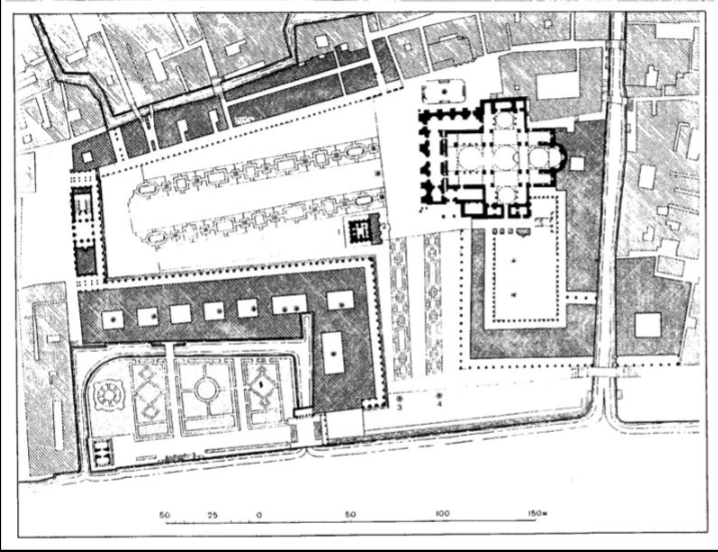
sansovino, plan of Doge Andrea Gritti’s renovatio urbis 1523-1538. strategic, ambitious, and politically charged urban renewal program designed to transform Venice into a "new Rome," reinforcing its status as a premier imperial power after the 1527 sack of Rome. Guided by architect Jacopo Sansovino and promoted by writer Pietro Aretino, the program modernized the city through classical-style architecture
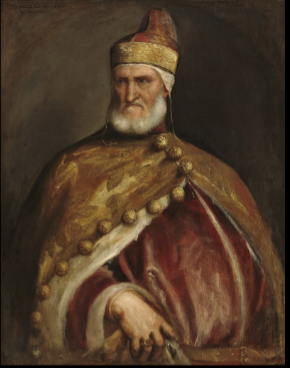
Titian, Portrait of Doge Andrea Gritti, 1540. ferocious expression and imposing figure mean authority. no setting, experimentation with black, muted background and emphasizes face, making it a real portrait. painterly quality and artist’s hand. after this titian becomes the most sought after portrait painter in all of venice
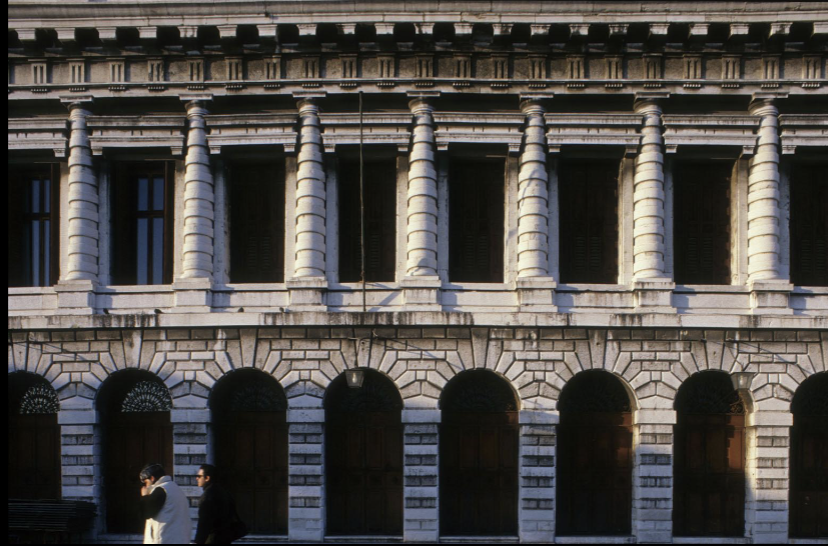
Jacopo Sansovino, Zecca (Mint), Venice, from 1536. sansovino comes to rome in a time of upheaval and brings new visual language from rome to venice in 1530s. mint is supposed to be strong and secure but this lacks defensive architecture and is completely open. example of mannerism and what comes after the high renaissance. playfulness and amusement with rules. architects want to do things differently and mess with the rules that high renaissance made. everything has rustication. many unusual things- rustication on columns, usually just on ground floor. squeezing columns. no solid walls at the bottom for merchants bc the guilds refused to give up their lease
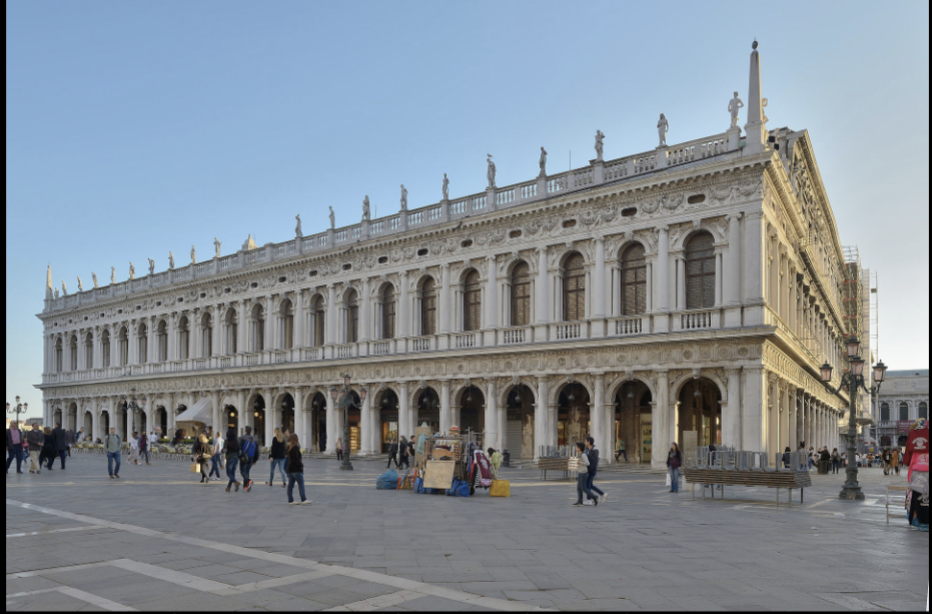
Sansovino, Library of Saint Mark’s (Marciana),1537-1591 sansovino comes to rome in a time of upheaval and brings new visual language from rome to venice in 1530s. simplifying, long and continuous. more renaissance with columns but venetian with the decorative elements everywhere. doric and ionic columns. lion of st mark featured. sansovino solves architectural problem with this building- the doric corner, and his solution of adding another corner between columns made him famous.
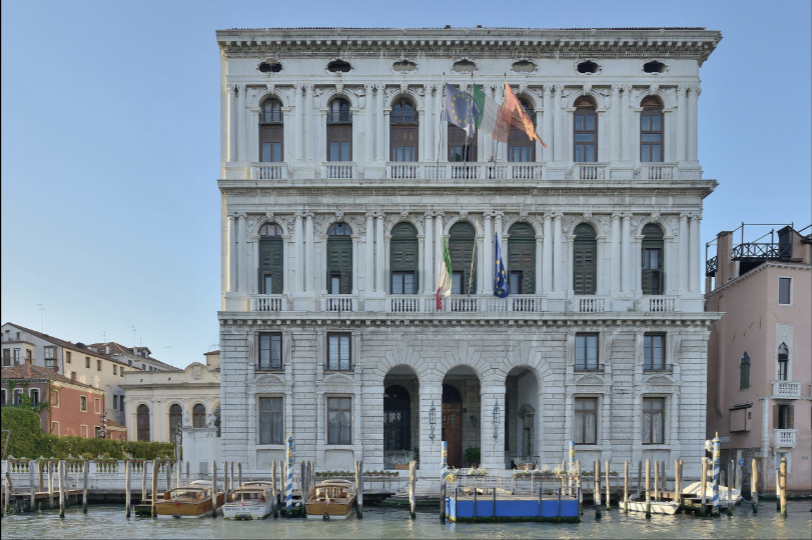
Sansovino, Palazzo Corner at San Maurizio (Ca’ Grande), from 1545. sansovino comes to rome in a time of upheaval and brings new visual language from rome to venice in 1530s. very grand palace because of queen cornaro’s dowry money. high renaissance elements of rusticated first floor, but weird columns like doubled up columns. prominent cornice is classical element. enter by boat or by back entrance on land.
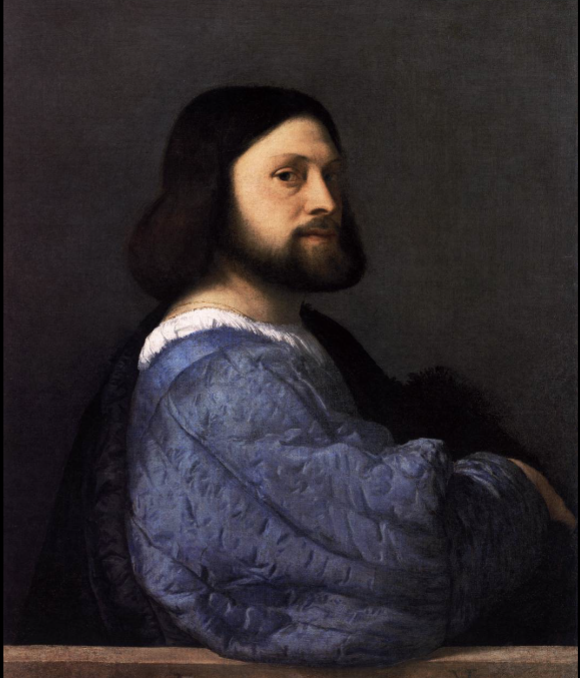
Titian, Man with Blue Sleeve, 1510. more confrontational, face stands out. dramatic portrait. bigger painting with the invention of the canvas. renaissance elbow signifying confidence and high status. viewers engaging with subject matter like the guy is annoyed at us. you can see the artist’s hand
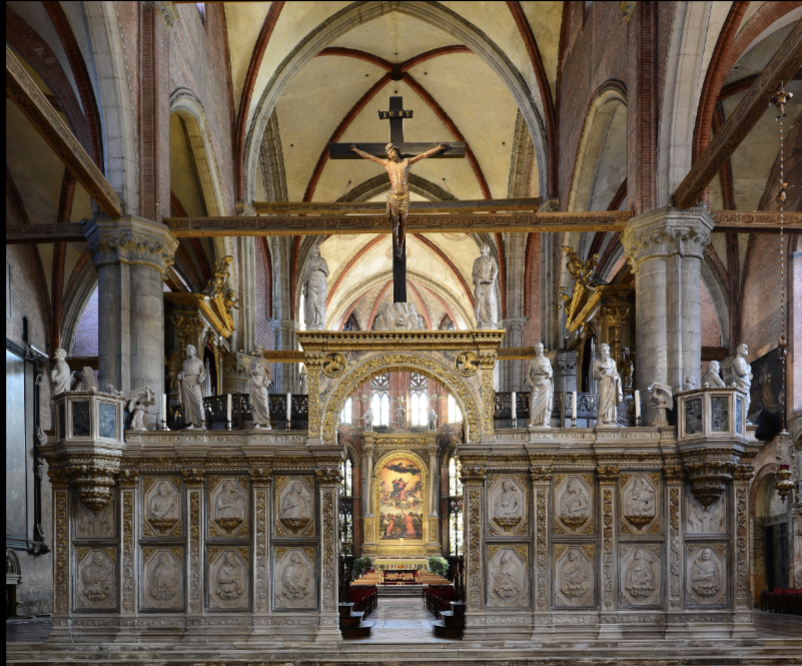
Titian, Assunta, 1520. huge statement and unlike anything before. the new things about this altarpiece are people in different forms and energized and dramatic. depicting heaven- new style of devotional portrait. everyone is interacting and captures the moment of death and the dramatic reaction to it. painted it in the church itself so titian is aware of the space it occupies. it’s in the back so as you walk towards it you’re walking towards a supernatural event and it is lit by the windows above the altar
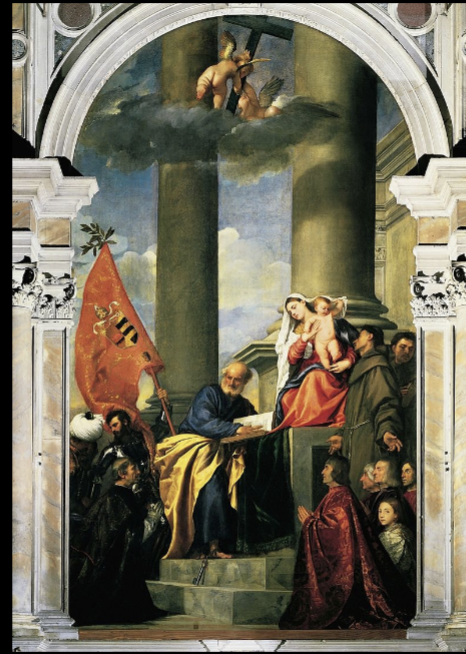
Titian, Pesaro Madonna, 1520. kinda looks like sacra conversacione paintings expect they’re actually interacting with each other instead of just being in the same space, just like interaction in assunta. within 2 altarpieces he creates, titian is above and beyond other artists.
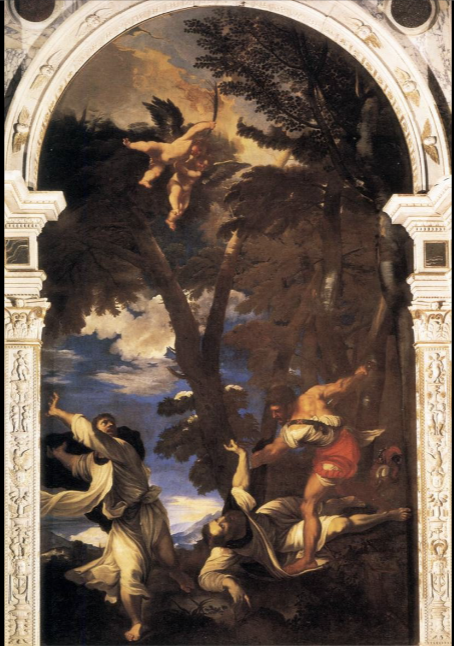
Titian, Saint Peter Martyr Altarpiece, ca. 1530. very different and best altarpiece. is a narrative with movement, showing us real fear and real martydom, emotion, and violence. the viewer approaches the altarpiece from the left side, right where st. peter is. the reformation was happening at this time, which increased interest in martyrdom/dying for your religion. the act of sacrifice becomes visualized more and more in this era. supposed to give viewer emotional response
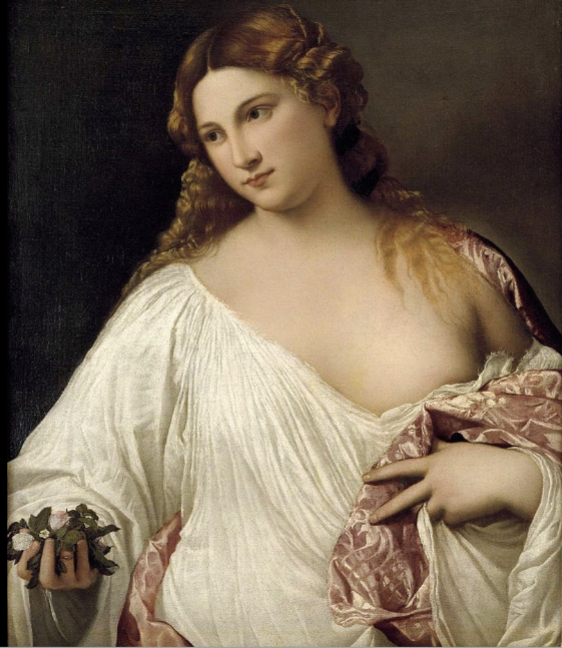
Titian, Flora, ca. 1515. belladonna, a painting of a beautiful and sensual unknown woman. we don’t know who this woman is but the idea is represented in many forms these women, naked or clothed, are the idealized women available for our consumption. unclear if woman is a courtesan or not. belladonnas are popular painting for titian
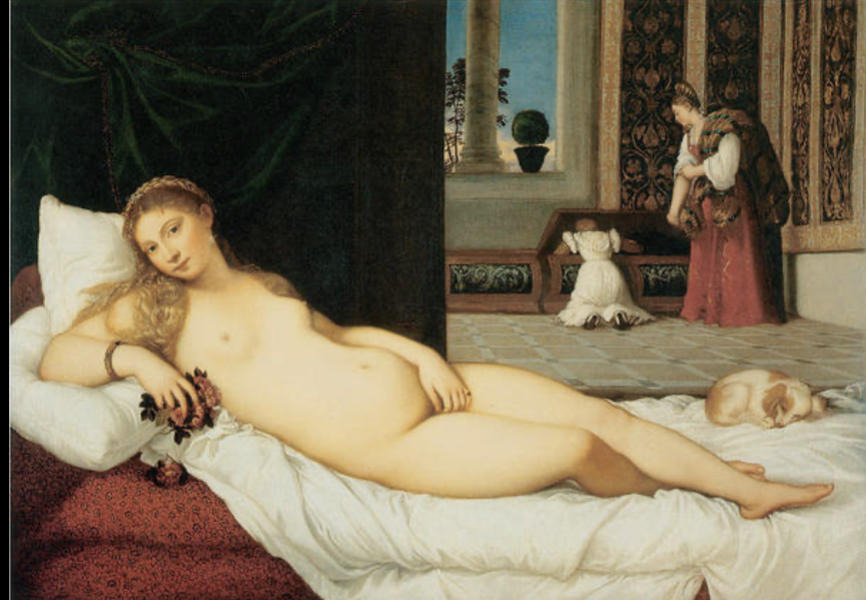
Titian, Venus of Urbino, 1540. viewer is way less of a voyeur than in sleeping venus. unclear if it is a courtesan because she is nude and available, but could also just be a portrait of the ideal wife due to the numerous symbols like marriage chest and dog for loyalty
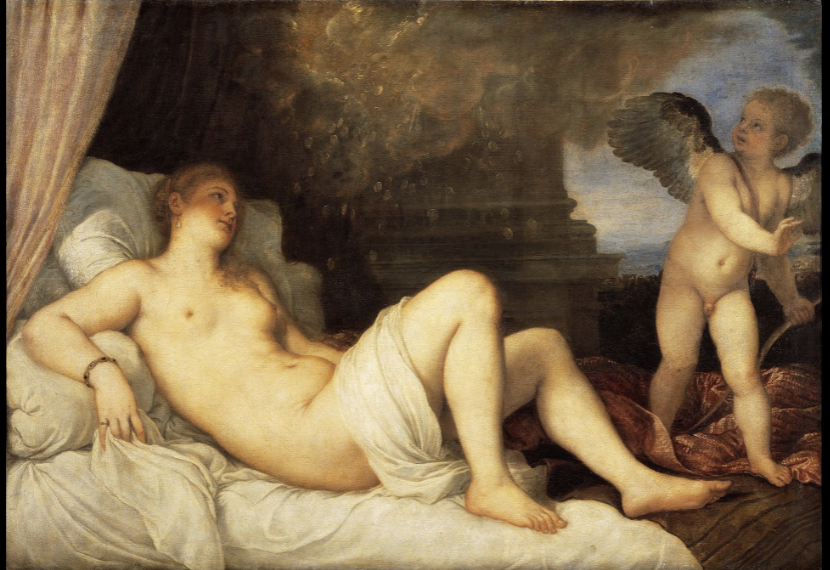
Titian, Danaë, 1545 just like venus of urbino, there are very many versions of danae because people love looking at a female nude. renaissance interpretation of greek myth. titian becomes the man who paints sensuous reclining nudes, pose and face.
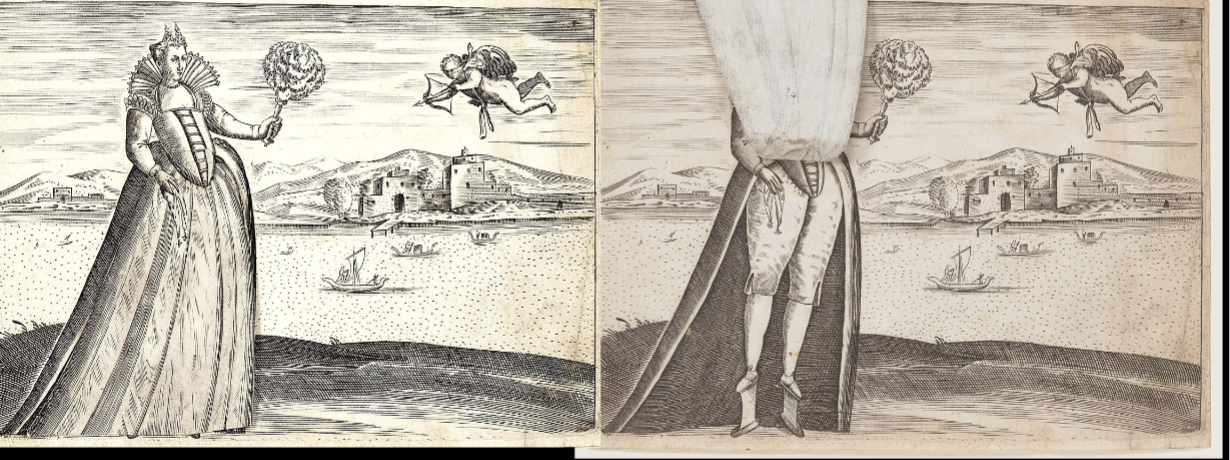
Bertelli, Venetian Woman with Moveable Skirt, ca. 1560. print represents how courtesans masked themselves as noblewomen, which can be seen in the second image as the upturned skirt reveals the woman is crossdressing in mens’ bloomers as courtesans did. This image also turns the viewer into a voyeur, enjoying seeing the courtesan in an uncovered, vulnerable state.
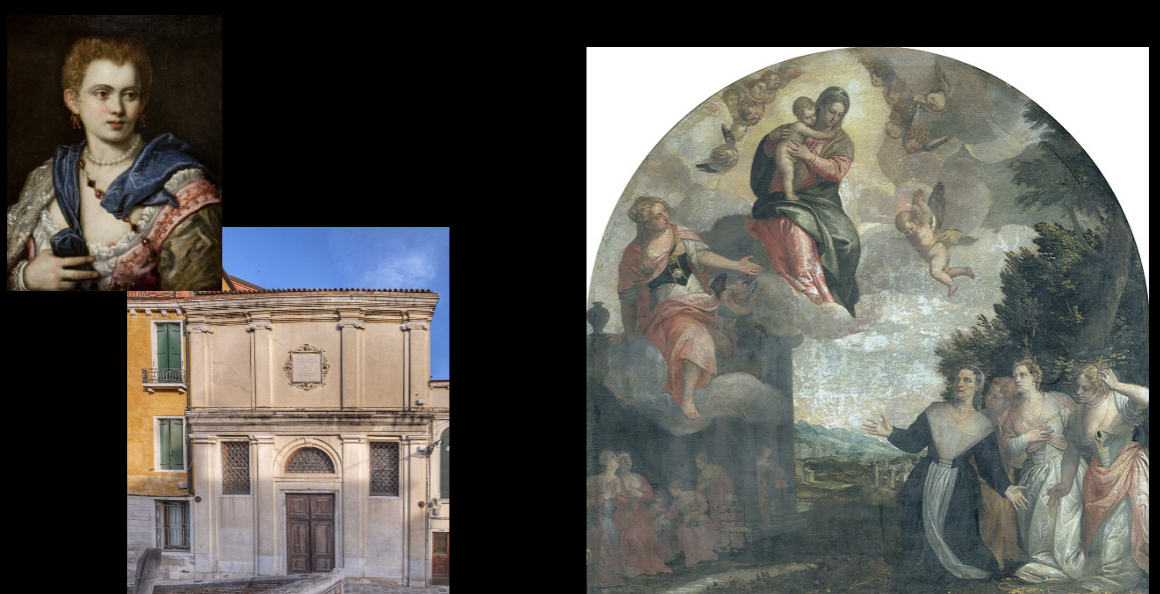
Caliari, Foundation of the Casa del Soccorso, 1575. veronica franco, famous courtesan of the renaissance, you can tell they are courtesans because they are touching their hair. altarpiece is from retreat for aging courtesans who are no longer working and they could live and be taken care of. franco was instrumental in creating it. courtesans were a class of highly educated women who were prostitutes but also companions to wealthy men. it was also difficult to tell if a woman was a noblewoman or a courtesan bc they dressed like noblewomen
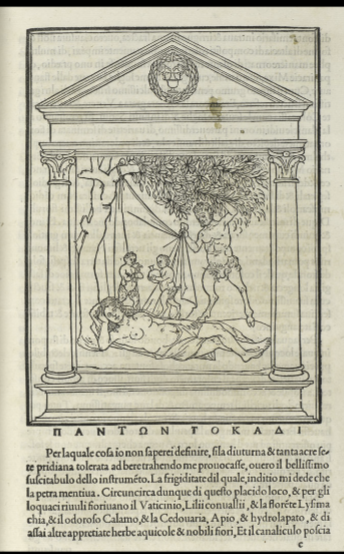
Manutius (printer), Hypnerotomachia Poliphili,1500. printed book with beautiful woodcut illustrations. print is a luxury object that venice is famous for. prints are for mass production. the invention of the printing press was revolutionary bc objects could get more widely distributed and individual letters and text could be moved around on one page.
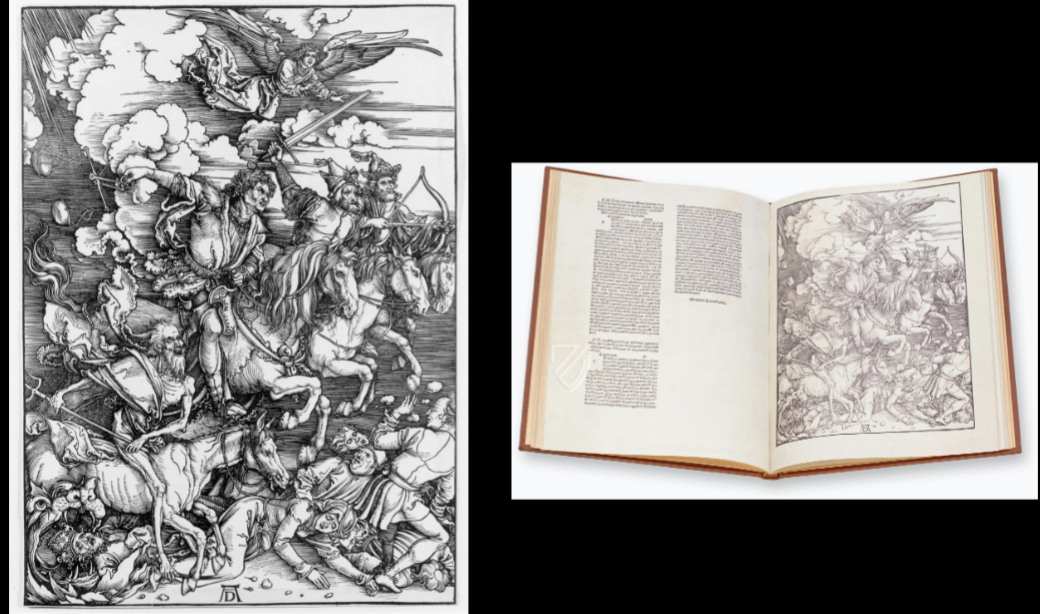
Dürer, The Four Horseman of the Apocalypse, 1500. will not be on test but know for context durer was famous for super elaborate prints. creates prints as an independent art form, however prints and paintings influence each other. dynamic, overlapping figures. sense of space, 3d, lines that create shadow. durers career is evident of strong dialogue and artistic exchange between venice and germany at the time.
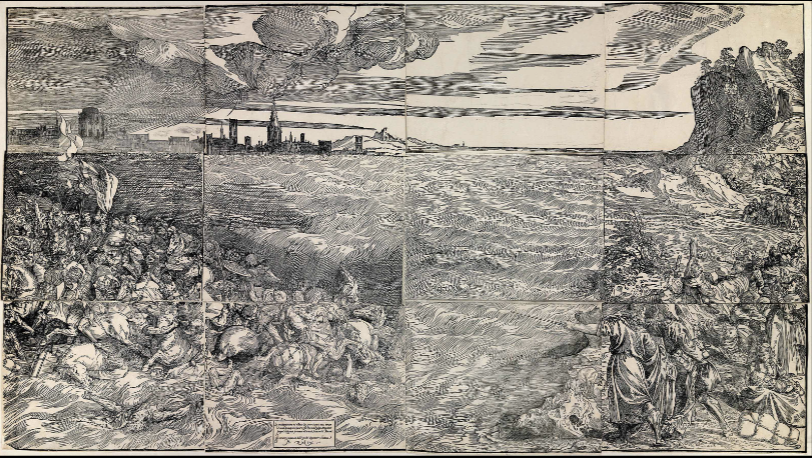
Titian, Submersion of Pharoah’s Army in the Red Sea, woodcut, 1515. prints become independent art form but prints and paintings influence each other. titian uses prints to lean into linework and is more abstract. snapshot of history, prints are for mass production. titian tries to turn print into painting after durer in the context of durer.
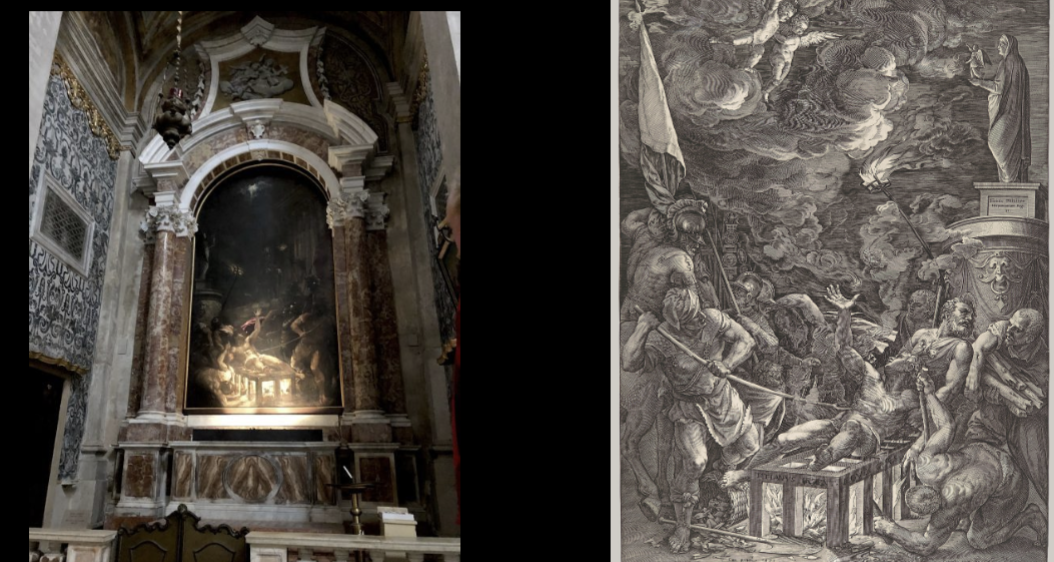
Titian, Martyrdom of Saint Lawrence, 1560 / Cort, after TITIAN’s Martyrdom of Saint Lawrence, engraving, 1570. slightly altered composition, captured dramatic lighting
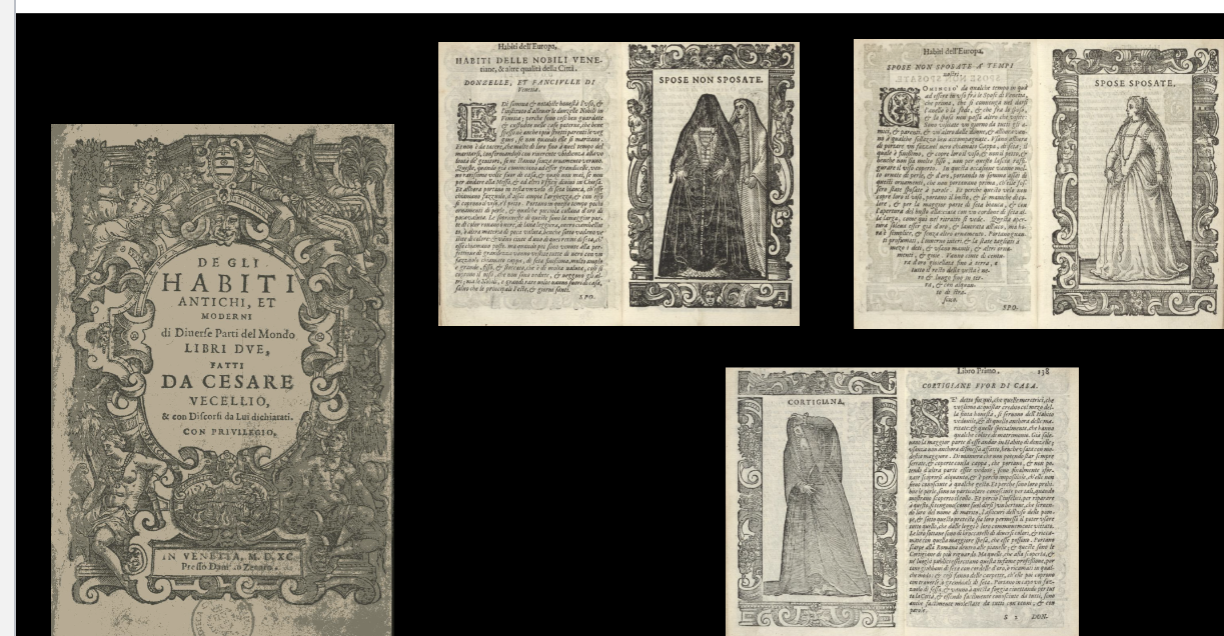
Vecellio, Degli abiti veneziane, 1590. costume book to show how every part of society dresses. the emergence of print brings an interest in cataloging the world and desire for knowledge.
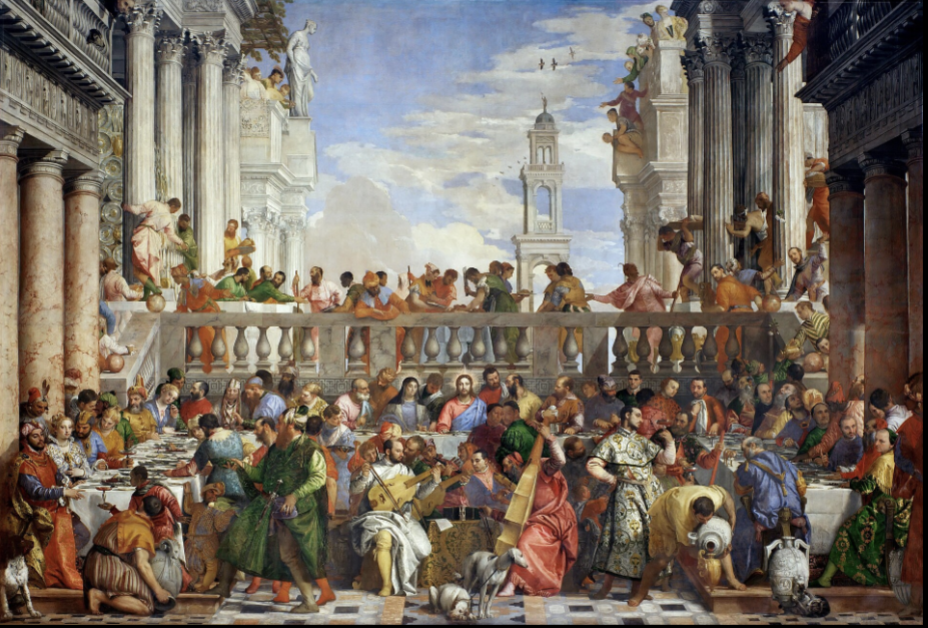
Veronese, Wedding Feast at Cana, 1563. veronese becomes master of wedding paintings. More traditionally venetian in the way that he paints. Paintings look just like titian’s. Very over the top, splendor, detail on the clothing. Dining is a very important activity in the 16th century so it is a commemoration of a wedding feast in the bible - aka an excuse to depict a venetian wedding feast, jesus just happens to be there in the middle. banquet culture in venice was almost a performance.
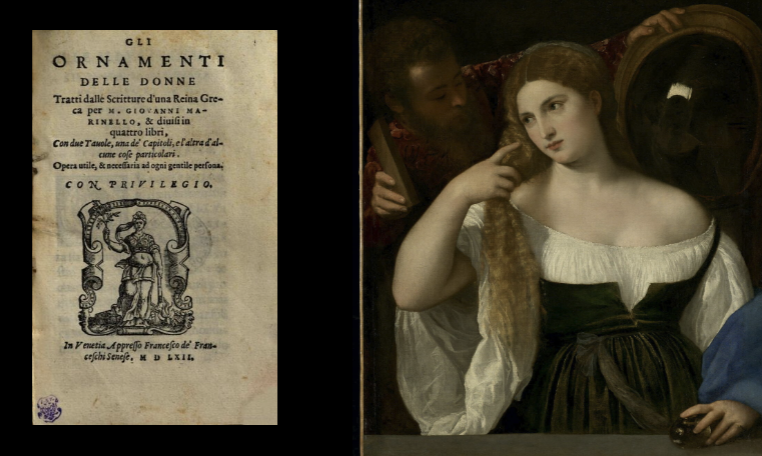
Marinelli, Ornaments of Women, 1575. print book of beauty, ornaments, self care and perfume. aimed at middle and lower classes. recipes for beautifying every body part. affordable book meant to be consumed
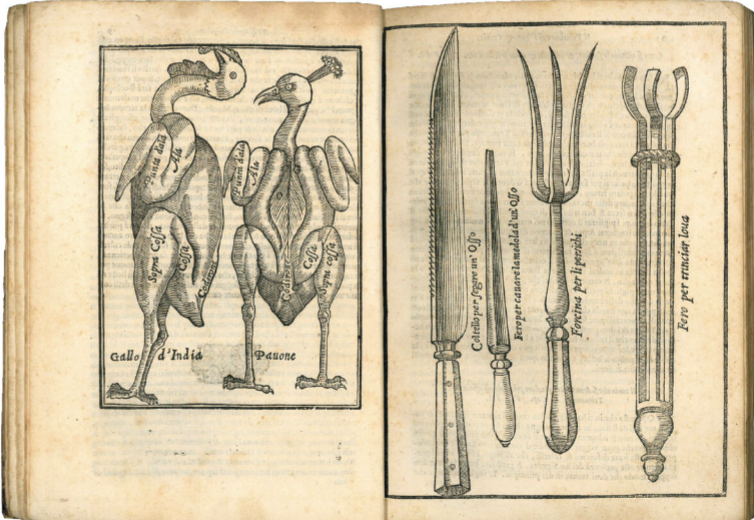
Cervio, Il Trinciante, 1580. details the performative art of meat carving. technical manual for the trinciante, who was the most important servant. his job was to carve meat in entertaining and interesting ways as a performance book provides detailed instructions on how to carve various animals. tracks because weddings and banquets are a performance
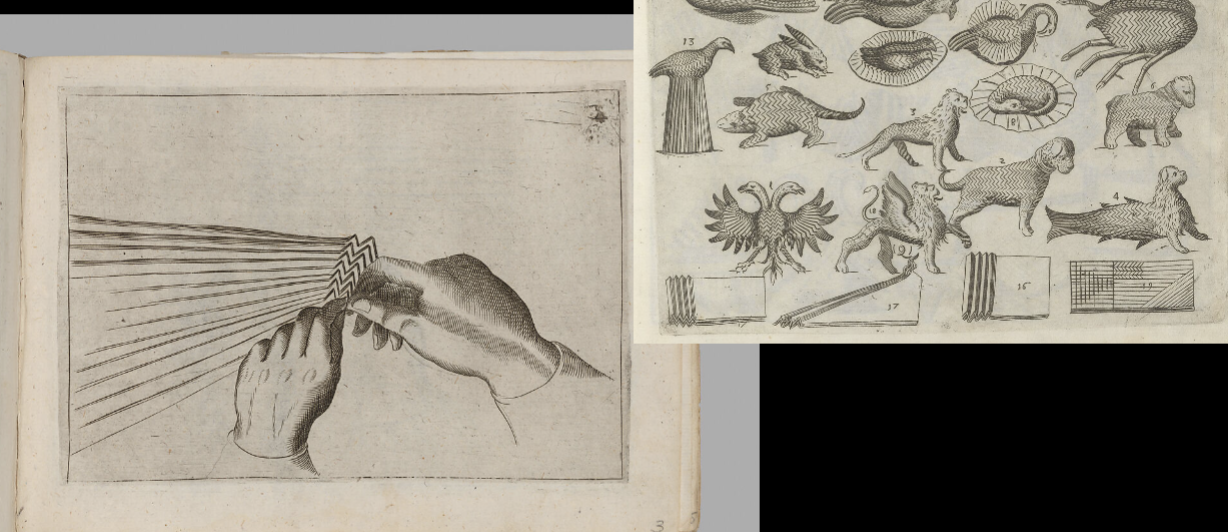
Geigher, Trattato delle piegature, 1640. print book describing how to fold napkins in many different shapes like animals. increase of knowledge with prints, banquet performance, distribution
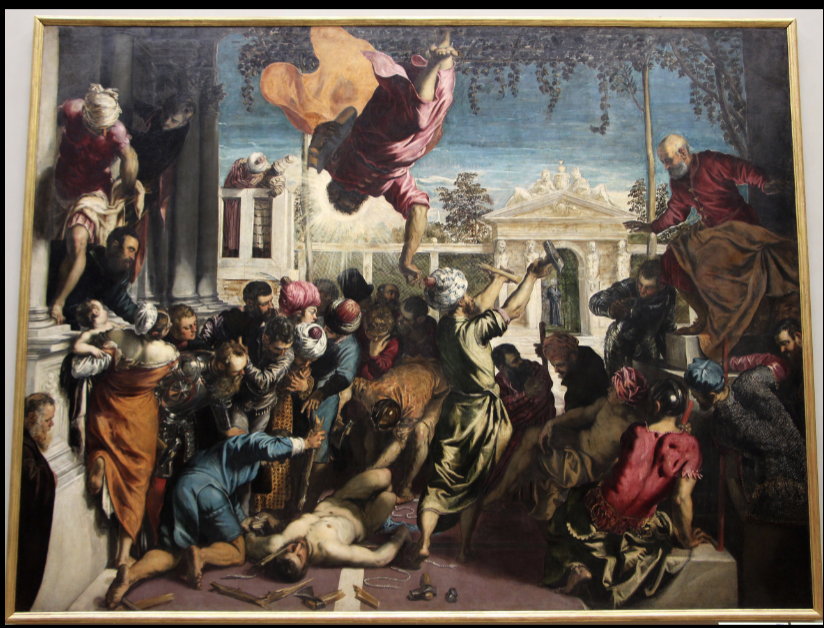
Tintoretto, Miracle of the Slave, 1550. posthumous miracle of st mark so this is certainly something the scuola loves to put on display. Saving christian slave who is being tortured by his master bc he wanted to go to venice to see the relics of st mark. This miracle happened because venice had the relics. Figures drawn from Michelangelo and also pulling from movement in paintings like the assumption of the virgin. people are all actively engaged in witnessing the miracle. They are not just having their portraits painted while witnessing; they are actively involved in the scene. drama, monumentality. inspired by titan assumption of the virgin, maybe even trying to outdo titian and go beyond what he has done with assumption 30 years earlier, challenging titan’s supremacy. combining colorito with desegnio.
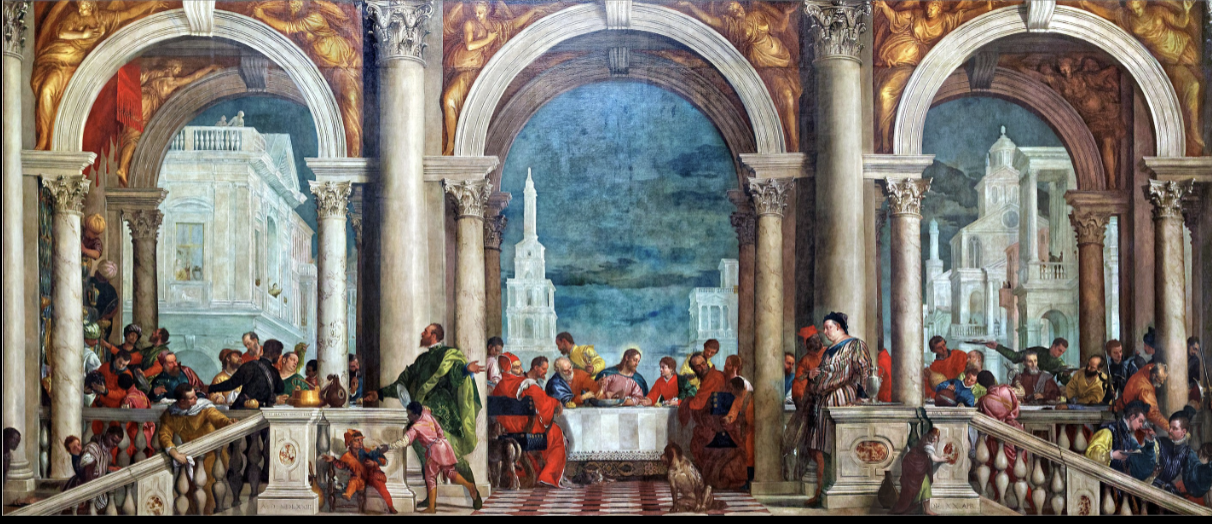
Veronese, Feast in the House of Levi, 1575. everyone loved veronese and wanted him to work for them. included drunk germans and jesters alongside holy jesus. Veronese says he includes them because he needs to fill it up because painting wouldn’t be full with just holy figures. He wanted to adorn it as he wants. He wants his painting to be visually interesting. Forced to change the name of the painting from the last supper to the feast in the house of levi.
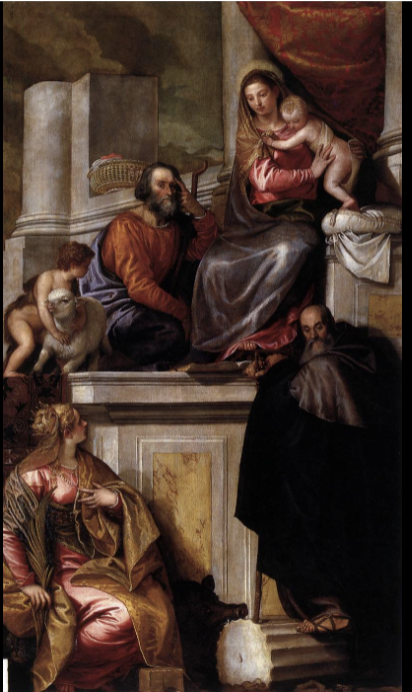
Veronese, Giustiniani Altarpiece, 1550. first commission to venice. asymmetrical composition based off titian. sacra conversacione painting like titian placing himself in that legacy
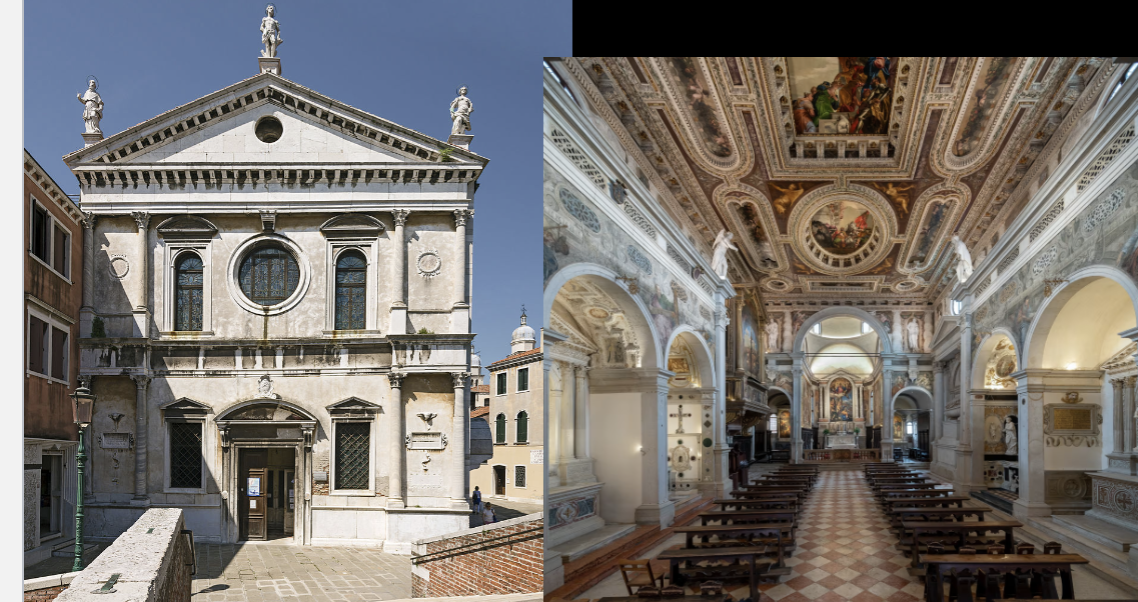
Veronese, interior of San Sebastiano, 1555-1565. looks like titian’s works, showing how veronese still references titian after his death to bolster his reputation and take titan’s spot. saying that he is on the same podium and legacy as titian with his use of historical figures and same asymmetrical structure. Very successful and receives many important commissions after this. increased interest in martyrdom/dying for your religion. feels holy as it is at the back wall and your attention is drawn towards it
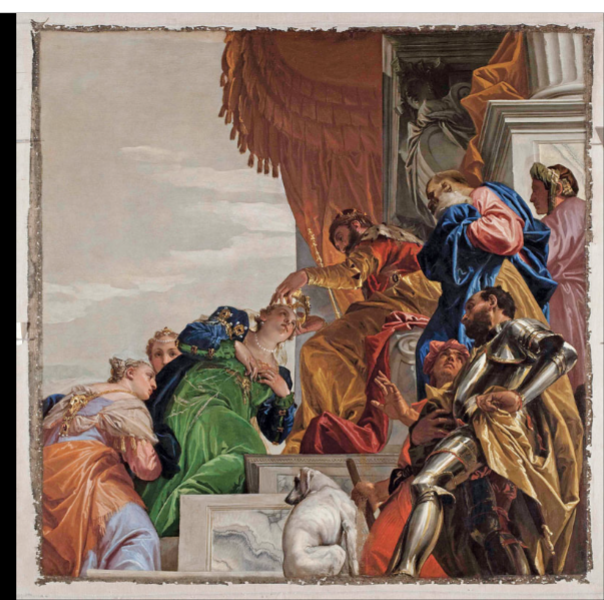
Veronese, Esther Crowned by Ahasuerus, 1555. story of esther is on the ceiling because she saved the jews from persecution. prefiguration of mary. people love veronese for his festive, bright, colors. references antique sculptures with posing and references titian’s asymmetrical compositions, putting him on the same level as titian.
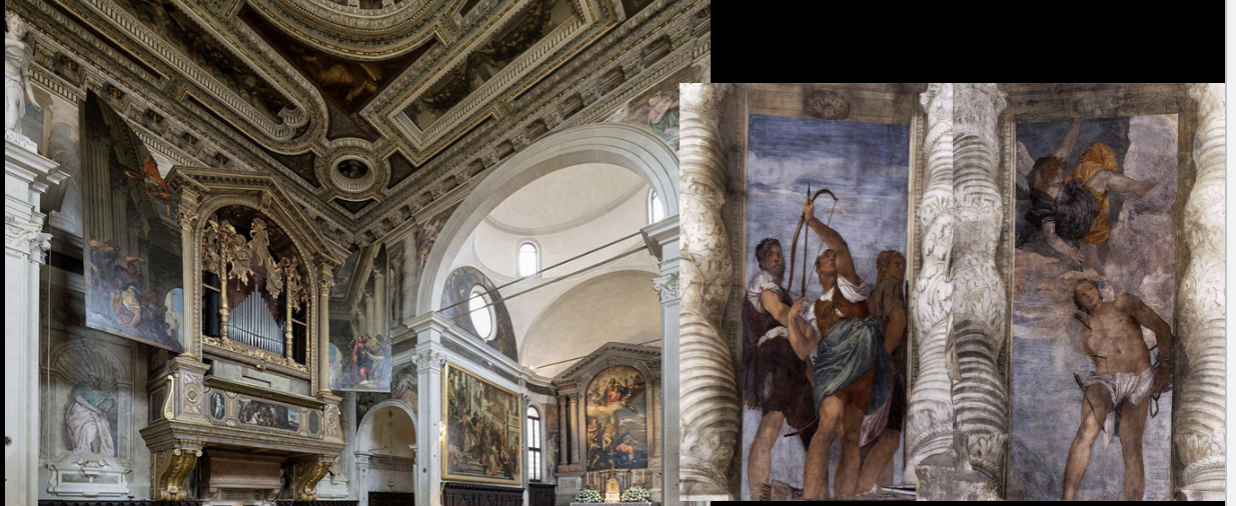
Veronese, interior of San Sebastiano, 1555-1565
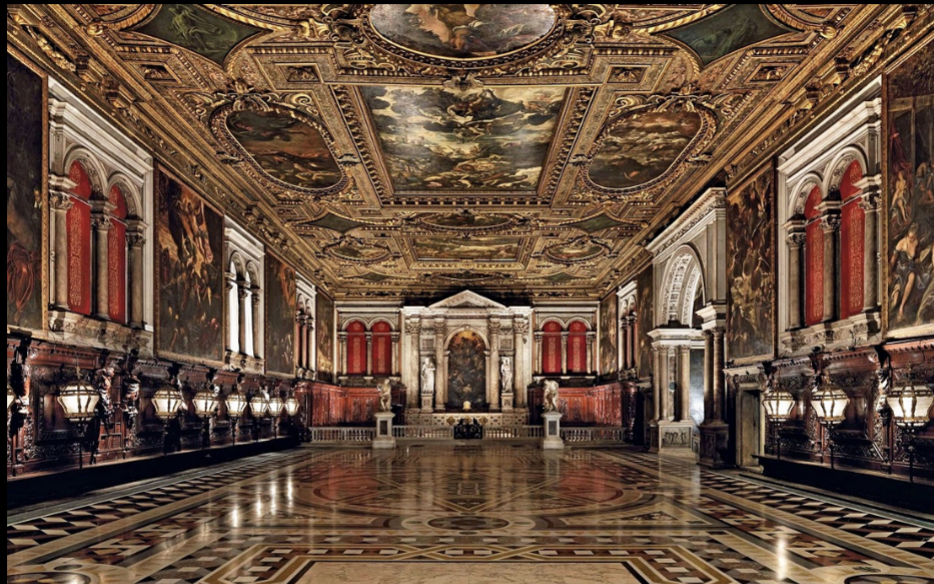
Scuola Grande di San Rocco, Tintoretto from 1565-1585. tintoretto tries to show off a greater skill than titian here. his work for the scuola puts him on the same level as titian and bellini, dark outlines, sketchy, diff from veronese and titian. cool toned, chaotic, multiple vantage points. tintoretto combined the disegno, or the posing and outlines and drawing of michelangelo, and the colorito, or painterly usage of color of titian. titian didn’t like this bc it was as if tintoretto was trying to outdo him
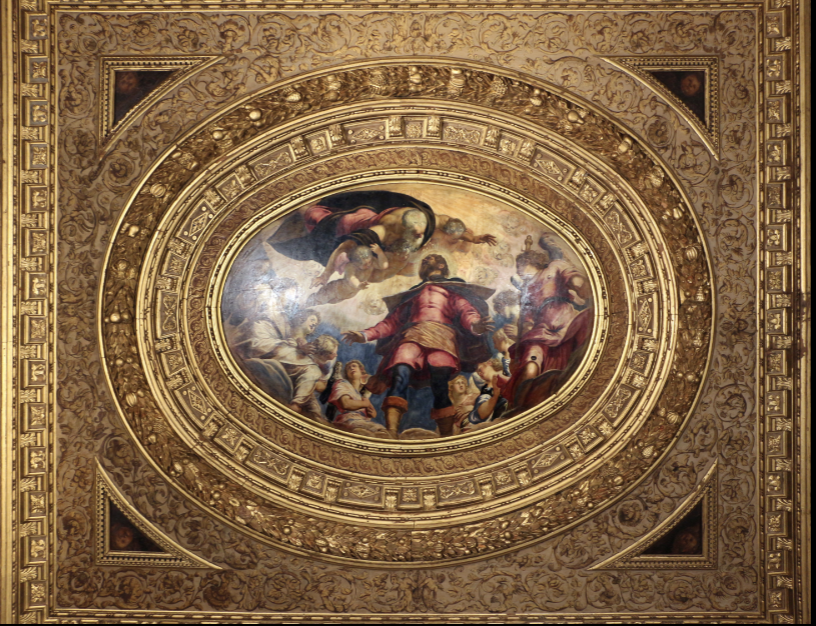
Tintoretto, The Apotheosis of Saint Roch, 1565. work for scuola of st rocco put him on the same level of titian and bellini. tintoretto combined the disegno, or the posing and outlines and drawing of michelangelo, and the colorito, or painterly usage of color of titian. combination of michelangelo’s poses in the fresco of the sistine chapel and titian’s assunta with the subject matter and the characters interacting. titian didn’t like this bc it was as if tintoretto was trying to outdo him
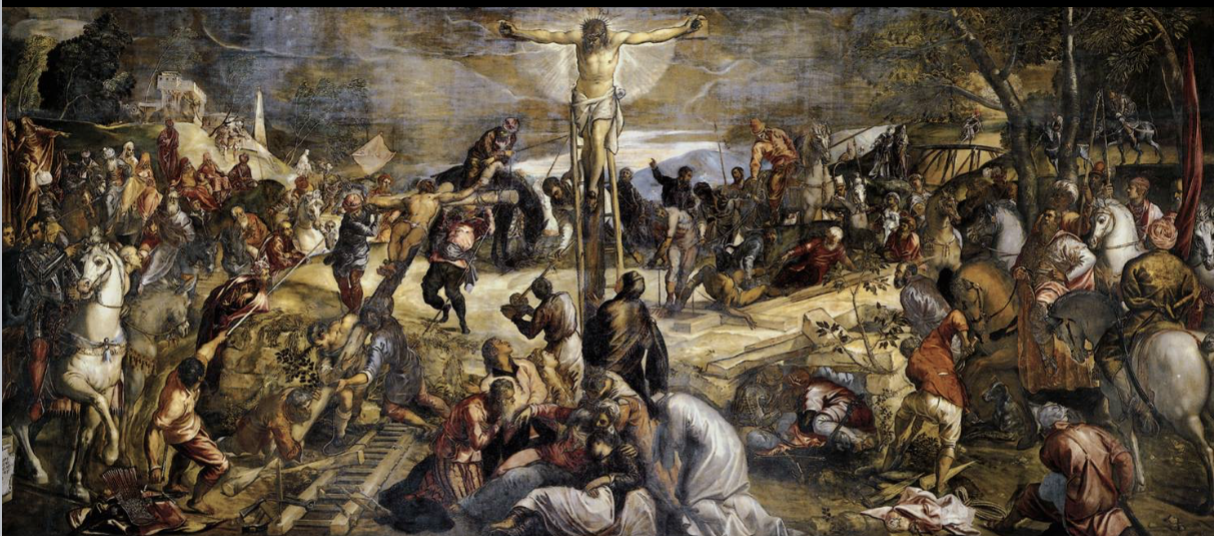
Tintoretto, Crucifixion, 1565. tintoretto tries to show off a greater skill than titian here. major painting for the scuola of st rocco that puts him on the same level as titian and bellini, dark outlines, sketchy, diff from veronese and titian. cool toned, chaotic, multiple vantage points. tintoretto combined the disegno, or the posing and outlines and drawing of michelangelo, and the colorito, or painterly usage of color of titian. titian didn’t like this bc it was as if tintoretto was trying to outdo him
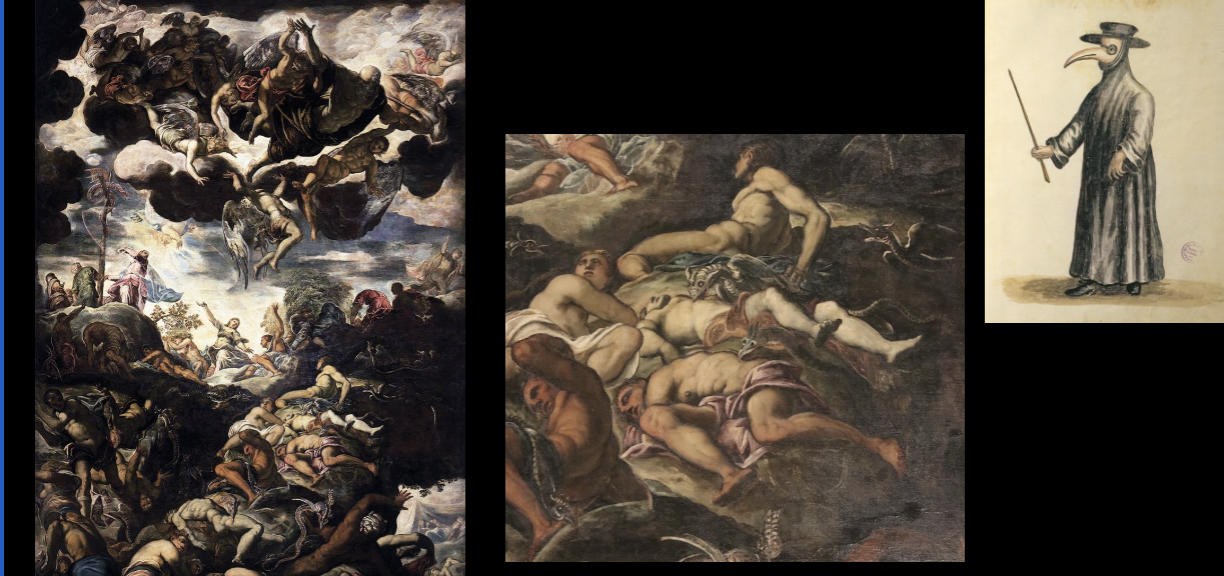
Tintoretto Miracle of the Brazen Serpent 1575. in scuola grande di san rocco.
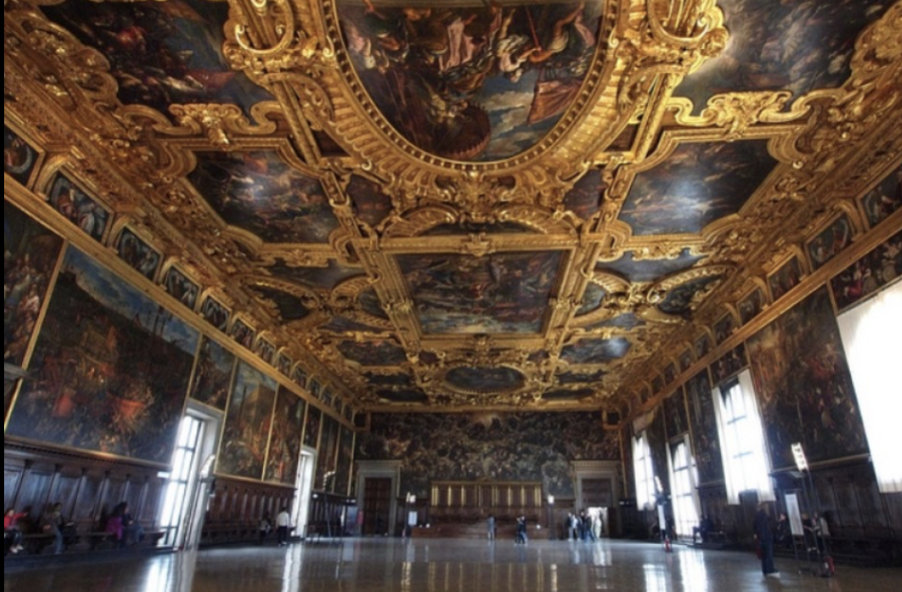
Doge’s Palace, Great Council Chamber, from 1580. massive hall for meetings of venice’s government. painted by veronese and tintoretto. paintings depict the power, wealth, and allegorical triumph of venice to project these qualities to foreign powers visiting. tintoretto’s paradise and veronese’s soffitto veneziano ceilings.
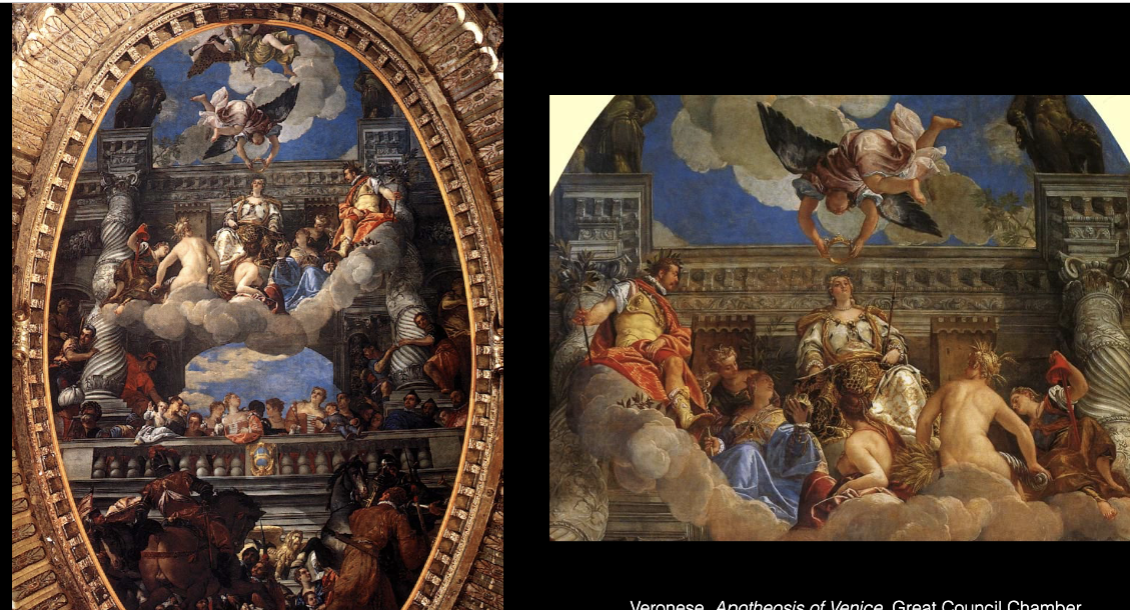
Veronese, Apotheosis of Venice, 1585. soffitto veneziano in the great council chamber. people crowning the personification of venice— she’s the queen of everything. huge self fashioning of venice, especially for foreign powers visiting the ducal palace. venetians, which may include courtesans, witnessing the miracle of the city. golden lion of st mark is highlighted. easier to read, more stable, and more eyecatching than tintoretto’s works.
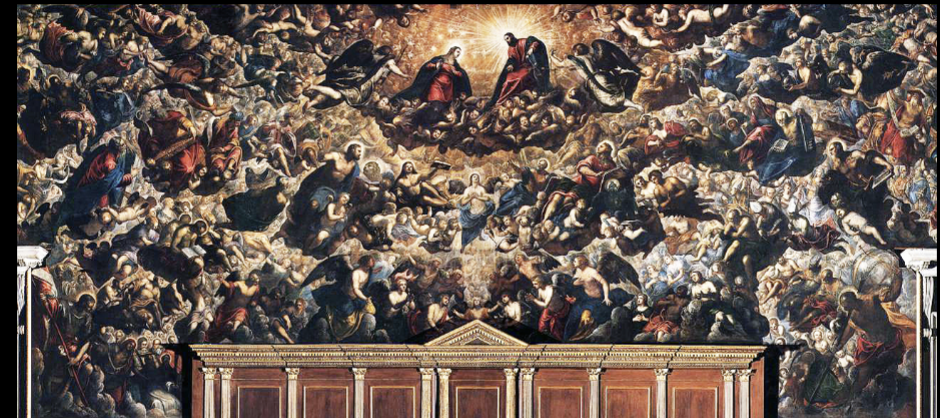
Tintoretto, Paradise, Great Council Chamber, Doge’s Palace, Venice, after 1590
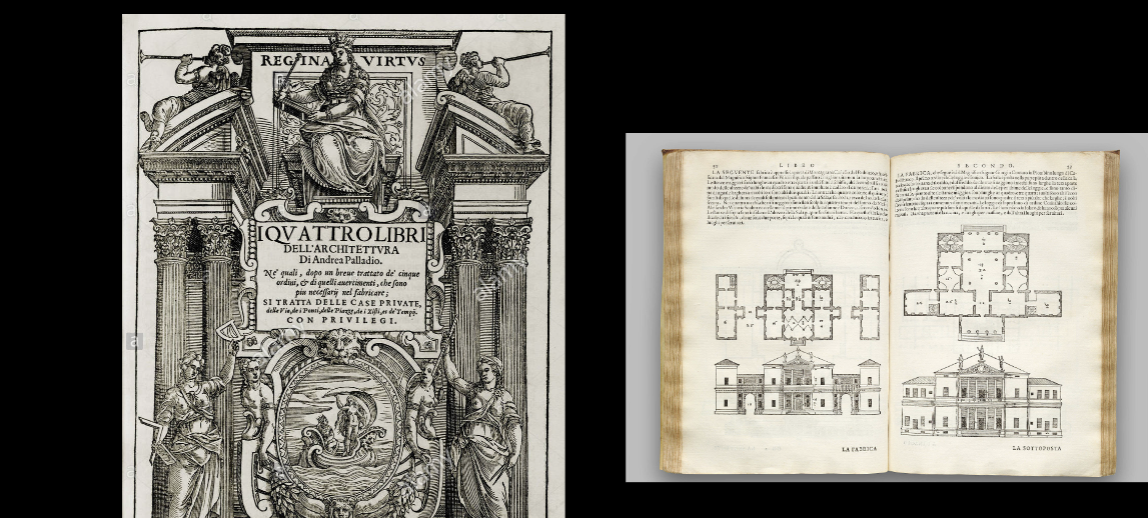
Palladio, Four Books on Architecture, from 1570. continues ideas that started in the renaissance under alberti. books on columns, orders, domestic architecture, putting his own drawings. placing himself alongside great ancient architects to put himself on their level
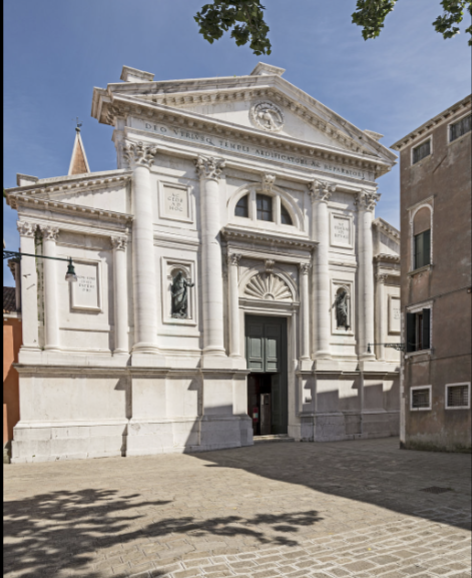
Sansovino, San Francesco della Vigna, 1535. palladio interprets sansovino’s facade with more of a reference to antiquity rather a temple look to it. facade is massive, grand, and feels out of place and ununified. it is designed to overwhelm the viewer, and this becomes palladio’s trademark.
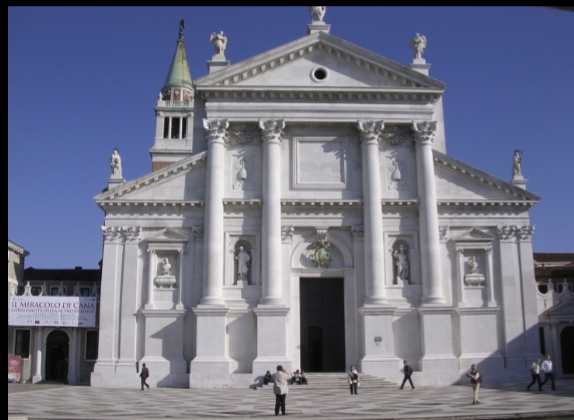
Palladio, San Giorgio Maggiore, 1565- palladio does symmetrical and harmonious architecture that is an imitation of antiquity and uses his stonemason background. immersed in accuracy and monumentality of architecture, and obsessed with measurements.
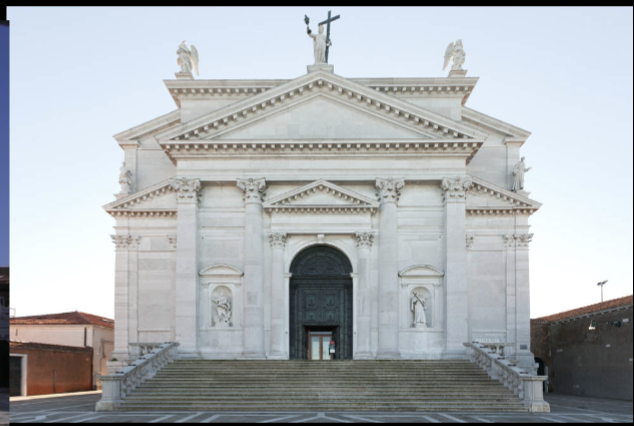
Palladio, Il Redentore, 1575. made in response to the plague. simplistic style yet went back to pediments and looks like the pantehon. mix of palladio’s previous works and feels more serious and somber. slight decorative touch on trims and has sculptures that look like doge. stairs give great prominence to facade. palladio does symmetrical and harmonious architecture that is an imitation of antiquity and uses his stonemason background. immersed in accuracy and monumentality of architecture, and obsessed with measurements.
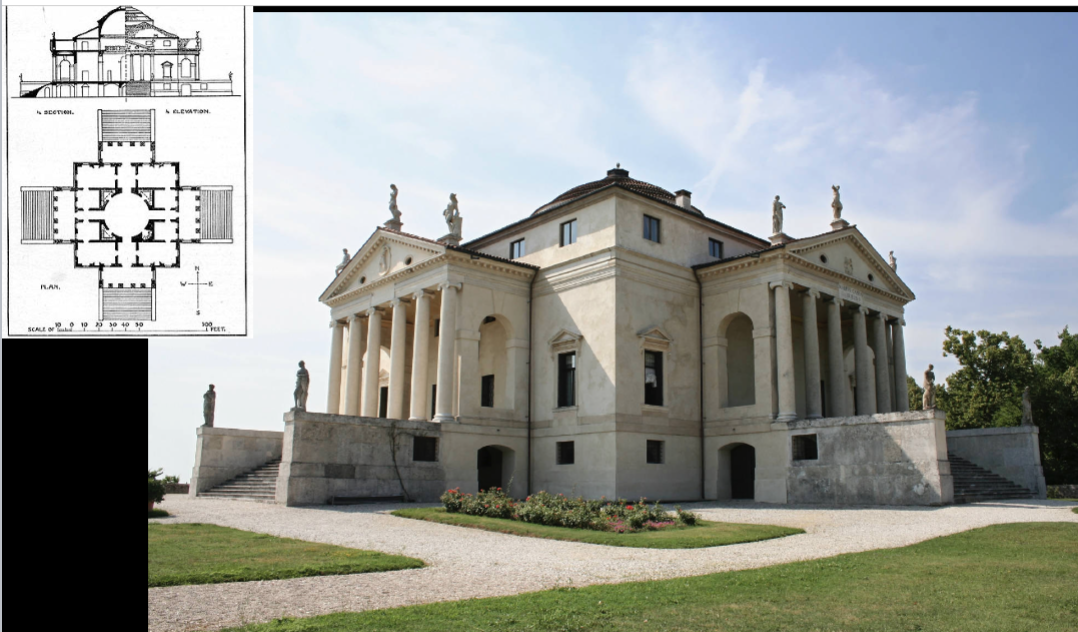
Palladio, Villa Rotonda,1570. at this time venice is investing in mainland territory as they begin to have difficulty with trade on water. villas can provide extra income and are practical and functional. no particular style of villas until palladio infused them with grandeur, making the villa its own architectural type. recalls ancient roman model and merges living with a functional farm. palladio is known for symmetrical, harmonious, imitation of antiquity, and obsessed with measurments and accuracy. picturesque villa for the picturesque countryside. four facades so it is pretty from any view when you walk around it. very centrally planned with dome at the center of the structure and gives it a monumental feeling. built on classical proportion and scale. not much room for many people, so it is meant for hosting weekend parties. palladio’s villas characterize strictly venetian architecture.
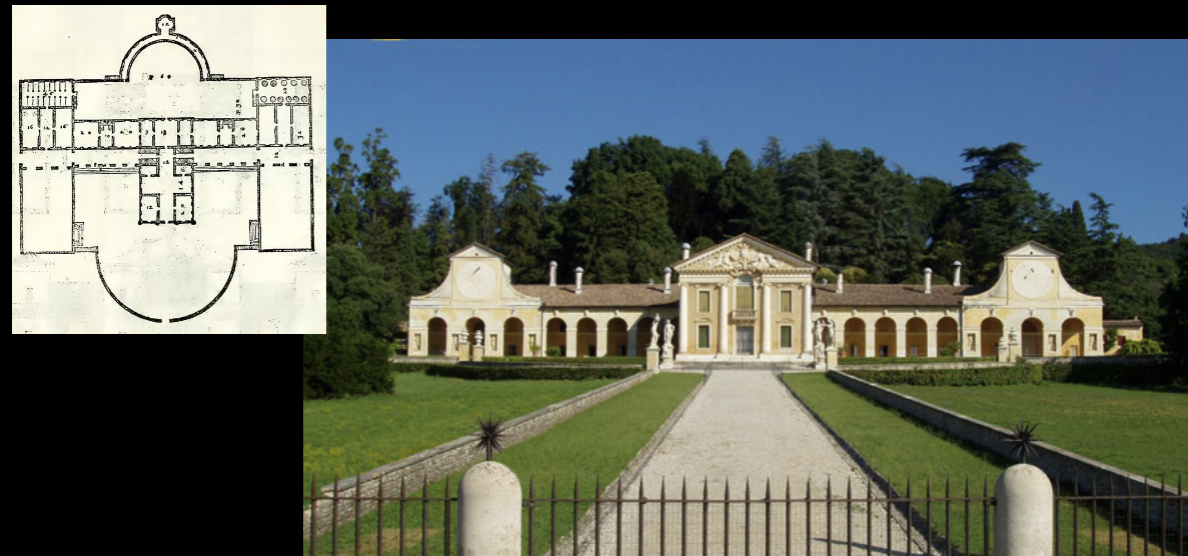
Palladio, Villa Barbaro at Maser, 1560. at this time venice is investing in mainland territory as they begin to have difficulty with trade on water. recalls ancient roman model and merges living with a functional farm. picturesque villa for the picturesque countryside. palladio is known for symmetrical, harmonious, imitation of antiquity, and obsessed with measurments and accuracy. based on ancient roman bath, which showcases bilateral symmetry. simple monumentality. the design expands into the landscape to show the natural countryside is a work of art that should be appreciated as well. templefront takes up entire front, barbaro coat of arms which alludes to their intellectual interests. the interior paintings are playful and do not match the exterior.
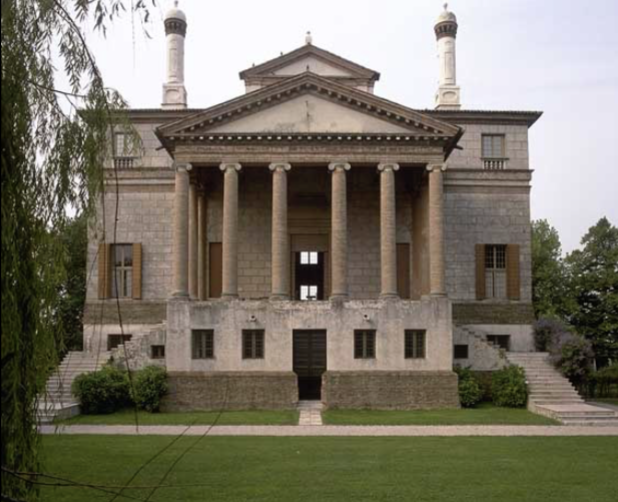
Palladio, La Malcontenta,1560. palladio does symmetrical and harmonious architecture that is an imitation of antiquity and uses his stonemason background. immersed in accuracy and monumentality of architecture, and obsessed with measurements. very high pedestal, no architectural wings. more suburban than other villas. just looks like a stately home, rather than a villa. meant to be seen and appreciated from all angles. palladio repeats its facade on many future villas.
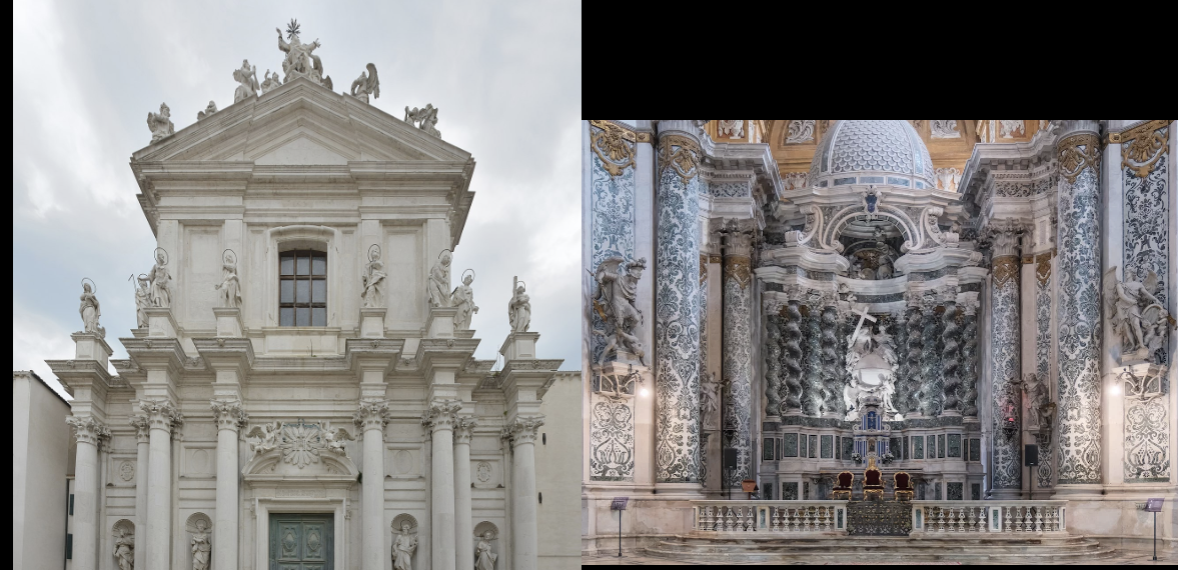
Rossi, Church of the Gesuiti, 1715-1730. huge amount of building going on. venice made laws to decrease the church’s power and money. represents the jesuit’s return to venice after they were expelled from the city. when they were let back into venice they commissioned rossi to build a grand structure that would assert their presence. high altar draws eye upwards
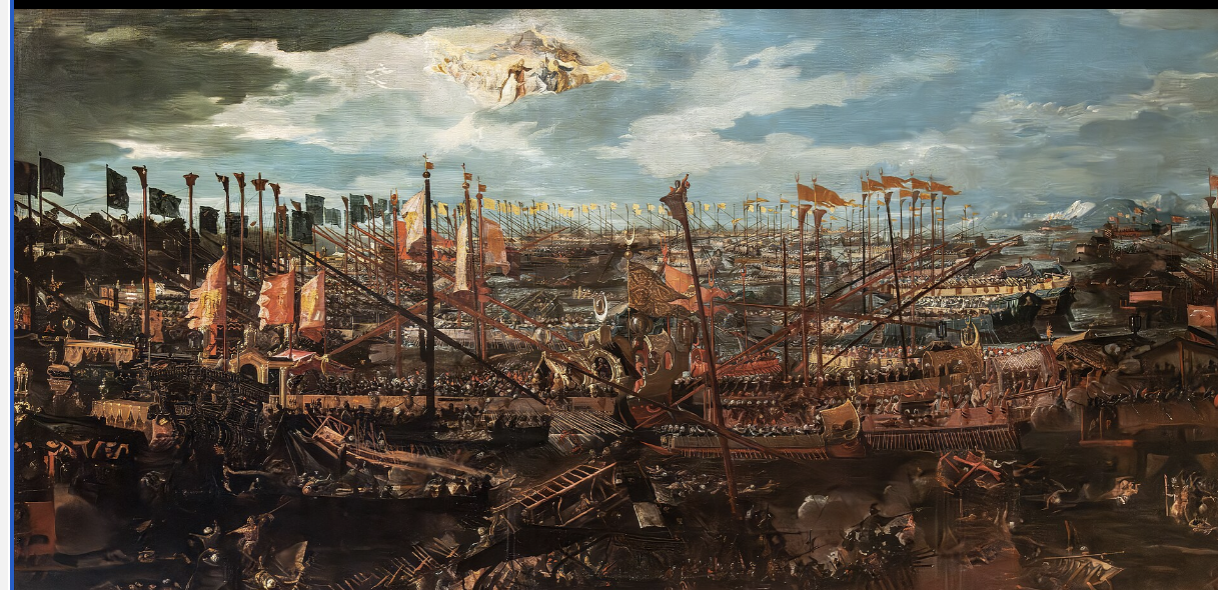
Vicentino, Battle of Lepanto,1575. victory of winning battle againts the turks that venetians celebrated for a very long time. represents the realistic and symbolic victory after many years humiliation and loss of power and wealth for Venice
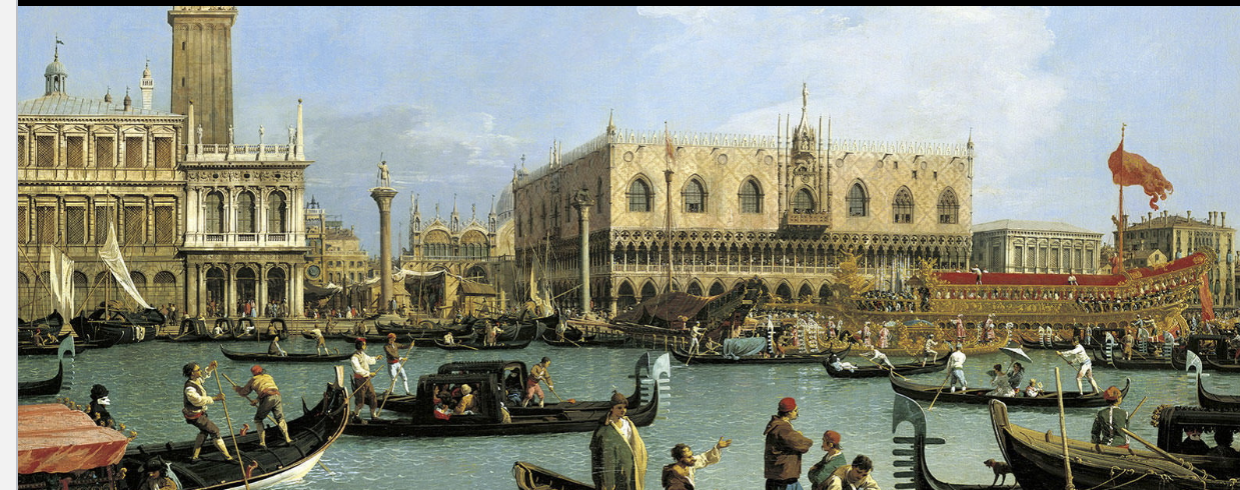
Canaletto, Return of the Bucintoro on Ascension Day, 1745. canaletto is most famous artist for grand tourists and only painted for grand tourists. foreigners loved these paintings because it shows an expansive view that encapsulates all the indescribable parts. calm scene, which is the opposite of the grand tourists’ trip. people are muddy and not detailed but super precise architecture to make many reproductions but keep archi similar. reminds gt of their trips and brings it home to show others
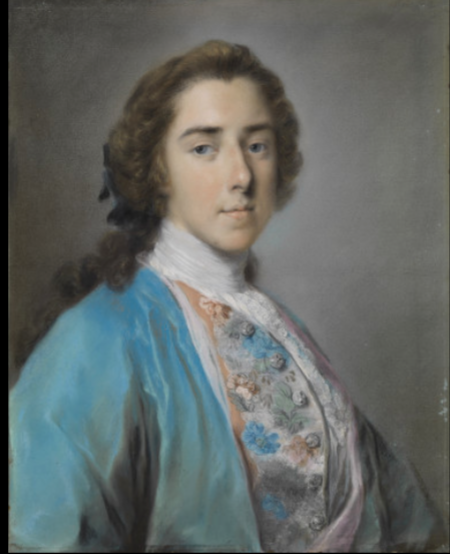
Rosalba Carriera, Henry Fiennes Pelham-Clinton, 1740. sought after for mood and personality in her portraits. pastels were a combo of painting and drawing, v venetian. grand tourists love the intimate small portraits
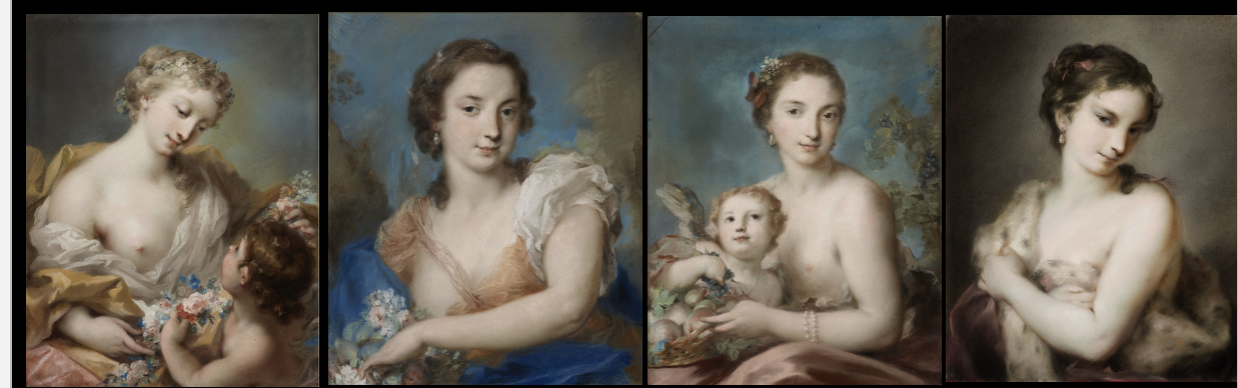
Rosalba Carriera, The Four Seasons,1730. seductive, alluring venetian women that look like titian’s bella donnas. rosalba’s paintings have that same eroticized feeling. very popular to collect paintings of beautiful women as a set. this set was owned by console smith, very important patron and sent to him in london. rosalba describes these in eroticized terms, which is interesting considering those were often painted by men.
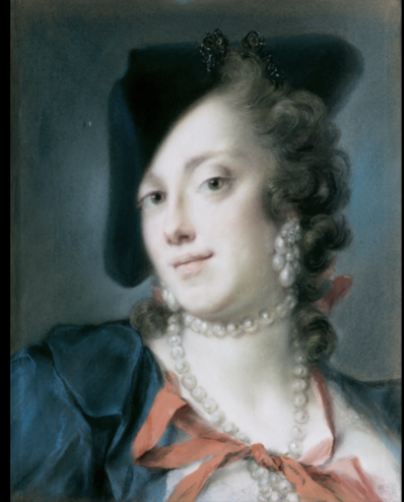
Rosalba Carriera, Caterina Sagredo Barbarigo as Berenice,1740. caterina chooses to have herself painted in the guise of this power of the ancient queen. caterina was a huge patron of the arts.
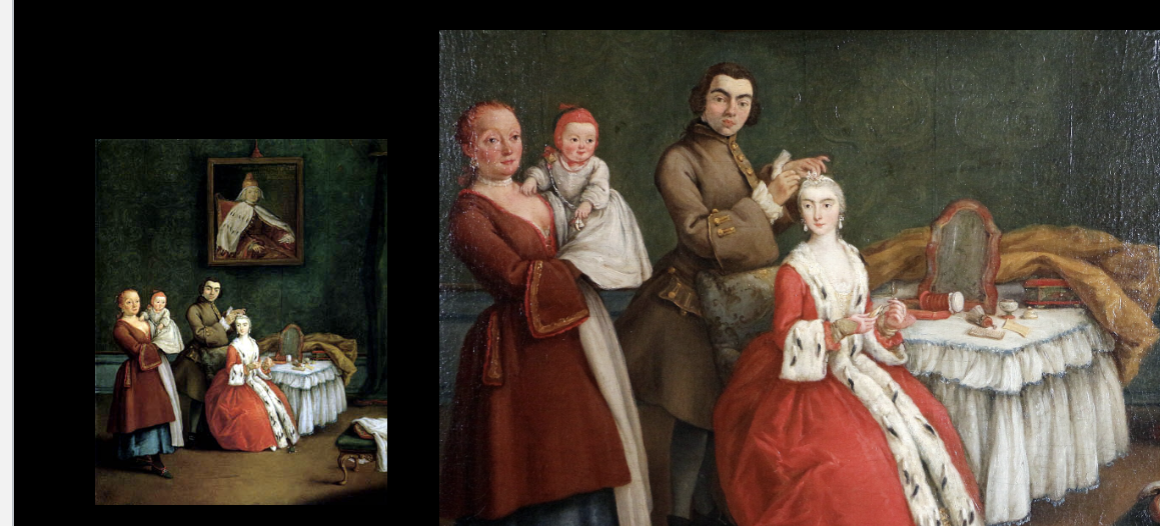
Longhi, The Hairdresser,1760. captures social changes after new families were introduced. being shown a private world of a family, pretty causal posing. family picture but not a portrait of elites. we don’t know exactly where we are but we are in a very nice home. less about display of wealth and more about recording daily life in venice.
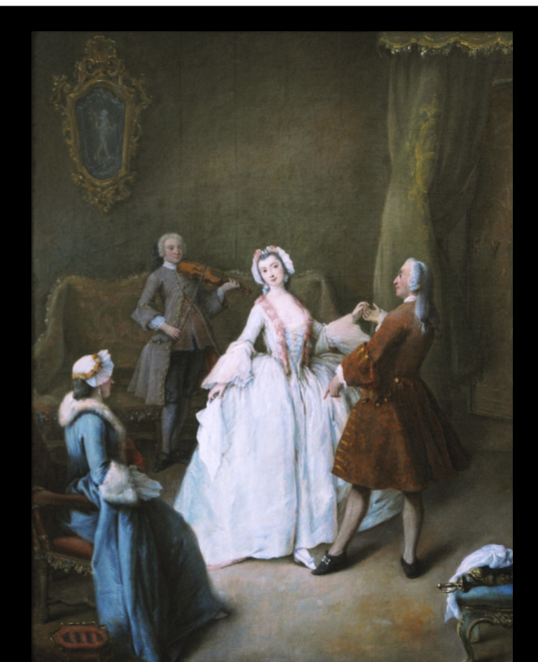
Longhi, The Dance Lesson,1740. being shown a private world of a family, pretty causal posing. family picture but not a portrait of elites. we don’t know exactly where we are but we are in a very nice home. less about display of wealth and status but just recording aspects of their life
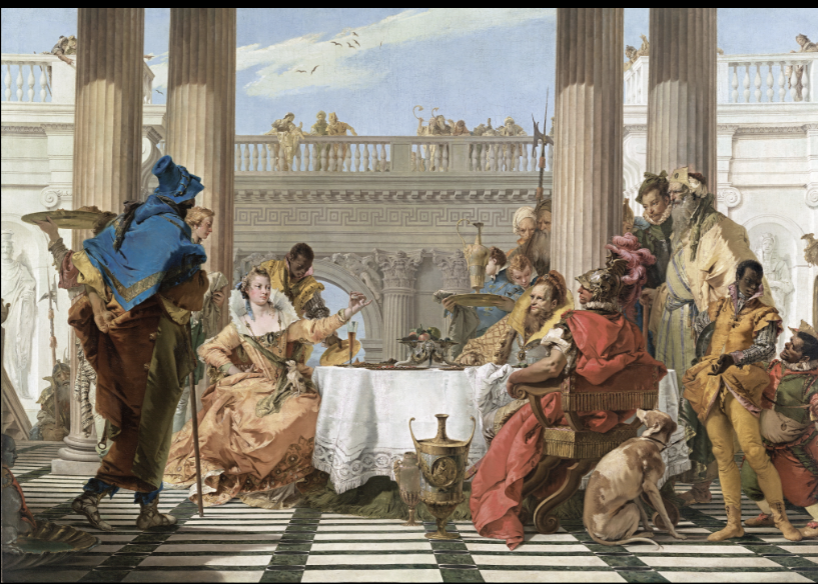
Tiepolo, Banquet of Cleopatra, 1745. tiepolo worked primarily for the venetians, compare to canaletto who painted for grand tourists. known for his fresco palace ceilings that celebrate marriages and became internationally famous. most famous artist in venice because he represents the theatricalness and decedance of venice. looks like veronese. cleopatra in the middle, everyday details on the side. other side has great display of important silver and gold plates items to show off wealth on display. idea of dining with cleopatra is popular 18th cent subject matter. lots of expressions of wealth. on the table is evidence of 18th cent dining practices like silver platter with fruit. member of a wealthy family is covering their palace ballroom ceilings with images of this, showing that famously private venetians who rarely invite people into their homes except for marriages or births, shows that there is a more social feeling now. you dance and socialize in a ballroom. grandiose statement about your place in the world. all of this tells us that there is a ton of wealth in venice.