The Psychodynamic approach
 Call Kai
 Learn
Learn Practice Test
 Spaced Repetition
 Match
Match Flashcards
 Knowt Play
1/9

There's no tags or description
Looks like no tags are added yet.
Name | Mastery | Learn | Test | Matching | Spaced | Call with Kai |
|---|
No analytics yet
Send a link to your students to track their progress
10 Terms
What does the psychodynamic approach suggest
The psychodynamic approach describes any theory that emphasises change and development in the individual. It is used to describe theories where drive is a central concept in this development
What is the unconscious
The part of the mind which we are unaware of but which directs much of our behaviour
What did Freud believe about the unconscious
Freud believed that most of our everyday actions and behaviours are not controlled consciously
are the product of the unconscious mind
only reveals itself in slips of the tongue "Freudian slips" in creativity and in neurotic symptoms
What are the structures of personality
Freud divided the brain into 3 sub-sections
Id = entirely unconscious, the Id is made up of selfish aggressive instincts that demand immediate gratification
Ego = the "reality check" that balances the conflicting demands of the Id and the superego
Superego = the moralistic part of our personality which represents the ideal self - how we ought to be
What are defence mechanisms
Unconscious strategies that the Ego uses to manage the conflict between the Id and the superego
Why are defence mechanisms important
If an individual is faced with a situation they are unable to deal with rationally
Defence mechanisms are triggered
They tend to operate unconsciously and work by distorting reality
Which means anxiety is controlled
Examples
Repression = the unconscious blocking of unacceptable thoughts or impulses
Denial = the refusal to accept reality so tend to avoid having to deal with any painful feelings
Displacement = the redirecting of thoughts or feelings where the person feels unable to express them in the presence of the person
What did Freud believe about the psychosexual stages
Freud believed that personality developed through a sequence of 5 psychosexual stages
These stages emphasise the most important driving force in development as the need to express sexual energy
What are the Psychosexual stages
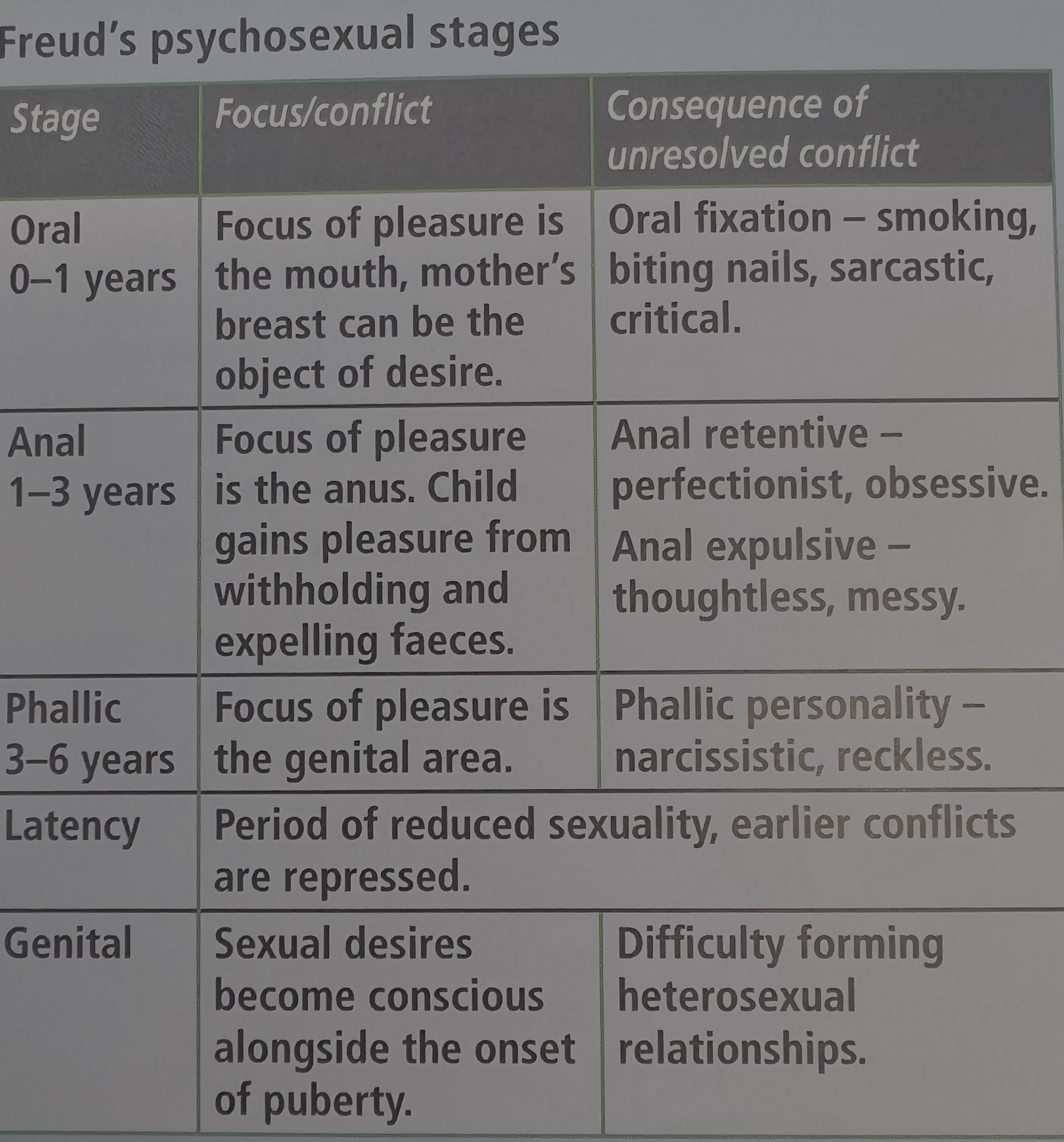
What are some strengths of the psychodynamic approach
A pioneering approach to understanding human behaviour
The development of psychoanalysis as an explanation of human behaviour represented a dramatic shift in psychological thinking.
new methodological procedures for gathering evidence (case studies)
based on observations of behaviour
examining one’s own conscious thoughts and feelings
Freud and his followers demonstrated potential of psychological rather than biological treatments
disorders such as depression and anxiety
successful treatments
de Maat et al.’s (2009) large-scale review of psychotherapy studies
psychoanalysis produced significant improvements in symptoms
improvements maintained in years after treatment
Scientific support for the psychoanalytic approach
Critics of psychoanalysis often claim there is no scientific evidence for psychoanalysis and that its claims are not testable or falsifiable.
many claims tested and confirmed using scientific methodology
Fisher and Greenberg (1996) summarised 2,500 studies
experimental studies compare well with studies relevant to any other major area of psychology
support for unconscious motivation in human behaviour
defence mechanisms: repression, denial and displacement
scientific credibility to psychoanalytic explanations of human behaviour
Psychoanalysis: a comprehensive theory
One of the main strengths of psychoanalysis is the comprehensive nature of the theory.
therapeutic applications
explains many aspects of human behaviour outside psychology
form of literary criticism
Shakespeare’s Hamlet
repressed messages hidden beneath surface of text
aspects of Hamlet’s psyche = projection of Shakespeare’s own mind
interpret works using psychoanalytic concepts
delve into mind of author or fictional character
enrich understanding of psychological state
What are some limitations of the psychodynamic approach
Psychoanalysis is a gender-biased approach
Freud’s views of women and female sexuality were less well developed than his views on male sexuality.
theories focused on sexual development
Freud ignorant of female sexuality and how it may differ from male sexuality
Karen Horney criticised Freud’s work
criticised views on women and development
dismissing women and their sexuality problematic
Freud treated many female patients
theories still influential today
Psychoanalysis is a culture-biased approach
Sue and Sue (2008) argue that psychoanalysis has little relevance for people from non-Western cultures.
mental illnesses = traumatic memories locked in the unconscious
therapy frees memories through supportive therapeutic environment
many cultural groups do not value insight in the same way Western cultures do
China example: depressed or anxious person avoids distressing thoughts rather than discussing them openly
contrasts with Western belief that open discussion and insight are always helpful in therapy