Ecology Ch.13
 Call Kai
 Learn
Learn Practice Test
 Spaced Repetition
 Match
Match Flashcards
 Knowt Play
1/11

There's no tags or description
Looks like no tags are added yet.
Name | Mastery | Learn | Test | Matching | Spaced | Call with Kai |
|---|
No analytics yet
Send a link to your students to track their progress
12 Terms
What is a parasite?
Organisms that feed on but (typically) don’t kill host
Often directly remove nutrients from hosts, but not necessarily biomass
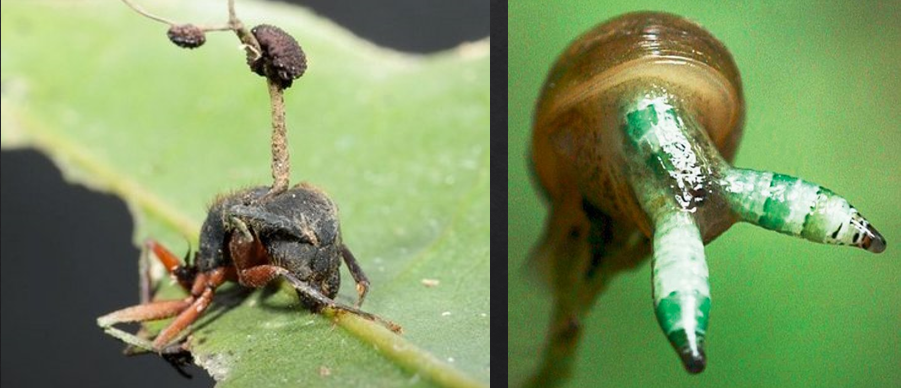
What is endoparasitism and its advantages?
Endoparasitism is feeding on the inside of the host
advantages: ease of feeding, protected from external environment, safer from natural enemies
disadvantages: vulnerable to host immune system, harder dispersal
What is ectoparasitism?
Feeding on the outside of the host
advantages: ease of dispersal, safe from the immune system
disadvantages: feeding is more difficult, exposure to the external environment, vulnerability to natural enemies
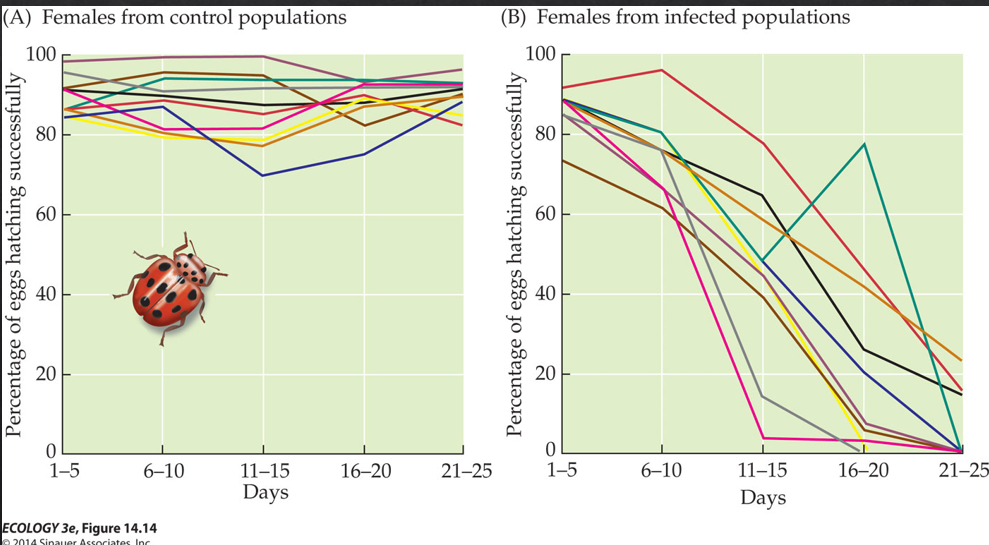
How do parasites affect host reproduction?
Infect populations have lower chance of successful eggs because of fewer resources
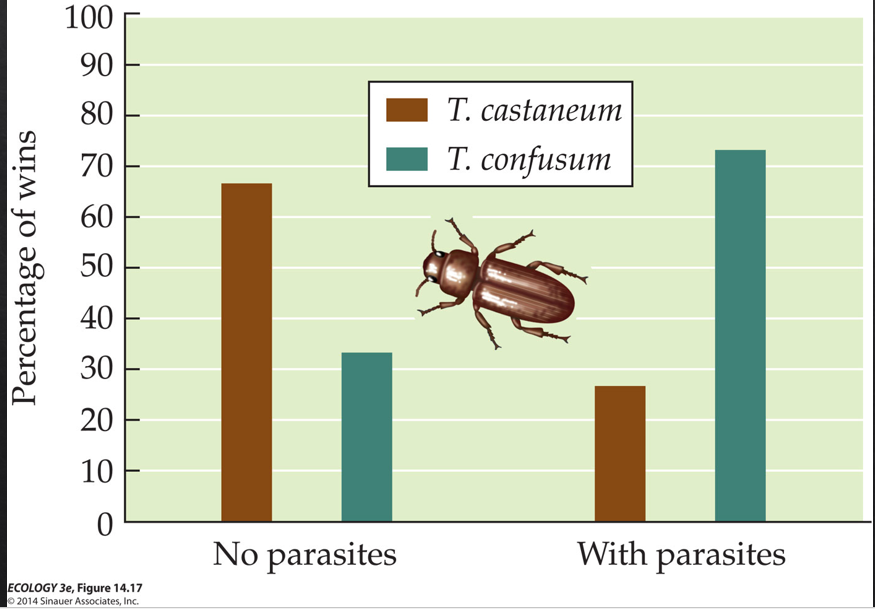
How do parasites affect the outcome of competition?
How do parasites affect distribution of species?
Parasites can limit distribution. Fungus completely eradicated the American chestnut trees
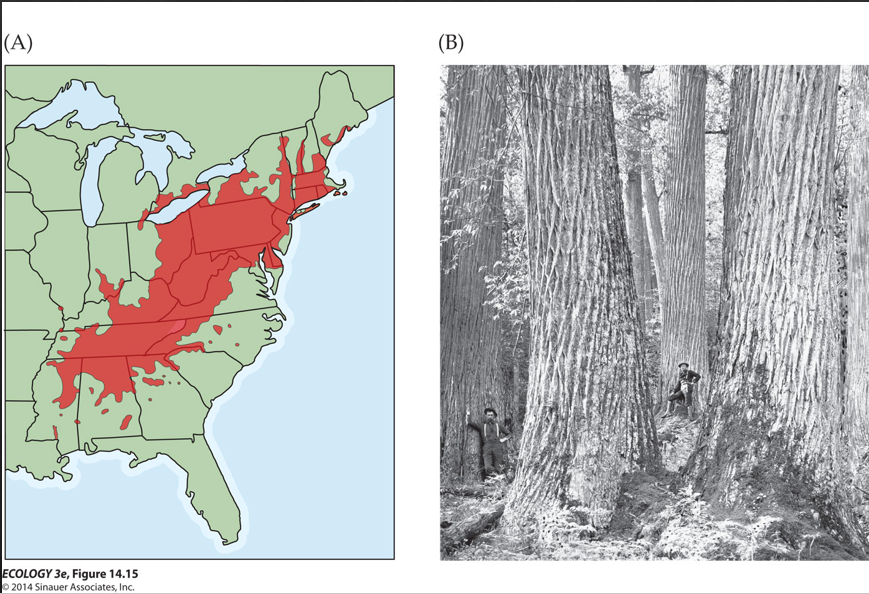
Describe parasite host coevolution
Parasite modify host life cycle/ behavior to increase the chances of them completeing their life cycle
Hosts can evolve resistance —> Parasite evolves work around —> Red Queen Hypothesis
coevolution
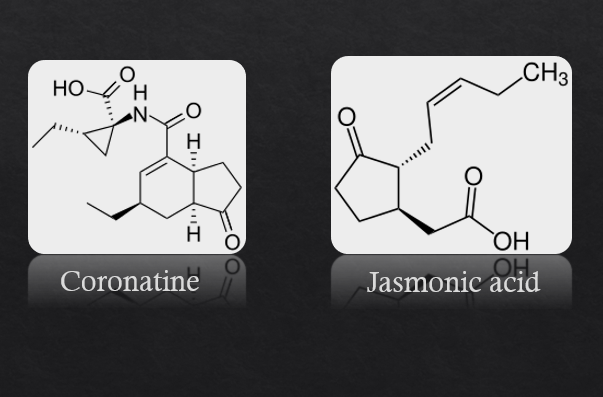
Example:mimicing host antigens. Parasite, Psuedomonas syringae produces coronatine. Coroatine mimic the plant hormoen jasmonic acid and suppresses the plant immune response.
What are examples of parasites causing coevolution?
Example 1 : mimicking host antigens. Parasite, Psuedomonas syringae produces coronatine. Coroatine mimic the plant hormoen jasmonic acid and suppresses the plant immune response.
Example 2: European Rabbits and Myxoma virus. Myxoma virus was introduced to reduce populations of invase rabbit, but the virus became less lethal over time.
Example 3 : Parasites better able to affect hosts they are familiar with compared to new hosts
Example 4: parasites infect common host genotypes more easily than rare genotypes
what are the ecological effects of parasites?
Parasites can alter physical environments
Corophium is an ecosystem engineer in mudflat- burrows to prevent erosion
Trematodes can drive Corophium to extinction increased erosion)

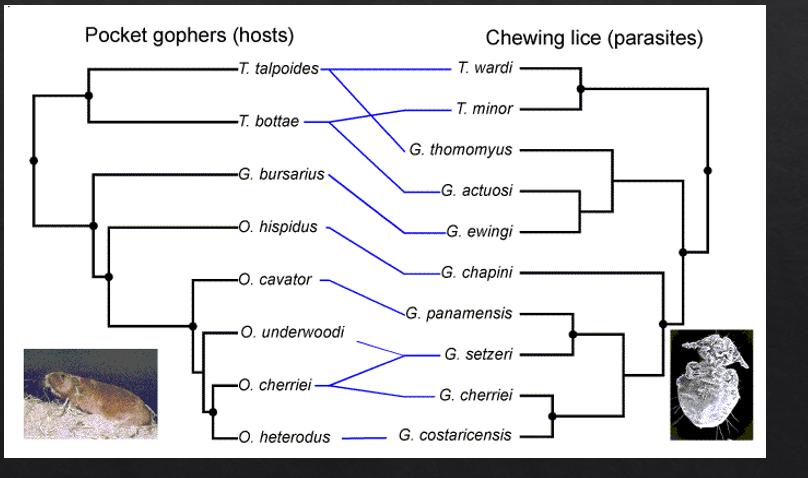
Parasites that are associated with their hosts over evolutionary times co-speciate(have similar phylogenies)
Describe the dynamics and spread of disease
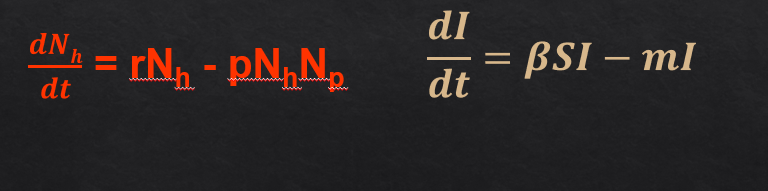
pNh = encounter rate
Np= percentage of successful predation
rNh= population growth
B= transmission coefficient
S= susceptible
I= infected
m=death
What are parasitoids?
Feed on the host throughout their life cycle, which usually kills their host.
Parasitoids are exclusively insects.
Wasps lay eggs in host and larva consume the still living host to pupate and emerge