Lecture 1 - Lifespan perspective and socioemotional processing in older age
 Call Kai
 Learn
Learn Practice Test
 Spaced Repetition
 Match
Match Flashcards
 Knowt Play
1/43

There's no tags or description
Looks like no tags are added yet.
Name | Mastery | Learn | Test | Matching | Spaced | Call with Kai |
|---|
No analytics yet
Send a link to your students to track their progress
44 Terms
perceptions vs reality (why study aging)
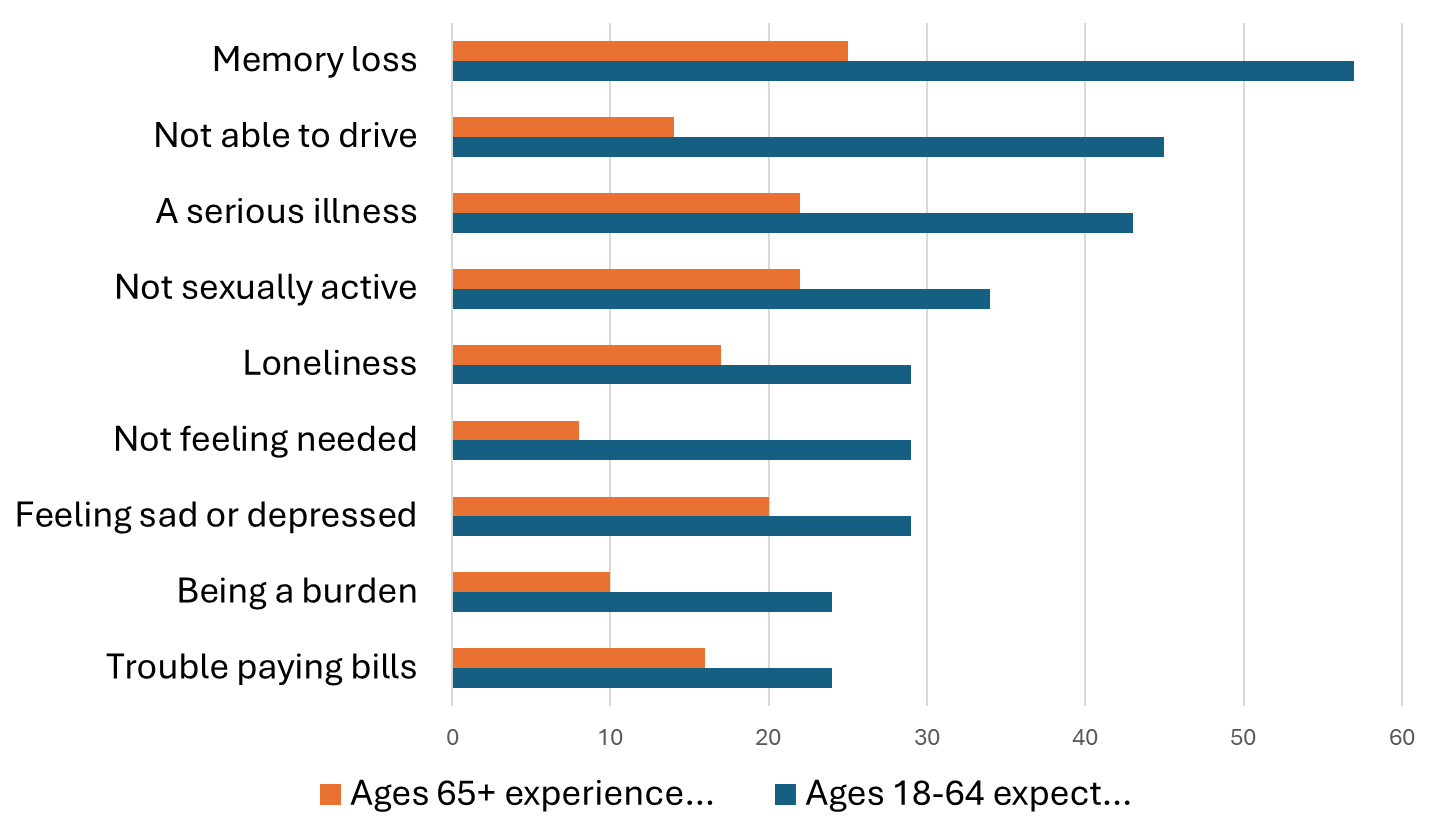
-perceptions of aging tend to be negative → based on fear and reality is often very different
-ask people before and after retirement what they expect to see in later life
-those before retirement rate all variables as more negative than those after retirement
-65+ find their experience is very different from expectation
expectations (why study aging)
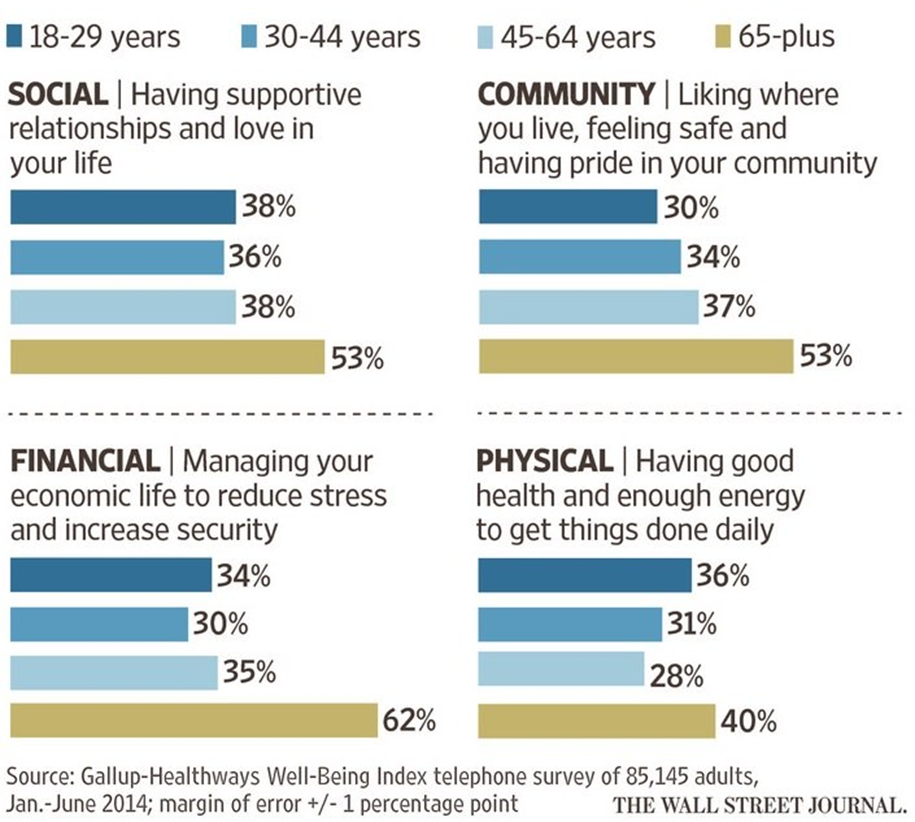
-oldest group responds most positively on variables of social, community, financial and physical factors
-financial → retirement, stability, predictability, less pressure
-physical health → closer to other demographics but still not a concern
-show stereotypes different from reality
stereotype threat (perceptions)
-people perform worse on task because they’re worried about confirming a negative stereotype about a group they belong to
-not about ability, is about pressure → concern leads to being distracted from task and so perform poorly, making stereotypes appear true
impact of stereotypes (perceptions)
-healthcare professionals may treat older people worse
-ageism in professional life
-technology and points of contact with nodes of learning pass older people by so gaps in ability have a steeper slope
Lamont (impact of stereotypes)
-gave older adults memory task
neutral condition → told try your best
stereotype threat condition → widely assumed that intellectual performance declines with age
-found performance was substantially worse in stereotype threat condition → d = .52
-shows negative stereotypes directly effect people’s performance
baltimore longitudinal study of aging (BLSA)
-longest continuously running study of human aging
-follows thousands of healthy volunteers over their lifetimes to understand how people age normally
-many different measures, family history, economic, etc.,
(BLSA) attitudes towards old people survey
-scored between 0-16
-sense of how positive view is towards older people
cardiovascular events (BLSA attitudes towards old people survey)
-looked at cardiovascular events
-participants in two groups:
positive views of aging → 80% did not have heart problems, associated with better aging outcomes
negative views of aging → 2/3 had heart attacks
-could be that imagined destination and took steps to ensure this happens
-controlled for many variables
brain structure (BLSA attitudes towards old people survey)
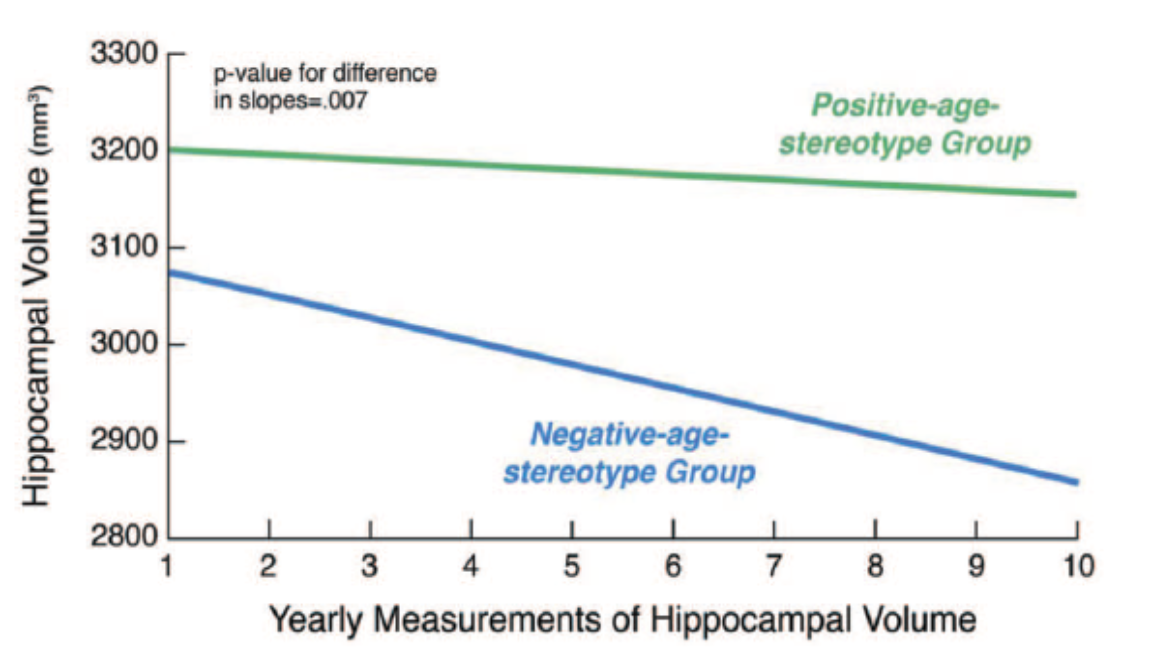
-measured volume of hippocampus over time → associated with memory
-in normal aging the volume decreases as get older
-those in negative age-stereotype group had a much steeper decline of hippocampus volume
aging world (reasons for studying aging)
-1950s people tend to retire then die, smaller older population
-2020s much wider spread of people in 90s and late 80s range
-in 2050s there will be fewer young people and more people in their 60s age range
-people living longer and proportionally more people → better healthcare and declining birth rates
psychology of aging in context
-broken up into social-emotional, cognitive and biological/physical
-these domains interact but tend to be separated when studying them
-complex to figure out the interaction between them, especially when looking at how they change over the lifetime
lifespan perspective
-development is a change that lasts a lifetime
-ontogenesis → development of an individual organism over its lifetime, from conception, through growth and maturity and eventually through aging
two phases (lifespan perspective)
early phase → childhood and adolescence, rapid age-related increases in size and abilities
later phase → young adulthood and upwards, changes in size are slow, abilities continue to develop as people continue adapting to the environment
Baltes (lifespan perspective)
-dynamic interactions among growth, maintenance and loss regulation
focus on abilities essential for functioning
optimize behaviour by focussing on more limited set of abilities
learn to compensate for declines by designing workaround strategies
theoretical propositions of lifespan perspective
development as a life-long process
multidirectionality
development as gains/loss
plasticity
historical context
contextualism
multidisciplinarity
lifelong process (lifespan perspective)
-no age period holds supremacy in regulating the nature of development
-at all ages of the lifespan, both continuous and discontinuous processes are at work during development
multidirectionality (lifespan perspective)
-even within a single domain of human experience, development can involve changes in different directions
-even within the same developmental period, some systems of behaviour show increases in functioning, while others show decreases and at different rates
information (example of multidirectionality)
-mechanics → basic information processing, content-poor, universal and biological, genetically predisposed
increases in early development but decreases and drops off with age
-acquired knowledge → content-rich, culture dependent, experience-based
increases rapidly during early development and remains stable throughout lifespan
-shows different aspects of memory develop in different ways
gains/losses (lifespan perspective)
-used to be thought that aging was simply an ongoing process of losses
-more accurate to think of development in terms of both gains and losses
-specifically think about the ratio of gains to losses
plasticity (lifespan perspective)
-how far an ability can be modified
-see a lot of within-individual plasticity in psychological development
-plasticity depends on life conditions and experiences
nun study (example of plasticity)
-researched convent → lots of women doing very similar things from similar background over a long period of time
-so active and homogenous lifestyle → minimising lifestyle factors
-showed the importance of early education and childhood for risk of diseases later in life
historical context (lifespan perspective)
-ontogenetic development varies with historical-cultural contexts
-development is influenced by the sociocultural conditions in a given historical period, and how these conditions change over time
analysing historical context (lifespan perspective)
-confounding factors studying 70 year olds vs 50 vs 20 year olds as people born in 1956 born in a very different culture to people born in 2006
-such as healthcare and education
-trying to study age of different groups have to factor in these cohort effects → studying different ages but also people who grew up in very different environments
contextualism (lifespan perspective)
-individual development is shaped by a complex interaction between three categories of influence:
age-graded
history-graded
non-normative
age-graded factors (contextualism)
-predictable and universal for most people at a particular age
-major time-marked events that are often ritualized → can be biological, psychological or sociocultural
history-graded factors (contextualism)
-factors that affect a large group of people at the same time
-because experience the same historical or social event
-can be biological, psychological or sociocultural → give generation its unique identity
non-normative factors (contextualism)
-unique or atypical events that affect one individual’s development
multidisciplinarity (lifespan perspective)
-psychologists study aging using a particular perspective using particular research tools
-these shape the view that we form, the questions we ask and the experiences we focus on
-however, a ‘purist’ psychological view has an incomplete picture of behavioural development from conception to death
interdisciplinary context (multidisciplinarity)
-human development illuminates and informs anthropology, biology, sociology, economics and policy
-need to balance integration of knowledge and separatist differentiation of disciplinary knowledge bases
changes in social networks with age
-social networks sizes tend to decrease with age
-social pruning begins in 30s-40s
-older people tend to show a preference for familiar and emotionally close partners
value of positive social networks with age
-better cognitive functioning
-reduced signs of dementia
-better recovery from stroke
-lower risk of morbidity and mortality
quality of social relationships
-older adults:
experience higher levels of positive emotions and less intense negative emotions when interacting with friends and family
derive greater support from their close relationships
report greater satisfaction and fewer negative interactions with members of their social network
aging paradox
-despite declines in physical and cognitive health, older adults often report positive relationships and well-being
-expectation that aging is a decline is challenged by older people’s self-report of their experiences
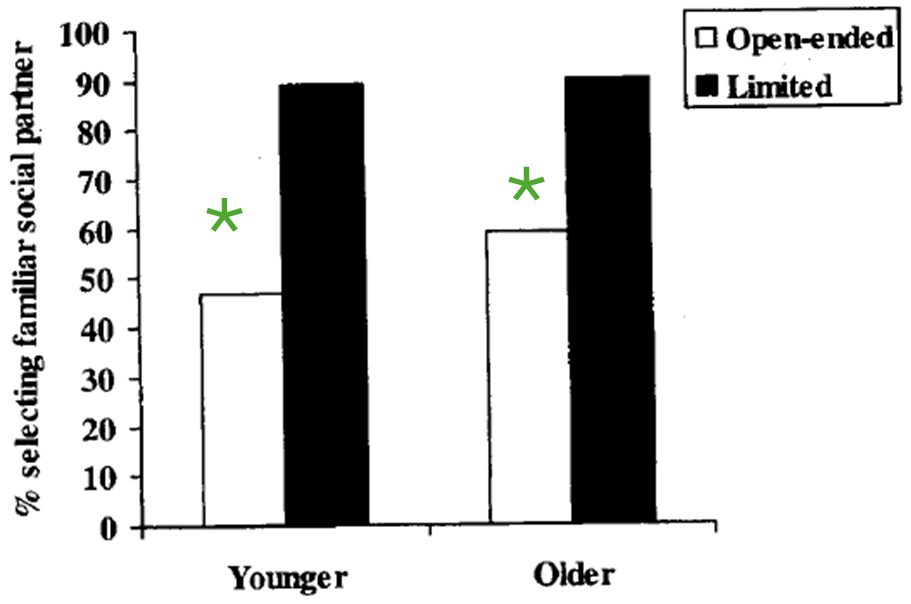
Fung - method (aging paradox)
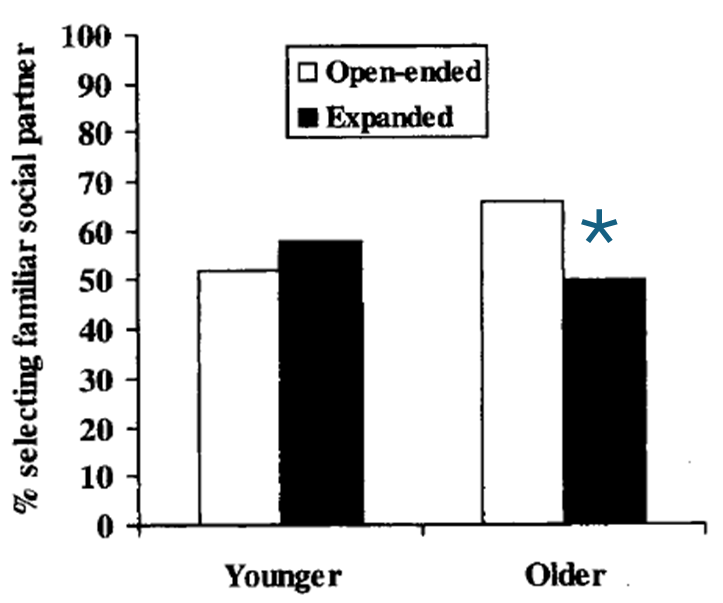
-asked participants three questions, who would you rather spend time with: close friend/family, acquaintance, celebrity:
have half an hour of free time with no pressing commitment
new medical breakthrough that means have extra 20 healthy years
going to emigrate to another country with no friends or family in two weeks
Fung - result (aging paradox)
-when their time horizons were expanded, older adults shift their typical preference for familiar social partners
-whereas limited time horizons shifted both age groups towards preferring familiar social partners → want to spend time with people know and like
-if have more time younger people will focus on building new relationships
socioemotional selectivity theory
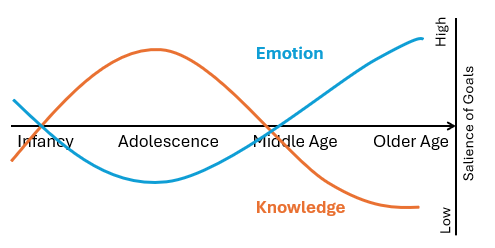
-in life we have different motivations and these motivations become more or less important during different parts of life
-during adolescence and adulthood → knowledge goals
-when older these become less important and focus more on emotional satisfaction
kolarz - method (socioemotional selectivity theory)
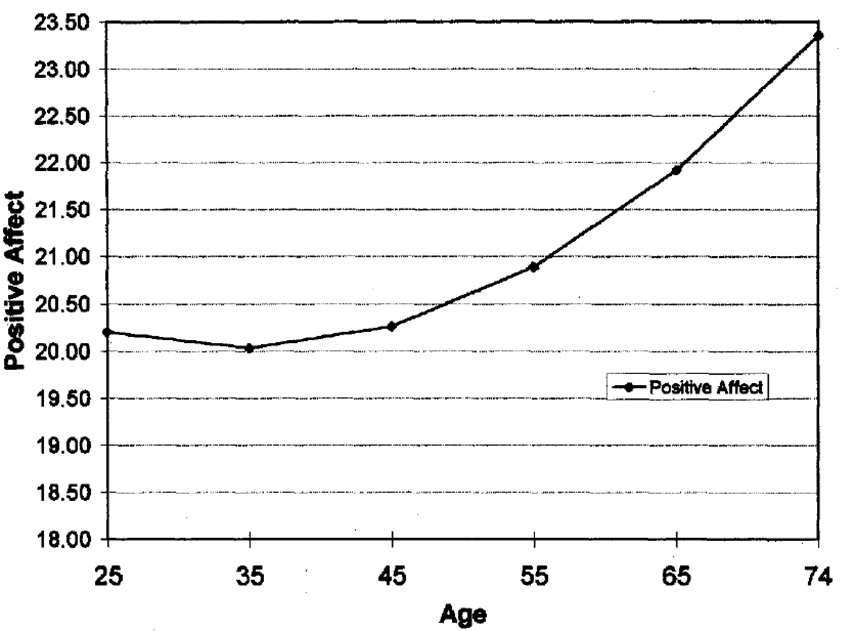
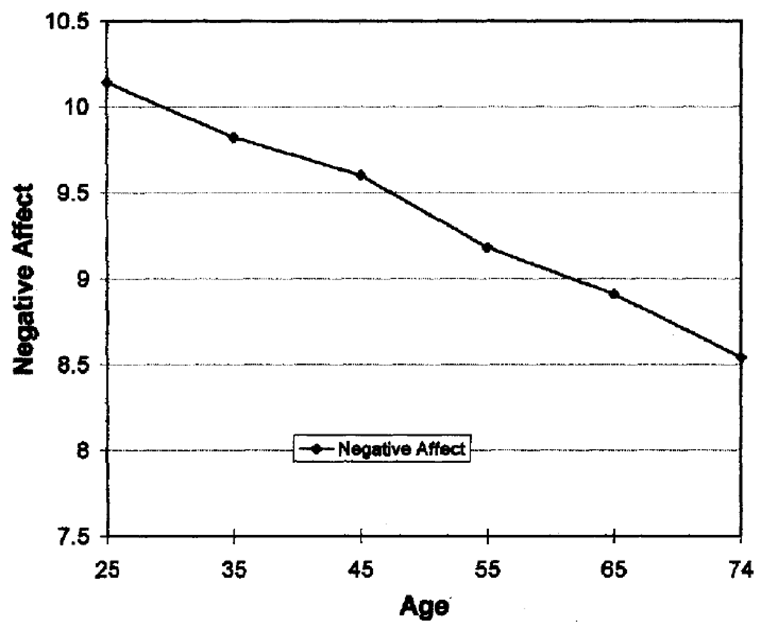
-emotion questionnaire
-repeated sampling of people over time and asking how they felt at different points in their life
kolarz - results (socioemotional selectivity theory)
-as we grow older:
positive affect tends to increase
negative affect tends to decrease
mather - method (socioemotional selectivity theory)
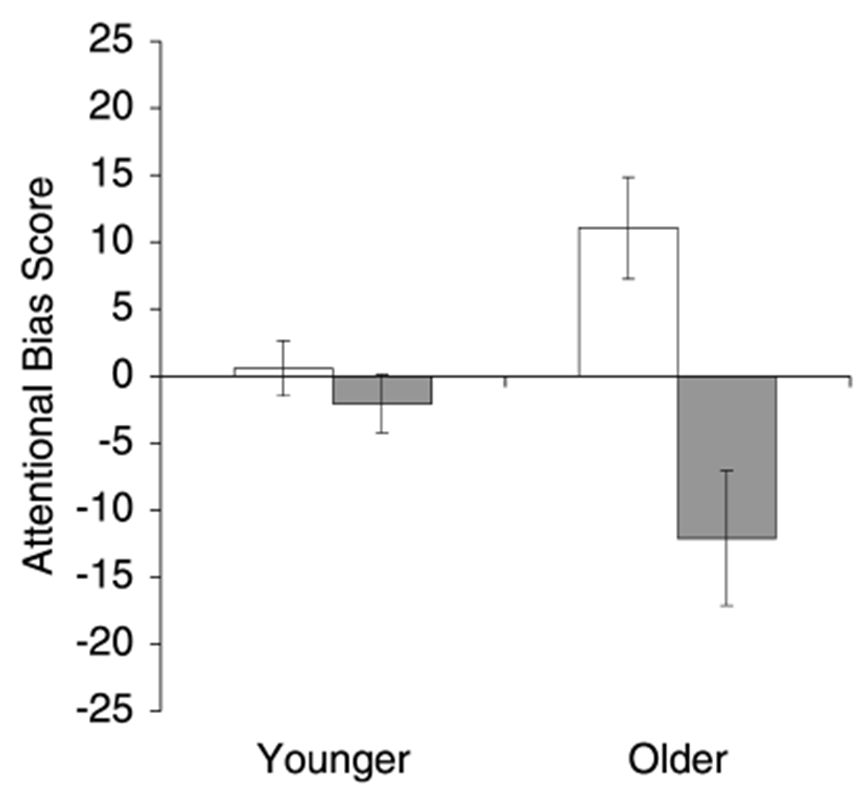
-dot-probe-task
-dot appears on left or right → need to press left or right key quickly in response
-showed neutral or happy or sad faces but should be ignored and only press keys for dot
-idea is that someone who doesn’t like negativity will look away from sad face and will be slower to respond if dot appears behind sad face and vice versa
mather - results (socioemotional selectivity theory)
-no difference in younger people
-older people faster to attend to positive stimuli
-older people slower to react to negative stimuli
-older people tend to remember positive images better compared to neutral and negative images
-shows older people have a positivity bias
emotional regulation (socioemotional sensitivity theory)
-older people experience a limited time horizon - shifts priorities towards emotional goals
-leads to fewer negative social experiences
-better emotional regulation in older age
Luong - method (emotional regulation)
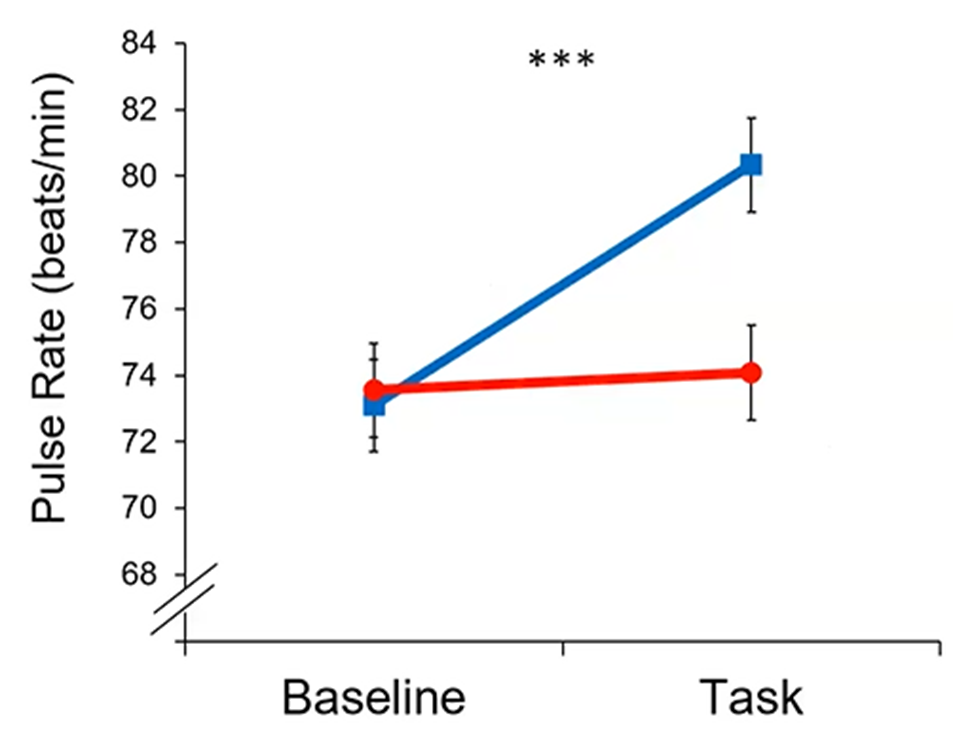
-older and younger people
-told to have conversation with confederate about a tricky moral decision
-confederate told to disagree with them
-measured mood
Luong - results (emotional regulation)
-older adults:
appraised the task and confederate more positively, reported less negative affect
younger people had higher heart rate in negative condition
endorsed goals to perform well on the problem-solving task
less likely to endorse goals to change their partner’s opinions
research on emotional regulation
-older adults:
less negatively reactive to daily stressors than younger adults
decision avoidant strategies for interpersonal conflict
less willing to take social risks