Drama IGCSE - Dramatic and Theatrical Terms
 Call Kai
 Learn
Learn Practice Test
 Spaced Repetition
 Match
Match Flashcards
 Knowt Play
1/51

There's no tags or description
Looks like no tags are added yet.
Name | Mastery | Learn | Test | Matching | Spaced | Call with Kai |
|---|
No analytics yet
Send a link to your students to track their progress
52 Terms
Pitch
The highness or lowness of a sound
Pace
The rate and pace at which words are spoken
Pause
Where sounds stop. How often? For how long?
Tone
The feelings and emotions in the voice
Volume
How loudly/softly words are spoken
Intonation
The rise and fall of the voice
Emphasis
Choosing to stress particular meaning
Posture
Stance, a particular position of the body
Facial expressions
Using the face to show mood, emotion and feelings
Gesture
A body movement to express an idea, feeling or mood
Eye contact
Establish eye contact with another actor or the audience
Energy
How you move, the amount of force, the mood expressed through the body
Proxemics
How far or close an actor is to another actor → communicate relationship between characters
Status
The power dynamics between two characters → dominant characters have a higher status to a more submissive character with a lower status
Inflection
The rise and fall of the voice
Articulation
The clarity of speech
Language
The way the character speaks including: accent, idiom, dialect, vocabulary or phrasing → suggests class, profession, culture or personality
Direction
Where you are going: forwards, backwards, diagonal, sideways
Antagonist
A principal role, opposed to that of the protagonist or hero
Protagonist
The main character or hero in a play
Levels
Height or positioning of a character compared to the other characters → can be used to portray status
Tableau
A frozen image of the scene as if the picture was paused.
Props
Furnishings, set dressings, and all items large and small which cannot be classified as scenery, electrics or wardrobe
Satire
A play in which irony, exaggerated characters and ridicule are used to expose or attack such aspects of society as foolishness, social snobbery or hypocrisy.
Soliloquy
A speech in which an actor speaks the inner thoughts of character aloud for audience to share → actor is usually alone on stage during it → not to be confused with a monologue.
Symbolism
The use of symbolic language, imagery, set design or colour to evoke emotions or communicate ideas.
Suspense
Tempo
The speed at which the action on stage proceeds.
Dynamics
Variations of level in energy (Voice, body language etc) → used to accentuate status.
Vocal projection
Directing the voice out of the body to be heard clearly at a distance.
Improvisation
The spontaneous and imaginative use of movement and speech to create a character or object in a particular situation and develop the scene.
Stage presence
The level of confidence, commitment and energy an actor appears to have on stage → ability of actor to hold the attention of the audience
Irony
An implied discrepancy between what is said and what is meant.
Types of irony:
Verbal irony
Dramatic irony
Situational irony
Proleptic irony
Blocking
used to describe the path traced by an actor’s movement on stage, including entrances and exits → usually determined by the director with assistance from the actor
Mirroring
Copying the movement and/or expression or look of someone else exactly.
Mood
The atmosphere or feeling of a performance, often created by the music, setting or lighting.
Transition
Movement, passage or change from one act, scene, section, position, state, concept, etc.
Fourth wall
illusion of an invisible wall of a set through which audience sees the action of the play → breaking the fourth wall refers to the moment when an actor directly addresses the audience through fourth wall → breaking the illusion.
Subtext
What a character is really thinking or feeling when they say particular words → linked to motivation.
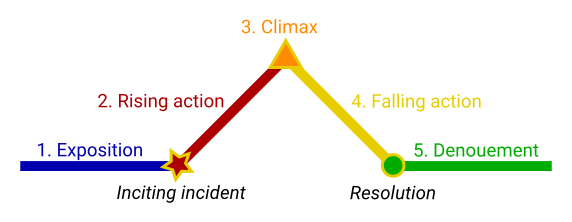
Dénouement
moment in a play when the essential plot point is unravelled or explained → tensions that have driven the drama are resolved.
Exposition
The part of a play that introduces the theme, main characters and current situation in the story.
Contrast
Dynamic use of opposites or significant differences to create dramatic effect.
Conflict
The internal or external struggle between opposing forces, ideas, or interests that creates dramatic tension.
Promenade
A staging genre in which the audience moves around the performance space(s) in response to the action
Tension
atmosphere created by unresolved situations that human feel compelled to address.
Types of Tension
Tension of Task
Tension of Relationship
Tension of Surprise (Unexpected and Expected)
Tension of Mystery
Pause
A short period of silence or stillness in a performance when the drama is communicated nonverbally
Rhythm
In performing, rhythm is the tempo, pace or regular pattern of the work → can reflect emotional state of a character or group of characters, or the atmosphere of scene.
Exposition
The part of a play that introduces the theme, main characters and current situation in the story
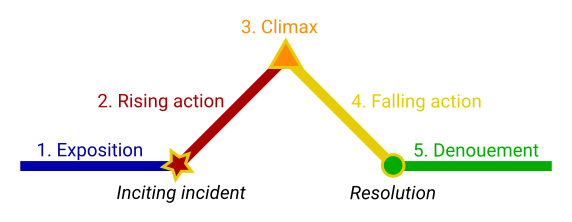
Rising Action
A series of plot relevant incidences that create suspense, interest and tension
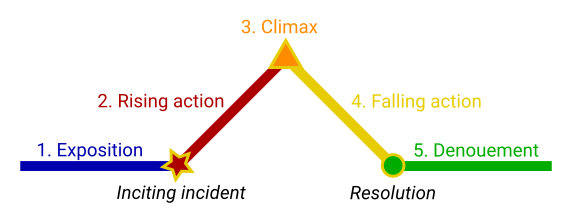
Turning point
The climax; the highest point of the story where the events can go either way (the highest point of tension)
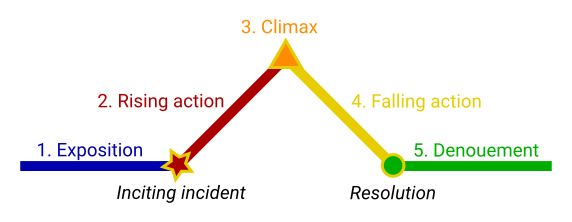
Falling action
Parts of the plot which happens after the climax.
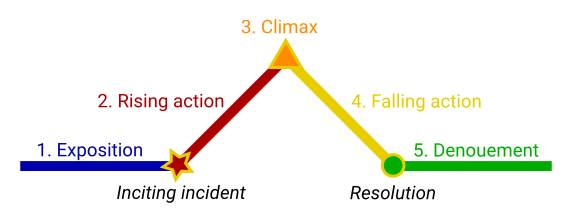
Resolution
How the problem or conflict in a drama is solved or concluded