COMPTIA A+ Chapter 6: Motherboards
0.0(0)
Studied by 3 people Call Kai
 Learn
Learn Practice Test
 Spaced Repetition
 Match
Match Flashcards
 Knowt Play
Card Sorting
1/39

Earn XP
Description and Tags
Last updated 11:46 PM on 12/22/22
Name | Mastery | Learn | Test | Matching | Spaced | Call with Kai | Chat |
|---|
No analytics yet
Send a link to your students to track their progress
40 Terms
1
New cards
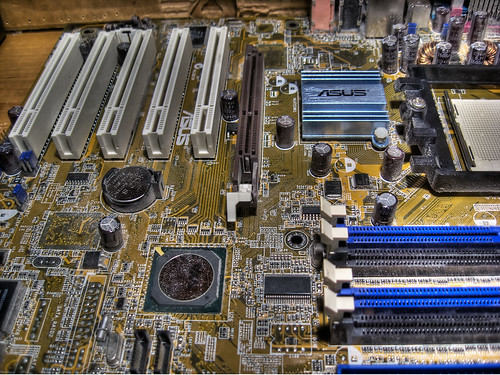
A printed circuit board (PCB) containing the principal components of a computer or other device, with connectors into which other circuit boards can be slotted. Sometimes called a Logic Board
motherboard
2
New cards
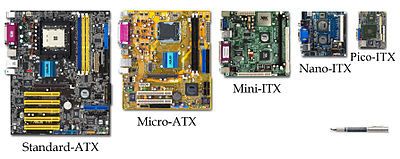
Standard for the physical organization of motherboard components and motherboard size. Most common are ATX, microATX, and Mini-ITX
Form Factor
3
New cards
Electronic chips, specially designed to work together, that handle all of the low-level functions of a PC
chipset
4
New cards
Model name of the second-generation, 80286-based IBM computer
Many aspects of this motherboard form factor, such as the BIOS, CMOS, and expansion bus, have become de facto standards in the PC industry.
Most common motherboard form factors are derived from this form factor
Many aspects of this motherboard form factor, such as the BIOS, CMOS, and expansion bus, have become de facto standards in the PC industry.
Most common motherboard form factors are derived from this form factor
AT (Advanced Technology)
5
New cards
The most common form factor for PC systems presently in use, originally introduced by Intel in 1995. These motherboards and cases make better use of space and resources than did the earlier AT form factor.
ATX (Advanced Technology Extended)
6
New cards
Connection between computer and external devices, mouse, printers
external ports
7
New cards
Connection on motherboard to power CPU fan and monitor speed
CPU fan power
8
New cards
The standard analog video port on computers manufactured before 2009
AGP (Accelerated Graphics Port)
9
New cards
An expansion card standard. It has largely been replaced by PCIe but is still used in some systems today.
An expansion card standard. It has largely been replaced by PCIe but is still used in some systems today
10
New cards
A type of motherboard memory that allows updates by disk or by downloading Internet files.
Flash BIOS
11
New cards
The battery on the motherboard used to power the CMOS chip when the computer is unplugged
CMOS battery
12
New cards
A group of wires running from the front of the computer case to the motherboard
Front Panel Connectors
13
New cards
A switch that is connected to the motherboard that allows you to configure the electric circuits located on the board.
DIP Switches
14
New cards
A term that signifies two IDE connectors (four devices) and support of the ATAPI standard.
EIDE (Enhanced Integrated Drive Electronics)
15
New cards
Motherboard form factor designed to work in standard ATX cases but with a smaller footprint
microATX
16
New cards
A family of motherboard form factors used in smaller systems, such as the home theater PC. Lower-power usage design.
ITX
17
New cards
A form factor designed to minimize the volume of a desktop computer
SFF (Small Form Factor)
18
New cards
The largest and the most popular of the three ITX form factors. At a miniscule 6.7 by 6.7 inches, Mini-ITX competes with microATX and proprietary small form factor (SFF) motherboards.
Mini-ITX
19
New cards
A 4.7 inch by 4.7 inch variation of the ITX form factor.
Nano-ITX
20
New cards
Smaller than Nano, this motherboard form factor has no expansion slots and is about the size of a deck of cards.
Pico-ITX
21
New cards
Form factors that are made specifically by companies and are not the same as the other boards on the market
Proprietary Form Factors
22
New cards
A card that plugs into a motherboard and allows for expansion cards to be mounted parallel to the motherboard. Expansion cards are plugged into slots on this card.
Riser Card
23
New cards
Chip specially designed to control low-speed, legacy devices such as the keyboard, mouse, and serial and parallel ports.
Super I/O Chip
24
New cards
Method for creating a fault-tolerant storage system. Uses multiple hard drives in various configurations to offer differing levels of speed/data redundancy.
RAID (Redundant Array of Independent or \n Inexpensive Disks)
25
New cards
RAID: Stores duplicate data on a second drive. Slow, but has data redundancy.
Mirroring (RAID)
26
New cards
RAID: Writes data across multiple drives. Fast, but no data redundancy.
Striping (RAID)
27
New cards
An early enhancement for PCI primarily used on servers. Most systems use PCIe instead. PCIe and PCI-X are sometimes confused, but there are significant differences between the two.
PCI-X (peripheral component interconnect extended)
28
New cards
Set of wires going to the CPU, governed by the expansion bus crystal, directly connected to expansion slots of varying types (PCI, AGP, PCIe, etc.)
Expansion Bus
29
New cards
Specialized form of PCI designed for use in laptops.
Mini-PCI
30
New cards
Serialized successor to PCI and AGP that uses the concept of individual data paths called lanes. May use any number of lanes, although a single lane (x1) and 16 lanes (x16) are the most common on motherboards.
PCIe (PCI Express)
31
New cards
The speed with which data, instructions, and information transfer to and from a device.
Transfer Rate
32
New cards
Set of rules that govern how a computer translates characters, numbers, and symbols into data the computer can actually work with
Encoding Scheme
33
New cards
Four Steps for Installing Expansion Cards
Knowledge, Physical Installation, Device Drivers, and Verification
34
New cards
Microsoft's rigorous testing program for hardware manufacturers, which hardware devices must pass before their drivers can be digitally signed
Windows Hardware Certification Program
35
New cards
Driver that has not gone through the Windows Certification Program to ensure compatibility.
unsigned driver
36
New cards
An option in Windows that allows you to restore a previously used driver after a driver has been upgraded. This option provides an easy mechanism for restoring a driver if the upgraded driver does not work properly.
Driver Rollback
37
New cards
Add Hardware Wizard in Vista/7/8/8.1
hdwwiz.exe
38
New cards
Mounts for screwing a motherboard to a case.
Mounts for screwing a motherboard to a case
39
New cards
Wires etched on to the motherboard to provide electrical pathways
Traces
40
New cards
A single board composed of nonconductive material with copper traces etched onto it and coated with epoxy for strength. Modern motherboards are composed of multiple layers of these boards.
PCB (Printed Circuit Board)