AOS 2 unit 16E Malfunctions in homeostasis
 Call Kai
 Learn
Learn Practice Test
 Spaced Repetition
 Match
Match Flashcards
 Knowt Play
1/19

There's no tags or description
Looks like no tags are added yet.
Name | Mastery | Learn | Test | Matching | Spaced | Call with Kai |
|---|
No analytics yet
Send a link to your students to track their progress
20 Terms
type 1 diabetes
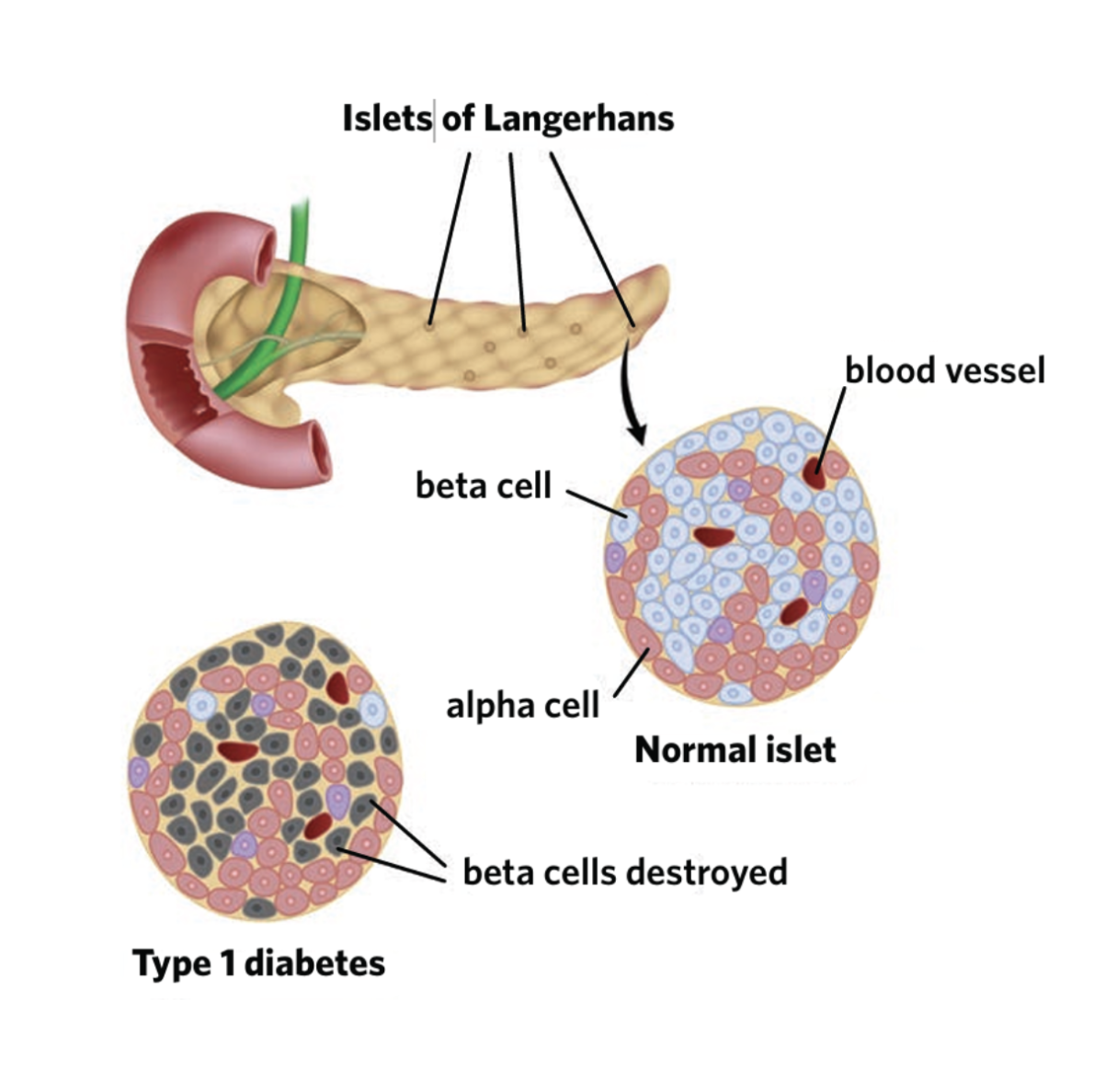
an autoimmune disease in which beta cells of the pancreas are destroyed, resulting in an inability to regulate blood glucose levels
What causes type 1 diabetes?
-body’s immune system recognises beta cells in the pancreas as non-self and attacks them using autoantibodies
leads to
- no insulin
-blood glucose are left un regulated
-alpha cells are also impaired and can no longer function properly.
autoantibodies
proteins created by the immune system that destroy an organism’s own tissues
type 2 diabetes
a disease in which the body becomes resistant to the effects of insulin and/or doesn’t produce enough insulin to maintain normal blood glucose levels
What can lead to hypoglycaemia and hyperglycaemia
As a result of beta cell attack, people with type 1 diabetes are insulin deficient
hyperglycaemia
the state of having blood glucose levels above the normal range (>7.8 mmol/L)
Why is insulin important for the regulation of blood glucose levels?
it facilitates the entrance of glucose into cells as well as the production of glycogen. Because glucose can’t be absorbed by people with type 1 diabetes, they are at risk of hyperglycaemia.
Short term effects of type 1 diabetes
increased urination and excessive thirst
– if levels of glucose in the blood are high, glucose can push through the walls of the glomerulus and end up in the kidney filtrate.
-The presence of glucose in the filtrate increases its osmolality, meaning that the normal osmotic processes that reabsorb water in the nephron don’t function properly.
-As a result, water remains in the filtrate and a larger amount of dilute urine is produced .
-This can cause a person with type 1 diabetes to lose large amounts of water, become dehydrated, and feel thirsty
• excessive hunger and lethargy
- because their cells aren’t receiving the glucose they need to function properly, people with type 1 diabetes often feel tired and lethargic.
-In an attempt to correct the lack of glucose entering the system, the body stimulates the sensation of hunger •
weight loss – the loss of large amounts of water and the inability of cells to grow and function normally due to a lack of glucose can lead to weight loss in people with type 1 diabetes.
Long term effects of type 1 diabetes
vision loss – the tiny vessels carrying blood to the eye become damaged and leaky, leading to swelling and reduced blood flow
) • heart disease and stroke – the blood vessels supplying the heart and brain can become damaged and blocked, causing cells to be deprived of oxygen and die
• tingling or numbness in the feet and/or hands – nerves are sensitive to elevated blood glucose levels and can become damaged
• prolonged wound healing – the damaged blood vessels in people with long term wounds take longer to heal or won’t at all
• kidney damage – the blood vessels that carry blood to the kidney are very small and sensitive, and can easily be damaged by increased blood glucose levels.
hypoglycaemia
the state of having blood glucose levels below the normal range (<4.0 mmol/L)
How can someone become hypoglycaemic
Too much insulin injected
Not enough food
Too much exercise
↓ glucagon (alpha cells also impaired)
Effects of hypoglycaemia
Weakness, dizziness
Can lead to loss of consciousness or death
Management of Type 1 Diabetes
Insulin injections (short + long acting)
Insulin pump (automatic control)
Regular blood glucose monitoring
Hyperthyroidism
condition where the thyroid gland produces too much T3 and T4, increasing metabolic rate.
triodothyronine
a hormone produced and secreted by the thyroid gland. Also known as T3
-regulating metabolism, growth, body temperature, and heart rate
thyroxine
-a hormone produced and secreted by the thyroid gland. Also known as T4
-essential for regulating metabolism, heart function, muscle control, and brain development.
Graves diseaae (autoimmune)
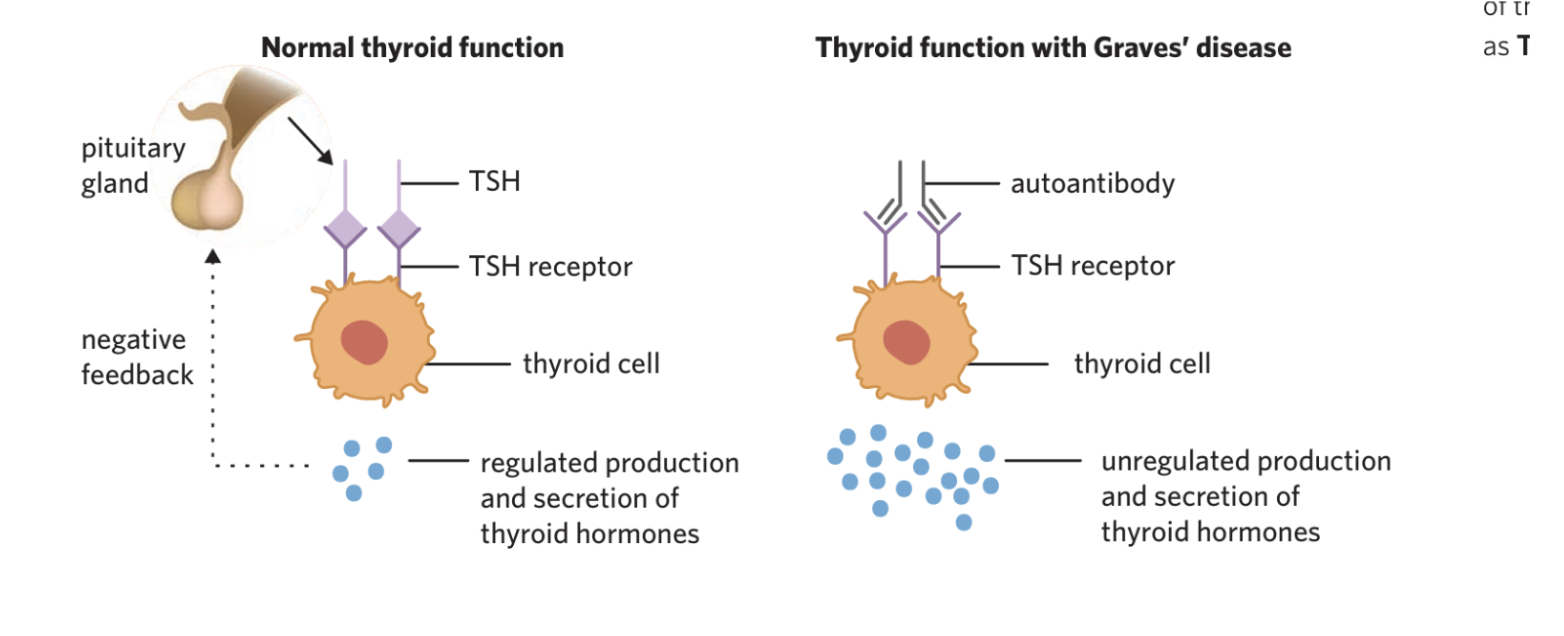
-The immune system produces an autoantibody called thyroid-stimulating immunoglobulin (TSI)
-antibody recognises and binds to the TSH receptors on the thyroid, stimulating the thyroid to release T3 and T4
Leads to
-elevated levels of thyroid hormones
-constant stimulation to release hormones
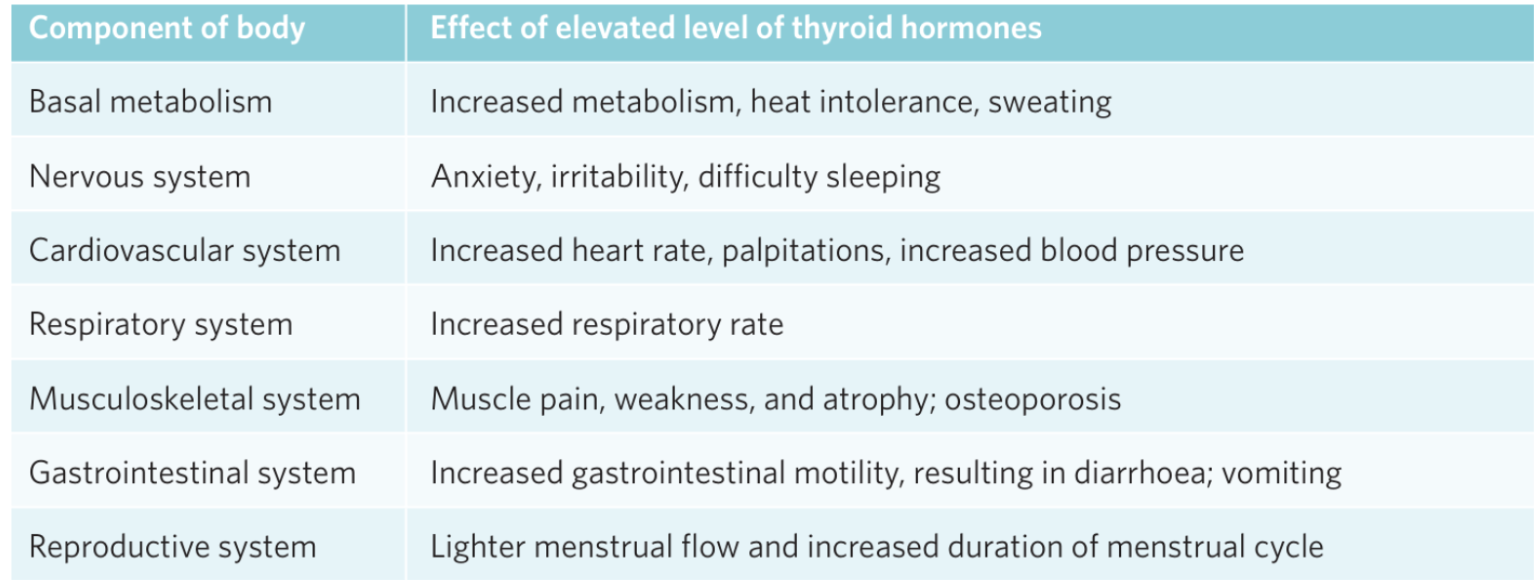
The components of the body when thyroid levels are elevated
Treatment
Medication (reduce hormones)
Radioactive iodine
Surgery (remove thyroid)