Orgo1 Test 1
 Call Kai
 Learn
Learn Practice Test
 Spaced Repetition
 Match
Match Flashcards
 Knowt Play
1/85

There's no tags or description
Looks like no tags are added yet.
Name | Mastery | Learn | Test | Matching | Spaced | Call with Kai |
|---|
No analytics yet
Send a link to your students to track their progress
86 Terms
how many bonds does sp3 have
4 sigma bonds
how many bonds does sp2 have
3 sigma bond 1 pi bond
how many bonds does sp have
2 sigma 2 pi
how many orbitals does sp3 have
1s 3p (4)
how many orbitals does sp2 have
1s 2p (3)
how many orbitals does sp have
1s 1p (2)
Whats the vespr model for sp3
tetrahedral 109.5
what is the vespr model of sp2
trigonal planar 120
whats the vespr model of sp
linear 180
where on periodic tabke is electronaegativity the highest
top right
hydrophobic molecules are ____
non polar
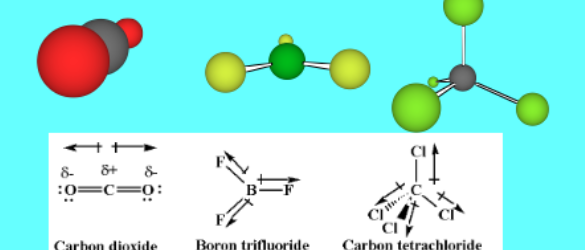
All of the compounds have a dipole moment of ______
zero
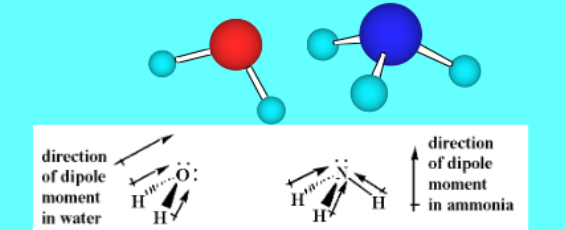
All of the compounds have a dipole moment of _____
above zero
A trans direction will have elements on a lewis strucutre going ______ directions
opposite
A cis direction will have elements on a lewis strucutre going ______ directions
similar
intermolecular attractions between molecules that have permanent dipoles (polar molecules)
differences in electronegativity. This creates:
a partial positive charge (δ⁺) on one side
a partial negative charge (δ⁻) on the other side
dipole dipole forces
Dipole-dipole attractions between hydrogen atoms bonded to small, strongly electronegative atoms (O, N, or F)
hydrogen bonds

What is the functional group
alkanes

What is the functional group
alkenes

What is the functional group
alkynes
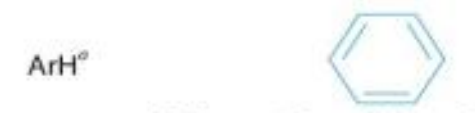
What is the functional group
arenes

What is the functional group
alkyl halides
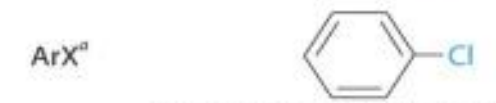
What is the functional group
aryl halides

What is the functional group
alcohol
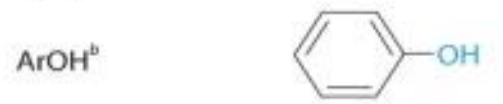
What is the functional group
phenol

What is the functional group
ethers
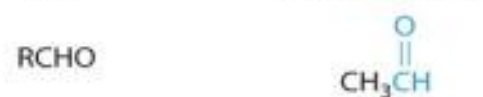
What is the functional group
aldehydes
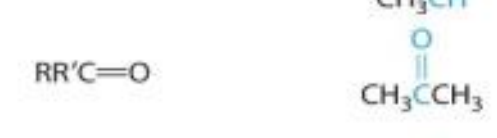
What is the functional group
ketones
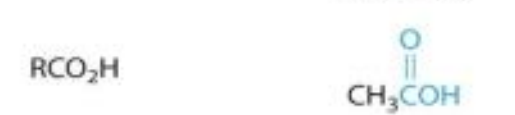
What is the functional group
carboxylic acid

What is the functional group
Acyl halide
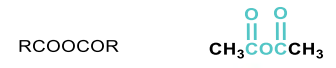
What is the functional group
anhydride
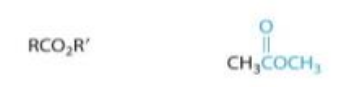
What is the functional group
esters
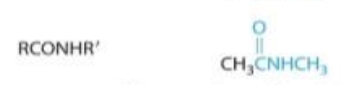
What is the functional group
amides

What is the functional group
amines

What is the functional group
nitriles
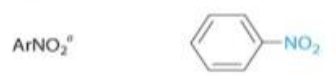
What is the functional group
nitro compounds

What is the functional group
thiol

What is the functional group
sulfide
The bond electron pair is retained by one of the bonded atoms with formation of ions.
heterolytic cleavage
The bonded electron pair is distributed equally between the two bonded atoms (one each) with formation of radical.
homolysis
brownsted lowry acid
proton donor
brownsted lowry base
proton acceptor
When an acid donates a proton, it is converted to its
conjugate base
When a base accepts a proton, it is converted to its
conjugate acid
The _____ the elctronegativity is the stronger and more stable the acid will be
larger
The ______ the size of an atom the more stable and larger pKa a conjugate base will have
larger
an atom being more spread out (resonance delocalization) does what?
makes acid stonger
A negative charge means there are “too many electrons” crowded in one area. An electronegative atom like Cl, N, F, or O acts like an electron “puller.” It pulls some electron density toward itself. So the negative charge becomes less concentrated and more stable.
Electron-withdrawing inductive effect
How can you tell if a negative charge can delocalize
next to double bond or positive charge
Groups like CH₃ push electron density toward the negative charge.
That makes the negative charge MORE crowded and LESS stable.
Less stable conjugate base = weaker acid.
electron donating group
What is the order of hybridization that contributes to stability the most
sp> sp2> sp3
solvent molecules surround a stabalize ions however too many makes them bulky…
making them unstable
higher the Ka = ______ = _______
lower pka= stronger acid
how do you know which side of a reaction will be favored at equilibrium
higher pka
accepts a pair of electrons to form a new covalent bond
lewis acid
donates a pair of electrons to form a new covalent bond
lewis base
reagents that seek electrons to achieve a stable shell of electrons (octet) like that of a noble gas (carboncations and lewis acids)
electrophile
carboncations are lewis ____
acids
Lewis base that seek a positive center such as a positively charged carbon atom (carbonanion)
nucleophile
compounds with the same molecular formula but a different connectivity
(order of attachment of their atoms)
constitutional isomers
prefix where there is 1 carbon
meth-
prefix where there is 2 carbon
eth-
prefix where there is 3 carbon
prop-
prefix where there is 4 carbon
but-
prefix where there is 5 carbon
pent-
prefix where there is 6 carbon
hex-
prefix where there is 7 carbon
hept-
prefix where there is 8 carbon
oct-
prefix where there is 9 carbon
non-
prefix where there is 10 carbon
dec-
prefix where there is 11 carbon
undec-
prefix where there is 12 carbon
dodec-
prefix where there is 13 carbon
tridec-
prefix where there is 14 carbon
tetradec-
prefix where there is 15 carbon
pentadec-
prefix where there is 16 carbon
hexadec-
prefix where there is 17 carbon
heptadec-
prefix where there is 18 carbon
octadec-
prefix where there is 19 carbon
nonadec-
prefix where there is 20 carbon
eicos-
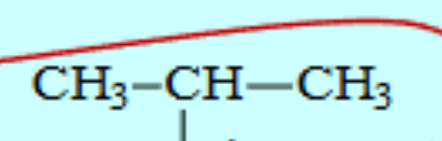
Name the alkyl group
isopropy

Name the alkyl group
sec-butyl
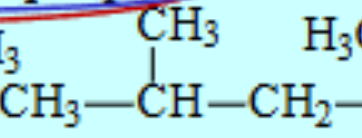
Name the alkyl group
isobutyl
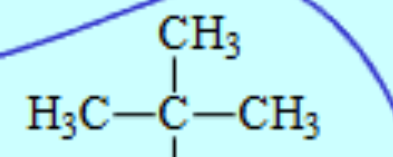
Name the alkyl group
tert-butyl
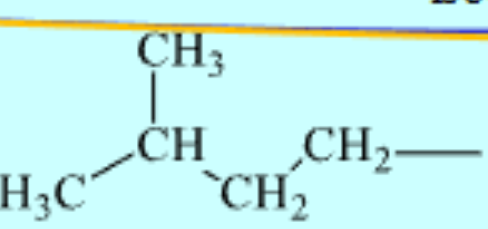
Name the alkyl group
isopentyl
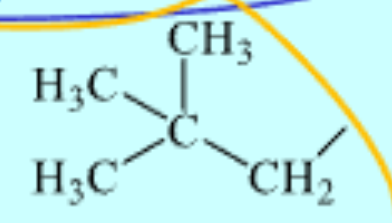
Name the alkyl group
neopentyl