Review of Nuclear Medicine Technology Exam 4
 Call Kai
 Learn
Learn Practice Test
 Spaced Repetition
 Match
Match Flashcards
 Knowt Play
1/99

There's no tags or description
Looks like no tags are added yet.
Name | Mastery | Learn | Test | Matching | Spaced | Call with Kai |
|---|
No analytics yet
Send a link to your students to track their progress
100 Terms
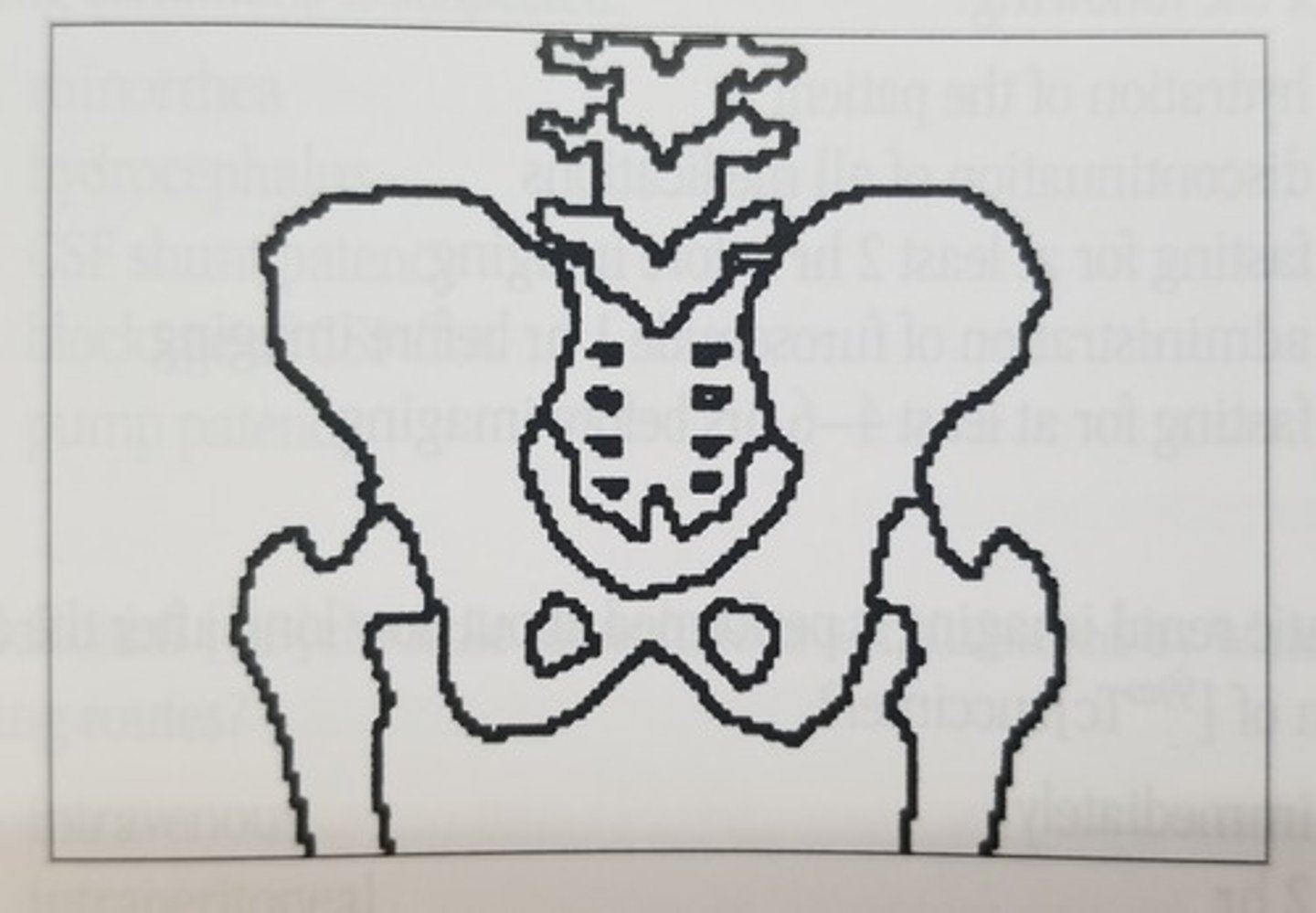
1. A [Tc-99m] medronate image of the region shown (pelvis) would best demonstrate which of the following structures?
I. iliac crests
II. distal femur
III. ischium
IV. thoracic vertebrae 10-12
- a. III and IV only
- b. I and III only
- c. III
- d. I, III, and IV only
- e. I, II, III, and IV
- Ans:
- c. III
- The diagram depicts a posterior view of the lower lumbar spine, the pelvis, and the proximal femurs. The iliac crests would be demonstrated on an anterior view of the pelvis. The distal femurs and the tenth through twelfth thoracic vertebrae are inferior and superior, respectively, to the structures shown in the diagram.
2. In performing a bone image, which of the following views would best demonstrate an abnormality in the calcaneus?
- a. lateral views of the patella
- b. post-void image of the pelvis
- c. posterior view of the distal humerus and radius
- d. anterior view of the distal humerus and radius
- e. plantar view of the feet
- Ans:
- e. plantar view of the feet
- The calcaneus -- the heel of the foot -- would be best imaged by placing the sole of the patient's foot on the detector. Both feet may be imaged at the same time.
3. All of the following statements about 4-phase bone imaging are true, except:
- a. The study may be performed with any blood pool agent.
- b. This study includes both dynamic and static imaging.
- c. The patient is positioned under the camera before tracer administration.
- d. The third phase is performed 5-6 hr after tracer administration.
- e. The fourth phase is performed the next day.
- Ans:
- a. The study may be performed with any blood pool agent.
- Because the second through fourth phases are performed to determine the presence of increased, persistent tracer uptake in the bone, the study must be performed with a bone agent.
4. Which of the following patients should receive fewer particles than typically administered for lung perfusion imaging?
- a. 80-year-old woman with suspected pulmonary embolism
- b. 65-year-old man with chronic obstructive pulmonary disease
- c. 25-year-old woman with asthma
- d. 45-year-old man with right-to-left cardiac shunt
- e. 19-year-old woman who is pregnant
- Ans:
- d. 45-year-old man with right-to-left cardiac shunt
- Patients with right-to-left cardiac shunts should be given a reduced number of particles because the particles pass through to the left side of the heart and into the systemic circulation, where they block capillaries and occlude blood flow in the brain, kidneys, heart, and other organs.
5. Which of the following statements about the wash-in/wash-out method for performing xenon ventilation studies is true?
- a. The patient rebreathes a mixture of xenon and oxygen during the wash-in phase.
- b. The patient can be disconnected from the gas-trapping apparatus after the wash-in phase.
- c. This method is not recommended for comatose patients.
- d. It is not necessary to introduce oxygen or air into the xenon delivery system.
- e. The xenon system is a self-contained generator of xenon.
- Ans:
- a. The patient rebreathes a mixture of xenon and oxygen during the wash-in phase.
- In the wash-in/wash-out method, the patient breathes a mixture of xenon and oxygen for several minutes while a wash-in image is acquired. Air is then added to the system, and the xenon that is exhaled is trapped. Serial images are acquired as the xenon clears from the lungs. This method requires little cooperation from the patient; no breath-holding or deep breaths are required. Therefore, the method is well-suited for comatose patients as well as for those on ventilators.
6. After the administration of [Tc-99m] pentetate aerosol with a face mask, radioactive contamination is likely to be found in all of the following areas except:
- a. on the technologist's hands
- b. around the patient's mouth
- c. on the patient's chest
- d. on the floor between the patient and nebulizer
- e. on the patient's face
- Ans:
- a. on the technologist's hands
- There is aerosol leakage at the exhaust of the delivery system. The filter is unable to trap the exhausted aerosol sufficiently to prevent escape of airborne tracer from the delivery system. The area around the patient's mouth becomes contaminated when the face mask is used. Some of the airborne tracer is not inhaled and is deposited on the patient's face.
7. Thyroid imaging may be performed with which of the following radiopharmaceuticals?
- a. [Tc-99m] pertechnetate
- b. [Tc-99m] sestamibi
- c. [Tc-99m] medronate
- d. [Tc-99m] pyrophosphate
- e. [Tc-99m] sulfur colloid
- Ans:
- a. [Tc-99m] pertechnetate
- For routine thyroid imaging, either Tc-99m-pertechnetate or I-123-sodium iodide may be used. Tc-99m-pertechnetate is trapped by the follicular cells of the thyroid. I-123-sodium iodide is trapped and organified (incorporated into the manufacture of thyroid hormones).
8. When performing a radioiodine thyroid uptake, nonthyroidal (body) background measurements may be taken over the:
- a. lateral skull
- b. mediastinum
- c. thigh
- d. abdomen
- e. substernal notch
- Ans:
- c. thigh
- Nonthyroidal background measurements may be collect over the thigh. The uptake probe should be positioned vertically just above the patient's knee to exclude bladder activity.
9. Pulse rates may be determined by all of the following methods except:
- a. listening to the heart with a stethoscope
- b. using a pulse oximeter
- c. multiplying the reparation rate by 4
- d. analyzing the electrocardiogram
- e. using a 3-lead EKG
- Ans:
- c. multiplying the reparation rate by 4
- In addition to routine finger method of determining the radial pulse, the pulse rates can be determined from the ECG or pulse oximeter. Listening to the heart with a stethoscope will give a pulse rate known as apical pulse.
10. Which of the following statements regarding the administration of oxygen is false?
- a. Oxygen is classified as a drug.
- b. With the consent of a physician or nurse, an oxygen appliance may be removed from the patient if it interferes with the imaging procedure.
- c. Oxygen therapy may be ordered by a physician, nurse, athletic trainer, or respiratory therapist.
- d. Orders for oxygen therapy must include the amount to be delivered, and the type of oxygen appliance to be used.
- e. Orders for oxygen therapy must include whether administration is to be continuous or intermittent.
- Ans:
- c. Oxygen therapy may be ordered by a physician, nurse, athletic trainer, or respiratory therapist.
- Because oxygen is a drug, it must be prescribed by a physician who specifies the amount to be received, the device to be used, and time interval (continuous or intermittent). Cessation of oxygen therapy can be done only with the consent or supervision of a physician or attending nurse.
11. Treatment of the adverse effects induced by dipyridamole involves the administration of:
- a. aminophylline
- b. adenosine
- c. acetazolamide
- d. nitroglycerin
- e. aspirin
- Ans:
- a. aminophylline
- Adverse effects of dipyridamole -- a vasodilator -- include hypotension, headache, and nausea. These effects may be reversed by administering aminophylline intravenously.
12. Which of the following must be discontinued for at least 24-36 hr before the administration of dipyridamole?
- a. water
- b. theophylline
- b. insulin
- c. Latex
- e. aspirin
- Ans:
- b. theophylline
- When adenosine or dipyridamole is used for stress testing, the patient should be instructed to discontinue the use of certain substances that interfere with the action of these drugs. Caffeine and medications containing caffeine should not be consumed for at least 12 hrs before testing. The use of xanthine derivatives (theophylline, aminophylline) should be discontinued for 24-36 hrs before the nuclear medicine procedure.
13. In a normal hepatobiliary study, secretion of the tracer into the intestine should occur a maximum of how long after tracer administration?
- a. 20-30 min
- b. 35-40 min
- c. 45-60 min
- d. 1-2 hr
- e. 2-3 hr
- Ans:
- a. 20-30 min
- In a normal hepatobiliary study, the duodenum and proximal jejunum are visualized by 30 mins after tracer administration.
14. Which of the following agents would be used to perform a gallbladder ejection fraction?
- a. morphine and [Tc-99m] lidofenin
- b. sincalide and [Tc-99m] sulfur colloid
- c. sincalide and [Tc-99m] disofenin
- d. morphine and [Tc-99m] mertiatide
- e. sincalide and [Tc-99m] medronate
- Ans:
- c. sincalide and [Tc-99m] disofenin
- A gallbladder ejection fraction is useful in assessing gallbladder dysfunction. In cases of delayed gallbladder visualization, sincalide is administered when the gallbladder is full. Pre- and post-contraction images are used to calculate an ejection fraction.
15. For which of the following procedures is the radiopharmaceutical administered orally?
- a. vesicoureteral reflux imaging
- b. gastrointestinal bleeding
- c. salivary gland imaging
- d. gastric emptying
- e. gallbladder ejection fraction determination
- Ans:
- d. gastric emptying
- For the determination of gastric emptying, the patient ingests the radiopharmaceutical. Tracers to detect gastrointestinal bleeding and to image the salivary glands are administered intravenously. Depending on the method used, tracers to detect vesicoureteral reflux are instilled into the urinary bladder via catheter (direct method) or injected into intravenously (indirect method).
16. Patient preparation for functional renal imaging should include which of the following?
- a. hydration of the patient
- b. discontinuation of all medications
- c. fasting for at least 2 hr before imaging
- d. administration of furosemide 1 hr before imaging
- e. fasting for at least 4-6 hrs before imaging
- Ans:
- a. hydration of the patient
- Renal function imaging should be performed with the patient in a normal state of hydration. To ensure hydration, the patient should drink 0.5 L of water 30-60 mins before the study. False abnormal results may be obtained if the patient is not hydrated.
17. Static renal imaging is performed about how long after tracer administration of [Tc-99m] succimer?
- a. immediately
- b. 2 hr
- c. 4 hr
- d. 8 hr
- e. 6 hr
- Ans:
- b. 2 hr
- Tc-99m-succimer (DMSA) is used for static renal cortical imaging. Imaging is performed about 2 hrs after tracer adminsitration.
18. Patient preparation for [Ga-67] citrate imaging may include administration of which of the following?
- a. diuretics
- b. potassium perchlorate
- c. Lugol's solution
- d. adenosine
- e. laxatives
- Ans:
- e. laxatives
- Ga-67-citrate is excreted in the feces. The activity level in the bowel may interfere with the interpretation of the study. Therefore, a bowel preparation may be prescribed at the time the tracer is administered.
19. A normal biodistribution of [In-111] labeled leukocytes will demonstrate the greatest tracer uptake at 24 hr after injection in which of the following sites?
- a. bone marrow
- b. liver
- c. lung
- d. heart
- e. spleen
- Ans:
- e. spleen
- At 24 hrs after injection, a normal biodistribution of In-III-labeled leukocytes demonstrates tracer uptake only in the spleen, liver, and bone marrow. The greatest uptake is in the spleen, followed by the liver and the bone marrow.
20. A patient with diabetes who becomes hypoglycemic may exhibit all of the following signs and symptoms except:
- a. weakness and shakiness
- b. confusion
- c. irritability
- d. nausea and vomiting
- e. low blood sugar
- Ans:
- d. nausea and vomiting
- Hypoglycemic patients may exhibit an intense hunger; might be weak and shaky; and may sweat excessively. They may become confused and irritable. Most patients will recognize symptoms before they become severe.
21. Which of the following tracers may be used to confirm brain death?
- a. [Tc-99m] oxidronate
- b. [Tc-99m] exametazime
- c. [Tc-99m] mertiatide
- d. [Tl-201] thallous chloride
- e. [Tc-99m] medronate
- Ans:
- b. [Tc-99m] exametazime
- Tc-99m-gluceptate, Tc-99m-pertechnetate, or Tc-99m-pentetate have been used to demonstrate brain death with a cerebral flow study followed by immediate static imaging. Tc-99m-exametazime more recently has been used for this purpose. Because this tracer is normally concentrated in brain tissue in proportion to blood flow, it can visualize the degree of perfusion in the brain.
22. Counting cotton gauze that has been placed in a patient's nose after intrathecal tracer administration is most useful when which of the following conditions is suspected?
- a. rhinorrhea
- b. hydrocephalus
- c. CSF shunt patency
- d. blockage of CSF flow
- e. pump patency
- Ans:
- a. rhinorrhea
- In the case of cerebral spinal fluid leaks through the nose (rhinorrhea) or ears (otorrhea), placing cotton gauze in the patient's nose or ears is helpful in diagnosing such leaks. This technique is particularly useful with small leaks that may not be visualized on images.
23. Colloidal [P-32] chromic phosphate is administered by which of the following routes?
- a. intravenous
- b. intraperitoneal
- c. subcutaneous
- d. inhalation
- e. intrathecal
- Ans:
- b. intraperitoneal
- Colloidal P-32-chromic phosphate is used to treat pleural or peritoneal effusions resulting from a malignancy. The agent is introduced directly into the pleural or peritoneal cavity. It should not be administered intravenously because it will be taken up in the liver, causing localized radiation damage.
24. Which of the following radiation safety measures should be used when performing [Sr-89] therapy?
- a. use of lead vial and syringe shields
- b. monitoring patient radiation levels daily
- c. use of absorbent paper in isolation room
- d. monitoring patient radiation levels weekly
- e. urinary catheterization for incontinent patients
- Ans:
- e. urinary catheterization for incontinent patients
- It is recommended that incontinent patients receiving Sr-89-chloride be catherized to minimize the spread of contamination. Because Sr-89 is primarily a beta emitter (less than 1% gamma emission), it is not necessary to place patients in isolation or monitor then with a survey meter. Lead shielding should not be used with this beta emitter because bremsstrahlung radiation will be produced in the shielding.
25. On the basis of blood flow, which of the following is visualized as an area of high tracer concentration on a brain image performed with [Tc-99m] exametazime?
- a. pineal body
- b. white matter
- c. gray matter
- d. medulla oblongata
- e. pituitary gland
- Ans:
- c. gray matter
- Uptake of SPECT brain agents is primarily in the gray matter of the cerebrum, which has a higher blood flow than white matter. These agents are localized in proportion to blood flow.
26. A technologist is performing a lung image on a patient known to have active tuberculosis. The most appropriate personal protective device the technologist should use is:
- a. latex gloves
- b. gown
- c. lab coat
- d. mask
- e. booties
- Ans:
- d. mask
- The mask is most appropriate for airborne respiratory disease.
27. The patency of a LeVeen shunt may be demonstrated with which of the following radiopharmaceuticals?
- a. [Tc-99m] disofenin or [Tc-99m] sulfur colloid
- b. [Tc-99m] albumin or [Tc-99m] labeled red blood cells
- c. [Tc-99m] pentetate or [Tc-99m] pertechnetate
- d. [Tc-99m] MAA or [Tc-99m] sulfur colloid
- e. [Tc-99m] medronate or [Tc-99m] sulfur colloid
- Ans:
- d. [Tc-99m] MAA or [Tc-99m] sulfur colloid
- A LeVeen shunt is used to treat ascites by draining the excess fluid that accumulates in the peritoneal cavity into the superior vena cava. Sometimes the shunt tube becomes blocked. Radionuclide imaging is used to differentiate mechanical blockage of the tube from other reasons for increased ascitic fluid. Imaging may be performed with either Tc-99m-MAA or Tc-99m-sulfur colloid. After the introduction of one of these tracers into the peritoneal cavity, images of the anterior abdomen (and chest if MAA is used) will demonstrate activity in the liver or lungs, confirming that the shunt is functioning. If the liver or lungs are not visualized, then the tubing is blocked.
28. Which of the following is common to imaging gastroesophageal reflux in both adults and children?
- a. [Tc-99m] macro aggregated albumin is the tracer of choice
- b. The patient must fast starting at midnight before the test.
- c. An abdominal binder is used to increase pressure over the abdomen.
- d. The patient ingests dilute hydrochloric acid with the tracer.
- e. [Tc-99m] sulfur colloid is the tracer of choice.
- Ans:
- e. [Tc-99m] sulfur colloid is the tracer of choice.
- Tc-99m-sulfur colloid is the radiopharmaceutical used to image gastroesophageal reflux in both adults and children. However, adults are administered a mixture of dilute hydrochloric acid, orange juice, and tracer after fasting from midnight. In infants and toddlers, the procedure is performed at the time of a scheduled feeding, so they may fast as little as 2 hs before receiving the tracer. In adults, an abdominal binder is used to increase external abdominal pressure to demonstrate more subtle instances of reflux. Because the abdominal muscles are important in pediatric respiration, the binder is typically not used with children, particularly infants.
29. The following studies are ordered for a patient:
I. ERPF determination
II. total-body bone imaging
III. [In-111] pentetreotide imaging
In which order should the studies be performed so that they do not interfere with one another and so they can be accomplish in the shortest amount of time?
- a. I, II, III
- b. I, III, II
- c. II, I, III
- d. III, II, I
- e. II, III, I
- Ans:
- a. I, II, III
- In general, a quantitative study -- any study whose results are a number -- should be performed first, so radioactivity from another study does not interfere with or have to be accounted for when calculating the results of a quantitative study. An ERPF is performed with Tc-99m-mertiatide. This radiopharmaceutical clears from the kidneys quickly. Its 6 hr half-life is short enough to permit bone imaging the next day. In-III-pentetreotide imaging should be performed last. In-III has a three-day half0life, and the tracer may remain in the body for an extended period.
30. Which of the following is the most common term for the artifact created by the presence of metals in the patient in CT imaging?
- a. ringing
- b. partial volume
- c. arcing
- d. biasing
- e. streaking
- Ans:
- e. streaking
- Patient-generated artifacts commonly come from patient motion, beam hardening, or metallic artifacts (commonly causing streak artifacts).
31. The region(s) of interest for detection of a left-to-right cardiac shunt is (are) drawn around which of the following structures?
- a. superior vena cava
- b. one or both lungs
- c. left ventricle
- d. right ventricle and great vessels
- e. aorta
- Ans:
- b. one or both lungs
- The region(s) of interest for detection of left-to-right cardiac shunt is (are) drawn around one or both lungs to generate a pulmonary time-activity curve. The curve demonstrates the first pass of tracer through the lungs, as well as any tracer that has returned to the lungs and bypassed the systemic circulation.
32. Which if the following sets of vital sign measurements represent normal values for an adult? (pulse bpm, blood pressure mmHg, respirations (resp/min), temperature (oral °F) )
- a. 75, 120/80, 17, 98.6
- b. 60, 100/50, 12, 98.6
- c. 45, 120/80, 10, 97
- d. 100, 150/100, 25, 102
- e. 110, 100/200, 30, 105
- Ans:
- a. 75, 120/80, 17, 98.6
- The normal ranges of vital signs for adults are:
- (i). Pulse --- 60-100 bpm
- (ii). Blood pressure (diastolic) --- 60-90 mmHg
- (iii). Blood pressure (systolic) --- 95-140 mmHg
- (iv). Respirations --- 12-20 breaths/min
- (v). Temperature --- 97.7-99.5ºF (36.5-37.5℃)
33. A common antecubital vein used for intravenous administration of the radiopharmaceutical is the:
- a. radial
- b. cephalic
- c. brachial
- d. ulnar
- e. plantar
-Ans:
- b. cephalic
- A variety of antecubital veins can be used for drug administration, but the two most commonly used are the basilic and the cephalic veins.
34. The [Cr-51] red cell sequestration study is performed to identify abnormal destruction of red blood cells by the:
- a. bone marrow
- b. spleen
- c. liver
- d. heart
- e. gallbladder
- Ans:
- b. spleen
- The red cell sequestration study is performed to determine if the patient's anemia is the result of splenic sequestration of normal red cells.
35. The difference in hematocrit values between the average whole body hematocrit and the venous hematocrit is the results of:
- a. the variation in red blood cell diameter
- b. the difference in vessel size
- c. the increased amount of blood in the extremities
- d. plasma leakage
- e. difference in size of white blood cells
- Ans:
- b. the difference in vessel size
- Hematocrits vary with vessel size. Smaller vessels yield lower hematocrit value than larger vessels.
36. On the basis of these counts per minute obtained from a thyroid uptake test, the percentage radioiodine uptake is:
Thyroid: 2876
Patient background: 563
Standard: 10,111
Room background: 124
- a. 3.5%
- b. 4.3%
- c. 28%
- d. 23%
- e. 50%
- Ans:
- d. 23%
- (i). The formula for calculating thyroid radioiodine uptake is:
- %uptake = net thyroid cpm/net standard cpm x 100
- (ii). Using the data, the percent uptake is:
- (2,876 - 563 cpm)/(10,111 - 124 cpm) x 100 = 23%
37. A technologist is asked to check the flow rate on a drip infusion on a patient in the department. An acceptable flow rate is how many drops per minute?
- a. 1-5
- b. 75-100
- c. 40-60
- d. 10-20
- e. 100-125
- Ans:
- d. 10-20
- An acceptable flow rate for a drip infusion is 10-20 drops per minute. This rate may be adjusted by physician order.
38. The total blood volume may be calculated by dividing the measured red cell volume by the:
- a. hematocrit
- b. plasmacrit
- c. number of red blood cells determined from a hemocytometer
- d. corrected plasmacrit
- e. corrected hematocrit
- Ans:
- e. corrected hematocrit
- The formula for calculation total blood volume (TBV), based on the red cell volume, uses corrected hematocrit (HCT) in the denominator. Correction is needed to account for trapped plasma and to adjust venous hematocrit to an average whole body hematocrit. The formula is:
- TBV = red cell volume/HCT x 0.91 x 0.97
39. The following data were collected for a plasma volume determination:
Net standard counts: 839,621 cpm
Standard dilution factor: 15
Net plasma counts: 2,528 cpm/mL
The calculated plasma volume in milliliters is:
- a. 2,214
- b. 3,321
- c. 4,516
- d. 4,982
.- e. 5,280
- Ans:
- d. 4,982
- (i). The formula for calculating plasma volume is:
- PV = (net standard cpm)(dilution factor)/net plasma cpm/mL
- (ii). From the data supplied:
- PV = (839,621 cpm)(15)/2,528 cpm/mL) = 4982 mL
40. If the concentration of a 1:2,000 dilution is 0.05 µCi/mL, what is the tracer concentration of the original solution?
- a. 0.00025 µCi/mL
- b. 10 µCi/mL
- c. 25 µCi/mL
- d. 100 µCi/mL
- e. 125 µCi/mL
- Ans:
- d. 100 µCi/mL
- A 1:2,00 dilution means that the concentration in the diluted solution is one 2,000th of the original concentration. In this problem, the concentration of the original solution is unknown. Thus:
- 1/2,000 (? uCi/mL) = 0.05 uCi/mL
- 1/2,000 = 0.05 uCi/mL/x
- x = 2,000 (0.05 uCi/mL) = 100 uCi/mL
41. A patient scheduled for [F-18] FDG imaging has a measured blood glucose level of 100 mg/dL. Which of the following actions should the technologist perform next?
a. Reschedule the patient for a later time.
b. Administer insulin to lower the patient's blood glucose level.
c. Administer glucose to raise the patient's blood glucose level.
d. Proceed with the examination.
e. Monitor the patient for hypoglycemia.
d. Proceed with the examination.
42. Based on the net counts shown here, what is the percentage gallbladder ejection fraction?
Maximum gallbladder counts: 185,632
Minimum gallbladder counts: 77,203
a. 71%
b. 41%
c. 58%
d. 29%
e. 13%
c. 58%
43. After a [Mo-99]/[Tc-99m] generator is eluted, it takes approximately how many hours for the [Tc-99m] activity to build up to a maximum level?
a. 8 hr
b. 12 hr
c. 24 hr
d. 48 hr
e. 4 hr
c. 24 hr
44. What is the total activity of 8 mL of [Tc-99m] eluate that has a concentration of 2.0 MBq/mL?
a. 16 MBq
b. 6 MBq
c. 32 MBq
d. 4 MBq
e. 10 MBq
a. 16 MBq
45. A wet column generator is equipped with all the following parts except a(n):
a. alumina column
b. lead shield
c. saline supply
d. collection port
e. charging port
e. charging port
46. According to the USP, the maximum allowable aluminum concentration in [Tc-99m] eluate is not to exceed:
a. 0 µg/mL
b. 15 µg/mL
c. 20 µg/mL
d. 15 mg/mL
e. 10 µg/mL
e. 10 µg/mL
47. Which of the following statements about determining [Mo-99] concentration in [Tc-99m] eluate using the lead shield method is true?
a. The eluate is assayed only for [Mo-99].
b. The lead shield is used to absorb high-energy [Mo-99] photons.
c. The unshielded eluate is assayed for [Mo-99] and [Tc-99m] by adjusting the dose calibrator settings.
d. The eluate in the lead shield is measured with the dose calibrator set to assay [Mo-99].
e. The eluate is assayed only for [Tc-99m].
d. The eluate in the lead shield is measured with the dose calibrator set to assay [Mo-99].
48. The test kit used to measure aluminum ion concentration in [Tc-99m] eluate contains specially treated indicator paper and an aluminum solution with a concentration of approximately:
a. 2 µg/mL
b. 10 µg/mL
c. 5 µg/mL
d. 20 µg/mL
e. 15 µg/mL
b. 10 µg/mL
49. Which of the following pairs of radiopharmaceuticals may be used to perform lung perfusion and ventilation imaging?
a. [Tc-99m] sulfur colloid and [Tc-99m] pentetate aerosol
b. [Tc-99m] macroaggregated albumin and [Xe-133] gas
c. [Tc-99m] albumin and [Xe-133] gas
d. [Tc-99m] bicisate and [Tc-99m] pentetate aerosol
e. [Tc-99m] medronate and [Tc-99m] pentetate aerosol
b. [Tc-99m] macroaggregated albumin and [Xe-133] gas
50. An eluate of [Tc-99m] pertechnetate is assayed for [Mo-99] contamination at 0600 with the following results:
[Mo-99]: 15.5 µCi
[Tc-99m]: 250 mCi
At 1000, the eluate is used to prepare a [Tc-99m] labeled compound with a shelf-life of 8 hr. What is the latest time the [Tc-99m] compound may be administered to patients?
a. 1400
b. 1500
c. 1700
d. 1800
e. 2400
a. 1400
51. If the following reagents are available, what is the maximum amount of [Tc-99m] oxidronate in mCi that can be prepared from on kit?
Oxidronate kit
Max [Tc-99m] activity to be added: 250 mCi
Reconstituting volume: 1.0-5.0 mL
[Tc-99m] pertechnetate
Concentration: 35.0 mCi/mL
Volume: 10 mL
a. 175 mCi
b. 225 mCi
c. 250 mCi
d. 350 mCi
e. 400 mCi
a. 175 mCi
52. Which of the following ingredients in a sulfur colloid kit are combined and heated?
a. [Tc-99m] pertechnetate and thiosulfate mixture
b. thiosulfate mixture and acid
c. [Tc-99m] pertechnetate, thiosulfate mixture, acid, and buffer
d. [Tc-99m] pertechnetate, thiosulfate mixture, and acid
e. thiosulfate mixture , acid, and buffer
d. [Tc-99m] pertechnetate, thiosulfate mixture, and acid
53. When preparing to withdraw a unit dose of [P-32] chromic phosphate, the technologist visually inspected the radiopharmaceutical and notes that it is a blue-green color. The technologist should next:
a. Contact the radiopharmaceutical manufacturer.
b. Reschedule the procedure.
c. Add it to a cup of water for dispensing to the patient.
d. Place the dose in radioactive waste for disposal.
e. Withdraw the unit dose.
e. Withdraw the unit dose.
54. What is the concentration of [Tc-99m] succimer if 1.5 mL succimer reagent and 30 mCi [Tc-99m] pertechnetate (concentration is 18 mCi/mL) are mixed to prepare the radiopharmaceutical?
a. 20 mCi/mL
b. 9.4 mCi/mL
c. 14.3 mCi/mL
d. 17.6 mCi/mL
e. 18 mCi/mL
b. 9.4 mCi/mL
55. The tagging efficiency of a radiopharmaceutical is determined using these solvent/support media systems: (Rf values of radiopharmaceutical/free pertechnetate/Hydrolyzed-reduced [Tc-99m])
System 1: 0.0/0.9/0.0
System 2: 1.0/1.0/0.0
After a chromatography strip containing a sample of the radiopharmaceutical was developed in each solvent, cut in half, and counted, these results were obtained: (cpm of solvent front half/origin half)
System 1: 1,716 cpm/23,706 cpm
System 2: 21,001 cpm/1,200 cpm
What is the tagging efficiency of the sample?
a. 92.8%
b. 6.7%
c. 12.1%
d. 87.9%
e. 5.4%
d. 87.9%
56. The label on an unopened vial states that the vial contains 10 mL of radiopharmaceutical with a concentration of 55.5 MBq/mL. When the technologist assays the vial in a dose calibrator, it measures 9 mCi. Which of the following actions should the technologist perform first?
a. Begin to prepare unit doses from the vial.
b. Check the radionuclide setting on the dose calibrator.
c. Perform an accuracy check on the dose calibrator.
d. Contact the radiopharmaceutical manufacturer.
e. Return the vial to the vendor.
b. Check the radionuclide setting on the dose calibrator.
57. A vial of [Ga-67] gallium citrate is calibrated to contain 5 mCi at 0600, Pacific Standard Time, on March 8. How much activity does the vial contain on March 9 at 1200, Eastern Standard Time?
a. 3.9 mCi
b. 4.9 mCi
c. 6.3 mCi
d. 3.7 mCi
e. 2.5 mCi
a. 3.9 mCi
58. What is the average CT number for the lung in Hounsfield Units (HU)?
a. -1000
b. -500
c. -100
d. -50
e. zero
b. -500
59. In labeling red blood cell with [Cr-51] sodium chromate, which of the following components is first added to the ACD solution?
a. blood sample
b. [Cr-51] sodium chromate
c. ascorbic acid
d. heparin
e. sodium chloride
a. blood sample
60. All of the following are advantages of the in vitro method of labeling red blood cells with [Tc-99m] pertechnetate except:
a. The red blood cells can be washed to remove substances from the plasma that may interfere with bleeding.
b. A commercially manufactured kit that requires no cell separation by centrifugation is available.
c. Higher labeling efficiencies than with the in vivo method are possible.
d. In vitro labeling has the lowest risk of red cell hemolysis.
e. In vitro labeling allows clear separation from white blood cells.
d. In vitro labeling has the lowest risk of red cell hemolysis.
61. Which of this equipment is needed to verify the size and number of MAA particles in a [Tc-99m] MAA preparation?
a. dose calibrator
b. limulus amoebocyte lysate solution
c. chromatography strips, solvent, developing chamber
d. hemocytometer, light microscope
e. G-M meter
d. hemocytometer, light microscope
62. According to NRC regulations, records of patient dosage determinations must be retained for how long?
a. 7 years
b. 5 years
c. 10 years
d. indefinitely
e. 3 years
e. 3 years
63. During red blood cell labeling with [Cr-51], the purpose of adding ascorbic acid to the ACD (acid-citrate-dextrose)-whole blood solution is to:
a. Reduce the chromate ion to a lower valence state.
b. Maintain the pH of the mixture.
c. Prevent clot formation.
d. Prevent hemolysis of the red blood cells.
e. Oxidize the chromate ion to a higher valence state.
a. Reduce the chromate ion to a lower valence state.
64. Upon visual inspection, a vial of [Tc-99m] MAA has a white, slightly cloudy appearance. Which of the following actions should the technologist perform next?
a. Prepare another vial of [Tc-99m] MAA.
b. Prepare unit doses from the vial.
c. Filter the preparation.
d. Adjust the pH of the preparation.
e. Add appropriate diluent.
b. Prepare unit doses from the vial.
65. On the basis of the chromatography results shown here, what is the percentage radiochemical purity of the [Tc-99m] mertiatide preparation? (origin, solvent front)
System 1: 107.5 µCi [Tc-99m] mertiatide + HR-Tc, 9.2 µCi [Tc-99m] pertechnetate
System 2: 8.4 µCi HR-Tc, 132.6 µCi [Tc-99m] mertiatide + HR-TC
a. 13.9%
b. 96.2%
c. 92.1%
d. 94.0%
e. 86.1%
e. 86.1%
66. If an MAA kit contains approximately 6 million particles, what reconstituting volume is required to obtain 500,000 particles in 0.4 mL?
a. 0.03 mL
b. 0.21 mL
c. 4.8 mL
d. 12 mL
e. 16 mL
c. 4.8 mL
67. When assembling a needle and syringe for an intravenous administration, all of the following areas must remain sterile except the:
a. luer lock
b. syringe tip
c. needed shaft
d. needle tip
e. outer side of the syringe barrel
e. outer side of the syringe barrel
68. The NRC defines an unrestricted area as one in which an individual will receive less than how many milliRems in an hour?
a. 2 mrem
b. 5 mrem
c. 50 mrem
d. 100 mrem
e. 500 mrem
a. 2 mrem
69. A package containing radioactive material is monitored and found to produce 0.4 mR.hr at the surface and no detectable radiation exposure at 1 m from the surface. Which DOT label must be affixed to the outside of the package?
a. "Category I-A"
b. "Category II"
c. "Category III"
d. No DOT label is required.
e. "Category I"
e. "Category I"
70. The NRC requires that all of the following information must be included in unit dosage measurements records except the:
a. date of measurement
b. time of measurement
c. patient's name
d. radiopharmaceutical name
e. dose calibrator and model number
e. dose calibrator and model number
71. If the distance between a radiation point source and a survey meter is double, the measured radiation exposure rate is reduced:
a. to half of the original exposure rate
b. unpredictably
c. to one-eighth of the original exposure rate
d. to one-quarter of the original exposure rate
e. to one-ninth of the original exposure rate
d. to one-quarter of the original exposure rate
72. According to NRC regulations, which of the following radiopharmaceutical administration errors must be reported to the NRC?
a. A patient receives 18 mCi of [Tc-99m] pertechnetate when 20-25 mCi was prescribed.
b. A patient scheduled for bone imaging receives 20 mCi of [Tc-99m] pertechnetate instead of [Tc-99m] medronate
c. Patient A receives a hepatobiliary scan dosage intended for patient B.
d. A patient receives a whole-body scan dosage of [I-131] instead of [I-123] for a thyroid uptake and scan.
e. Patient A receives a bone scan dosage intended for patient B.
d. A patient receives a whole-body scan dosage of [I-131] instead of [I-123] for a thyroid uptake and scan.
73. According to the NRC, a written directive for the administration of [Sr-89] chloride must include all of the following information except:
a. patient's Social Security number
b. radiopharmaceutical name
c. route of administration
d. signature of an authorized user
e. patient's name
a. patient's Social Security number
74. According to the NRC, the radiation dose to the fetus of a declared pregnant worker must not exceed how many rems during the pregnancy?
a. 0.5 rem
b. 50 rem
c. 5 rem
d. 500 rem
e. 2 rem
a. 0.5 rem
75. Which of the following monitoring techniques should be employed to rule out internal contamination after handling a radioiodine solution?
a. thyroid uptake 24 hr after handling the solution
b. urine counts 2-4 hr after handling the solution
c. plasma counts 24 after handling the solution
d. pocket dosimeter reading
e. G-M meter reading
a. thyroid uptake 24 hr after handling the solution
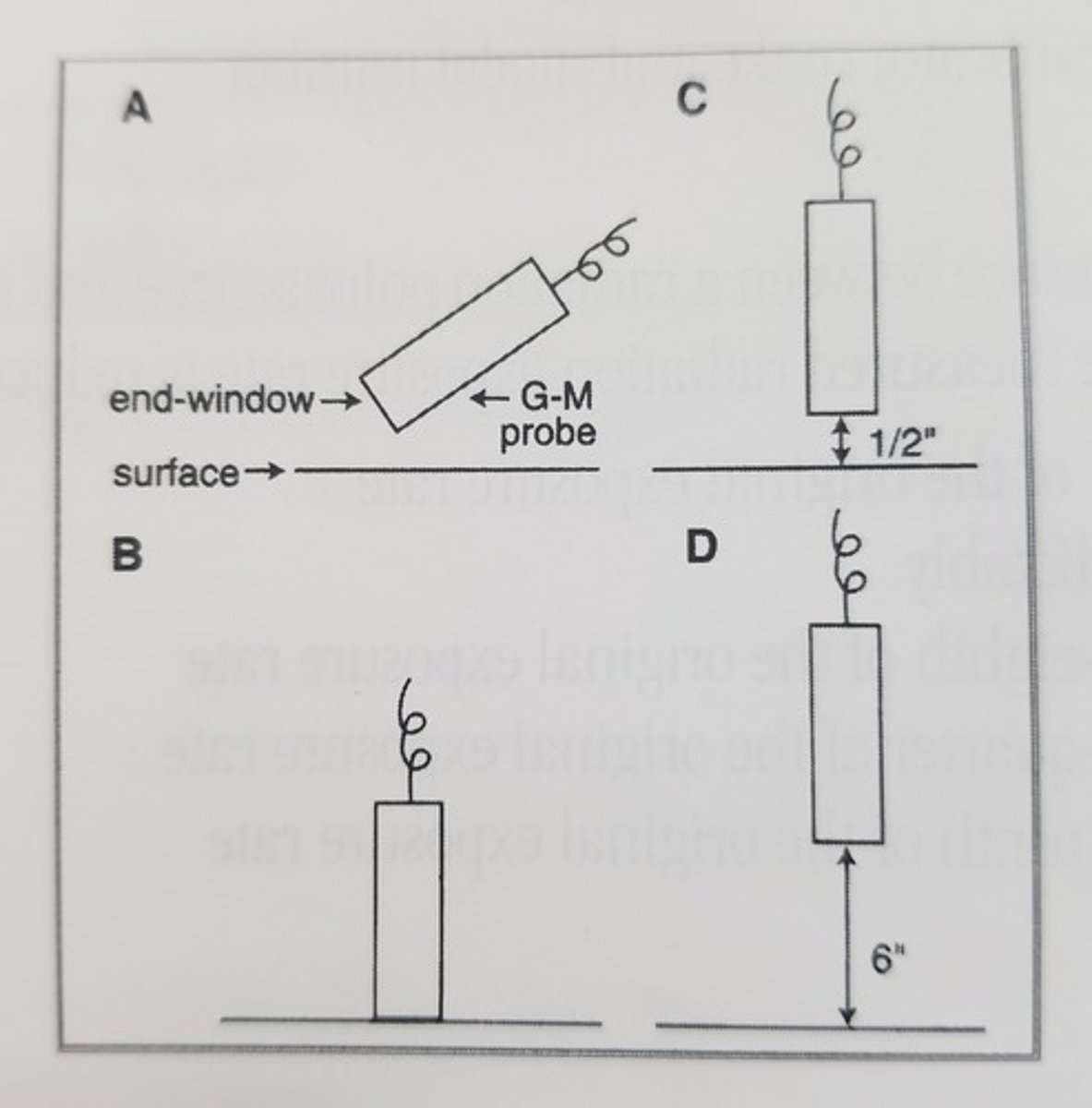
76. When surveying for contamination, which of the following diagrams depicts the correct position of the probe of an end-window G-M meter in relation to the surface being monitored?
a. A
b. B
c. C
d. D
e. A & C
c. C
77. According to the NRC, packages with which of the following DOT labels must be checked for contamination using a wipe test?
a. yellow II only
b. white I and yellow II only
c. yellow II and yellow III only
d. yellow III only
e. white I, yellow II, and yellow III
e. white I, yellow II, and yellow III
78. The first step in the radioactive decontamination of personnel is to:
a. Immediately place the contaminated person in a shower.
b. Wash contaminated areas of the skin with soap and water.
c. Remove the contaminated person from the site of the spill.
d. Remove any articles of contaminated personal or protective clothing.
e. Establish hot and cold zones.
d. Remove any articles of contaminated personal or protective clothing.
79. According to the NRC, a written directive must be retained:
a. for 1 year
b. indefinitely
c. for 5 years
d. for 3 years
e. for 7 years
d. for 3 years
80. According to the NRC, patient dosage records must be retained for how man years?
a. 3 years
b. 1 year
c. 5 years
d. as long as the facility's license is in effect
e. 7 years
a. 3 years
81. If a technologist stands next to a radioactive source that is producing an exposure rate of 0.5 mrem/hr for 20 min, what radiation dose does the technologist receive?
a. 17 mrem
b. 0.5 mrem
c. 10 mrem
d. 0.17 mrem
e. 23 mrem
d. 0.17 mrem
82. A wipe test gives a reading of 1240 cpm with a background count of 410 cpm. If the efficiency of the instrument is 35%, what is the wipe test reading in dpm?
a. 35 dpm
b. 290 dpm
c. 3,542 dpm
d. 2,371 dpm
e. 5,273 dpm
d. 2,371 dpm
83. 10 milliSieverts is equivalent to how many milliRems?
a. 0.1
b. 1,000
c. 100
d. 1
e. 10,000
b. 1,000
84. If a technologist receives dosimeter readings that are nearly equal to the NRC limits, which of the following is the most appropriate action?
a. The technologist must cease working in a radiation area.
b. The technologist can work in a radiation area but must limit exposure.
c. The RSO must reassign the technologist to non-radiation exposure work areas.
d. The RSO must give the technologist a written warning.
e. The RSO must review the technologist's work habits.
e. The RSO must review the technologist's work habits.
85. How often must dose-calibrator constancy be performed?
a. daily
b. monthly
c. weekly
d. annually
e. hourly
a. daily
86. According to the NRC, records of survey meter calibration are retained for how long?
a. 7 years
b. 5 years
c. as long as the instrument is in use
d. as long as the facility license is in effect
e. 3 years
e. 3 years
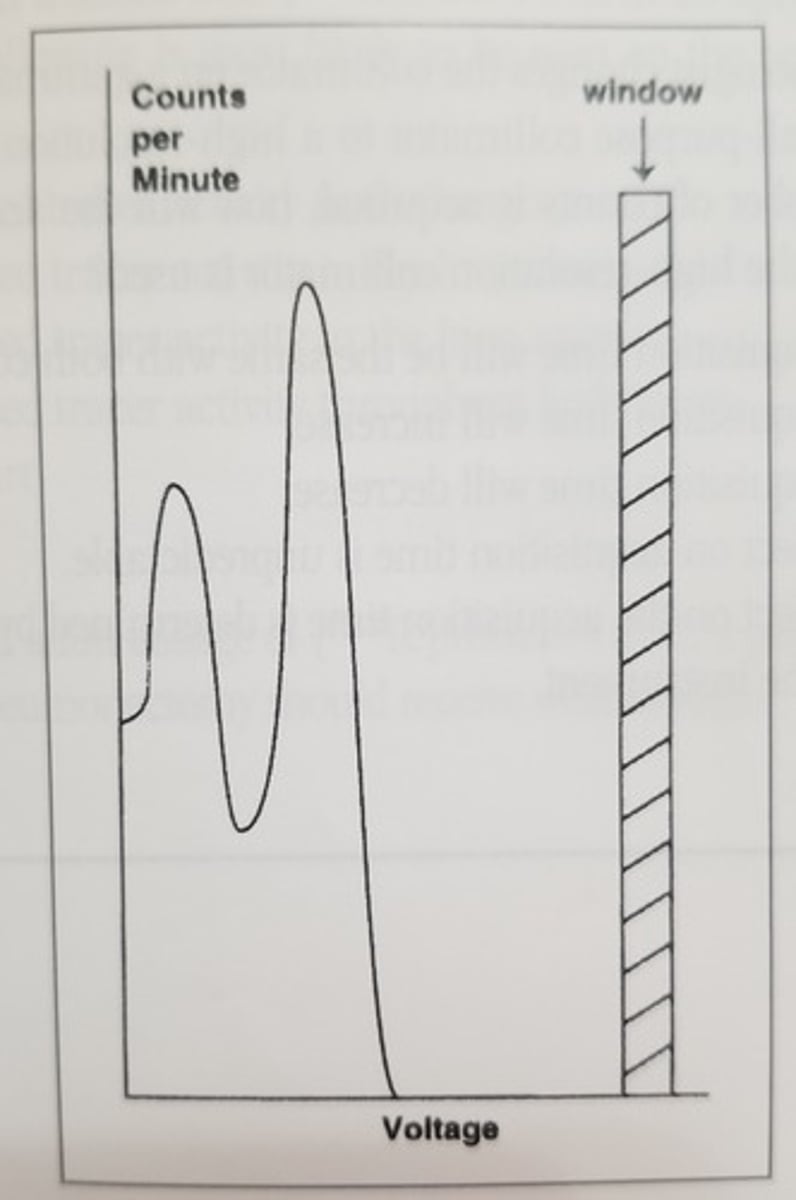
87. The γ-ray spectrum shown here was obtained at a voltage of 800. To move the photopeak into the window, which of the following actions should be taken?
a. The voltage should be decreased.
b. The voltage should be increased.
c. The window should be widened.
d. The window should be moved.
e. The high voltage should be turned off.
b. The voltage should be increased.
88. These are the results of energy-resolution tests for the last four quarters:
January: 9.5%
April: 10.3%
July: 10.9%
October: 11.1%
According to these data, which of the following statements is true?
a. The energy resolution of the instrument is improving.
b. The test is erroneous.
c. The results indicate that the instrument should no longer be used.
d. The test should be performed with a different radionuclide.
e. The energy resolution of the instrument is worsening.
e. The energy resolution of the instrument is worsening.
89. According to the NRC, how often must survey meters be calibrated?
a. daily
b. before each use
c. annually
d. monthly
e. bi-annually
c. annually
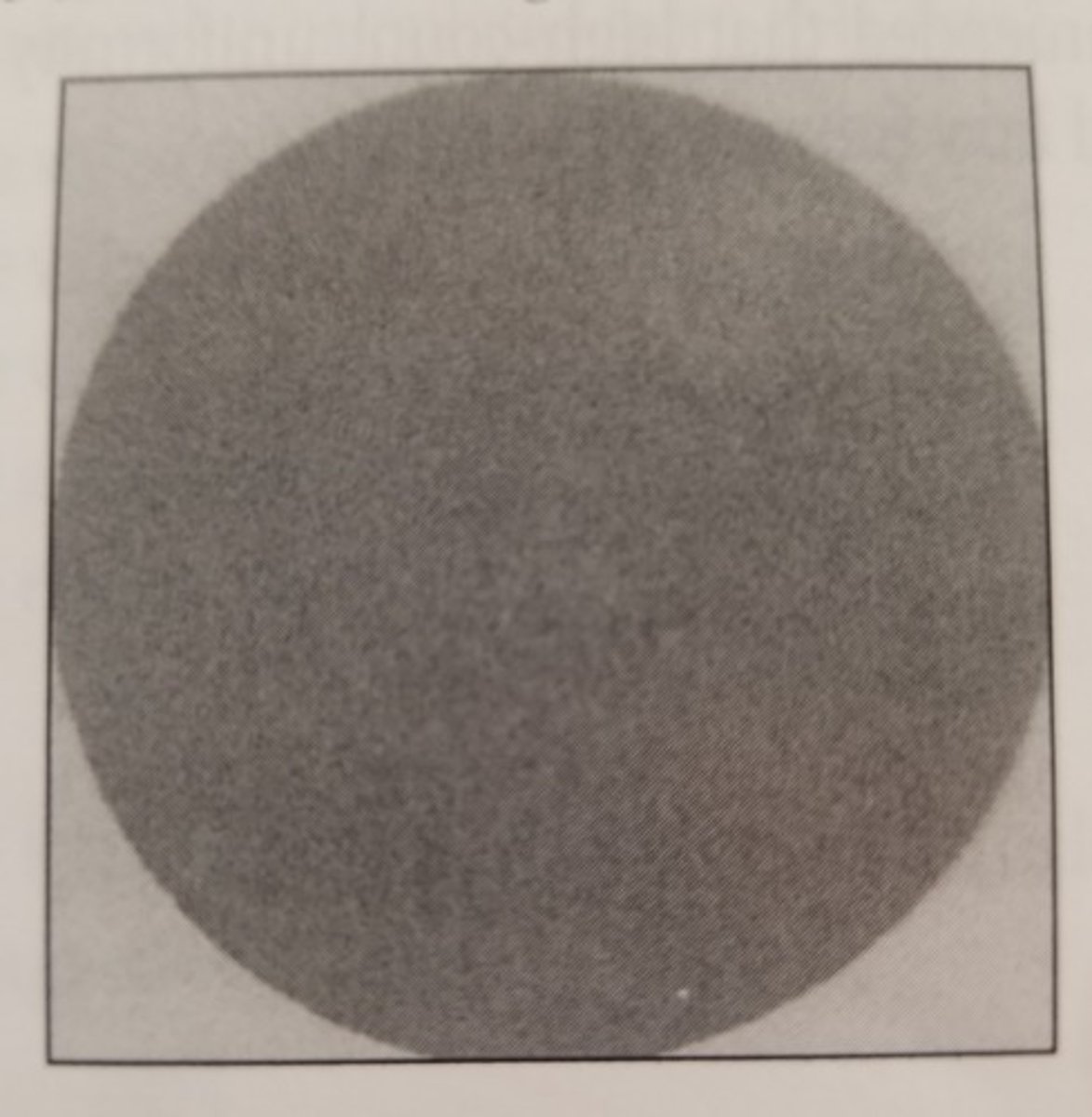
90. On the basis of this flood image, which of the following should the technologist do?
a. Reacquire the flood for more counts.
b. There is non-uniformity; troubleshoot the problem.
c. Arrange for service immediately.
d. Perform Chi-square test.
e. There is uniformity; use as usual.
b. There is non-uniformity; troubleshoot the problem.
91. The standard of practice dictates that the center of rotation (COR) offset correction be performed how frequently on SPECT cameras?
a. weekly
b. daily
c. monthly
d. quarterly
e. hourly
a. weekly
92. How often should a uniformity flood be acquired on a scintillation camera?
a. weekly
b. daily
c. monthly
d. quarterly
e. hourly
b. daily
93. Static frame mode acquisition is the most appropriate type of image acquisition for which of the following procedures?
a. first phase of a three-phase bone scan
b. thyroid imaging
c. left ventricular ejection fraction determination
d. renal function imaging
e. bone imaging
b. thyroid imaging
94. Which of the following radionuclide sources is used to acquire an extrinsic uniformity flood?
a. [Tc-99m] point source with collimator removed
b. [Co-57] sheet source with collimator removed
c. [Tc-99m] point source with collimator in place
d. [I-131] point source with collimator removed
e. [Co-57] sheet source with collimator in place
e. [Co-57] sheet source with collimator in place
95. It is recommended that high-count uniformity correction flood maps be acquired how frequently?
a. daily
b. weekly
c. monthly
d. quarterly
e. hourly
b. weekly
96. Which of the following will increase the resolution of a "spot view"?
a. moving the camera closer to the patient's body
b. increasing the pulse-height analyzer window width
c. using a high-sensitivity collimator instead of LEAP collimator
d. using fewer shades of gray to display the image
e. using a slant hole collimator
a. moving the camera closer to the patient's body
97. If a Butterworth filter is applied to an image and the order of the filter remains constant, which of the following cutoff frequencies ( the frequency at which the filter magnitude drops below 0.5 ) will results in the smoothest image?
a. 0.50 cycles/pixel
b. 0.42 cycles/pixel
c. 0.33 cycles/pixel
d. 0.15 cycles/pixel
e. 0.12 cycles/pixel
e. 0.12 cycles/pixel
98. When a high activity of a radionuclide is used for a PET scan, image quality is degraded because:
a. dead time decreases
b. random events increase
c. attenuation increases
d. noise increases
e. specificity increases
b. random events increase
99. If a 20% window is set around a centerline of 364 keV, what energies will be accepted by the pulse-height analyzer?
a. 291-437 keV
b. 328-400 keV
c. 344-384 keV
d. 354-374 keV
e. 364-384 keV
b. 328-400 keV
100. A technologist changes the collimator on a gamma camera from a low-energy all-purpose to a high-resolution collimator. If the same number of counts is acquired, how will the acquisition time change when the high resolution collimator is used?
a. The acquisition time will be the same with both collimators.
b. The acquisition time will increase.
c. The acquisition time will decrease.
d. The effect on acquisition time is unpredictable.
e. The effect on the acquisition time is determined by the sensitivity of the instrument.
b. The acquisition time will increase.