Bio HL1 Test 5 - Kim
 Call Kai
 Learn
Learn Practice Test
 Spaced Repetition
 Match
Match Flashcards
 Knowt Play
1/163

There's no tags or description
Looks like no tags are added yet.
Name | Mastery | Learn | Test | Matching | Spaced | Call with Kai |
|---|
No analytics yet
Send a link to your students to track their progress
164 Terms
organisms with a different chromosome number could struggle during meiosis due to
inability to produce homologous chromosomes, resulting in no or infertile offspring; e.g. horse (64) + donkey (62) → infertile mule (63)
chromosomes are not indicative of
genetic complexity
changes in chromosome number are
rare
most eukaryotes have ____ # of chromosomes
even
even number of CHR is a result of
sexual reproduction—fusion of gametes (n) → zygote (2n)—actual CHR number is unimportant, as long as all species have same #
Genome
total genetic info of a cell or organism
genome is measured using nuclear DNA content of
a haploid cell (gamete), as mass in picograms, as number of base pairs in megabase pairs
genome contains genes, or functional units; members of same species have same
genes; in same order, on same CHR, allowing crossing over during meiosis which increases diversity
diversity exists in alleles
through variation of genes, differing in one or few bases
single-nucleotide polymorphisms
main factor that causes uniqueness in humans
genome size—larger genomes carry more non functional DNA; in humans,
half of the human genome contistrs of transposons, refered to as “junk DNA”
base sequence
varies in number and types of genes—greater difference exists in populations that diverged longer ago, sequence of vital genes w/ stable functions won’t change (Cytochrome C)
Karyotype
Individual’s complete set of chromosomes
Karyogram
Picture of a karyotype—induce and arrest mitosis during metaphase, and stain chromosome to be photographed—chromosomes are arranged by homologous pairs with sex chromosomes last
centromere position
centromere is special DNA that holds chromatids, and p arm is shorrter and q arm is the longer arm, genes are found at specific loci or position
binding pattern—determined by base sequence
specific genes can be identified by:
chromosome number, arm letter (p or q), and G band number
goals for genome sequencing
determine evolutionary origins
trace diverging pathways from common ancestors
conserve and protect biodiversity
understand pathogenic bacteria
control and prevent infectious disease
sequence as many individual human genomes
develop personalized medicine
knowing SNPs can predict health problems and prescribe better drugs
diploid organisms
sexually reproducing organisms
diploids are produced through
zygotes, through mitosis
to prevent CHR number from doubling each generation, meiosis is
reduction division by cutting CHR in half in gametes (2n → n)
Meiosis has TWO cellular divisions:
Meiosis 1 separates homologous chromosomes (2n → n)
Meiosis 2 separates sister chromatids (n → n)
Formation of zygote via fertilization restores
diploid number
Haploid vs Diploid
Haploid: Nucleus, cell or organism with a single set of CHR that are non-homologous—gametes or sex cells from meiosis
Diploid: Nucleus, cell, or organism with TWO sets of CHRs that are homologous (one from each parent), body or somatic cells derived by mitosis.
homologous chromosomes
CHR that carry matching genes, containing two alleles, one from each parent; homologous=same information
Maternal and paternal CHR pair
Same size, bonding pattern, centromere position, same genes at same loci, alleles may differ, separated during meiosis, follows interphase where DNA is replicated, consists of two divisions, interkinesis (second growth) occurs between the two phases without DNA replication
Prophase I
CHR condense, nuclear membrane disappears, homologous CHR connect at chiasma to form bivalents, crossing over occurs
Metaphase I
Spindles connect to CHR at centromeres, align bivalents along equator
Anaphase I
Spindles contract and split bivalent, homologous CHR move to opposite poles
Telophase I
CHR decondense, nuclear membrane reforms, cytoplasm divides (cytokinesis) via cleavage furrow, produces two haploid daughter cells
Prophase II
CHR condense, nuclear membrane disappears, no crossing over
Metaphase II
Spindles connect to CHR at centromeres, align them along equator
Anaphase II
Spindles contract and split sister chromatids, now CHR moves to opposite poles
Telophase II
CHR decondenses, nuclear membrane reforms, cytoplasm divides (cytokinesis) via cleavage furrow, produces four haploid daughter cells
recombination in meiosis
meiosis reshuffles alleles to produce new combinations, mutation can change base sequences to make new alleles, recombination together with mutation creates homologous CHR that are similar but not identical
Genetic diversity in meiosis is created thru
crossing over and random orientation of bivalents
crossing over (prophase I)
homologous CHR undergo synapsis to become bivalents (tetrads), exchanges CHR btwn non-sister chromatids, held together at chiasmata, produces new allele combinations, occurs at random positions, at least one crossover occurs per bivalent, but often more than one
bivalent
two homologous CHR crossing over
bivalents aligning randomly at equator in Metaphase I determines
which alleles enter which gamete in anaphase I, position of one bivalent doesn’t affect other bivalents
cytokinesis
division of cytoplasm btwn two daughter cells, beginning after nuclear division
cytokinesis in animals
actin and myosin form a ring around the cell’s equator, constricts to form a cleavage furrow, use centripetal force, forming periphery, moving towards center, once furrow meets, mother cell pinches apart in two
cytokinesis in plants
microtubules form phragmoplast, made of microtubules and actin, across equator, vesicles fuse together and form early cell plate, contains pectin and other cellulose precursors for cell wall, vesicle membranes form two layers and connect to membranes of daughter cells, creating middle lamella that cements two cell walls together
asexual budding in yeast
after nuclear division, small outgrowth forms, receiving a nucleus and small amnt of cytoplasm with essential organelles
oogenesis in humans
requires two divisions, creates one large cell and one small polar body; large cell becomes mature oocyte (egg) and ensures that fertilized ovum has sufficient resources to undergo embryonic development, polar bodies degenerate via apotosis—smaller cells survive only if they receive a nucleus and essential organelles like mitochondria
nondisjunction
CHR fail to seperate properly, producing gametes with aneuploidy
if during Ana I, 4 daughter cells affected
If during Ana II, 2 affected
If these gametes form a zygote, resulting offspring will have aneuploidy
Missing CHR often results in
Extra results in
Cell death due to lack of essential genes
Can be lethal, but also can survive w/ conditions like down syndrome
Down Syndrome (trisomy 21)
One parent has two copies of CHR 21, fertilization produces a zygote w/ 3 copies of CHR 21, leads to palmar crease, short stature, intellectual disability, and heart defects
Klinefelter Syndrome (XXY)
Taller than average, longer legs and shorter torso, broader hips than other boys, absent or delayed puberty, small dih and balls, enlarged breast tissue
Turner’s syndrome (XO)
Only viable monosomy, short, wide neck, broad chest, moles, arms that flare at elbows
DNA replication
Production of new, identical DNA to existing DNA
Replication is needed for
Reproduction - offspring need copies of parental DNA
Growth and tissue replacement - both require cell division and DNA must be replicated
Semiconservative model
Both original strands serve as templates for the new, produces DNA with one original parent strand and one new daughter strand, allows every new strand to be identical to old
Complimentary base pairing
Only complimentary bases (A-T, C-G) can be added to new strand, hydrogen bonds cannot form btwn non-complimentary bases, this is how polymerase recognizes and replaces mispairings
All nucleotides have ___ covalent bonds
2, except for those at ends
New nucleotides bind to
3’end, while phosphate groups are found at 5’ end
Deoxynucleoside Triphosphates (dNTPs)
Free floating dNTPs have 3 floating phosphates, DNA polymerase cleaves 2 phosphates and uses the NRG to form a phosphodiester bond at 3’ end
DNA polymerase needs a ___ ___ to attach dNTPs
3’ end
DNA polymerase can extend, but not
initiate replication (new DNA grows in 5’ to 3’ direction)
Helicase
seperates and unwinds DNA by breaking hydrogen bonds btwn nitrogenous bases, occurs at origins of replication, creates replication forks, two parental strands serve as templates
DNA primase
lays down short RNA primers (10-15 bp), provides a 3’ for DNA Polymerase III to bind to and add nucleotides
DNA Polymerase III
binds to a template strand at 3’ end of RNA primer, NEEDS a 3’ end, can extend but not initiate
covalently bonds complimentary DNA nucleotides, new chain grows in 5’ to 3’ direction, forms phosphodiester bonds btwn deoxyribose sugar of one nucleotide and phosphate of another
cleaves two phosphates off of dNTPs and uses the energy to create bonds
proofreads each nucleotide
DNA Polymerase I
functions as both an exonuclease and polymerase, removes RNA primers and replaces them with DNA nucleotides, cannot make 3’ to 5’ links, leaves a gap where a sugar-phosphate bond would be
DNA Ligase
covalently bonds sugar-phosphate backbone to form a continuous strand, also joins Okazaki Fragments
replication involves leading and lagging strand:
Leading: makes DNA continuously, grows towards replication fork (5’ → 3’), finishes faster, needs only one RNA primer
Lagging: Makes DNA discontinuously, grows away from fork, has to backtrack to add nucleotides, as fork moves away and exposes more of the template strand, produces Okazaki fragments, needs primers every 100-200 nucleotides
DNA proofreading
Occurs immediately after a wrong base has been added, once recognized, DNA Polymerase III moves back one nucleotide and inserts correct base
Polymerase Chain Reaction (PCR)
Automated method of DNA replication, generates large amounts of specific DNA in a short period of time, requires initial small quantity of DNA
Materials: DNA of interest, DNA primers, free nucleosides (dNTPs), Taq polymerase (derived from a hot spring bacteria), can function in high temp without denaturing
Temperature dependent PCR procedures
Denature - 95 deg C, separates DNA strands by breaking H-bonds
Anneal - 55 deg C, allows primers to bind
Elongate - 72 deg C, optimal temp for Taq polymerase, assembles new DNA strands
Gel electrophoresis
Separates DNA fragments according to length, place samples into wells in agar gel, neg charged phosphates travel towards positive electrode, shorter strands have less resistance to gel and travel farther, different sizes separate into bands as they travel in different speeds, gel is treated with dye to make bands (DNA) visible, banding pattern determined by DNA sequence and type of restriction enzyme used, size of DNA fragment is determined by comparing to known marker (ladder)
Satellite DNA
non-coding regions, or junk DNA, contains short tandem repeats (STRs), short sequences of DNA repeated a varied amount of times
STRs (short tandem repeats)
people vary in number and location, creating unique DNA profile (banding pattern), 13 or more STRs used in DNA profiling, excised using restriction enzymes and separated using gel electrophoresis
DNA profiling
collect DNA from blood or semen, amplify via PCR, cut all samples w/ same restriction enzyme, different STRs generate different fragment lengths, separate with gel electrophoresis, compare profiles (banding patterns)
Forensic investigation
To convict, a suspect’s DNA must 100% match DNA from crime scene, population size is considered when determining uniqueness of a profile
Paternity testing
Children inherit their chromosomes from both parents, all DNA fragments of a child must match either that of the mother or father
Asexual Reproduction
Involves one parent
Uses mitosis
Offspring are genetically identical
Adapted to stable ENV.
e.g. binary fission, budding, vegetative propagation
Asexual reproduction advantages
Produces genetically identical offspring by individuals that are adapted to an existing environment
Rapid reproduction (no mate needed), requires less energy
Sexual reproduction
Involves two parents (M and F), involves meiosis and fertilization
Offspring are genetically unique
May be better adapted to changing ENV.
e.g. internal or external fertilization, pollination
Sexual reproduction advantages
produces offspring with variation which increases adaptability to ENV changes
Reproductive system
Organ system responsible for creating offspring and passing on genetic information
Structures differ by gender unlike other systems
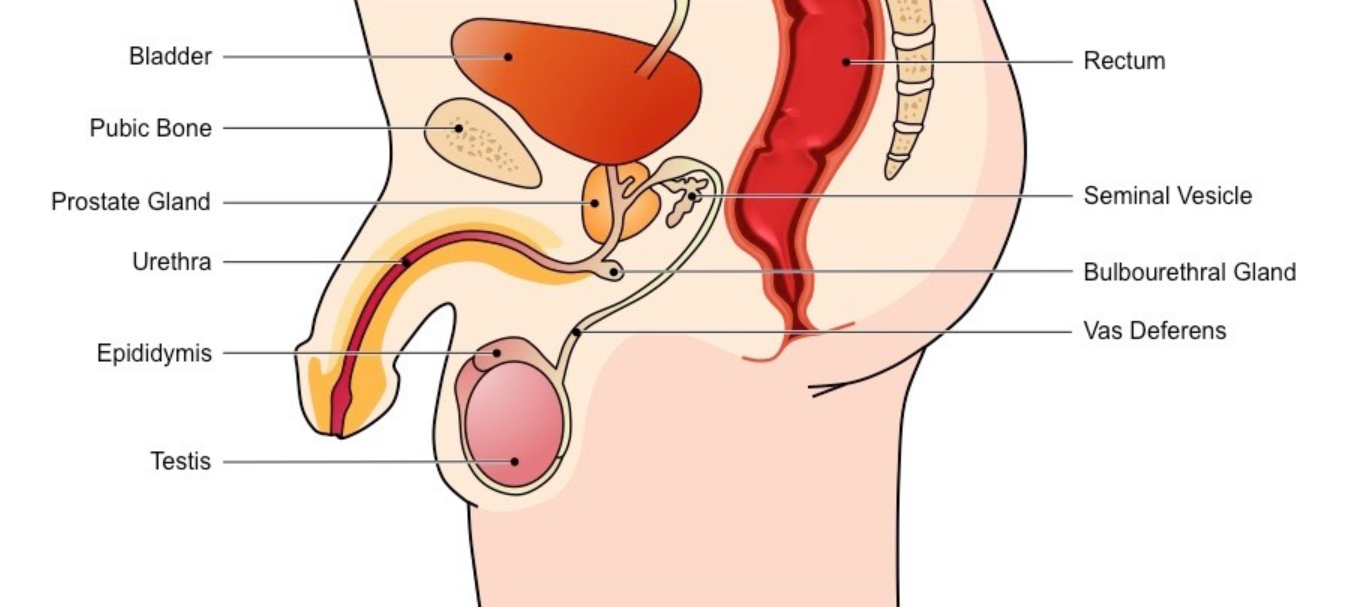
male reproductive system
testis—produces sperm and testosterone
epididymis—stores sperm until it matures and is ejaculated
scrotum—skin fold that holds testes at a lower body temp, allows sperm to survive
vas deferens (sperm duct)—muscular duct that propels sperm during ejaculation
seminal vesicle and prostate gland—secretes fluids with nutrients, prostaglandin and anticoagulating enzymes to form semen
bulbourethral gland—secretes alkaline fluid that neutralizes acidity in urine
penis—enters vagina for semen ejaculation
urethra—transfers semen and urine out of body via the penis
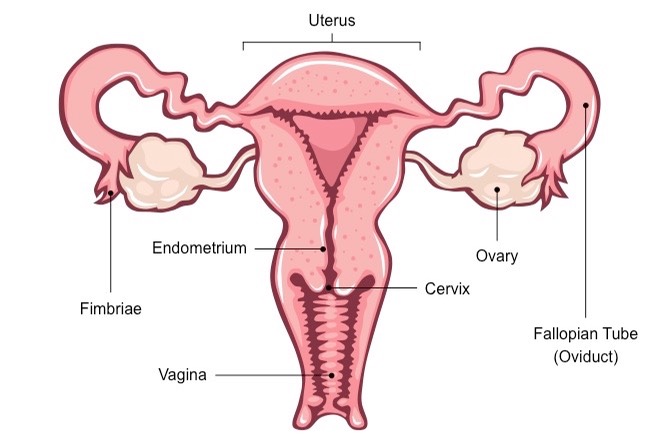
Female reproductive system
ovary—produces egg and estradiol/progesterone
fimbria—tissue that sweeps released oocyte into oviduct
oviduct/fallopian tube—carries oocyte/embryo to uterus, site for fertilization
uterus—muscular organ where embryo develops
endometrium—inner lining of uterus, thickens in prep. of implantation, lost during menstruation
cervix—neck of uterus, protects fetus during pregnancy, dilates for childbirth
vagina—birth canal
vulva—outer area that protects internal reproductive organs
puberty
biological transition from childhood to adulthood marked by secondary sexual characteristics and reproductive maturity, regulated by hypothalamus-pituitary-gonadal (HPG) axis
hypothalamus secretes increasing amounts of gonadotropin-releasing hormone (GnRH) in childhood
stimulates anterior pituitary to release gonadotropins (luteinizing hormone—LH, and follicle-stimulating hormone—FSH)
Sex hormones in puberty
Estrogen and progesterone (both from ovaries):
Development of secondary sex characteristics (body hair, breast development), regulation of menstrual cycle
Testosterone (from testes):
Development of secondary sex characteristics (facial/body hair, muscle mass, deep voice), growth of testes and penis, initiation of sperm production
menstrual cycle
produces an ovum (egg) which allows pregnancy, begins in puberty and ends in menopause, lasts for ~28 days
Ovarian cycle—follicular phase (Days 1-14)
purpose: growth and maturation of follicles
FSH stimulates follicle growth → releases estradioll
estradiol releases more FSH and begins LH (positive feedback), which inhibits FSH at higher levels (not yet)
Ovarian cycle—ovulation (Day 14)
purpose: release of oocyte from follicle
LH surge causes ovulation, positive feedback with FSH/LH ends when follicle ruptures, inhibits FSH (negative feedback)
Ovarian cycle—luteal phase (15-28)
purpose: LH converts ruptured follicle into corpus luteum
corpus luteum → progesterone + some estrogen
progesterone thickens and maintains endometrium (inner lining of uterus)
with estradiol, inhibits FSH/LH (negative feedback), prevents development of new follicles
Uterine cycle—menstrual phase (1-5)
purpose: drop in progesterone and estrogen sheds endometrium
if fertilization doesn’t occur, corpus luteum → corpis albicans
no corpus luteum → less progesterone and increased FSH which begins cycle
Uterine cycle—proliferative phase (6-14)
purpose: regrow endometrial lining
if fertilization occurs, embryo releases hormones to sustain the corpus luteum
corpus luteum → progesterone → thickens and maintains endometrium for pregnancy
Uterine cycle—secretory phase (15-28)
purpose: endometrium prepares for implantation
increase blood supply and glandular secretion, progesterone maintains uterine lining
gametogenesis
process in which diploid cells become haploid (n) gametes
in males, sperm is made through spermatogenesis
in females, egg is made through oogenesis
BOTH involve mitosis/meiosis differentiation
spermatogenesis
production of spermatozoa (sperm)
location: seminiferous tubules of the testes
spermatogenesis as a continuous process
during puberty, spermatogonia (2n germ cells) continuously undergo mitosis
grows/matures into primary spermatocytes (2n)
after meiosis I, forms two secondary spermatocytes
after meiosis II, forms four spermatids
during differentiation, acquires a tail and becomes spermatozoa
detach from Sertoli cells (mother cells that provide nutrients for spermatids) and move out of testes
Oogenesis
Production of ova/ovum (egg)
location: ovaries
Oogenesis as a discontinuous process
Before birth, oogonia (2n) continuously undergo mitosis
grows/matures into primary oocytes
enters prophase I and pauses until puberty
during puberty, one primary oocyte completes meiosis I during each menstrual cycle
forms one larger secondary oocyte (n) (all cytoplasm)
enters meiosis II and pauses until fertilization
forms one smaller polar body, eventually degenerates due to unequal division of cytoplasm
during ovulation, secondary oocyte is released and enters oviduct
if fertilized, meiosis II is completed
forms ovum and another polar body via unequal division of cytopasm
differences between male and female gametes
Males: millions of sperm (small, motile), produced in testes via spermatogenesis, released continuously
Females: limited numbers of ova (large, sessile), produced in ovaries via oogenesis, released cyclically
Gamete structure and adaptations (M)
M: sperm is streamlined for motility, head—haploid nucleus, acrosome with enzymes to degrade jelly coat of egg, paired centrioles needed by zygote to begin mitosis, minimal cytoplasm, midpiece—large amounts of mitochondria to fuel movement via ATP, tail—large flagellum for motility, made of microtubules
Gamete structure and adaptations (F)
Egg contains a large amount of cytoplasm with nutrients, zona pellucida—follicular layer that provides structural support, cortical granules—released during fertilization to prevent polyspermy
Hormone regulation (M/F)
M: testosterone regulates spermatogenesis and secondary sexual characteristics (muscle, body hair)
F: estrogen and progesterone regulate ovarian and menstrual cycles and secondary sexual characteristics (breast development)
Reproductive roles (M/F)
M: produce and deliver sperm for fertilization
F: produce eggs, provide site for fertilization, and support embryo development
Fertilization
fusion of haploid sperm and egg to form a diploid zygote
Sperm transport and capacitation
transport—sperm travels through female reproductive tract (vagina → cervix → uterus 0 → fallopian tubes)
capacitation—membrane undergoes biochemical changes that enhance sperm’s motility and ability to penetrate egg, enzymes in female reproductive tract heighten sperm’s permeability to Ca2+