Phys M3 Exam - BIG DADDY FLASHCARDS
 Call Kai
 Learn
Learn Practice Test
 Spaced Repetition
 Match
Match Flashcards
 Knowt Play
1/114

There's no tags or description
Looks like no tags are added yet.
Name | Mastery | Learn | Test | Matching | Spaced | Call with Kai |
|---|
No analytics yet
Send a link to your students to track their progress
115 Terms
Define physiology. Give an example of cell, organ, and systemic physiology. What is pathophysiology?
The study of the functions of the body
Cellular - focuses on the functions of cells (ex: cardiomyocyte heart muscle cell)
Organ - studies the functions of specific organs (The heart)
Systemic - examines the functions of organ systems (cardiovascular system)
Pathophysiology: Looks at the changes in function that result from disease
What is homeostasis? How do the nervous system and endocrine system regulate?
The body's ability to maintain stable internal conditions despite external changes. This involves body temp, bp, pH levels, and fluid balance
Auto regulation
Local adjustment by the organ or tissue itself
Tissue sends a message to itself, very localized
Extrinsic regulation
Requires help from the nervous system, involves the nervous or endocrine system
Nervous system:
FAST, short term responses
Uses electrical impulses and neurotransmitters
Endocrine system:
Slower, long-lasting responses
Uses hormones released into the bloodstream
Write an example of negative feedback – include stimulus, receptor, control center, effector, result. What does the outcome do to the receptor?
Temp regulation:
Stimulus: Body temp rises above set point
Receptor: Temp receptors in skin and brain
Control center: Hypothalamus (acts like thermostat)
Effector: Sweat glands produce sweat, blood vessels dilate to release heat
Blood Glucose Regulation:
Stimulus: Blood sugar rises
Receptor: Beta cells in pancreas
Control center: Pancreas
Effector: Pancreas releases insulin
Maintaining BP:
Stimulus: Sudden drop in BP
Receptor: Receptors in blood vessels send signals to brain
Control center: Brain's medulla oblongata
Effector: Heart beats faster, blood vessels narrow
Result/Response: THe body is brought back to its normal set point, ending the corrective action and restoring balance
Write an example of positive feedback – how is this outcome different than negative feedback? What does it do to the receptor?
A physiological mechanism that amplifies a change rather than returning it to balance. Exaggerates the effect rather than opposing it
Ends when a specific goal is reached
Ex:
Blood clotting : Platelets attract more platelets to seal the wound
Childbirth : Stretching of the cervix triggers more oxytocin and stronger contractions
Milk Letdown : Baby's suckling triggers more oxytocin resulting in more milk ejection
What does pH measure? What does a pH of 2 mean? What about 9? Describe the relationship between pH and Hydrogen ion concentration.
(potential of hydrogen) Is a measure of the acidity or alkalinity of a solution, representing the concentration of hydrogen ions in a solution
What is the pH of blood? What is it called when pH of the blood is above the set point? Below the set point?
7.35-7.45
Alkalosis
Acidosis
What is a buffer? What is an example of a buffer in the human body?
Resists changes in pH (by neutralizing excess acids or bases)
Help to maintain stable pH levels in body fluids
Ex: Bicarbonate
Where are electrons found in an atom?
Electron cloud / shells outside the nucleus
What is a valence shell? What are valence electrons?
Outermost electron layer
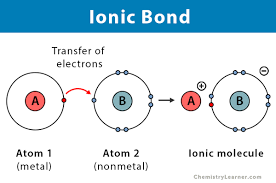
What is an ionic bond? What’s happening to electrons? Draw an ionic bond.
When atoms have an incomplete valence shell so they lose or gain electrons to achieve stability. When an atom loses or gains electrons.
What is an ion? What is the difference between a cation and an anion?
An atom that has a charge due to having unequal number of electrons and protons
Cation: Ion with a positive charge
Anion: Ion with a negative charge
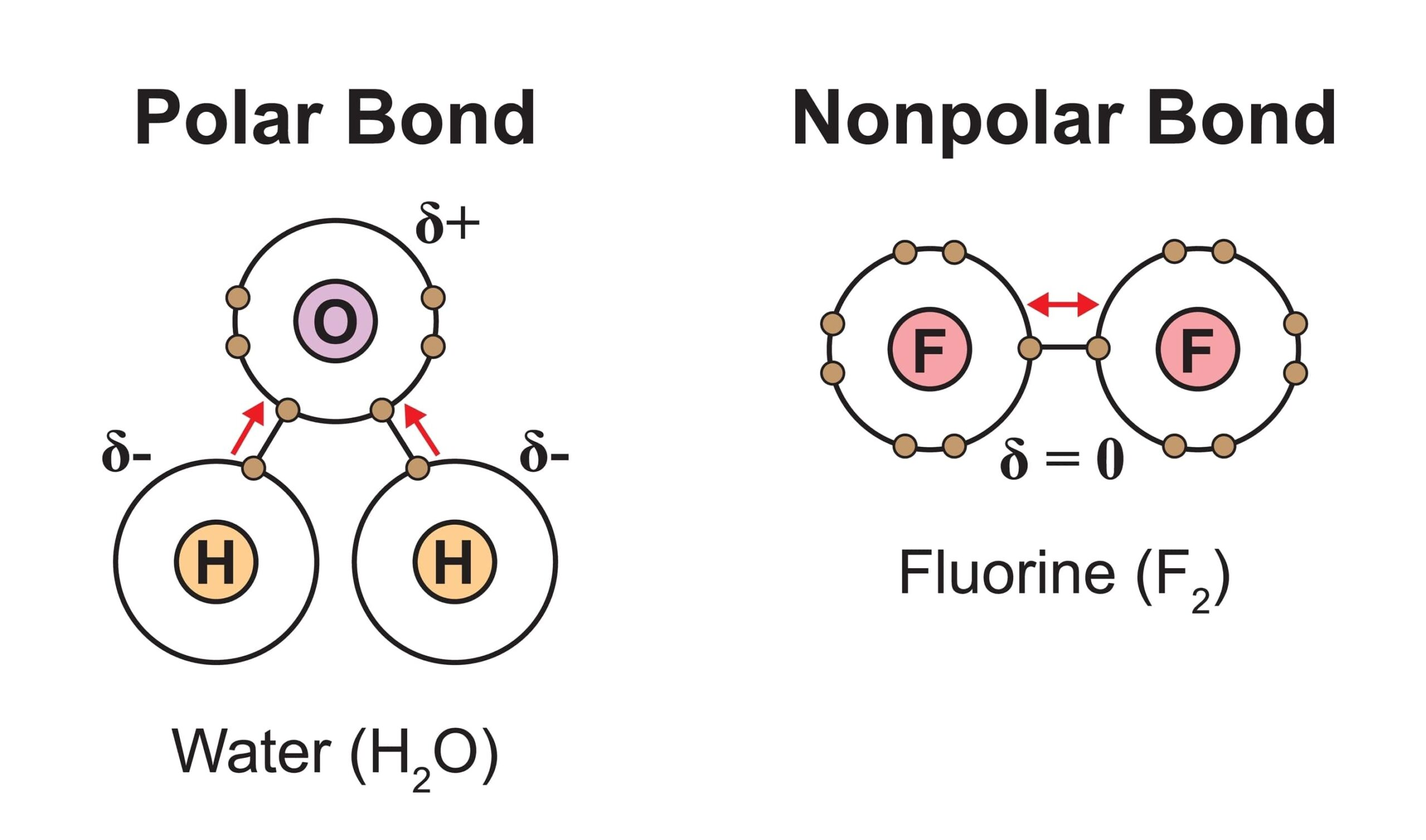
What is happening with electrons in a covalent bond? How do polar and nonpolar bonds differ? Draw a polar covalent bond and a nonpolar covalent bond.
Covalent bonds are formed when two atoms share electrons to achieve stability in their outermost shells. These bonds allow atoms to fill their valence shells and become more stable
Non-polar (electrons shared equally)
Polar (electrons shared unequally)
What is a hydrogen bond? What relevance does this have in the human body?
Weak bonds that form between a slightly positive hydrogen atom and a slightly negative atom
Found between molecules not within them
Responsible for:
DNA base pairing
Protein folding
Water's unique properties
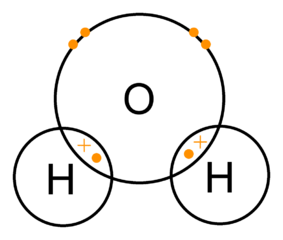
What bond makes a single water molecule?
Polar covalent bonds
Explanation: Because oxygen is more electronegative than hydrogen, it "hogs" the shared electrons, causing the oxygen end of the molecule to have a partial negative charge and the hydrogen ends to have a partial positive charge.
(Note: While water molecules are famous for their hydrogen bonds, those are the intermolecular forces that link different water molecules to each other, not the bonds within a single molecule.)
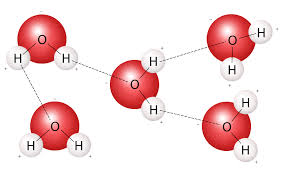
What bond is formed between multiple water molecules?
Hydrogen Bond
Explanation: The bond between separate water molecules is called a hydrogen bond. This weak intermolecular attraction occurs when the slightly positive hydrogen atom of one water molecule is attracted to the slightly negative oxygen atom of an adjacent water molecule
What is the role of the cell membrane? What does it mean when we say the cell membrane is selectively permeable?
crucial structure that surrounds the cell, providing protection and support
Physical barrier preserving homeostasis inside the cell
Controls the entry and exit of ions, wastes, nutrients into and out of the cell
Sensitive to the outside environment
Has receptors to detect changes on the outside of the cell
Has receptors where binding may occur to alter cellular activities
Provides structure when necessary (anchors the cytoskeleton, connects with other cells and tissues)
Describe the following membrane proteins: anchoring, cell adhesion, enzyme, transport, antigen.
Anchoring Proteins : Attach the cytoskeleton within the cell to the plasma membrane to support the internal structure of the cell.
Cell adhesion: Proteins for cell-to-cell attachment
Enzyme: Catalyze (accelerate) reactions inside or outside the cell
Transport: Transport solutes across plasma membrane. May or may not require energy. Also channel proteins.
Antigen / recognition: Helps immune system recognize self cells from foreign cells.
What type of transport does NOT require energy (ATP)? How does this relate to the concentration gradient?
Diffusion. Passive movement going with the concentration gradient (higher concentration to lower concentration)
What is diffusion? What is moving? How is it moving in relation to the concentration gradient?
The passive movement of SMALL OR NON-POLAR molecules from an area of high concentration to low concentration, driven by the concentration gradient.
What is the difference between simple diffusion and facilitated diffusion? Does either type of diffusion use energy (ATP)?
Simple: Materials can pass through the phospholipid bilayer without aid
Facilitated: Used for substances that cannot cross lipid bilayer due to size, charge, and or polarity. Needs carrier protein.
What is osmosis? What is moving? How is it moving in relation to the concentration gradient?
Movement of water. Lower solute concentration to higher solute but does not require energy.
Does osmosis require ATP?
Naur
What type of transport uses ATP? List 2 examples.
Active transport & Vesicular transport
ex: Sodium-potassium exchange pump
ex: Exocytosis
List the function of the nucleus.
Contains genetic material (DNA) and controls cellular activites
List the function of the ribosome.
Synthesize proteins from amino acids
Read mRNA and link amino acids into polypeptides
List the function of the Golgi apparatus.
Modifies, sorts, and packages proteins and lipids for secretion or internal use.
List the function of the lysosome.
Contains enzymes for the digestion of cellular waste and pathogens.
List the function of both the smooth and rough endoplasmic reticulum.
Synthesizes proteins (rough ER) and lipids (smooth ER)
List the function of the mitochondria.
Powerhouse. Produce energy (atp) through cellular respiration
Draw out the pathway of ATP production and location in the cell starting with glycolysis. Indicate whether the step is aerobic or anaerobic.
Glycolysis - Anaerobic (no oxygen)
Krebs Cycle - Aerobic
Electron Transport Chain - Aeorbic
Glycolysis: Occurs in the cytoplasm, 1 glucose into 2 pyruvates, produces 2 ATP, generates 2 NADH for later steps
Krebs Cycle: Occurs in the mitochondrial matrix, Pyruvate into CO2, transfers high-energy electrons to electron transport chain
Electron Transport Chain (ATP Jackpot!): Occurs in inner mitochondrial membrane,
What is transcription? Where does it happen in the cell?
Making a copy of DNA into RNA. Nucleus.
What is translation? Where does it happen in the cell?
Reading message from mRNA and making a protein. Ribosome.
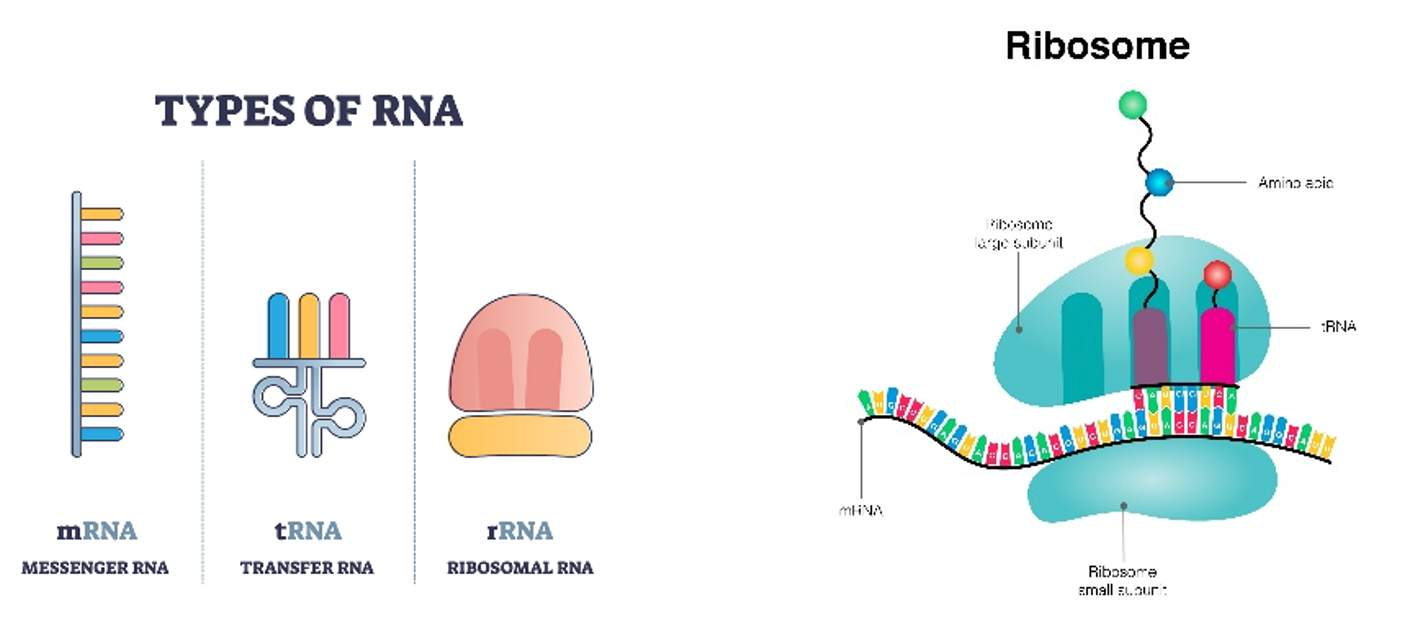
What are the 3 types of RNA and where are they used in transcription/translation?
mRNA (messenger RNA, product of transcription)
tRNA (transfer RNA, 1 amino acid for every 3 nucleic acid)
rRNA (ribosomal RNA, acts as a pair of hands forcing mRNA and tRNA to work together.
What does a ribosome do for protein synthesis?
Reading mRNA: Ribosomes bind to mRNA and read the genetic code in sets of three nucleotides, called codons.
Recruiting tRNA: They provide a docking site for transfer RNA (tRNA) molecules, which carry specific amino acids and match their anticodons to the mRNA codons.
Catalyzing Peptide Bonds: Ribosomes (acting as ribozymes) link the incoming amino acids together with peptide bonds to form growing protein chains.
Termination: Once the ribosome reaches a "stop" codon on the mRNA, it releases the newly synthesized protein so it can fold into its functional shape
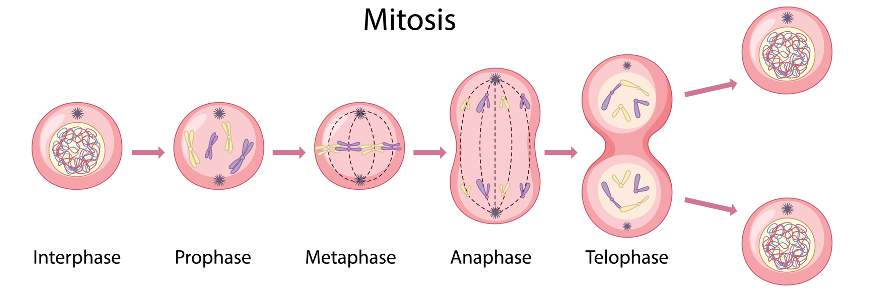
What is mitosis? What is the result of mitosis? Why is this important for life?
Cell division that results in two genetically identical daughter cells. Essential for growth development, and tissue repair.
Functions of the Cell Membrane
aka plasma membrane
crucial structure that surrounds the cell, providing protection and support
Physical barrier preserving homeostasis inside the cell
Controls the entry and exit of ions, wastes, nutrients into and out of the cell
Sensitive to the outside environment
Has receptors to detect changes on the outside of the cell
Has receptors where binding may occur to alter cellular activities
Provides structure when necessary (anchors the cytoskeleton, connects with other cells and tissues)
Proteins of the Plasma Membrane
Anchoring proteins
Recognition Proteins (antigens)
Enzymes
Receptor Proteins
Transport Proteins
Cell Adhesion Proteins
Anchoring Proteins
Attach the cytoskeleton within the cell to the plasma membrane to support the internal structure of the cell.
Recognition Proteins (antigens)
The presence or absence of these proteins helps the immune system to recognize ‘self cells’ as opposed to ‘foreign cells’.
Enzymes
Catalyze (accelerate) reactions inside or outside of the cell.
Receptor Proteins
Serve to mark a cell’s identity so that it can be recognized by other cells.
Transport Proteins
Includes carrier proteins that bind solutes and transport them across the plasma membrane, which may or may not require energy, and also channel proteins with a pore that allows water and other solutes to enter an otherwise water-insoluble membrane (channels are specific and passage is limited).
Cell Adhesion Proteins
Proteins for cell-to-cell attachment.
Permeability
Permeability is the characteristic of a membrane that determines what substances can pass through.
Impermeable: Nothing can pass through
Freely permeable: Anything can pass through
Selectively permeable: Allows and restricts passage
Diffusion
The passive movement of molecules from an area of higher concentration to an area of lower concentration, driven by the concentration gradient. Only works for small & nonpolar molecules.
(e.g, oxygen, co2, lipids)
Essential for maintaining cellular homeostasis
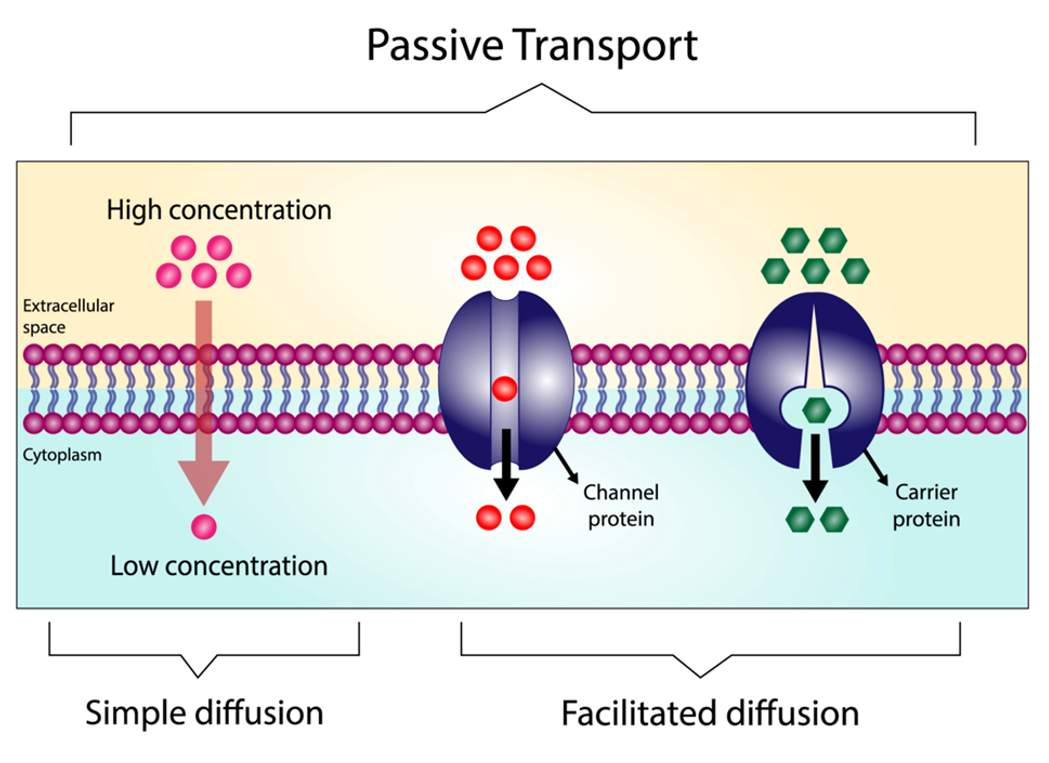
Simple diffusion
Channel-mediated diffusion
Facilitated diffusion
Simple diffusion
Materials that can pass through the phospholipid bilayer without aid
Channel-mediated diffusion
Channel proteins or “leak channels” are passive channels that water or ions can enter through freely. Ions will have limited passage based on size, charge, or interactions with the protein channel.
Facilitated diffusion
The diffusion process used for those substances that cannot cross the lipid bilayer due to their size, charge, and/or polarity. It NEEDS a carrier protein so polar molecules, ions, and water-soluble molecules can move through lipid tails.
e.g, glucose, water, ions
Osmosis
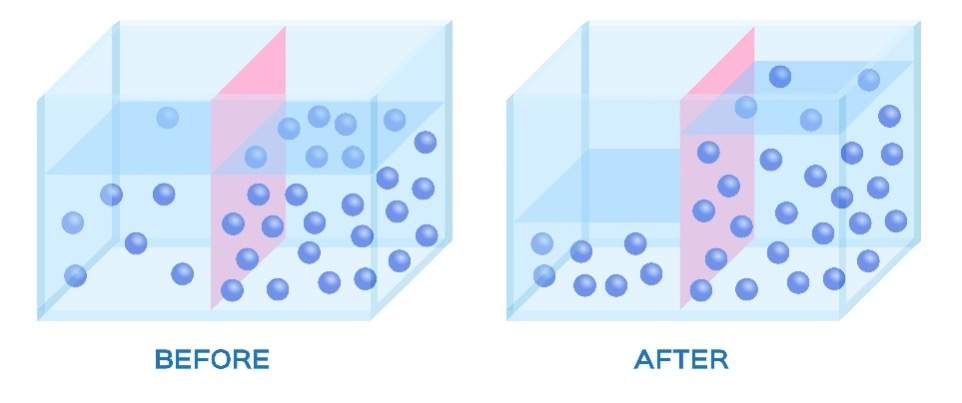
The movement of water across a selectively permeable membrane from an area of lower solute concentration to an area of higher solute concentration.
Occurs: when there is a difference of solute concentration on the two sides of the membrane
Goal: To have the same solution concentration on both sides of the membrane but using water instead of solutes to accomplish it
Osmolarity
Measures the total concentration of solute particles in a solution
(Measures solute concentration)
Tonicity
Refers to how the concentration of solutes in a solution affects the movement of water into or out of a cell
(Describes the effect on the cell's volume and shape)
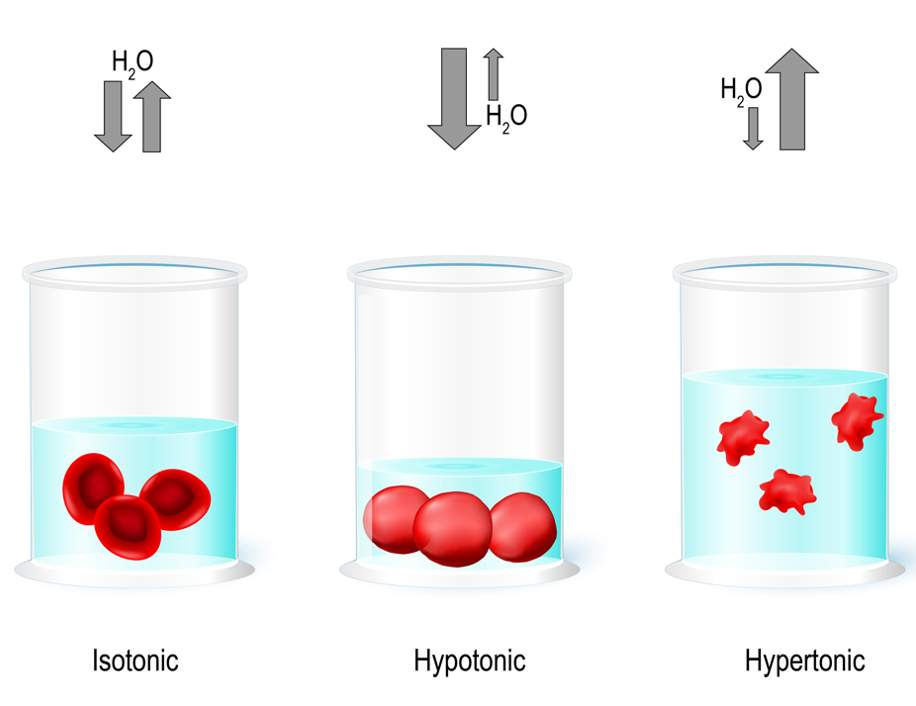
Osmolarity: Isotonic
Equal solute
Equal water
No net movement
Cell size is normal
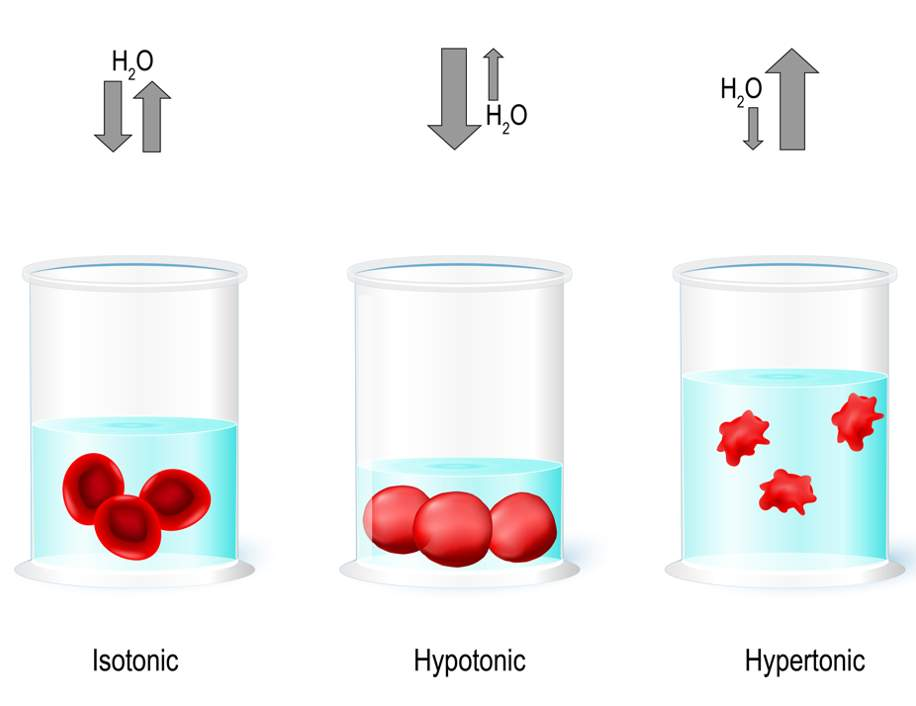
Osmolarity: Hypotonic Solution
Higher solute inside
Higher water outside
Water moves in
Cell SWELLS
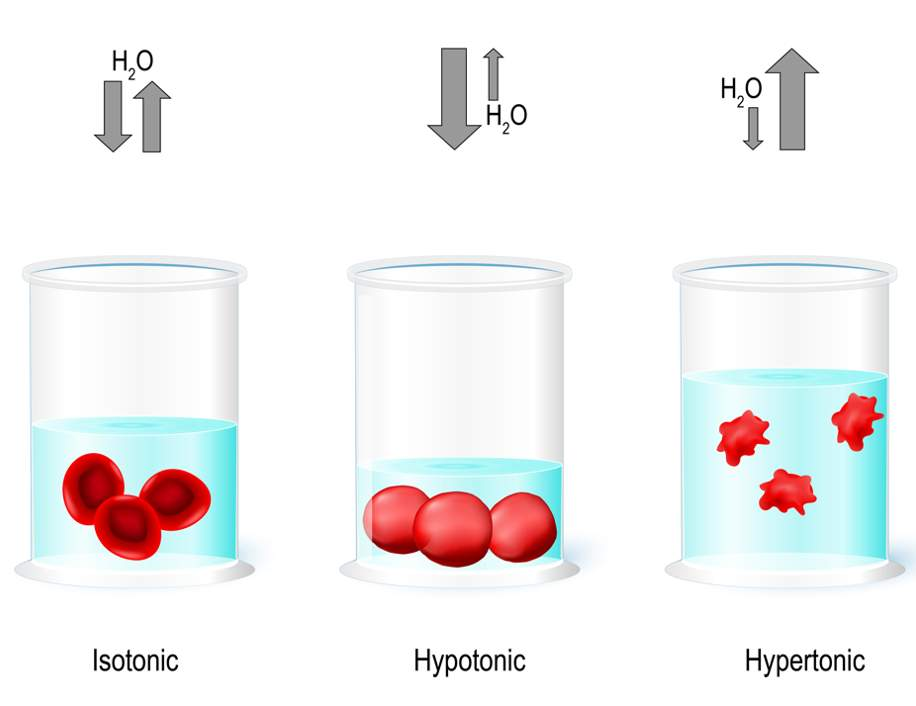
Osmolarity: Hypertonic solution
Higher solute outside
Higher water inside
Water moves out
Cell SHRINKS
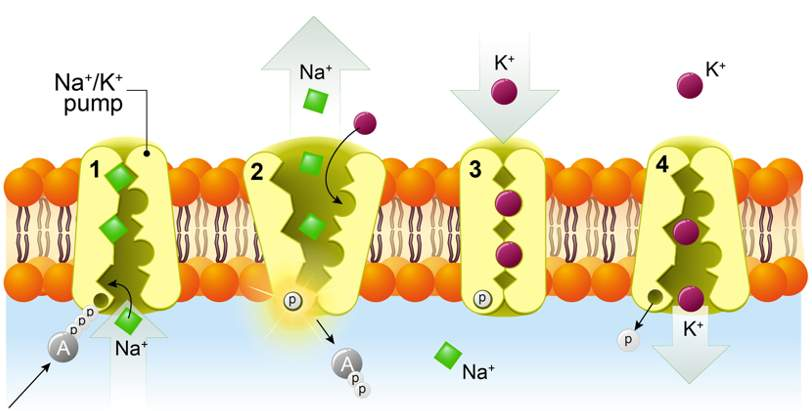
Active transport
The process by which molecules are moved from an area of lower concentration to an area of higher concentration against a concentration gradient.
This movement requires energy in the form of ATP because it goes against the natural direction of diffusion
Ex: Sodium-potassium exchange pump
Vesicular transport
(requires energy), the process of moving materials within or between cells using vesicles, which are small, membrane-bound sacs.
Allows for movement of large substances (or large amounts of substance) across the cell membrane.
Endocytosis
Phagocytosis
Exocytosis
Vesicular transport: Endocytosis
Materials packaged in vesicles and transported into the cell.
Vesicular transport: Phagocytosis
Simple definition: cell eating
Long definition: Occurs only in specialized cells like a macrophage; the cell engulfs a foreign/damaged substance, fuses with a lysosome, breaks down the foreign/damaged material, and either reabsorbs or rids of the product through exocytosis.
Vesicular transport: Exocytosis
The process of a cell exporting material using vesicular transport
Nucleus
Contains genetic material (DNA) and controls cellular activities.
Mitochondria
Produce energy (ATP) through cellular respiration.
Endoplasmic Reticulum (ER)
Synthesizes proteins (rough ER) and lipids (smooth ER).
Golgi Apparatus
Modifies, sorts, and packages proteins and lipids for secretion or internal use.
Lysosomes
Contains enzymes for the digestion of cellular waste and pathogens.
Ribosomes
Synthesize proteins from amino acids. Ribosomes may be found floating in the cytoplasm (free) or attached to the endoplasmic reticulum (bound).
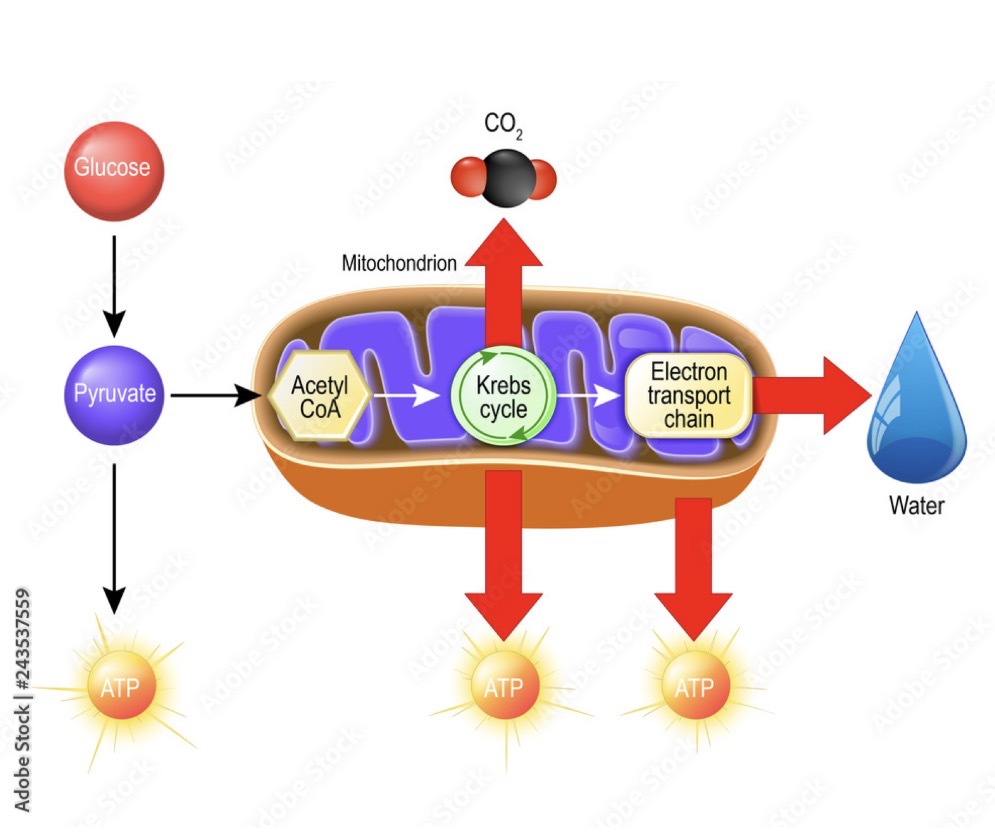
Mitochondrial Energy Production
Process of glycolysis in the cytoplasm → energy is generated through anaerobic and aerobic respiration
Notes: ??
Mitochondrial energy production begins with glycolysis, a process occurring in the cytoplasm where glucose is broken down into two molecules of pyruvate, yielding a small amount of ATP and NADH.
In the absence of oxygen, anaerobic respiration occurs, where pyruvate is converted into lactic acid, generating only a small amount of ATP (about 5% of cellular energy). If oxygen becomes available, lactic acid can be converted back to pyruvate and will follow the next step.
If oxygen is present, pyruvate enters the mitochondria for aerobic respiration, undergoing the Krebs cycle and oxidative phosphorylation to produce a substantial amount of ATP (about 95% of cellular energy).
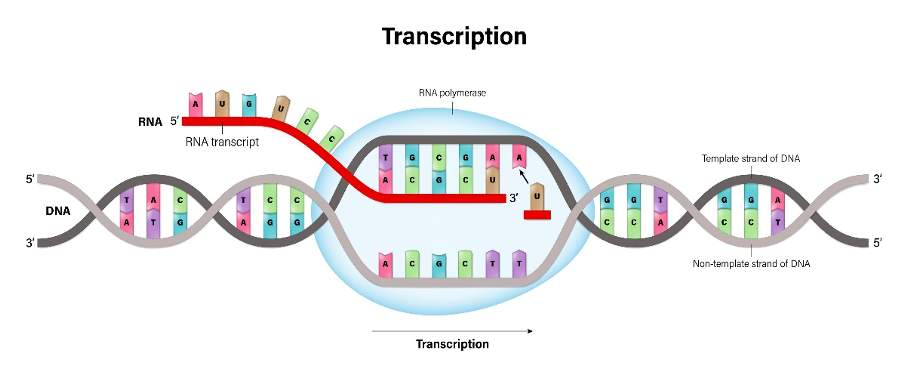
Transcription
Short definition: Making a copy of the instructions found in DNA (inside the nucleus). Copy is carried by mRNA
Long definition: The process of copying a segment of DNA into RNA. This is the first step in gene expression, where the DNA sequence of a gene is transcribed to produce an mRNA molecule. The mRNA is like a transcript, or copy of the gene's DNA code.
Translation
Simple definition: Reading the message from the mRNA and making a protein. This occurs in the ribosome. As the ribosome reads the message, it has tRNA bring in amino acids. These are then bound together via carbon to form a linear protein.
Long definition: The process by which ribosomes synthesize proteins using the mRNA transcript produced during transcription. This involves decoding the mRNA sequence to build a specific protein.
Three types of RNA are involved in Translation:
mRNA (messenger RNA, a product of Transcription)
tRNA (transfer RNA, which transfers 1 amino acid for every 3 nucleic acids),
rRNA (ribosomal RNA, which acts as a pair of hands forcing mRNA and tRNA to work together).
Mitosis
The process of cell division that results in two genetically identical daughter cells. Mitosis is essential for growth, development, and tissue repair.
Concentration Gradient
The difference in concentration of a substance across a space
Movement of particles from an area of higher concentration to an area of lower concentration (diffusion) down/with
Particles moving up/against is the movement of particles of lower concentration to an area of higher concentration (requires ATP)
Water soluble and impact on ability to move into the cell
Water soluble = will mix with water
In the body, water soluble things (ions, polar molecules) travel easily in the blood BUT cannot cross the cell membrane due to lipid tails (they are not fat soluable)
Fat/lipid soluable and impact on ability to move into the cell
These are non-polar molecules because fats are non-polar. In the body these need a protein carrier to travel in the blood BUT they cross the cell membrane without any help.
How cells make proteins
Transcription
Translation
Protein moves to golgi
Golgi packages it into a vesicle
Can be moved to a location inside the cell OR expelled via exocytosis
3 stages to transcription
Initiation - A promoter (a particular sequence of nucleotides) triggers the start of transcription
Elongation - RNA polymerase unwinds the DNA segment. RNA polymerase is an enzyme that adds new nucleotides to a growing strand of RNA
Termination - causes the RNA to separate from the gene and from RNA polymerase, ending transcription.
The process of protein synthesis
DNA in nucleus as template
mRNA is processed and released into cytoplasm
mRNA binds to ribosomes
tRNA carries amino acid to mRNA
Anticodon-codon complementary base paring occurs
Peptide chain is transferred from resident tRNA to incoming tRNA
tRNA departs
Protein modification after translation
Base pairing DNA vs RNA
DNA: adenine, thymine, cytosine, guanine
DNA base pairs: A-T , C-G
RNA: adenine, uracil, cytonside, guanine
RNA base pairs: A-U, C-G
Smooth ER
Makes and stores lipids and steriods
Responsible for the synthesis of:
Phospholipids and cholesterol
Steriod hormones
Glycerides
Glycogen
Smooth ER
Protiens synthesized, modified, packaged, and exported
Physiology
The study of the functions of the body
The scientific study of the chemistry and physics of the structures of the body and the ways in which they work together to support the functions of life.
Cellular - focuses on the functions of cells
Organ - studies the functions of specific organs
Systemic - Examines the functions of organ systems
Pathophysiology
Looks at the changes in function that result from disease
Homeostasis
The body's ability to maintain stable internal conditions despite external changes.
This involves regulatory mechanisms that balance factors such as body temp, bp, pH levels, and fluid balance
What are the 2 types of homeostasis?
Auto regulation
Local adjustment by the organ or tissue itself
Tissue sends a message to itself, very localized
Extrinsic regulation
Requires help from the nervous system, involves the nervous or endocrine system
Homeostasis: Stimulus
A deviation from the normal range triggers the feedback loop
Homeostasis: Sensor/Receptor
Specialized cells detect the change
Component of a feedback system that monitors a physiological value
That value is reported to the control center
Homeostasis: Control Center
Receives info from the sensors, compares the value to a normal range, then decides on the appropriate response.
Homeostasis: Effector
Cell or organ that causes a change to reverse the situation and return the value to normal range
Homeostasis: Response
The body is brought back to its normal set point, ending the corrective action and restoring balance
Homeostasis: Set point
The desired range or value around which the normal range flactuates
Homeostasis: Negative Feedback Loop
A physiological mechanism that maintains homeostasis by reversing a deviation from the set point
Keeps the body in its normal range by counteracting the original change
Most common feedback in the body
Ex:
Body temp regulation
Blood glucose control by insulin and glucagon
Blood pressure regulation
Homeostasis: Positive Feedback Loop
A physiological mechanism that amplifies a change rather than returning it to balance. Exaggerates the effect rather than opposing it
Ends when a specific goal is reached
Ex:
Blood clotting : Platelets attract more platelets to seal the wound
Childbirth : Stretching of the cervix triggers more oxytocin and stronger contractions
Milk Letdown : Baby's suckling triggers more oxytocin resulting in more milk ejection
Metabolism
Refers to all the chemical reactions that occur within a living organism to maintain life.
Catabolism
Anabolism
Catabolism
Break things down into smaller parts
The metabolic process that breaks down complex molecules into simpler ones, releasing energy and heat in the process. ex: Digesting food.
Anabolism
Build molecules our body needs.
Metabolic process that builds complex modules from simplier ones, using energy in the process. ex: Makes proteins and fats. storing sugars.
pH
(potential of hydrogen) Is a measure of the acidity or alkalinity of a solution, representing the concentration of hydrogen ions in a solution.
Measured from 0-14:
pH 0-7: Acidic (higher H⁺ concentration)
pH = 7: Neutral
pH 7-14: Alkaline (lower H⁺ concentration)
pH of blood
7.35-7.45
pH: Acidosis
Acidosis: A condition in which the blood or body fluids have a pH lower than 7.35, indicating excess hydrogen ions (H⁺) and increased acidity.
Metabolic acidosis: Caused by an accumulation of acids or loss of bicarbonate (e.g., in diabetes, kidney failure).
Respiratory acidosis: Caused by inadequate CO₂ removal, leading to carbonic acid buildup (e.g., in respiratory diseases).
pH: Alkalosis
Alkalosis: A condition in which the blood or body fluids have a pH higher than 7.45, indicating decreased hydrogen ions (H⁺) and increased alkalinity.
Metabolic alkalosis: Caused by a loss of acids (e.g., from vomiting or excessive bicarbonate intake).
Respiratory alkalosis: Caused by excessive loss of CO₂ (e.g., from hyperventilation).
pH: Buffer
Resists changes in pH (by neutralizing excess acids or bases)
Help to maintain stable pH levels in body fluids
Atoms
Basic building blocks of matter consisting of neutrons, protons, and electrons
Electrons
Subatomic particles with a negative charge that orbit the nucleus of an atom.
Play a key role in chemical bonding and chemical reactions (as their arrangement determines how atoms interact with each other)
2 in the first energy level
8 in second
8 in third