Short Answer Questions -> Cumulative Module 1,2,3
 Call Kai
 Learn
Learn Practice Test
 Spaced Repetition
 Match
Match Flashcards
 Knowt Play
1/48

Earn XP
Description and Tags
Answer in Bulletpoints
Name | Mastery | Learn | Test | Matching | Spaced | Call with Kai |
|---|
No analytics yet
Send a link to your students to track their progress
49 Terms
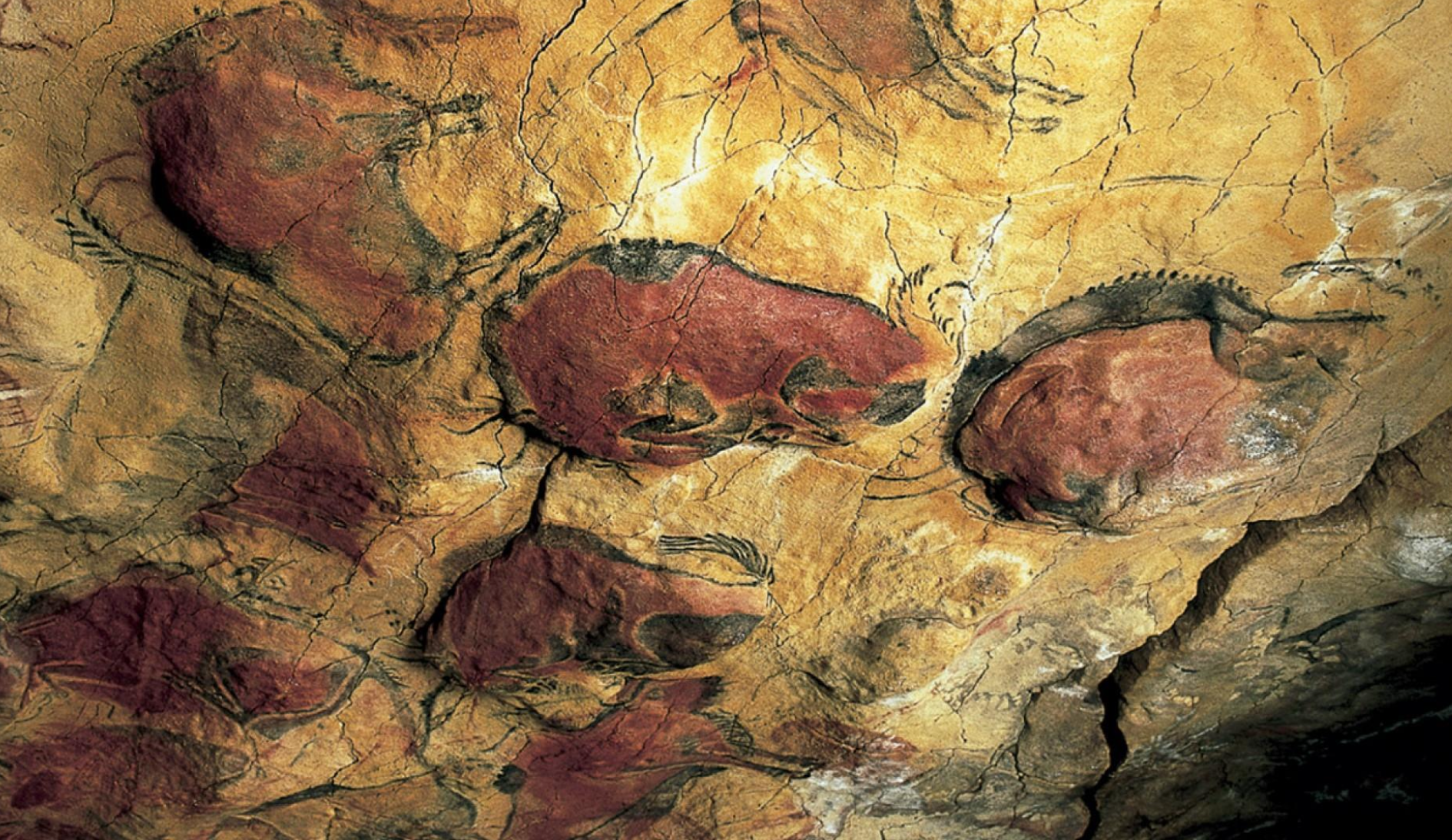
Altamira
Magdalenian Cave Art:
Large, uses formation of rock to create volume.
Imagine the process of choosing spot, very slow, thoughtful, creative
Painted in difficult conditions with no natural light and with the aid of torches or stone lamps with animal fat, the painted cabes are not near the entrance, made for just a few? Ceremonial spaces for ritual?
The study of these caves mainly based in comparison with contemporary (19th century) ‘primative’ groups.
Interpretations:
Magical, ritualistic to secure nourishment and fertility, abundance
Hands, traces of the participants in ceremonies
Duality of nature, some animals representing men (horses) and others women (bison and bull), men thin, women obese, duality based in opposition
Symbolic and communicative to register events and history
711
Muslims Invade the Iberian Peninsula,
This region was referred to Al-Andalus under Islamic rule
Lead to significant cultural and artistic exchanges that shaped the region's history for centuries. (In the context of Al-Andalus)
Al-Andalus
The name for the Iberian Peninsula under Islamic rule
Reined From 711 (752 fully conquered) until 1492
Was considered a Golden Age, cultural advancements influenced advancements in architecture and arts in the region and the people.
Caliphate of Córdoba (929-1031), Huge chunk of Spain
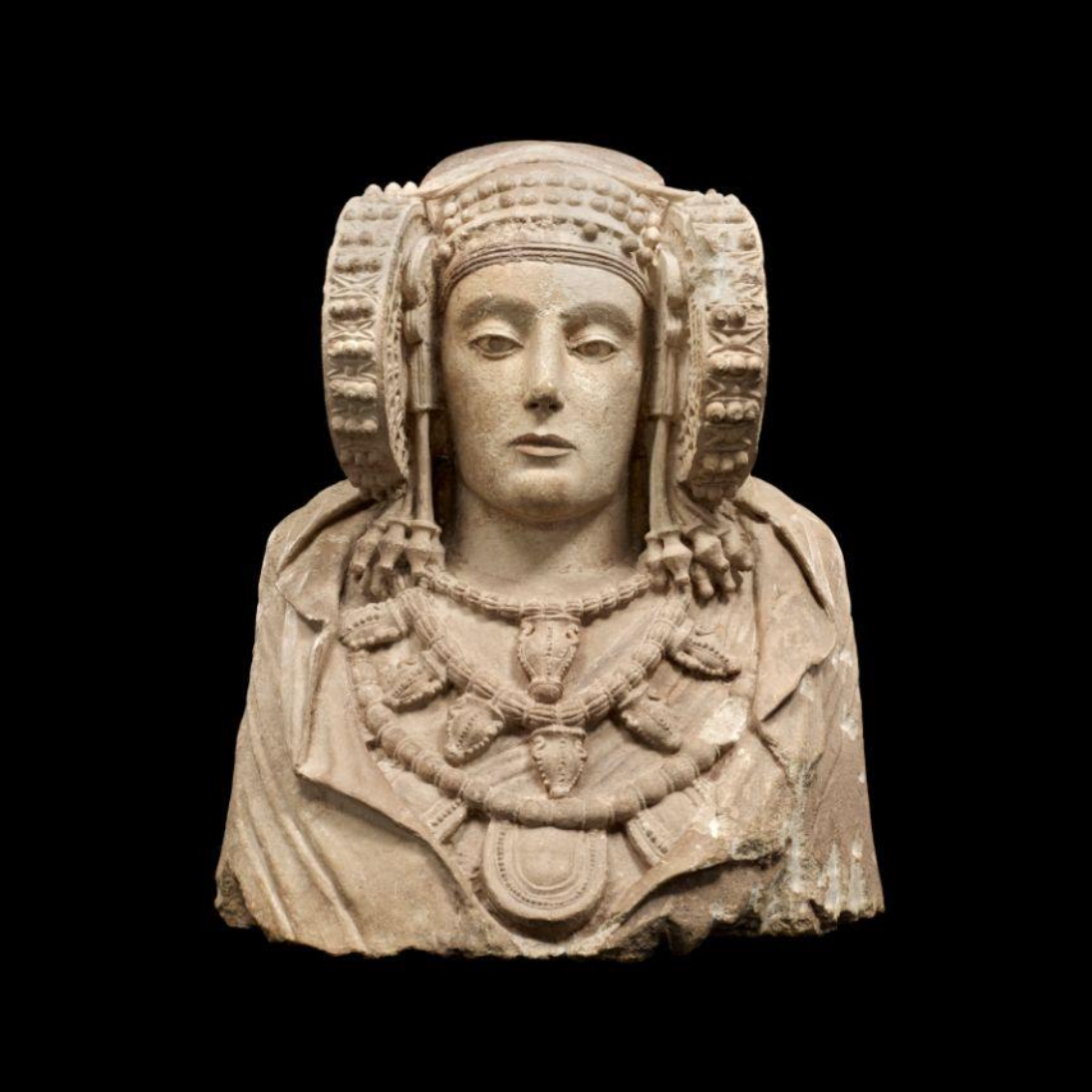
Dama De Elche
Became a National Symbol for Spain (created in 5th century BC)
Representative of Iberian Art
Idealized/Stylized Features
Funerary Urn (hollow back)
Unidentified Women - Richly Dressed - Possibly Divine
(Greek Influence - Drapery folds)
Made in Elche where it was found by Chance in 1897
Purchased by a French man who brought it to the Louvre, displayed as a treasure of Iberian art, yet the Spanish wanted its return, which it was in 1940, and celebrations ensued amplifying its status as a national symbol
Basilica
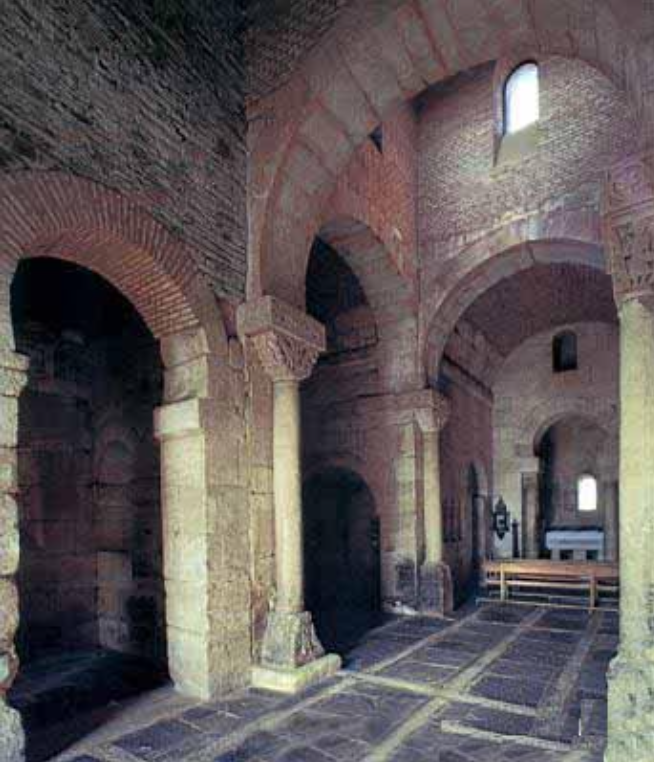
Visigothic Era Church
Either Basilica Plan Church (type of church layout) Dedicated to Saint John the Baptist
or Greek Cross Plan, (or mixed cross inside a rectangle)
A Basilican church plan is a classic, long, rectangular building design
Small
Straight Apse (rounded, semi-circular room extension at end of church)
Horseshoe Arches
Decorative Columns
Visigoths
Visigothic Spain (after Roman Empire) [1/4] - (reined late 400 ish - 711)
The Visigoths were a group of Germanic people who establishing a kingdom in Iberia after the fall of the Roman Empire, significantly influencing the region's political, social, and cultural landscape until the Islamic conquest.
Arabesque
Seen Heavily in Islamic Architecture (big influence)
Repeating geometric forms echoing plants often with calligraphy
These forms constitute an infinite pattern reflecting an un-centralized nature of God
Spirituality without figural representations
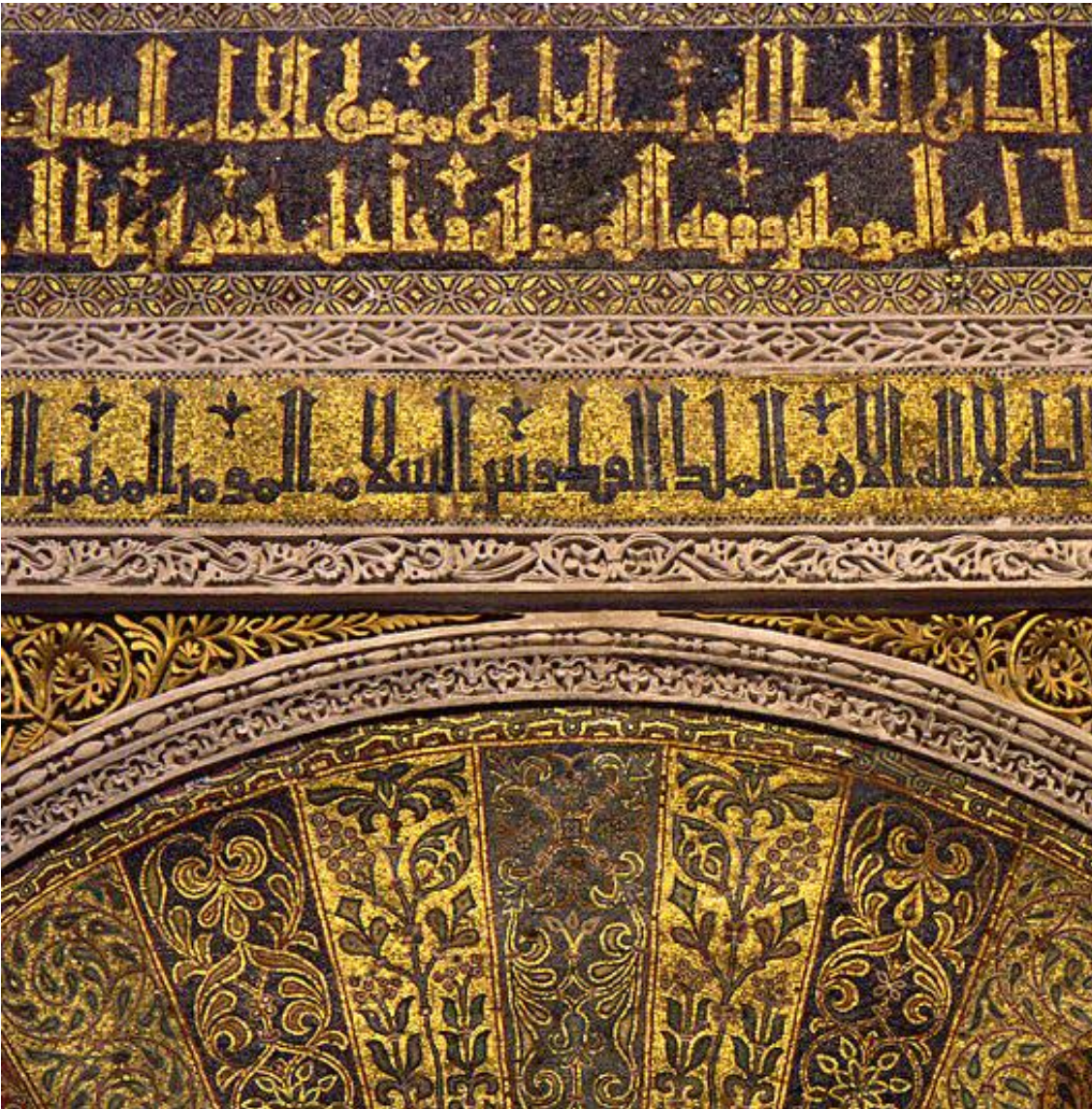
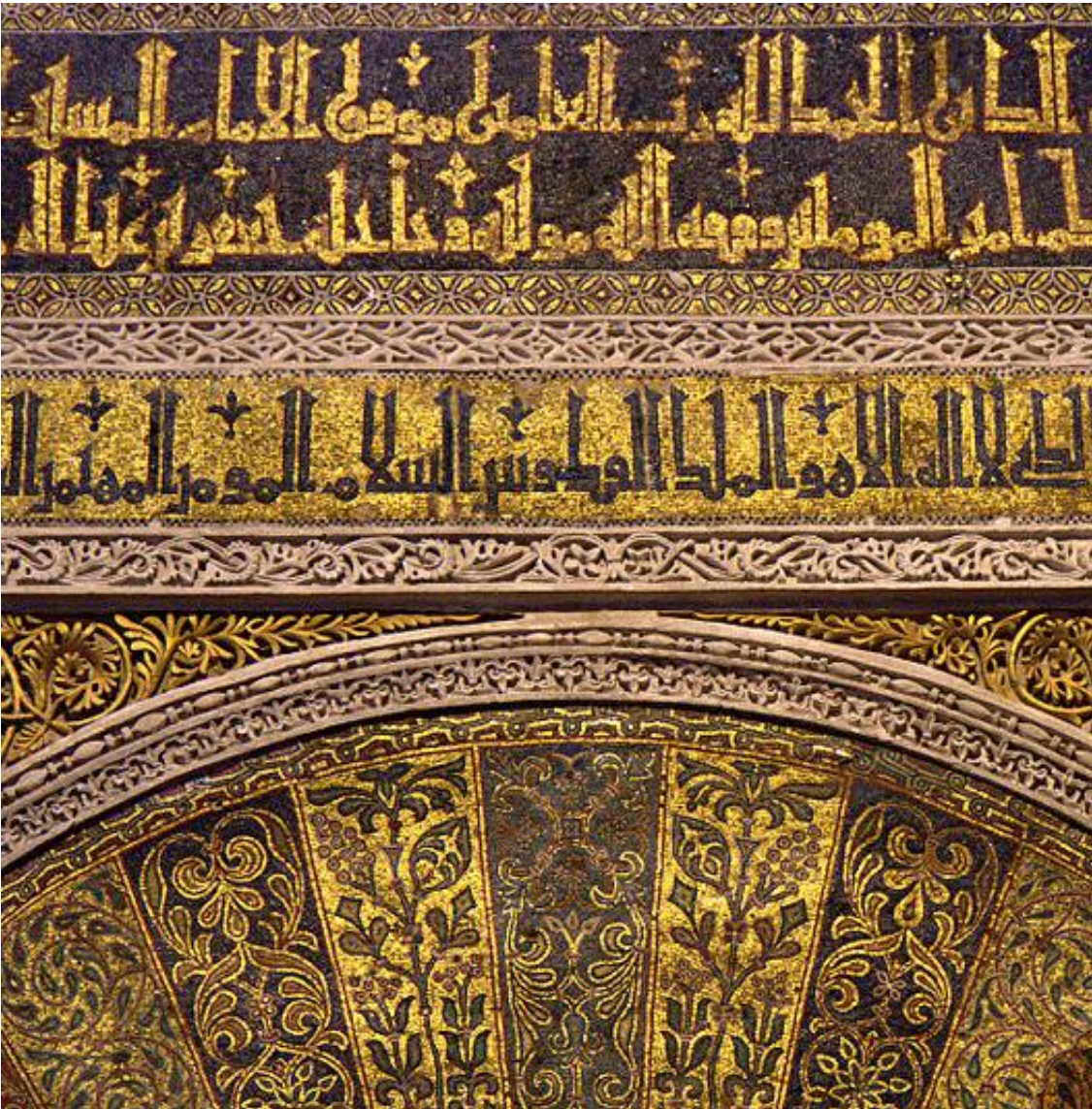
Mihrab
A semicircular niche in the wall of a mosque that indicates the direction of Mecca, serving as a focal point for Islamic worship.
A highly ornate, octagonal, niche-like room built in 965 AD
Positioned to indicate the direction of Mecca
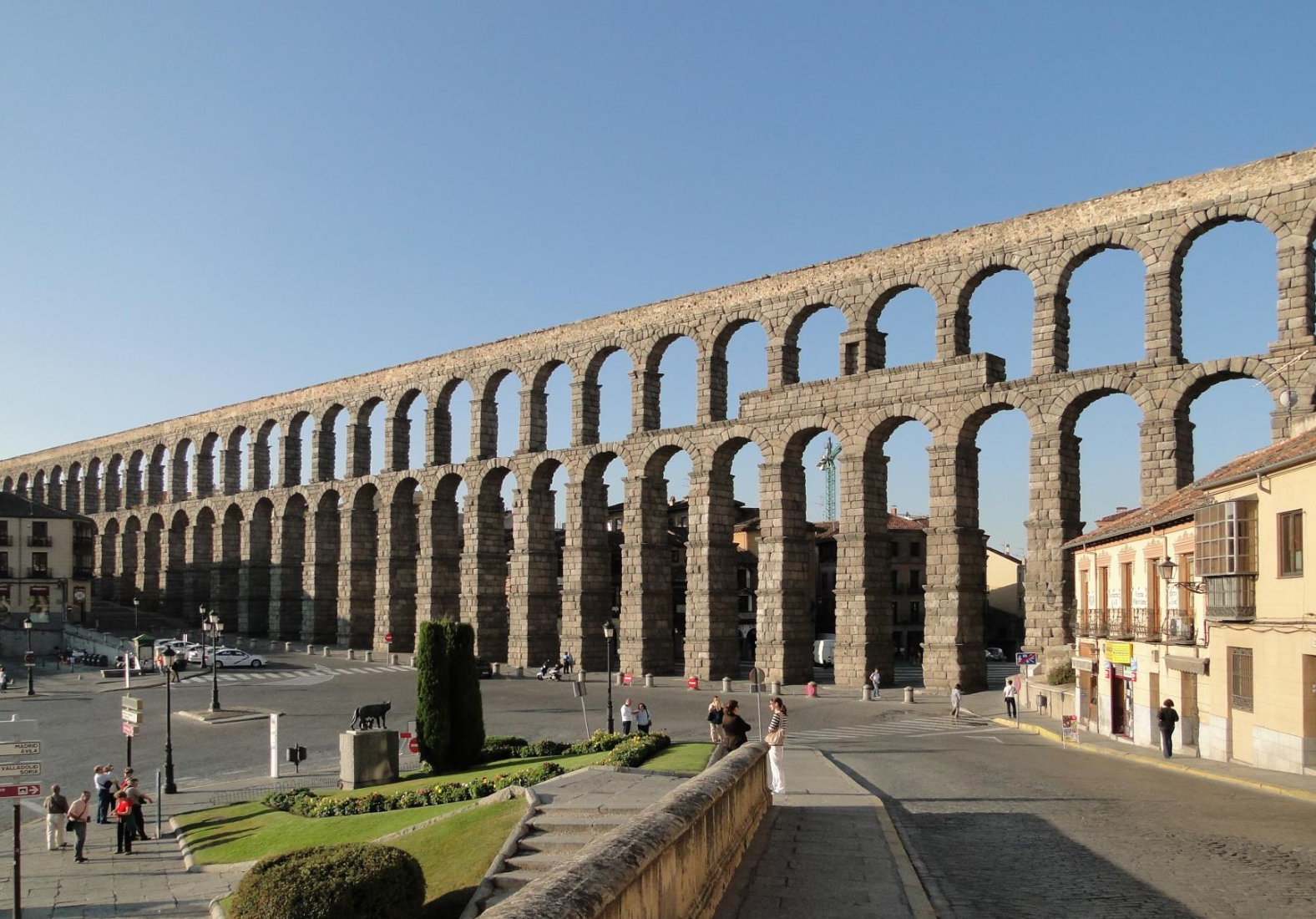
Aqueduct
A structure built by the romans designed to Transport Water.
Think Aqueduct of Segovia
Also showcased Roman power through architecture. (tall, double arches)
Greek/Roman Orders of Architecture
Refers to the classical styles of columns and entablatures that originated in ancient Greece and Rome, significantly influencing later architectural practices.
Corinthian inspired the Visigoths (however more simplified)
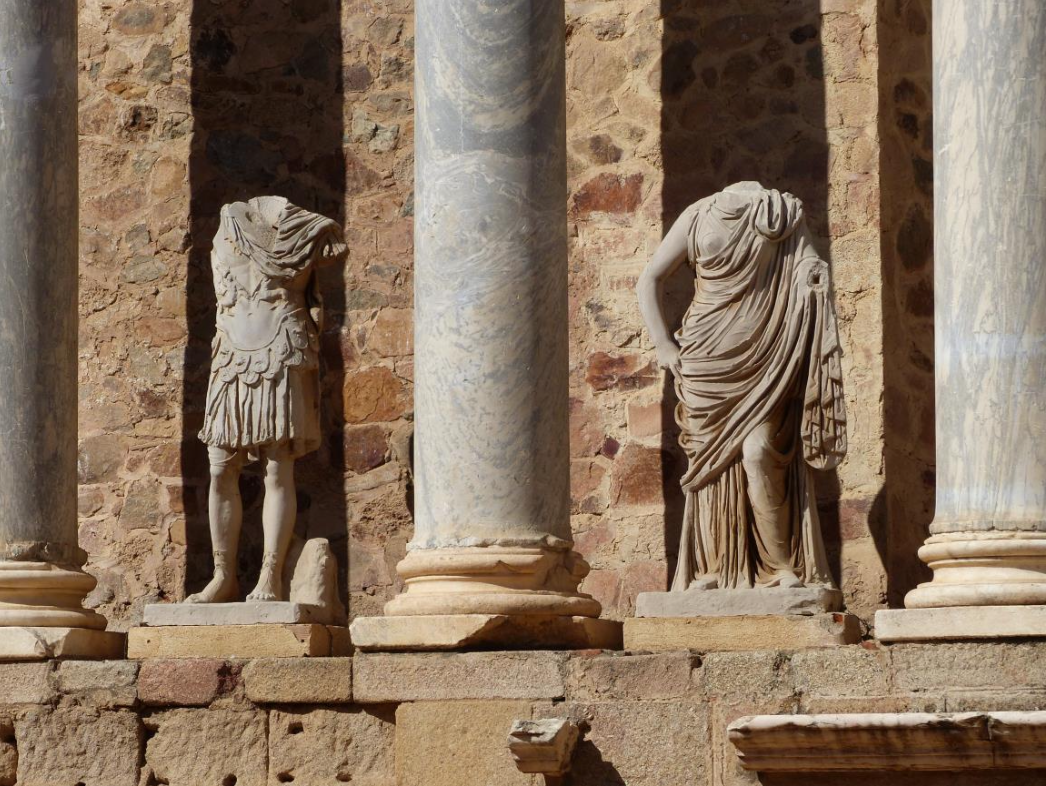
Imperial Cult
Imperial cult: Living emperors (beginning with Augustus) and family members were honored (seen as divine) for their representation of the genius of their predecessors.
The emperor is going to be omnipresent (present everywhere at the same time) through the imperial cult.
Augustus: The imperial cult began with him; he was sculpted to embody diversity.
Mudéjar
Mudejar means artistic and architectural style in Christian Spain that incorporates Islamic elements.
Also refers to a Muslim person living and practicing their religion under Christian rule.
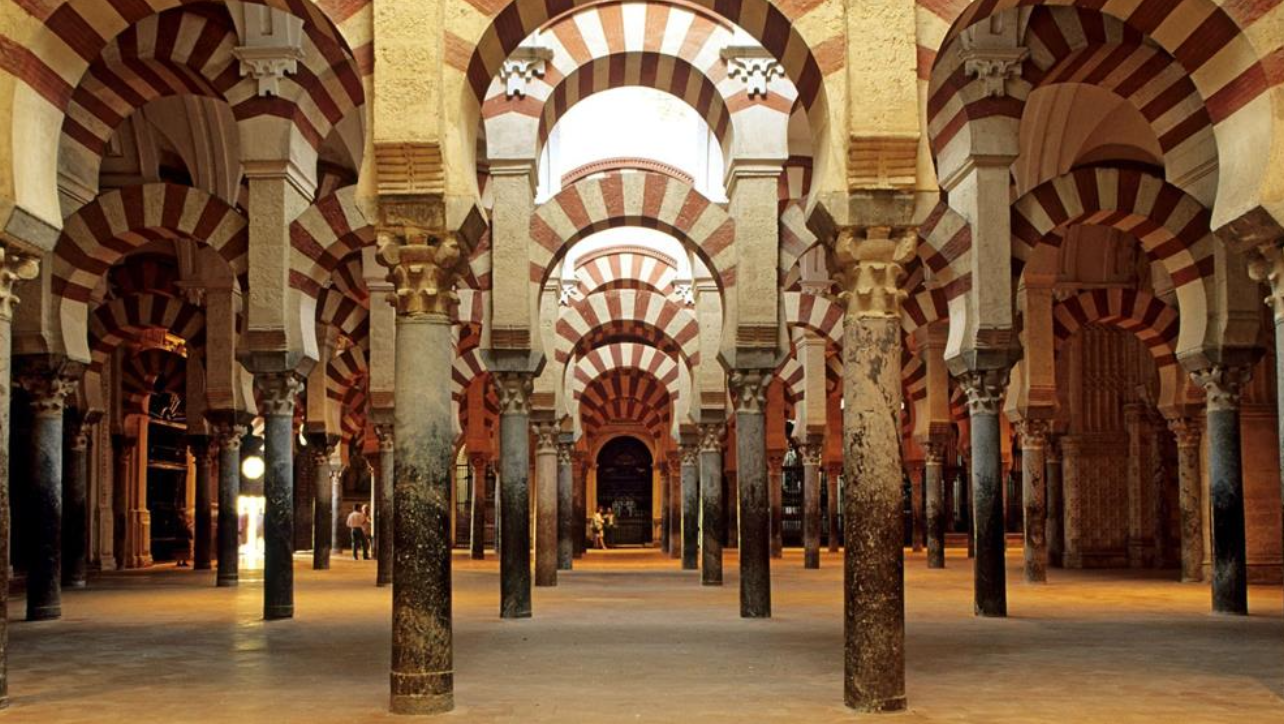
Mosque of Córdoba (Mezquita)
An iconic example of Islamic architecture in Spain, showcases the cultural architecture of the Islamic with some Christian influence.
Founded in 785 on the site of former Visogothic church (St. Vincent)
Expanded on by successors, until 900 (10th century)
“Caliphal Islamic style” representative of art and architecture of the Caliphate of Córdoba
Forest of Columns
Double-arch (horseshoe arch and semicircular)
Gives sense of air and space, with flat ceilings (feels taller than it is)
Repetition
Geometric and organic lines
Interlacing flowing, highly decorative
Stylized plant motifs
Alternating red and white, also gold
Use of stucco, wood, and recycled marble
Mihrab (facing Mecca, ornate mosaic, hexagonal)
Monumental, ribbed dome with ornate decoration
(Perpetuity, meditation, intimacy, hypnotic effect Evocation of the divine.)
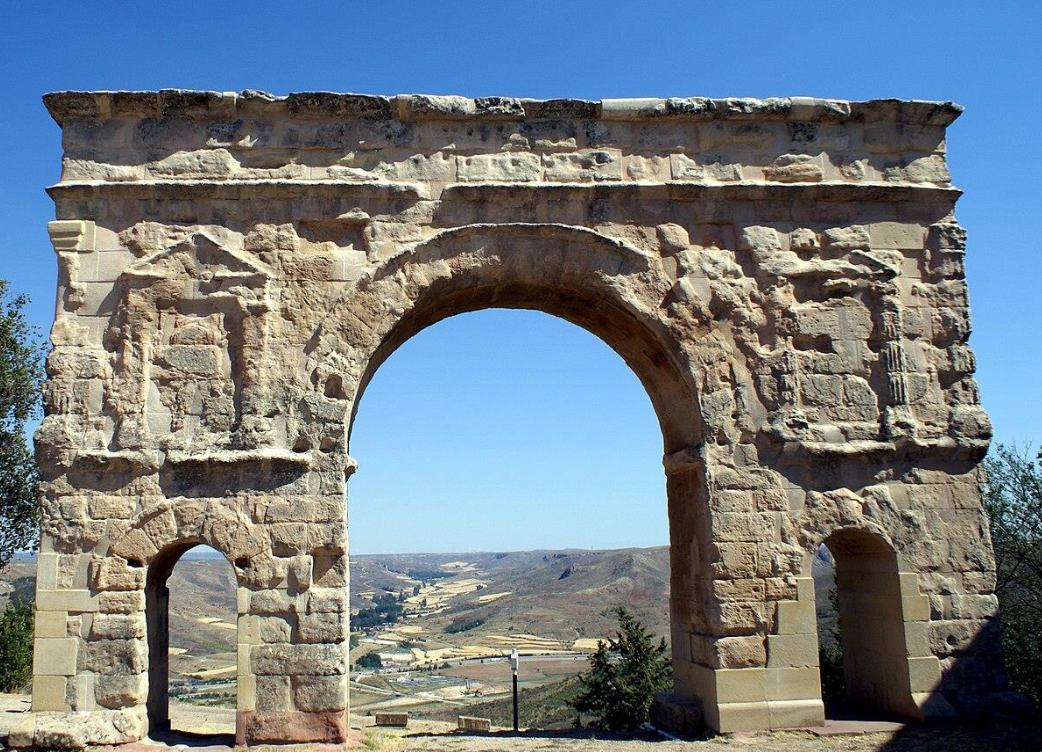
Triumphal Arch
A monumental structure often built to commemorate victories or significant events
Originated in Ancient Rome
PUBLIC MAGNIFICANCE, served as a symbol of power, success and pride
To Increase quality of life
476
The Roman Empire Falls
Shortly after The Visigothic Kingdom begins (after conflict of course)
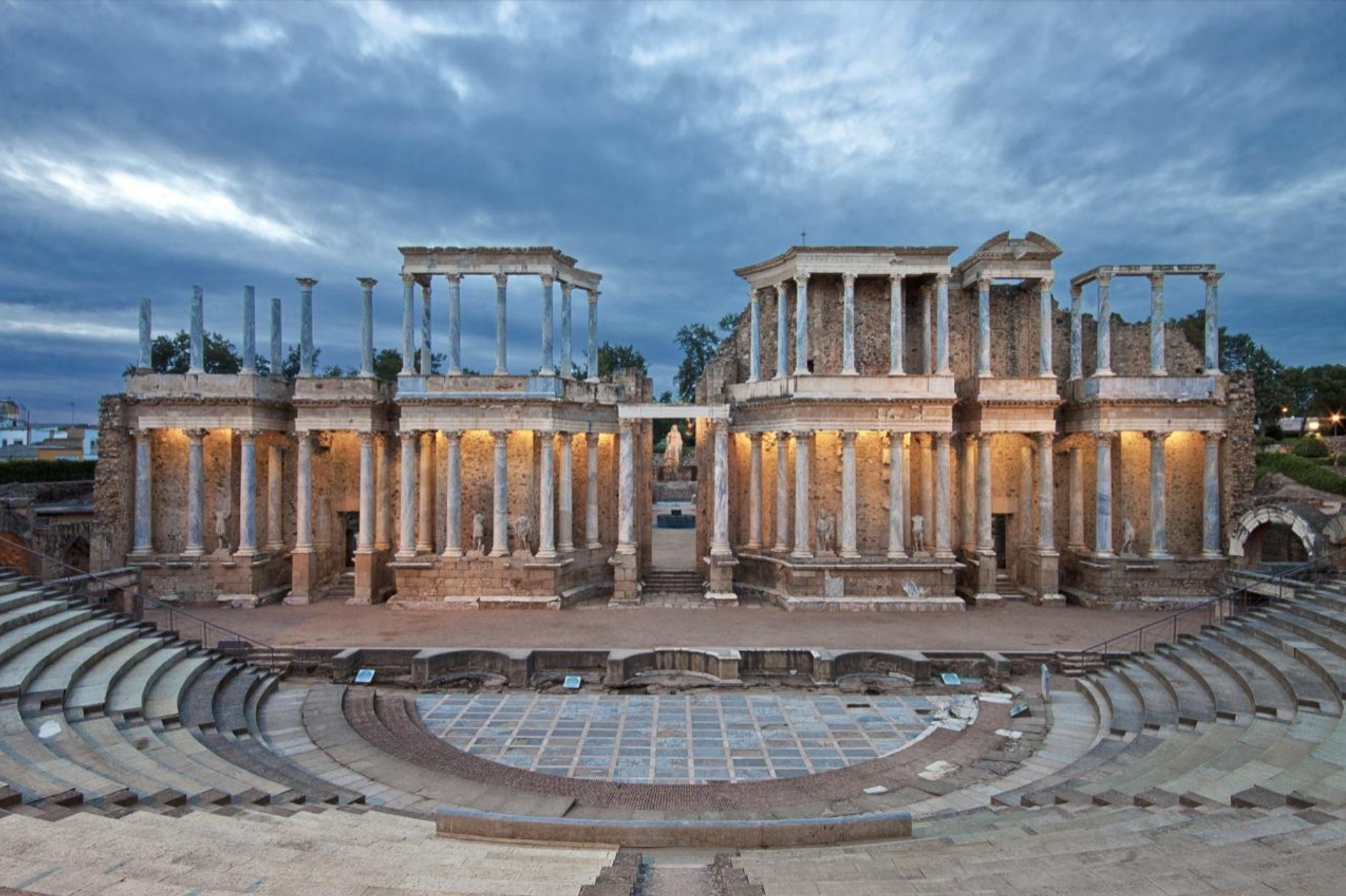
Mérida Theater
A prominent example of Roman theater architecture in Spain (built in 24-25 BC)
reflecting the cultural integration of Roman and local traditions in Iberia.
1492
1492 – Granada falls to Isabel la Católica and Ferdinand (End of Al Andalus)
Also known as the end of the Reconquista (Christians kingdoms trying to take land back from the islamic) marking the end of Muslim Rule in Spain
Romanesque
“Romanesque” used to refer to the period of European art from the eleventh century throughout the twelfth (1000-1100 AD) (exception of the region around Paris till 12th.)
Romanesque style arises in the context of the Reconquista
Romanesque is the first international style in Western Europe since antiquity – extending across the Mediterranean and as far north as Scandinavia
This international connection is due in large part to the importance of pilgrimages to holy sites. (Jerusalem for example)
The most important of which Europe was Santiago de Compostela
Visible in architecture, sculpture, painting
Tympanum (semi-circular carved stone panel above church doorway)
Historiated capitals (A decorated column top, carved human/animal figures)
Buttresses (pillar built on exterior wall —> romanesque flat and integrated)
Santiago de Compostela
The most important pilgrimage site in Europe (Spain), (home to the shrine of Saint James), significant in the spread of Christianity to people who traveled from all over Europe including Scandanavian countries.
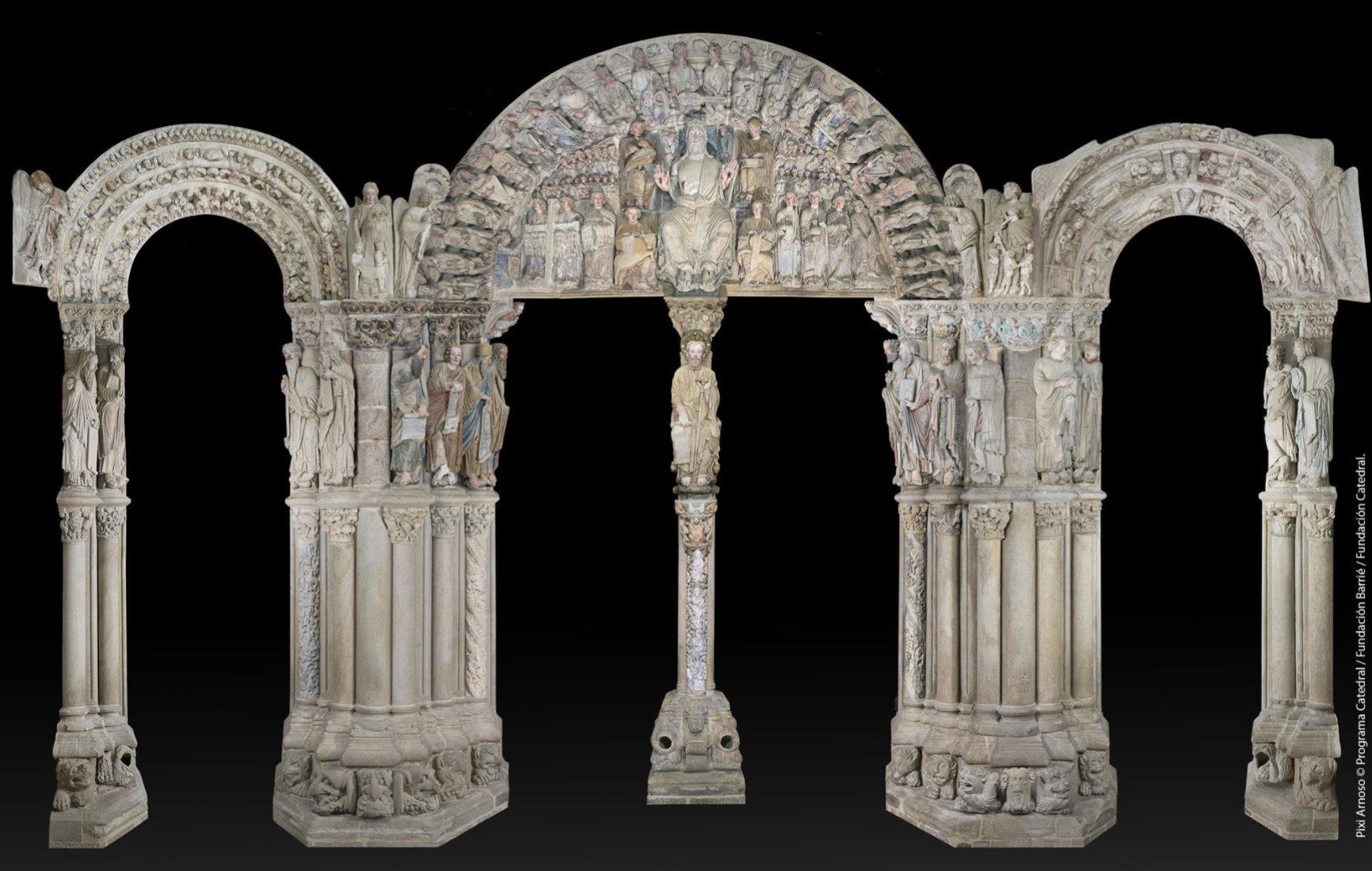
Puerta de la Gloria
The Romanesque sculpture/architecture located at one of the entrances of the Cathedral of Santiago de Compostela
Created between (1168-1188)
Three-arched portal is renowned for its detailed, polychrome, and symbolic sculptures, including Christ, the Apostles, and the 24 elders of the Apocalypse.
Camino de Santiago
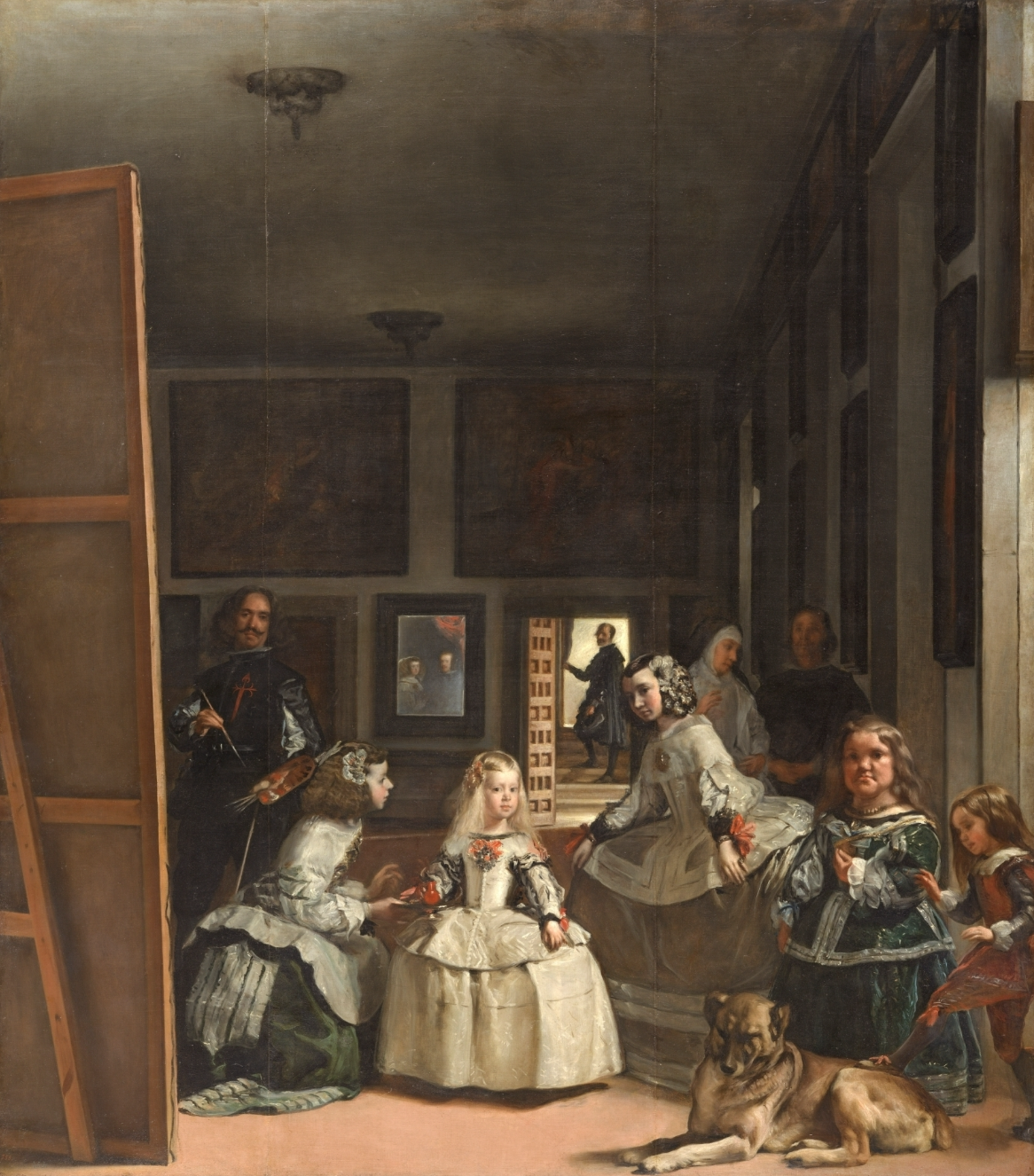
(Velazquez, Las Meninas, 1656, Museo del Prado)
- Little girl is princess Infanta Magarita (daughter of Phillip IV)
o Reflection of the King and Queen in the mirror
o Incredibly realistic
o Velazquez paints himself bigger, not unnoticed, bold Cross (nobleman)
§ His high position in society is important to him
- Maybe the king and queen walked into the room, Velazquez would want to show how good his relationship with Phillip IV, incredibly uncommon relationship for him to be so close with the King.
- Putting himself on equal footing, royal chamberman, looking after the palace, had the keys to every room in the palace, responsible for negotiating the paintings and works for the palace.
- The Infanta is the heir, which also shows lack of male heir (the problem of no heir in the monarchy was very real and couldn’t be hidden)
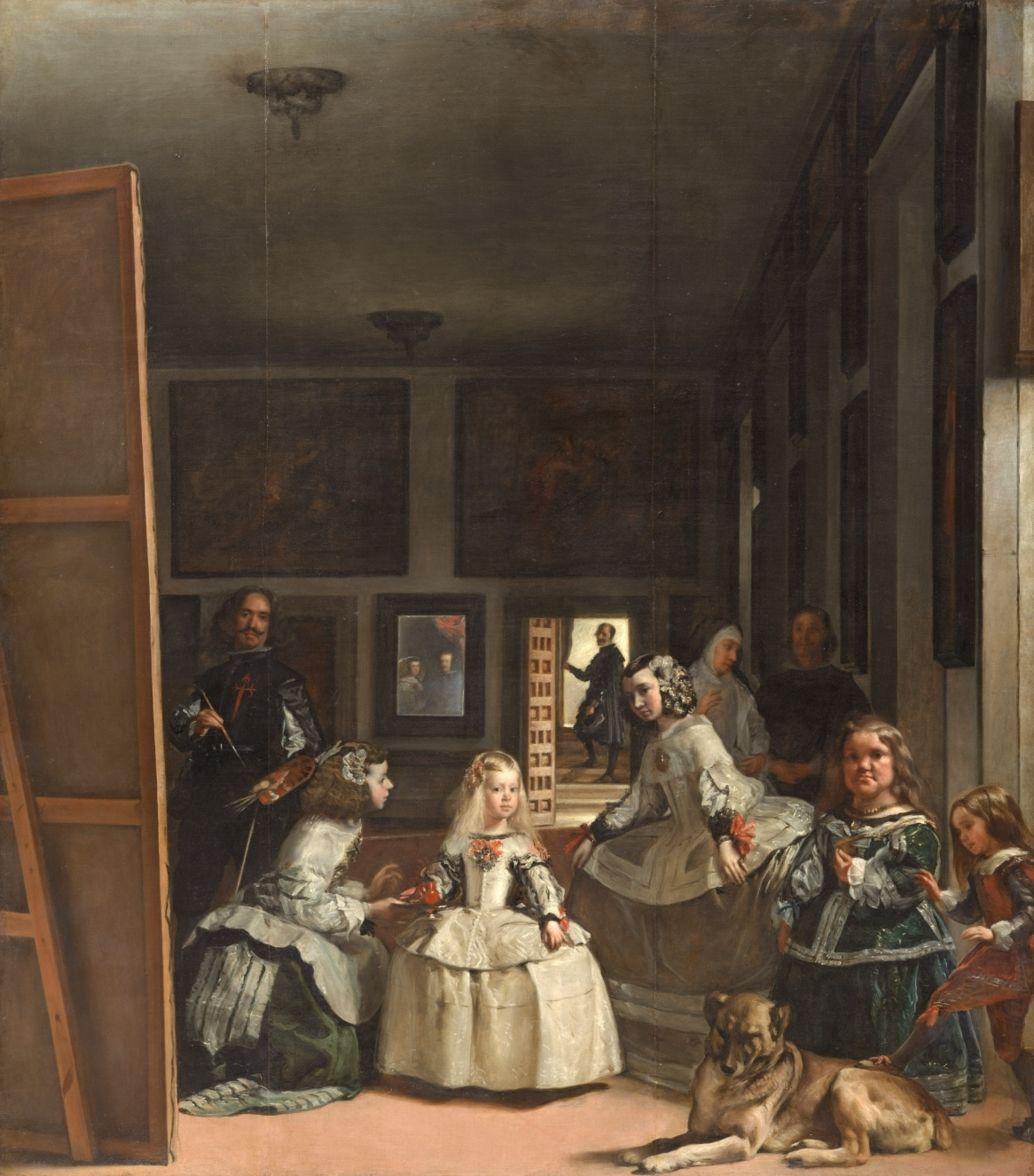
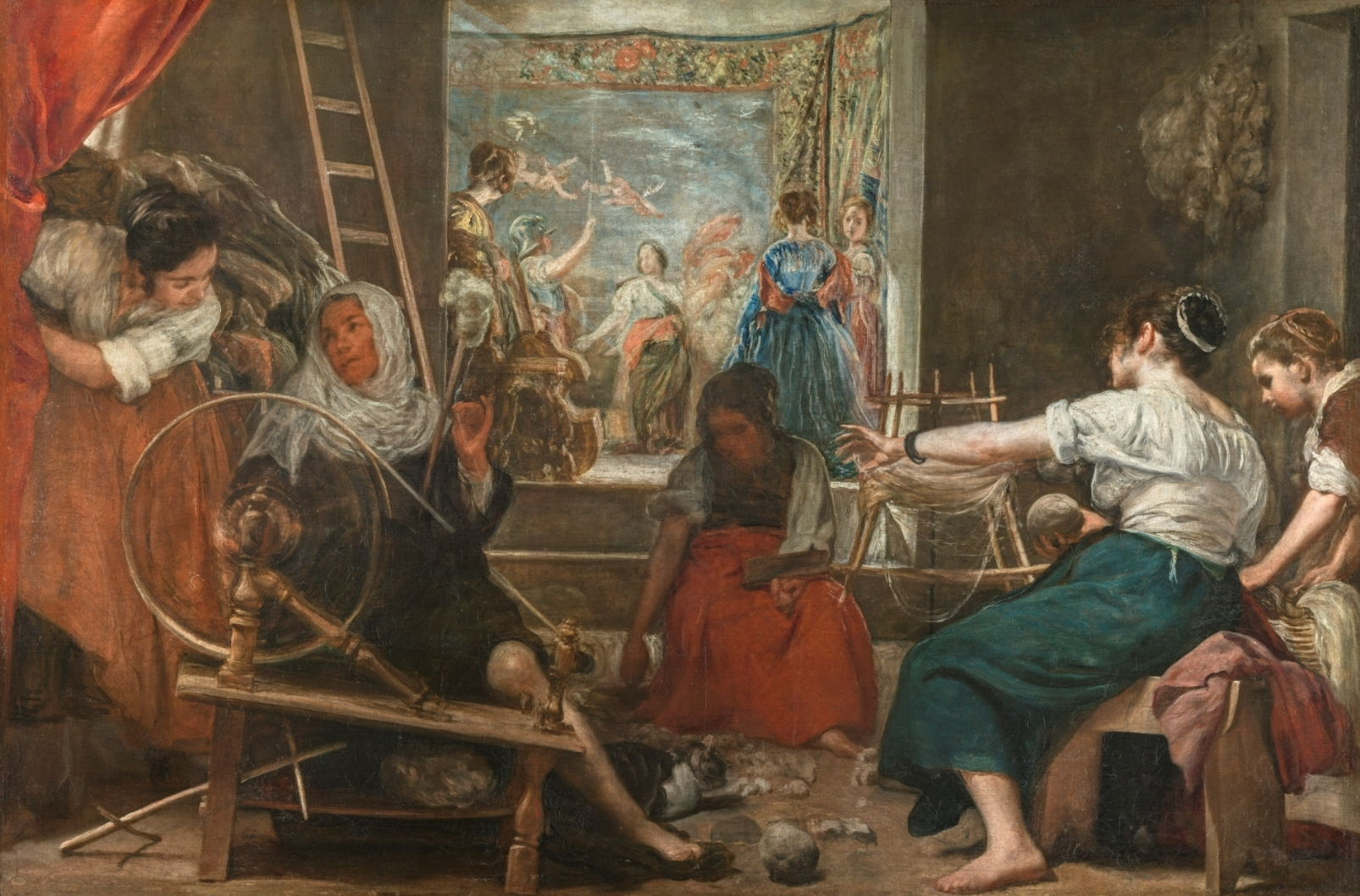
The Spinners
Velázquez, The Spinners/Fable of Arachne, 1658-60, Museo del Prado)
- Velazquez the spinners, Interesting is that looks like a genre scene in the front (domestic scene → Genre) Portrait is one genre, religious painting is one genre, mythological scenes is one genre
- Athena (the goddess of war) has her hand raised
Someone asked Arachne → “You are such a good weaver aren’t you thankful to Athena and the gods” → Athena get angry and challenged Arachne to a weaving competition to make the better tapestry, Arachne wins and makes Athena even angrier. → Very personal about the loves of the gods (zeus) Athena is even angrier and now curses Arachne → turns her into a spider for forever.
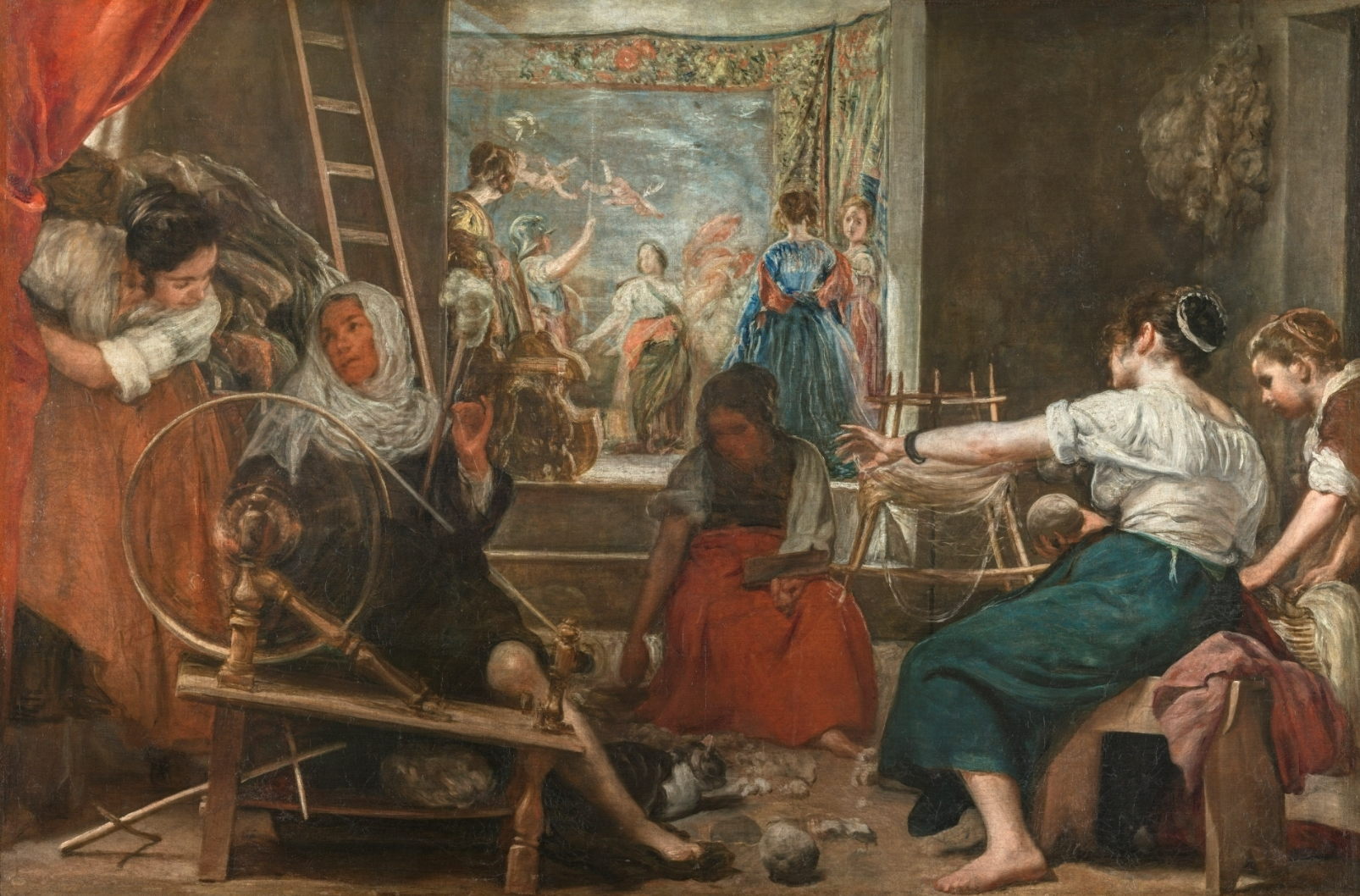
Philip IV
Phillip IV (1605-1665, r. 1621-1665)
- Unparalleled collector and patron
- Purchased important collections (Rubens, Duke of Buckingham, Charles I of England)
- Diego de Velázquez
- Peter Paul Rubens
- Palace of Buen Retiro
- Torre de la Parada
- Count-Duke of Olivares (favorite)
King Philip IV oversaw major renovation and redecoration of Torre de la Parada
- Hunting portraits of King Philip IV and family
Close with Velazquez, unusual relationship for the time
(Velázquez, Philip IV on Horseback)
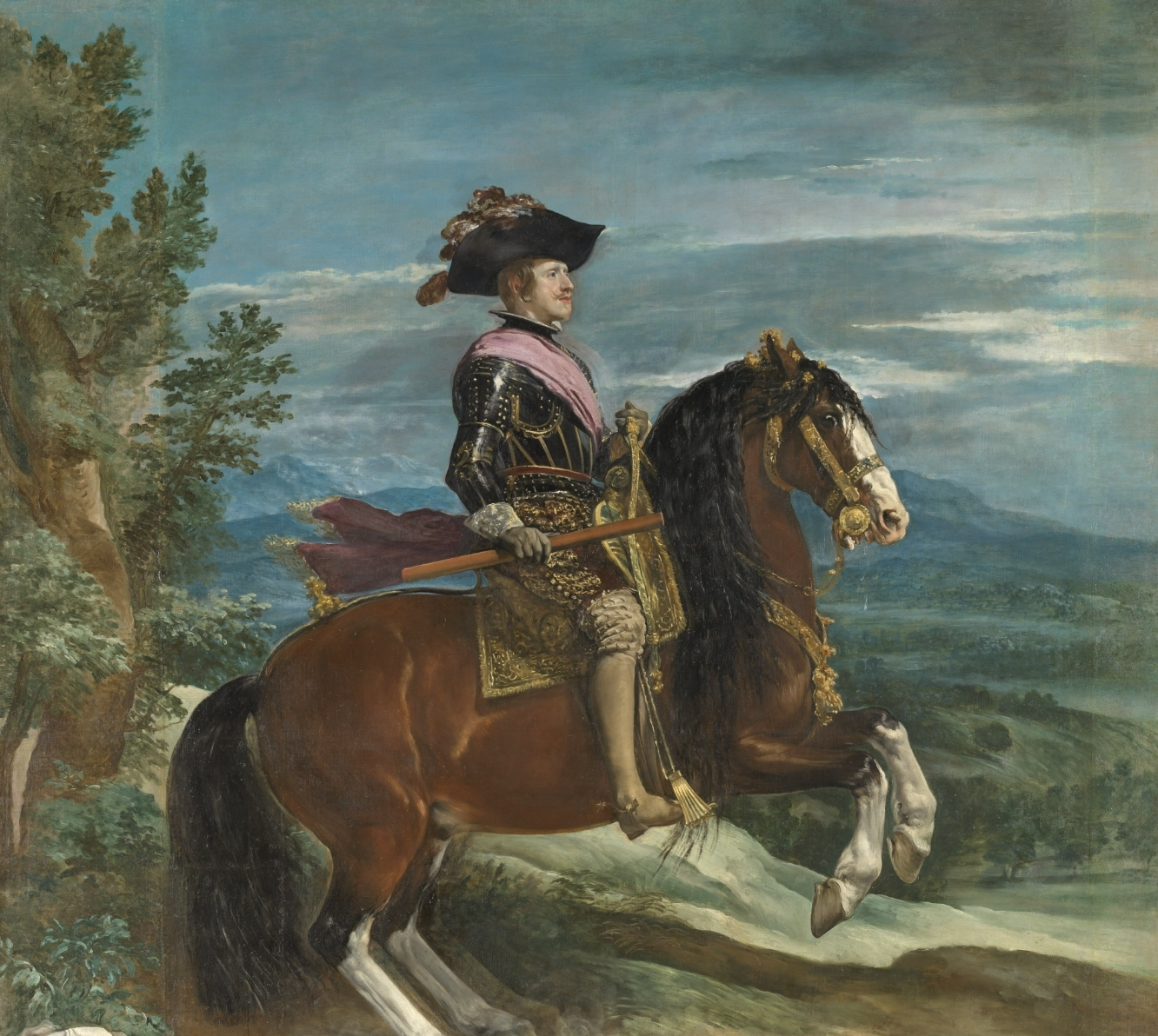
Velázquez
Diego Rodrigo de Silva y Velazquez (1599-1660)
- Trained and worked in Seville until he was 24
- Mostly “bodegones’ and religious paintings in Seville
- Moved to Madrid (twice both with intention to work with the King)
o Unsuccessful to work with king, started painting for the count duke of Olivares and eventually ends up getting called back to work with the King
Genre painting: (bodegón)
- Naturalistic kitchen or tavern scenes with prominent still lifes
- A demonstration of young Velázquez’s skill
Velázquez, Triumph of Bacchus, (The Drunkards)
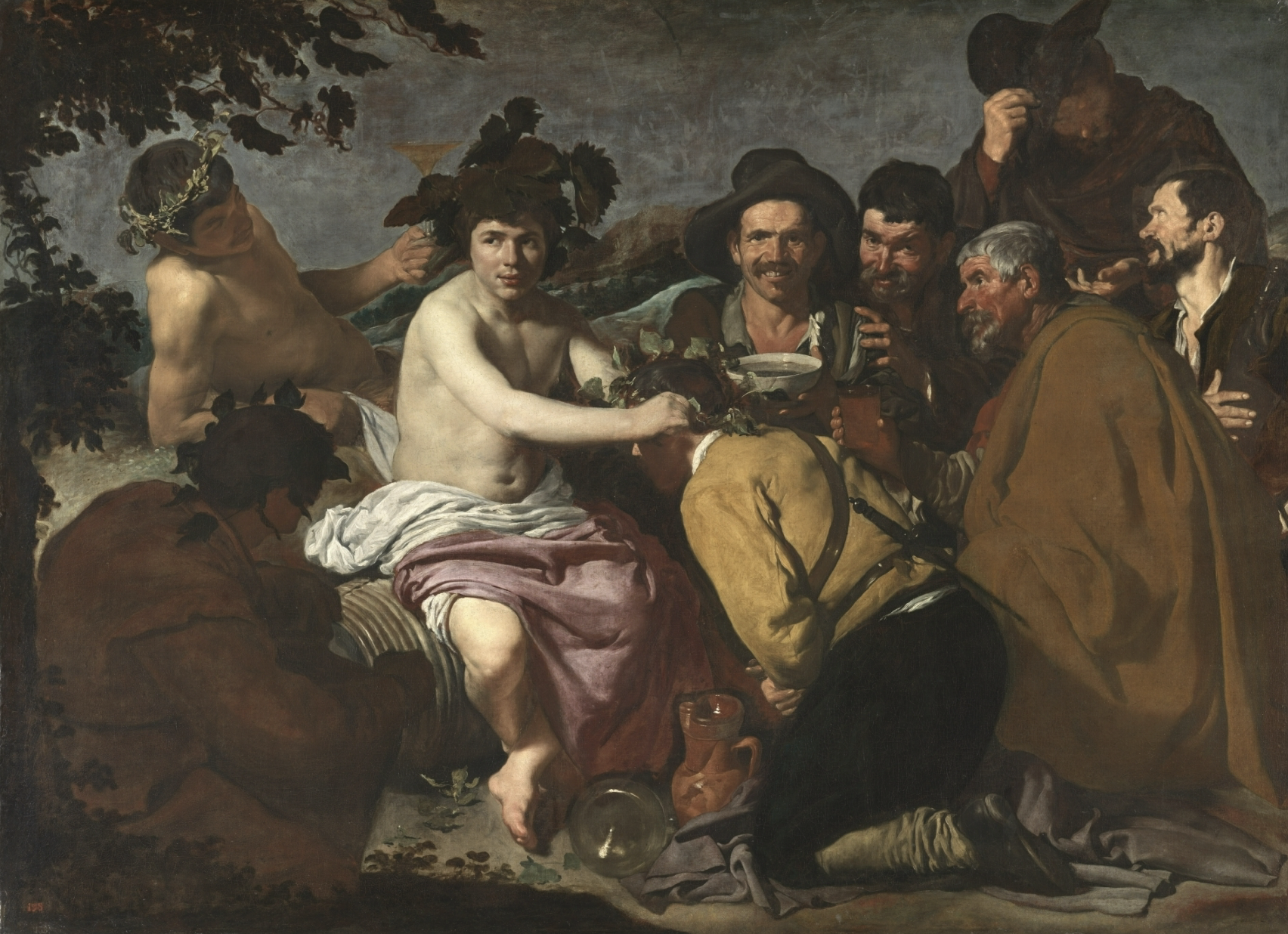
Murillo
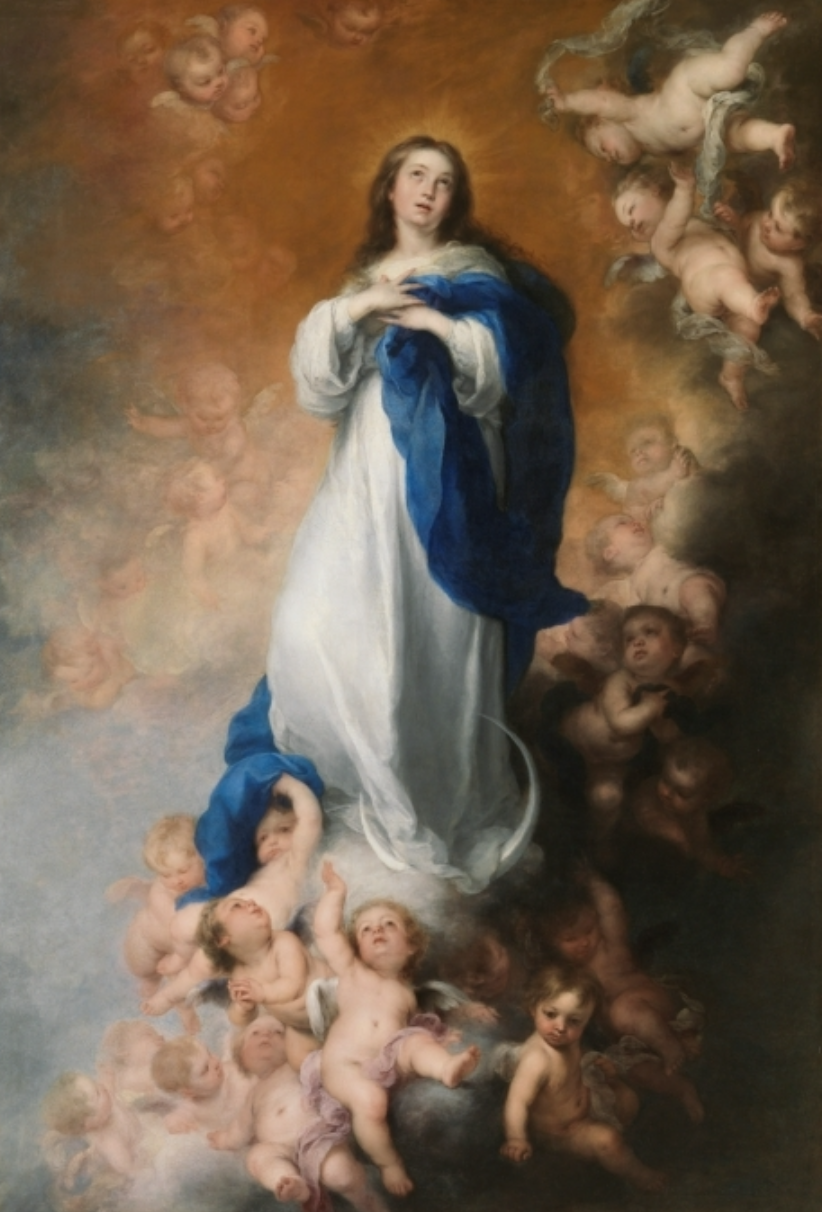
Bartolomé Esteban Murillo (1617–1682) was a leading Spanish Baroque painter of the Golden Age, celebrated for his sentimental religious works, scenes of the Virgin and Child, and realistic depictions of everyday life, based in Seville.
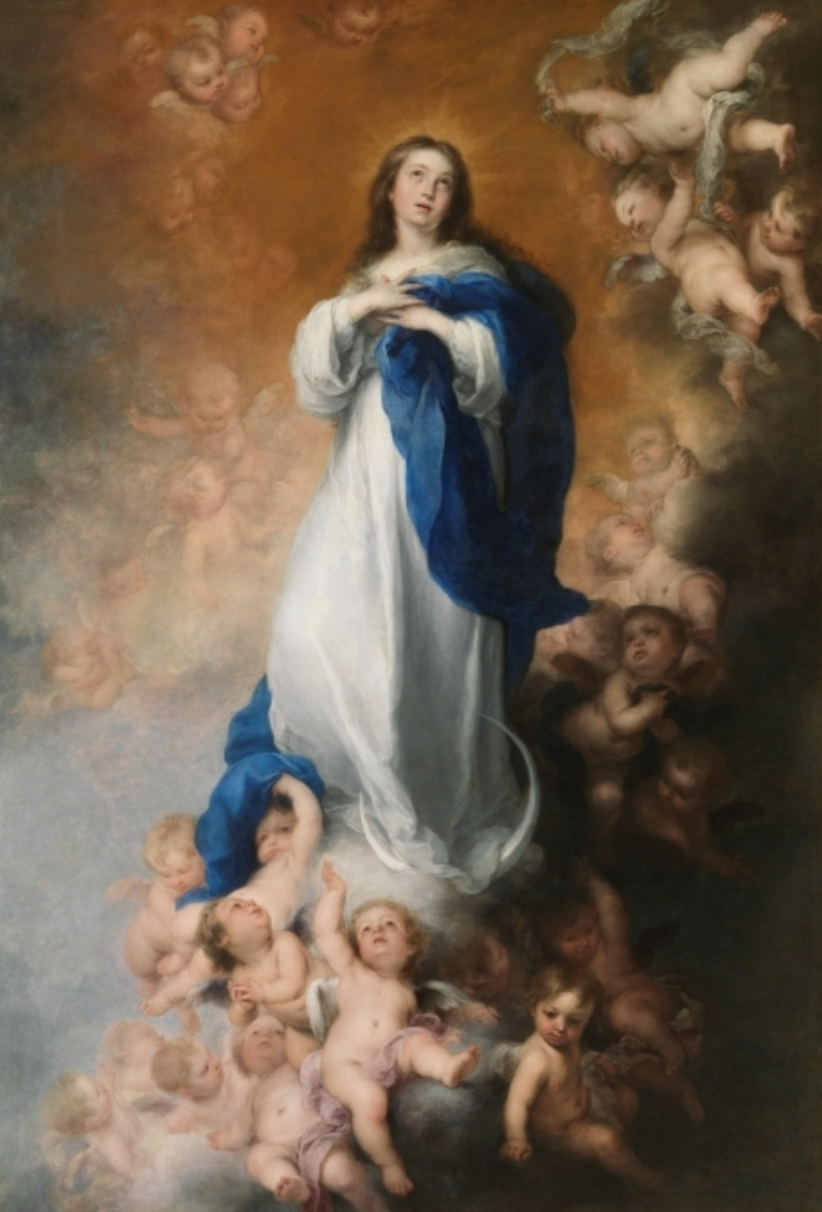
Murillo, Immaculate Conception (of soult) (INCREDIBLY IMPORTANT)
Zurbarán
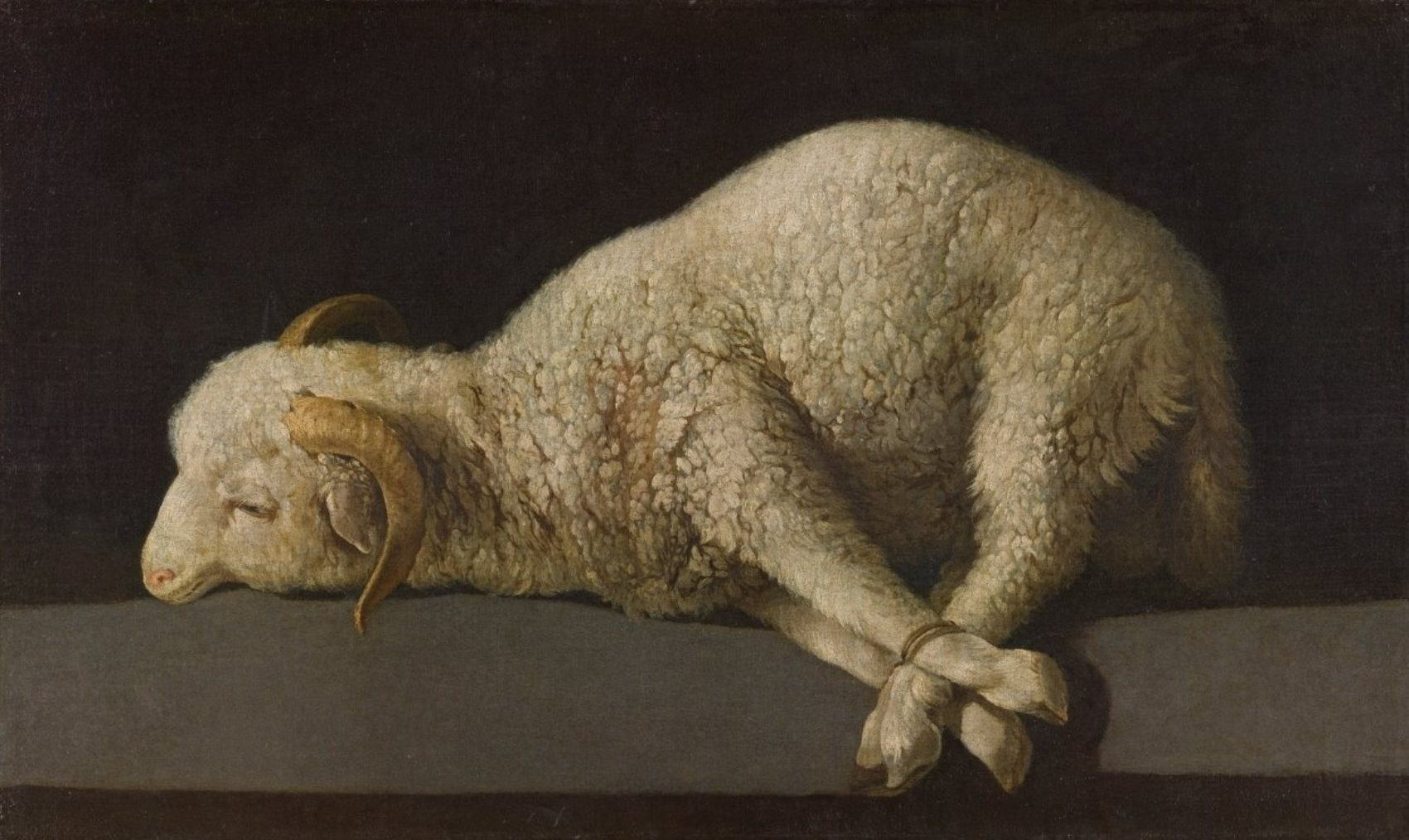
Francisco Zurbaran: (1598-1664)
- Precise, sharp focus
- Shocking, stark realism
- Sculpturesque
- Tenebrism
- In accord with Tridentine ideals: to persuade, delight, to move, instruct, inspire
- To convince the viewer of the truth of its message by impacting the senses, awakening the emotions, and activating-even sharing the viewer’s space
Interest in naturalism
Reproducing tactile sensations
Lifelike, but mystical setting
Dark backgrounds = tenebrism
Little perspective, foreshortening, movement
In the decade of 1630, Zurbarán works on larger, more complex compositions.
He is called to paint a series for Phillip IV of Spain.
- Twelve Labors of Hercules for the Palace of Buen Retiro (1634, Museo del Prado)
(Agnus Dei, Zurbarán)
Baroque
Baroque:
- Complex
- Dynamic, exciting
- Dramatic, tension, unease
- Off kilter
- Exaggeration, ostentation
- Disruption, theatrically
- Interest in diagonals
- Emotional
- Realistic, everyday figures
- Drama, theatrical → Diagonal
Painters: Diego Velázquez, Murillo, Francisco Zubarban...
Baroque elements of architecture:
- flanking bell tower
- Frontispiece or façade-retable/façade-altarpiece (outdoor altarpiece like in Valencia)
- Sacrarium’s are seen a lot inside buildings
- False domes
How do we see Baroque:
- Dramatic chaotic scenes
- Theatrical (literal curtain and draping of frames and pillars)
- Contrasting light and shadows
- Highlight the propaganda sued in the counter reformation of the Hapsburg era
- First 2 are full of movement Lots of diagonal lines Twisted Columns
- 3-Dimensional → Concept of Illusion
- The Motif of animals and the representation they bring
(Salón de los Reinos, Madrid)
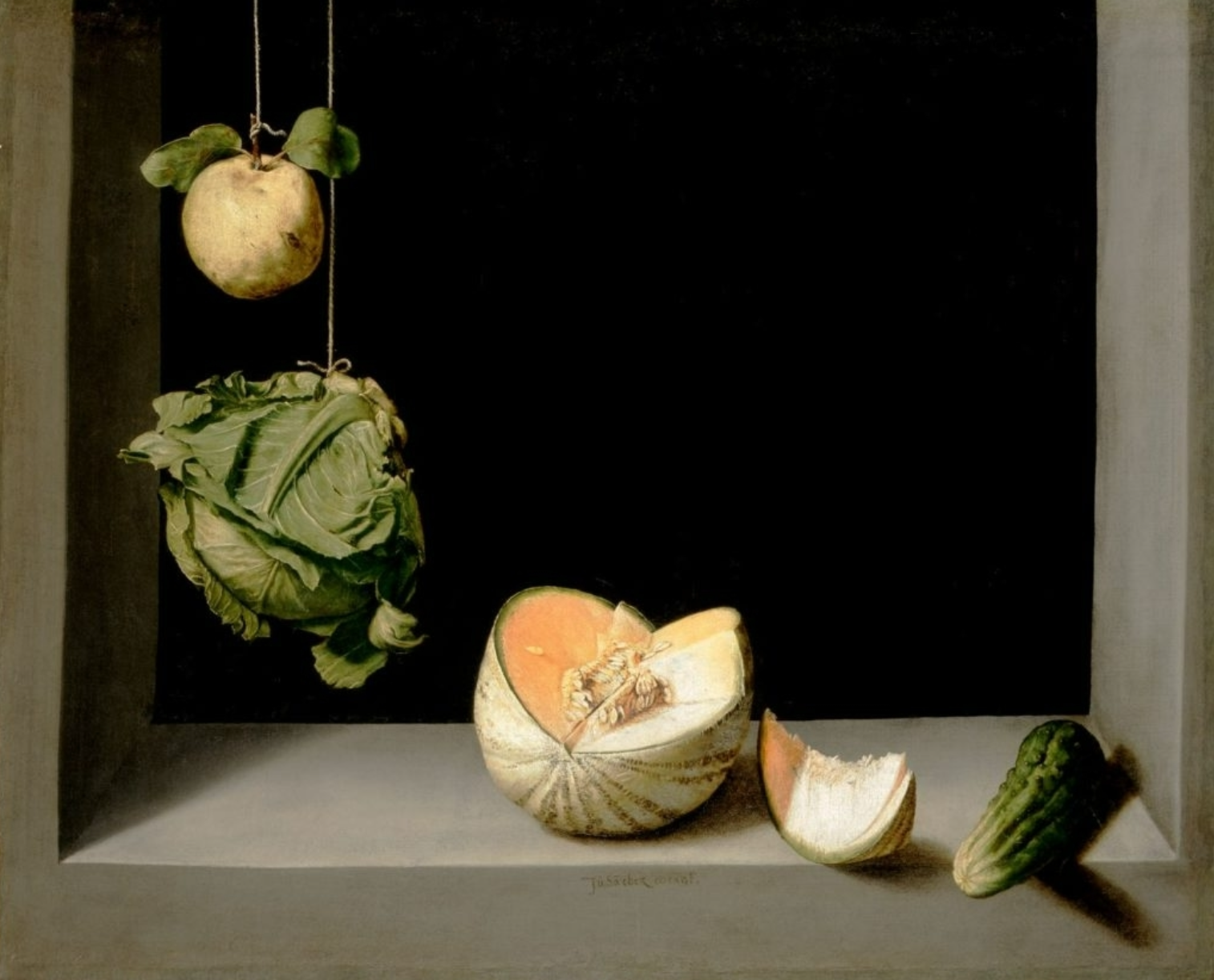
Still Life
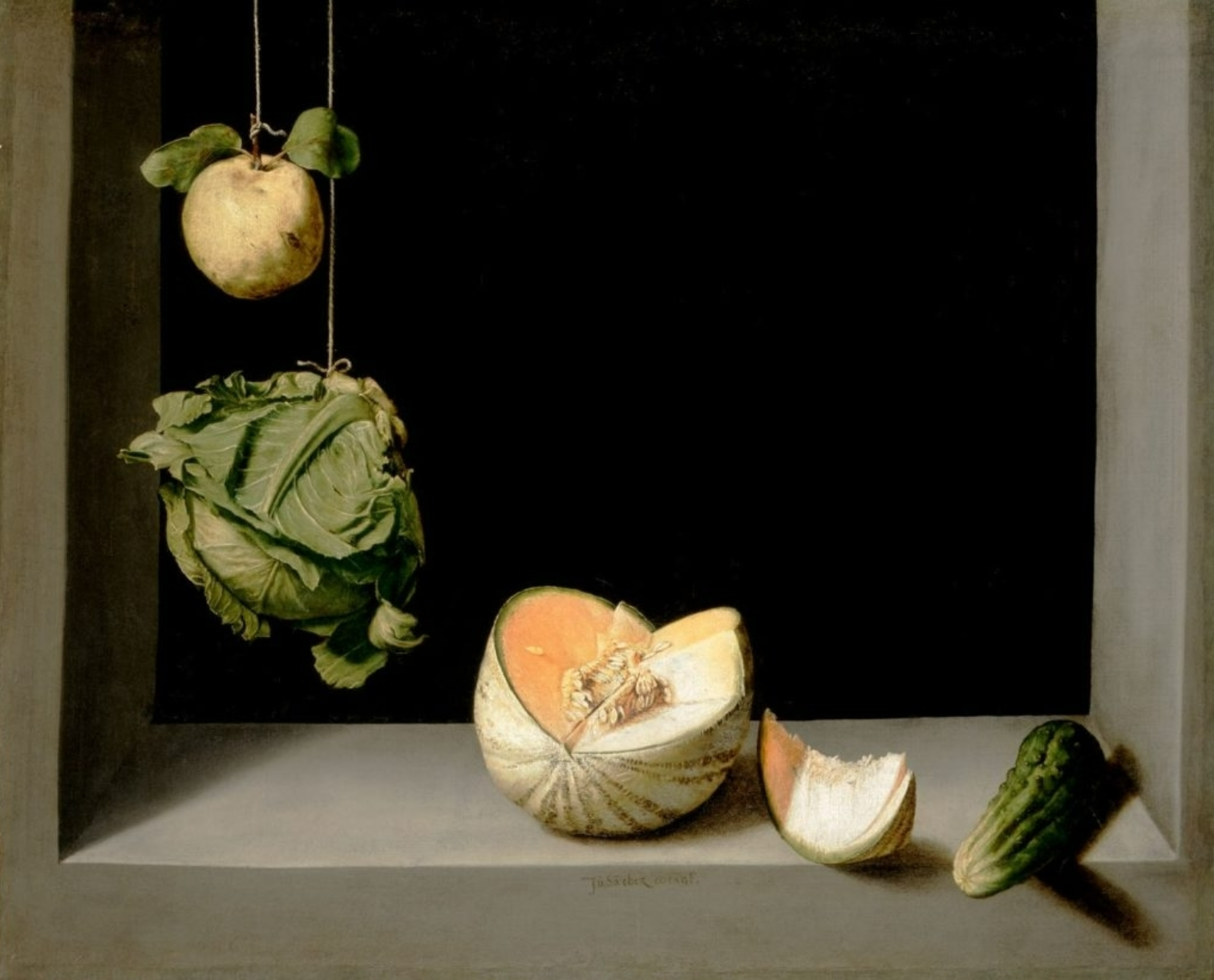
Still life, is a genre, a type of image we are looking at, we are looking at purposeful arrangement of objects, typical without people, sometimes symbolic, classic still life is a bowl of fruit or flowers.
(Juan Sánchez Cotán, Still life with quince, melon and cucumber)
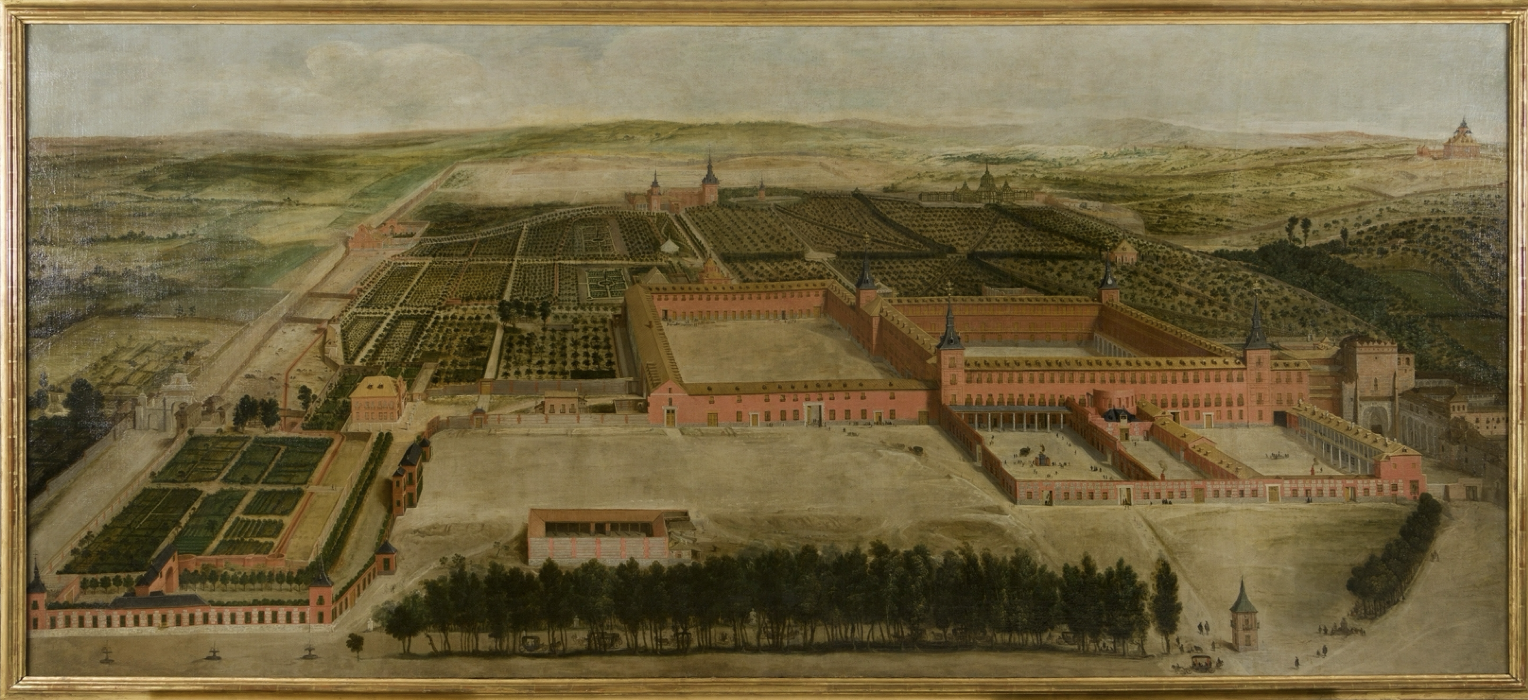
Palacio de Buen Retiro
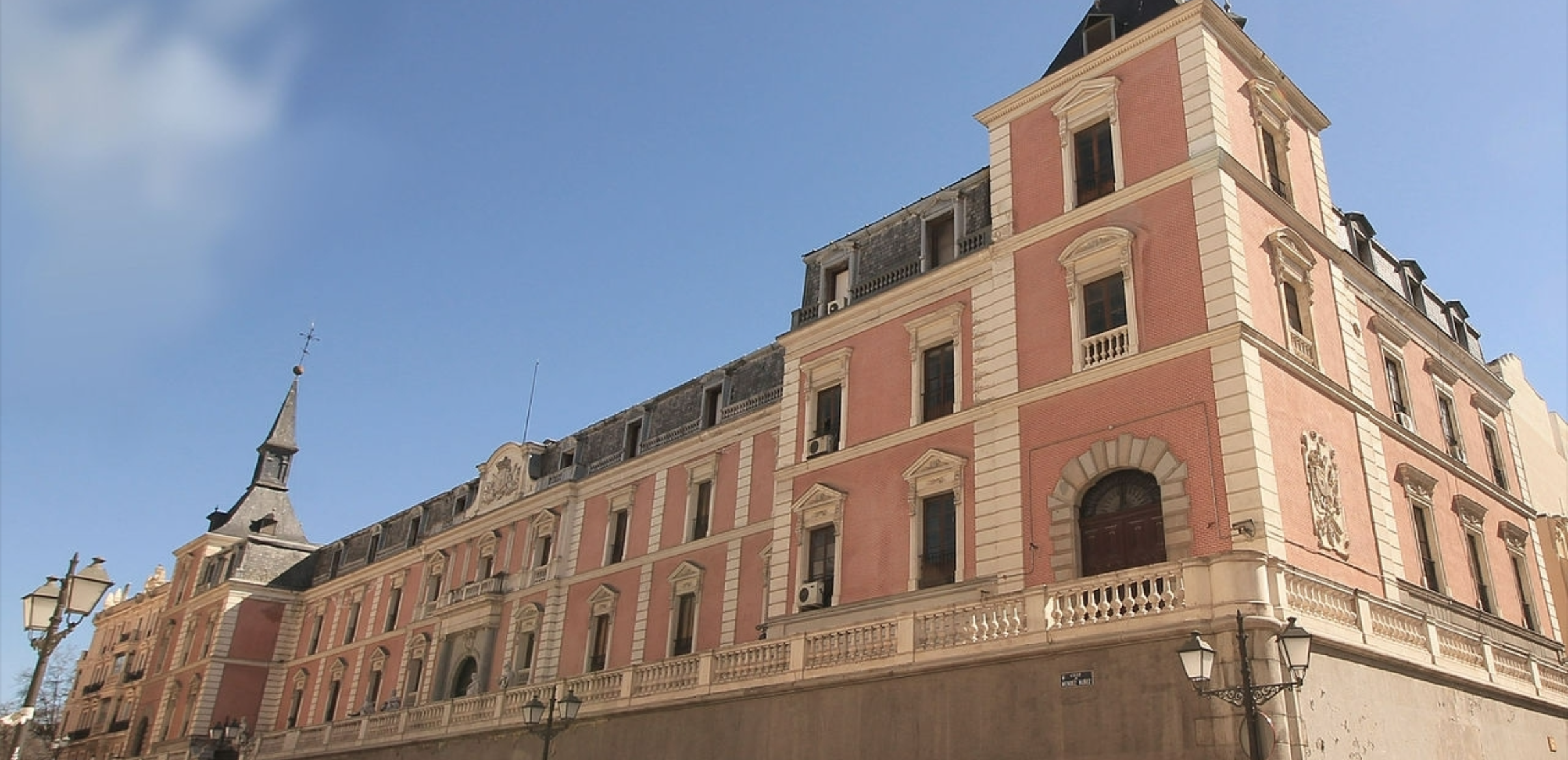
Palacio del Buen Retiro:
- Begun by Phillip II, expanded and redecorated by Phillip IV
- Palace for leisure in Madrid
- Square plan with four towers
- Cason del Buen Retiro (ballroom)
- Salon de Reinos
- Las lanzas – Velazquez
- Equestrian portraits of King and family
(Palace of Buen Retiro, 17th century)
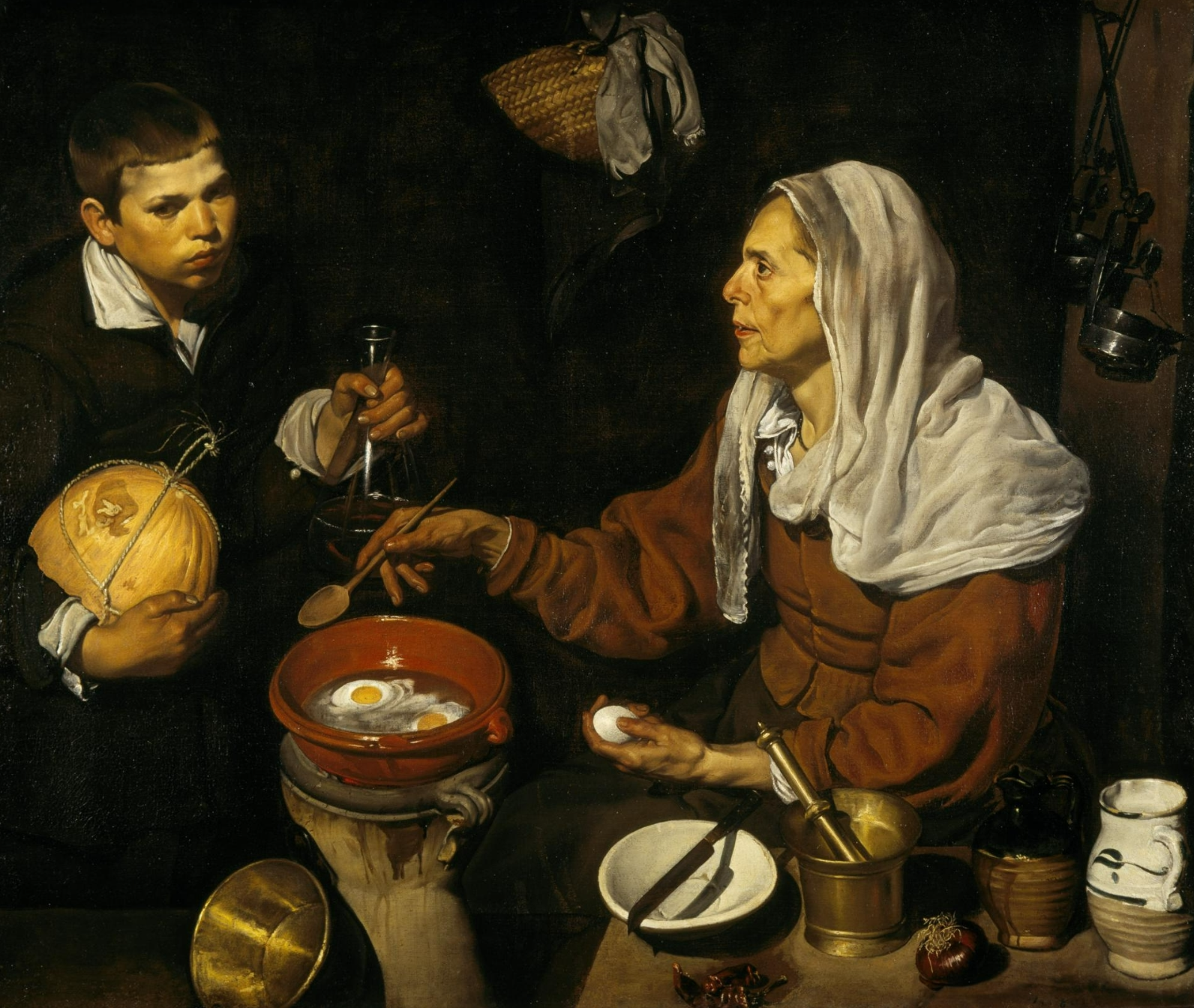
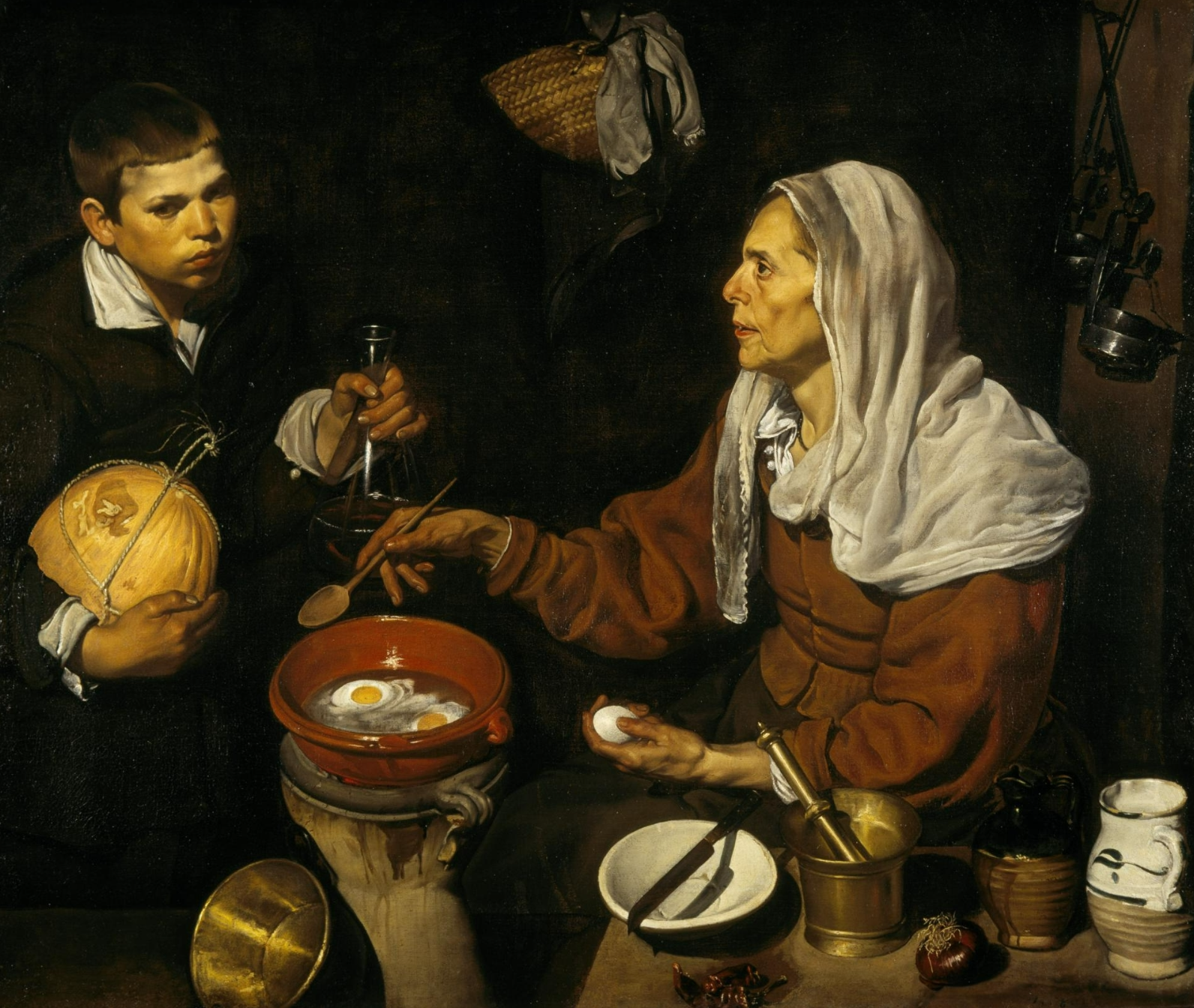
“Bodegón”
A genre that appears in 17th century Seville, like a still life but we have human figures un it, we were looking at the beginning of Velazquez.
(Diego de Velázquez, Old Woman Cooking Eggs)
A Bodegón example, it is not just any kind of interior scene but specifically just a kitchen scene.
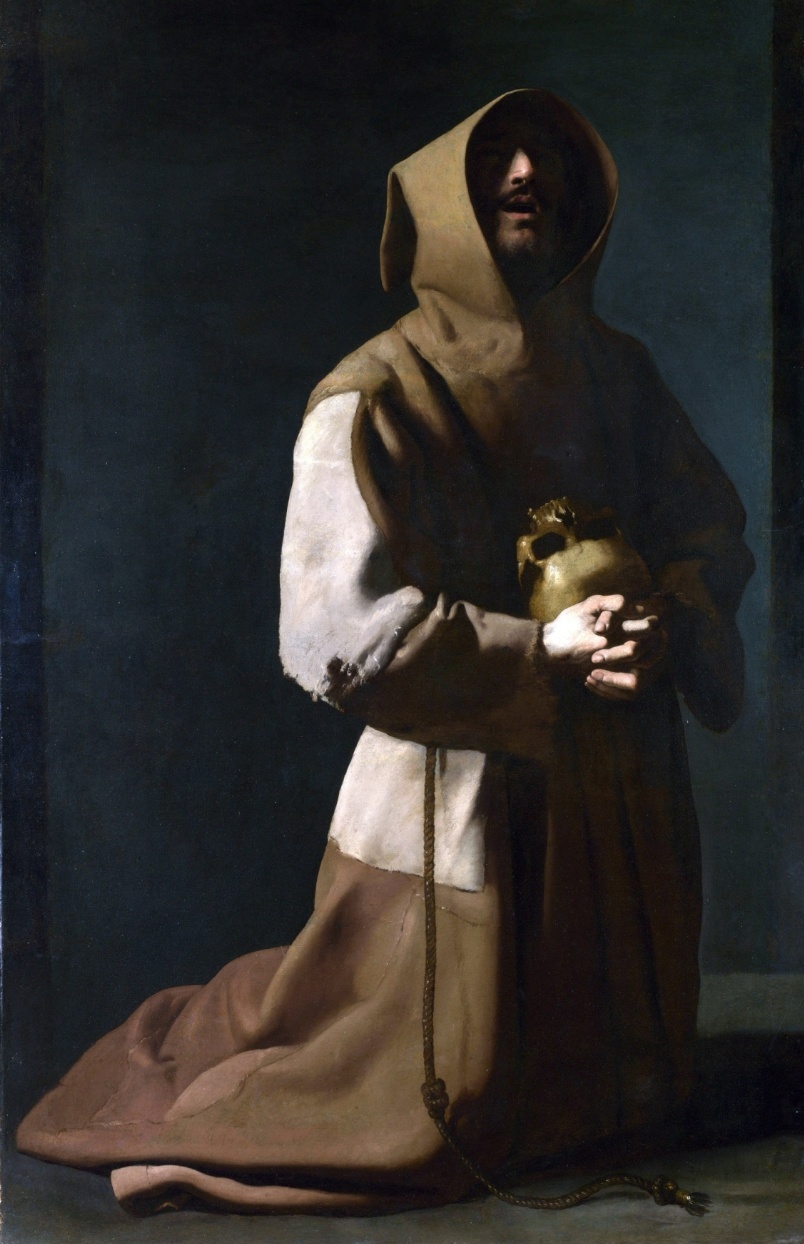
Tenebrism
A dramatic Baroque painting technique characterized by extreme contrasts of light and dark, where darkness is a dominating feature of the composition.
Dark backgrounds = Tenebrism
Big with Zurbarán
(Francisco Zurbarán, Saint Francis in Meditation)
Genre Painting
Genre painting: (bodegón)
- Naturalistic kitchen or tavern scenes with prominent still lifes
- A demonstration of young Velázquez’s skill
- (Velazquez, The Spinners,) Interesting is that looks like a genre scene in the front (domestic scene → Genre) Portrait is one genre, religious painting is one genre, mythological scenes is one genre.
Seville
Seville → “qui non ha visto Sevilla, non ha visto Maravilla”
- Booming in the late 16th and early 17th centuries
- Most populous Spanish city, international residents
- Principal port for Spain’s trade with the New World, Guadalquivir River
- Growing economy = artistic opportunity
Seville – point of connection with the New World:
- Influence of Spanish art in colonies
- And reception of new materials, subjects and techniques from Americas to Spain (and rest of Europe)
- Spanish painters sent paintings to Americas
- By the second half of the 17th century, paintings were sent from Americas religious orders and noble homes in Spain
Seville School:
- Francisco Pacheco (1564-1644)
- Diego Velazquez (1599-1660). → Mostly bodegones painted in seville in general
- Francisco Zurbaran (1598-1664)
- Bartolome Esteban Murillo (1618-1682)
(Diego de Velázquez, Old Woman Cooking Eggs)
Sánchez Cotán
Juan Sanchez Cotan (1560-1627),
Still life with bowl, vegetables and fruit, 1602, Prado (concept)
- Artistic virtuosity, erudite and religious associations in seemingly mundane objects
Zeuxis in Pliny’s Natural History
- New Genre rising throughout Europe
- Sense of presence, mystery
- Illusionist effect – trompe l’oeil – clever window frame
- Deep shadow, palpable textura
- Disproportionate importance of mundane objects
- Influenced Francisco de Zurbarán
(Juan Sánchez Cotán, Still life with quince, melon and cucumber)
Mannerism
Mannerism:
- Late Renaissance
- ‘stylish’ style (approx. 1520-1600)
- Artists looking to art rather than nature
- Exploitation of Renaissance principles in new directions
- Intellectual, allegorical, anti-naturalistic, artificial, ambiguous, sensuous, emotionally provocative, elegant, sophisticated, pushes the boundaries of fantasy, looks to art rather than nature for a model, unnatural elegance
- self-conscious artifice, deliberate complexity, layered themes
- Appealing to the eye and intellect
(Potormo, deposition from the Cross, 1525-28
- Mannerism is the name given to the style followers of Raphael and Michelangelo
(Parmigianino, Madonna with a long neck, 1535-1540)
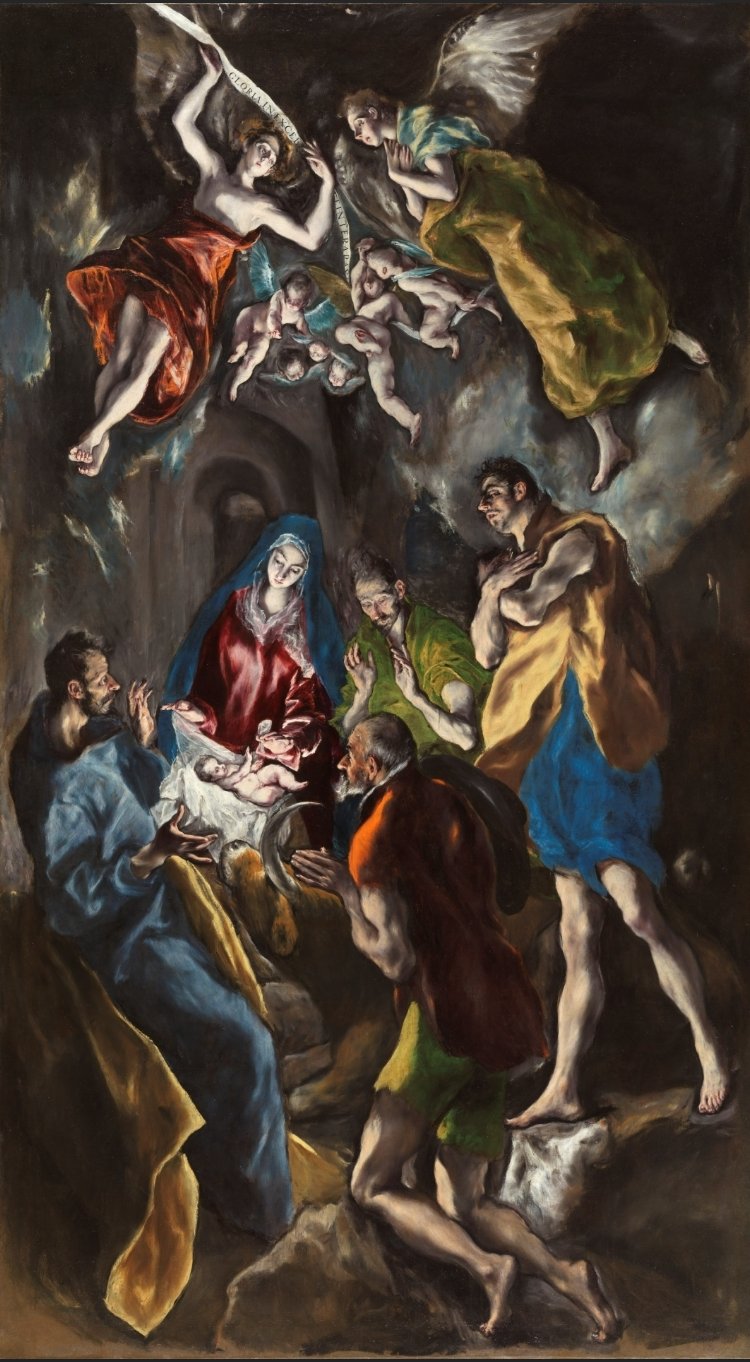
(El Greco, Adoration of the Shepherds)
El Greco
El Greco:
- From Crete
- Traveled through Italy
- Came to Spain 1570s
- Mannerism
- Elongated figures
- Highly personal, spiritual, unique style
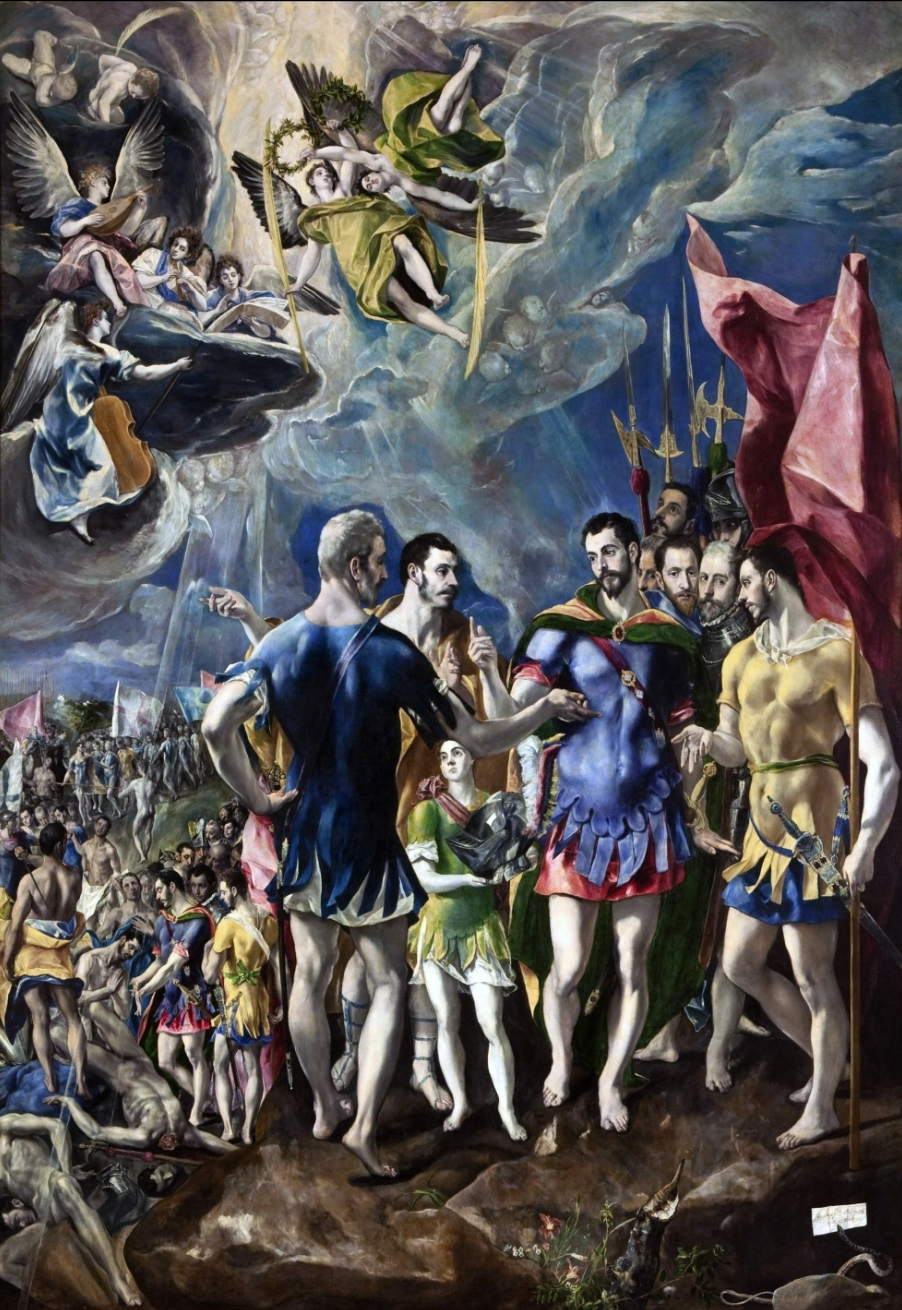
- Painted the Martyrdom of St. Maurice as a trial to work at El Escorial
(El Greco tried to get into El Escorial directly as a part of the decorative program, but wasn’t successful Martyrdom of Saint Maurice)
Shows 2 different scenes related to the martyrdom
(El Greco, Martyrdom of St. Maurice)
Spanish Golden Age
o The dates for the Spanish golden age (16th-17th centuries) in terms of painting, the baroque follows the renaissance. The counter reformation is during the baroque (not in between or after, something that happens after the protestant reformation (beginning 16th century), mid 16thcentury is council of Trent where catholic church really defines _______, then the counter reformation 17th - 18th century.
§ Spanish golden age is a period of cultural flourishing in spain
(Phillip II time)
Spanish Baroque painting and the Golden Age, what is the Spanish golden age?
- Cultural flourishing of literature, arts, theater from 16th to 17th centuries
- Writers: Miguel de Cervantes, Lope de Vega, Calderón de la Barca, Francisco Quevedo
- Painters: Diego Velázquez, Bartolomé Esteban Murillo, Francisco Zubarban...
(Velázquez, Las Meninas)
Francisco Pachecho
Francisco Pacheco (1564-1644) was a prominent Spanish Baroque painter, teacher, and theorist based in Seville. While his own painting style was stiff and academic, he was a pivotal mentor to Diego Velázquez—his student and son-in-law.
Iconography
Iconography in Spanish art refers to the study, identification, and interpretation of the visual symbols, subjects, and themes commonly used in Spanish artistic works to convey deeper meanings.
Seville → (We will also see Iconography, popular cultures in America, coming back to Spain as well)
Murillo’s Immaculate Conception → Solidified iconography of this dogma
(Murillo, Immaculate Conception (of Soult)
Favorite
Favorite is an official position at court (the right hand man to the king), specifically we talked about favorites with one figure was the count duke of Olivares, the favorite of Philip IV, important because he brings Velazquez to court, decides that palace of buen retiro should be built.
(Velázquez, Count Duke of Olivares on Horseback)
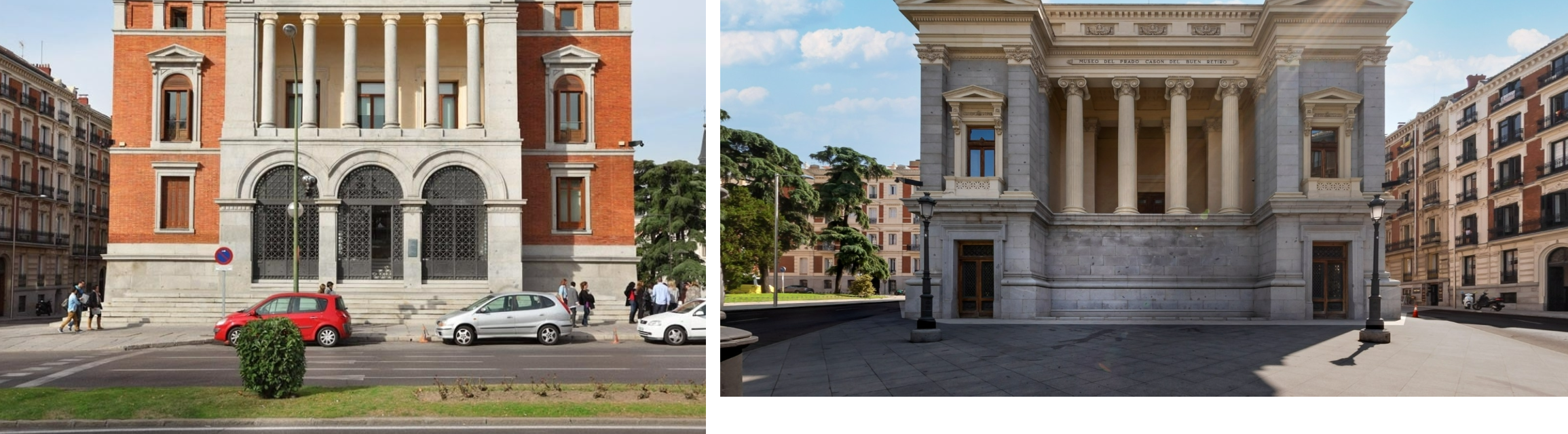
Cason del Buen Retiro
Cason del Buen Retiro: one of the spaces that still remains from the palace of buen retiro (around prados campus),
Charles V
Challenges for Charles V:
- Expansion of Ottoman Empire
- Protestant Reformation
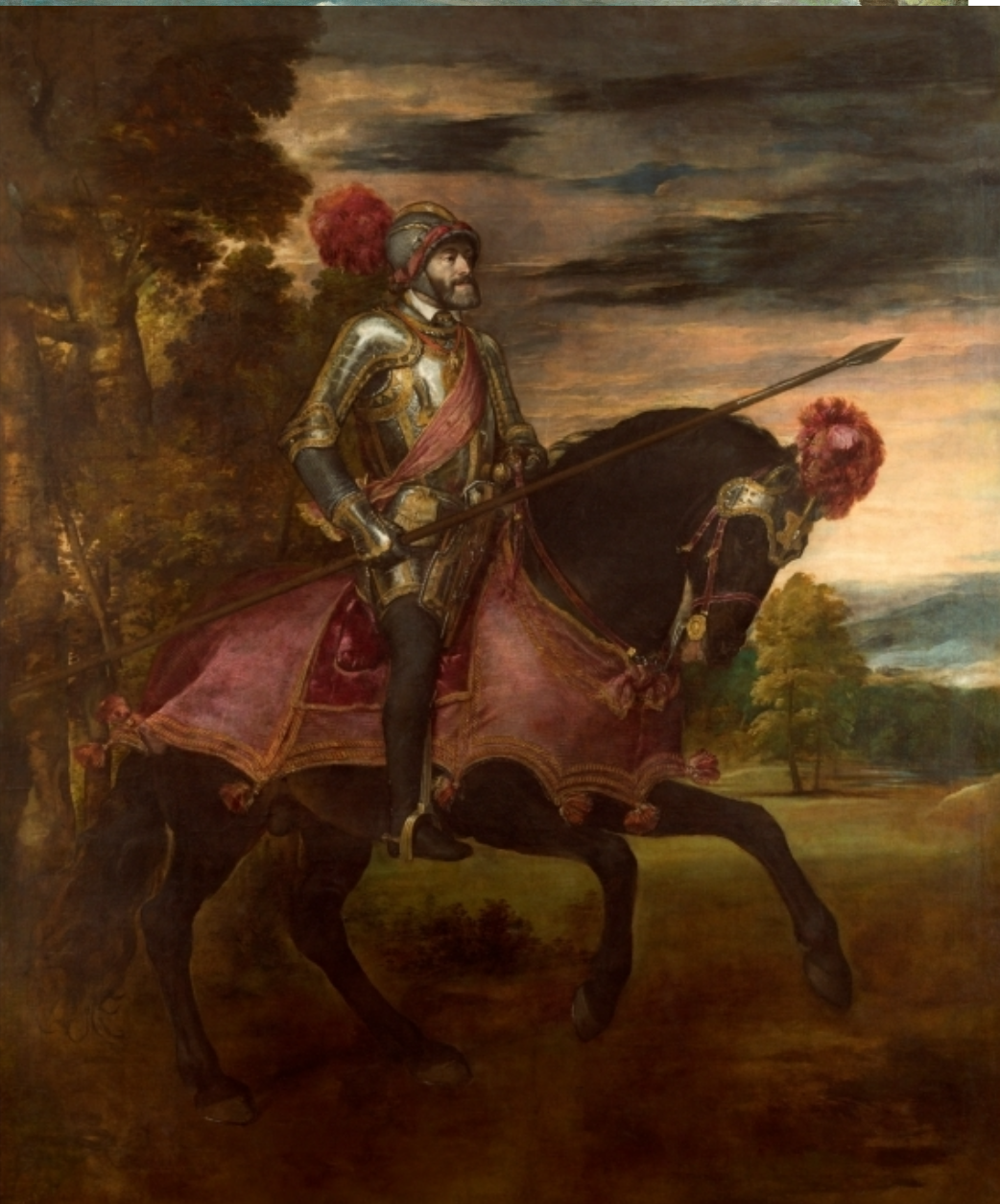
(Titian, Charles V on Horseback at the Battle of Mühlberg, 1548, museo del Prado)
Phillip II is Charles V’s son
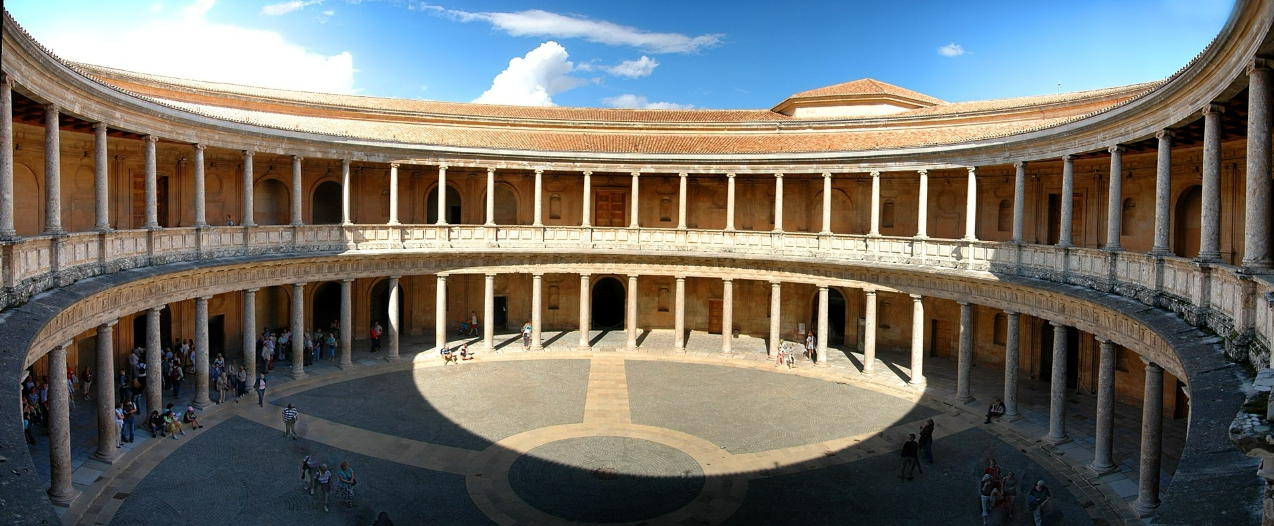
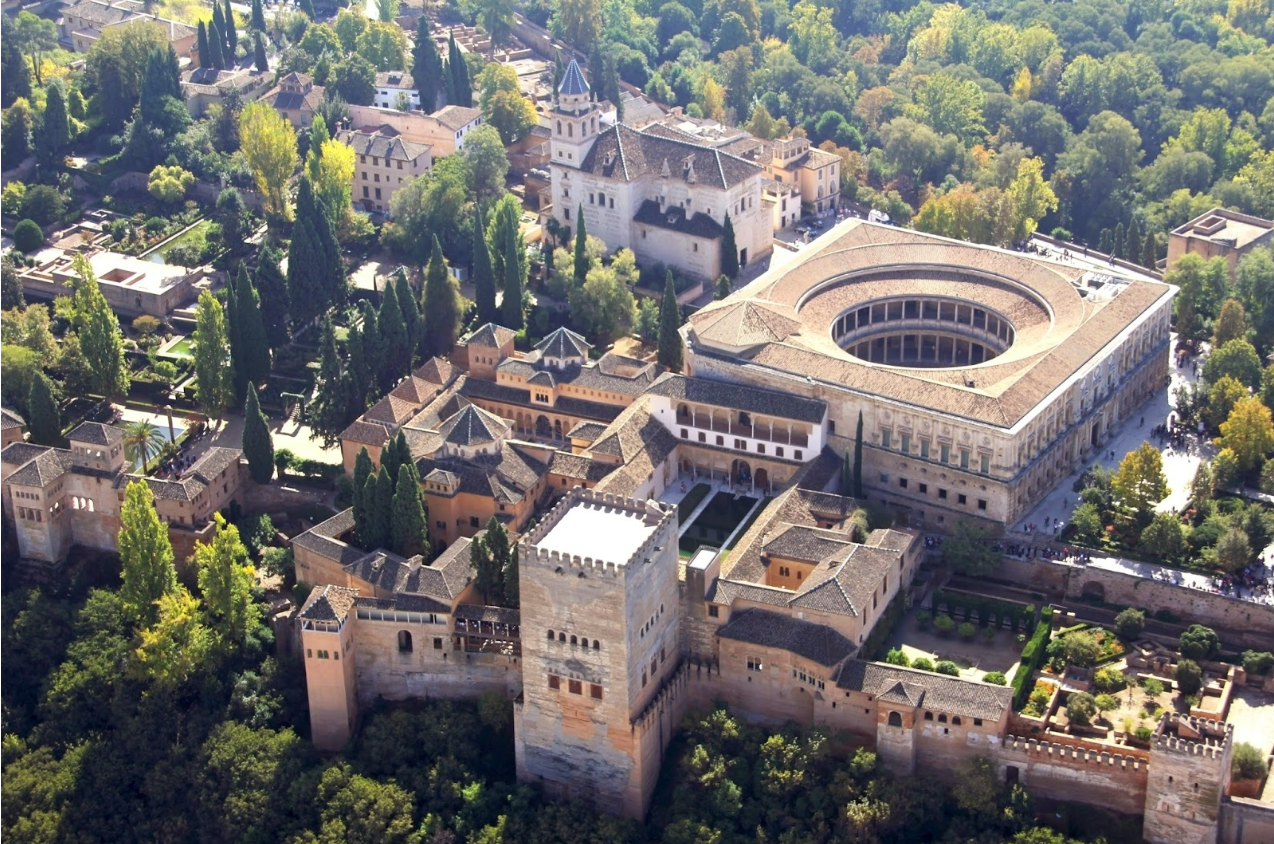
(The Palace of Charles V, (in the Alhambra, that circle within the square building)
Philip II
Phillip II, patron of the arts:
- Charles V’s son
- Phillip II transformed the history of Spanish painting, bringing unprecedented number of painters from Italy and Flanders, laying the groundwork for Spanish Golden Age (King from 1556-98)
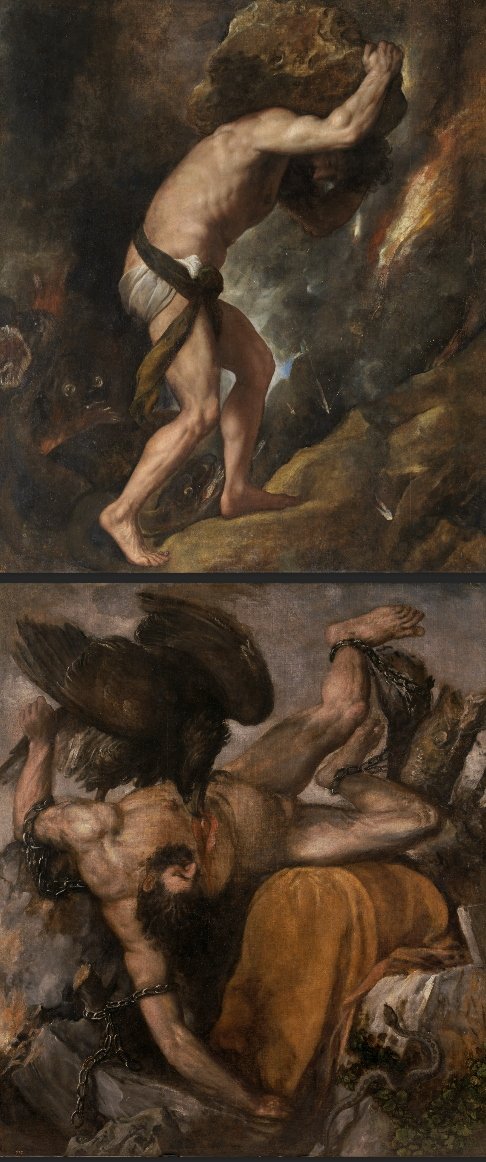
- Important patron of Titian
o Commissioned titian to create the Poesie.
§ The renaissance Subject is mythological subjects
Commissioned El Escorial and the Palace de Buen Retiro
Created the Decorative Art Program for El Escorial
Philip II’s defense of Catholic daith and imperial power is reflected by El Escorial
Mary of Hungary (1508-1558)
Mary of Hungary is the sister of Charles V, also the governess of Netherlands/Flanders for some times, important as she was behind a lot of the artistic propaganda behind Charles V, she asked titian to paint furies and probably the horse picture of Charles V
(Titian, Furies)
Martin Luther
Led The Protestant Reformation
A key event in the Counter-Reformation, the Catholic Church’s movement to reform itself and counter the theological challenges posed by Protestant reformers such as Martin Luther and John Calvin
o (John Calvin and Martin Luther are depicted in the painting Victory of Truth of Heresy by Rubens, both lead the protestant reformation
Protestant Reformation
The Protestant Reformation was a major 16th-century religious, political, and cultural revolution initiated by Martin Luther in 1517 that splintered Western Christendom. It challenged Roman Catholic doctrine and papal authority, promoting salvation by faith alone, the Bible as the supreme authority, and sparking the creation of new Protestant denominations.
Counter-Reformation
the 16th- to 17th-century resurgence of the Roman Catholic Church, launched in response to the Protestant Reformation. It involved internal reforms, reaffirmation of doctrine (notably at the Council of Trent), and aggressive efforts to stop Protestantism and restore Catholic influence. (Think about the art in El Escorial)
Council of Trent - A key event in the Counter-Reformation, the Catholic Church’s movement to reform itself and counter the theological challenges posed by Protestant reformers such as Martin Luther and John Calvin
The Council of Trent’s effect on art:
Addressed the role of religious art, affirming that art should be used to inspire devotion
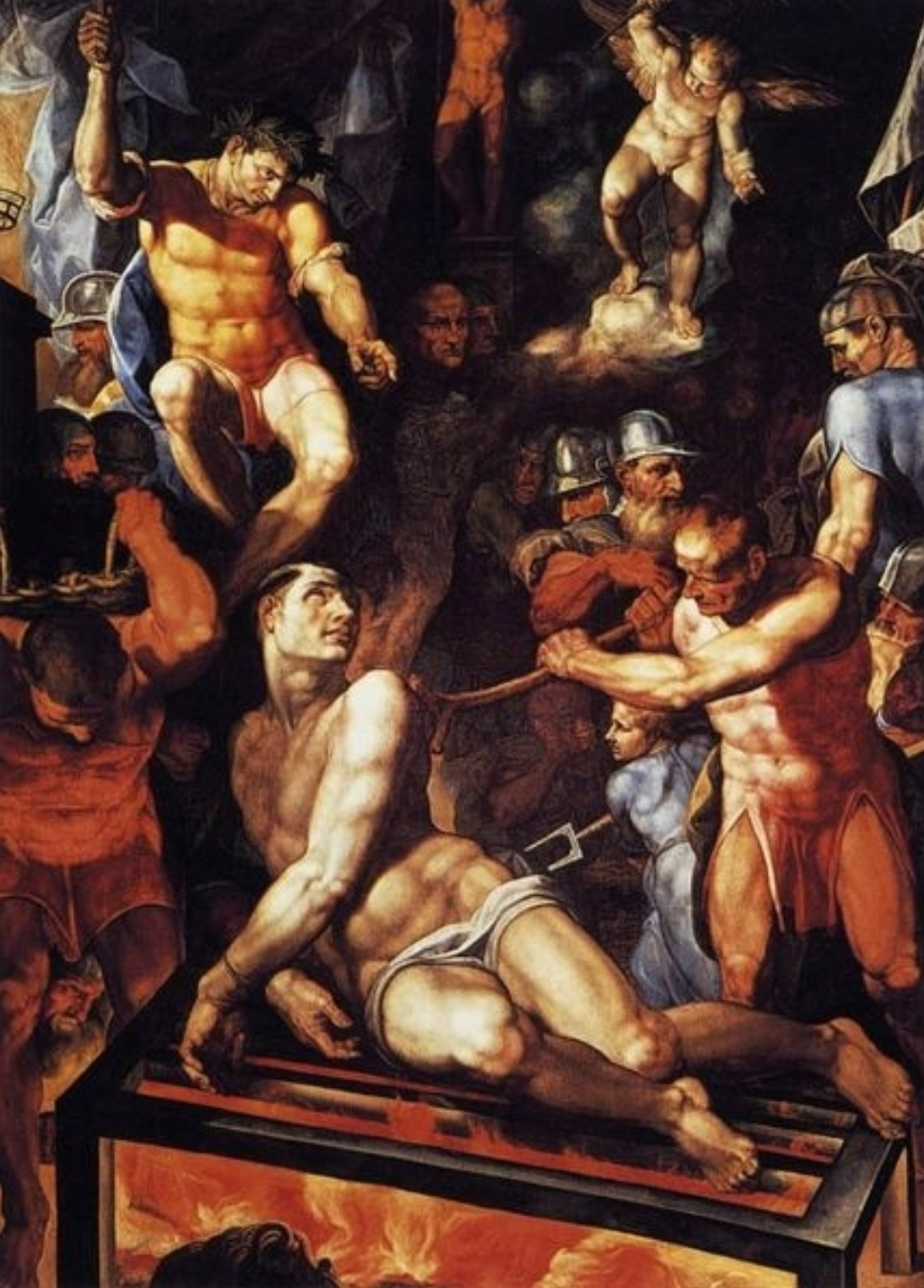
These principles of Counter-Reformation art will direct the visual program of El Escorial (Saint Lawrence Burning on a Grill). This is the painting that is chosen to go into the altar piece by Philip II
(Pellegrini Tibaldi, Martyrdom of St. Lawrence)
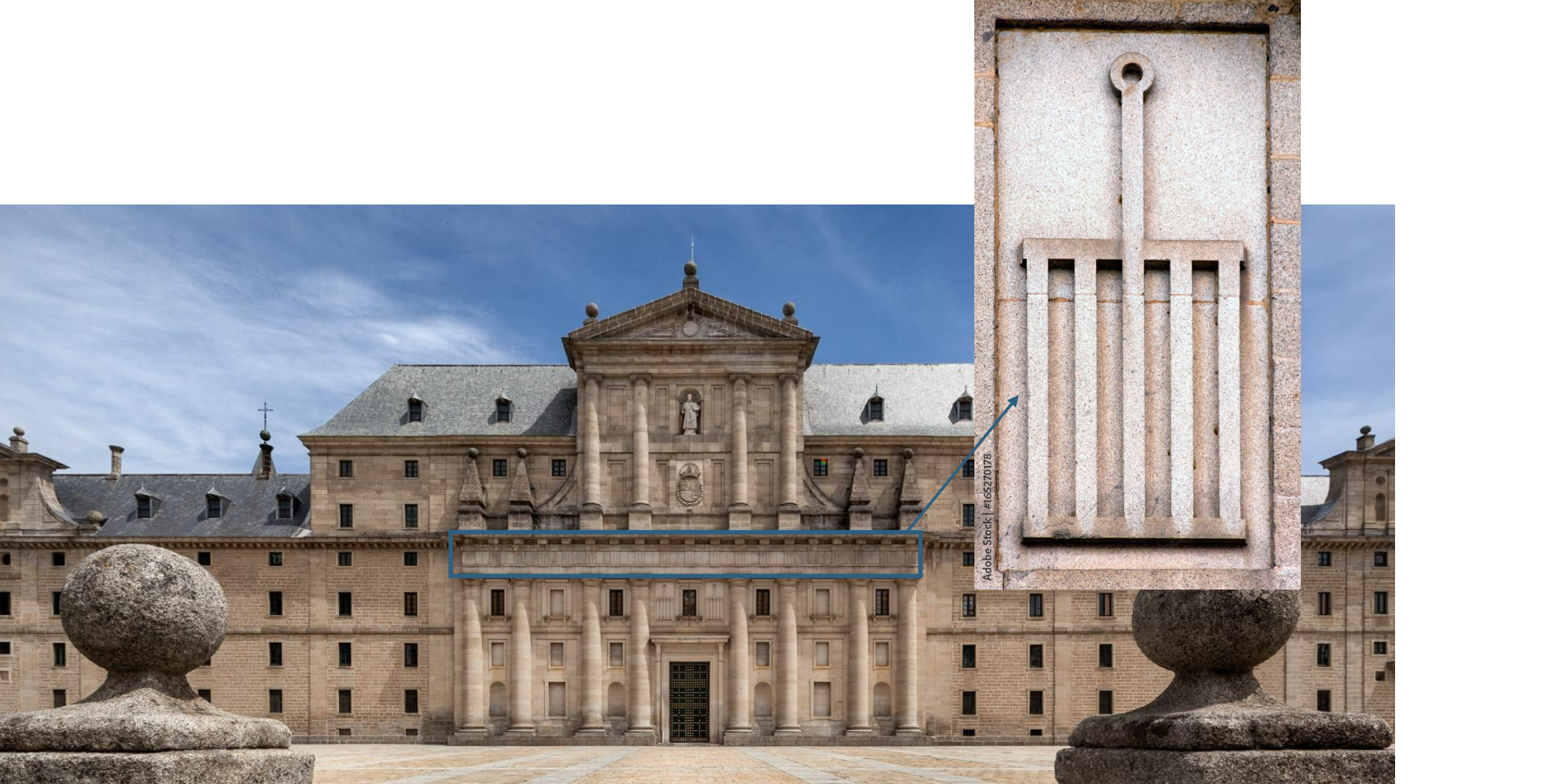
El Escorial
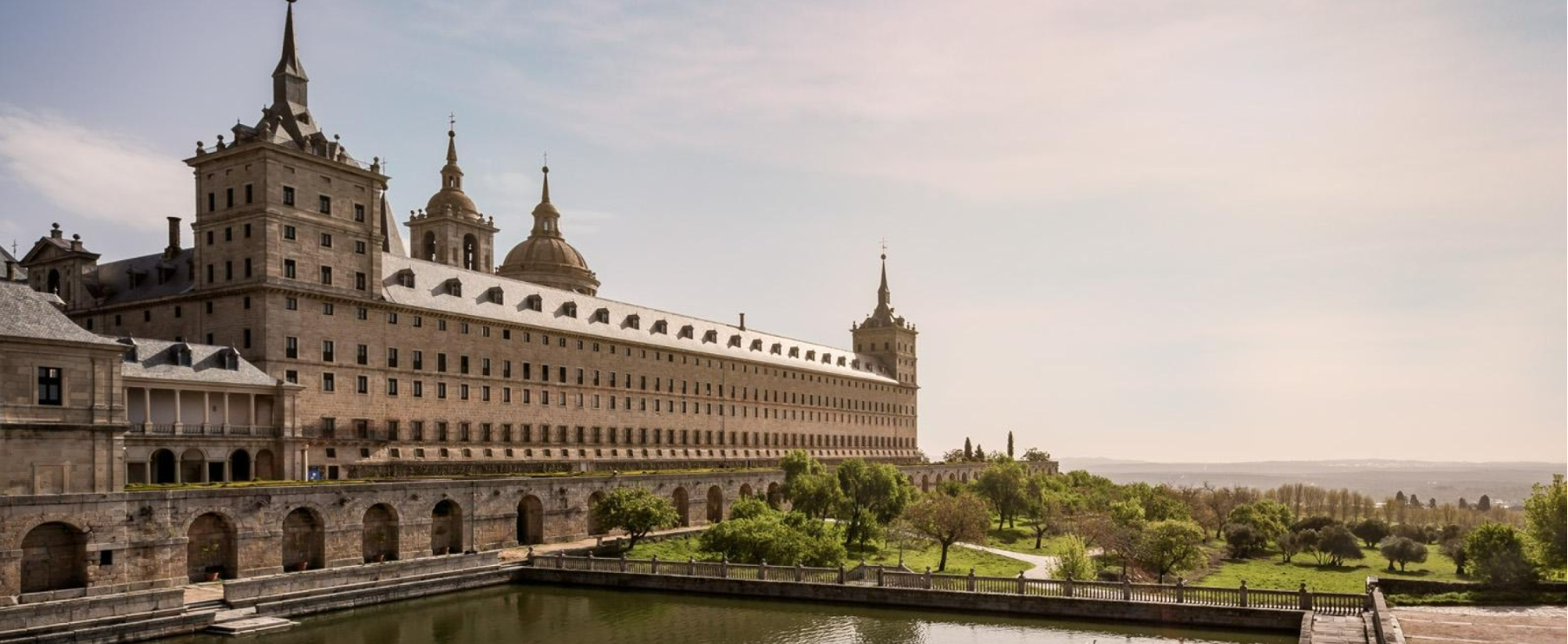
El Escorial:
- Commissioned by Phillip II in 1563
o Completed in 1584
- Reflects Philip II’s defense of Catholic daith and imperial power
- The political, religious, and intellectual ambitions of Phillip II’s reign
- Juan Bautista de Toledo/Juan de Herrera
(Luca Giordano, Battle of Saint Quentin, preparatory sketch, 1692-93, Museo del Prado)
(The Battle of Saung Quentin was won on the Feast Day of St. Lawrence)
(Decides to dedicate the building of El Escorial to Saint Lawrence)
Both paintings of Saint Lawrence burning on a grill:
- Dark, Ambiguous, Unclear Narrative, Distractions, Confusing focal point
- Clear story, Dignified, Beautiful, graceful, obvious place of emphasis, monumental light and shadow clarify rather than obscure.
o These principles of Counter-Reformation art will direct the visual program of El Escorial This is the painting that is chosen to go into the altar piece by Philip II
You wont ask the architect except for El Escorial (Juan Bautista de Toledo and Juan de Herrera)***
The architectural taste of El Escorial:
- Renaissance and Herrerian styles
- Key architects: Juan Bautista de Toledo and Juan de Herrera
o Juan Bautista Toledo (1515-1567) – trained in Italy, brought classical elements to taste for austerity and monumentality
o Renaissance ideals of symmetry, order, and classical proportions
o Juan de Herrera (1530-1597) – Bautista’s apprentice
§ ‘Herrerian’ style – emphasis on monumental scale, horizontal lines, simplicity and geometric clarity
§ Austere, somber, monumental, grand but grave, Flemish style-roof
El Escorial Multiple Functions:
- Royal pantheon, library, basilica, monastery, seminary, palace
Palace of Charles V
- The Palace of Charles V (in the Alhambra, that circle within the square building)