Lecture 11: Financial Options
 Call Kai
 Learn
Learn Practice Test
 Spaced Repetition
 Match
Match Flashcards
 Knowt Play
1/13

There's no tags or description
Looks like no tags are added yet.
Name | Mastery | Learn | Test | Matching | Spaced | Call with Kai |
|---|
No analytics yet
Send a link to your students to track their progress
14 Terms
How do put & call options change with strike prices?
Call option (right to buy) value increases when strike price decreases → valuable when you pay less
Strike price (k) inc → Call value dec, Strike price (k) dec → call value inc
Put option (right to sell stock) value increases when strike price increases → can sell stock at higher price
Strike price (k) inc → put value inc, strike price (k) dec → put value dec
How do put & call options change with stock prices?
Call option (right to buy) value increases when stock price increases → because can pay less
Stock price inc → call value inc, stock price dec → call value dec
Put option (right to sell) value increases when stock price decreases → because you can just sell the stock in the market
Stock price inc → put value dec, stock price dec → put value inc
What are the 4 limits on option prices?
American option can’t be worth less than European counterpart → American can be equally or more valuable
Time value can’t be negative → can only add no value or positive value
Call option can’t be worth more than stock itself → why buy call when can buy stock
C = (S - K, 0 otherwise)
Put option can’t be worth more than strike price
P = (K - S, 0 otherwise)
What is intrinsic value of an option (arbitrage opportunity)?
The value of option if option expired immediately right now
0 = out of the money
other than 0 = in the money
American option can’t be worth less than intrinsic value → otherwise, there’s an arbitrage opportunity if it is worth less!
What is time value of an option?
Difference between option price & intrinsic value → can’t be negative
American price = intrinsic value + time value
option is more valuable when the exercise date is longer! (this is why American option is usually more valuable or equal to European)
How are option prices related to volatility?
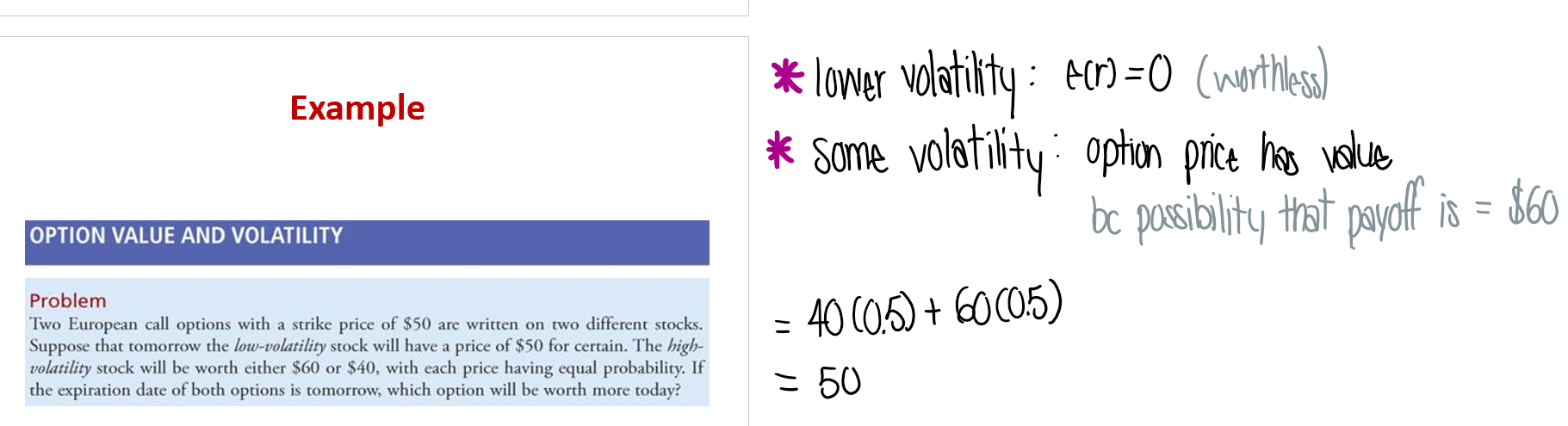
The value of an option increases with the volatility of the stock
lower volatility: expected return = 0 (worthless)
some volatility: option price has value (bc there is a possibility that payoff is $60)
How can call parity without dividends be split into intrinsic & time value?
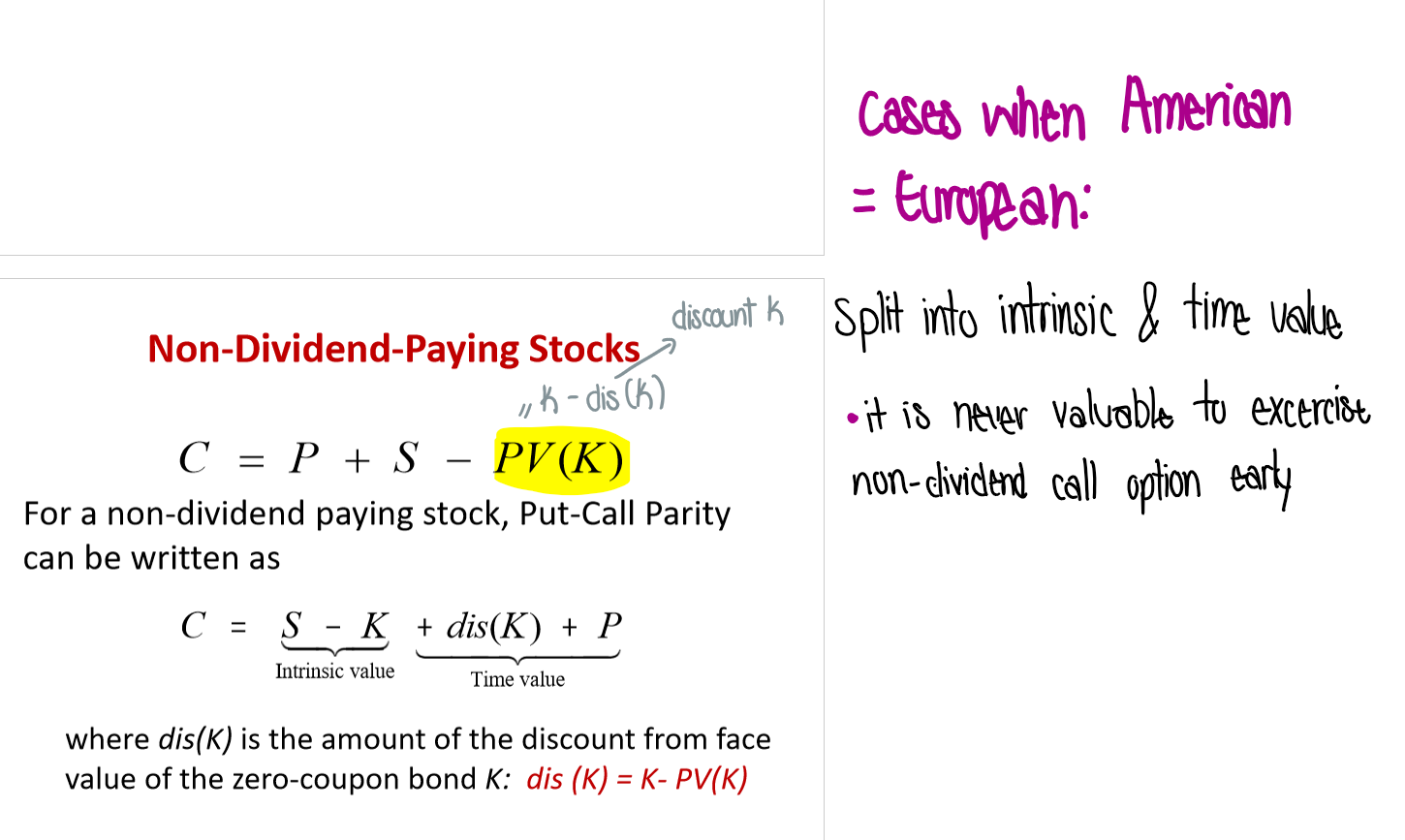
Never valuable/optimal to exercise non-dividend call option early! → bc price of any call option always exceeds intrinsic value (price is more than the value you get)
European call always has a positive time value bc you can only exercise on expiration date
Negative discount(k) means option can be negative at time value → happens when deep in the money & K is very large (better to buy early than sell in market if deep in the money!)
When do you sell or exercise a call option?
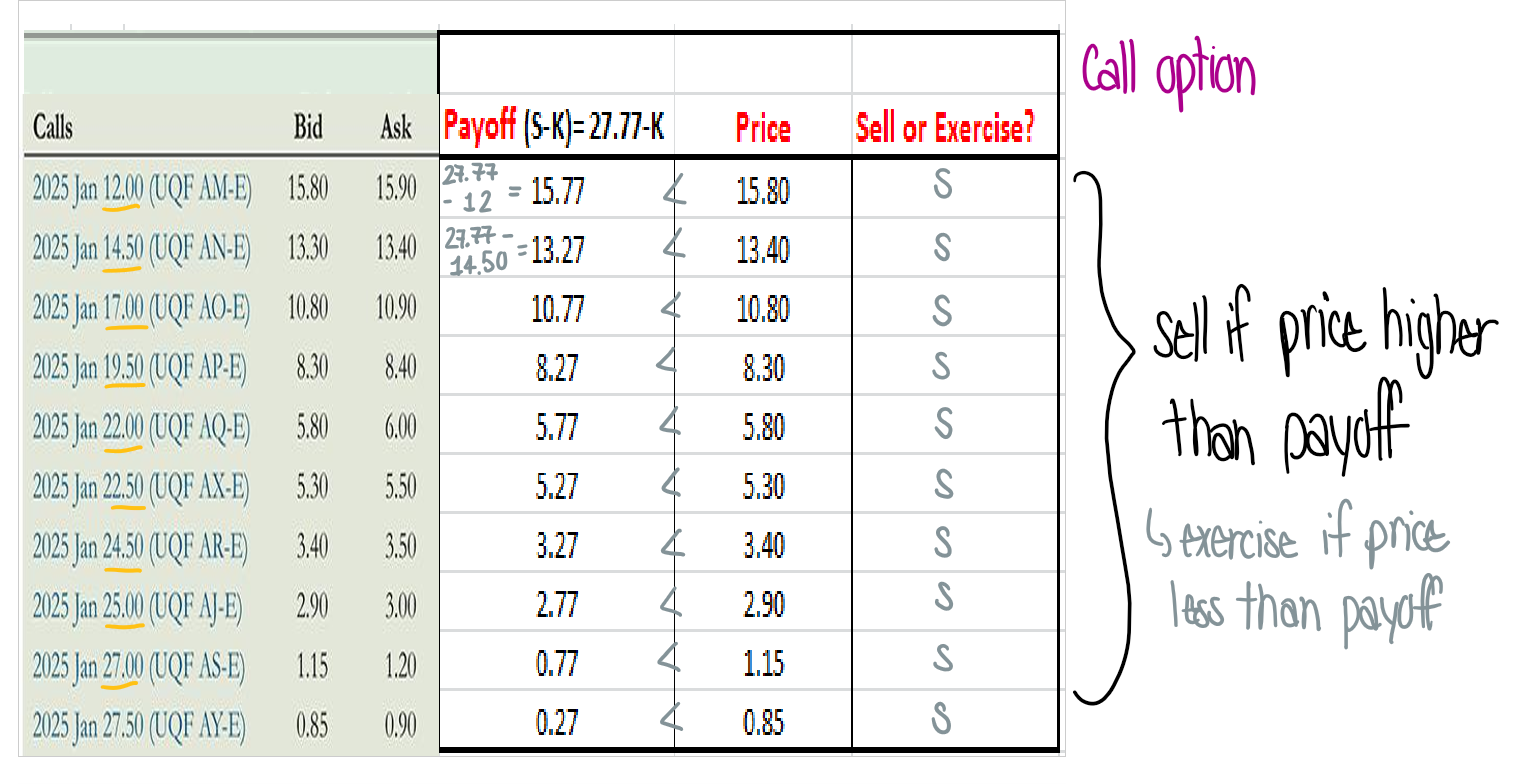
Sell → if price is higher than payoff
Exercise → if price is less than payoff
Same for with & without dividends!
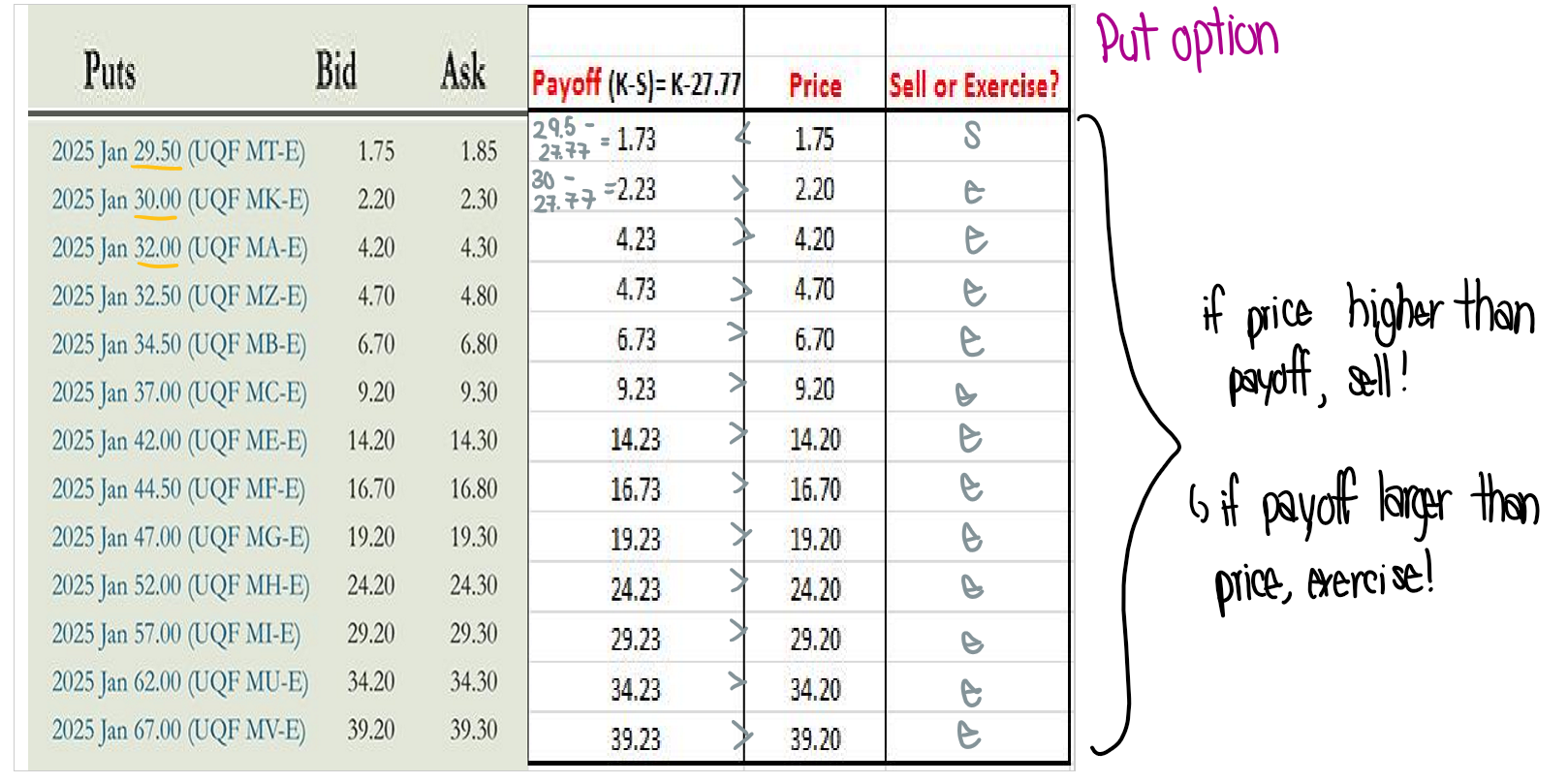
When do you sell or exercise a put option without dividends?
Sell → if price is higher than payoff
Exercise → if price is less than payoff
Same for with & without dividends!
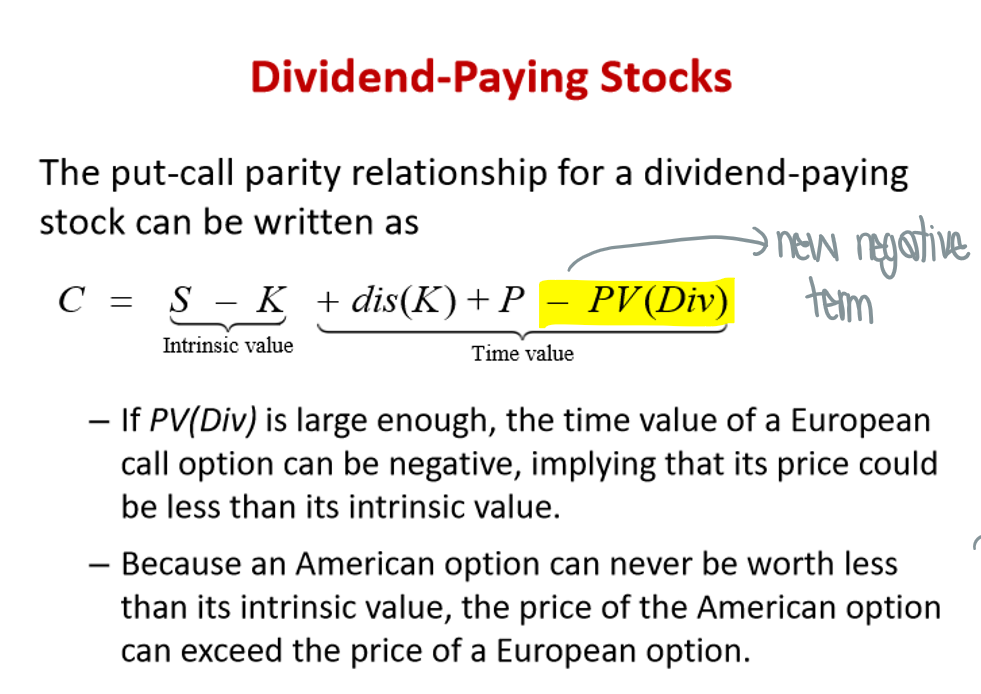
What is the call parity with dividends split into intrinsic & time value?
If time value is negative, better to exercise early! → bc you can capture the dividend itself
If PV(Dividend) is large enough, price can be less than intrinsic value → can’t happen bc arbitrage opportunity
* Sometimes better to exercise early with dividends, never better to exercise early without dividends!
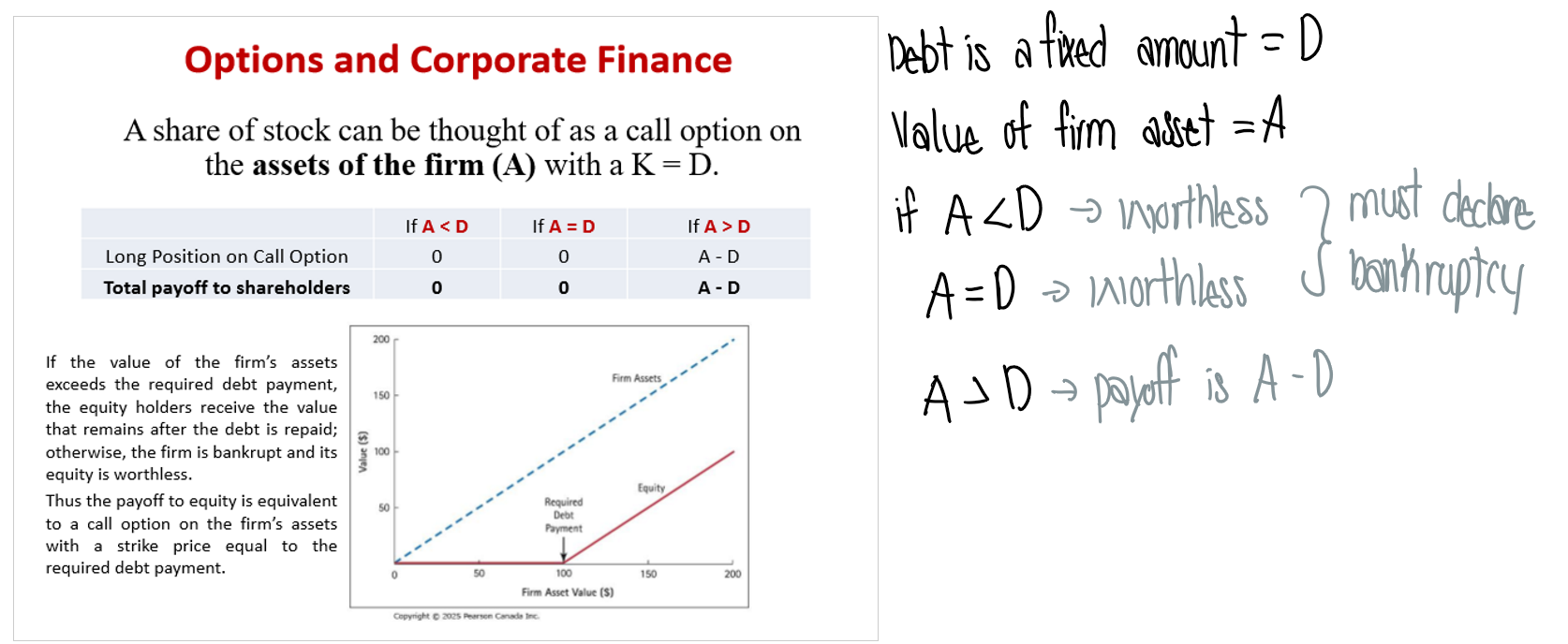
How is call option value related to debt?
When firm value goes down (can’t pay debt) → call option is worthless
After company repays debt, the remaining goes to equity holders/shareholders
D → debt is a fixed amount
A → value of firm asset
If asset less than debt → worthless
If asset = debt → worthless
If asset more than debt → payoff id Asset - Debt
What is debt as an option portfolio?
Debt holders → owner of firm
Owners → sell call option to equity holders
Call option strike price = debt outstanding
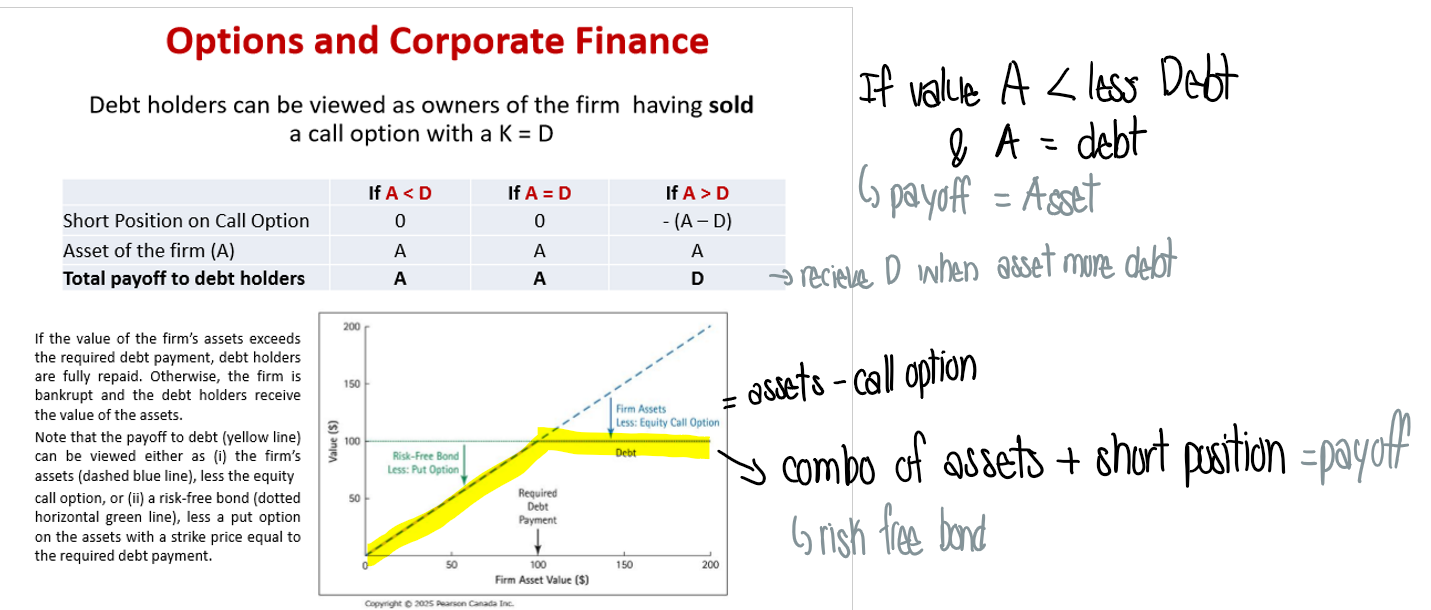
What is risky debt?
Risky debt = Risk-free debt - put option on firm assets
when firm assets are worth less than required debt payment, owner of put option will exercise & receive difference between required debt payment & asset value
If firm value is greater than required debt payment, debt holder only receives required debt payment
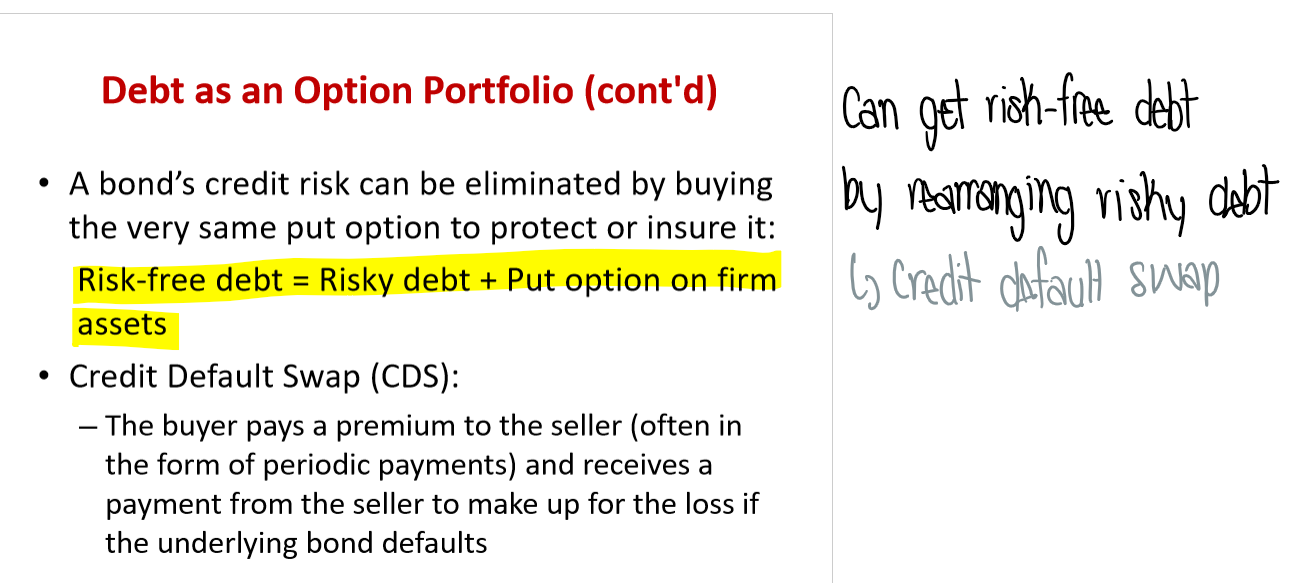
How can you get risk-free debt?
By rearranging risky debt
Credit default swap → buyer pays premium to seller & receives payment from seller to make up for loss