Evolution of Earth - Unit 3
 Call Kai
 Learn
Learn Practice Test
 Spaced Repetition
 Match
Match Flashcards
 Knowt Play
1/9

There's no tags or description
Looks like no tags are added yet.
Name | Mastery | Learn | Test | Matching | Spaced | Call with Kai |
|---|
No analytics yet
Send a link to your students to track their progress
10 Terms
geologic time scale
chronological grouping of different geological, biological, and environmental conditions through earth's history
Hadean Eon
- 4.6 to 4.0 bya
- high temperatures in earths interior and surface, no rock formations survive from this time
- surface likely covered in magma ocean
- earth differentiates into zones of different chemical compositions (interior likely partially molten)
- sources of heat for partial melting includes accretion and radioactive decay
- no evidence of life in geologic record
- earths atmosphere forms from gases and ices leftover from solar system formation
- outgassed water vapor condenses from atmosphere to form rain ( leads to oceans)
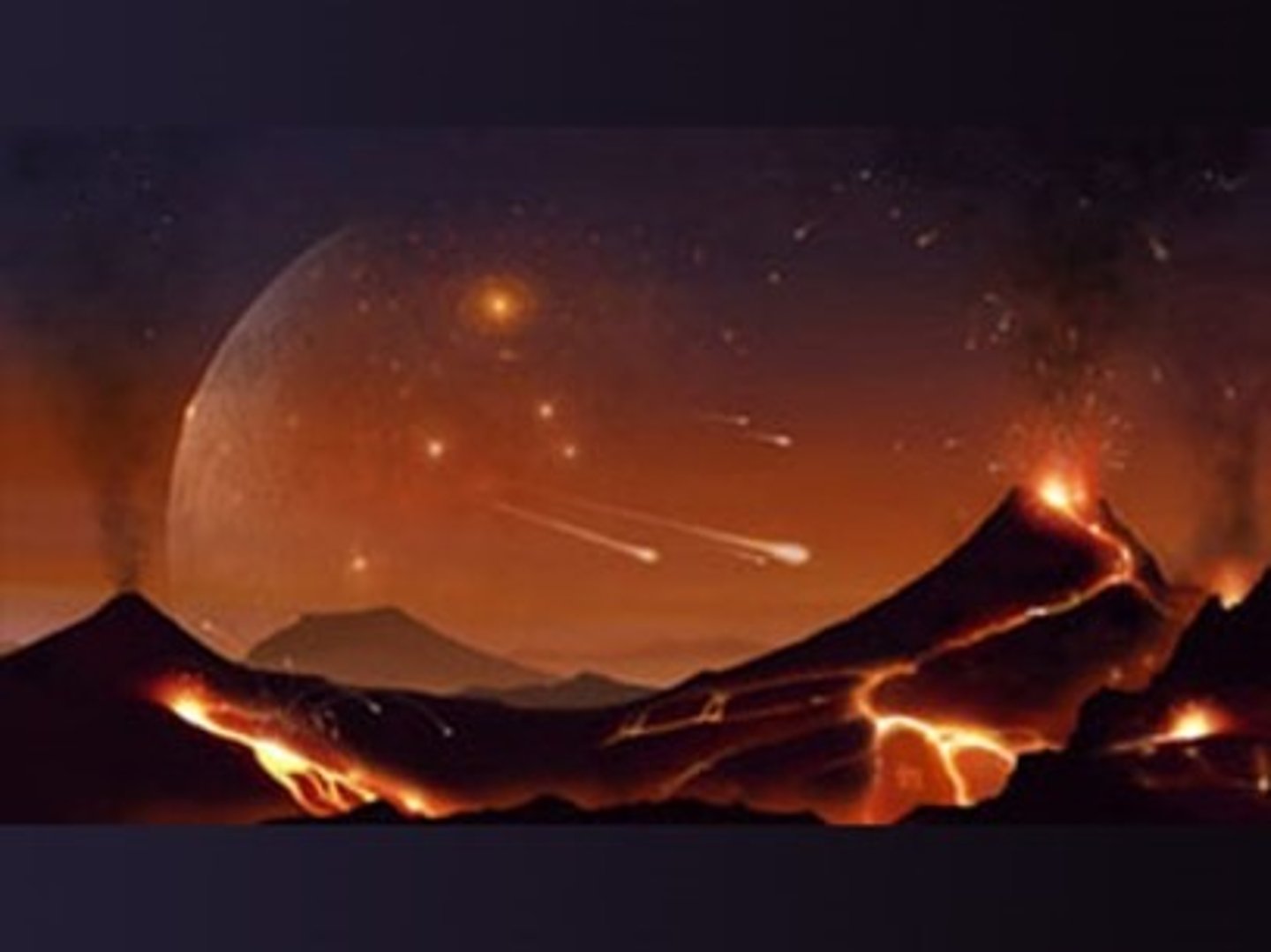
What theory describes how the moon formed
"giant impact theory"
- the moon is the result of a giant impact on earth
Archaean Eon
- 4.0 - 2.5 bya
- early crust is formed from cooling magma ocean and volcanic extrusions
- small granite terranes form (granite islands)
large continental crust blocks form (granite terranes and island archs)
- cratons are produced
- banded iron formations formed (3.5-3.2 bya)
- microfossils and stromatolites (cyanobacteria 3.5 bya)
- oxygen begins to accumulate
- rainwater continues to accumulate in ocean basins
granite island
landmasses formed from plutonic, silica-rich felsic magmas that cooled slowly deep within the Earth's crust before being uplifted and exposed by erosion
granite terrane
distinct, ancient geological regions (primarily Archean) characterized by domes of granite plutons
island archs
curved chains of volcanic islands formed at oceanic-oceanic convergent plate boundaries
cratons
the ancient, stable cores of continents, surviving for billions of years without major tectonic deformation
Proterozoic Eon
- 2.5 - 0.541 bya
- supercontinents form and break up
• Nuna (2.1-1.8 bya)
• Rodina (1.1-0.9 bya)
• Pannotia (0.61 bya)
- simple, single celled organisms diversify, eukaryotic cells later
- mesozoans appear (animals with differentiated cell types- 635-541 mya)
- great oxygenation event (2.4-2.3 bya)
- marine life diversifies
Phanerozoic
- 541 mya to present
- Pangea forms (300-250 mya) and breaks up (180 mya)
- north America forms Appalachian and western mountains
- K/T boundary 66 mya (extinction of avian dinos)
Early phanerozic:
• animals move onto land (amphibian)
• land plants appear (seedless, spore bearing)
• several mass extinctions
Middle of phanerozic:
• new animals appear (flying reptiles, dinosaurs, mammals, and birds)
• seed producing flower plants become dominant
End of Phanerozoic:
• mammals rise to dominance and humans appear
• plankton with calcium carbonate exoskeletons proliferate, leads to large chalk formations on ocean floor