Saladin Chapter 20
 Call Kai
 Learn
Learn Practice Test
 Spaced Repetition
 Match
Match Flashcards
 Knowt Play
1/90

There's no tags or description
Looks like no tags are added yet.
Name | Mastery | Learn | Test | Matching | Spaced | Call with Kai |
|---|
No analytics yet
Send a link to your students to track their progress
91 Terms
blood vessels
form a closed system of tubes that carry blood, oxygen, and nutrients to the body
blood vessels consist of
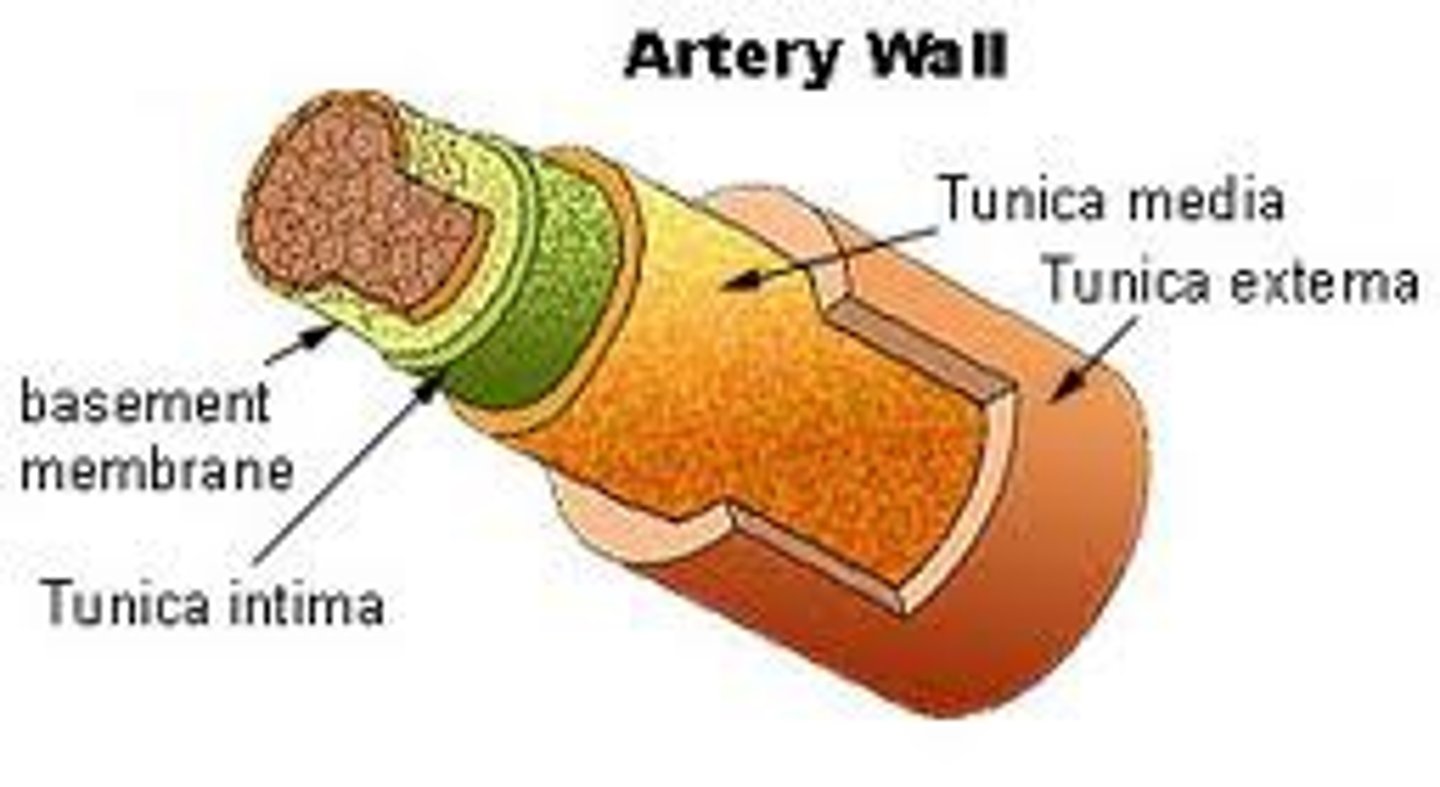
3 layers called tunics
tunic layers of the blood vessels
tunica interna, tunica media, tunica externa
tunica interna (intima)
forms the thin, inner lining of blood vessels and comes in DIRECT contact with the blood
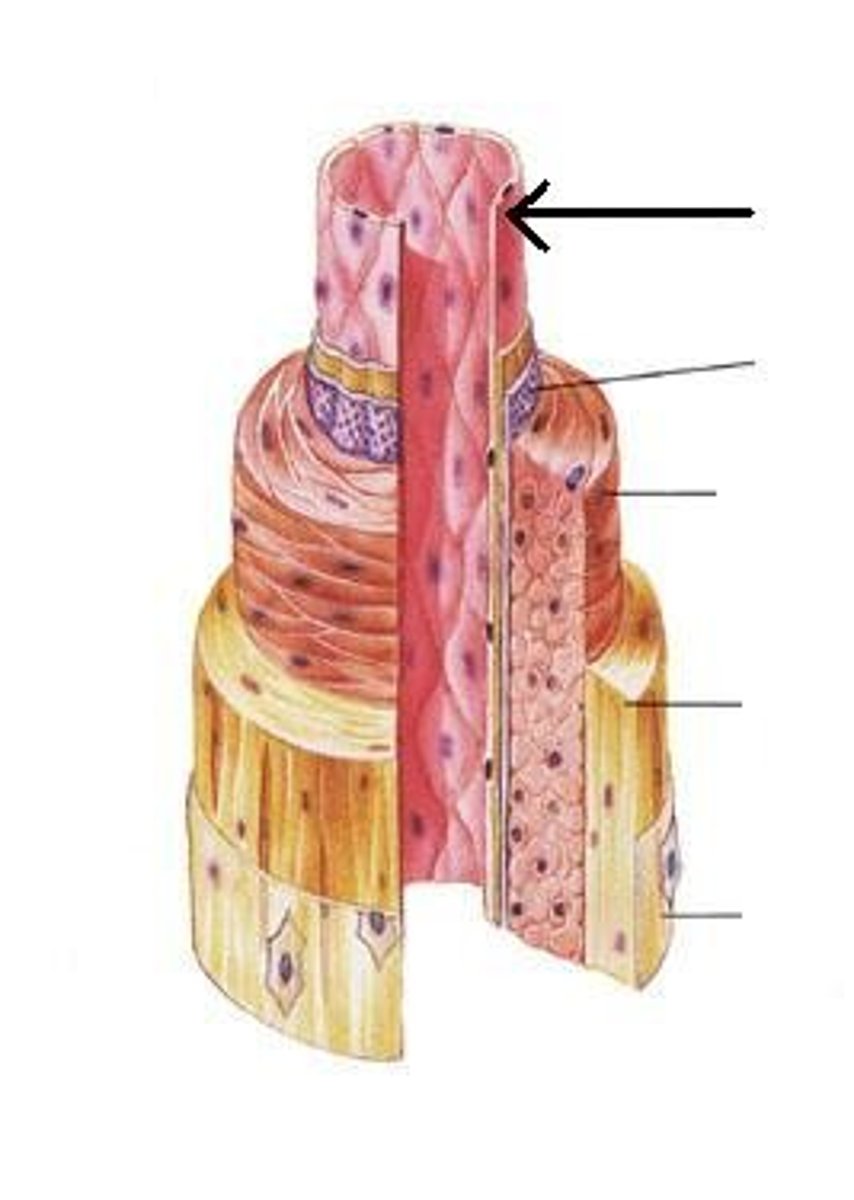
tunica that is made up of simple squamous epithelium known as endothelium
tunica interna
the endothelium of the tunica interna
acts as a selectively permeable membrane, secretes chemicals that can dilate or constrict the blood vessels, and repels blood (so no clots form)
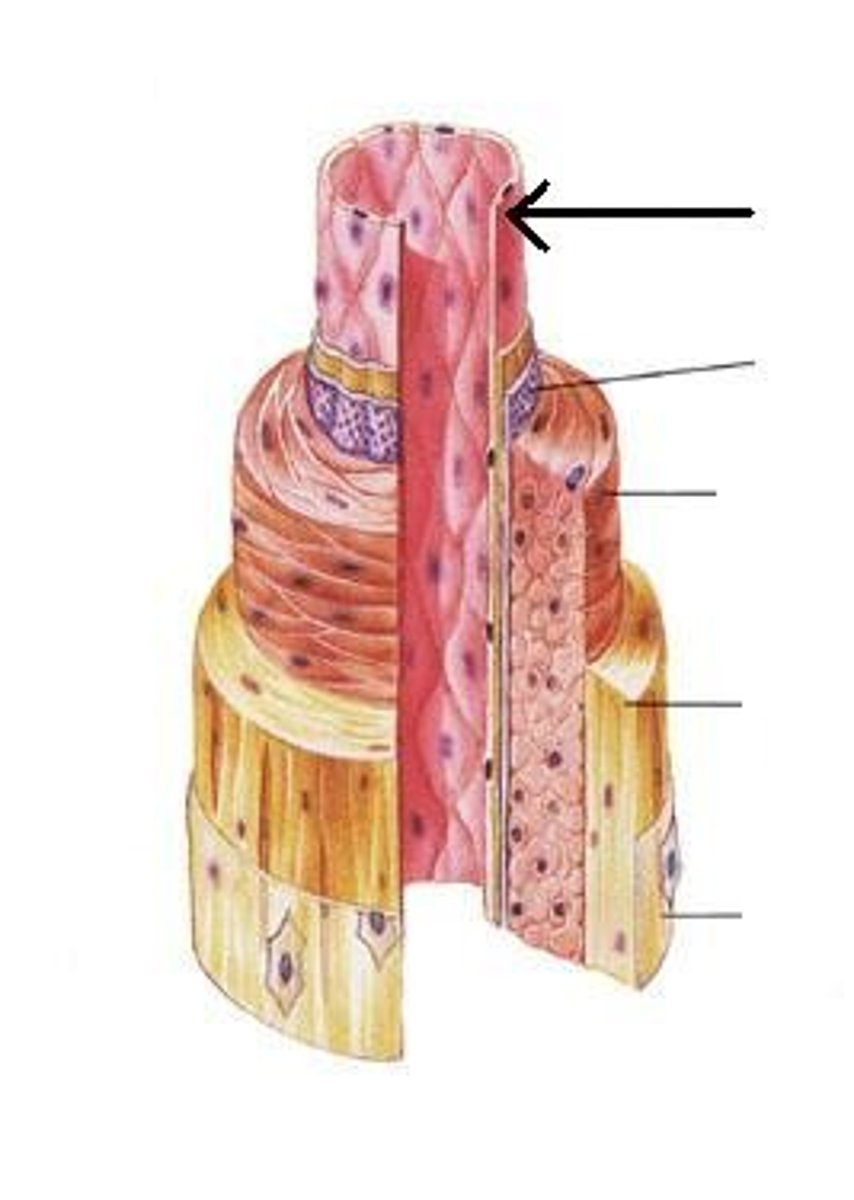
tunica media
forms the thick, middle layer of the blood vessels that consists of smooth muscle
primary function of tunica media
to contract in order to regulate blood flow and blood pressure (vasomotion)
vasomotion
contraction in order to regulate blood flow and pressure
tunica externa (adventitia)
outer most covering of a blood vessel
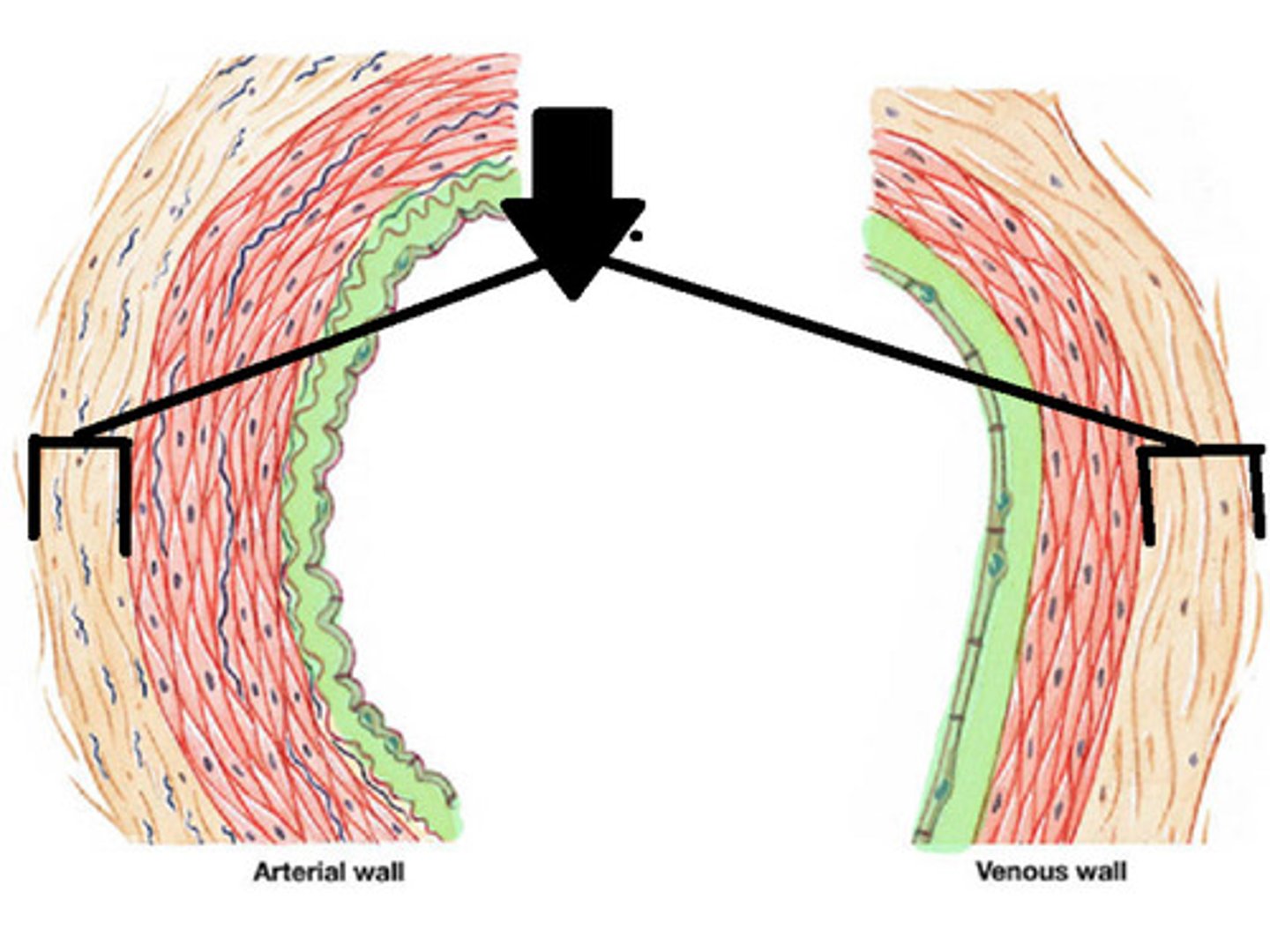
primary function of tunica externa
to anchor the blood vessels to surrounding tissues/structures
layer of the blood vessels that contain nerves and tiny blood vessels that supply the blood vessel tissue
tunica externa
vaso vasorum
blood vessels for blood vessels
types of blood vessels
arteries, veins, capillaries
arterial vessels
carry blood away from the heart
veins
carry blood to the heart
capillaries
responsible for gas exchanges
arterial vessels from largest to smallest
conducting (elastic) arteries, muscular (distributing) arteries, arterioles, metarterioles
largest of the arterial vessels
conducting/elastic arteries
the aorta is an example of
conducting artery
conducting arteries
have numerous elastic fibers and help to propel blood away from the heart
muscular/distributing arteris
distribute blood to specific organs
arterioles
are very small branches from the distributing/muscular artery
metarterioles
short vessels that link arterioles with capillaries
anastomoses
the union of branches of two or more arteries supplying the same region of the body
most tissues receive blood supply from more than one artery because
multiple routes means multiple ways to circulate the blood
capillaries
are microscopic blood vessels that connect arterial outflow from the heart to venous return to the heart
primary function of capillaries
to exchange oxygen and nutrients between the blood and tissues
most capillaries use
simple diffusion to exchange materials
the exchange vessels of the cardiovascular system
capillaries
filtration
movement of fluid from capillaries to interstitial space
reabsorption
movement of fluid from interstitial space to capillaries
the venous vessels from largest to smallest
veins, venules
how much blood is found in the veins at any given moment
over half
venules
receive blood from capillaries
when many venules come together
vein
veins have the presence of
valves
valves
prevent the backflow of blood
muscle contractions are used
to help push the blood back up the veins to the heart
arteries have
thick walls, thick muscle layer, carry blood from the heart, no valves
veins have
thin walls, thin muscle layer, carry blood toward the heart, valves
blood flow
the volume of blood that flows through any tissue, organ or blood vessel in a given period of time
blood pressure
the force exerted by blood on the walls of a blood vessel
blood pressure is created by
the contraction of the ventricles
normal adult blood pressure
120/80 or less
the top number
systolic or the highest pressure that occurs during contraction
the bottom number
diastolic or the lowest pressure that occurs during rest
increased blood volume would
increase bp
increased sympathetic stimulation would
increase bp
increased parasympathetic stimulation would
decrease bp
increased heart rate would
increase bp
decreased heart rate would
decrease bp
increased cardiac output would
increase bp
decreased cardiac output would
decrease bp
systolic bp
number when you first hear a heart beat
diastolic bp
number when you can no longer hear the heart beat
hypertension
chronic resting bp of 140/90 or higher
hypotension
chronic low resting bp
main factors that affect blood pressure
peripheral resistance, blood viscosity, vessel length, vessel radius
peripheral resistance
the friction caused by blood flow
increased peripheral resistance
increased bp
blood viscosity
thickness of the blood
increased blood viscosity
increased bp
decreased blood viscosity
decreased bp
vessel length
the longer the blood vessel, the more friction it will encounter
increased vessel length
increased bp
decreased vessel length
decreased bp
vessel radius
half the diameter of a vessel
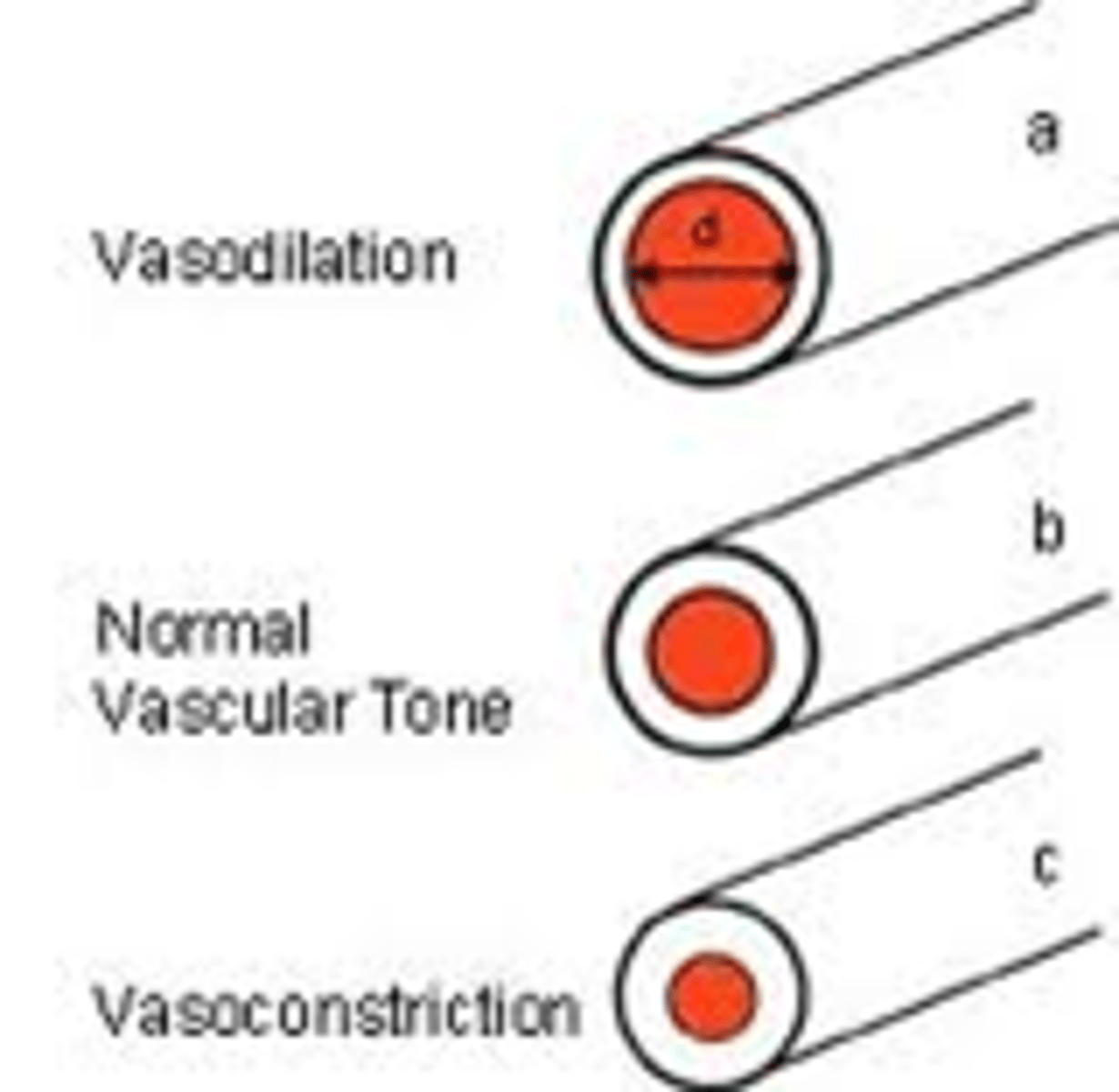
vasoconstriction
decreasing the diameter of a vessel
vasodilation
increasing the diameter of a vessel
vasoconstriction causes
increased bp
vasodilation causes
decreased bp
laminar flow
blood closest to the vessel walls move slower than the blood in the middle
systemic circulation
movement of blood from the heart to the body and back again
pulmonary circulation
movement of the blood from the heart to the lungs and back again
aorta
largest artery of the heart
aortic arch branches
brachiocephalic trunk, left common carotid artery, left subclavian artery
branches of the brachiocephalic trunk
right sublclavian artery and right common carotid artery
the carotid arteries branch into numerous smaller arteries that supply
the head, neck, brain
the subclavian arteries branch into smaller arteries that supply
the upper limbs
thoracic aorta
part of aorta that is in the thorax
abdominal aorta
part of the aorta that is in the abdomen
the abdominal aorta gives off a
external iliac artery that gives off several branches that supply the lower extremities
the superior vena cava
receives blood from the head, neck, and upper extremities
the inferior vena cava
receives blood from the abdominopelvic region and lower extremities
aneurysm
where a bulging sac is created at a weak point in an artery wall. . .can eventually lead to a rupture
varicose veins
due to hereditary causes, prolonged standing; the valves in the veins become weaker, allowing blood to pool in the lower extremities
TIA
mini stroke; stroke-like event whose symptoms last less than 24 hours and usually don't cause permanent brain damage
stroke
caused by a blood clot blocking an artery in the brain, leading to death of brain cells and brain damage
arteriosclerosis
hardening of the artery walls
atherosclerosis
build up of fats/cholesterols on the walls of the arteries