Psych SAC 3
 Call Kai
 Learn
Learn Practice Test
 Spaced Repetition
 Match
Match Flashcards
 Knowt Play
1/81

There's no tags or description
Looks like no tags are added yet.
Name | Mastery | Learn | Test | Matching | Spaced | Call with Kai |
|---|
No analytics yet
Send a link to your students to track their progress
82 Terms
what is conciousness
Consciousness is the awareness of your own internal mental processes, including your thoughts, feelings, sensations and perceptions, and your awareness of the external world around you.
considered a psychological construct because it cannot be objectively observed or measured through the collection of data
what types of conciousness are there
normal waking conciousness
altered state of conciousness
normal waking conciousness
Normal waking consciousness is a state associated with being aware of our internal and external environments.
present everyday activities when we are awake and have a regular level of awareness.
altered state of conciousness
any state that differs in awareness from normal waking consciousness.
they can occur naturally or be induced
natural altered state of awareness
Naturally occurring altered states of consciousness occur without any external influence, such as sleep or a state of fatigue.
induced altereed states of awareness
Induced altered states of consciousness are brought about on purpose, such as an alcohol-induced state, an anaesthetised state for an operation or a meditative state.
what is sleep
Sleep is a naturally occurring and reversible altered state of consciousness, characterised by a reduction in awareness and responsiveness to external surroundings.
what is NREM Sleep
characterised by a progressive decline in physiological activity.
NREM sleep consists of three distinct stages and takes up around 80% of a sleep episode in people of school age and older.
NREM stage 1
A transitional phase between wakefulness and sleep. It is considered to be light sleep
If they are not disturbed for a couple of minutes in N1, a person quickly moves into NREM Stage 2 (N2).
NREM stage 2
NREM Stage 2 (N2) is also considered light sleep, during which physiological responses continue to slow down.
till wakes relatively easily during N2; however, bursts of brain activity help resist being woken by environmental stimuli such as noises.
experienced the most throughout a sleep episode.
NREM 3
NREM Stage 3 (N3) is considered to be deep sleep, during which physiological responses are at their slowest and a person is most difficult to wake up.
known as ‘slow-wave sleep’ due to brain activity being at its slowest.
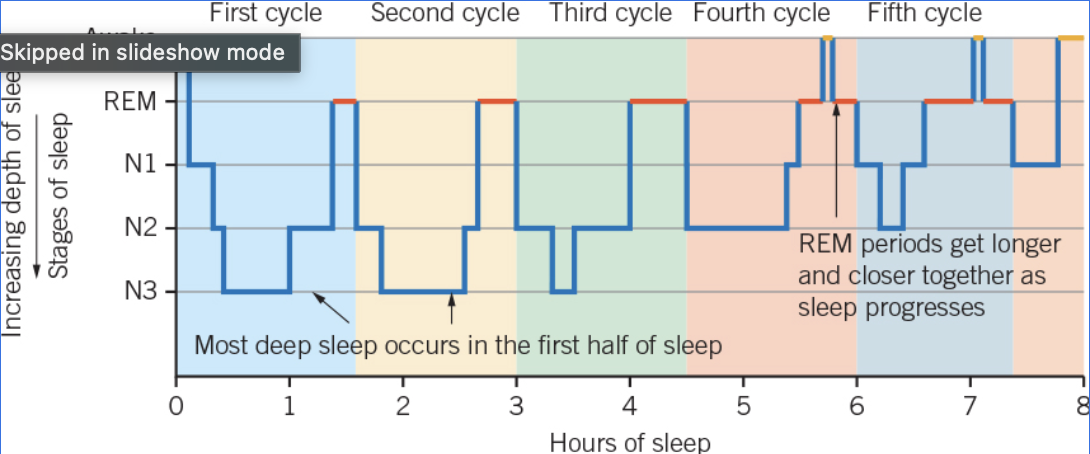
N3 is experienced more in the first half of the night than the second half of the night.
It is thought that our body is repairing itself during NREM sleep.
what is REM sleep
During rapid eye movement (REM) sleep, your eyes make quick darting movements behind their closed eyelids and your physiological activity increases.
brain activity resembles wakefulness, and heart rate and breathing rate increase.
Voluntary muscles are seemingly paralysed and twitch only intermittently.
The most vivid and memorable dreams occur during REM sleep.
period of REM occurs at the end of each sleep cycle,
typically takes up 20% of a sleep episode in people aged around 5 years and older.
our mind is repairing itself during REM sleep.
Hypnograms
Time (in terms of the time of a 24-hour day or hours since attempting to sleep) is plotted on the horizontal x-axis. The types and stages of sleep are shown on the vertical y-axis, with wakefulness at the top and deepest sleep at the bottom.
objective sleep measurements
eeg
emg
eog
Electroencephalography (EEG)
An electroencephalograph detects, amplifies and records electrical activity of the brain (brainwaves)
Non-invasive brain imaging technique that uses scalp electrodes to measure the voltage fluctuations induced by the mass electrical activity of neurons
The image it produces is an electroencephalogram
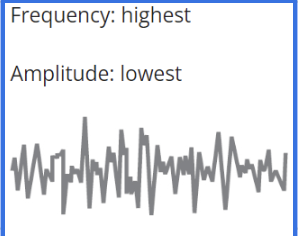
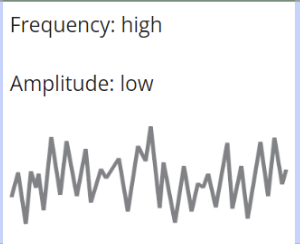
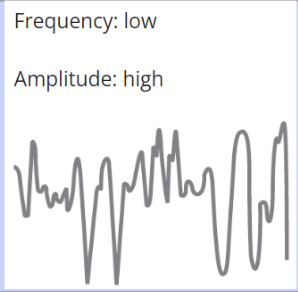
Brainwaves can be measured in both frequency (the speed - the number of brain waves per second) and amplitude (the strength - the deviation from the central point)
Brainwaves are associated with the level of alertness we experience
What state is this
Normal waking consciousness
Awake, alert and focused
High environmental stimulation
Brain working on several things at once
What state is this
Lower alertness
Awake but relaxed
Drowsy
Low environmental stimulation
what state is this
Low alertness
Light sleep
Senses withdrawn from the external environment
Deep meditation
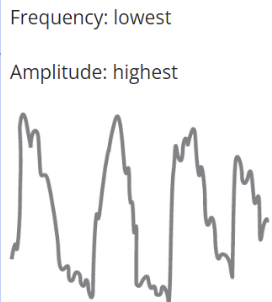
what state is this
Lowest alertness
Deep N3 sleep
Dreamless sleep
Electromyography (EMG)
Detects, amplifies and records the electrical activity of the skeletal muscles
Can be used on face or body muscles
The image it produces is an electromyogram
Muscle movement/tension can be measured in both frequency (the speed) and amplitude (the strength)
In general, more muscle tension indicates greater alertness, so as a person drifts into deeper sleep, muscle movement decreases.
Additionally, no muscle movement is detected during REM sleep.
Electro-oculography (EOG)
This device detects, amplifies and records electrical activity of the muscles that allow the eye to move (it therefore only infers eye movement)
The image it produces is an electro-oculogram
‘Eye-movement’ can be measured in both frequency (the speed) and amplitude (the strength)
It is measure by placing electrodes around the eye
Activity levels of ‘eye-movements’ are associated with different stages of sleep
As you drift into deeper sleep, your eye movement decreases and slows down, and when you experience REM sleep, your eye movement increases.
Subjective sleep measurements
sleep diary
video monitoring
sleep diary
Sleep diaries are often used when a person is experiencing sleep troubles (e.g sleep apnoea or insomnia) and help sleep experts understand the participant’s experience.
They are a self-reported record of an individual’s sleep & waking time activities.
Records can be kept of:
Time trying to fall asleep
Number, time and length of awakenings during sleep
How sleepy the individual feels at different times of the day
Factors that affect sleep e.g. number of caffeinated or alcoholic drinks consumed
video monitoring
Video cameras are used to record externally observable physiological responses throughout a sleep episode
Recordings can also be shown to the participant to help them become aware of and understand their behaviour, for example, showing what they do when sleepwalking or even observing the effects of a snoring partner on their sleep.
Records may be kept of:
Changes in posture or body position
Amount of ‘tossing and turning’ restlessness
Sleep-related breathing problems (e.g. sleep apnoea)
What happens when awakening from a nightmare or night terror
Behaviour associated with sleepwalking
objective data advantages
data is quantitative, which is easy to measure and compare.
minimal interpretations required, thus minimises bias.
more accurate and reliable data, allowing for replication.
objective data disadvantages
can lack detail, as no insight gained as to why responses/measurements are obtained.
can be more artificial and lack external validity because measurements are taken in a laboratory.
subjective data advantages
provides qualitative data, thus is more detailed.
can provide insight into mental processes that cannot be directly measured. eg. dreams.
subjective data disadvantages
qualitative data, means it can be difficult to measure and compare.
requires personal judgements/ interpretation, meaning it is often influenced by bias
it is less valid and reliable due to bias and therefore, more difficult to replicate.
circadian rhythms
qualitative data, means it can be difficult to measure and compare.
requires personal judgements/ interpretation, meaning it is often influenced by bias
it is less valid and reliable due to bias and therefore, more difficult to replicate.
ultraradian rhythms
Ultradian rhythms are biological processes that coordinate the timing of activity of body systems over periods of less than 24 hours.
Ultradian rhythms may last from a few minutes to a few hours, allowing them to cycle repeatedly over the course of a day.
Some biological processes that follow an ultradian rhythm include heart beats, digestion, blood pressure, some hormone secretions and appetite.
Although the daily cycle of wakefulness and sleep follows a circadian rhythm, the sleep portion consists of several sleep cycles occurring as ultradian rhythms.
Within a typical 8-hour sleep episode, a person will experience around five sleep cycles, each lasting around 90 minutes and cycling through a repetitive and reasonably predictable pattern of REM and NREM sleep.
Sleep cycles tend to increase in length over the course of a sleep episode, with a general pattern of increased REM sleep and decreased N3 sleep as we progress through each cycle or ultradian rhythm.
Suprachiasmatic nucleus (SCN)
The suprachiasmatic nucleus (SCN) is found in the hypothalamus.
It synchronises and controls the body’s circadian rhythms - acting as a ‘master body clock’.
At specific times in a 24-hour day, the suprachiasmatic nucleus sends signals to regulate various activities in the body and keep it functioning to a daily schedule of sleep and wakefulness.
The suprachiasmatic nucleus can function independently to maintain an approximately 24-hour cycle because of a precise feedback loop of gene expression and inhibition.
However, it is influenced by external cues known as zeitgebers, such as exercise, social activity, eating patterns and temperature.
The suprachiasmatic nucleus is particularly sensitive to light, and this is why the human circadian rhythm is so closely connected to day and night.
Suprachiasmatic nucleus and melatonin
Light-sensitive neurons in the retinas of the eyes detect incoming light and send messages to the brain’s suprachiasmatic nucleus about the amount of light in the surroundings.
More light being received by the eyes indicates daytime
Less light being received by the eyes indicates night-time.
At night-time when the eyes detect low/no light, the suprachiasmatic nucleus sends an excitatory neural signal to the pineal gland in the human brain.
This results in the pineal gland releasing melatonin, a hormone that induces drowsiness.
The more melatonin released by the pineal gland at night-time induces sleepiness and decreases cell activity. This process ensures that our sleep is connected to night-time.
During the day when the eyes detect more light, the suprachiasmatic nucleus sends inhibitory messages to the pineal gland, resulting in the inhibition of melatonin release by the pineal gland.
Less melatonin release by the pineal gland increases cell activity in the body.
The result is that a person does not feel drowsy, and therefore wakefulness is promoted during the day.
The SCN also monitors and is responsive to the levels of melatonin in your blood (an internal stimulus).
When melatonin levels in the blood are high, the SCN signals to the pineal gland to reduce the secretion of melatonin.
This is a negative feedback loop:
A mechanism to stabilise the body’s internal environment by opposing and counteracting the effects of internal or external stimuli.
A regulatory mechanism where the output of a system reduces or slows down the processes that led to that output, ultimately stabilizing the system
With light cues from the Sun reliably cycling every 24 hours, the circadian rhythm can undergo daily resetting that keeps a person’s sleep–wake cycle aligned to a 24-hour day.
However, if these light cues are absent, the circadian rhythm tends to run free and can cycle for a little longer than 24 hours, resetting on average every 24.25 hours.
Variations in the circadian rhythm may explain some of the individual differences in those who are a ‘morning lark’ and feel more wakeful in the morning, or those who are a ‘night owl’ and feel more wakeful in the evening.
Sleep across the lifespan
As a person ages through the lifespan, their need for, and experience of, sleep changes in the following ways:
The total amount of sleep decreases.
The proportion of REM sleep decreases significantly from birth until 2 years old.
The amount of N3 sleep decreases, replaced mostly by N2 sleep.
A circadian phase delay occurs during adolescence (preference for going to sleep later).
After adolescence, a shift to a circadian phase advance occurs (preference for going to sleep earlier).
Awakenings during sleep increase from adulthood to old age.
Sleep efficiency (the percentage of the time in bed that is spent asleep) reduces.
neonatal age
0-1 month
neonatal Total recommended hours of sleep and proportion of REM and NREM
14-17 hours
Each sleep episode lasts between 2-4 hours
REM 50%
NREM 50%
neonatal Explanation for sleep patterns
Newborns require the highest amount of total sleep for rapid growth and development.
Newborns experience the highest proportion of REM sleep, as REM sleep may boost brain growth and development, and help consolidate learning and memory. Muscle twitches that occur during periods of complete relaxation and immobility in REM sleep may help newborns develop their sensorimotor system, coordinating sensory experiences (e.g. seeing, hearing) with motor actions (e.g. reaching, touching).
infancy age
2 - 12 months
infancy Total recommended hours of sleep and proportion of REM and NREM
13-15 hours
Each sleep episode can last from 5 - 8 hours per night.
REM 35-40%
NREM 60-65%
infancy Explanation for sleep patterns
Infants begin to sleep for longer periods at a time as their circadian rhythm develops a more regular sleep pattern following day–night cycles.
This is due to the SCN and melatonin synchronising with a 24 hour circadian rhythm.
Childhood age
2-11 years
childhood Total recommended hours of sleep and proportion of REM and NREM
9 - 11 hours
REM 20%
NREM 80%
childhood explanation for sleep patterns
From the early to late childhood years, the timing of the circadian rhythm gradually delays, and sleep shifts to later in the evening.
2 - 5 years old: N3 makes up more than half of NREM sleep.
6 - 10 years old: N1 and N2 sleep increases and N3 decreases
adolescence age
11-18 years
adolescence Total recommended hours of sleep and proportion of REM and NREM
8 - 11 hours
(early adolescence sleep is longer)
REM 20%
NREM 80%
adolescence Explanation for sleep patterns
Adolescents experience a delay in the circadian rhythm because of a hormonally determined shift in melatonin release to 1–2 hours later than other age groups. This can cause a preference for a later bedtime, resulting in fewer hours of sleep than needed because of early waking for school.
In this age group, increasing school-related requirements, increasing independence and easy access to constant entertainment and social networks also contribute to delayed bedtime.
early to middle adulthood age
19 - 50 years
early to middle adulthood Total recommended hours of sleep and proportion of REM and NREM
7-9 hours
REM 20%
NREM 80%
early to middle adulthood Explanation for sleep patterns
Total daily sleep and proportion of REM is settled for the moment - decreases as we age.
N3 continues to decrease and we spend more time in N1 and N2.
More frequent awakenings in middle adulthood.
Frequent awakenings and lifestyle choices (staying up, work, social pressure, alcohol consumption) leads to decreased quality of sleep.
Older Adult Age
50+
Older Adult Total recommended hours of sleep and proportion of REM and NREM
6 - 7 hours
REM 18-20%
NREM 80-82%
Explanation for sleep patterns
Sleep patterns in older adults can alter because of lifestyle changes such as retirement, increased health issues including sleep disorders, physical inactivity, decreased social interactions, increased medication use, change of living arrangements and bereavement.
A circadian phase advance occurs, and less sleep may be achieved if a person resists the body’s preference for an earlier bedtime and earlier awakening.
Amount of N3 sleep continues to decline and may not occur at all, replaced with N2 sleep or more frequent awakenings.
During older adulthood there is an increase in sleep latency (the time taken to fall asleep).
Melatonin concentrations continue to decline.
The shorter total sleep in this stage may be due to the impaired ability to obtain sleep, rather than a reduced need for sleep.
Sleep onset trend across lifespan
Neonatal (no circadian rhythm, many sleep episodes over 24 hours)
Infants (circadian rhythm becomes established, longer sleep blocks overnight starting ~9-10pm, several naps during day)
*Children (1-2 naps in early childhood, sleep onset gets earlier when naps are dropped 5-7 and shifts later again in late childhood ~7-8pm)
*Adolescents (sleep onset moves later again ~9-10pm as circadian rhythm shifts later than both childhood and adulthood by a couple of hours)
*Adults (varies but ~8-12pm)
*Old age (varies but generally a bit earlier than when an adult)
sleep awakening trend across lifespan
Neonatal (many over 24 hrs, awake generally not longer than 20-90 min, sleeping pattern is erratic!)
Infants (several short to medium periods awake to feed overnight for ~30-60 min overnight until ~6 months of age, awake periods between naps during the day)
Children (occasional brief to short awake periods overnight)
Adolescents & Adults (stays relatively the same/stable⇒ several brief awakenings overnight)
Old age (many more brief to short awakenings overnight )
Explanation for trends: Melatonin production and age
Neonatal
minimal melatonin production
= no night/day cycle, mostly asleep with regular short period of being awake - SCN not active?
Infants
rapid increase in melatonin
= night/day cycle and establishment of circadian rhythm
Children
melatonin still high = fewer but longer naps, and night sleep
Adolescents
melatonin starts to drop = puberty and night sleep only
circadian rhythm delayed by 1-2 hours
Adulthood
Slow decline in melatonin
Old age
low melatonin production
Partial Sleep Deprivation
Partial sleep deprivation (PSD) is the experience of achieving inadequate sleep in terms of quantity AND/OR quality.
Note, this is not a VCAA approved abbreviation
PSD = starts at about 17 hours without sleep
Sleep quantity refers to the duration of sleep, or the number of hours you sleep.
Sleep quality refers to how well you sleep, such as whether you were woken up in the night or how deep and restful your sleep is.
You need to consider both of these factors because even though you may be getting enough total hours of sleep for your age, your sleep may be disrupted, resulting in poor-quality sleep.
Affective Functioning
Affective functioning refers to a person’s expression and experience of their emotions.
When sleep deprived, you may have trouble regulating or controlling your emotions.
You may experience mood swings or emotional outbursts, feel sad or depressed, be more irritable or cry for no apparent reason.
For example, when very sleep deprived, you may get overly annoyed when your parent asks you to do a regular household chore.
Behvaioural Functioning
Behavioural functioning refers to a person’s observable actions, usually motor skills.
When sleep deprived, you may have decreased control in balance and coordination, and slower reaction times.
You may also participate in more risk-taking or impulsive behaviour, take longer to finish tasks, have reduced productivity and work efficiency, be reluctant to get out of bed in the morning or be more accident prone.
Children may show hyperactive behaviour and increased misbehaviour.
For example, a child who is sleep deprived may have trouble following rules in class and may show more ‘naughty’ behaviour.
Cognitive Functioning
Cognitive functioning refers to a person’s mental processing.
When sleep deprived, you may experience with these cognitive functioning issues:
trouble with memory
decreased alertness
poor concentration
impaired problem solving, decision making
poor judgement
lack of motivation
trouble coping with change or stress
difficulty learning new concepts
slower thinking
a shortened attention span.
Full Sleep Deprivation
No sleep / sleep episode for 24 hrs
Effects/symptoms are more severe than PSD, e.g. greater mood swings, greater risk taking, poorer memory (especially encoding)
Impairs physical wellbeing -> obesity, diabetes, heart problems, immune system collapse, death
and psychological well being -> hallucinations (visual and/or auditory), depersonalisation, depression, anxiety
What is Blood Alcohol Concentration?
Blood alcohol concentration (BAC, not an approved abbreviation) is the percentage of alcohol in the bloodstream.
In Victoria, the legal BAC for driving a car is under 0.05%.
This means that a person has 0.05 grams of alcohol in every 100 millilitres of blood.
It has been determined that a BAC level above this limit has negative and detrimental effects on a person’s functioning, including their affective (emotional regulation) and cognitive (mental processing) functioning.
These negative effects increase as BAC increases.
BAC and Sleep Deprivation
The study concluded that the effects of 17 hours of sustained wakefulness (meaning that a person has been awake for 17 hours) are equivalent to the effects of a BAC of 0.05%.
The effects of 24 hours of sustained wakefulness are equivalent to the effects of a BAC of 0.10%, which is above the legal BAC limit for driving in Australia.
The study found that the detrimental effects on cognitive functioning include poorer concentration, attention, decision making and problem-solving ability.
The effects on affective functioning include poorer emotional regulation, increased irritability and emotional outbursts.
Circadian Rhythm Sleep Disorders
A category of sleep disorders characterised by a persistent pattern of sleep disruption due to a misalignment between the circadian rhythm and the sleep–wake schedule required by a person.
The misalignment causes excessive sleepiness, insomnia, distress or impairment of a person’s functioning.
These disorders may cause a person to be unable to sleep and wake at the appropriate times needed to attend school, go to work or participate in social activities.
Circadian Rhythm disorder symptoms
General fatigue
Excessive sleepiness
Amplified emotional responses
Impaired cognition
Slowed reaction time
Reduced self-control
Reduced emotional awareness
Difficulty falling asleep
Difficulty staying asleep
Waking up too early and not being able to get back to sleep
circadian rhythm disorder causes
Exposure to light at unusual or irregular times
The colour of light a person is exposed to before bedtime
Unhealthy or irregular sleeping habits
Shift work
Travelling (particularly between time zones)
Other underlying health conditions
Delayed Sleep Phase Syndrome [DSPS]
Delayed Sleep Phase Syndrome (DSPS) is a circadian rhythm sleep disorder characterised by a delay in the timing of sleep onset and awakening, compared with the timing that is desired.
The delay is usually for two or more hours, with a person falling asleep later than what is required or conventionally accepted.
This then causes a need to wake up later than required if a person is to achieve an adequate amount of sleep.
For example, instead of a sleep schedule of 10 p.m. until 6 a.m., a person may sleep from 2 a.m. until 10 a.m.
The delay in sleep onset contributes to a sleep disorder when a person is unable to achieve their recommended amount of sleep because they need to wake in the morning for work, school or other commitments.
DSPS is more common in teenagers and young adults. This is due to the SCN delaying the release of melatonin.
The main effect of DSPS is sleep deprivation due to a reduction in the total amount of sleep a person gets.
Advanced Sleep Phase Disorder [ASPD]
Advanced Sleep Phase Disorder (ASPD) is a circadian rhythm sleep disorder characterised by an advance in the timing of sleep onset and awakening compared to the timing that is desired.
A person may fall asleep usually two or more hours earlier than what is needed or acceptable, resulting in them then experiencing an earlier waking time than is desired.
For example, instead of a sleep schedule of 10 p.m. until 6 a.m., a person may sleep from 8 p.m. to 4 a.m.
When a person with ASPD attempts to adhere to a more reasonable, later bedtime, they may continue to have an early wake time due to the shift in their circadian rhythm.
ASPD is more common in middle-aged and older adults. As people age, the SCN may advance the release of melatonin each night.
Most people with ASPD report their sleep quality and quantity are not negatively affected.
However, people with ASPS may feel sleepy in the early evening and struggle to stay awake. ASPD may interfere with their ability to participate in evening events or cause serious issues if they need to work in the early evening or night.
Causes of Advanced Sleep Phase Disorder [ASPD]
A family history of ASPD
Older age
Too much exposure to morning light
Environmental factors, such as work schedules
causes of Delayed Sleep Phase Syndrome [DSPS]
Adolescence & social pressures
Irregular sleep schedule
Confined to bed for an extended period
Lack of exposure to light
Jet lag
Shift Work Sleep Disorder
Shift work can cause a circadian rhythm sleep disorder when a person regularly works outside of normal business hours, particularly at night and the very early morning.
This can include a consistent night shift or a rotating schedule, in round-the-clock professions such as health care, hospitality, factory work, transport and travel.
Shift work can put a person’s sleep–wake schedule in direct opposition to the regular day–night environmental hours, resulting in distress and dysfunction due to excessive sleepiness at work and impaired sleep at home after their shift.
For example, a nurse working a night shift needs to sleep during the day, but their sleep may be disrupted due to noise from outside traffic, family members, visitors, or bright light shining through curtains. This may result in sleep deprivation and then excessive sleepiness while they are working the following night.
It is estimated that anywhere form 10% - 40% of shift workers in Australia are affected by SWSD
Diagnosis depends on how severe the symptoms are and the level of distress experienced by the person.
Shift work - Effects
Excessive sleepiness (both on and off the job)
Insomnia (during the day when they need to sleep)
Difficulty concentrating (may lead to increased risk of accidents)
Lack of energy
Sleep that feels incomplete or not refreshing
Interpersonal problems
Poor mental wellbeing, which can even lead to other mental disorders such as depression and substance use disorders
Shift work - Rotations
A person’s symptoms reduce when they can spend longer on one shift rotation before changing. WorkSafe Victoria recommends a roster of minimum 3 weeks at a time.
Where rotating schedules are required, they should ideally shift forward, such as from morning shift, to afternoon shift, to evening shift, to allow a person the best chance to adjust.
When a person returns to a typical, consistent daytime shift routine, then their symptoms can also resolve.
Bright Light Therapy
Bright light therapy, which involves exposing a person to different light intensities for a specific amount of time to reset the sleep–wake cycle.
The strategic exposure to light prompts the wake-inducing biological mechanisms involving the circadian rhythm and suprachiasmatic nucleus, and delays the release of melatonin, which promotes wakefulness.
The light source may be a safe but artificial source from a specifically designed light box, desk lamp, floor lamp, visor hat with attached light, or dawn simulator light, or the light may be natural sunlight if deemed reliable.
The duration of the treatment/exposure to light may vary, but generally 20 - 60 minutes is recommended for treatment of most disorders.
Bright light therapy is most effective when timed exposure to light occurs over several days.
Bright light therapy for Advanced Sleep Phase Disorder [ASPD]
Timing:
Evening (8pm - 11 pm)
Light intensity:
2500 to 4000 lux
Result:
later melatonin release, and therefore delays sleepiness until a more appropriate later time of the evening.
This can help push the circadian phase backward.
Bright Light Therapy for Delayed Sleep Phase Syndrome [DSPS]
Timing:
Early morning (6am - 9am)
This therapy also includes limiting night-time light exposure and gradually going to bed earlier each night over several weeks.
Light intensity:
2000 to 2500 lux
Result:
Reduces melatonin release in the morning therefore reducing drowsiness
Shifts the circadian rhythm forwards (signals SCN to release melatonin earlier in the evening)
Bright Light Therapy For Shift Work Sleep Disorder
Timing:
For at least 3 hours in the evening before commencing a night shift
Using light-reducing eyewear after the night shift
Avoiding light before the major sleep episode during the day
Light intensity:
5000 to 10,000 lux
Result:
Delays release of melatonin at night
Shifts circadian phase backwards
Reduced light exposure during the day supports release of melatonin
Zeitgebers
Zeitgebers are external environmental time cues, used daily by the SCN to adjust our circadian rhythm
Zeitgebers - light
Daylight includes all direct and indirect sunlight during the daytime, and is considered the primary zeitgeber for the human circadian rhythm.
Light has the greatest influence on the sleep–wake cycle because its detection by the suprachiasmatic nucleus in the brain directly influences the release of melatonin by the pineal gland.
However, the 24-hour access to light means we can undertake activities at night-time that were previously restricted to daylight hours.
Although all wavelengths of light can shift the sleep–wake cycle, blue light is of particular concern.
Blue light has the most influence on the circadian rhythm through its powerful inhibition of melatonin.
Light - Improvements
Wear well-fitting eye mask or keep sleeping room as dark as possible (even low light levels decrease sleep onset and quality)
Expose your eyes to light at ideal times
Although many devices have a ‘reduce blue light mode’ the stimulation using the device can still disrupt sleep patterns, as well as a ‘quick glance’ to check a notification during the night
Stop exposure to bright & device lights 1 - 2 hours before bedtime
Dimming LED room lights, using red or orange lamps, or using glasses that block blue light also help to reduce sleep disturbances and their detrimental effects on wellbeing
Zeitgebers - Temperature
Core body temperature (37 degrees celsius), melatonin & sleep are closely connected
Temperature decreases 1-2 hours before sleep when melatonin increases, gradually drops during the night as melatonin continues to increase, and then rises as melatonin levels drop 1-2 hours before waking
Bedrooms should have cool air temperature to promote sleep onset and sleep quality (especially NREM deeper stages)
Temperature - Improvements
Research has determined that the ideal room temperature for sleep onset is 18–20°C. However, the ideal skin and bed microclimate is 31–35°C for people during sleep.
This means that the combination of a cool room and warm bedding is an easy way that most people can promote sleep.
Regulating temperature can help a person to initiate sleep quickly and maintain sleep throughout the night, improving consistency of the sleep–wake cycle and therefore mental wellbeing.
Having a warm bath/shower before bed promotes relaxation and vasodilation, then getting out into cool air cools the body to promote sleep onset.
Zeitgebers - eating and drinking patterns
When we eat and drink is important or we risk synchronising SCN clock with other peripheral clocks
Eating or drinking less than 1 hour before bed increases the chance of awakenings
Pattern needs to be maintained - erratic eating has detrimental effects on sleep wake cycle. Our body is ready to digest food during the day, not at night!
Types of food consumed also has an impact:
Diets high in carbohydrates can increase tryptophan uptake (amino acid used to produce melatonin)
High fat diets can decrease the length of sleep episodes and increase awakenings
Caffeine stimulates CNS, increases heart rate and suppresses melatonin release
Alcohol initially helps with sleep onset but as it is processed by the body it disrupts sleep duration and sleep quality in 2nd half of sleep episode
The depressant effect makes it more difficult to enter REM sleep during the first 2 sleep cycles.
Can also cause night sweats, nightmares, headaches, more frequent awakenings, and is a diuretic.
Quantity of food consumed also influences sleep
Large meals may cause drowsiness, but can cause reduced quality of sleep if eaten right before bedtime.
Eating and drinking patterns - Improvements
Limiting caffeine intake later in the day
Avoid after midday as takes 4-6 hours per standard measure of one cup of espresso coffee (85 mg caffeine) to be processed by body.
Not eating right before sleep can help sleep onset and quality
Should try not to eat a full meal less than 4 hours before bedtime
Reducing alcohol intake, particularly in the evenings
Bringing mealtimes back to a normal schedule during the active, light phase of the day, as well as leaving a sufficiently long fasting window during the circadian inactive phase of night, will allow the peripheral clocks to resynchronise with the suprachiasmatic nucleus.