mental health dev psych
 Call Kai
 Learn
Learn Practice Test
 Spaced Repetition
 Match
Match Flashcards
 Knowt Play
1/14

There's no tags or description
Looks like no tags are added yet.
Name | Mastery | Learn | Test | Matching | Spaced | Call with Kai |
|---|
No analytics yet
Send a link to your students to track their progress
15 Terms
ATYPICAL DEVELOPMENT
Different trajectory of meeting milestones compared to the norm
➤ This is only a problem when it is associated with impairment
➤ Age 1-3: Developmental Delays, Autism Spectrum Disorder
➤ Age 3-5: Emergence of fears, some separation anxiety and phobias
➤ Age 5-10: Attention Deficit Hyperactivity Disorder (ADHD)
➤ Adolescence: Increases in anxiety and depression, common onset of psychosis/schizophrenia
mental health
Children’s sense of wellbeing
Internally - emotions and stress levels
Externally - relationships with family members and peers, school performance, other activities
Exists on a continuum
Varies both between and within individuals
stress
Stress - A physiological reaction to some change/threat in the environment (can lead to fight/flight).
In itself is not a bad thing. Prepares the body for an adaptive reaction (e.g., moving quickly, focused attention, more energy)
Inability to manage or regulate stress can lead to psychological disorders such as anxiety and depression
Toxic Stress - the idea that you can experience overwhelming levels of stress without support from adults to hep mitigate the effects of that stress
Chronic and/or overwhelming
Lack of support
Beyond the person’s ability to cope/adapt
ADVERSE CHILDHOOD EXPERIENCES
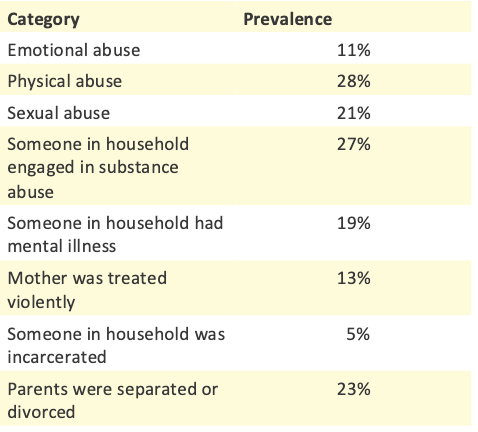
Adverse childhood experiences such as abuse, neglect, violence exposure, or death of a parent
Single biggest preventable cause of mental health difficulties across the lifespan
INTERNALIZING DISORDERS
Depression: A mental disorder that involves sad or irritable mood along with physical and cognitive changes that affect the individual’s ability to function
– Both gender and developmental effects
– Heritability around ~40%, ACEs and stress contribute as well
– Cognitive component → CBT can help but only 39% of teens get help
Anxiety: Inability to regulate fear and worry
– Separation anxiety is normative, unless it is not
– Anxiety tends to emerge earlier than depression
– Clear contributions of genetics and environment; inhibited temperament
MENTAL DISORDERS
CONNECTION TO DEVELOPMENT
➤ Children learn models of body (interoception) and emotion understanding throughout development through interactions with caregivers
➤ Predictable early environments (including caregiver interactions) allow individuals to regulate themselves over time
➤ Unpredictable environments make it harder to make accurate models, lots of prediction error, energy inefficiencies, etc.
➤ Some behaviors can be appropriate for an unpredictable environment – e.g., hypervigilance helps you ready yourself for the unexpected
➤ Parents co-regulation along with exposure to small, supported, developmentally-appropriate “stress” predicts better mental health outcomes
WHAT DO WE LEARN FROM ATYPICAL DEVELOPMENT?
➤ Early caregiving adversity/Romanian orphanage example: the importance of early attachment relationships
➤ Autism Spectrum Disorder: typical intrinsic understanding of communication and social cues. Building blocks of language and social skills.
➤ Anxiety and depression: the importance of differentiating toxic from normal stress
➤ Nature vs. nurture in typical development
➤ Parenting contributions to development
NATURE AND NURTURE
Nature and nurture start interacting before birth
Ex: The effect of teratogens may depend in part on mother and child’s genetics
Children and their environments are bi-directional
Ex. Smiley babies elicit warm caregiving, warm caregiving makes for smiley babies
Timing of experiences matters
Ex. Timing of teratogen exposure, language
Nature/genetics unfold over time
Ex. Depression in adolescence
In sum, everything influences everything
THE ACTIVE CHILD – OR HOW CHILDREN SHAPE THEIR OWN DEVELOPMENT
A central tenet of many theories
Key example: Piaget!
Self-initiated activity
Begins in utero (tasting amniotic fluid, kicking), extends to infants’ eye movements and crawling, continues to complex behaviors in childhood and even self-socialization and gender segregation at later ages
Active interpretation of experience
Asking why in childhood; individual differences like hostile attribution bias
Self-regulation
Children change dramatically in their ability to control behaviors and emotions; individual differences in self-regulation predict key outcomes
Eliciting reactions from other people
Ex. Babies with an easy temperament will evoke different responses than babies with difficult temperament; effects can snowball over time
CONTINUITY VS. DISCONTINUITY
Development is both continuous and discontinuous
Example: Change in height, shows gradual change with spike at puberty
Continuity/discontinuity of individual differences
Many individual differences are stable but not 100% so, stability depends in part on whether environment remains stable
Example traits: IQ, temperament, academic achievement
Continuity/discontinuity of overall development
Piaget’s theory of cognitive development, Freud’s theory of psychosocial development, Erikson’s theory of psychosocial development and Kohlberg’s theory of moral development revolve around notion of “stages”
Helpful for explaining development and it’s true that jumps can occur BUT in general, development is much messier and more continuous
MECHANISMS OF CHANGE - HOW DOES CHANGE OCCUR?
Biological mechanisms
Begin at the level of conception and cell division, through neurogenesis and synaptogenesis to higher order brain specialization
Behavior change mechanisms
Key learning tools: Habituation, operant and Pavlovian conditioning
Social learning
Example: Social referencing, imitation, modeling
Information processing mechanisms
Examples: Changes in strategy use, metacognition
Domain-specific learning mechanisms
Infants rapidly learn about domains relevant for survival (e.g., physics)
Change mechanisms work together
SOCIOCULTURAL CONTEXT
When and where children grow up has a tremendous impact on nearly all aspects of their development
Examples: Parent discipline practices, language, emotional expressiveness, language…Sesame Street
Many historical and contextual factors have pluses and minuses
Example: Internet, social media, war, AI
Variability within a society
Economic factors weigh heavily on development, especially in societies with large disparities
Family and peer influences (which may be consistent or inconsistent with broader culture)
Bronfenbrenner’s Bioecological Model
Children are influenced by the spheres within which they live their lives
INDIVIDUAL DIFFERENCES
What constitutes an important individual difference?
Breadth of related characteristics (e.g., reach of IQ at Time 1), stability over time, predictive of imp. future outcomes
Trickiness: I.D.’s are not randomly distributed
Ex: Attachment and self-esteem
Stability is maintained by both genes and environment
Heterotypic continuity: I.D.’s remain constant, despite different expression
Causes of individual differences: Genes and experiences
HOW DOES RESEARCH INFORM CHILDREN’S WELLBEING
Parenting
Pick a good partner, healthy pregnancy, reduce major health risks (vaccinate!), form a secure attachment, provide stimulation
Education
Piaget: Active learner; Vygotsky: Social scaffolding
Helping children at risk
Importance of timing (early intervention)
Disrupting maltreatment early (dose response) and preventing conditions that put parents at risk
Biology and environment work together
Informs detection and treatment
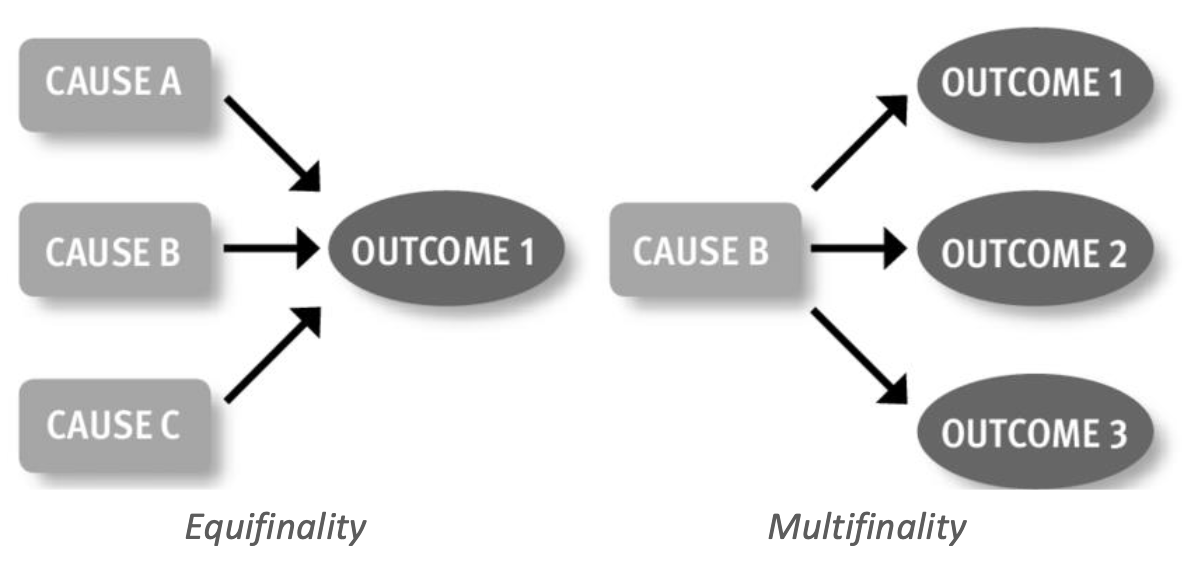
Every problem has multiple causes
Consider multiple risks
Improving social policy
Parental leave, good quality childcare
Legal: Eyewitness testimony, juvenile justice