Body Fluid Dynamics and Electrolyte Homeostasis - Lecture
 Call Kai
 Learn
Learn Practice Test
 Spaced Repetition
 Match
Match Flashcards
 Knowt Play
1/31

There's no tags or description
Looks like no tags are added yet.
Name | Mastery | Learn | Test | Matching | Spaced | Call with Kai |
|---|
No analytics yet
Send a link to your students to track their progress
32 Terms
What is the microscopic process that occurs within the renal corpuscle?
Filtration
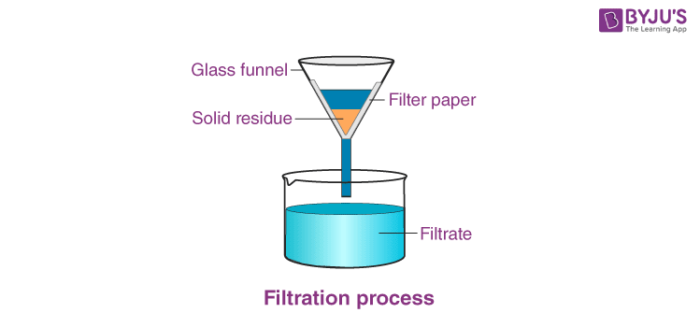
What do we call the fluid produced by filtration?
Filtrate
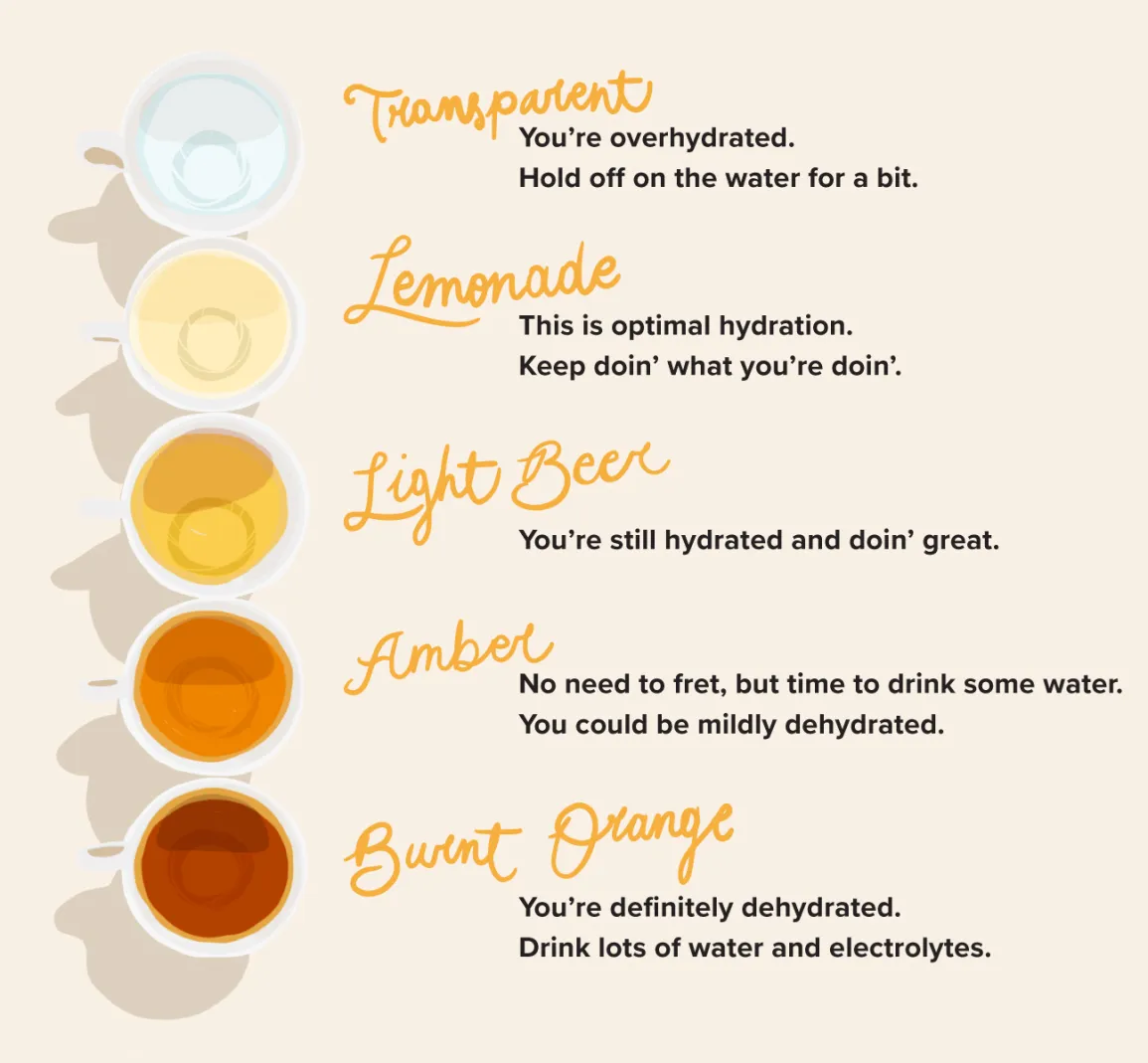
What do we call the filtrate once it reaches the collecting duct?
Urine
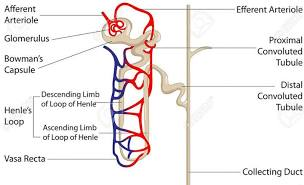
What is the "workhorse" of the nephron?
Proximal convoluted tubule
65% of all re absorption occurs
How much glucose is reabsorbed in the PCT?
99% of glucose
along with water, amino acids, and other solutes
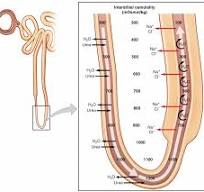
Is the ascending (up ) limb of the loop of Henle permeable to water?
No, it is impermeable to wate
Under what condition do the distal convoluted tubule and collecting duct reabsorb water?
Only in the presence of hormones such as Antidiuretic Hormone (ADH) and Aldosterone
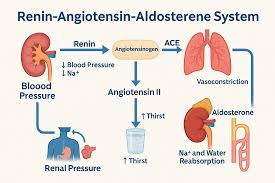
RAAS
Which part of the nephron detects blood pressure and volume changes?
Macula densa
(part of the juxtaglomerular apparatus)
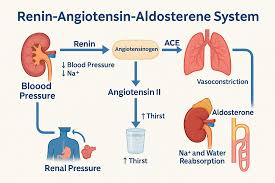
RAAS
Which cells produce renin?
Juxtaglomerular (JG) cells
Response to Blood volume (= the picture)
What is the condition called when blood volume exceeds the upper limit?
Hypervolemia
How does the body respond to hypervolemia regarding ADH?
It decreases ADH production (water production) and release to avoid retaining more water
How does the body respond to hypervolemia regarding Atrial Natriuretic Peptide (ANP)?
It increases ANP to inhibit the RAAS system and prevent water retention
How do the renal arteries respond to high blood volume/pressure?
They vasodilate to increase blood flow and filtrate formation, helping to excrete more water
Also to relieve the pressure
What is hypovolemia?
When the fluid volume in the body falls below the lower limit
How do the renal arteries respond to hypovolemia?
They vasoconstrict to increase pressure and decrease filtrate formation
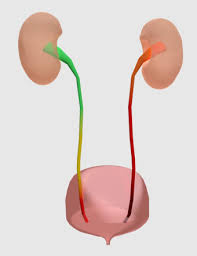
How is urine moved from the kidney to the bladder?
Through peristalsis
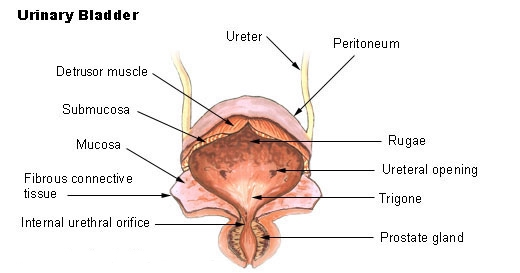
What is the specific name of the smooth muscle found in the urinary bladder?
The detrusor muscle
What are the three portions of the male urethra?
The prostatic urethra, the membranous urethra, and the spongy (penile) urethra
Which urethral sphincter is under voluntary control?
The external urethral sphincter, which is made of skeletal muscle
What are the two broad categories of body fluids?
Intracellular fluid (ICF) and extracellular fluid (ECF)
What fluid makes up the ICF?
Cytosol
Which fluid compartment is larger?
ICF (roughly 70% of total body water)
What is the primary source of water intake?
Food and beverages (providing about 90% of intake)
What is "osmolality"?
concentration of solutes within a solution
What are the most abundant cations and anions in the ECF?
Sodium and Chloride
What is hyponatremia?
When blood sodium levels fall below 135 mEq/L
What is hyperkalemia?
When blood potassium levels exceed 5.0 mEq/L
What is hypocalcemia?
When blood calcium levels fall below the lower limit (e.g., 8.2 mg/dL)
What is hypermagnesemia?
When magnesium levels exceed 2.2 mEq/L
Which two organ systems regulate blood pH?
The urinary system and the respiratory system
What is the normal physiological range for human blood pH?
7.35-7.45
Is human blood pH considered acidic or basic?
Slightly alkaline/basic (to the right of the neutral 7.0 mark)