International Relations: War, Peace, and Global Institutions
 Call Kai
 Learn
Learn Practice Test
 Spaced Repetition
 Match
Match Flashcards
 Knowt Play
1/73

There's no tags or description
Looks like no tags are added yet.
Name | Mastery | Learn | Test | Matching | Spaced | Call with Kai |
|---|
No analytics yet
Send a link to your students to track their progress
74 Terms
What is the definition of war in international relations?
An event involving the organized use of military force by at least two parties that reaches a minimum threshold of severity.
What are the three important components of war?
1. Organized use of military force, 2. At least two parties, 3. Minimum threshold of severity (often at least 1,000 battle deaths).
What distinguishes war from mass killings?
War involves at least two parties, while mass killings may be perpetrated by a government against a non-fighting group.
What is a preemptive war?
A war fought under the anticipation that an attack by the adversary is imminent, supported by clear evidence.
What is a preventive war?
A war initiated to neutralize a perceived future threat, preventing other states from becoming strong enough to pose a significant threat.
What is the rally effect in the context of war?
The phenomenon where people become more supportive of their government in response to dramatic international events, such as crises or wars.
What is deterrence in international relations?
A strategy of preventing or discouraging another actor from taking action by instilling fear of the consequences.
What is collective security?
The concept where each state accepts that the security of one is the concern of all, committing to a collective response to threats to peace.
What was the main representative body of the League of Nations?
The Assembly, which consisted of representatives from all member states, met once a year, and required unanimous decisions.
What is the significance of the League of Nations Assembly?
It served as the main representative body with equal representation for all member states and broad functions.
What is the role of international institutions like the NPT in nuclear nonproliferation?
They help facilitate agreements and cooperation among states to prevent the spread of nuclear weapons and promote disarmament.
What does the term 'rally-round-the-flag' refer to?
The increase in public support for a country's government during times of international crises or wars.
What is the relationship between domestic interests and war?
Domestic actors may support war to rally public opinion and increase government approval ratings during crises.
What is the threshold of severity often required to classify an event as a war?
At least 1,000 battle deaths.
What distinguishes preemptive war from preventive war?
Preemptive war anticipates an imminent attack, while preventive war seeks to neutralize a future threat.
What is the impact of nuclear deterrence on international relations?
It creates a strategic balance that discourages states from initiating conflict due to the fear of catastrophic consequences.
What is a key observation regarding the behavior of democracies in international conflicts?
Mature democracies rarely engage in wars against each other, supporting the concept of democratic peace.
What does the concept of collective security assume about states?
That all states have a shared interest in preventing war, regardless of their alliances.
What is the primary function of the League of Nations Council?
To handle urgent and critical issues, including disarmament and arbitration of territorial disputes.
Who were the initial permanent members of the League of Nations Council?
Great Britain, France, Italy, and Japan.
What was a major criticism of Wilson's League of Nations?
It was labeled as utopian liberalism due to the non-participation of the United States and lack of enforcement mechanisms.
What is mutual deterrence?
A strategic balance where two or more adversaries successfully deter each other from initiating conflict due to the high costs involved.
What does Mutually Assured Destruction (MAD) entail?
A condition where both sides possess survivable nuclear arsenals, ensuring that a first strike would lead to complete annihilation of the attacker.
What are the prerequisites for Mutually Assured Destruction?
1. Second-strike capability, 2. Rational leadership, 3. Accurate attribution.
What is the Nuclear Non-Proliferation Treaty (NPT)?
An international treaty aimed at preventing the spread of nuclear weapons, promoting disarmament, and allowing peaceful use of nuclear energy.
How does a security guarantee help prevent nuclear proliferation?
Nuclear-armed states can ensure the security interests of potential proliferators, discouraging them from developing their own nuclear weapons.
What is meant by the term 'nuclear umbrella'?
A security arrangement where a nuclear-armed state promises to use its nuclear arsenal to defend a non-nuclear armed state in case of an attack.
What is the main idea behind the concept of democratic peace?
Mature democracies rarely, if ever, fight wars against one another, although they may engage in wars overall at similar rates as nondemocratic states.
What is the role of the UN General Assembly (UNGA)?
To serve as a forum for all member states to discuss international issues and promote cooperation, peace, and security.
How are resolutions passed in the UN General Assembly?
With a 2/3 majority of present voting members.
What distinguishes the UN Security Council (UNSC) from the UN General Assembly?
The UNSC has legally binding decisions, while UNGA resolutions are non-binding.
What is required for a substantive resolution to pass in the UNSC?
A 'yes' vote from at least 9 of the 15 council members and no negative vote from any of the P5 members.
What does the Heckscher-Ohlin trade theory emphasize?
Comparative advantage depends on a country's abundant factor of production.
What are the three main factors of production according to the Heckscher-Ohlin theory?
Land, labor, and capital.
How do trade barriers typically benefit domestic industries?
They protect owners of scarce factors of production from global competition.
What is the principle of reciprocity in international trade?
Countries grant each other similar trade rights or concessions.
What was the purpose of the General Agreement on Tariffs and Trade (GATT)?
To expand economic activity by encouraging the free flow of goods across borders.
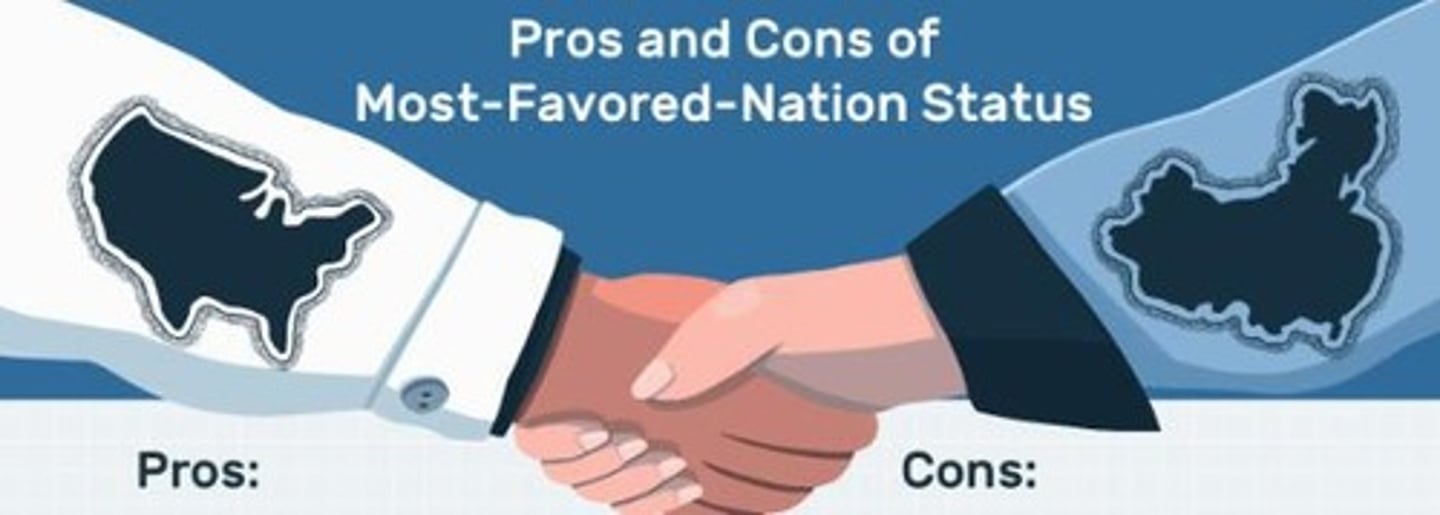
What does the Most-Favored-Nation (MFN) principle entail?
A country cannot discriminate between its trading partners and must extend any special concessions to all members.
What is portfolio investment?
Investment in a foreign country via the purchase of stocks, bonds, or other financial instruments without management involvement.
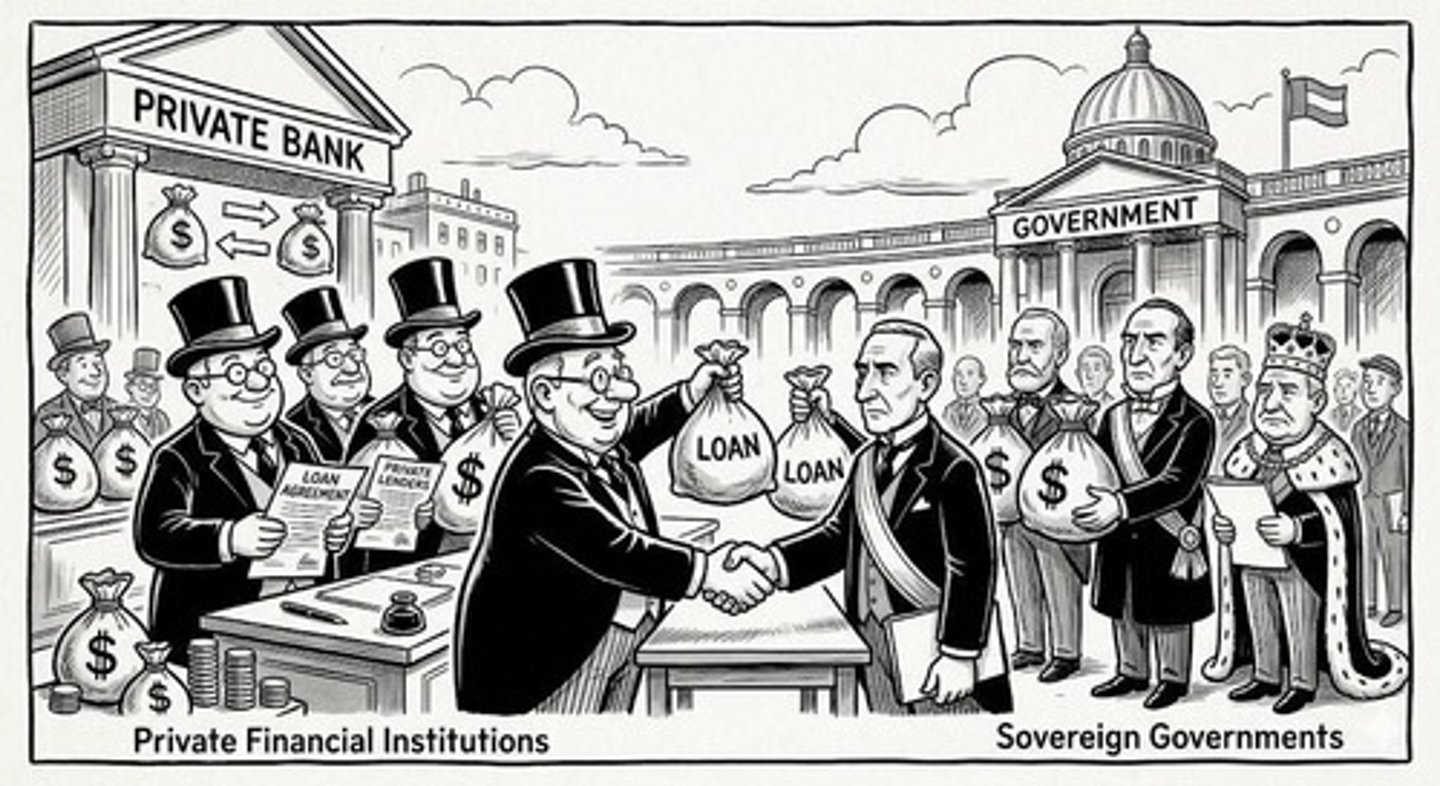
What is sovereign lending?
Loans from private financial institutions to sovereign governments.
What defines Foreign Direct Investment (FDI)?
Investing in a foreign country by acquiring a local facility, establishing a new facility, or forming a joint venture.
What potential conflicts can arise from Foreign Direct Investment?
Conflicts over the distribution of profits and control of resources between firms and host countries.
What is the role of the Secretary-General in the League of Nations?
To oversee the administration and operations of the League.
What was a significant limitation of the League of Nations?
The lack of an enforcement mechanism to ensure compliance with its resolutions.
What is the significance of the UN Charter Article 9?
It states that the General Assembly shall consist of all the Members of the United Nations.
How does the UNSC facilitate decision-making?
By being a smaller body designed for swift and efficient decision-making regarding international peace and security.
What is the impact of trade barriers on labor-intensive industries in the U.S.?
They protect these industries from cheaper foreign imports, allowing them to maintain higher prices.
What is the relationship between free trade and abundant factors of production?
Free trade benefits owners of abundant factors, allowing them to expand market share and increase income through exports.
What is a key feature of the GATT?
Lowering trade barriers and promoting reciprocity among member countries.
What does the term 'factor endowment' refer to?
The resources a country has available for economic activity, such as land, labor, and capital.
What is a multinational corporation (MNC)?
An enterprise that operates in multiple countries with production or service facilities outside its country of origin.
What major system prevailed between 1870 and 1914 regarding currency?
The Gold Standard, which tied currencies to gold at a legally fixed price.
What was the fixed price of gold under the Gold Standard?
1 ounce of gold = $20.
What system replaced the Gold Standard after World War II?
The Bretton Woods system, which established a Dollar standard backed by gold.
What was the fixed price of gold under the Bretton Woods system?
$35 per ounce of gold.
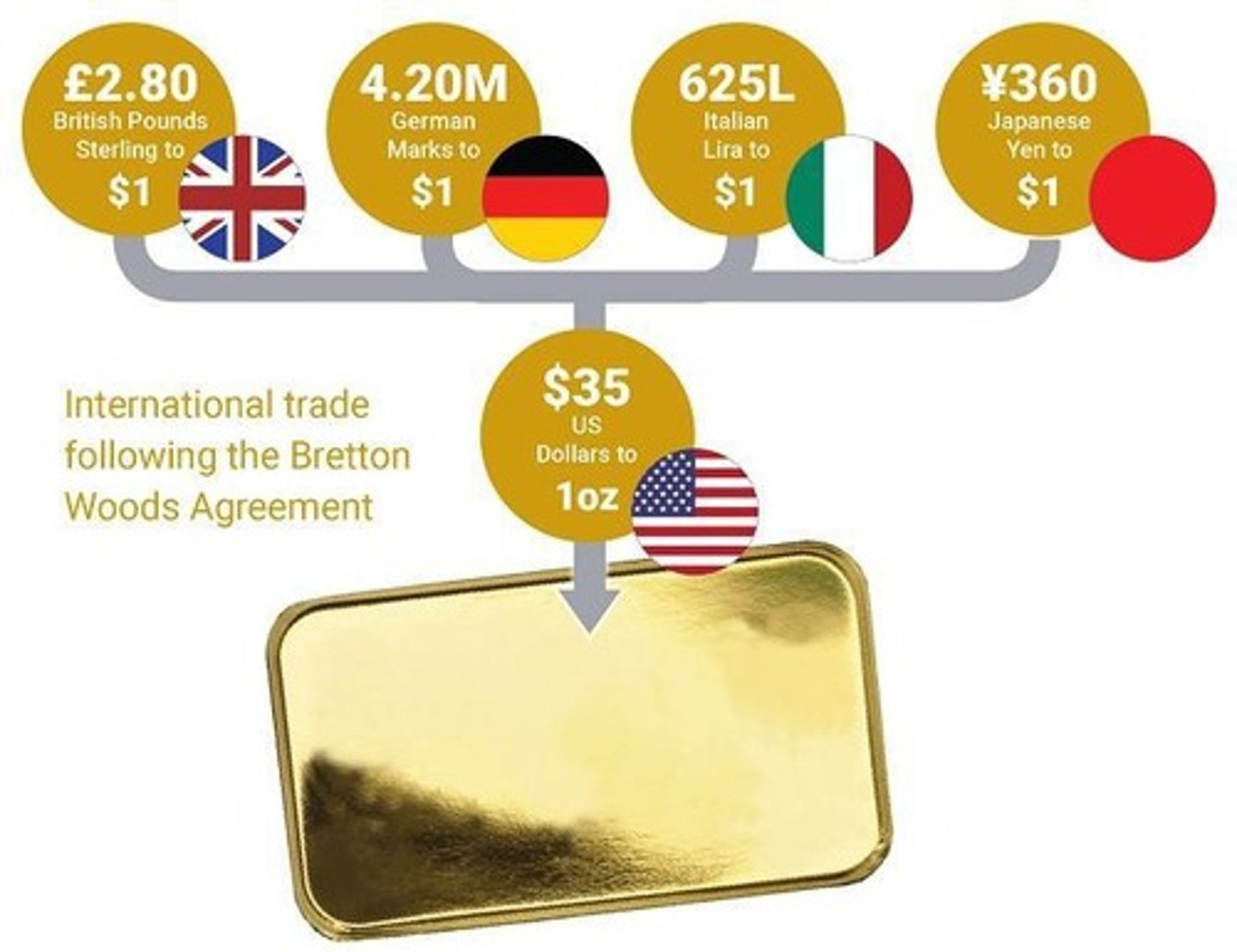
What is an exchange rate?
The price at which one country's money is exchanged for another country's money.
How does currency appreciation affect imports and exports?
Currency appreciation leads to more imports and less exports, as domestic goods become more expensive for foreigners.
How does currency depreciation affect imports and exports?
Currency depreciation leads to less imports and more exports, as domestic goods become cheaper for foreigners.
What is the role of the International Monetary Fund (IMF)?
To provide short-term stabilization funds to countries experiencing a currency crisis.
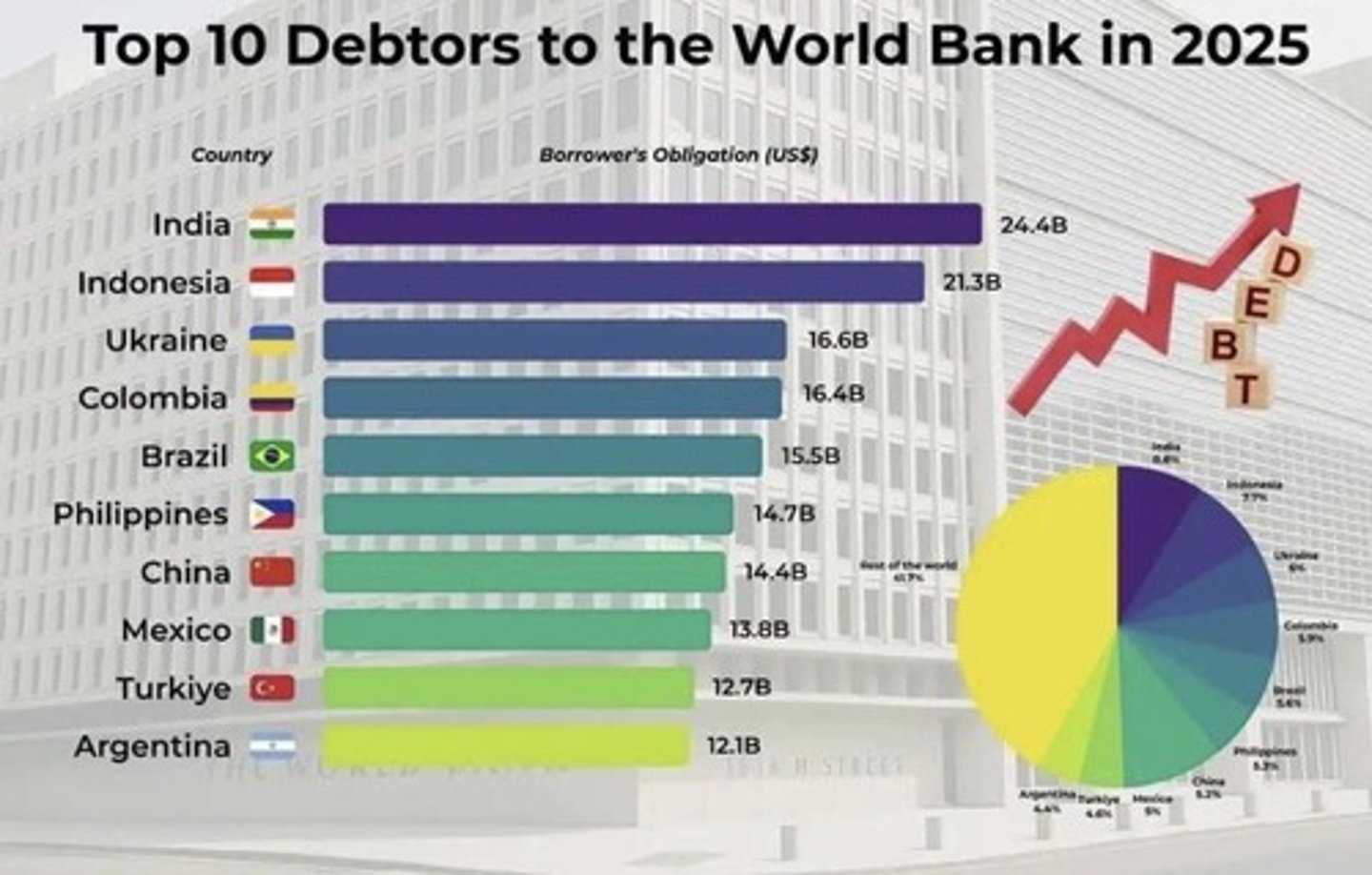
What was the original purpose of the World Bank?
To rebuild the economies of post-war Europe.
What does the World Bank focus on today?
Providing long-term loans for infrastructure and social projects in developing countries.
What is the Universal Declaration of Human Rights (UDHR)?
A declaration adopted by the UN General Assembly in 1948 that defines a common standard of achievement for all peoples.
Who was appointed as a delegate to the UN to lead the drafting of the UDHR?
Eleanor Roosevelt.
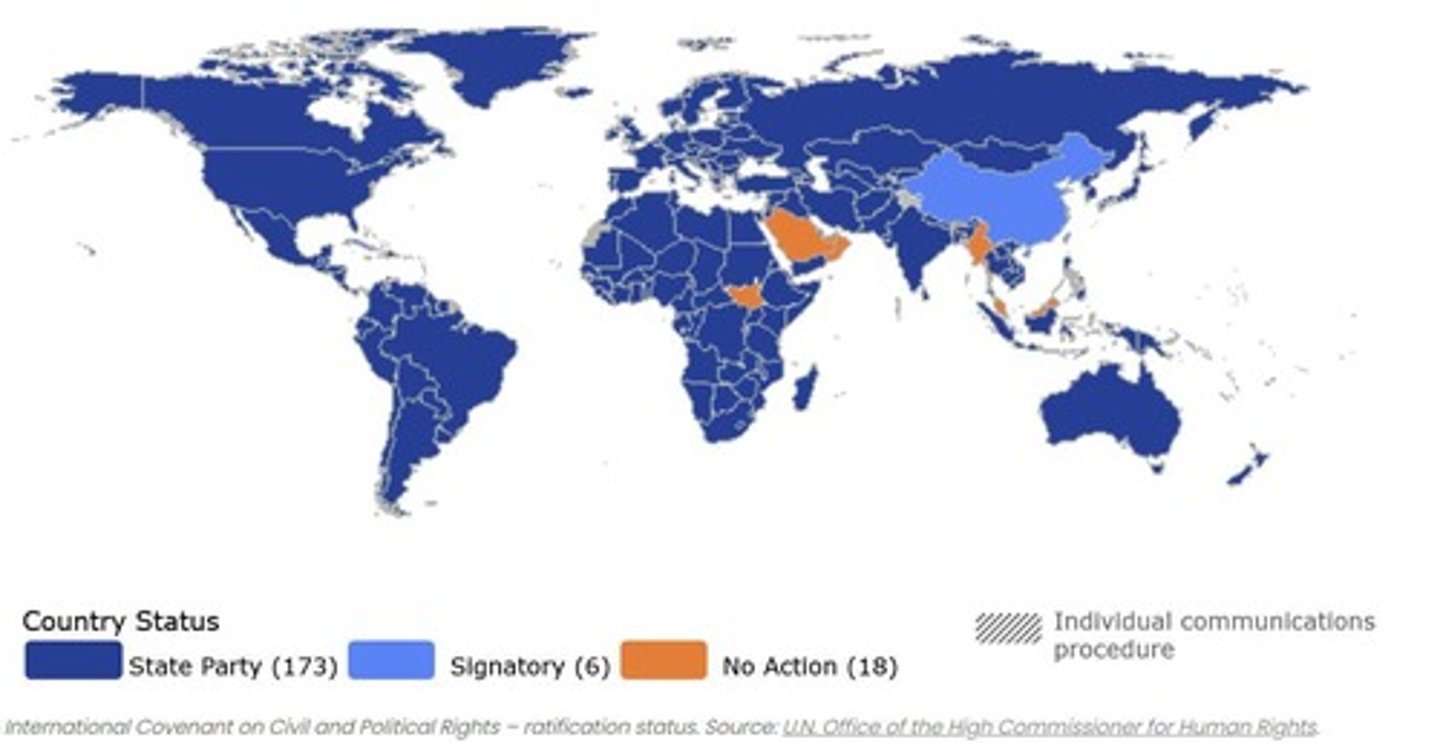
What are the three components of the International Bill of Rights?
The UDHR, the International Covenant on Civil and Political Rights (ICCPR), and the International Covenant on Economic, Social, and Cultural Rights (ICESCR).
What is the International Criminal Court (ICC)?
An international tribunal established to investigate and prosecute individuals for serious offenses like war crimes and genocide.
When was the ICC established?
By the Rome Statute in 1998, and it came into force in 2002.
What conditions must be met for the ICC to have jurisdiction?
The individual must have committed war crimes, genocide, crimes against humanity, or crimes of aggression.
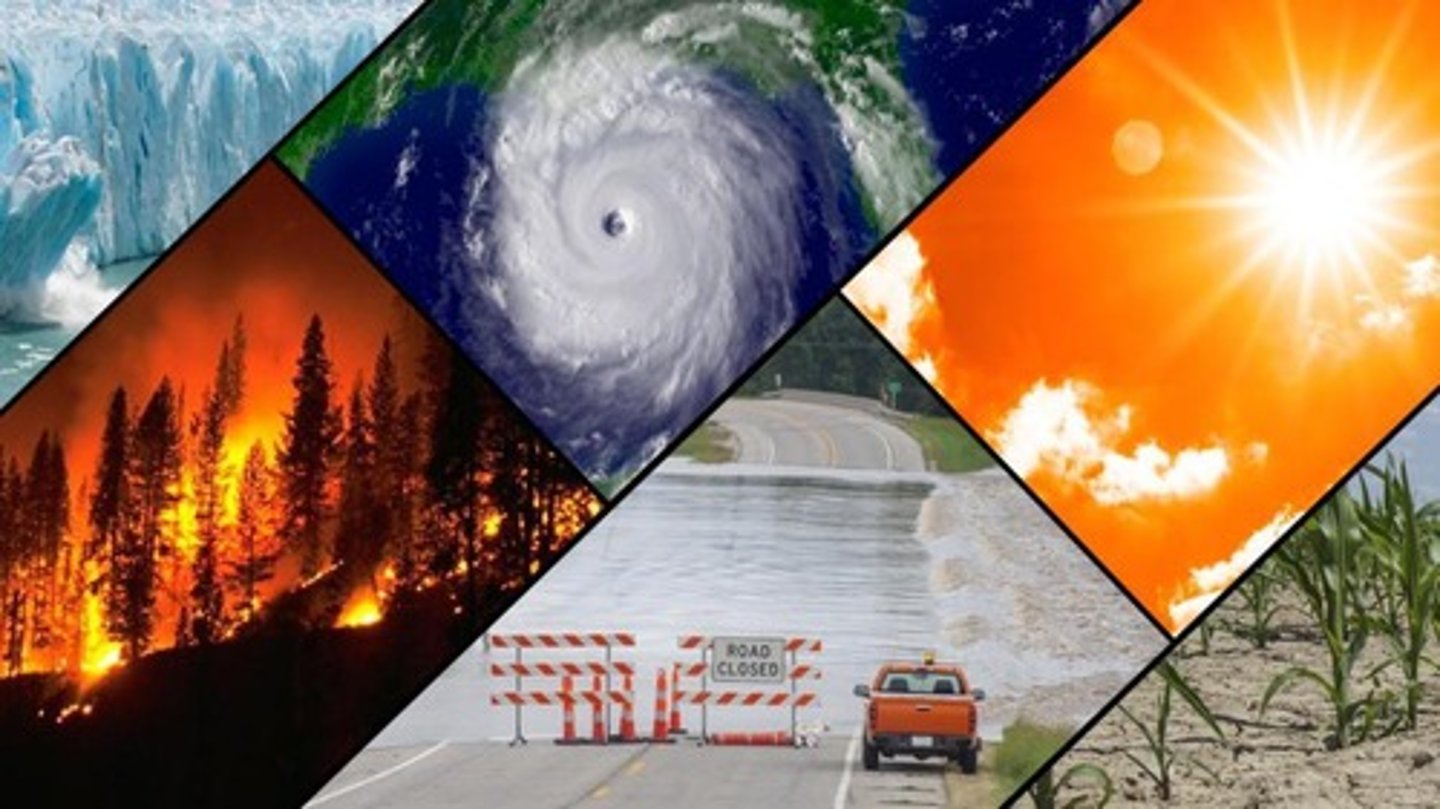
What is climate change?
Long-term shifts in temperatures and weather patterns, mainly caused by human activities, especially the burning of fossil fuels.
What is the role of the Intergovernmental Panel on Climate Change (IPCC)?
To provide policymakers with regular scientific assessments on climate change and its implications.
What is the United Nations Framework Convention on Climate Change (UNFCCC)?
The first major international environmental treaty signed in 1992 to address rising greenhouse gases.
What is the Conference of the Parties (COP)?
The supreme decision-making body of the UNFCCC where parties meet annually to assess progress and negotiate further actions.
What significant agreement was adopted at COP3 in 1997?
The Kyoto Protocol.
What significant agreement was adopted at COP21 in 2015?
The Paris Agreement.
Still learning (21)
You've started learning these terms. Keep it up!