Psychology - Brain
 Call Kai
 Learn
Learn Practice Test
 Spaced Repetition
 Match
Match Flashcards
 Knowt Play
1/32

There's no tags or description
Looks like no tags are added yet.
Name | Mastery | Learn | Test | Matching | Spaced | Call with Kai |
|---|
No analytics yet
Send a link to your students to track their progress
33 Terms
Frontal lobe
planning, problem solving, personality, organising, judging, contains primary motor cortex and BROCAs area
Parietal lobe
left: reading, writing, mental arithmetics, right: perceive 3D shapes and spatial awareness, contains somatosensory cortex
Occipital lobe
interprets visual information, contains the Primary Visual Cortex
Temporal lobe
Processes auditory information and memory, contains WERNICKE’S AREA
Right hemisphere
non verbal functions: imagination, music insight, creativity
Left hemisphere
verbal and analytical functions: math, language, reasoning
Special areas of the brain
BROCAs area, motor cortex, somatosensory cortex, wernicke’s area
Motor cortex
Controls voluntary movements of skeletal muscles, parts of the body that can be moved more are represented by larger areas on the cortex
Somatosensory cortex
receives and processes sensations of touch, temperature, pain and pressures from the body
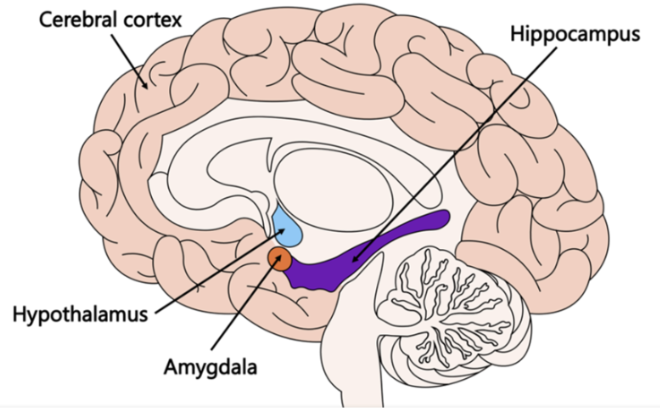
Hypothalamus
controls emotions, motivated behaviours
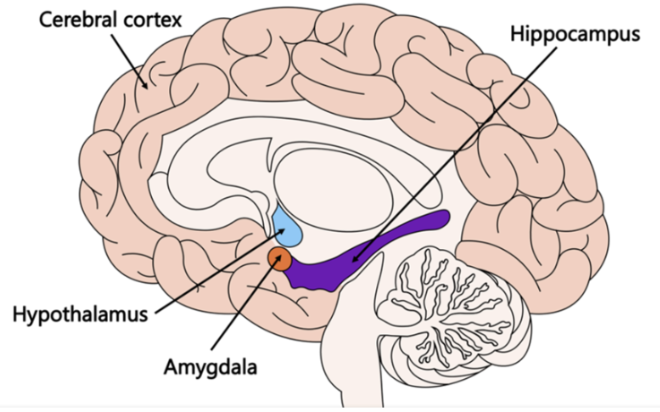
Amygdala
processes emotions, fight/flight response, decision making
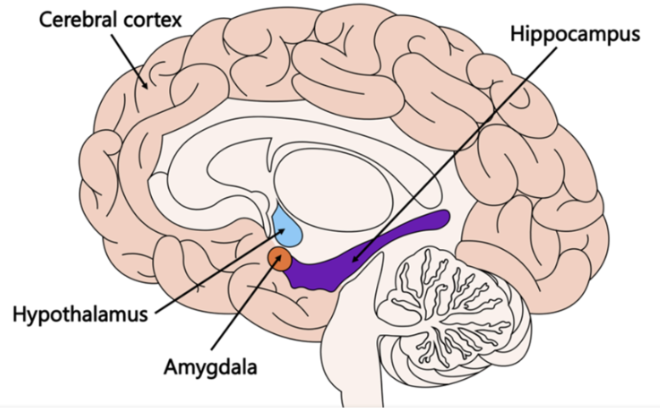
Hippocampus
limbic system, emotions, behaviour
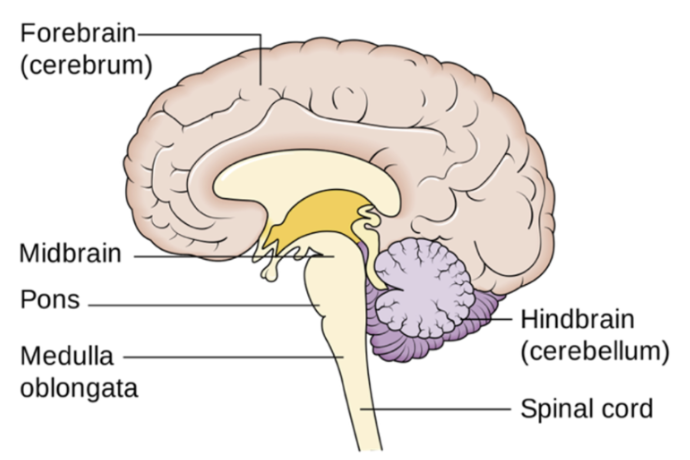
Pons
controls breathing and basic life functions, role in REM sleep
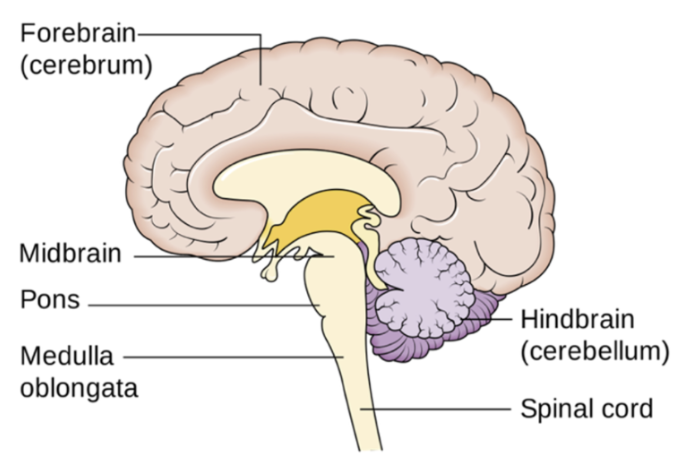
Medulla oblangata
autonomic functions, regulating vital organs
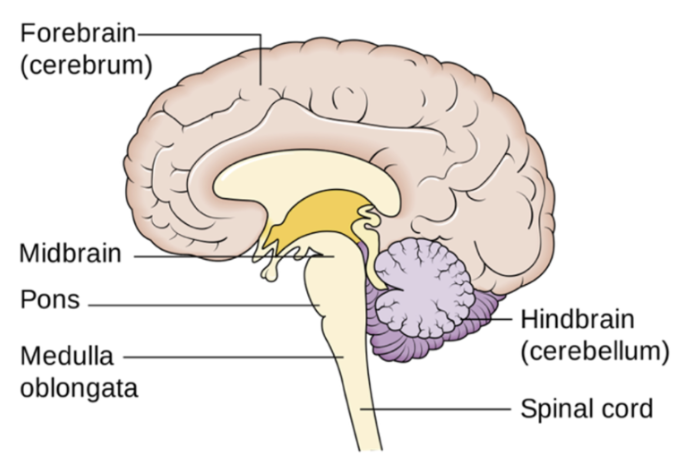
Brain stem
connects the brain to spinal cord, passes messages
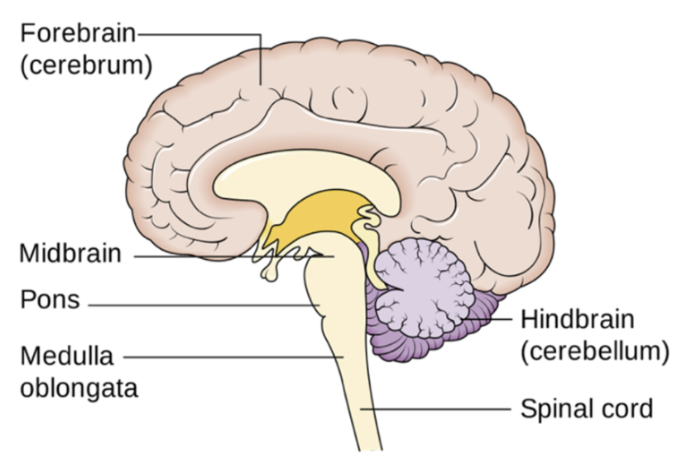
Cerebellum
voluntary movements and motor skills
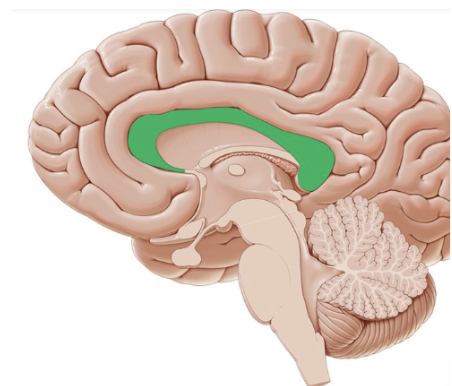
Corpus callosum
allows exchange of communication between left and right hemispheres
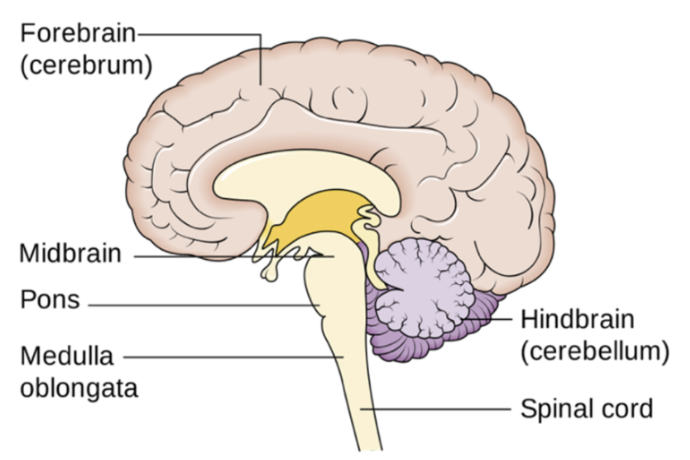
Forebrain
4 lobes, high order thinking (planning, memory, thinking)
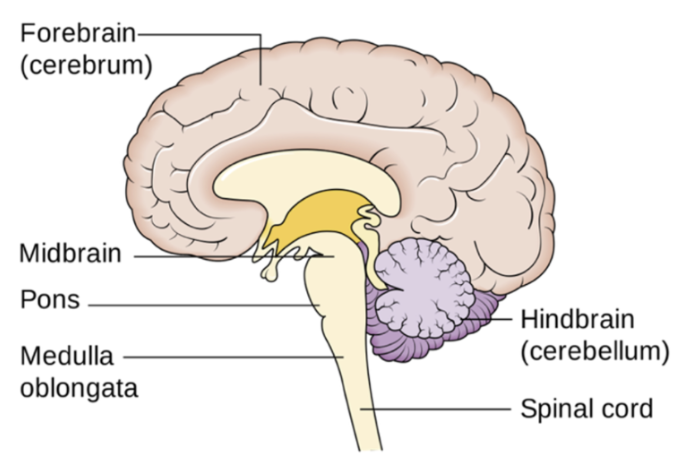
Midbrain
Coordinates movement, sleep, arousal
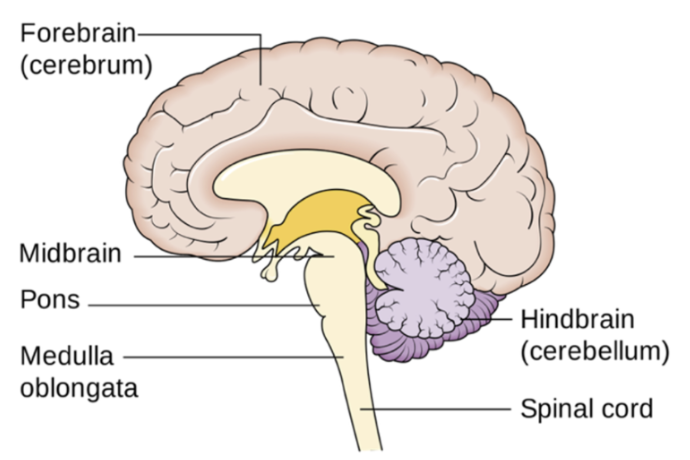
Hindbrain
For movement and balance
Prefrontal cortex
decision making, self control, emotional regulation, social behaviour
Axon terminals
The end of the axon that releases neurotransmitters
Myelin sheath
Covers the axon, insulation to keep electrical signals inside the cell, moves more quickly
Axon
A nerve fibre that transfers electrical impulse signals from the cell body to the next neuron, pathway for information
Dendrites
Tree like structures that receives electrical impulses from neighbouring neurons, receives information
Communication between neurons
chemical
Communication within neurons
electrical
Cerebral cortex
brain’s outer layer of grey matter, responsible for the higher mental processes and complex behaviours
Sympathetic nervous system
heightens the responsiveness of muscles and organs during activity, periods of stress or when threatened, fight/flight/freeze
Parasympathetic nervous system
returns body to a state of homeostasis by reversing physiological functions from sympathetic nervous system, rest and digest
Peripheral nervous system
Conveys messages from sense organs to CNS and from CNS to muscles and glands, split into autonomic and somatic
Autonomic nervous system
contains physiological systems involved in arousal, split into sympathetic and parasympathetic
Somatic nervous system
role in entire body communication, perceptual processing of information gathered from senses and controls movement/muscles