Early Europe & Colonial Americas, Later Europe & Americas
 Call Kai
 Learn
Learn Practice Test
 Spaced Repetition
 Match
Match Flashcards
 Knowt Play
1/104

There's no tags or description
Looks like no tags are added yet.
Name | Mastery | Learn | Test | Matching | Spaced | Call with Kai |
|---|
No analytics yet
Send a link to your students to track their progress
105 Terms
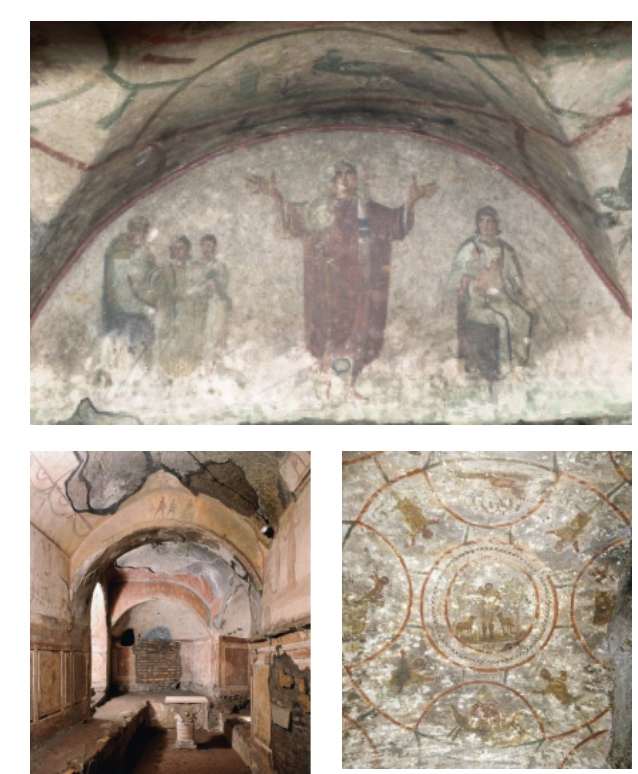
Catacomb of Priscilla, 200 CE, Tufa and fresco, Rome, Early Christian
Orant fresco: Shows Jesus in prayer. Left: teacher & childre, Right: Virgin Mary holding baby Jesus
Another fresco shows Christ as the Good Shepherd, surrounded by lambs
The Catacombs were a place for persecuted Christians in Rome to worship
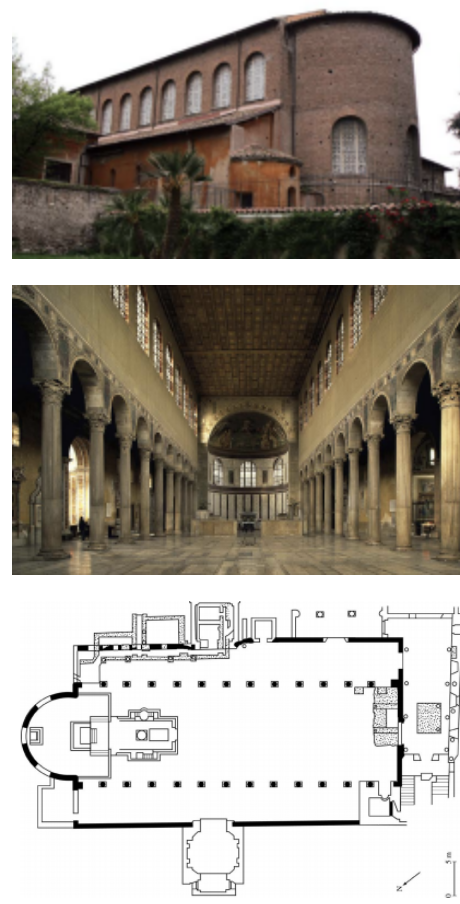
Santa Sabina, 400 CE, Brick and stone; wooden roof, Rome, Early Christian
bare exterior but decorative inside (Outside is plain, inside faith is beautiful)
Basilica plan, nave has an arcade
Columns were spoils from a Roman temple (spoila)
Chrisitan church made after Christianity was unbanned in Rome
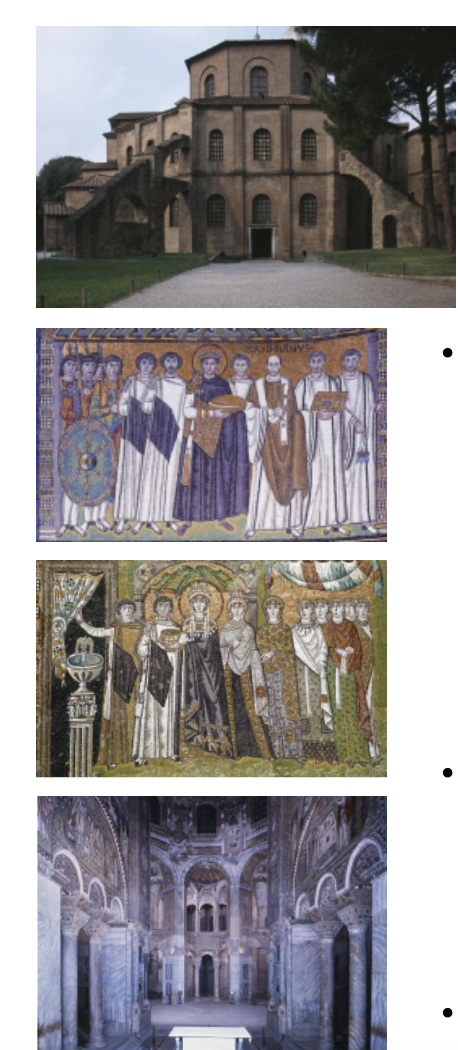
San Vitale, 500 CE, Brick and stone, mosaic, Italy, Byzantine
octogonal shape
plain outside, decorated inside
Contains mosaics of Justinian (ruler of Byzantine Empire) & Theodora (his wife)
Justinian Mosaic: dressed in purple, with a halo, surrounded by soldiers & bishops, holding a shallow bowl for the Eucharist bread, his feet over the others to signify his importance
Theodora Mosaic: halo, carries chalice for the wine of the Eucharist, dressed in purple, in hieratic scale over other women
Typical Byzantine style of mosaics:
Frontal, Floating, Flat, Gold
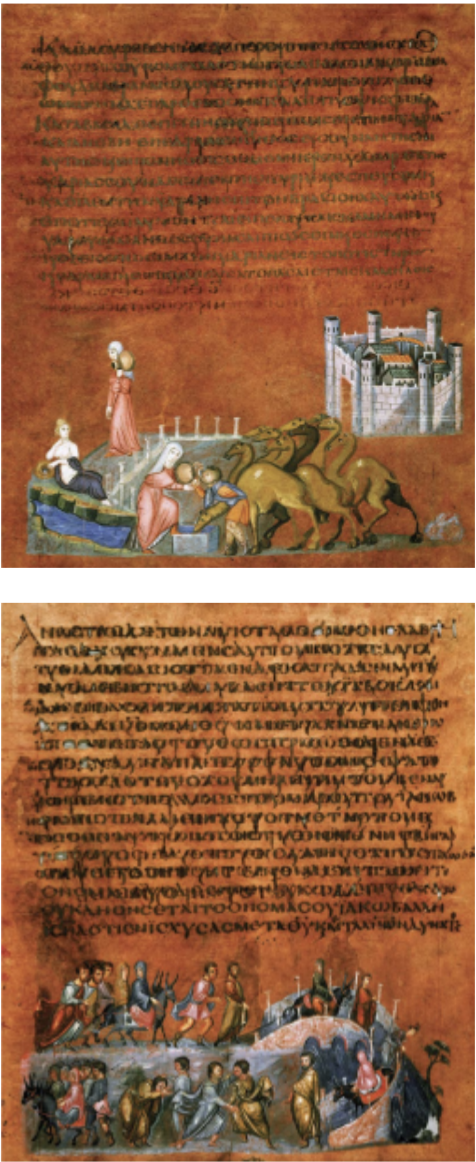
Vienna Genesis: Rebecca and Eliezer at the Well /Jacob Wrestling an Angel, 500 CE, Illuminated manuscript, Constantinople or Syria, Byzantine
Illuminated manuscript of the book of Genesis
Text from bible that explains the image accompanying it
Rebecca & Eliezer at the well:
Story: Eliezer goes to find a wife for Isaac. God says the wife will help Eliezer on her journey. Rebecca gives Eliezer’s camels water.
Classical influences: nude woman, colonnade, contrapposto
Jacob Wrestling an Angel
story: Jacob leads wives & childrens over a bridge, wrestles an angel, who blesses him by touching his hip. Jacob is given the name Israel.
Both tell a story
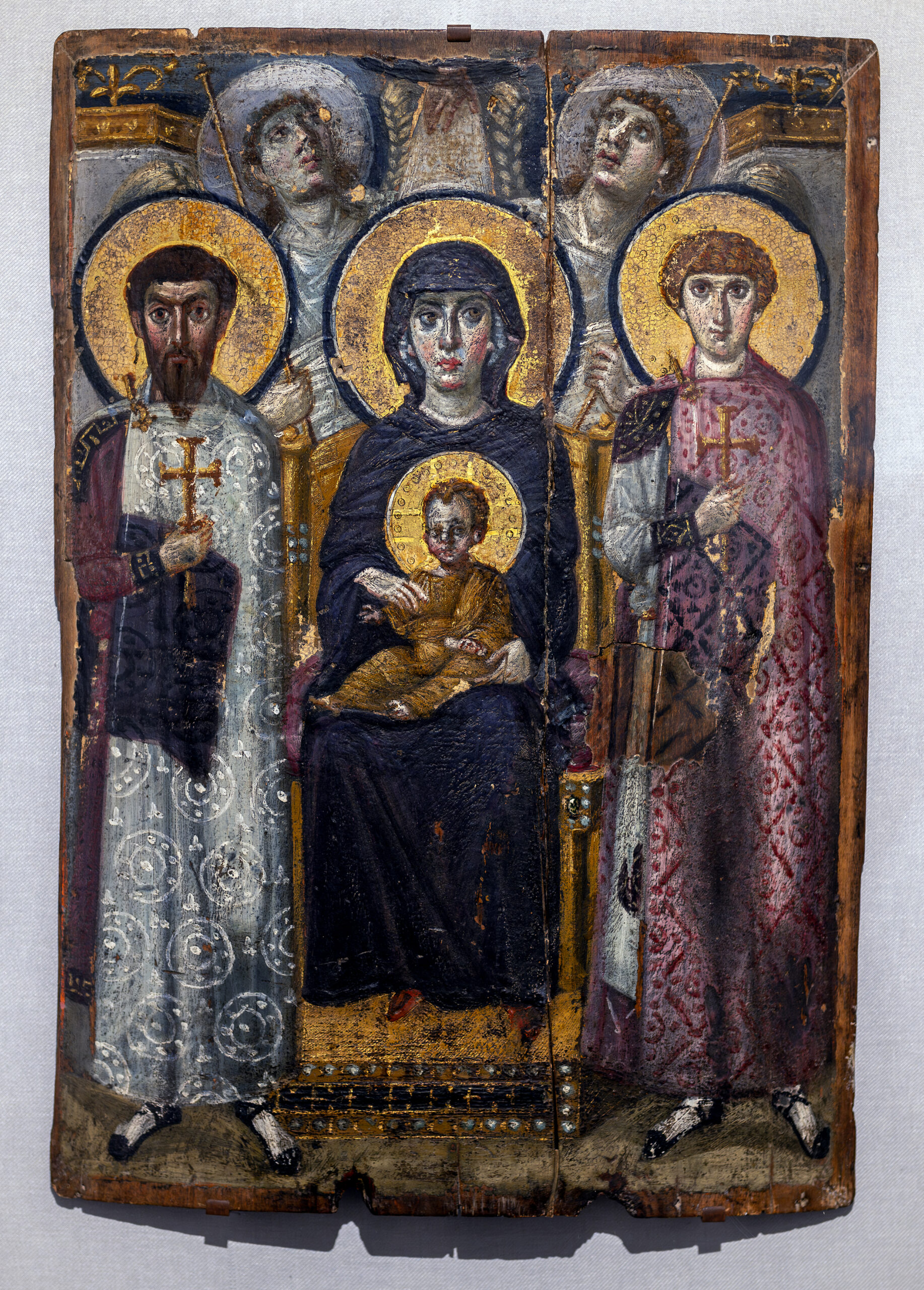
Virgin (Theotokos) and Child between Saints Theodore and George, 600 CE, Encaustic on wood, Egypt, Byzantine Art
Mary is the central figure, holding baby Jesus in her lap, with Saints on each side of her. Angels in the background look up to see God’s hand
Figures have halos
unproportional bodies
Byzantine style: lack of depth, gold halos, floating figrures
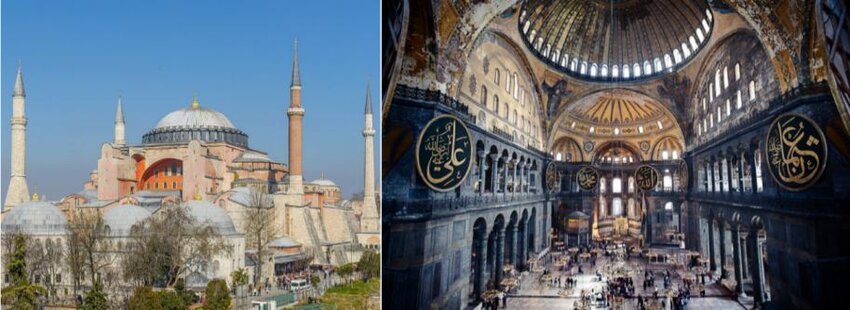
Hagia Sophia, 500 CE, Brick and stone, Istanbul/Constantinople, Byzantine, Anthemius of Tralles & Isidorus of Miletus
Patrons: Justinian & Theodora
Central plan + axial plan = Greek cross
Interior meant to be highly decorated compared to exterior
Dome (emphasis) supported by pendentives (triangular shaped walls the dome rests on)
Christian church —> Mosque (added minarets) —> Museum
Contains mosaics as well
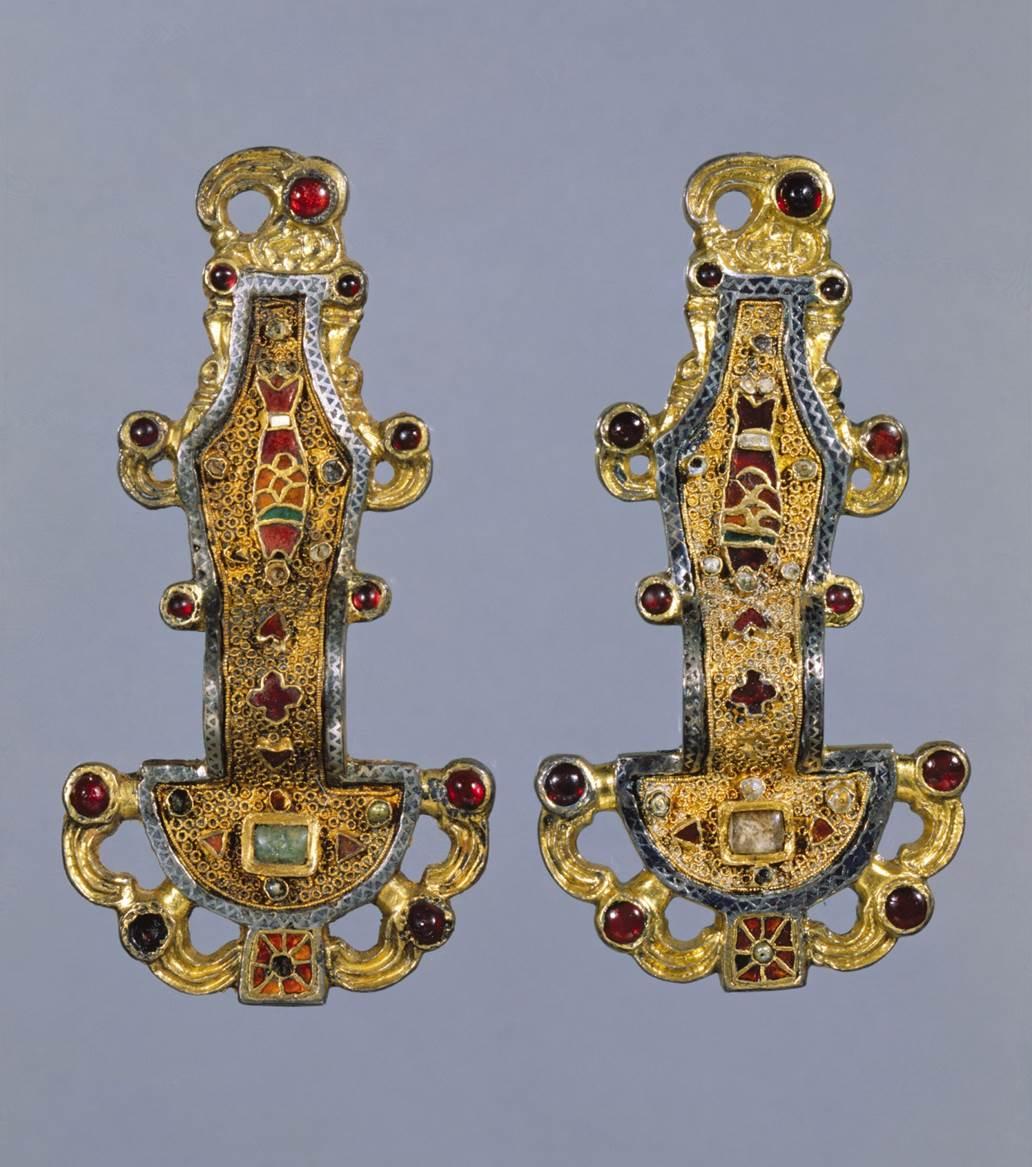
Looped Fibulae, 500 CE, Silver and semiprecious stones, Medieval (Mergovingian), France
Depicts animals: eagle at the top (large stone for eye), & fish throughout the piece (ref to jesus)
Usted to fasten garments at the shoulder, shows high status
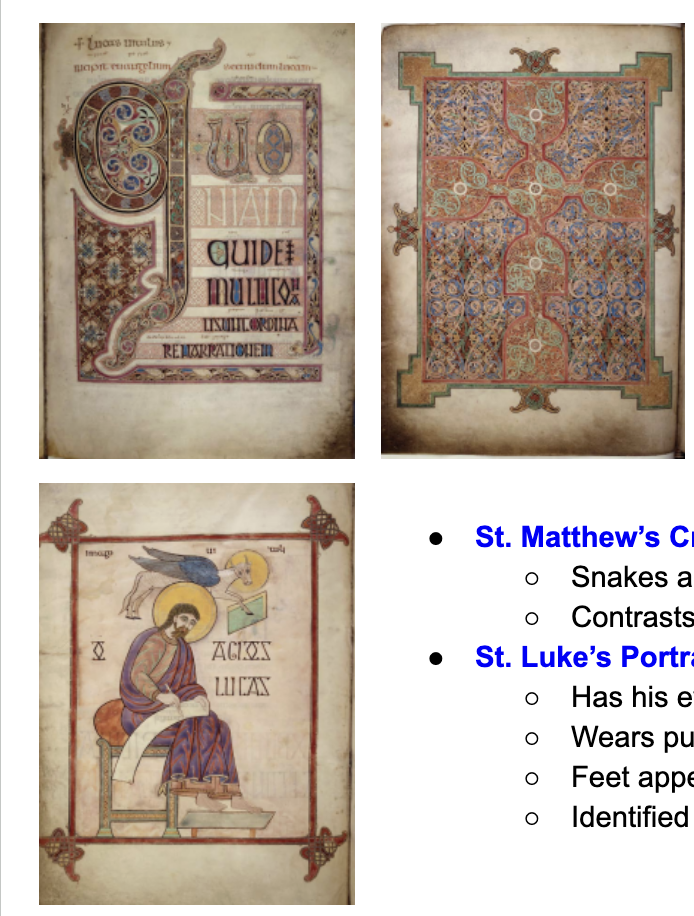
Lindisfarne Gospels, 700 CE, Illuminated manuscript, Medieval (Hiberno-Saxon), England, Bishop Eadrith of Lindisfarne
Incipit Page of St. Luke
Written in Latin, but also contains English Version (first)
St. Matthew’s Cross-Carpet Page—celtic cross
Snakes & birds fill up the entire space (horror vacui)
stability of cross vs. chaos of filled space
St. Luke’s Portrait Page — St. Luke writing his part of the Bible
above him: Evangalist symbol of cow with halo
Luke is wearing purple, his feet appear to be levitating
Greek writing next to his figure tell us his name
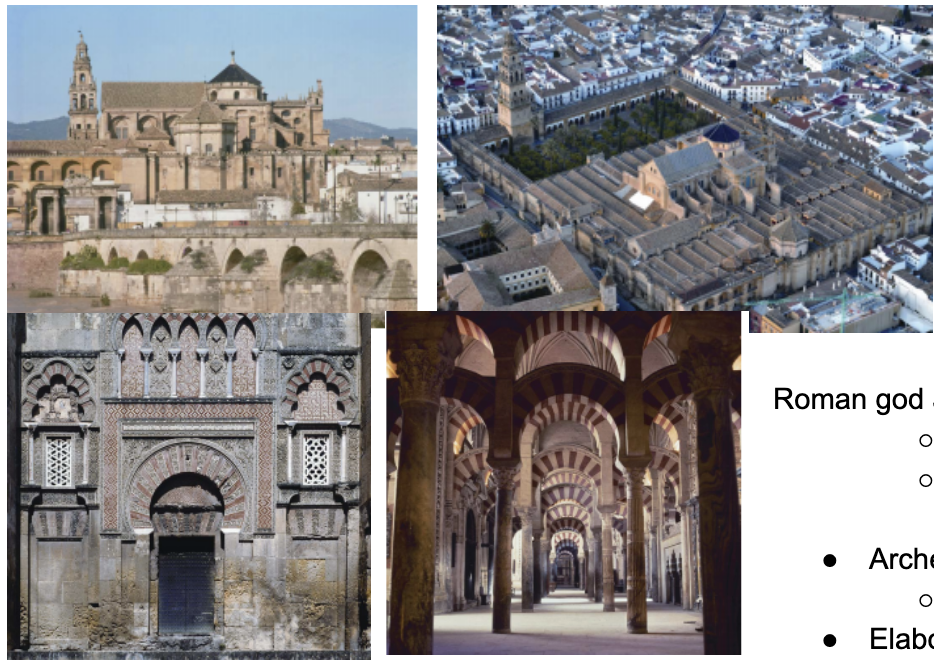
Great Mosque of Cordoba, 1000 CE, Stone masonry, Spain, Umayyads
hypostyle hall, dome, arches are spoila from the visigoths
Squinching support the dome
contains fountain to show purity
Temple for Roman god —> Mosque —> Chrisitan church
Umayyads wanted to showcase their power & extent of their empire
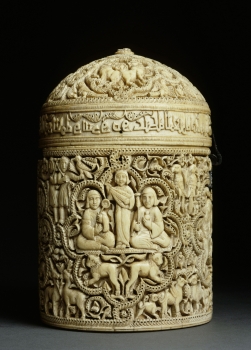
Pyxis of Al-Mughira, 1000 CE, Ivory, Spain, Umayyads
uses iconography (non religious Islamic piece)
Horror Vacui
Calligraphy: owner, asks for Allah’s blessing, gift for Caliph’s son
tells us its function: hold expensive perfumes/aromatics
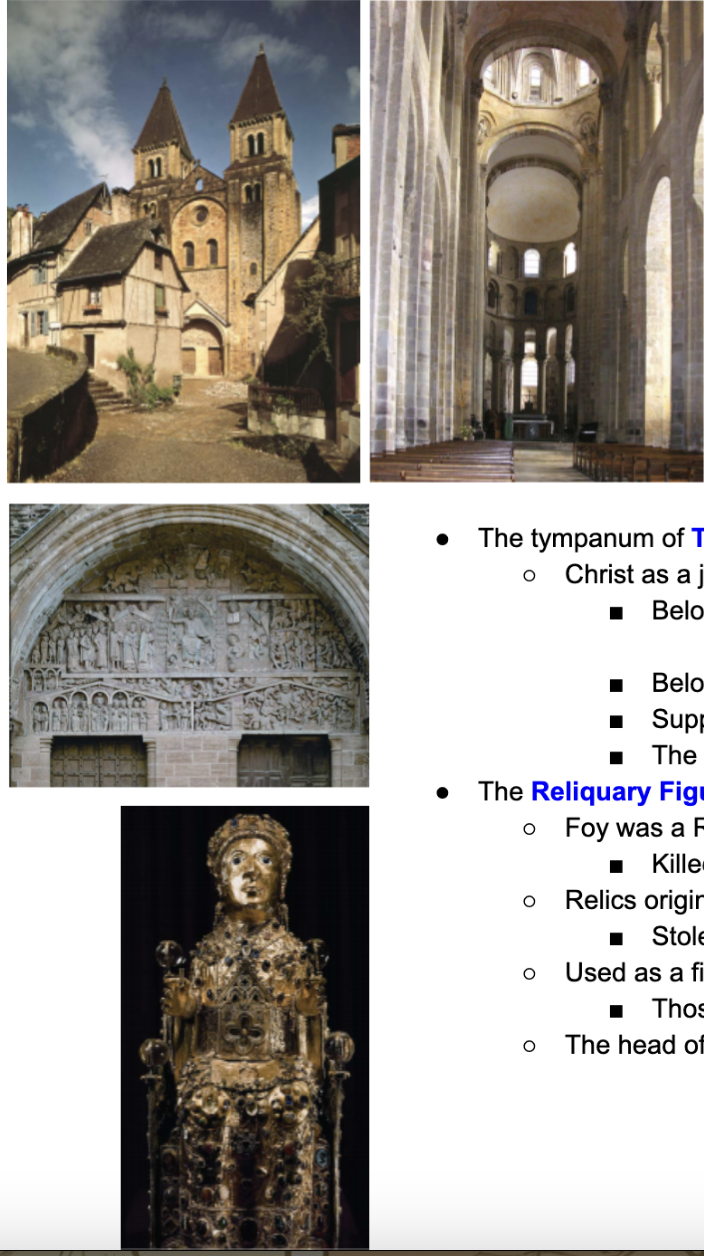
Church of Sainte-Foy, 1100 CE, Stone, Conques, France, Romanesque
Site for pilgrimage
Cruciform plan, radiating chapels, to accomodate for large # of people
Barrel vaults support arches, side windows to let in light
The tympanum of The Last Judgement
Stone
Christ in the center, as judge. Jesus’s right hand is up, people underneath this hand are saved. To his left, his hand is down, are the damned.
Meant to be a warning to Pilgrims: focus or else
Reliquary Figure of Sainte-Foy
Gold & gemstones on wood
Foy was a Roman girl who refused to convert from Christianiy to paganism—martyr. Pieces of her skull are inside
Used as a figure to heal the sick
Head was taken from a Roman statue
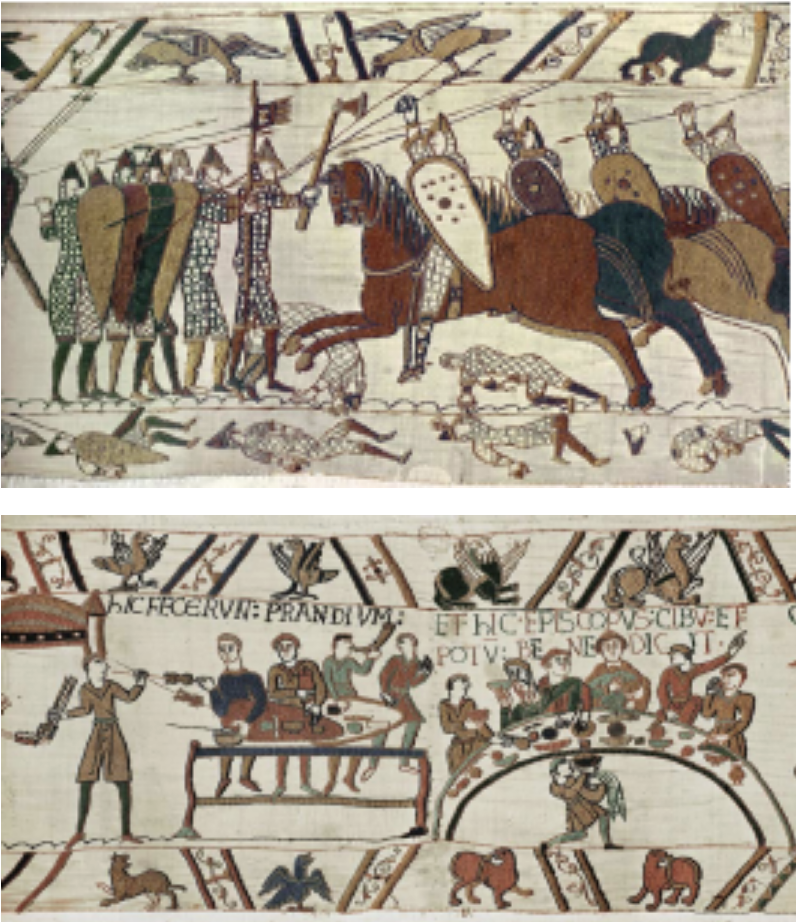
Bayeux Tapestry, 1070 CE, Embroidery on linen, England, Romanesque
Depicts story of the Battle of Hastings in 1066
William the Conqueror’s conquest of England
Calvary Scene
the battle, william’s army on horseback is winning, deceased bodies lie on the ground
First meal
William’s army after the Battle, Bishop Odo is next to William, servant is below the table, serving the soldiers
Displayed in the Bayeux Cathedral
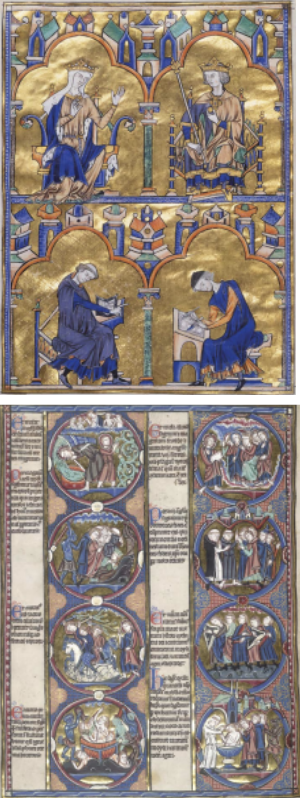
Dedication Page with Blanche of Castile and King Louis IX/ Scenes from the Apocalypse, from Bibles Moralisees 1230 CE
Illuminated Manuscript (ink, tempera and gold leaf on vellum), France Gothic
Dedication page: moralized Bible Cover page
Top Register: Blanche of Castile with her son, King Louis IX of France
Bottom Register: priest telling a scribe what to write, he is doing the roundels of the piece below
Scenes of the Apocalypse
eight medallions that mimic the look of a stain glass window
Depicts John’s vision where he is taken on a tour of heaven.
Visuals with written descriptions next to them.
Shows wealth of patron
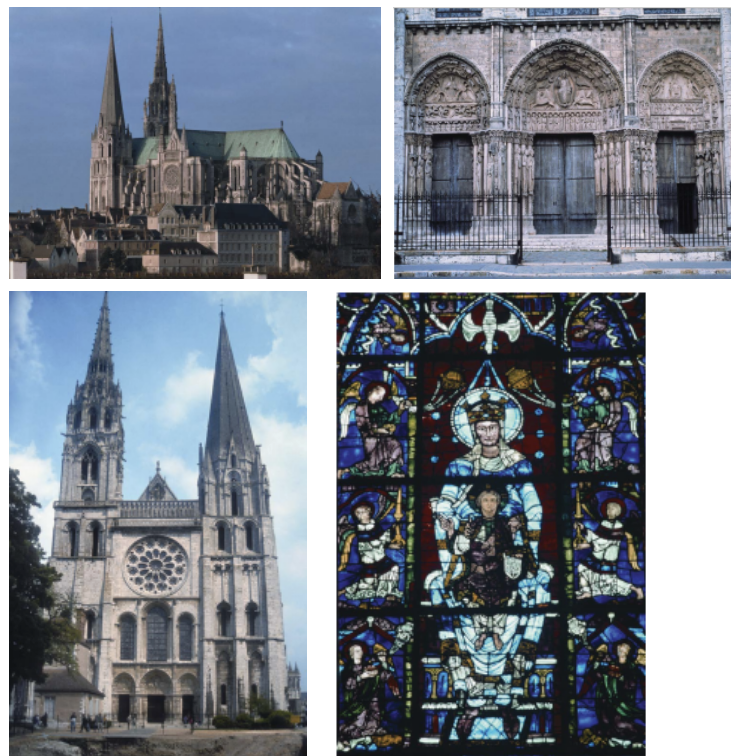
Chartres Cathedral, 1145 CE, Limestone and stained glass, Chartres, France, Gothic
dedicated to the virgin mary (Cult of the Virgin Mary)
Had the relics of Anne’s (Mary’s mom) head and the tunic Mary wore during Jesus birth
Only the tunic survived the 1194 fire
The Great Portal: contain carvings of Biblical Kings & Queens. Tympanums tell stories of Christ’s life (Left: before incarnation, Middle: Second Coming, Right: Virgin Mary)
Two towers: Left tower, Gothic. Right, Romanesque, not destroyed in fire.
Rose window between them is Gothic
Notre Dame de la Belle Verriere —Stained glass
Mary (in blue) holding baby Jesus
Dove representing the Holy Spirit
Other gothic characterictics: skeletal structure, highly decorative, Lux Nova (sacred light from stained glass; church is divine)
Pilgrimage site
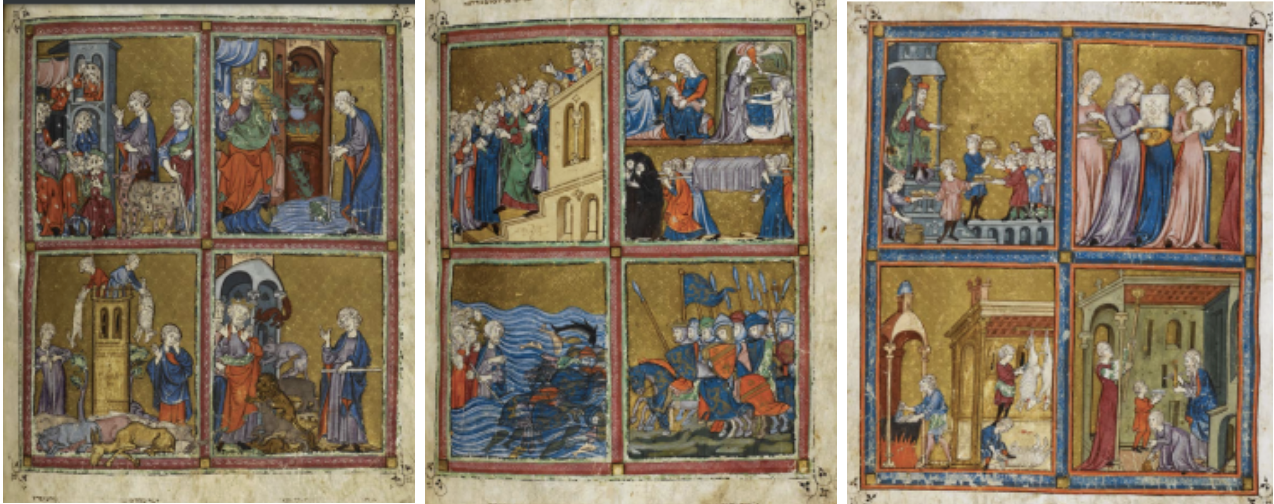
Golden Haggadah, 1320 CE, Illuminated manuscript (pigment of vellum), Northern Spain, Jewish Gothic
Depicts story of Jews leaving Egypt under Moses (left to right)
Plagues of Egypt
Boils infect Egyptians, frogs take over city, wild canines run through Egypt, domestic animals die
Scenes of Liberation
Pharaohs order Israelites out, funeral for first born child of queen, Egyptians drown in the Red Sea, Egyptian knights pursue Israelites
Preparation of Passover
Children give bread, Moses’s sister praised, sheep slaughtered for passover, house prepared for passover
Manuscript is meant to be read at a Passover seder
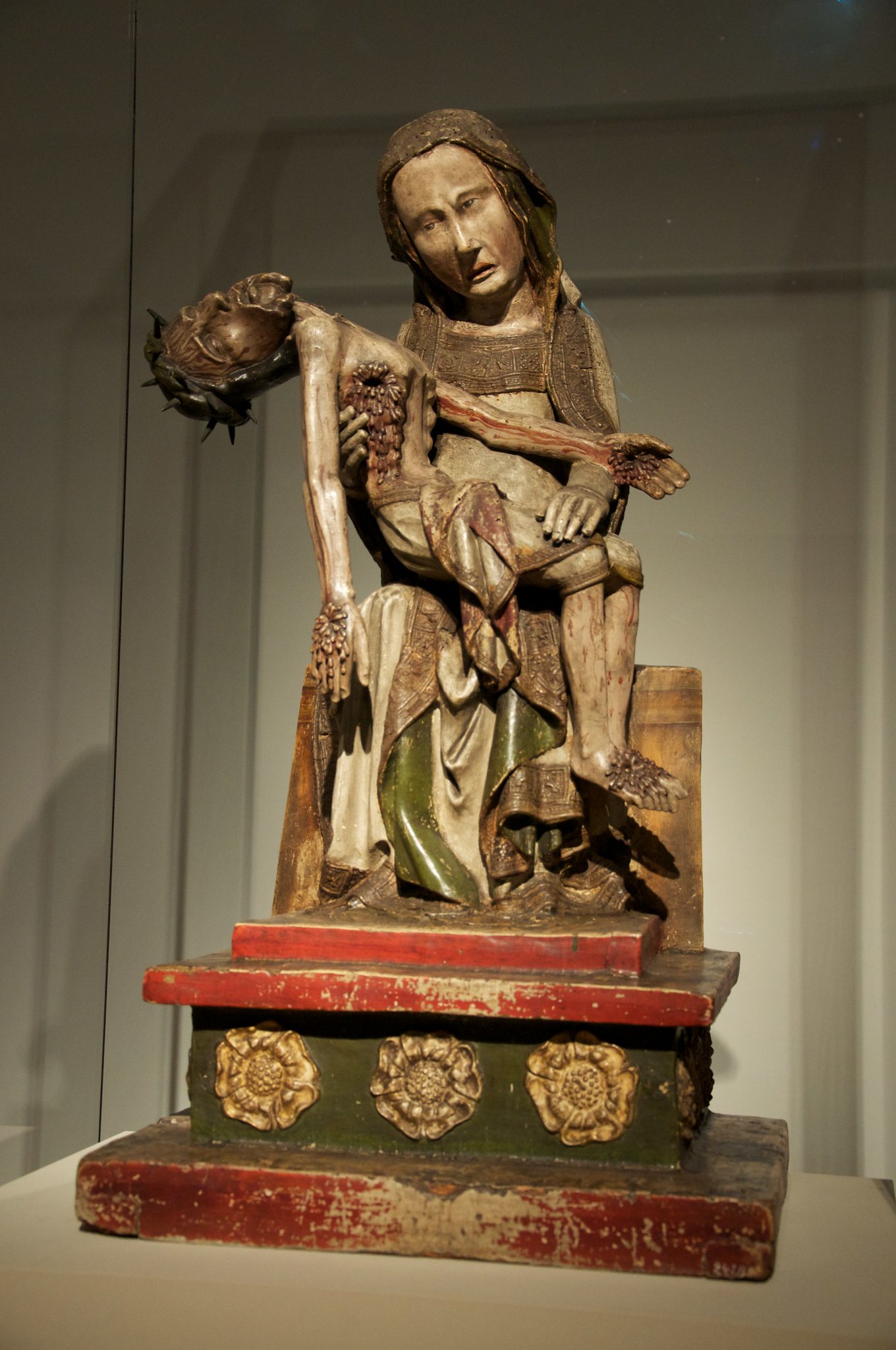
Rottgen Pieta, 1300-1320 CE, Painted wood, Germany, Gothic
Rottgen—city in Germany
Pieta—scene of christ lying dead in Mary’s lap
Mary hold jesus with a distraught expression
Jesus is severely injured: holes in his side, bloody, wearing a crown of throns
Meant to make the viewer feel bad for Mary, part of the Cult of Mary—makes Mary seem more huma/relatable; Used for private devotion
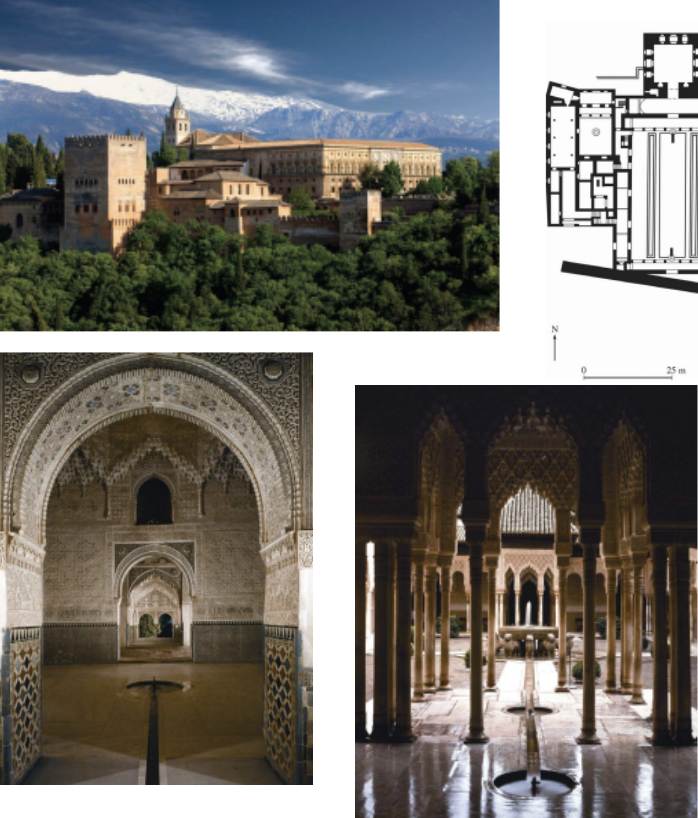
Alhambra, 1400 CE, Adobe stucco & wood, Spain, Nasrid
Secular building
Fountains represent gradens of paradise
Hall of Lions
Residential area for women
Lions protect central fountain
Hall of the Sisters
muqarnas, squinching, and calligraphy lining the walls, horror vacui
possible music room for receptions
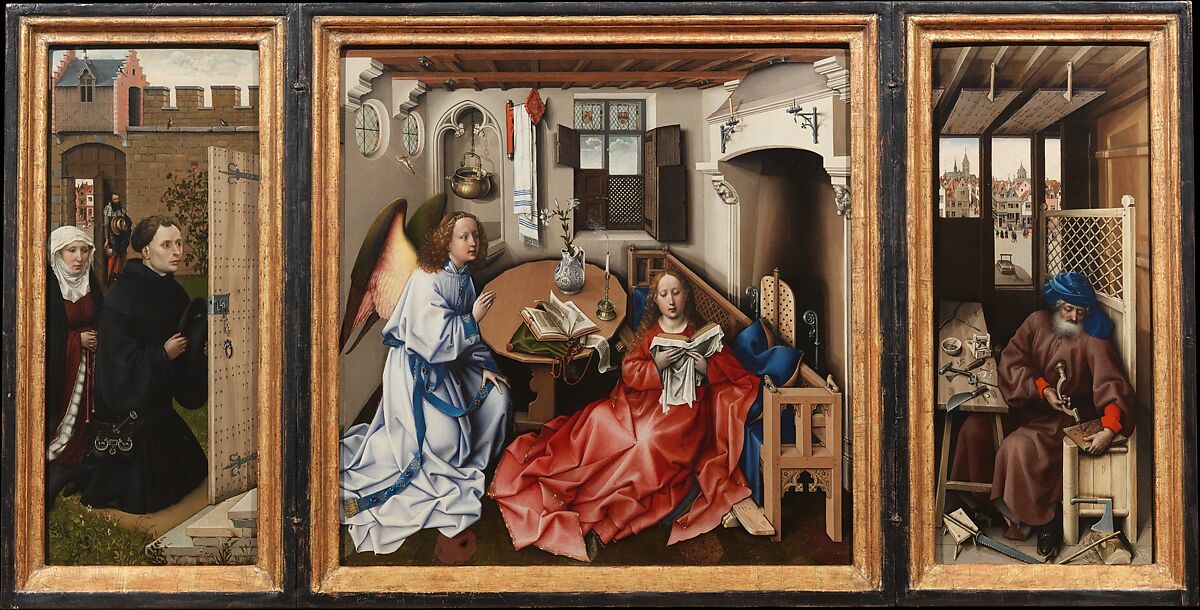
Annunciation Triptych (Merode Altarpiece), 1400 CE, Tempera and Oil on Panel, Netherlands, Northern Renaissance, Robert Campin
triptych—three panels
Left Panel: Patron looking into the scene. Wife behind the patron added later
Middle Panel: Annunciation: Angel Gabriel tells Mary about the coming of Christ
Blown out candle displays presence of God.
Lily flower & kettle show Mary’s purity.
Mary (in red) holds a Bible with fabric in between & has a Bible open on the table —shows she is pious
Right Panel: Joseph is working as a carpenter
Mousetrap in window relates to Bible verse: Jesus’ sacrifice is a mousetrap for Satan
For aiding in prayer in the home; Connect the patrons to Jesus
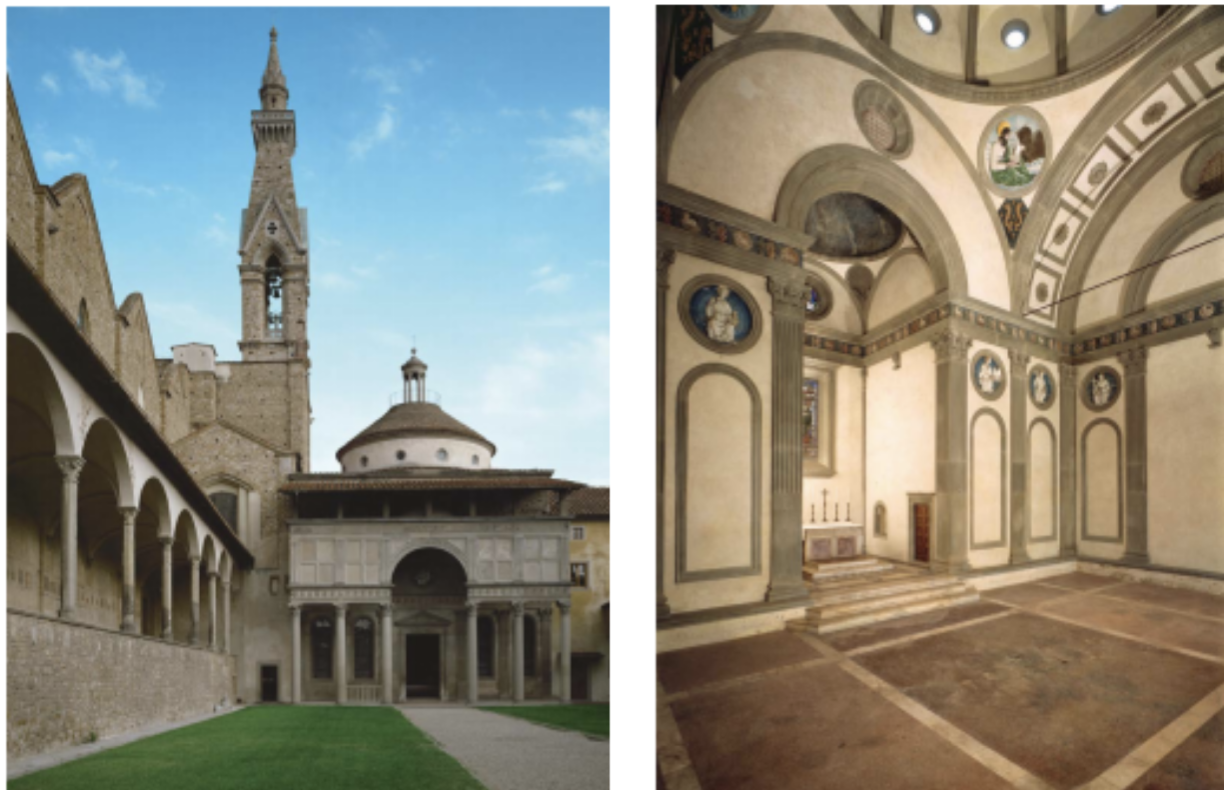
Pazzi Chapel, 1450 CE, Masonry, Florence, Early Italian Renaissance, Brunelleschi
central plan, dome, clerstory in dome, corinthian pilasters (flatenned columns)
Rondals on pendentive depict the four evangelists
Meeting place for monks
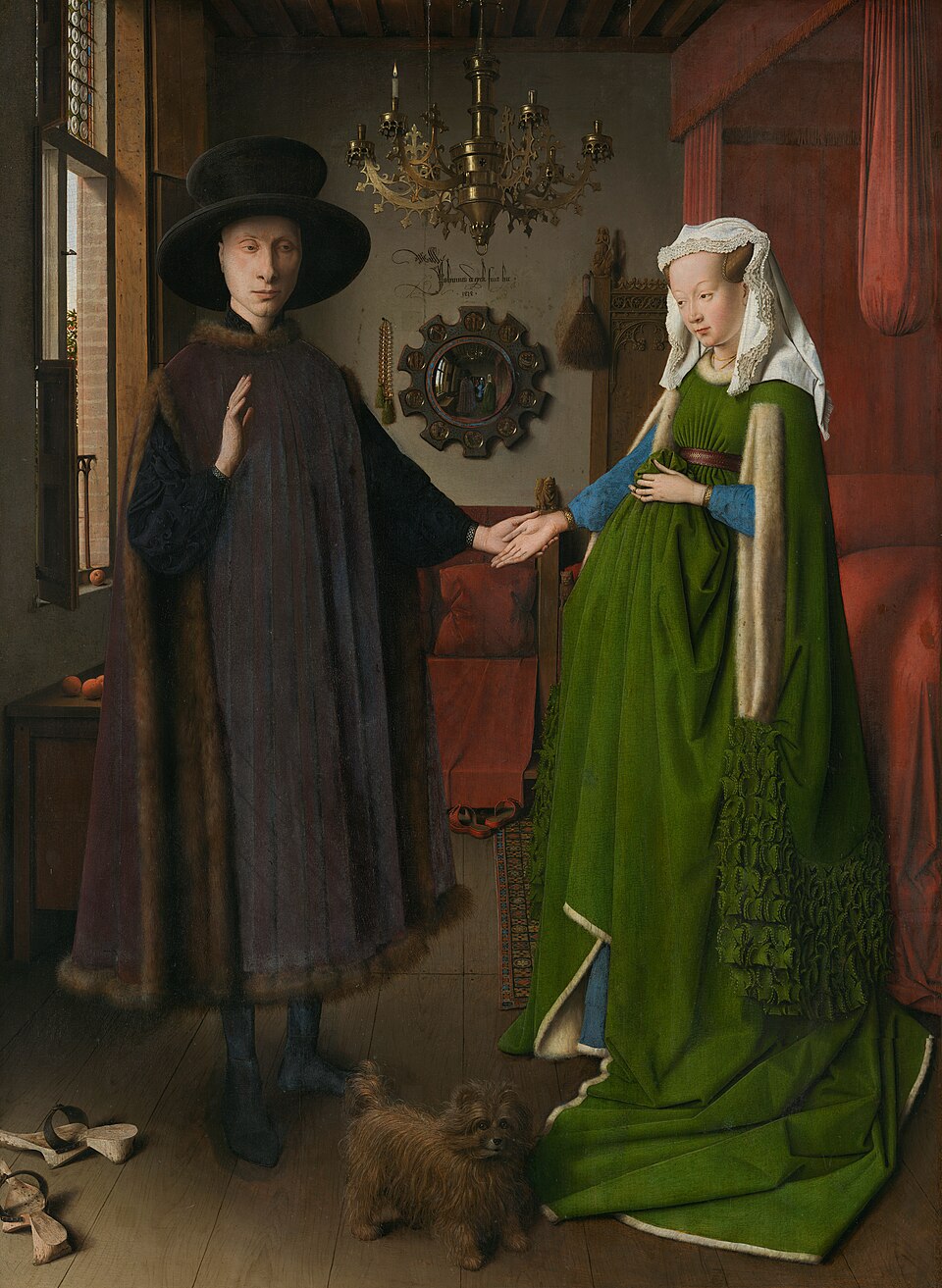
Arnolfini Portrait, 1400 CE, Tempera and Oil on Wood, Belgium, Northern Renaissance, Jan van Eyck
Patron: Mr. Arnolfini
A portrait of Mr. Arnolfini and his wife
wife is not pregnant
Highly detailed with a lot of symbolism
Dog = loyalty
Mirror in bg = 10 scenes from passion of christ, can see reflection of subjects + 3rd person (the painter)
artist’s signature above mirror
Oranges on counter & nice clothes = wealth
shoes off = shows how this is a sacred event
Possible depicting a marriage ceremony pr showing that Mr. Arnolfini was granting his wife legal responsibilities. Could also be a memorial piece for wife.
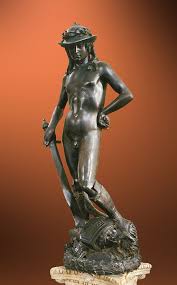
David, 1450 CE, Bronze, Florence, Early Italian Renaissance, Donatello
Depicts David after defeating Goliath: Standing on Goliath’s head, holds Goliath’s sword & a rock
David is confident: relaxed pose, calm face
Or humble: face looking down
David symbolizes the city of Florence; he defeated Goliath (a bigger opponent) like how Florence (known for cloth) defeated Milan (known for weapons)
Made for medici courtyar
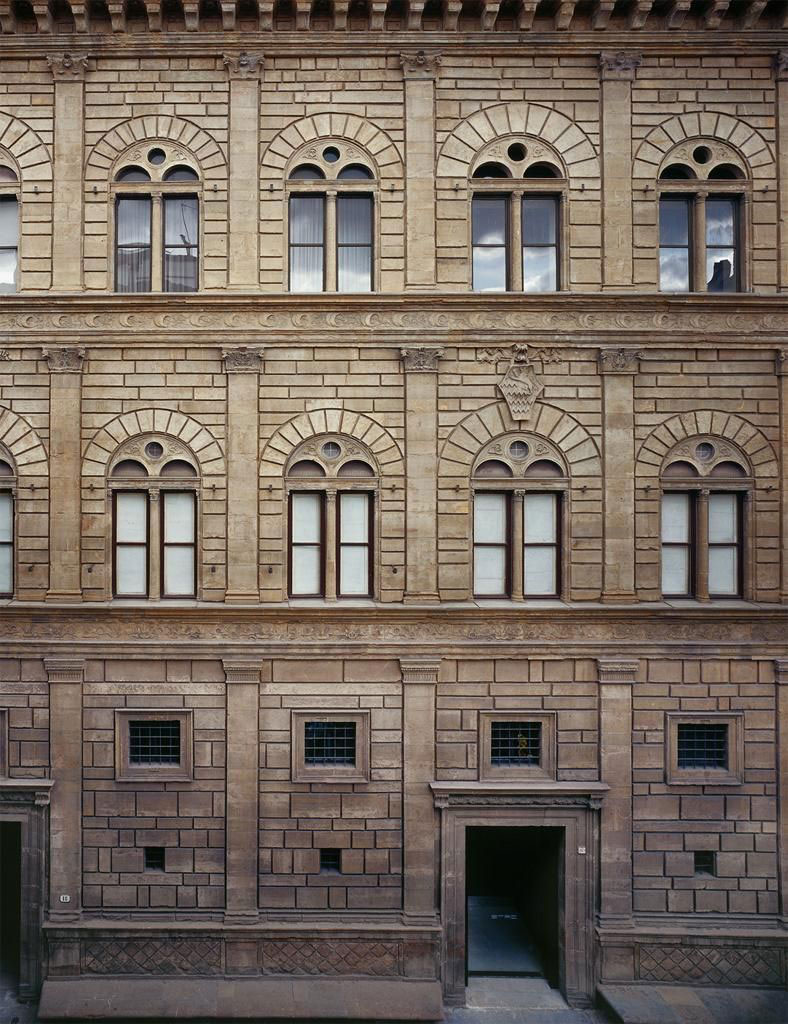
Palazzo Rucellai, 1450 CE, Masonry, Italy, Early Italian Renaissance, Leon Battista Alberti
Patron: Giovanni Rucellai, a wealthy merchant
Doric, Ionic, and Corinthian capitals on pilasters
Friezes have rucellai family emblem
shows power of the Rucellai family
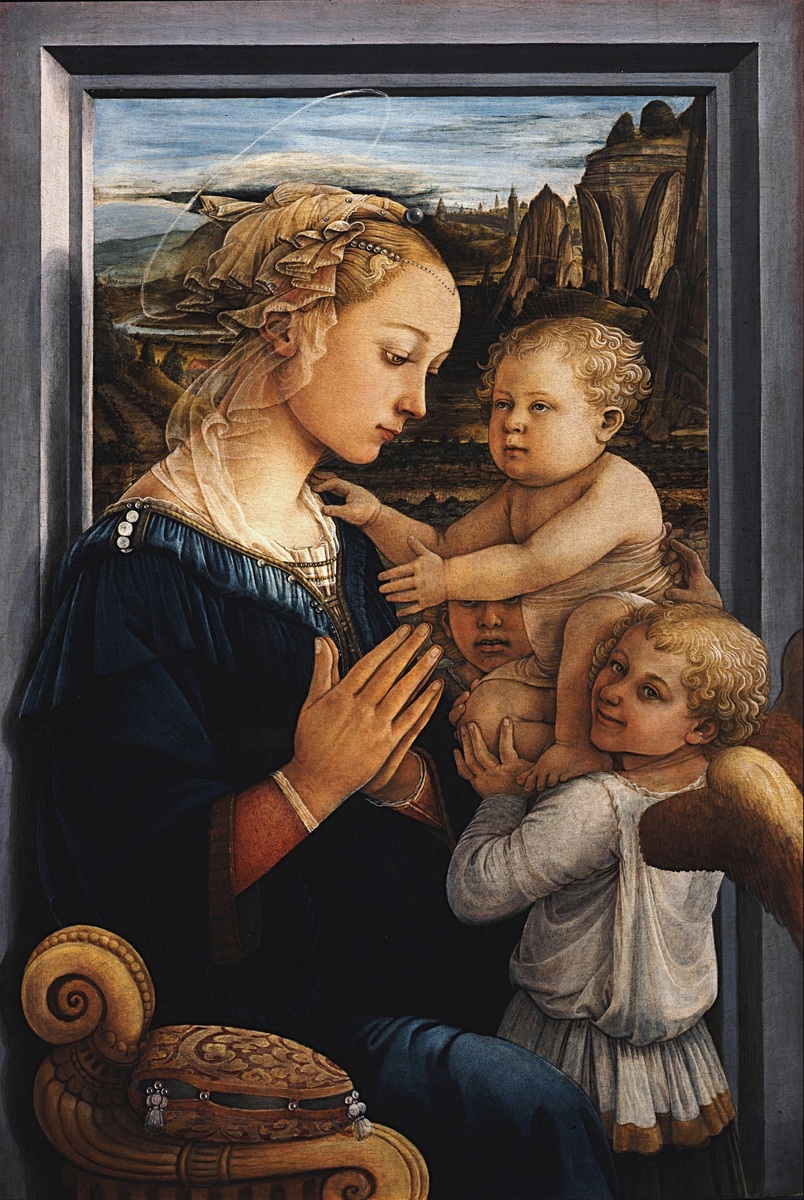
Madonna and Child with Two Angels, 1450 CE, Tempera on Wood, Florence, Italy, Early Italian Renaissance, Lippi
Patrons: Medici family
Mary is seen praying. Baby jesus is held by an angel, with a second angel behind him in shadow. Detailed background looks like a window.
Faint halo around Mary’s head
Angels look at us & invite us into the painting
Use of Chiaroscuro: an art technique using strong, dramatic contrasts between light and shadow to create the illusion of volume, depth, and three-dimensional modeling on a flat surface
Seems to take place in a wealthy home: Mary’s veil & seat
Lippi became an artist for the Medicis after failing to be a monk by running away with a nun
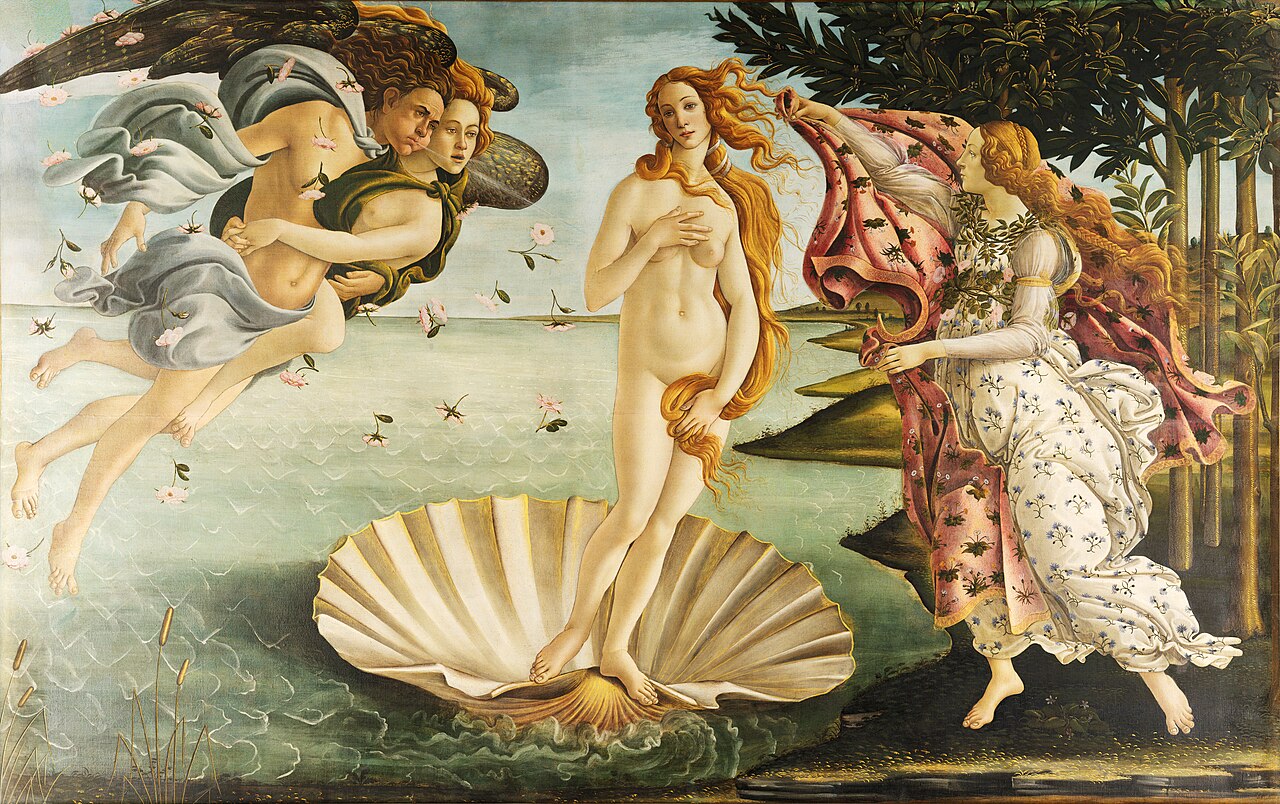
Birth of Venus, 1500 CE, Tempera on Canvas, Florence, Italy, Early Italian Renaissance, Botticelli
Patron: medici family
Venus emerges from seafoam, brought to shore by two zephyrs (wind)
Golden ratio is used in the making of the piece
Elongated bodies, floating figures, golden hair, all meant to be aesthethically pleasing
Inspired by Neoplatonism—beautiful things connects you to gods
Sets standard for female nudes
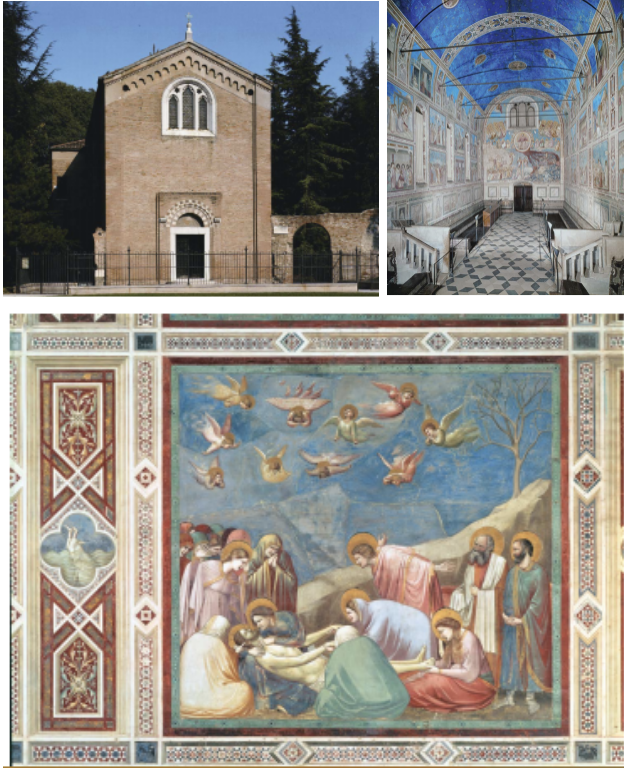
Arena (Scrovegni) Chapel, 1300 CE, Brick and fresco, Italy, Proto-Renaissance, Giotto
Patron: Enrico Scrovegni
Built chapel in effort to go to heaven
Altar shows timeline of Christ
begins with Mary, ends with ascension of Christ
Last Judgement above altar
Christ surrounded by 12 apostles
Cross divides saved from damned, scrovegni is shown on the side of the saved
Lamentation: shows Mary holding deceased Jesus in agony
10 angels in the air
Tree in background symbplizes death & rebirth
Use of triangle composition for figures
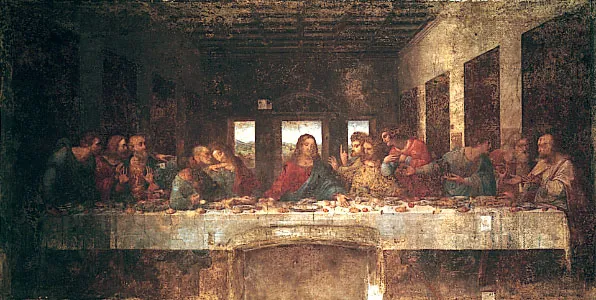
The Last Supper, 1500 CE, Tempera and Oil, Milan
High Italian Renaissance, Da Vinci
Comissoned for the dining area of monks
depicts moment where Christ tells apostles that one of them will betray him
Christ is the central figure
One point perspective—he is the vanishing point
Background lighter behind him
Only one not grouped with others
Triangle composition in figures, grouped into trees
Chiaroscuro
In bad condition due to Da Vinci experimenting with medium
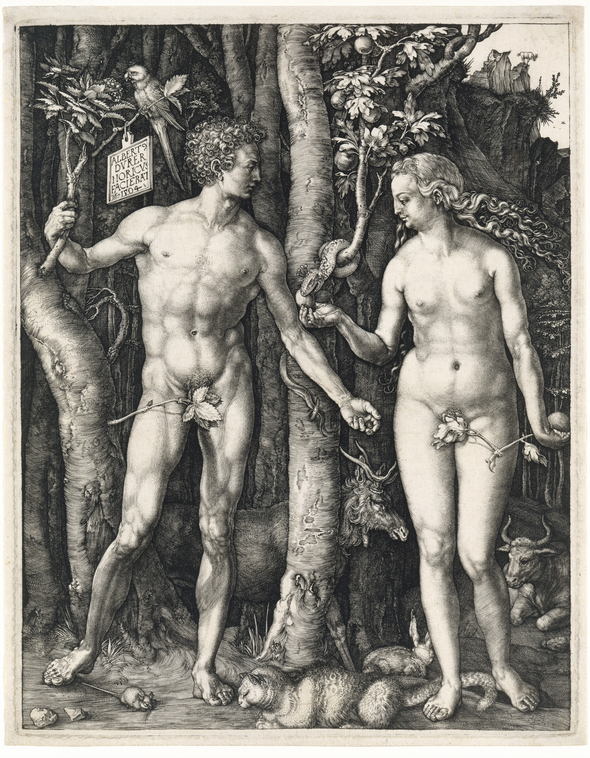
Adam and Eve, 1500 CE, Ink on Paper (Engraving), Germany, Northern Renaissance, Albrecht Durer
Durer tried bringing Italian Classical ideas to the North
Sign below parrot is his signature
Idealized depiction of Adam & Eve, contrapposto
Animal symbolism
Snake=Satan
Cat/rabbit/ox/elk=the four humors of the body that need to be balanced
Made for sale on the art market
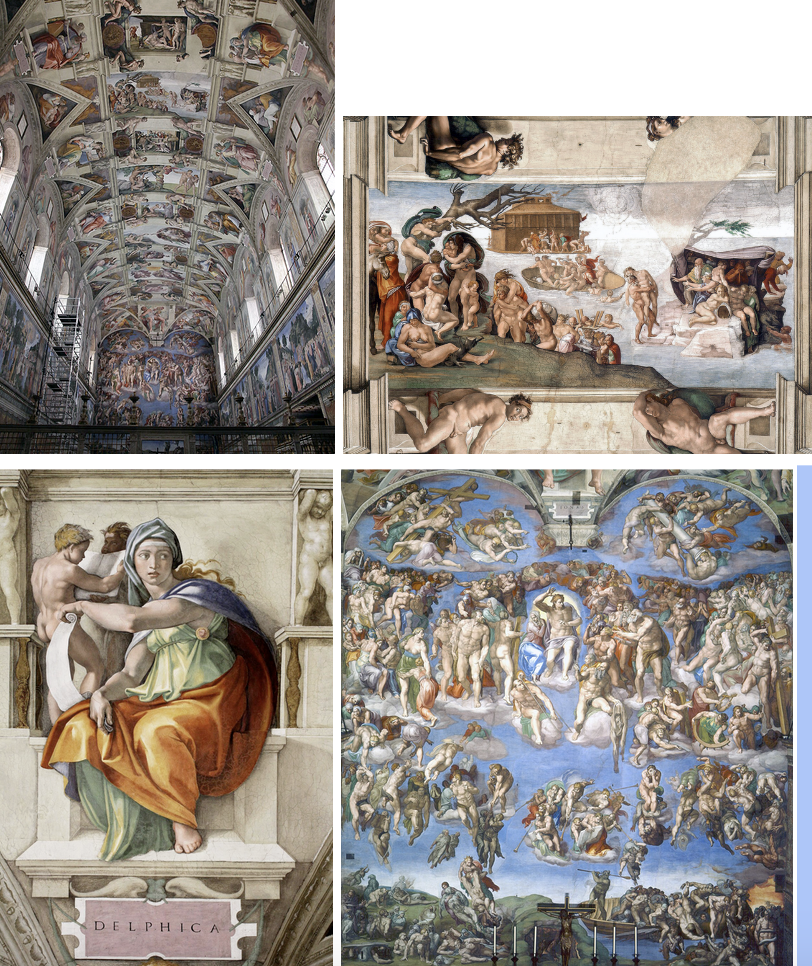
Sistine Chapel Frescoes, 1500 CE, Fresco, Vatican City, High Italian Renaissance, Michaelangelo
Patron: Julius II
Decorate the place where a new pope is elected
The narrative begins at the altar and is divided into three sections. In the first three paintings, Michelangelo tells the story of The Creation of the Heavens and Earth; this is followed by The Creation of Adam and Eve and the Expulsion from the Garden of Eden; finally is the story of Noah and the Great Flood.
The Flood: Shows Noah’s ark during the flood
People in the foreground, middleground, and background try to escape. Twisting bodies, very crowded
Delphic Sibyl
Woman prophet predicted coming of Jesus
Idealized with muscles, diagonal pose, serious expression
Last Judgement—Mannerism
Christ is elongated & disproportional, excessive musculature
Saved on left, damned on right
Michaelangelo is in the piece (face skin being help by St. Bartholomew)
Reflect political instability in the time period—papal schism
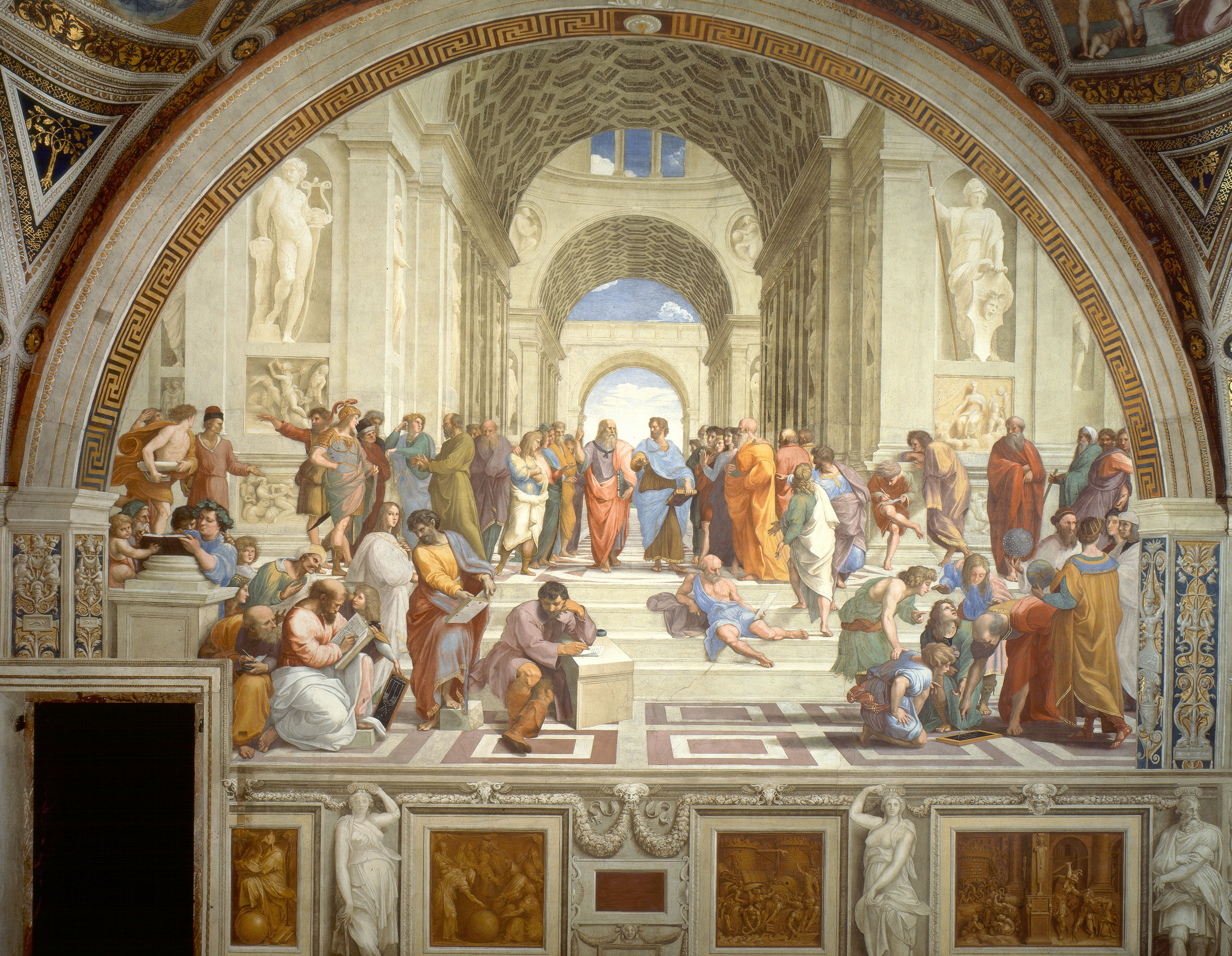
School of Athens, 1500 CE, Fresco
Vatican City, High Italian Renaissance, Raphael
Patron: Pope Julius II, in papal library
Depicts various philophers in the School of Athens. Painting is divided in hald based on abstract (left) and concrete (right) thinkers
Plato & Aristotle are the two central figures
Michelango & Raphael both pictured—shows they should be respected as much as the intellectuals
Apollo (God of Dun & Music) statue on left, Athena statue on right (Goddess of war & wisdom)
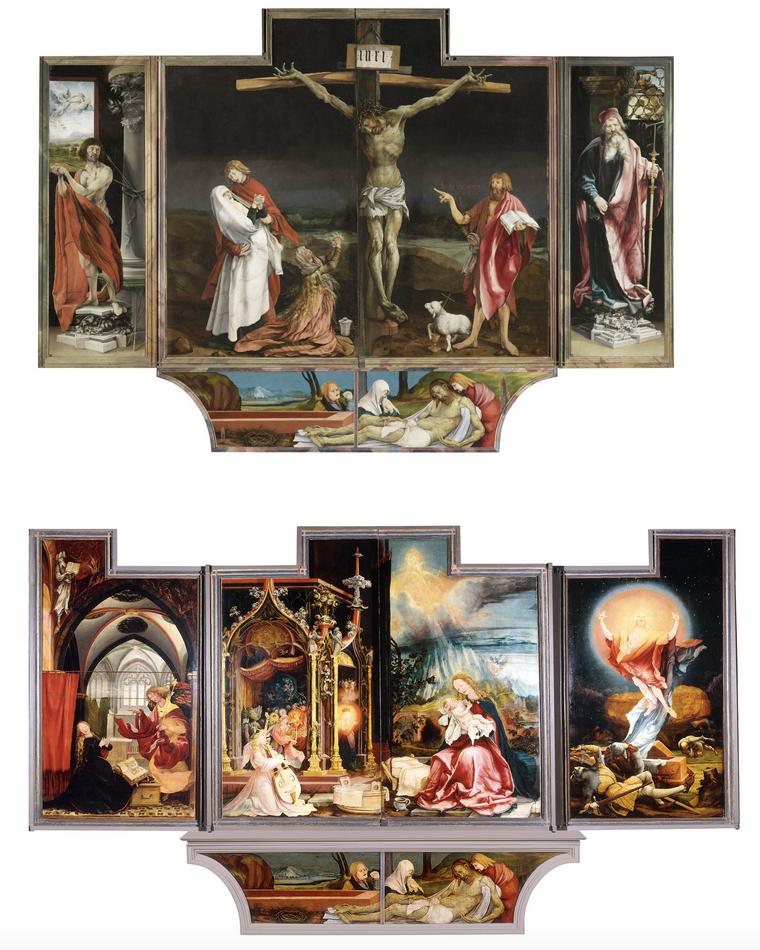
Isenheim Altarpiece, 1500 CE, Oil on Wood, Germany, Northern Renaissance, Grunewald
(top)CLOSED: Left: St. Sebastian (patron saint of plague); Center: shows crucifixion; Right: St. Anthony (patron saint of Ergotism); Predella (support area below main altar) has Lamentation
(bottom)OPEN: Shows scenes of joy. Left: Annunciation; Center: Shows heaven & Earth as one, Nativity scene; Right: Resurrection; Predella: Same as closed
Use of color: Closed position shows night-colors associated with death: black, red, white and green-brown tinged bodies. In the open position, vibrant reds, yellows, pinks, and oranges create a hopeful mood.
Was comissioned for a hospital chapel—Comforsts patients suffering from ergotism
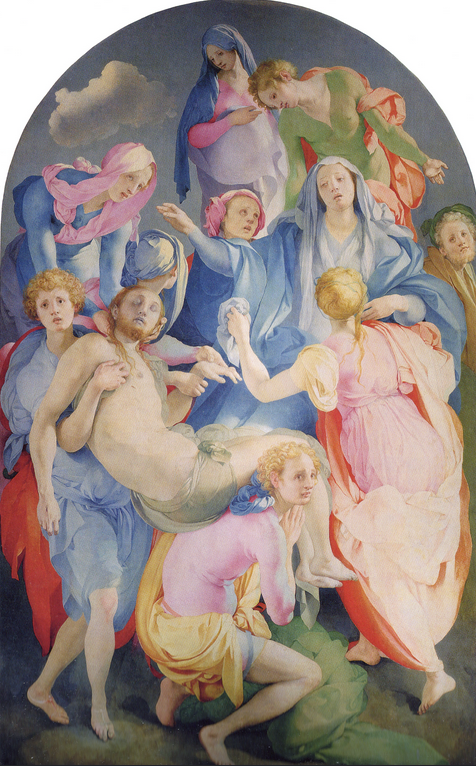
Entombment of Christ, 1500 CE, Oil on Panel, Florence, Italy, Mannerism, Pontormo
Unclear wheter it’s actually the entombment (no symbols or landmarks to know settings or time)
twisted bodies, unnatural body positions
Jarring bright colors
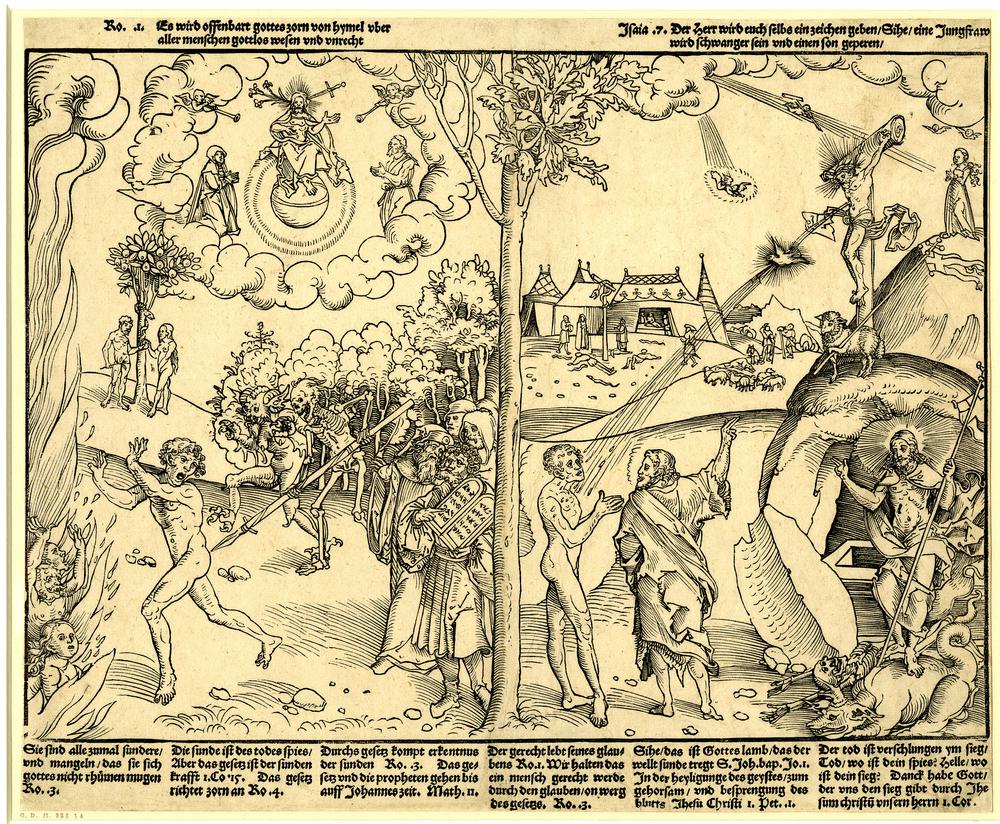
Allegory of Law and Grace, 1500 CE, Ink on paper (woodcutting), Germany, Northern Renaissance, Cranach
Patron: Martin Luther
Protestant piece
Catholicism on the left/Last Judgement/Law
Adam & Eve commit the original sin
Moses holds the 10 commandments
Skeletons chase people
Catholicism = not enough to get into heaven
Protestanism on the right/Salvation/Grace
Having Faith in christ will save you
Christ tramples on death & the devil
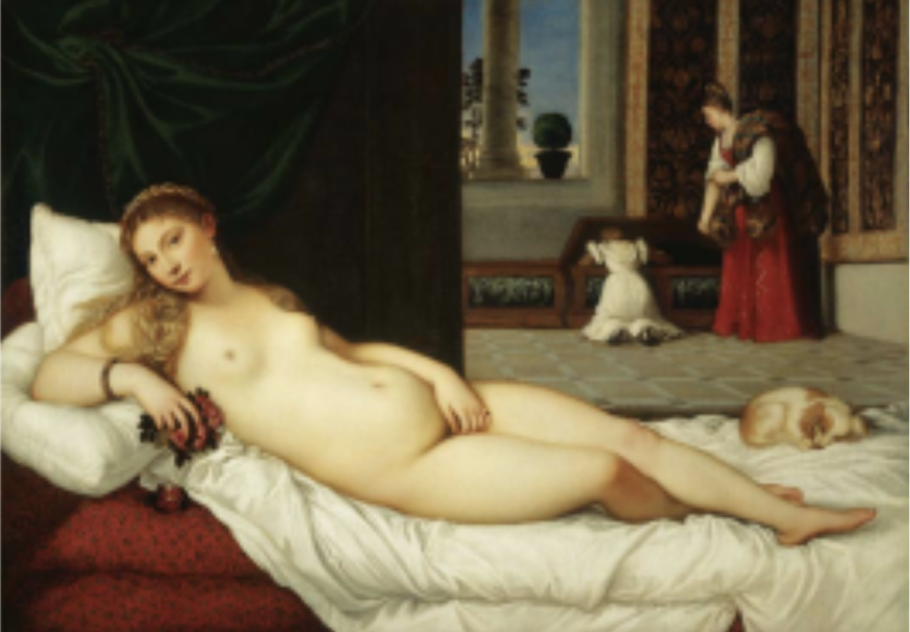
Venus of Urbino, 1500 CE, Oil on Canvas, Venice, Venetian Renaissance, Titian
patron: duke of urbino
Venus is laying down on the bed gazing at us.
Diagonals draw eyes down her body
black line in bg aligns with her genitalia, which she is covering with her hand
Use of complementary colors: green curtain behind Venus & the red bed she lays on
chiaroscuro
sets standard for female reclining nudes
dog = loyalty
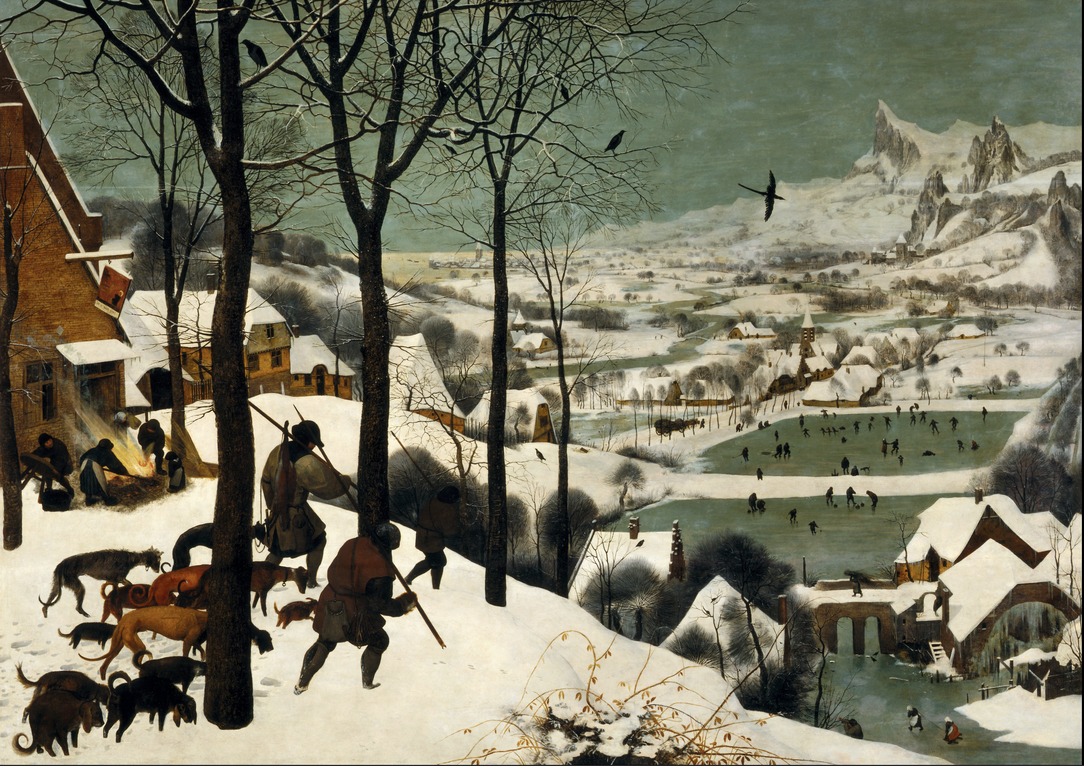
Hunters in the Snow, 1500 CE, Oil on wood, Netherlands, Northern Renaissance, Bruegel
Not real landscape, inspired by travels
Genre scene of peasants
Hunters return with only one small animal from hunt
Diagonals lead us into the painting
Secular painting
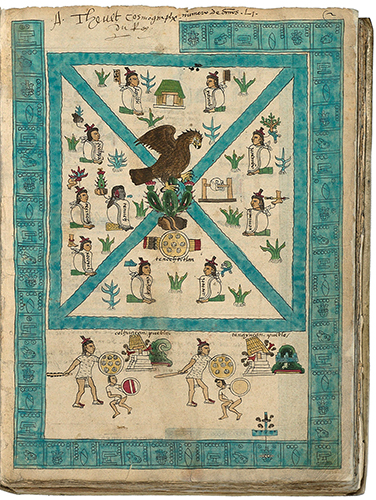
Frontispiece of the Codex Mendoza, 1550 CE, Ink on paper, Spanish Colonial, Mexico
Patron: Viceroy of Mexico Antonio de Mendoza, intended to be given to the Spanish King Charles V
Tells histrory & culture of the aztecs
Shows eagle on top of cactus with snake in claws (sign the Aztec saw from the god on where to place Tenochtitlan)
Blue/4 crosses represent Aztec capital Tenochtitlan (on a lake)
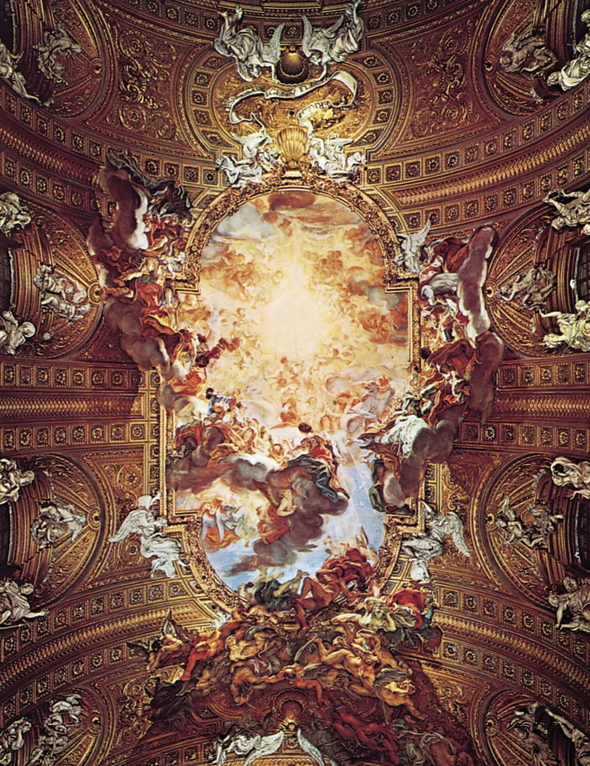
Il Gesu including Triumph in the Name of Jesus ceiling fresco, 1600 CE, Fresco, Marble, Stone masonry, Stucco, Rome, Baroque
Part of the catholic counter reformation
Home of the Jesuits \
Ceiling is the Last Judgement, the light is symbolic of Jesus Christ
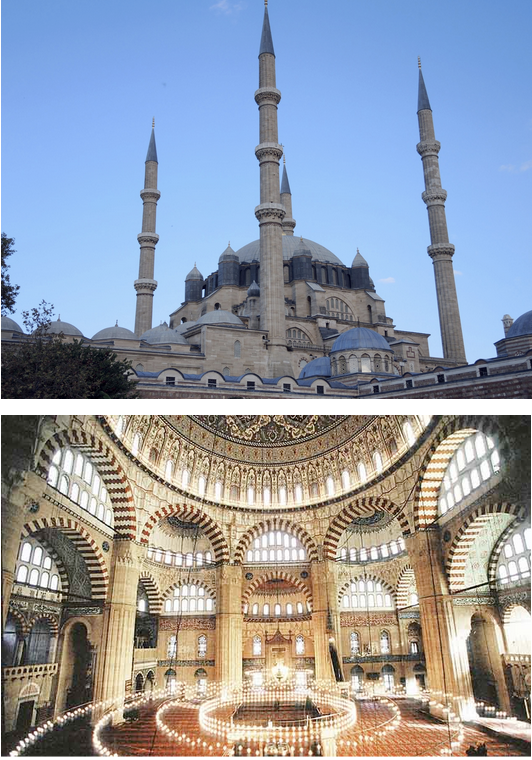
Mosque of Selim II, 1600 CE, Brick and stone, Turkey, Ottoman, Sinan (Architect)
Patron: Selim II
Response to St. Peter’s Basilica & Hagia Sophia
Taller minarets than the Hagia Sophia
Abudant windows, dome supported by squinches, dome supported by piers, horror vacui (very decorated)
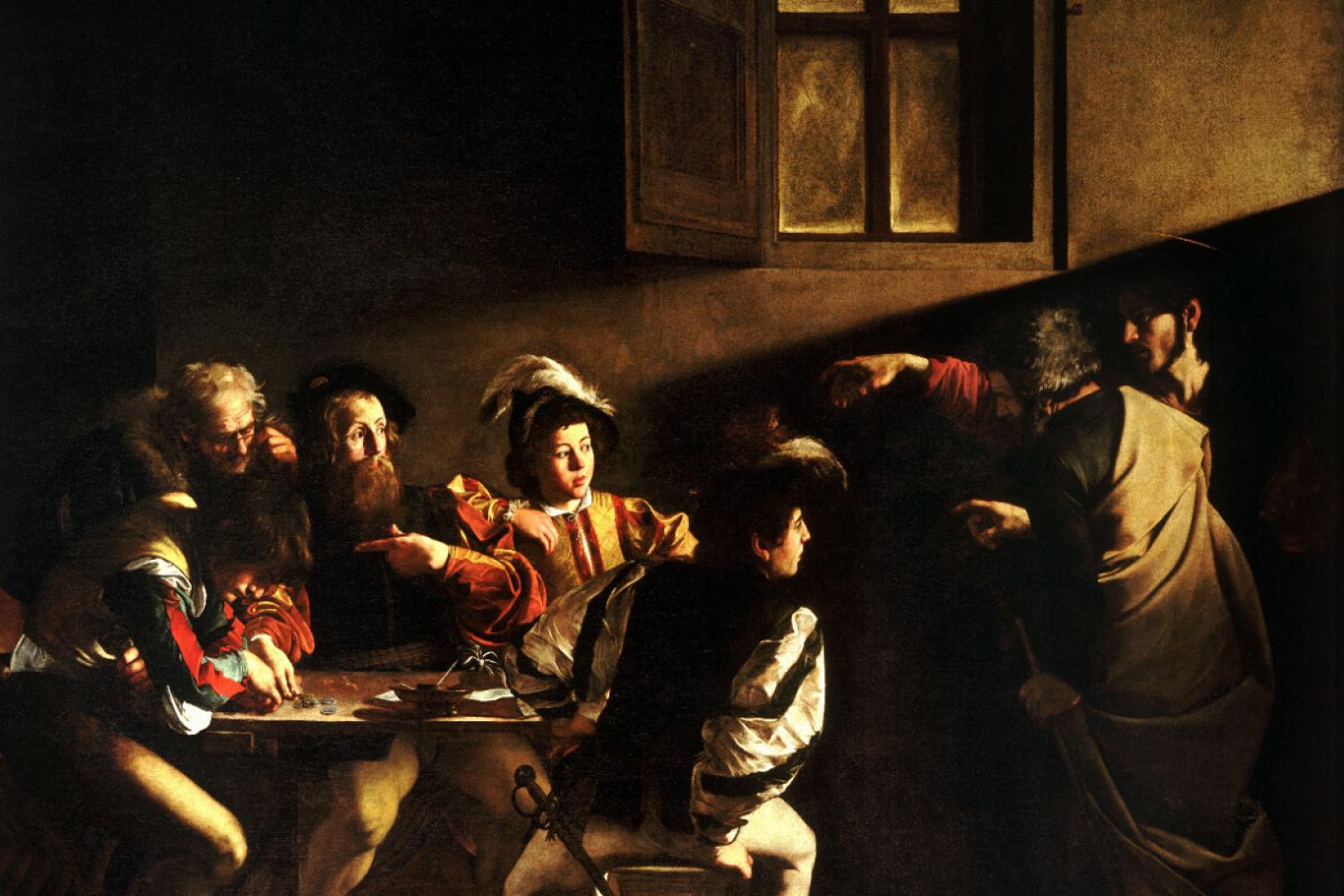
Calling of Saint Matthew, 1600 CE, Oil on Canvas, Rome, Baroque, Caravaggio
Patron: Contorelli family—Catholic cardinals
Jesus is pointing at St. Matthew. Depicts moment in time as tax collector (Matthew) questions Jesus’ selection of him
Baroque style: tenebrism & dramatic lighting
Reflect Catholic counter reformation belief—miracles can happen to anyone at any time
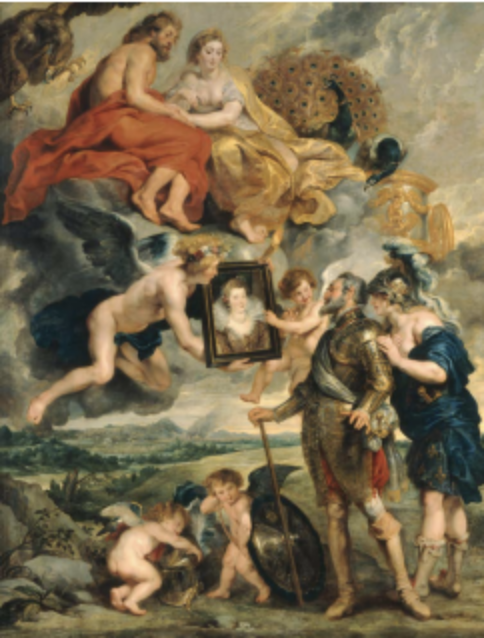
Henry IV Receives the Portrait of Marie De’ Medici, 1600, Oil on Canvas, Flanders, Baroque, Rubens
Patron: Marie de Medici
Henry IV stares in love at portrait of Marie de Medici
Puts armor on ground: choose love over war
Personalized france whispers in Henry’s ears—France supports the marriage
Cupid & Hymen (god of marriage) hold painting
Zeus & Hera overlook
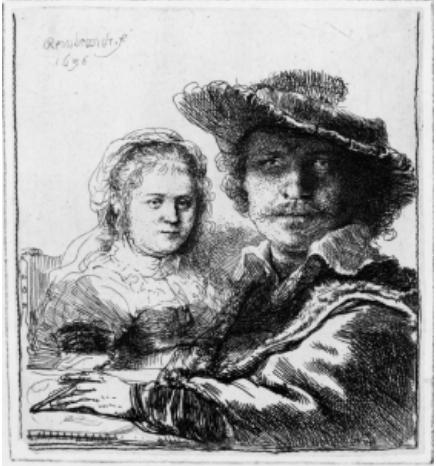
Self-Portrait with Saskia, 1600 CE, Ink and paper , Netherlands, Baroque, Rembrandt
Self portrait of Rembrandt drawing with his wife Saskia next to him.
Showcases his skill as an artist
High contrast lighting emphasizes eyes
Made for the art market
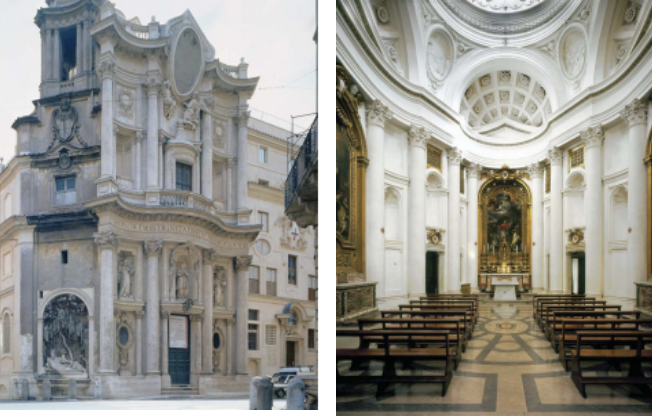
San Carlo alle Quattro Fontane, 1600 CE, Stone and stucco, Rome, Baroque, Borromini
Dedicated to St. Charles
undulating wave like patterns
alternating concave & convex (architectural baroque)
bright interior
Built for Trinitarians, followers of the Holy Trinity
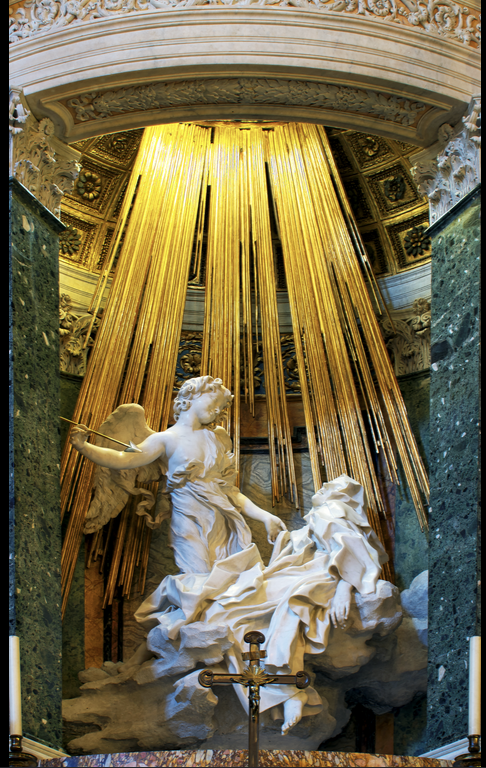
Ecstasy of Saint Teresa, 1650 CE, Marble, Stucco, Gilt bronze, Rome, Baroque, Bernini
Based on St. Theresas’ diary—vision of angel stabbing her through the heart with an arrow of God’s love. Sculpture shows this event
Dramatic facial expressions, bronze rays of light, hidden window lets in light, strong diagonals
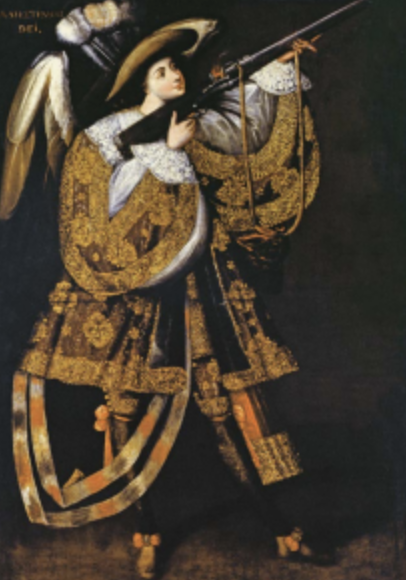
Angel with Arquebus, 1700 CE, Oil on canvas, Peru, Spanish Colonial, Calamarca
Patron: Viceroy of Peru
Arquebus—type of rifle
Angel holds the Arquebus to show loyalty to Christ grants protection
Used to convert indigeonous people
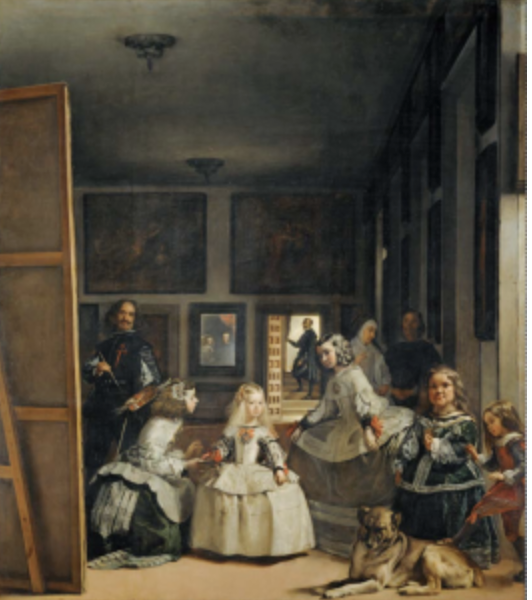
Las Meninas, 1650, Oil on canvas, Spain, Baroque, Velazquez
Painted to elevate the role of the artist—an important part of the household
Princess Margarita is in center surrounded by maids
King Philip IV & Queen are in the mirror in the background
drama, tenebrism in background
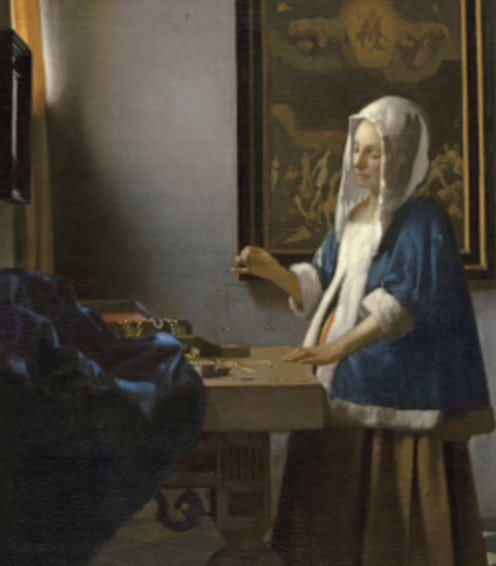
Woman Holding a Balance, 1700 CE, Oil on canvas, Netherlands, Baroque, Vermeer
well dressed upper class woman seems to be balancing her jewlery against weights
Meant to represent the importance of the spiritual world over the material world
Use of light from window on the left
Painting in the back is the last judgement —indicates religious meaning
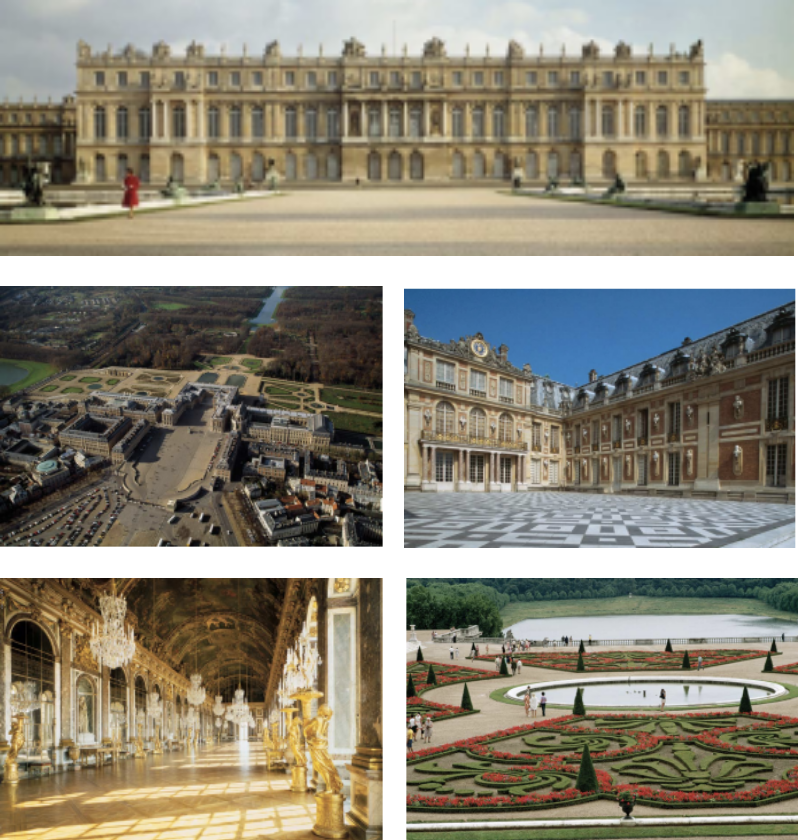
The Palace at Versaille, 1600 CE, Masonry, Gardens, Gold, Iron, etc., Versailles, France, Baroque
Patron: King Louis XIV
Built to show his wealth
Hall of Mirrors—used for parties
mirrors were very expensive
Pathway to the kings’ personal chapel
Overlooked the gardens
Gardens are formal and have a maintained apperance closer to the palace
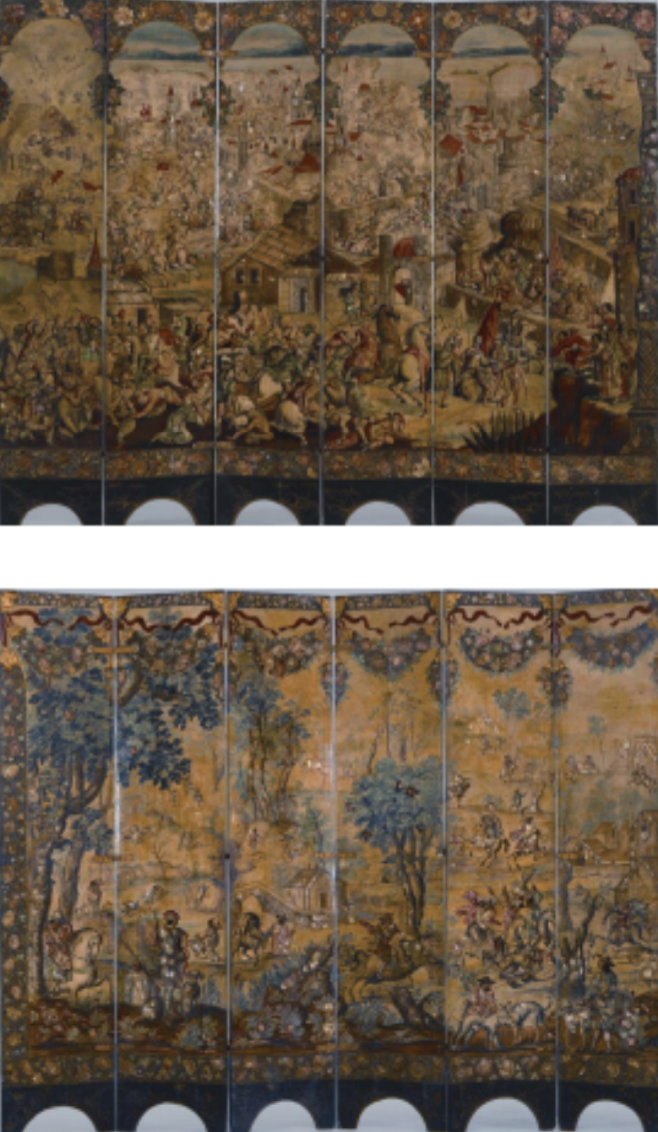
Scene with the Siege of Belgrade and Hunting Scenes, 1700 CE, Tempera on wood with inlaid mother of pearl, Mexico, Spanish Colonial
One side is the Siege of Belgrade: Spanish Habsburh vs. Ottomans—shows loyalty to spain
Viceroy’s visitors would see this side
Other side is a hunting scene
reserved for view with wife/friends
Japanese influence—Biombo folding screen, mother of pearl shells
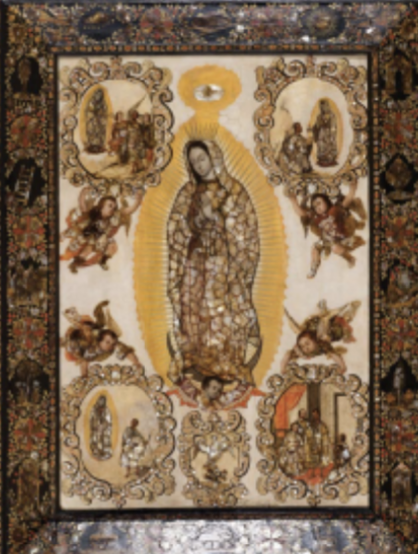
Virgin of Guadalupe, 1700 CE, Original on cactus cloth, this one is oil on canvas, mother of pearl, Mexico, Spanish Colonial, Gonzalez
Virgin in the center enshroud by light
The four medallions in each corner are supported by angels and tell the story of Juan Diegos’s vision of seeing the Virgin of Guadalupe
Her cloak is made up of fragments of shell—enconchado
Considered to be an acheiropoieta—a divine work not made by human hands
Worship—connects indigenous people to christianity
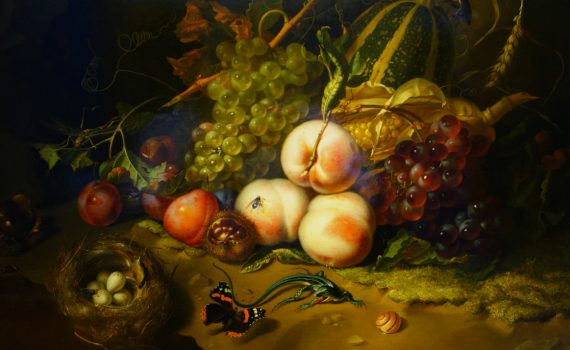
Fruit and Insects, 1700 CE, Oil on wood, Netherlands, Baroque, Rachel Ruysch
female painter!
Still life of fruit and insects
Fruits from all different seasons & places
corn & squash come from new world
Tenebrism, dramatic light
Idea of memento mori: flies on fruit, chesnut shell open, butterfly & lizard, eggs—reminds us the transient nature of life, everything dies
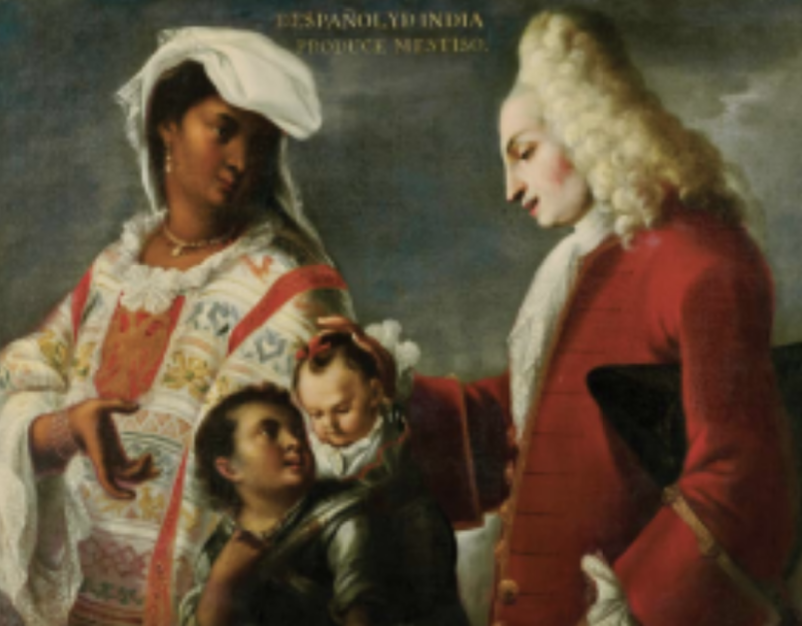
Spanish and Indian Produce a Mestizo, 1700 CE, Oil on canvas, Mexico, Spanish Colonial, Juarez
part of casta paintings—shows social hierarchy of spain based on race
Both parents are wealthy—indigenous mother & spanish/white father, mestizo child.
There is a servant
Modeled off Virgin Mary, Joseph, and Christ
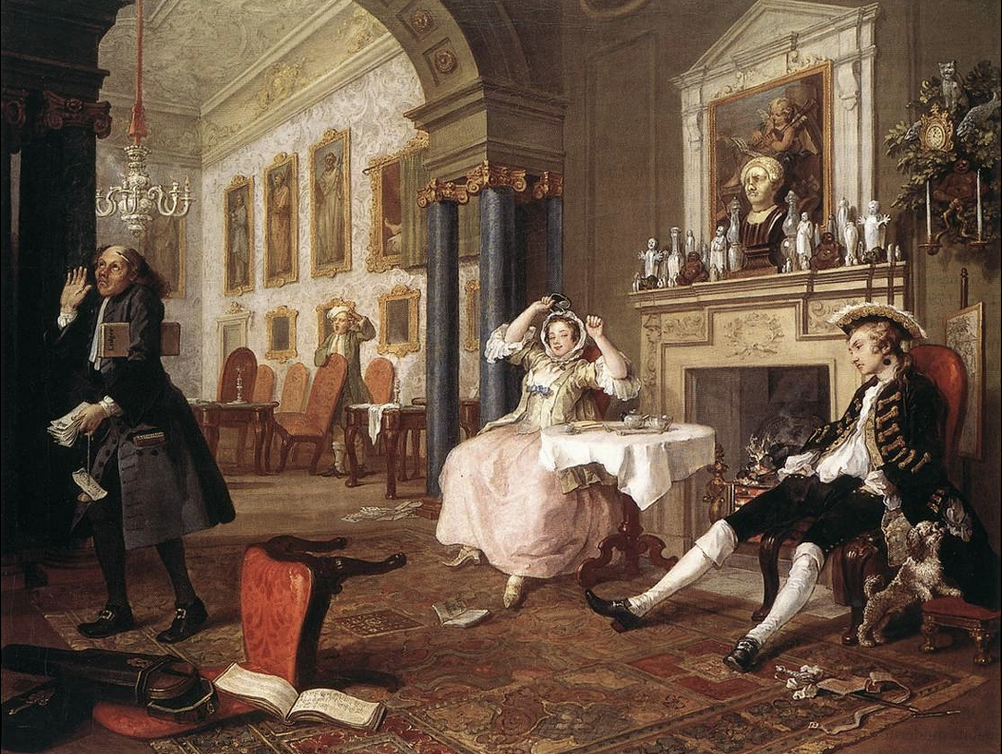
The Tete a Tete, from Marriage a la Mode, 1740 CE, Oil on Canvas, England, Naturalism, Hogarth
Series made fun of the aristocracy & marriages made for political gains
Wife: unrefined pose, playing cards, lost a lot of money
Steward: exaspherated at how much money woman has lost playing cards, holds unpaid bills
Husband: has spent the night with another woman, as indicated by the dog sniffing the bonnet he is holding. There is a black mark on his neck—syphilis
Illustrates the immoral behavior and personal ruin that can come from arranged marriages
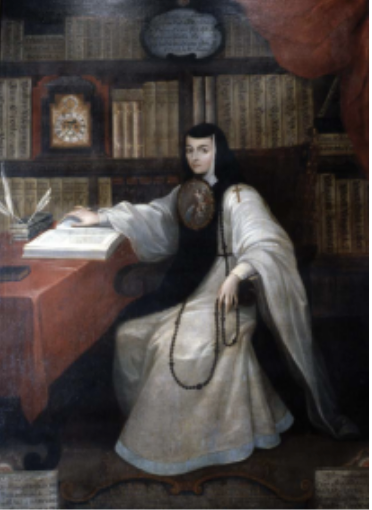
Portrait of Sor Juana Inez de la Cruz, 1750 CE, Oil on canvas, Mexico, Spanish Colonial, Cabrera
Depicts feminist Sor Juana
She is shown as a religious intellectual
holding rosary
infront of many books
Created after death by admirers
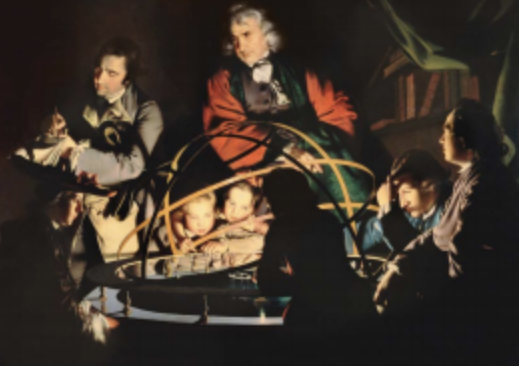
A Philosopher Giving a Lecture on the Orrery, 1760 CE, Oil on canvas, England, Naturalism, Wright of Derby
Philosopher in red gives a lesson on an orrey
A representation of the solar system
One man records notes, young woman leans over edge, young man shields eyes from the light, young boys look into the orrey
Spread of Enlightenment ideals. Science and reason>
Demonstrates moral lesson that the pursuit of knowledge is significant
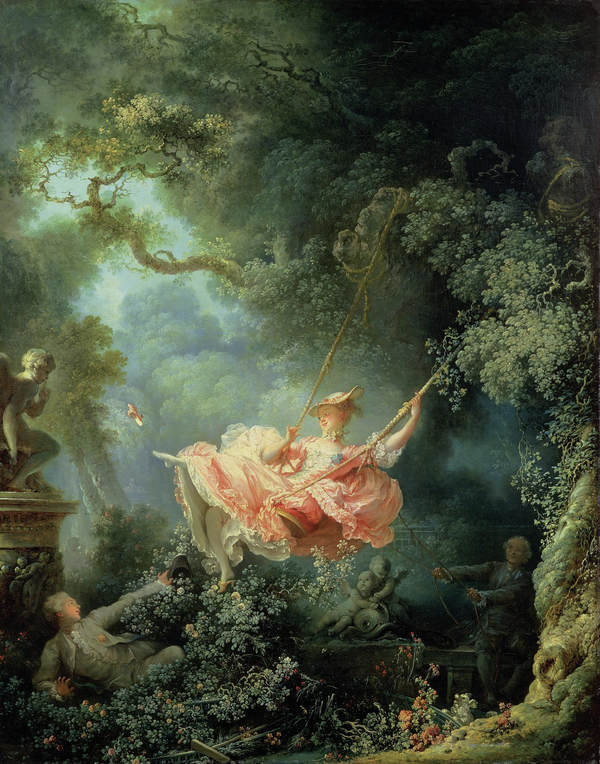
The Swing, 1170, Oil on Canvas, France, Rococo, Fragonard
Depicts a woman swinging on a swing
man looks up her skirt
Another man pushes woman on the swing, oblivious to the other man. White collar signifies he is part of the church
Woman seductively kicks off shoe
Dog represents loyalty or lack thereof
Typical Rococo style
Pastel colors
Depicted in nature that is idealized
Main character shown in silk-like clothing
Rich people in nature
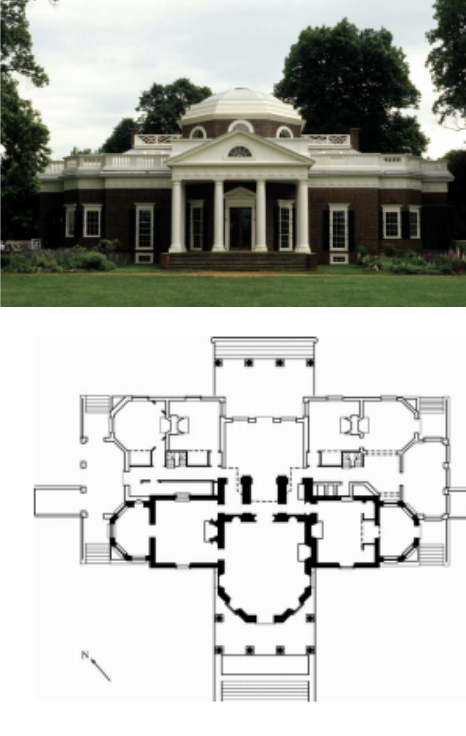
Monticello, 1800 CE, Brick, glass, stone, and wood, Virginia, Neoclassical, Thomas Jefferson
Meant to represent democratic ideals
Humble & inexpensive
uses brick made from clay around the property
Influenced by classical buildings
Oculus & dome from Pantheon
Portico, doric columns, pediment
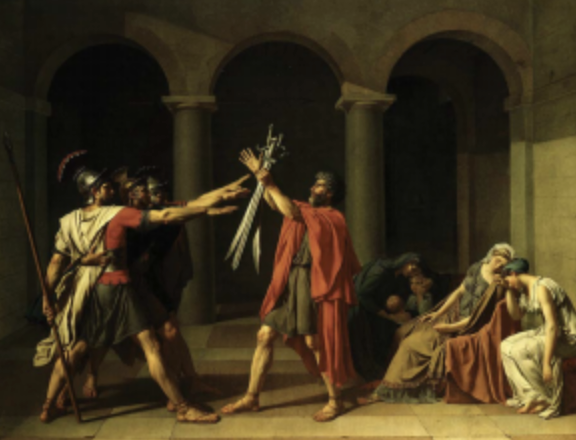
The Oath of the Horatii, 1784 CE, Oil on canvas, France, Neoclassical, Jacques Louis David
Depicts the Horatii brothers vowing to defend Rome with their life. Their sisters & wives sit to the side looking distraught.
men—upright, tall, & calm, represent patriotism & civic duty
women—sittting diwn, curved lines, crying, represent emotion
Influenced by Greece and Roman art (hence the term ‘neoclassical’)
Elaborate drapery on women, musculature of the men, arches, doric columns
Neoclassical art is known to teach a moral lesson
Jacques Louis David considered the father of neoclassical art
Promotes civic duty over emotion
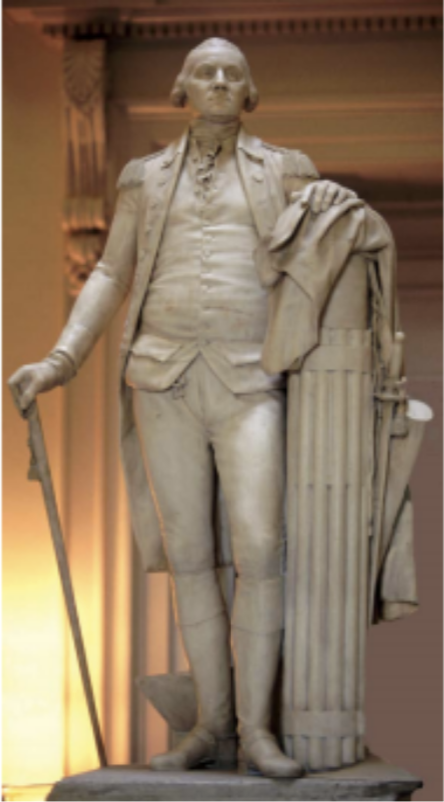
George Washington, 1790 CE, Marble, Virginia, Neoclassical, Jean-Antoine Houdon
George Washington depicted in a plain outfit, not idealized, looks old
Posed in front to plow to show him as a humble farmer
Has a badge of the Roman leader Cincinnatus on his belt
Cincinnatus, like Washington, returned to farming after retirement
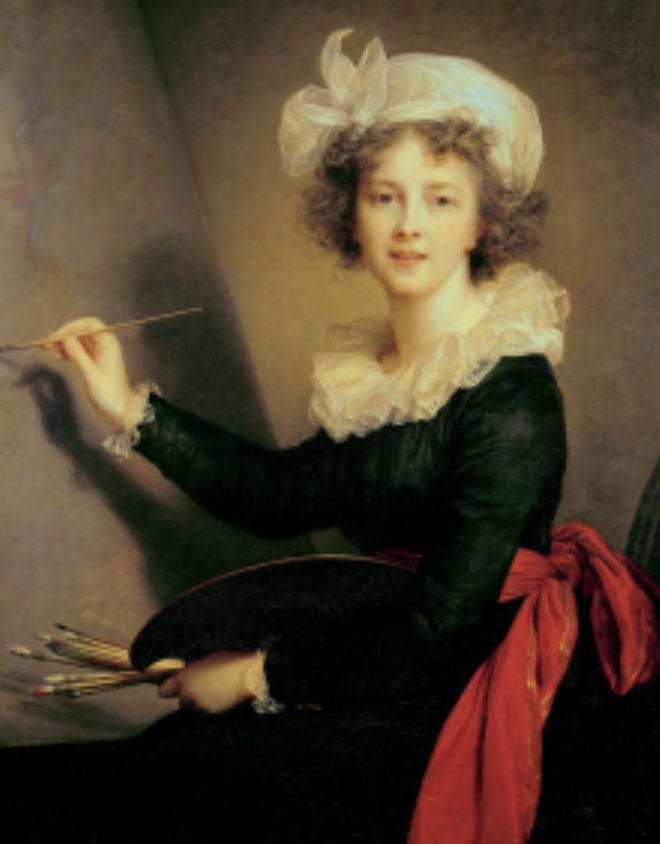
Self Portrait, 1790, Oil on Canvas, England, Neoclassical, Vigee Le Brun
Le Brun depicted painting Marie Antoinette (she was her personal portrait painter), in a fancy outfit
One of the few women part of the French Academy
Realistic portrait, looking at audience
displays her skills as an artist
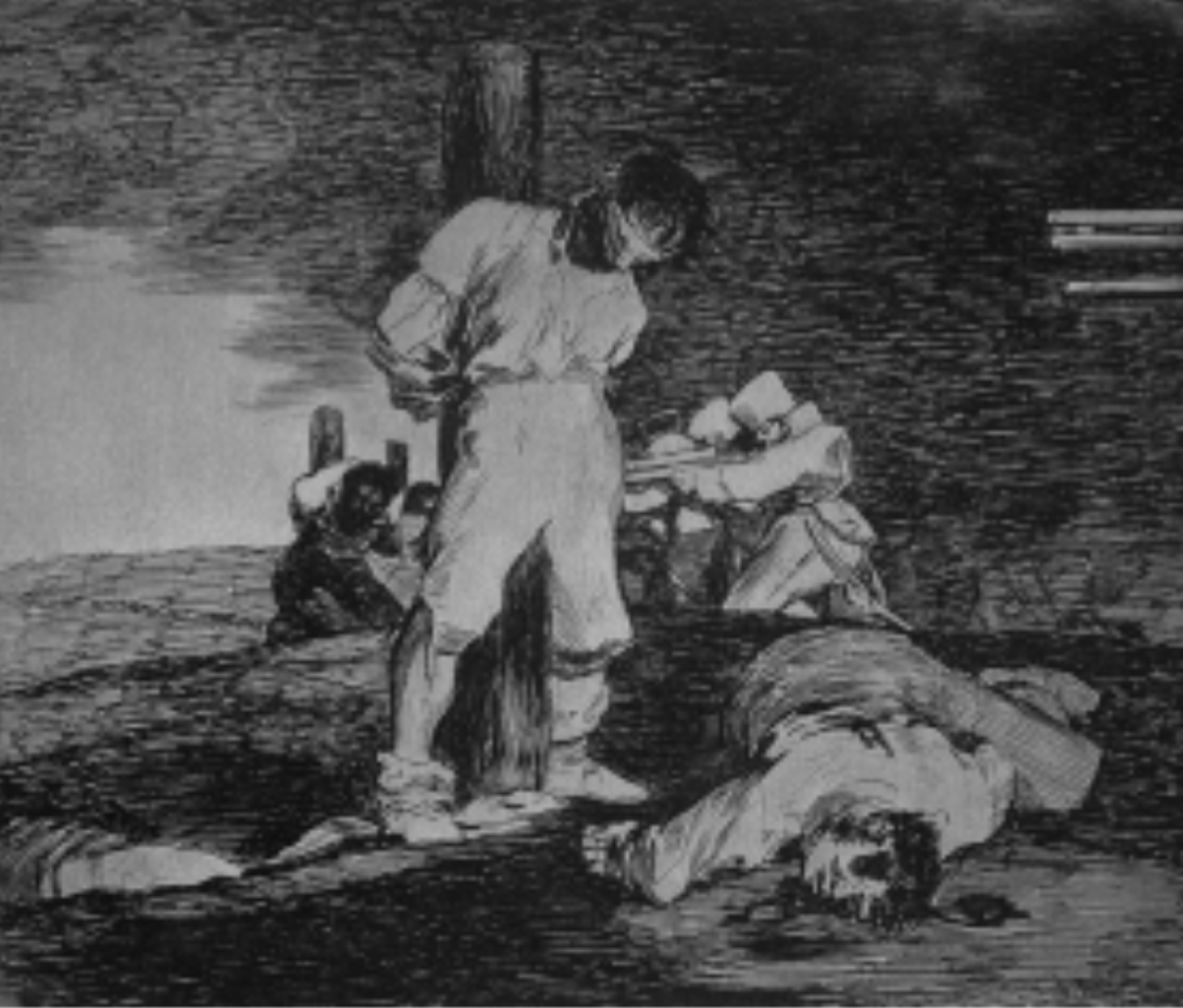
Y no hai remedio (And There’s Nothing to be Done), 1810 CE, Etching, drypoint, burin, and burnishing, Spain, Romanticism, Goya
Depicts a blindfolded man, a spanish civilian strapped to a pole. 3 guns are aimed at his head from French soldiers. A deceased man lays at his feet. A firing squad appears in a line behind him. aimed at others strapped to a pole
Part of a seires called the Disasters of War
critiqued the french occupation of Spain
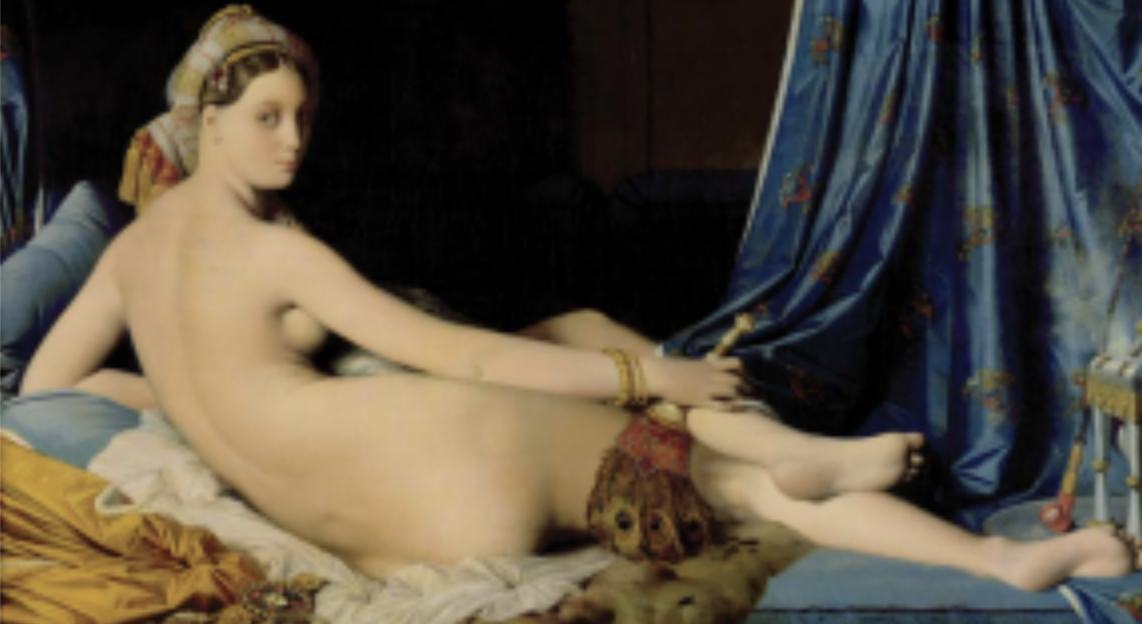
La Grande Odalisque,1815 CE, Oil on canvas, France, Neoclassical, Jean-Auguste-Dominique Ingres
Depicts a nude woman in a brothel
Influenced by Persian cultures (France was obsessed with Persian styles)—orientalism
Hookah pipe, peacock feather fan, turban
elongated, non anatomically correct body
Neoclassical characteristics: balanced composition with her body & curtain, nudity, clean brushwork
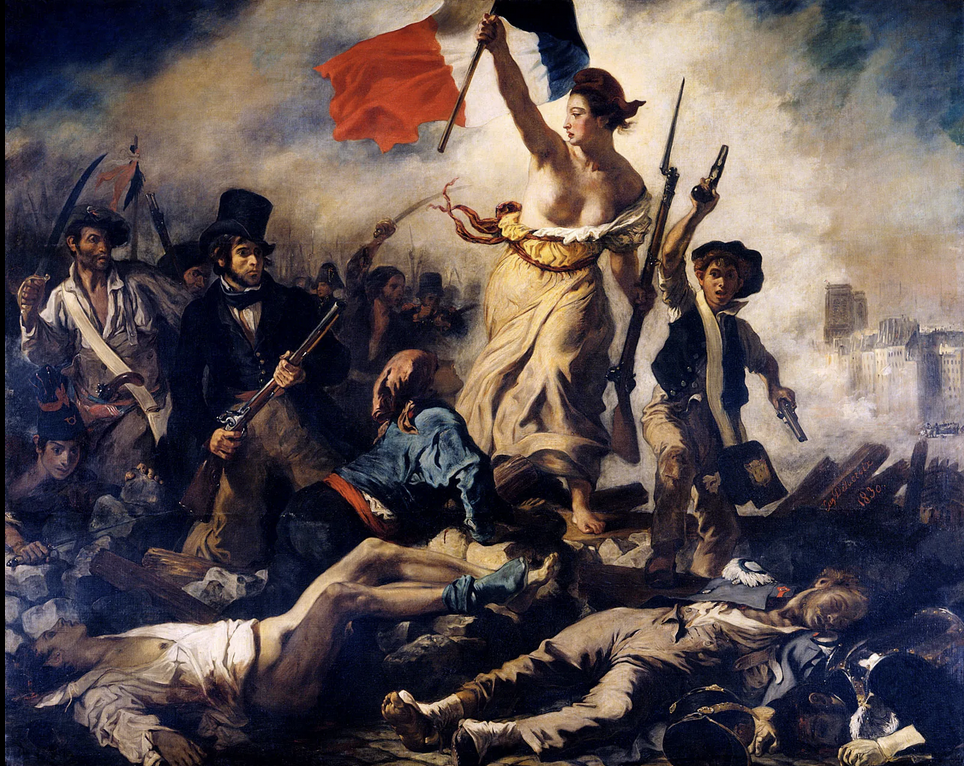
Liberty Leading the People, 1830 CE, oil on canvas, France, Romanticism, Eugene Delacroix
Depicts the July Revolution of 1830. Event that overthrew King Charles X for King Louis-Philippe
Central figure=liberty
revolution is for everyone=lower class & aristocrats are pictures
shows deceased people and young boy
Patron: Louis Philippe
Like most Romanticism art, violated the rules of the Academy
Sloppy brushstrokes
Dramatic event
Scene depicted is dynamic
Intense color
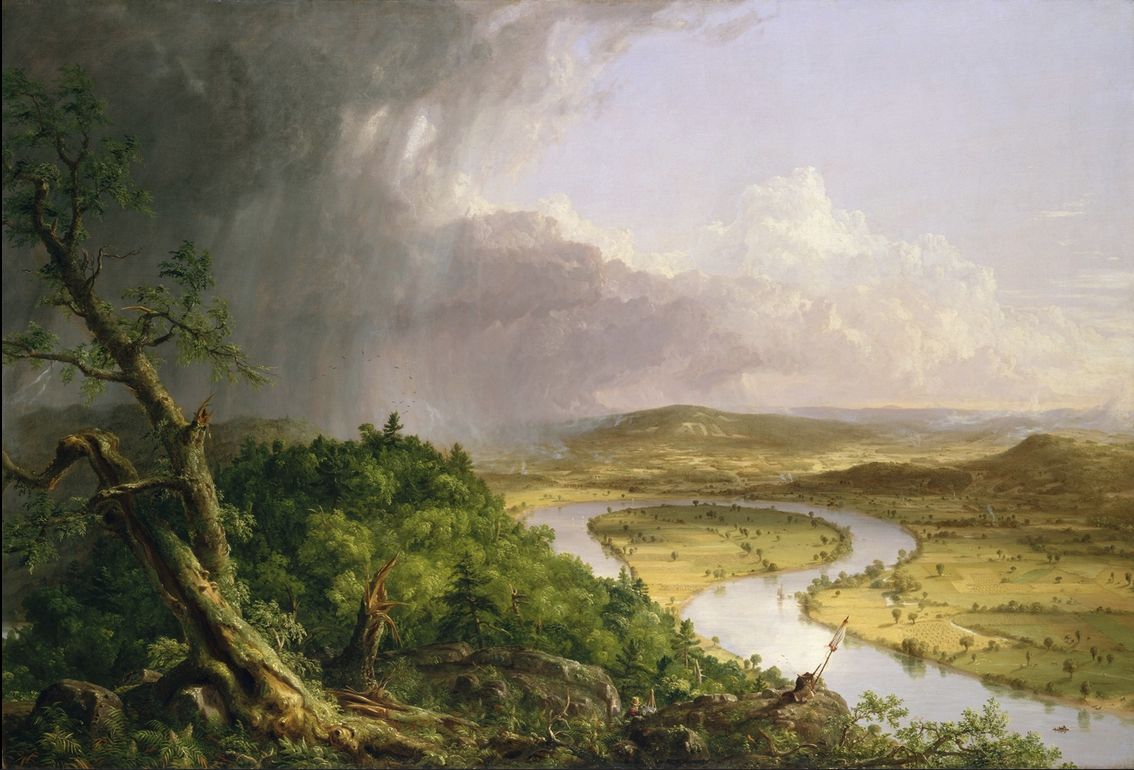
The Oxbow (Voew from Mount Holyoke, Northampton, Massachusetts, after a Thunderstorm), 1836 CE, Oil on canvas, New York, Romanticism, Thomas Cole
Image depicts an oxbow (where the river bends back on itself) of the Connecticut River
Left side of the scene depicts sublime wilderness
Broken tree with thunderstorm
Tree has fungus on it
Right side represents pastoral expansion of the US
Farmlands, ferry services, beginning of roads
Express support for Manifest Destiny
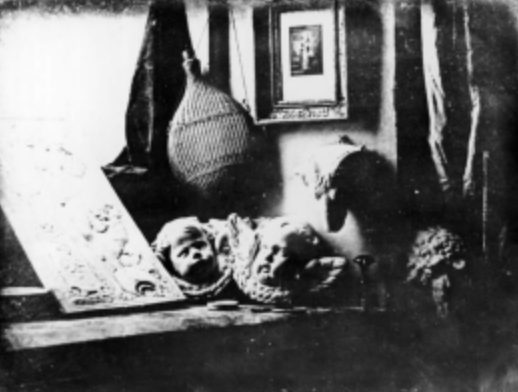
Still Life in Studio, 1837, Daguerreotype, France, Photography, Daguerre
Attempt to elevate the status of photography
Variety of objects in a genre scene (a picture of art pieces)
Statue of angel heads, bouquet, relief carving of woman, canteen, painting, animal skull
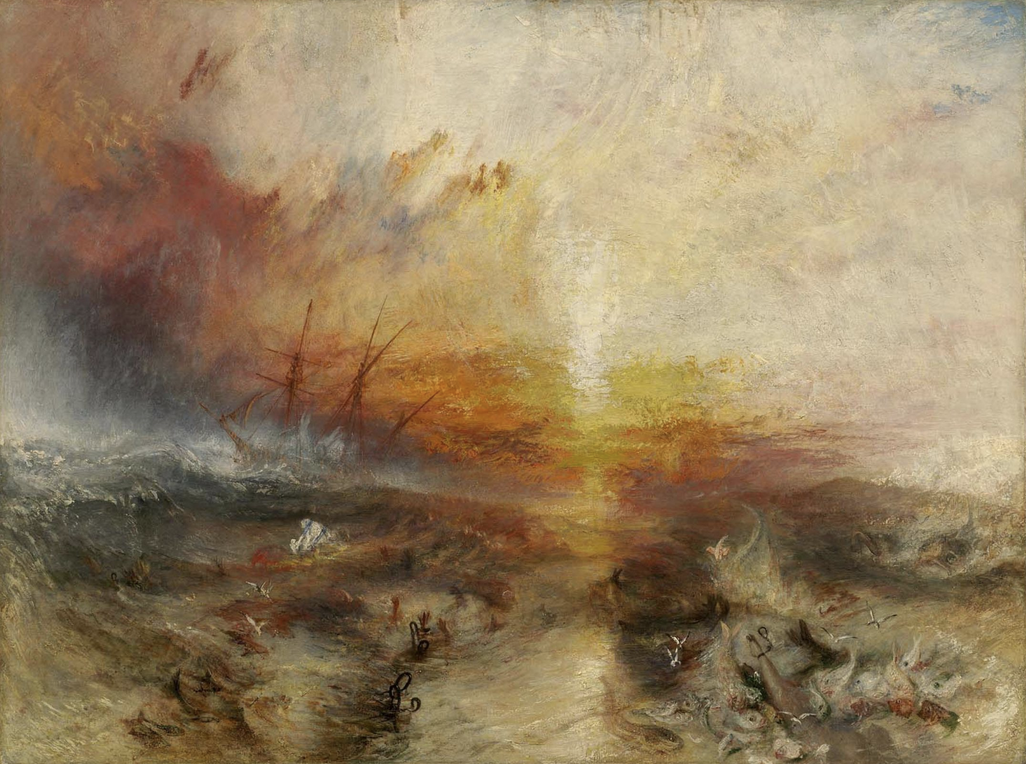
Slave Ship (Slavers Throwing Overboard the Dead and Dying, Typhoon Coming On), 1840 CE, Oil on canvas, Great Britain, Romanticism, J.M.W. Turner
Depicts the contemporary event of The Zong slave ship in 1781
Ship was gaining water as a typhoon was approaching
Captain threw overboard the dead and dying slaves
Use of loose brushstrokes and bright colors
Turner wanted to convey anti-slavery messaging
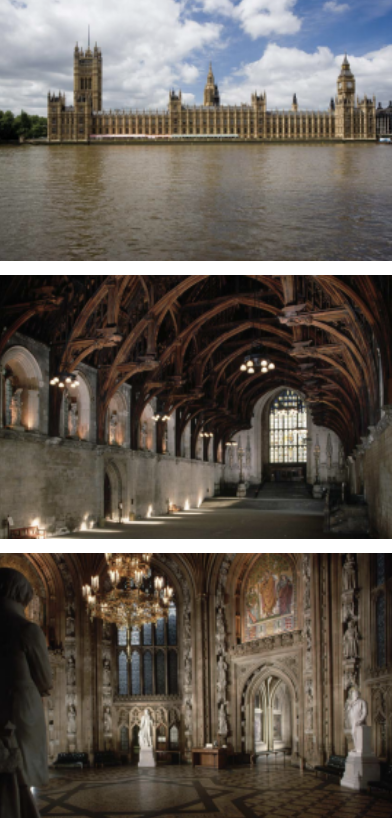
Palace of Westminster (Houses of Parliament), 1850 CE, Limestone masonry and glass, London, Romanticism (Neo Gothic), Charles Barry & A.W.N Pugin
Use of Gothic style b/c Pugin appreciated how the Gothic era focused on churches rather than factories and other industrial buildings
represents tradition & moral values, which help govern
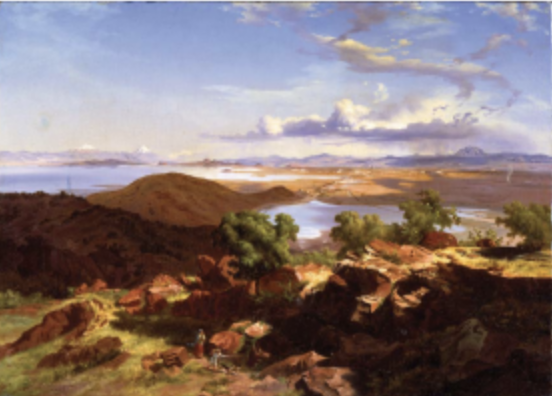
The Valley of Mexico from the Hillside of Santa Isabel, 1882 CE, Oil on canvas, Mexico, Romanticism, Jose Maria Velasco
Mexico City (former Tenochtitlan) is vaguely visible in the back
The lake around the city is receding
A rainstorm seems to approach the city on the right
A young woman, two children, and a dog run away from the city
Rural Mexicans, in rural attire, who likely live in the mountains
A road leads through the lake to Mexico City
Smoke comes up from the road
Represents industrialization in Mexico
Supposed to promote Mexican nationalism and detail the history of Mexico
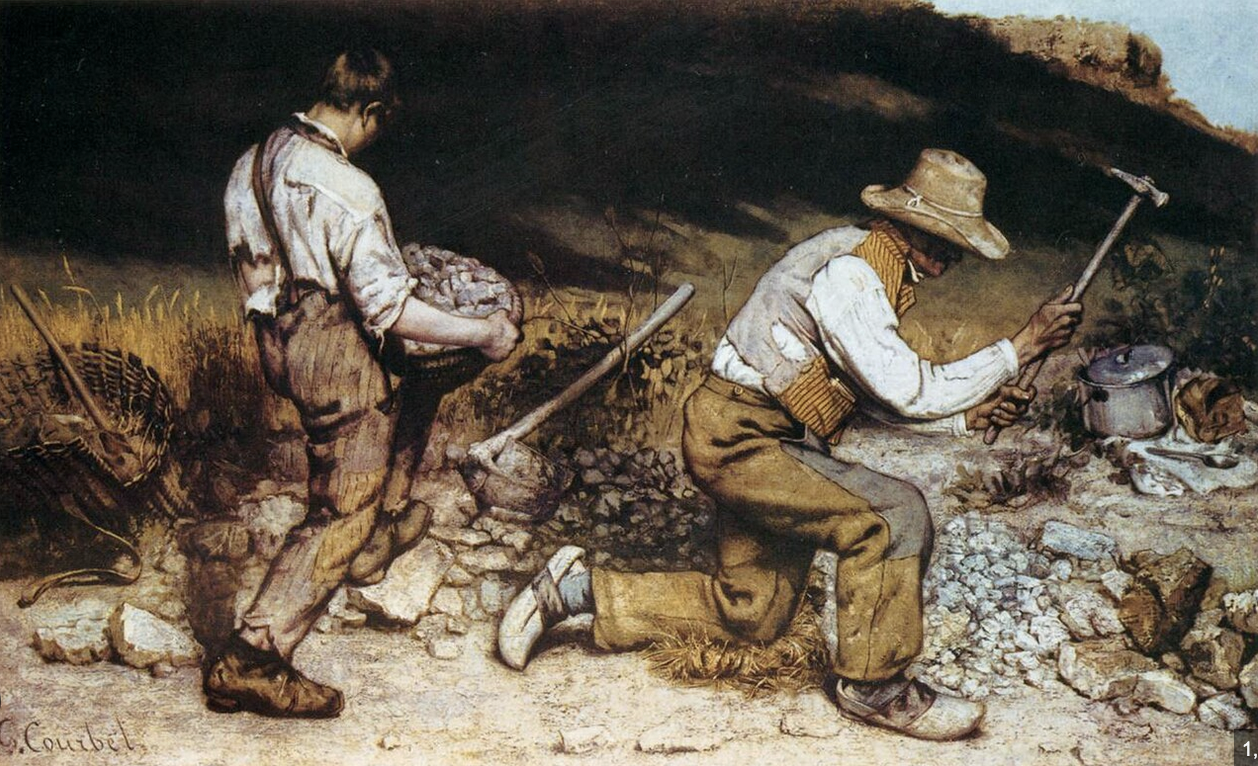
The Stone Breakers, 1853 CE, Oil on canvas, France, Realism, Courbet
Depicts two poor laborers breaking stones for a road
In ripped and tattered clothing
Not shown happy, landscape is not in full view
The Academy and the people hated the piece
Piece large to emphasize we should be paying attention
Courbet wanted to criticize the treatment of the poor under capitalism
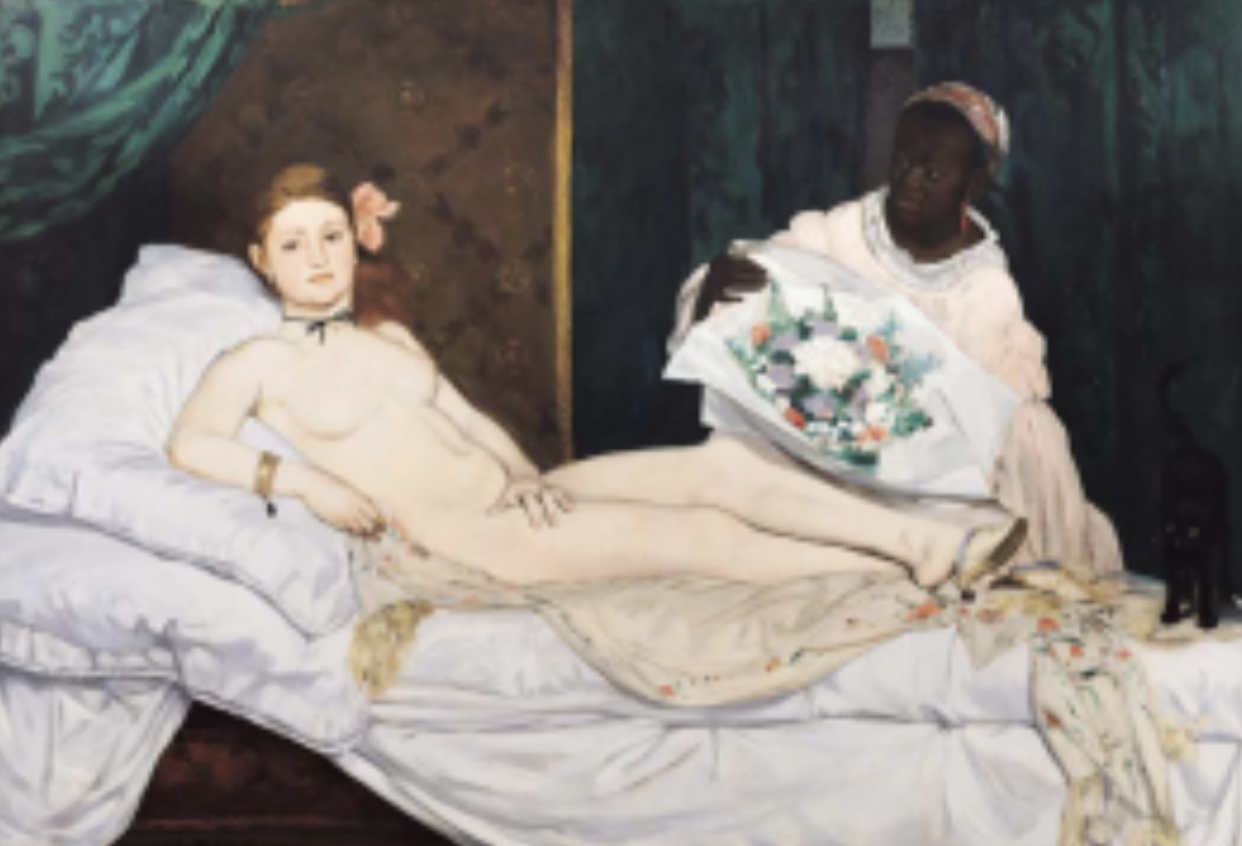
Olympia, 1863 CE, Oil on canvas, France, Realism, Edouard Manet
Depicts a prostitute
pale body, hand draws attention to genitalia, no sense of depth
Olympia is slang for prostitute
Wanted the viwer to think about sexiuality
Likely is extremely wealthy
Lies on a silk kimono, had a bangle on her wrist, flower in her ear, has a servant
The maid is black and presents a bouquet of flowers from an admirer
Europeans thought black people could not control their sexual appetite
Increased sexuality of the piece
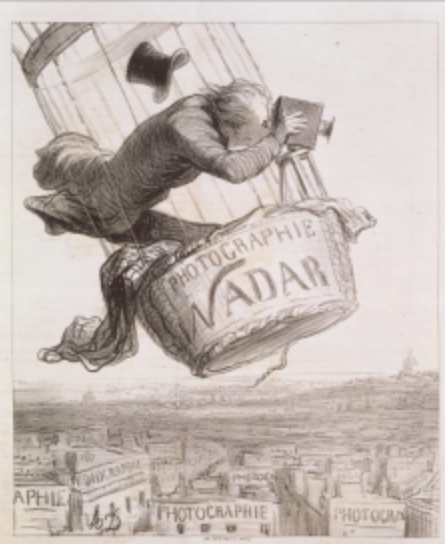
Nadar Raising Photography to the Height of Art, 1863 CE, Lithograph, France, Photography
Mocked Nadar’s attempt to make photography equal to art
He flies over Paris, taking pictures from a hot air balloon . It looks like Nadar is about to fall out of the balloon. Each building says ‘photographie’
Photography is taking over Paris
Placed in newspapers to make fun of photography being equal to art
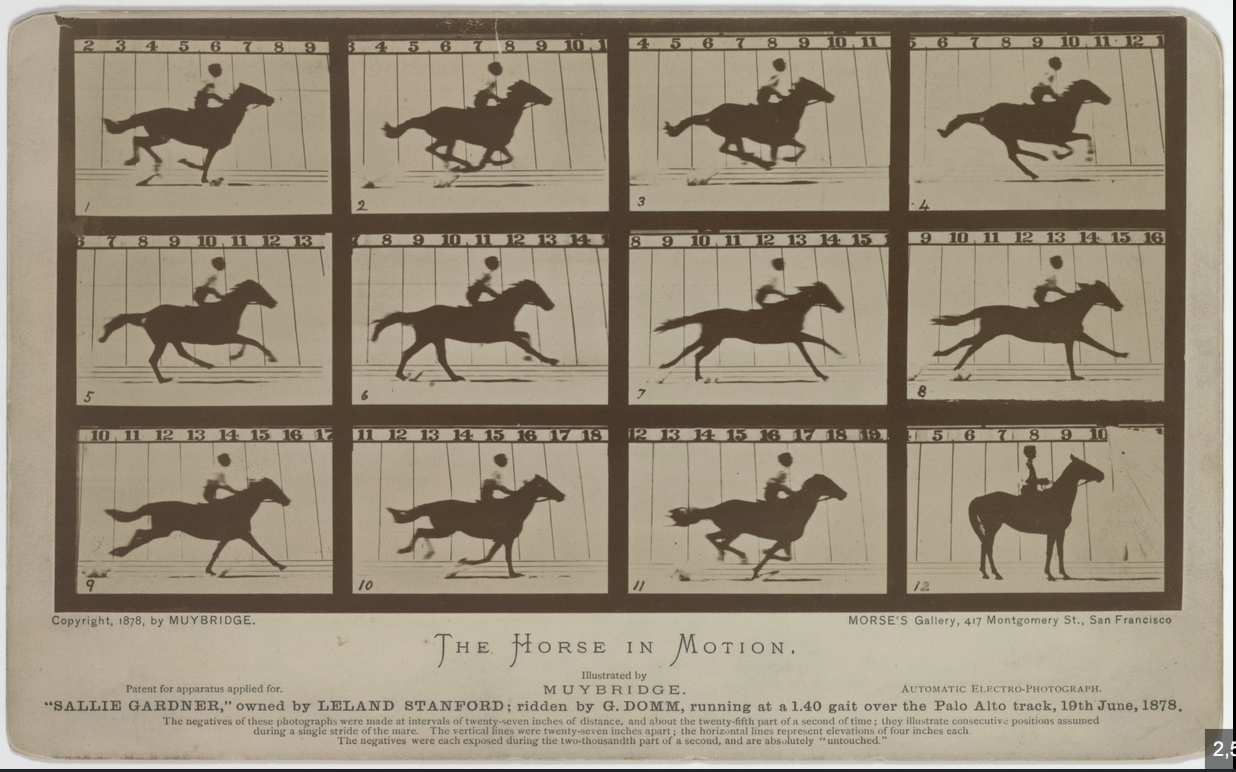
The Horse in Motion, 1878 CE, Albumen print, California, Photography, Muybridge
Patron: Leland Stanford
Stanford bet a friend that a horse has at least 1 foot on the ground. Found that Stanford lost the bet (see top row middle pics)
Shows photography can capture what the human eyes cannot
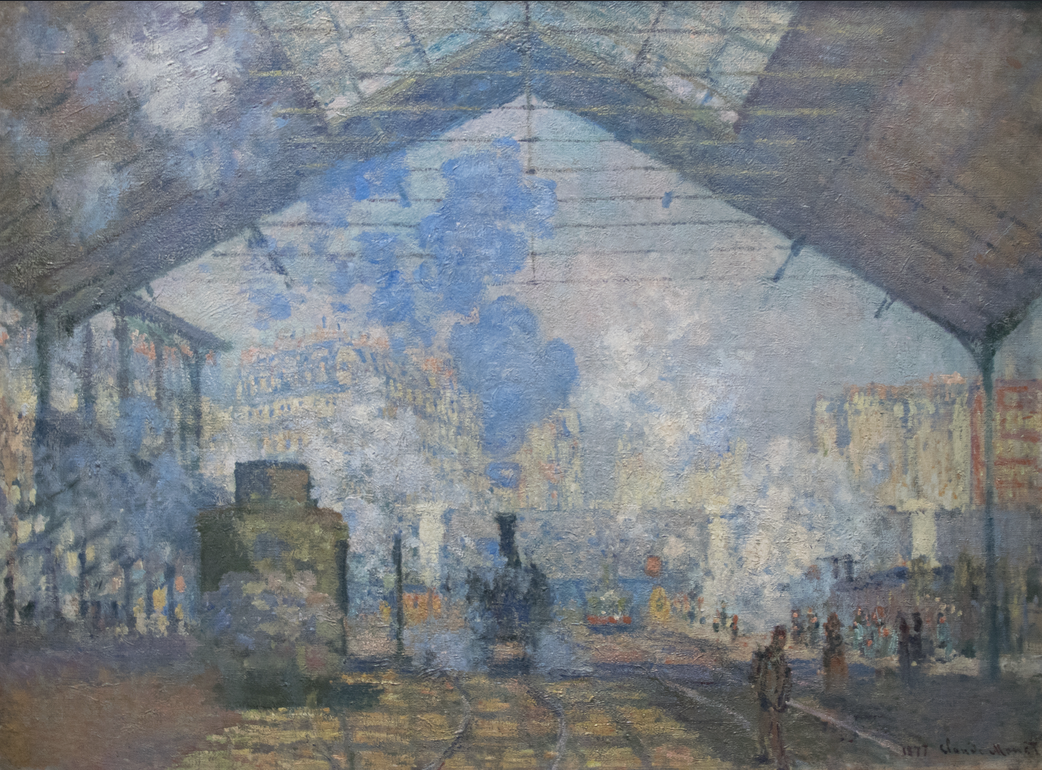
Saint-Lazare Station, 1877 CE, Oil on canvas, Paris, France, Impressionism, Claude Monet
Emphasized light in his pieces
Open roof above the station
Makes the train smoke look blue
Pro Industrialization
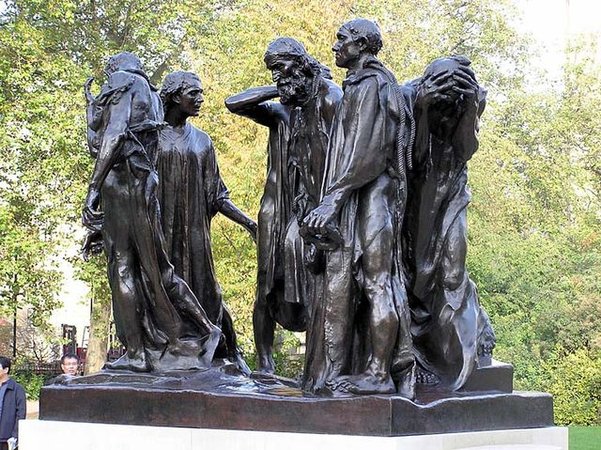
The Burghers of Calais, 1884 CE, Bronze, Calais, France, Realism, Auguste Rodin
City of Calais commissioned him to commemorate the 100 Years War
Took place in the 1300’s
Burghers sacrificed themselves to the English king to save Calais
Ended up being saved, thanks to the English Queen
Have highly emotional faces
Refuse to accept that they are marching toward their death
Rejected by Calais city council because they wanted the burghers to be seen as martyrs
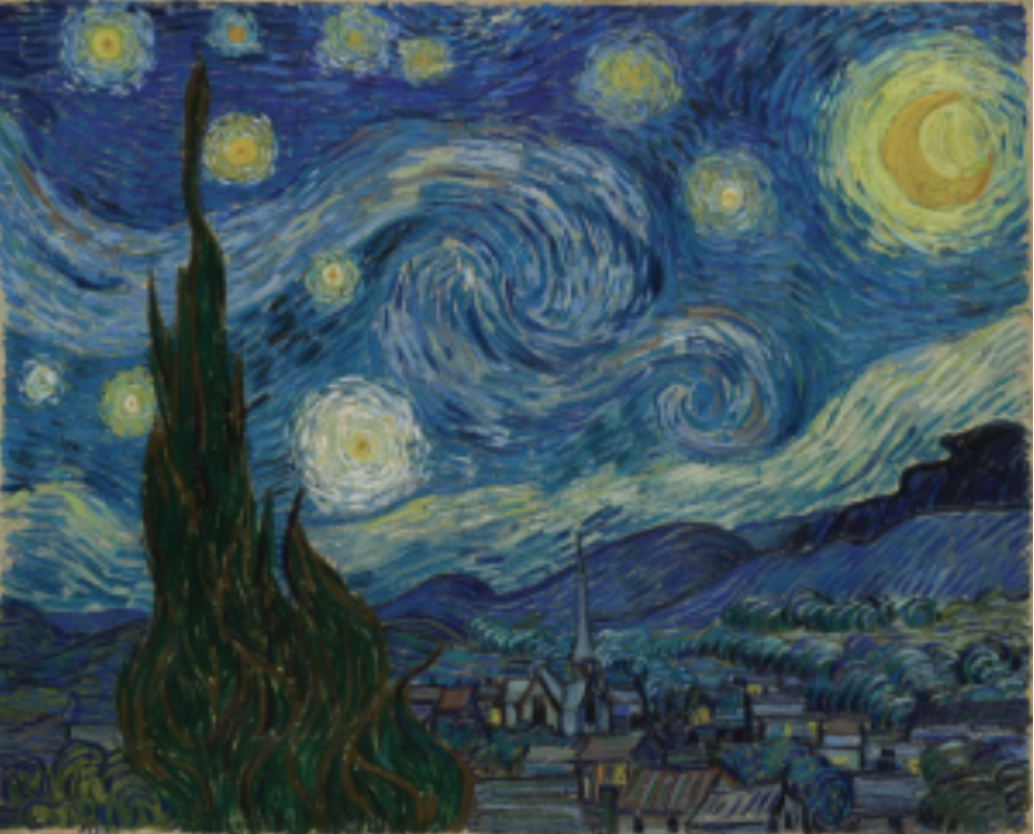
The Starry Night, 1889 CE, Oil on canvas, France, Post-Impressionism, Vincent Van Gogh
Wanted art to express emotions
Was depressed
To him, blue was a happy color
Large cypress tree extends into the sky
Cypress trees were planted in cemeteries
Town has a cathedral towering above the rest of the city
May show importance of christianity, or represent an average town with a church
Shows nature is more powerful than humans
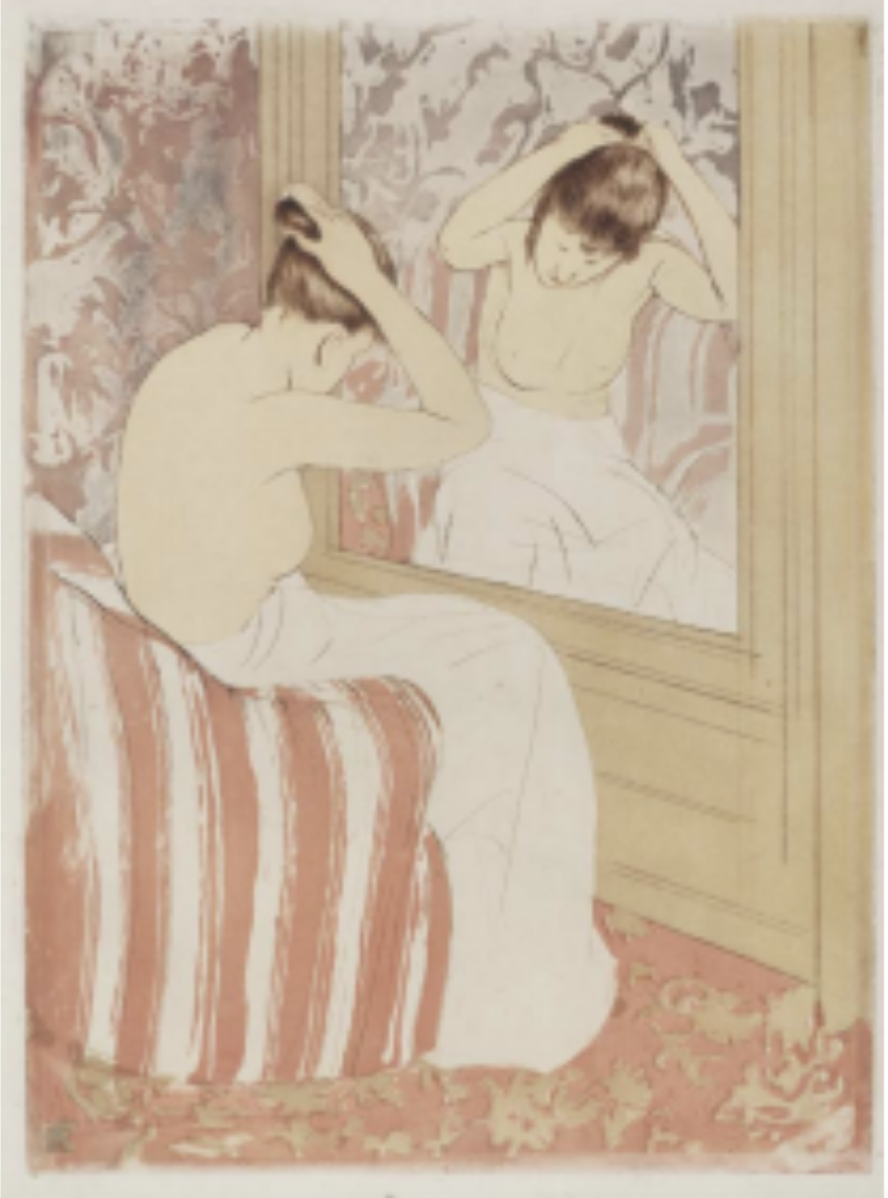
The Coiffure, 1890 CE, Drypoint and aquatint on paper, France, Impressionism, Mary Cassatt
Influenced by ukiyo-e (Japanese woodblock print)
Flat (no depth), black outlining, parts of image cropped
Shows women in intimate moments
Known for painting woman and children
Shows a middle class woman adjusting her hair
Semi-nude, but does not evoke sexual endeavors
Does not look at us directly or via the mirror
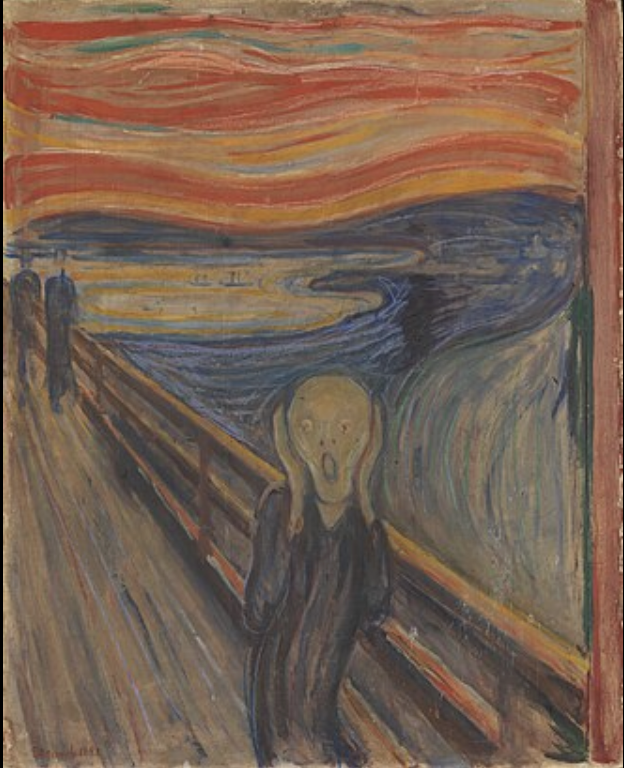
The Scream, 1893 CE, Tempera on cardboard, Norway, Symbolism, Edvard Munch
Was not happy about industrialization
Feared it hurt the environment too much
Wanted to show intense human emotion on the issue
Figure has a stylized body
Skull-shaped head, enlarged hands, wide-open eyes
Two people on the bridge walk past the figure
Seem to not care about the environmental damage
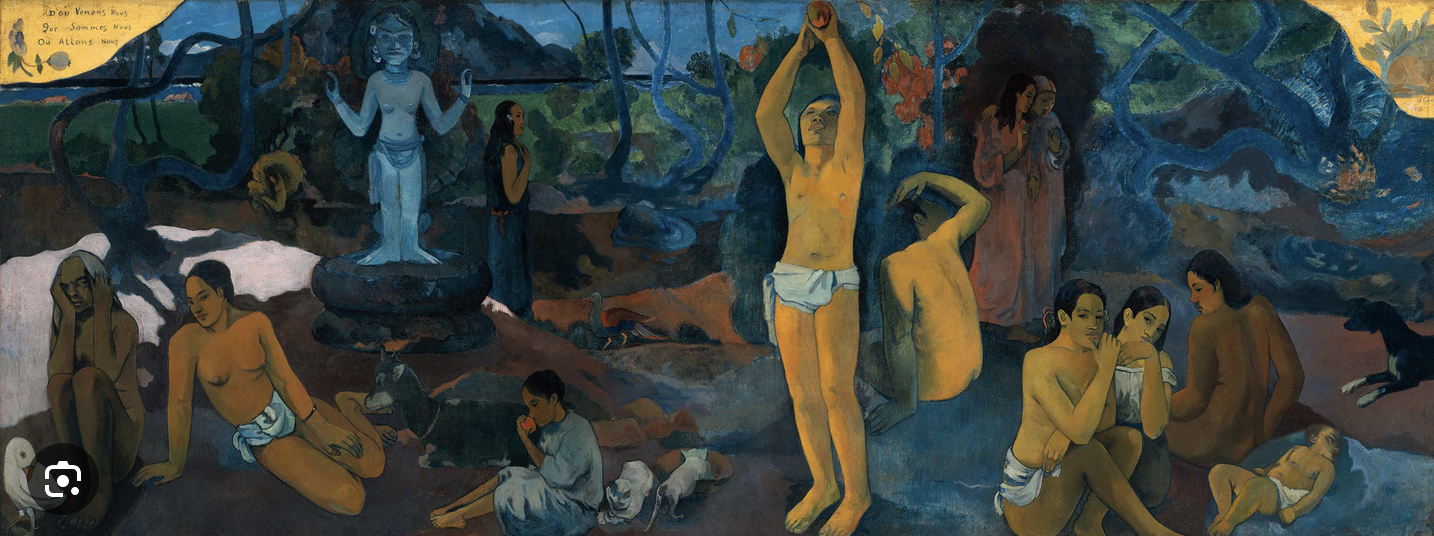
Where do we come from? What are we? Where are we going? 1898 CE, Oil on sackcloth, Tahiti, Post-Impressionism, Paul Gauguin
French artist who moved to Tahiti to escape the city life in France
Represents his answers to the questions named in the title
Far right (Where do we come from?)
Couple sits next to a child
Another couple contemplates in the background
Middleground (What are we?)
Figure in unnatural skin tone takes the ‘forbidden fruit’
Shows humans as sinful or are curious
Child eats a piece of fruit on the ground
Far left (Where are we going?)
Old woman in a grey skin tint sulks
Symbolizes that we all die
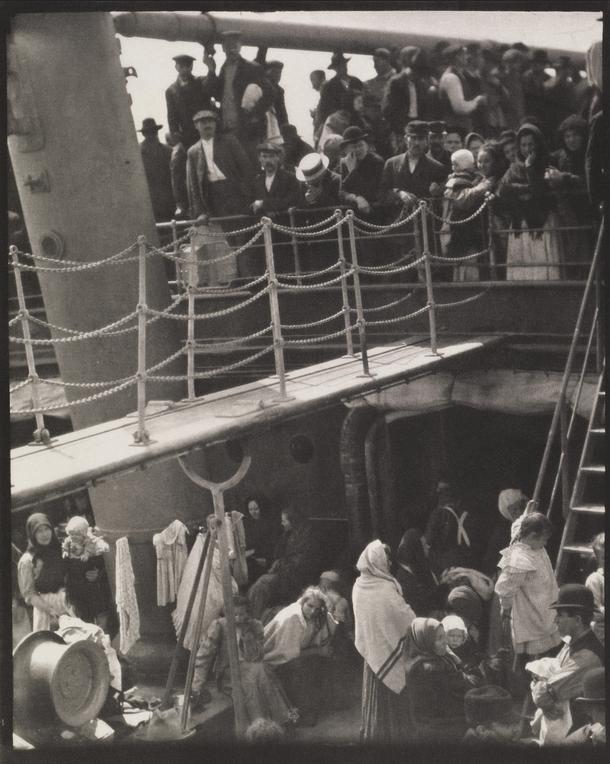
The Steerage, 1907 CE, Photogravure, Atlantic Ocean, Photography, Stieglitz
Was on a boat going from New York to Europe
Went to the area where the poor people were
Called the steerage of the ship
Excited by the diagonals of the piece; they proved photos were art
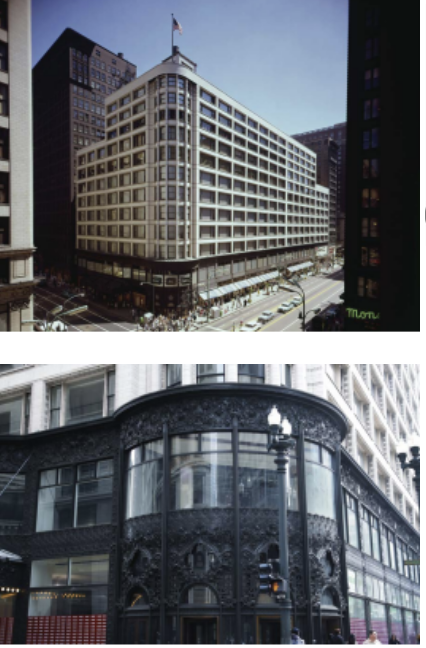
Carson, Pirie, Scott and Company Building, 1899-1903 CE, Glass, steel, iron, and terracotta, Chicago, Modernism, Louis Sullivan
Believed a skyscraper had three parts
Base level for shops
Middle level for offices/work
Top level attic
Windows allowed for natural light and display areas for products
Elevators allowed for people to access more floors in a building
Corner details were meant to draw customers in
Form follows function
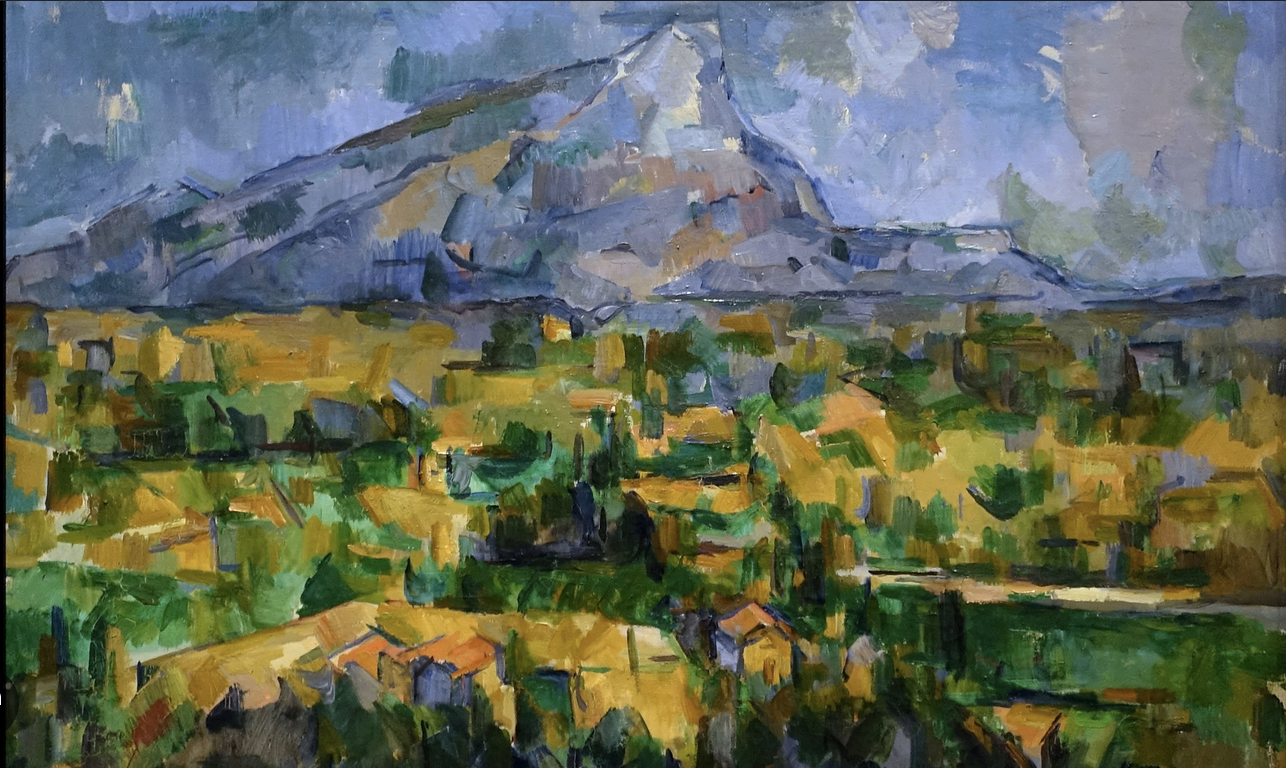
Mont Sainte-Victoire, 1902 CE, Oil on canvas, France, Post-Impressionism, Paul Cezanne
Rugged brushstrokes
Distance away from the foreground is dictated by color
Foreground is blues and browns
Middleground is reds and greens
Background is blues
Influential to cubism—reducing forms to basic shapes
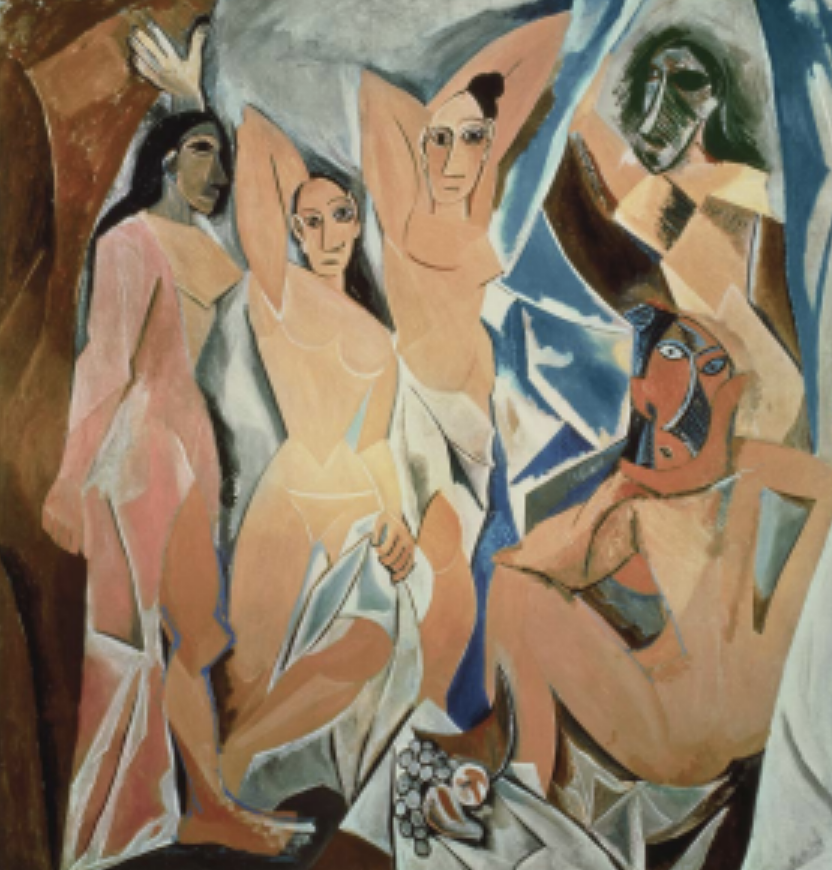
Les Demoiselles d’Avignon, 1907 CE, Oil on canvas, Spain, Cubism, Picasso
Created Cubism: breaking down form to basic shapes
Was ‘scared’ of women and their sexuality
Depicts five women in a brothel waiting for men
Three women on the left are influenced by Iberian sculpture
Big eyes and simplified bodies
The two women on the right were influenced by African masks
Both have scarification on their faces
Big eyes and flexed noses
Picasso was fascinated with African art
Human anatomy is broken down into basic geometric shapes
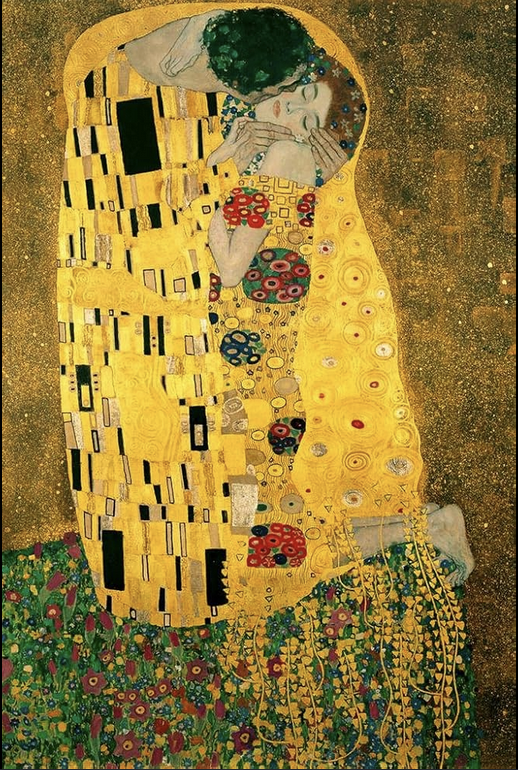
The Kiss, 1908 CE, Oil on canvas, Vienna, Austria, Symbolism, Klimt
Wanted it to look like a religious icon (similar to Byzantine art)
Gold makes it look like a halo
Interested in colors and form
Man = square, woman = circle
Female is full frontal but horizontal
Eyes closed, calm face
Seems to be accepting the man’s embrace
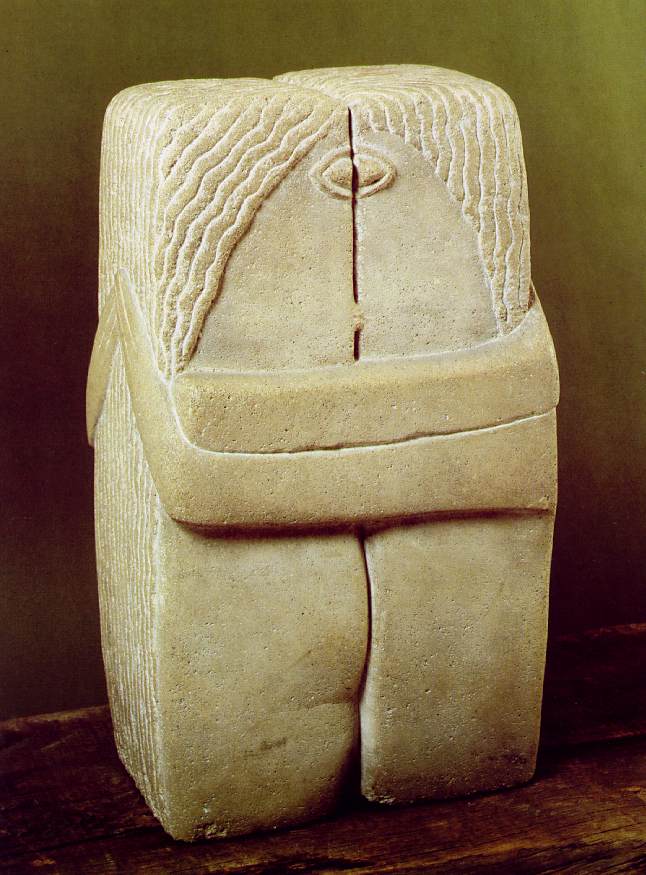
The Kiss, 1907 CE, Stone, France, Cubism, Brancusi
Wanted to revert back to basic shapes to convey an image
Typical of Cubist art
Stone was considered a primitive material to work with
Depicts a couple in a loving embrace
Eyes and lips combine to be one
Female has longer hair and slight breast
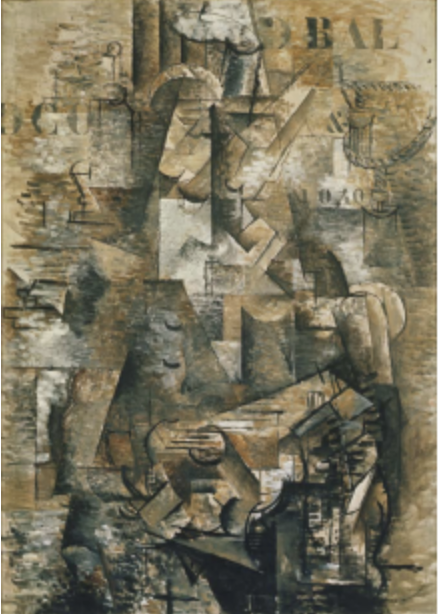
The Portuguese, 1911 CE, Oil on canvas, France, Cubism, Georges Braque
Worked with Picasso in the Cubist style to focus on form
Chose to work with neutral earth tones
A man playing guitar is subject matter
Only clarity is in the stenciled numbers in the background
Forced the audience to look hard at the piece
Many different interpretations to where his body parts are
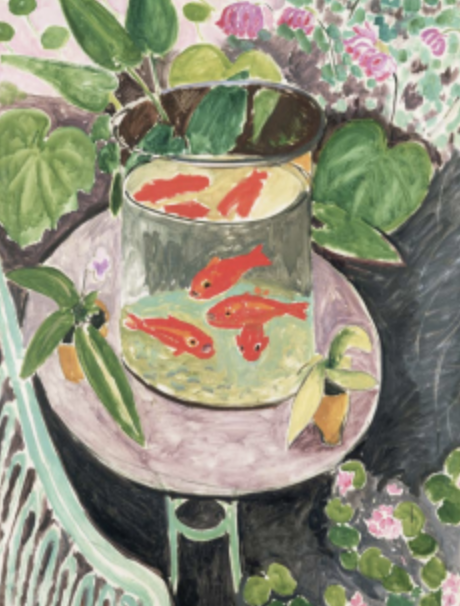
The Goldfish, 1912 CE, Oil on canvas, France, Fauvism, Henri Matisse
Inspired by his visits to Morocco
Moroccan people love goldfish; Stare at them during meditation
Exhibits many characteristics of the Fauvism style
Non-idealized figures with sloppy brushstrokes
Bright and contrasting color palettes
A sense of movement
Flat (no depth) and cropped; influenced by Japanese woodblock prints
Impossible viewpoints of the scene
Top and bottom of the table can be seen
Goldfish in frontal and aerial view
Show inspiration by moroccan culture, invite viewer to meditate
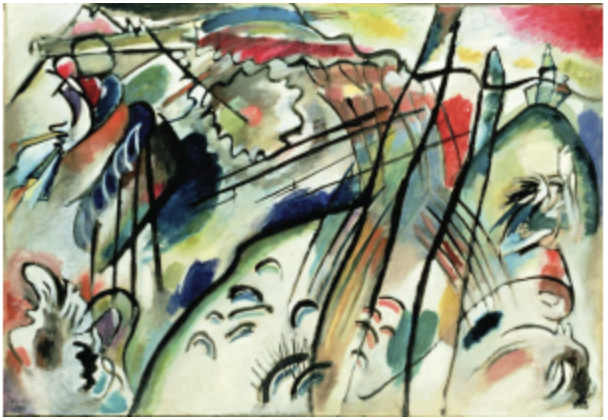
Improvisation 28 (Second Version), 1912 CE, Oil on canvas, Russia, German Expressionism, Vasily Kandinsky
Believed you could hear color and see sounds (synesthesia)
Title derived from a music
Improvisation is a genre of musical pieces
Strong black diagonals, bright colors and shading, hazy background (represent chaotic sound)
Great flood in bottom left corner, upper right is a mountain with city on top, meant to rep heavenly city
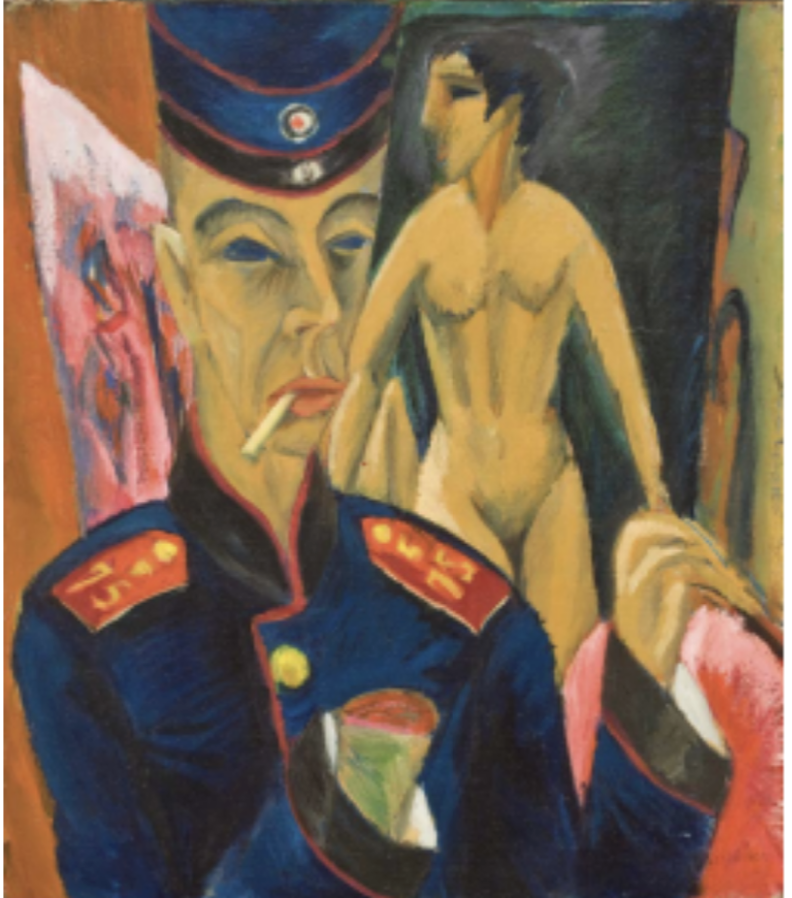
Self Portrait as a Soldier, 1915 CE, Oil on Canvas, Germany, German Expressionism, Kirchner
Volunteered to be a driver in WWI for Germany
Depicts Kirchner in a military uniform, aged, with his right hand cut off
represents fear of losing identity as artist
Placed in a Degenerate Art Exhibition by Nazis
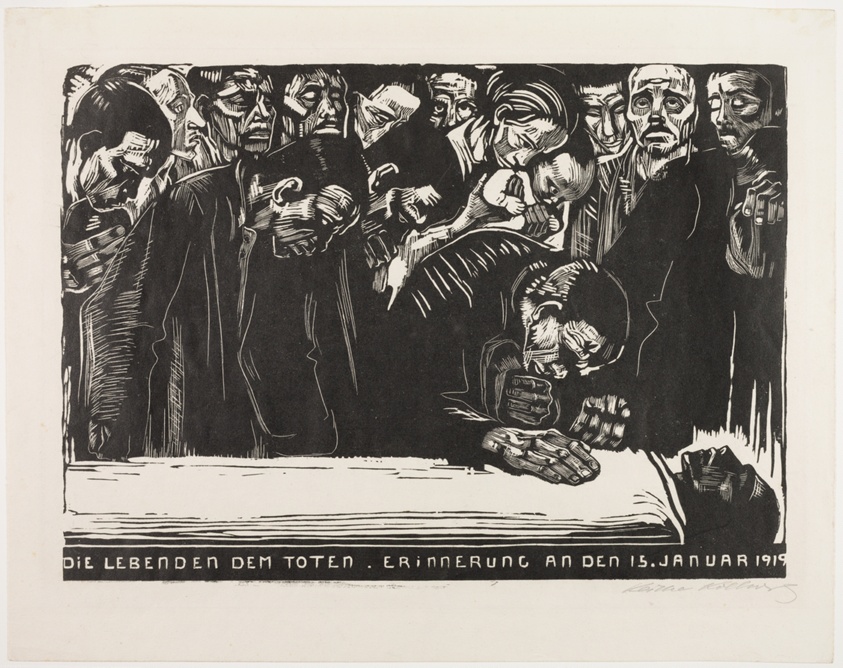
Memorial Sheet for Karl Liebknecht, 1919-1920 CE, Woodcut, Germany, German Expressionism, Kathe Kollwitz
Top register is filled with faces
Made to look like there is a crowd behind them
Middle register is four men looking down at Liebknecht dead body
Bottom row is Karl’s deceased body
Liebknecht was one of the founders of the German Communist Party
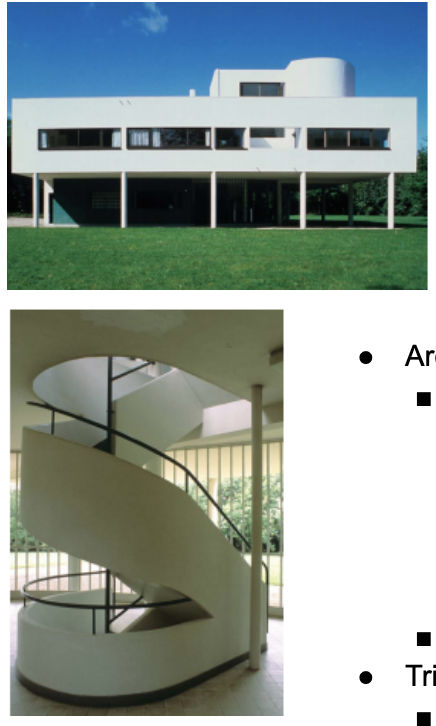
Villa Savoye, 1929 CE, Steel and reinforced concrete, France, International Style, Le Corbusier
Had five rules for architecture
Had to have pilots (thin columns supporting the building off the ground)
Roof terrace garden to replace the nature lost during construction
Open space in a free plan
A facade with no decoration
A long ribbon window
Building embraced the typical International style
Plain building (also painted white)
Smooth walls
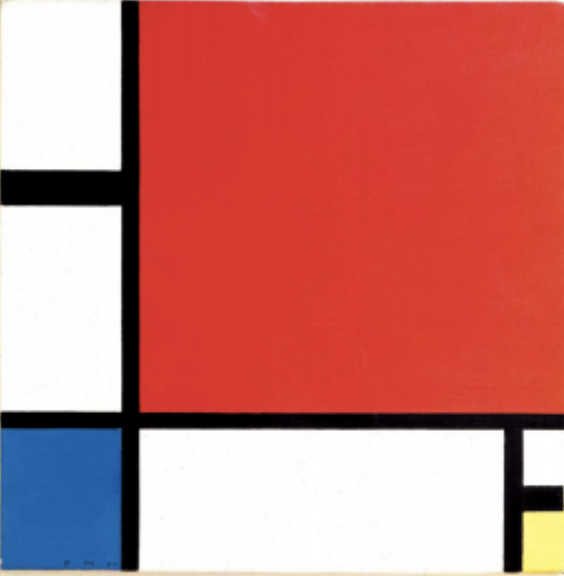
Composition with Red, Blue and Yellow, 1930 CE, Oil on canvas, France, De Stijl, Piet Mondrian
Founded the De Stijl art movement
Created works that convey spiritual harmony
Piece is asymmetrical but balanced
Due to golden ratio
Abstraction using primary and neutral colors
Reduced art to the basics
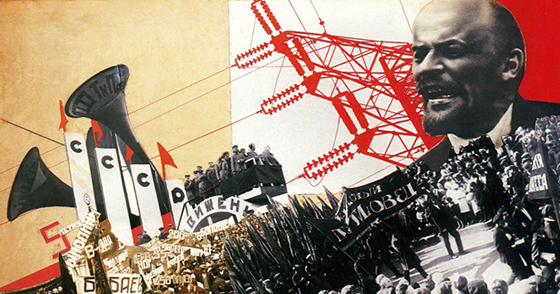
Illustration from the Results of the First Five Year Plan, 1932 CE, Photomontage, Russia, Constructivism, Varvara Stepanova
Her art focused on industrialization of the USSR
Put together photos and newspapers to make piece
Used as political propaganda (pro USSR)
5 year plan was a failure, Crowd shown to be supporting the plan’s success, hence the work’s use as propaganda
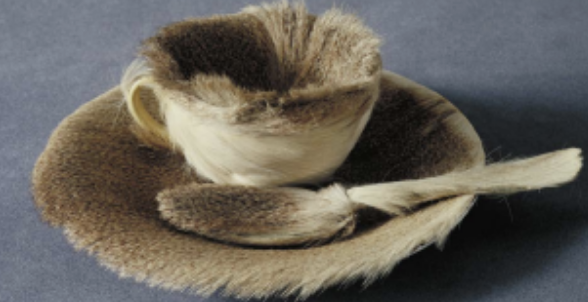
Object (Le déjeuner en fourrure), 1936 CE, Fur covered cup, spoon, and saucer, Switzerland, Surrealism, Oppenheim
Contrast between the porcelain and fur
Porcelain is a hard material that Oppenheim associated with men
Fur is a soft material that Oppenheim associated with women
Meant to make fun of masculine objects
Has sexual overtones, which Oppenheim made sure to state when describing her piece
The spoon represents the male phallus
The cup represents the female genitalia
The spoon goes into the cup
Supposed to showcase the male desire for sexual endeavors
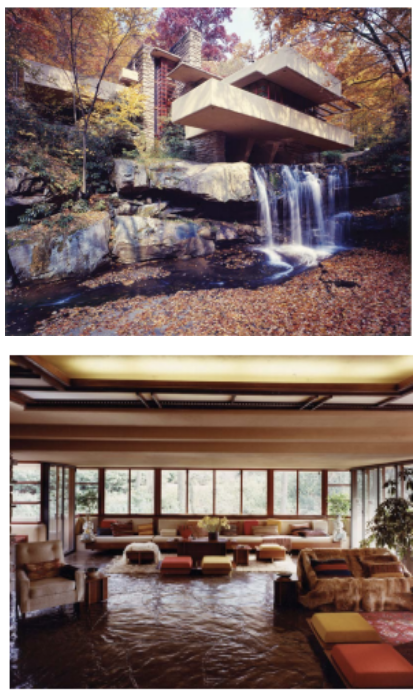
Fallingwater, 1936-1939 CE, Reinforced concrete, sandstone, steel, and glass, Bear Run. Pennsylvania, Organic Architecture, Lloyd Wright
Built over a stream and a waterfall, concrete cantilevers extend over stream
No walls, only windows, face the waterfall
Supposed to exemplify the power of nature
promote connection with nature
The open plan of the building represents American democratic values
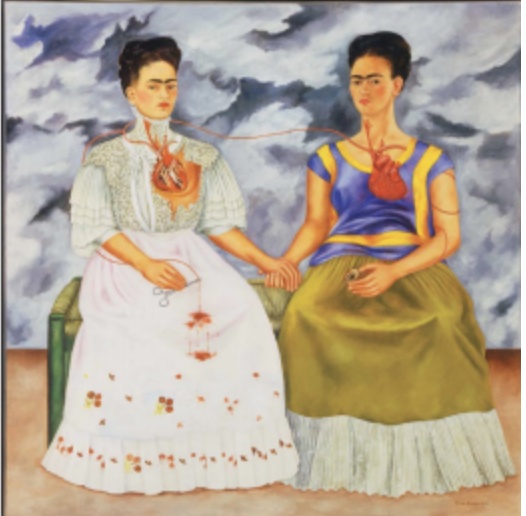
The Two Fridas, 1939 CE, Oil on canvas, Mexico, Surrealism, Frida Kahlo
Was a Mestizo (parents were Mexican and European)
Rivera rejected Kahlo’s European descent
Embraced the mexican Revolution instead
Kahlo is depicted wearing two outfits
On the right, she wears traditional Mexican attire
Holds an amulet of her ex-husband Rivera
Represents the person Rivera loved
On the left, she wears traditional European attire
Holds a pair of surgical scissors to cut the cord connecting the two hearts
Represents the woman Rivera divorced
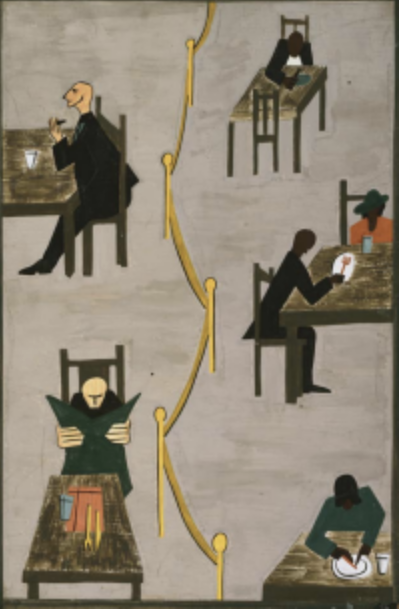
The Migration of the Negro, Panel no. 49, 1940-1941 CE, Casein tempera on hardboard, Harlem, New York, Harlem Renaissance, Jacob Lawrence
African-American artist who moved to the North
Piece depicts a segregated restaurant after the Great Migration
Yellow line separates the two races
Whites are more detailed to show that the North was still segregated
Silverware on left in gold, no color on right side
Point out racial inequality
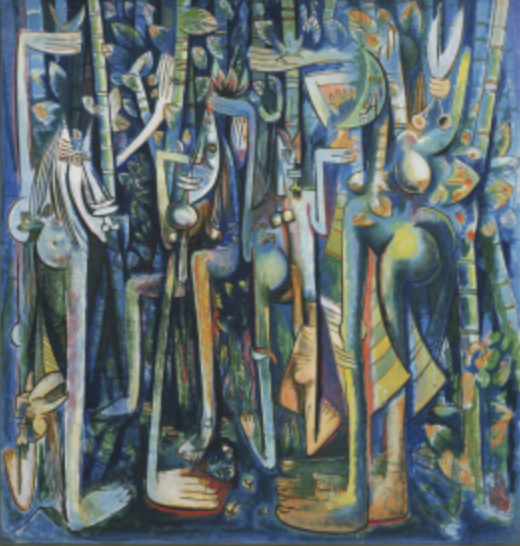
The Jungle, 1943 CE, Gouache on paper mounted on canvas, Cuba, Surrealism, Wifredo Lam
Some faces resemble African masks
Shows slave workers picking sugarcane in Cuban fields
Show realities of Afro cubans at a time where Americans saw Cuba as a vacation spot
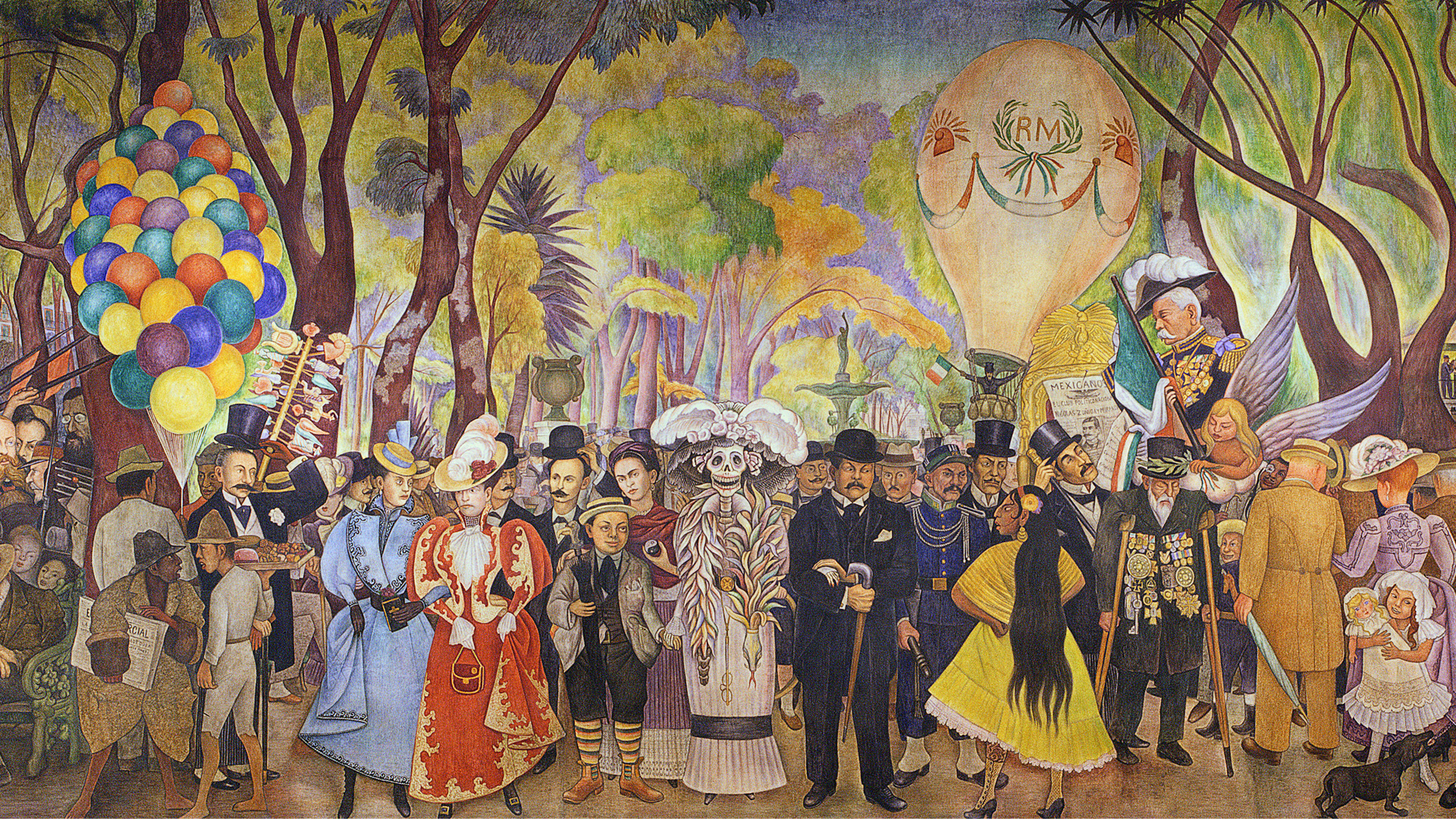
Dream of a Sunday Afternoon in Alameda Park, 1947-1948 CE, Fresco, Mexico City, Mexican Muralism, Diego Rivera
Piece depicts three segments in Mexican history
Left side shows the colonization of Mexico and important figures
Sor juana, General Santa Anna, President Benito Juarez
Middle displays the Mexican fight for independence
Has Mexican dictator Porfirio Diaz next to a hot air balloon
La Catrina (wealthy European woman) in the middle of the piece
Frida Kahlo, Rivera’s husband appears behind RIvera and La Catrina
Holds a yin/yang symbol and has a disgusted face
Represents her complicated relationship with Rivera
Right side showcases the Revolution of 1910
Brought democracy to Mexico
Piece shows both the positives and negatives of Mexican history
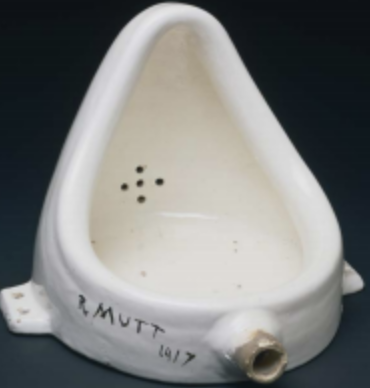
Fountain (second version), 1917 CE, redone 1950 CE, Readymade glazed sanitary china with black paint, New York, Dada, Duchamp
Literally bought a urinal, carved a word and date on it, and called it art
Part of the anti-art, anti-cultural Dada movement
R. mutt is the name of the plumbing shop he got the urinal from
Wanted the viewer to ponder what art was
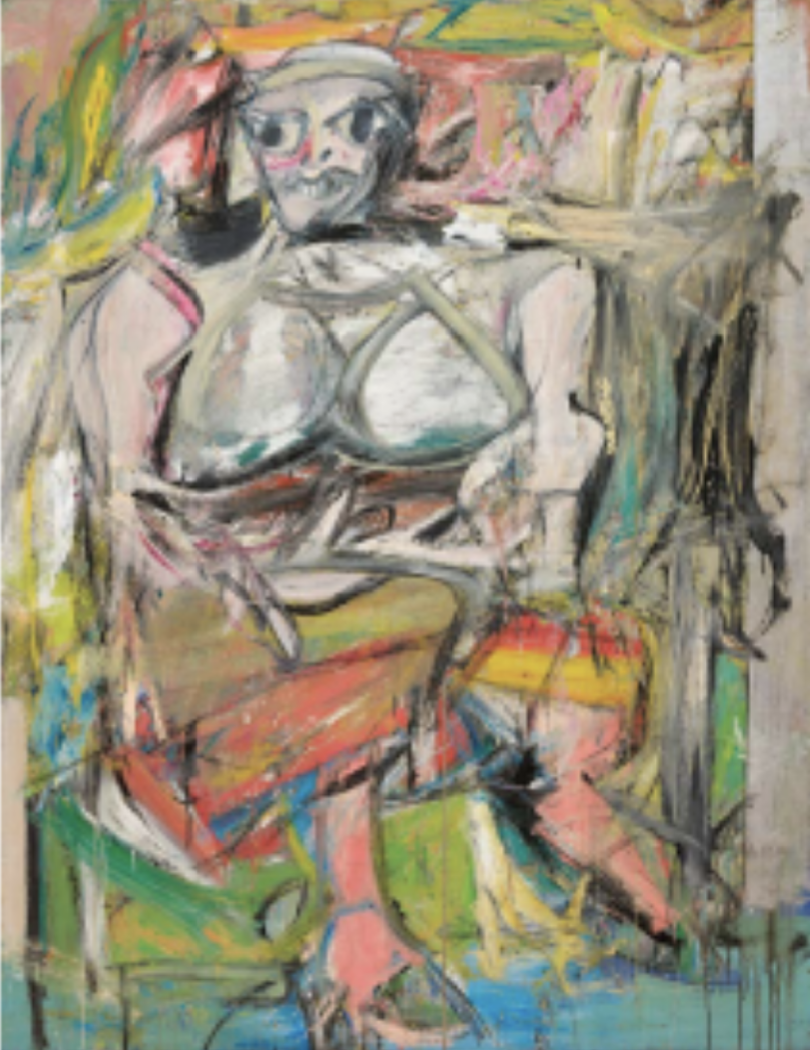
Woman I, 1950-1952 CE, Oil on canvas, New York, Abstract Expressionism, De Kooning
Depicts a pin-up girl
Large breasts, plump lips, makeup
Painted over it until he got the effect he desired
Sloppy brushstrokes
He slabbed on paint quickly (action painting)
Takes the male view of women and transforms it into abstract art
Contemporary representation of the female figure
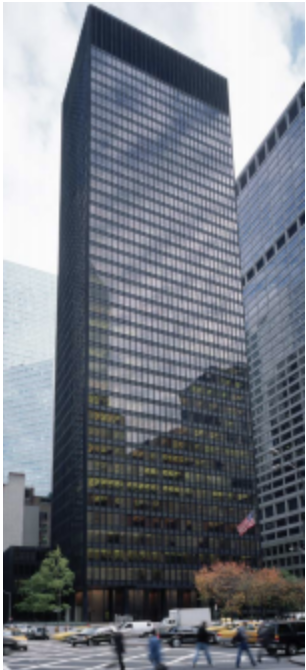
Seagram Building, 1954-1958 CE, Steel frame with glass curtain wall and bronze, New York, International Style, Ludwig Mies van der Rohe, Philip Johnson
Believed that ‘less is more’ in architectural design
Large height supposed to make it look and seem powerful and important
Elevators were used for support
The I-beams (mullions) on the outside were not for structural support
Symmetrical compositon
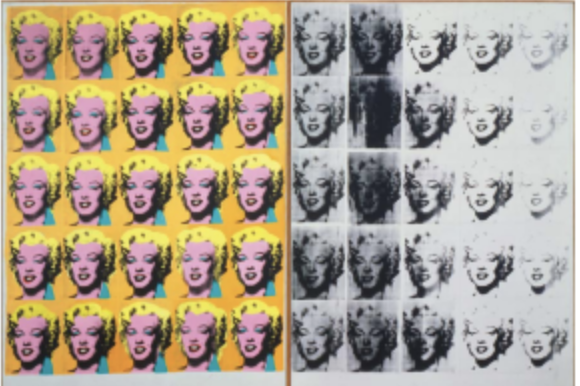
Marilyn Diptych, 1962 CE, Oil, enamel, and silkscreen enamel on canvas, Los Angeles, Pop Art, Andy Warhol
A two-sided piece with pictures of Marilyn Monroe on both sides
Left in color to represent her life
Right in black and white to represent her death
Monroe was a pop-culture and sexual icon
Depicts her as a one-dimensional sex symbol
Brilliant blonde hair, heavy lipstick, seductive expression
criticizes hollywood