Materials T9 - Manufacturing
 Call Kai
 Learn
Learn Practice Test
 Spaced Repetition
 Match
Match Flashcards
 Knowt Play
1/58

There's no tags or description
Looks like no tags are added yet.
Name | Mastery | Learn | Test | Matching | Spaced | Call with Kai |
|---|
No analytics yet
Send a link to your students to track their progress
59 Terms
Solidification of Metal
Nucleus forms → dentritic growth → grains form
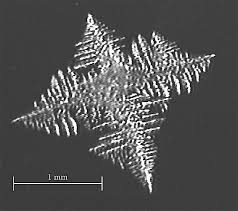
Dendrites
Tree-shaped formations that occur during crystalisation
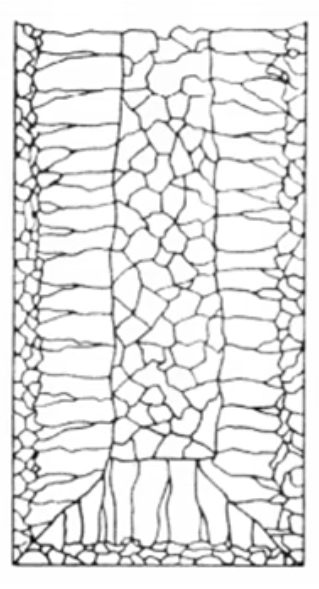
Small chill grains form on mold walls
Outer layer
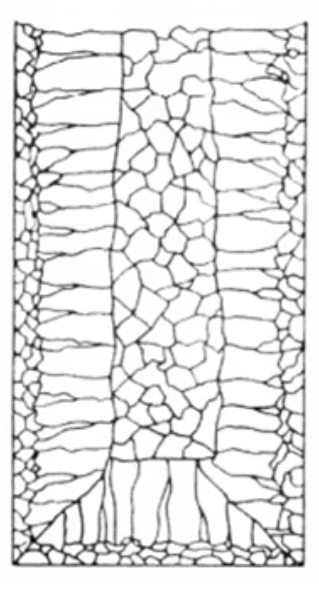
Columnar grains grow towards centre of ingot
Middle layer
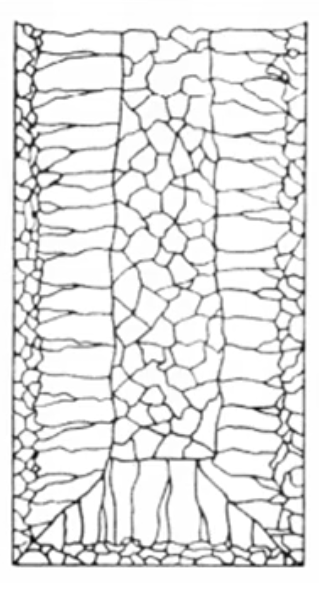
Equiax grains
Inner layer
Casting
Molten metal is poured into a cast, used for creating complex shapes
Sand Casting
Sand is used to form the mold used for casting
Wrought Processing
Processes that involve deformation of metal, typically by hand
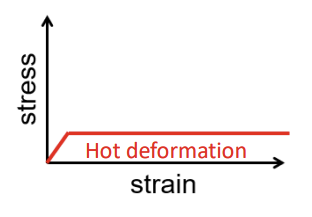
Increases ductility, lowers strength, prevents permanent strain
Reasons that high temperatures are used during wrought processes
Rolling
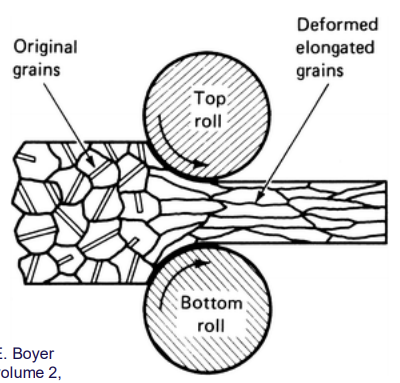
Material is squeezed between two rollers, thinning and lengthening the material
Hot Rolling
Rolling that occurs at high temperatures, increases ductility and reduces strength
Cold Rolling
Rolling that occurs at/near room temperature, maintains strength
Drawing
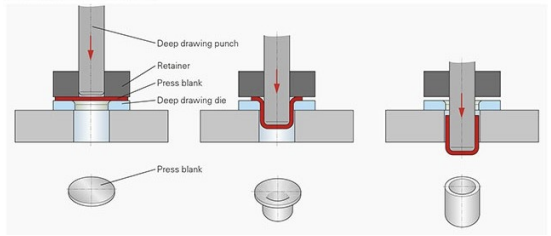
Creates cup-shaped parts by forcing sheet metal into a die using a punch
Extrusion
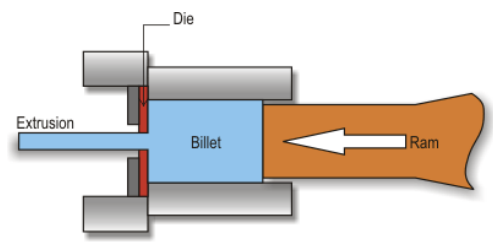
Billet material forced through a die to produce a shape with the same cross-section as the die - use softer alloys
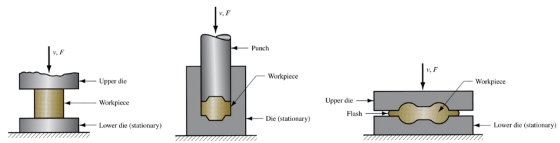
Forging
Metal is compressed between two dies to impart the shape onto the work, hammering process at high temps
Annealing
Reorganisation of grains to increase ductility/malleability in a cold worked alloy
Recovery
Annihilation and rearrangement of dislocations (stage one of annealing)
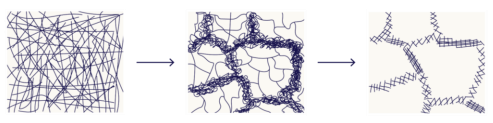
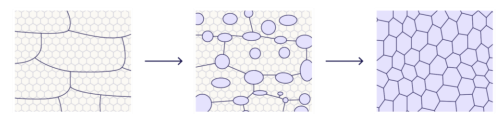
Recrystallisation
Nucleation and growth of new grains (stage two of annealing)
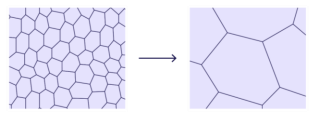
Grain Growth
Stage three of annealing
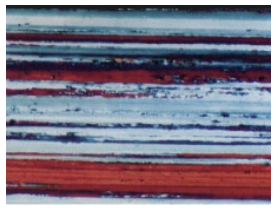
As-rolled, high strength but low ductility
State of aluminium
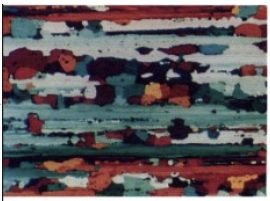
Partially recrystallised, increasing ductility
State of aluminium
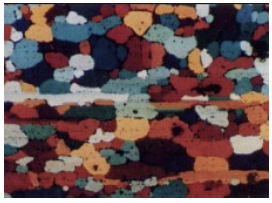
Recrystallised, ductile
State of aluminium
Processing of Thermoplastics
Heat until soft, shape, set via cooling
Processing of Thermosets
Prepolymer is molded, set via cooling
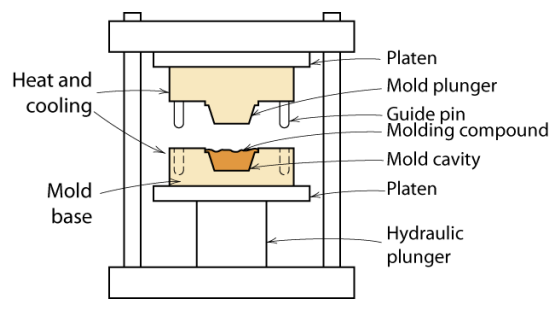
Transfer Molding (polymers)
Material (thermoplastic/set) in bottom heated mold is shaped by compressing top mold
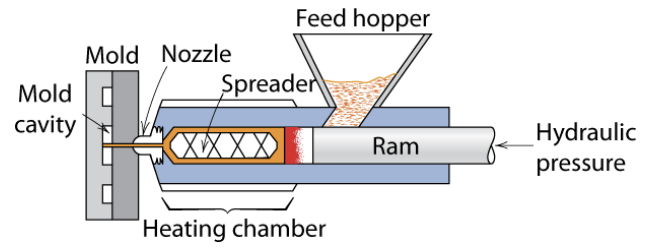
Injection Molding (polymers)
Hydraulic pressure applied to chamber to feed heated thermoplastic pellets into mold
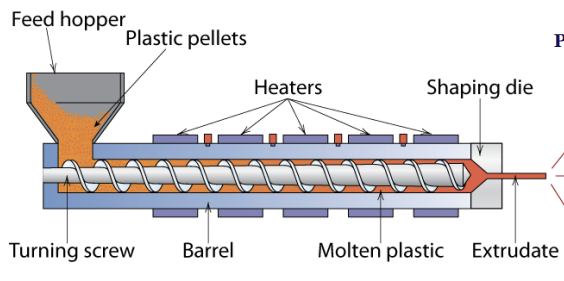
Extrusion (polymers)
Screw feeds heated plastic pellets through shaping die to produce long shape
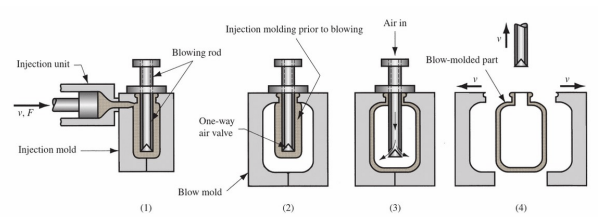
Blow Molding (polymers)
Creates hollow plastic products by blowing air into plastic blank to fill a mold cavity
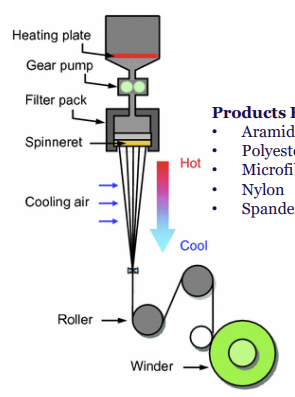
Melt Spinning (polymers)
Extrusion-type process where molten material is pulled through fine extrusion dies (spinneret) to form fibres used for fabrics
Glass Forming Processes
Pressing, blowing, drawing, fibre forming
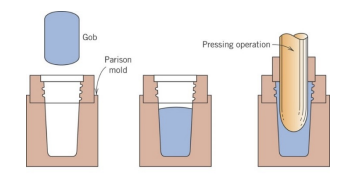
Glass Pressing
Forming glass into the shape of a mold using a ram, for thicker products
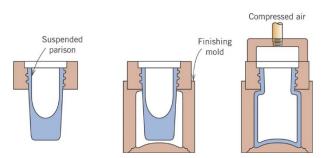
Glass Blowing
Using compressed air to force softened glass into the shape of a mold
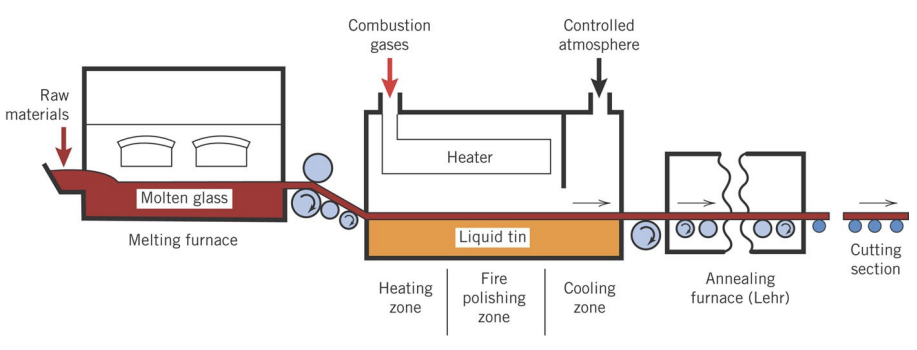
Sheet Glass
Molten glass is rolled into a sheet and cooled over a pool of liquid tin
Annealing Glass (Heat Treating Glass)
Removes internal stress caused by uneven cooling
Tempering Glass (Heat Treating Glass)
Puts surface of glass part into compression, suppressing surface crack propagation
Clay, filler, fluxing agent
Components of clay mixture
Hydroplasticity
When clay becomes plastic when water is added
Effect of Adding Water to Clay
Material shears easily along weak van der Waals bonds
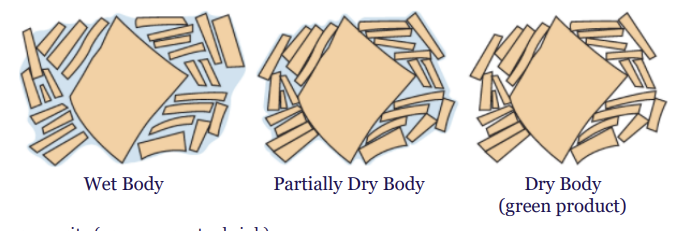
Drying Clay
Removing excess water causing shrinkage
Firing Clay
Reduces porosity, causes fluxing agents to melt and form glass
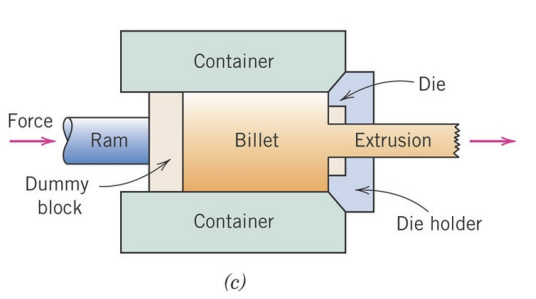
Clay Extrusion
Extruding clay into shape for products such as bricks
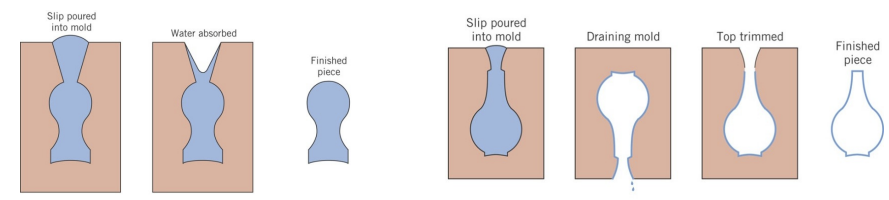
Slip Casting
Slip (mixture of clay and water) poured into a mold and either drained for hollow product or dried for solid product
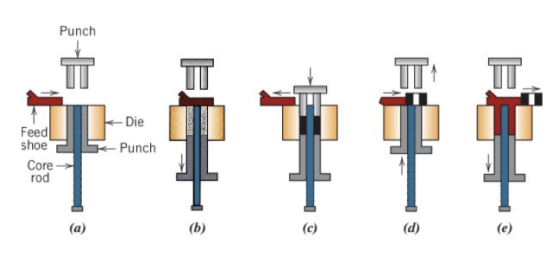
Powder Pressing
Forms solid mass of powder which requires sintering
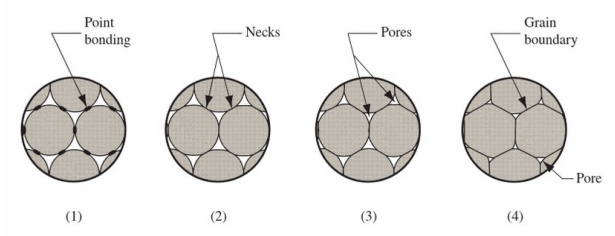
Sintering
High temperature process used to densify and strengthen powder parts, carried out under hot isostatic pressing
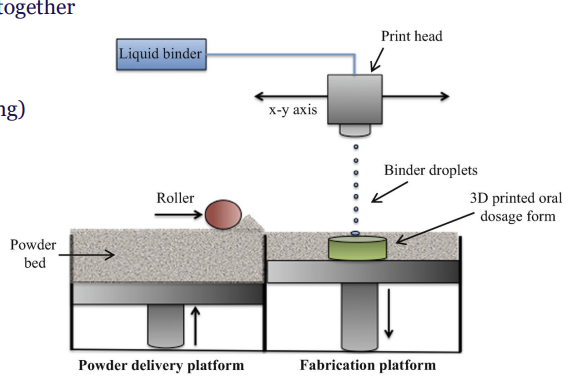
Binder Jetting (BJT)
Polymer glue holds power together, used for metals/ceramics/composites
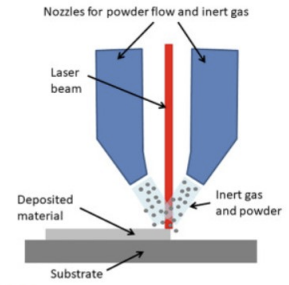
Directed Energy Deposition (DED)
Laser used to set flow of metal powder mixed with inert gas, exceeds 2000oC and used for metals/composites
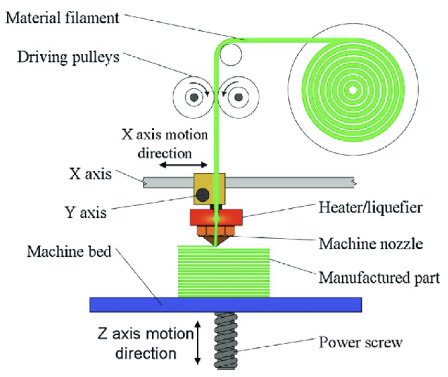
Material Extrusion (MEX)
Thermoplastic filament heated and prints layers, also called FDM (filament deposition modelling)
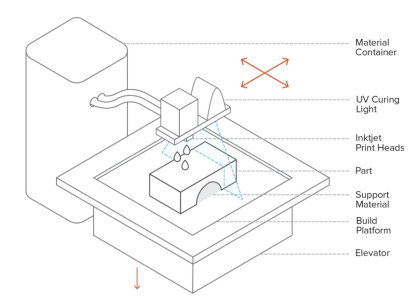
Material Jetting (MJT)
Incoming resin is a liquid which is cured by a UV light - liquids can be mixed during printing and polymer can have range of properties
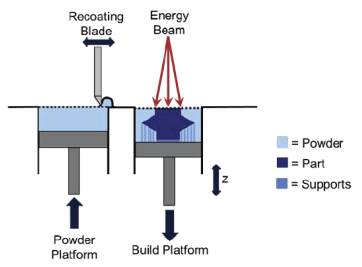
Powder Bed Fusion (PBF)
Laser/electron beam heats metal powder to form solid, usually in enclosure w/ inert gas, used for polymers/metals
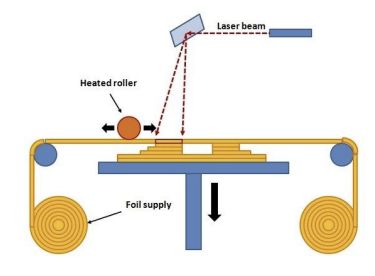
Sheet Lamination (SHL)
Metal sheets bonded w/ polymer, can be welded after stacking - lots of waste material
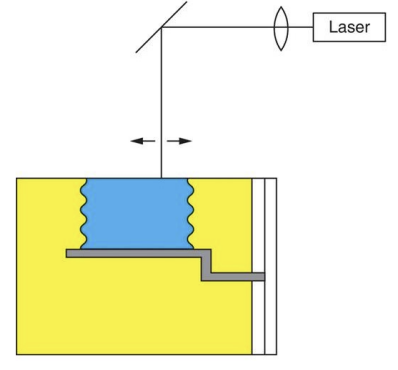
Vat Polymerisation (VPP)
Starting material is liquid polymer which is set by a laser/UV light - can be rigid or rubbery
Rapid protoyping, quick turnaround, faster design improvements
Advantages of 3D printing
Anisotropy
Strength of 3D printed material is dependent on the direction it was constructed