NUTR 9 (test review)
 Call Kai
 Learn
Learn Practice Test
 Spaced Repetition
 Match
Match Flashcards
 Knowt Play
1/37

There's no tags or description
Looks like no tags are added yet.
Name | Mastery | Learn | Test | Matching | Spaced | Call with Kai |
|---|
No analytics yet
Send a link to your students to track their progress
38 Terms
energy metabolism?
body source of energy are macronutrients like…
obtain energy from macronutrients
carbs (4 kcal/g), protein (4 kcal/g), fat (9 kcal/g), alcohol (7 kcal/g)
Metabolic pathways
catabolic pathway (ex: lipolysis) =
anabolic pathway (ex: protein synthesis) =
amphibolic pathway (ex: citric acid cycle) =
breaks down large molecules to release energy
uses energy to build larger molecules
is both catabolic and anabolic
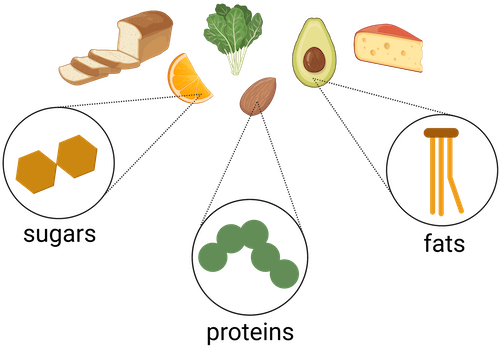
food into energy is a series of catabolic reactions which begins with ___ then units go through ___
digestion (breaking food in smaller absorbable units)
metabolic pathways
units from digestion that sent through metabolic pathways?
(key metabolic pathways: anabolic, catabolic, amphibolic)
amino acids
monosaccharides (fuel for ATP production)
free fatty acids (long-term energy)
glycerol (3 fatty acids + glycerol = triglycerides)
alcohol (later converted to acetyl-CoA)
A metabolic pathway for energy metabolism is a series of connected,
enzyme-catalyzed chemical reactions that transform nutrients into usable cellular energy (ATP)
intermediates
molecules formed in between steps
metabolism steps:
step 1: digestion = food broken down into absorbable small units
step 2: conversion =
step 3: energy use
absorbed nutrients converted into ATP, storage forms (glycogen, fat), and metabolic intermediates
metabolism steps:
step 1: digestion
step 2: conversion
step 3: energy use = ATP used for…
muscle contraction, pump ions across membranes, condensation reactions, making new compounds
energy stored as ATP and creating ATP releases
heat (about 60% of energy from glucose is released as heat)
carbon dioxide (Krebs cycle)
water (electron transport chain)
redox reactions =
transfer electrons (hydrogen ions) to release and store energy
redox reactions are controlled by ___ and directly make ___
enzymes, ATP
Oxidation:
Reduction:
Oxidation: loses electrons or hydrogen OR gains oxygen
Reduction: gains electrons or hydrogen OR loses oxygen
important enzymes for redox reactions is dehydrogenases which…
remove hydrogens from energy-yielding compounds to form water
vitamins that help aid dehydrogenases?
niacin (B3) and riboflavin (B2)
niacin (B3) oxidized and reduced form =
riboflavin (B2) oxidized and reduced form: =
oxidized form: NAD (nicotinamide adenine dinucleotide)
reduced form: NADH
oxidized form: FAD
reduced form: FADH2
Niacin (B3) and riboflavin (B2) in energy metabolism are
coenzymes that act as electron carriers to convert carbohydrates, fats, and proteins to energy
how many ATP produced at each stage of aerobic cellular respiration (glycolysis, pyruvate to acetyl-CoA, citric acid cycle, electron transport chain)
glycolysis: net 2 ATP (4 produced - 2 invested)
pyruvate to acetyl-CoA: 0 ATP
citric acid cycle: 2 ATP
ETC: 28 ATP
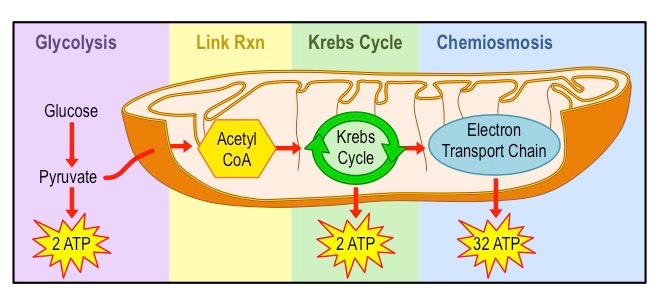
(leave out ATP) end results of each stage of aerobic cellular respiration (glycolysis, pyruvate to acetyl-CoA)?
glycolysis: 2 pyruvate (3 carbon compound), NADH
pyruvate to acetyl-CoA: acetyl-CoA (2 carbon compound), CO2, NADH
(leave out ATP) end results of each stage of aerobic cellular respiration (citric acid cycle, electron transport chain)?
citric acid cycle: 6 NADH, 2 FADH2, CO2 (most CO2 released here)
ETC: water, NAD, FAD
location of each stage of aerobic cellular respiration (glycolysis, pyruvate to acetyl-CoA, citric acid cycle, electron transport chain)
glycolysis = cytosol (fluid in cytoplasm)
pyruvate to acetyl-CoA = mitochondrial matrix
citric acid cycle = mitochondria
ETC = mitochondria
stages that require oxygen and don’t in aerobic cellular respiration ?
need oxygen: ETC
don’t need oxygen: glycolysis, citric acid cycle
gluconeogenesis (makes glucose from some amino acids and other compounds) location?
occurs in liver and kidneys
gluconeogenesis begins in ___ (specifically where in hepatocytes) with _____ (hint: acetyl-CoA)
mitochondria (& later cytoplasm) with oxaloacetate
oxaloacetate?
combines with acetyl-CoA to form citrate, which improve ATP production
ketogenesis is process where
acetyl-CoA build up and forms ketone bodies in liver
Ketosis (state) happens when…
(ketogenesis is the process)
low carbs. low insulin, fasting, type 1 diabetes (autoimmune)
Gluconeogenesis starts around ___ after fasting and depletes around ___
4-6 hours, 24 hours
ketones (Ketosis) begins ___ after fasting with major production around ___ (also spares body proteins by reducing need of gluconeogenesis)
24 hours, 2 days
Insulin promotes:
glycogen synthesis, fat storage, protein synthesis
Low insulin promotes:
gluconeogenesis. lipolysis (breaking down stored triglycerides into glycerol and free fatty acids for energy), protein breakdown
cori cycle (aka lactic acid cycle) is a metabolic pathway connecting….
muscle and liver
cori cycle is where…
anaerobic lactate production in muscles is converted back into glucose in the liver (to sustain energy production)
beta-oxidation is the metabolic process of…
breaking down fatty acids in mitochondria to make energy
beta-oxidation produces…
acetyl-CoA, NADH, and FADH2
location of protein metabolism?
liver
urea cycle (or ornithine cycle) is a metabolic pathway location?
the liver (the same with deamination and synthesis of blood proteins)
urea cycle (or ornithine cycle) converts…
highly toxic ammonia, produced from protein metabolism, into urea for safe excretion by the kidneys
location of the synthesis of blood proteins (like albumin)
liver (same place for deamination, ammonia to urea)