Art and Architecture of the Roman Empire
 Call Kai
 Learn
Learn Practice Test
 Spaced Repetition
 Match
Match Flashcards
 Knowt Play
1/74

Earn XP
Description and Tags
A set of flashcards covering key terms and concepts related to the art and architecture of the Roman Empire, based on the lecture notes.
Name | Mastery | Learn | Test | Matching | Spaced | Call with Kai |
|---|
No analytics yet
Send a link to your students to track their progress
75 Terms
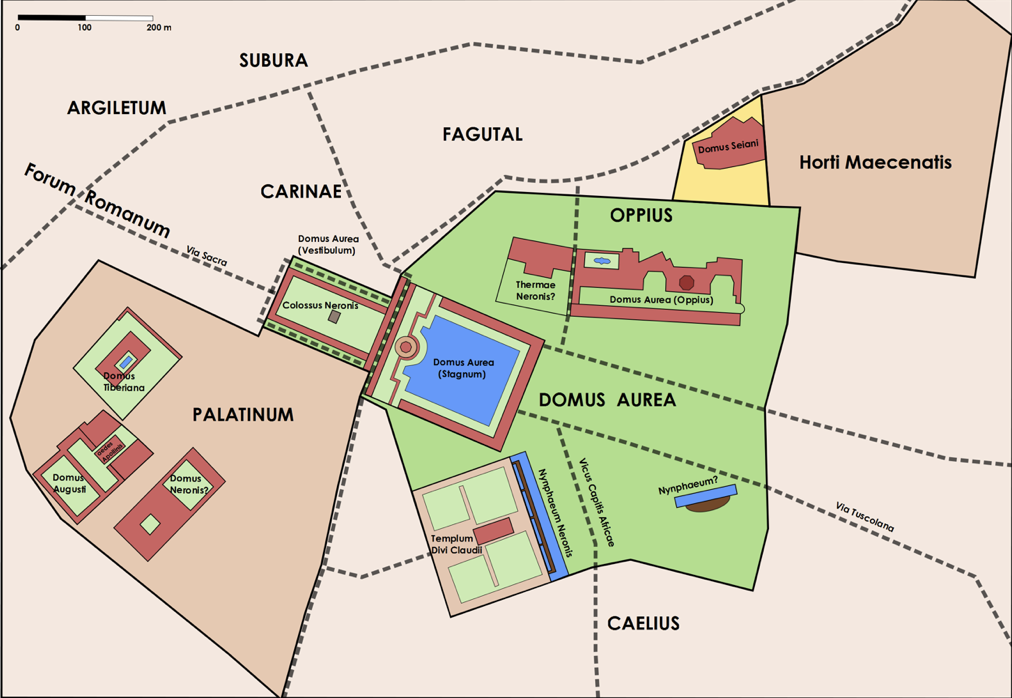
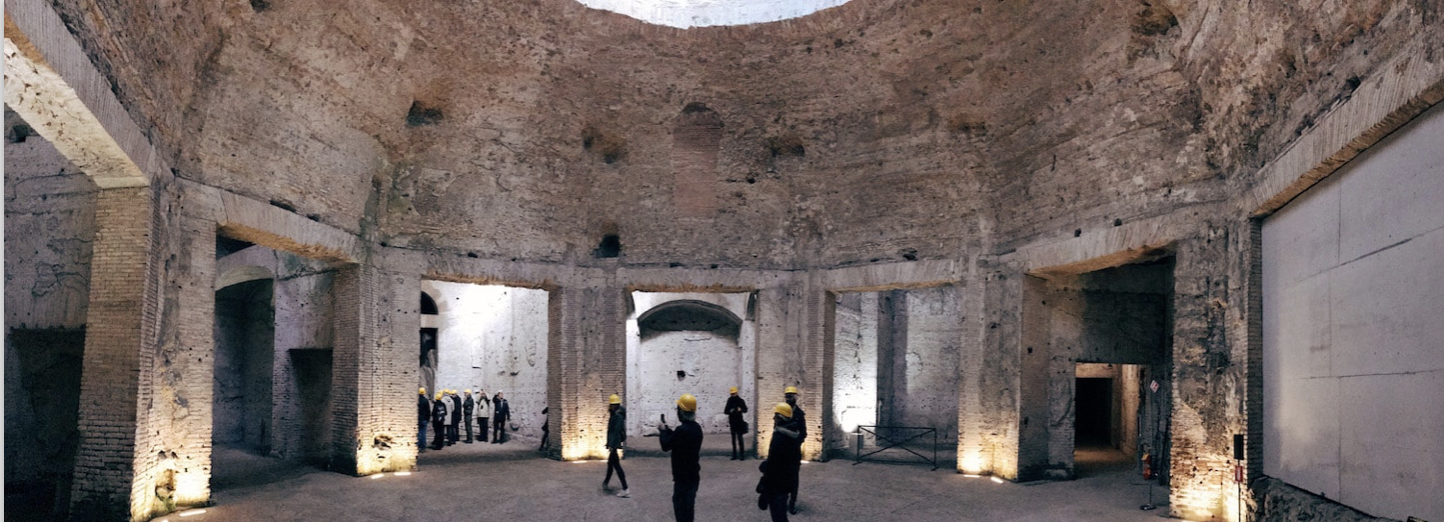
Domus Aurea — Nero’s golden house
Nero's Golden House, built around 64-68 CE, noted for its luxurious features, including fields, lakes, and innovative architecture. /// —- Octagonal dining room,, concrete
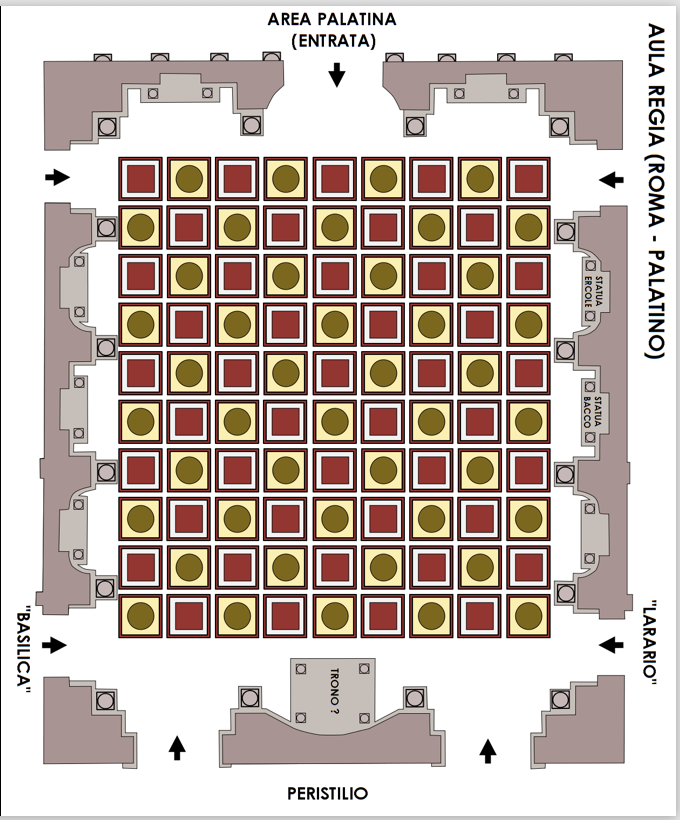
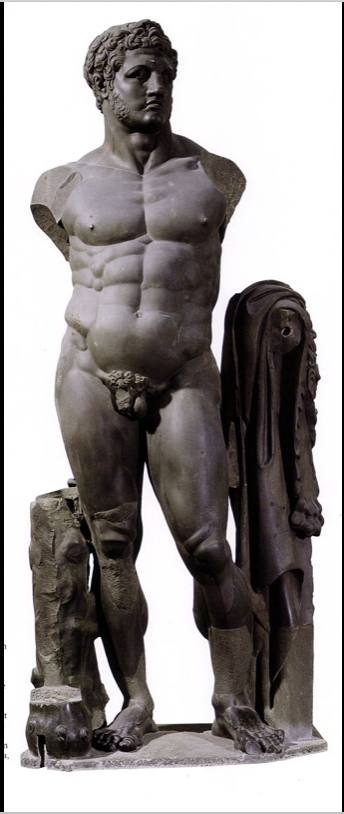
Aula Regia
plan of the audience chamber in the palace on the Palatine, ca. 92 CE. — Hercules greywacke, 3.65m high
Flavian Amphitheatre
Also known as the Colosseum, completed in 80 CE, it is one of the most iconic architectural feats of ancient Rome.
Basilica
A large public building used for meetings and other gatherings in ancient Roman architecture.
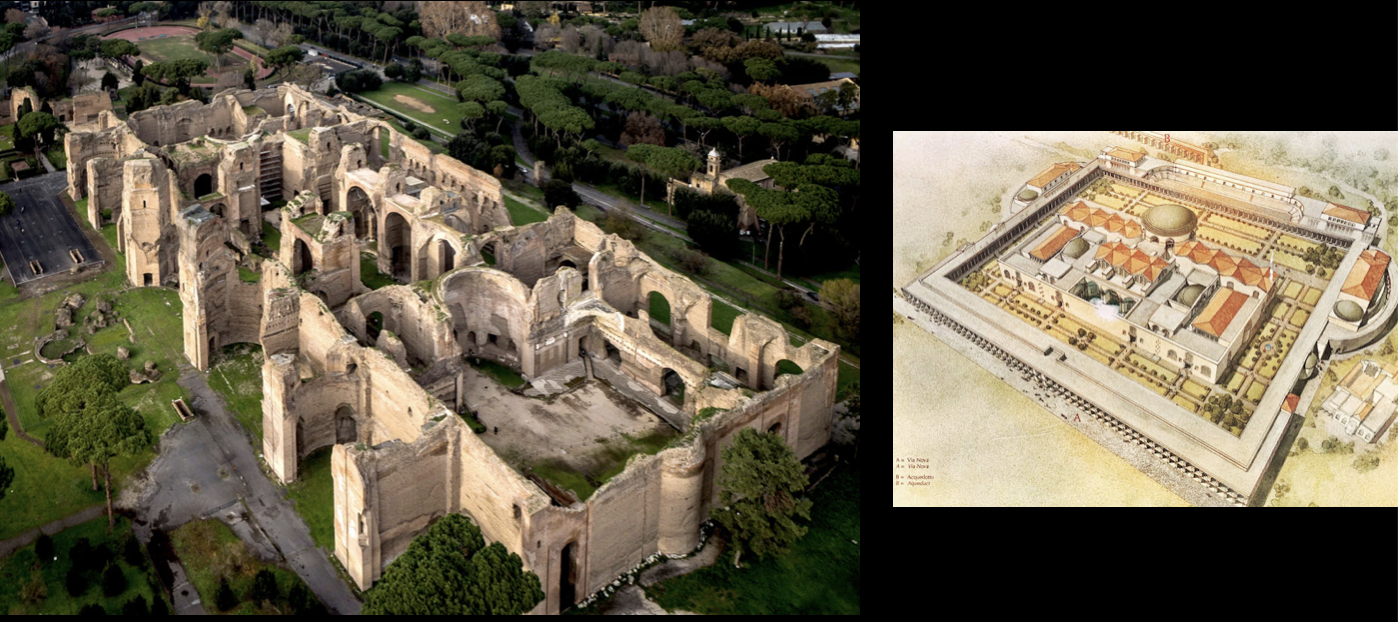
Baths of Caracalla
A massive bathing complex in Rome, built between 212-216 CE, known for its mosaics and vast public baths.
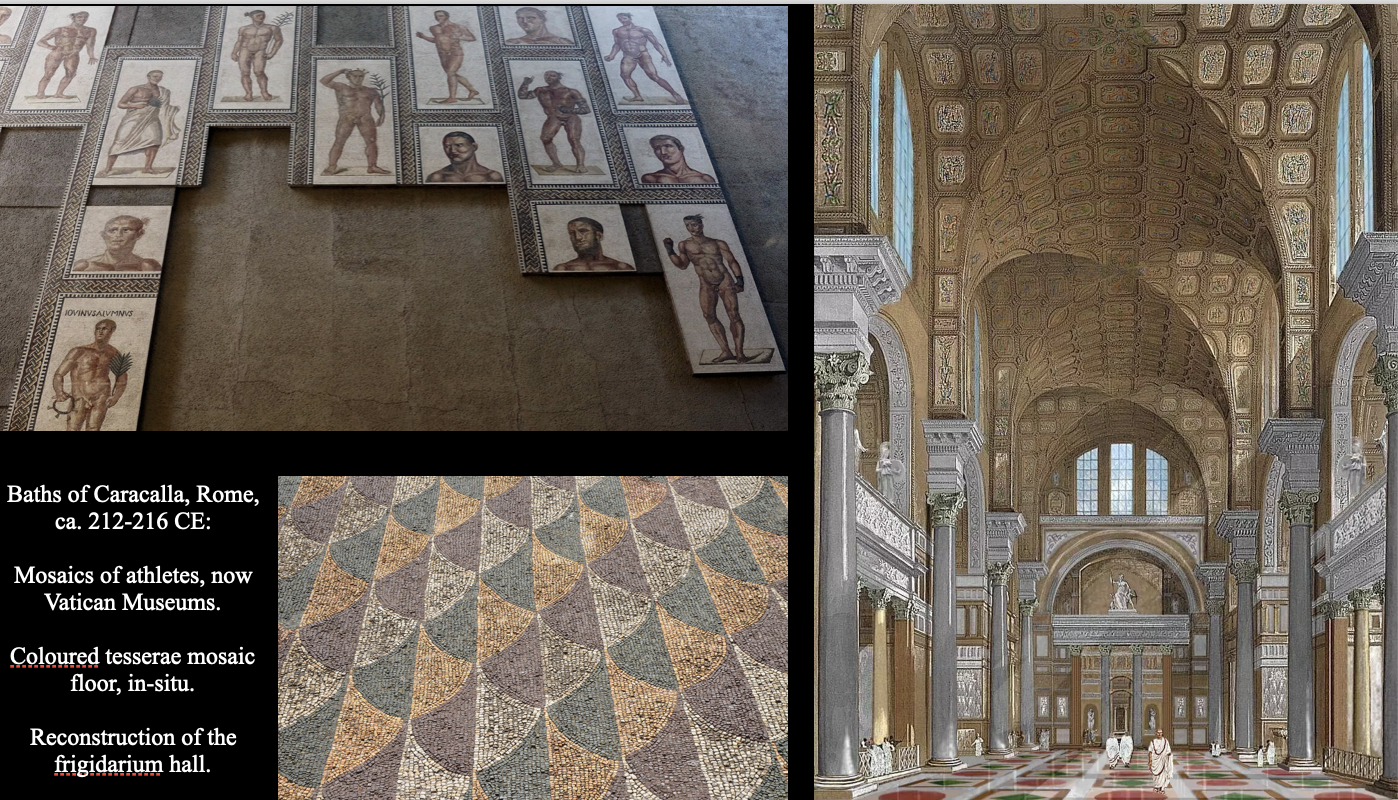
Mosaics
Baths of Caracalla Rome ca 212-216CE
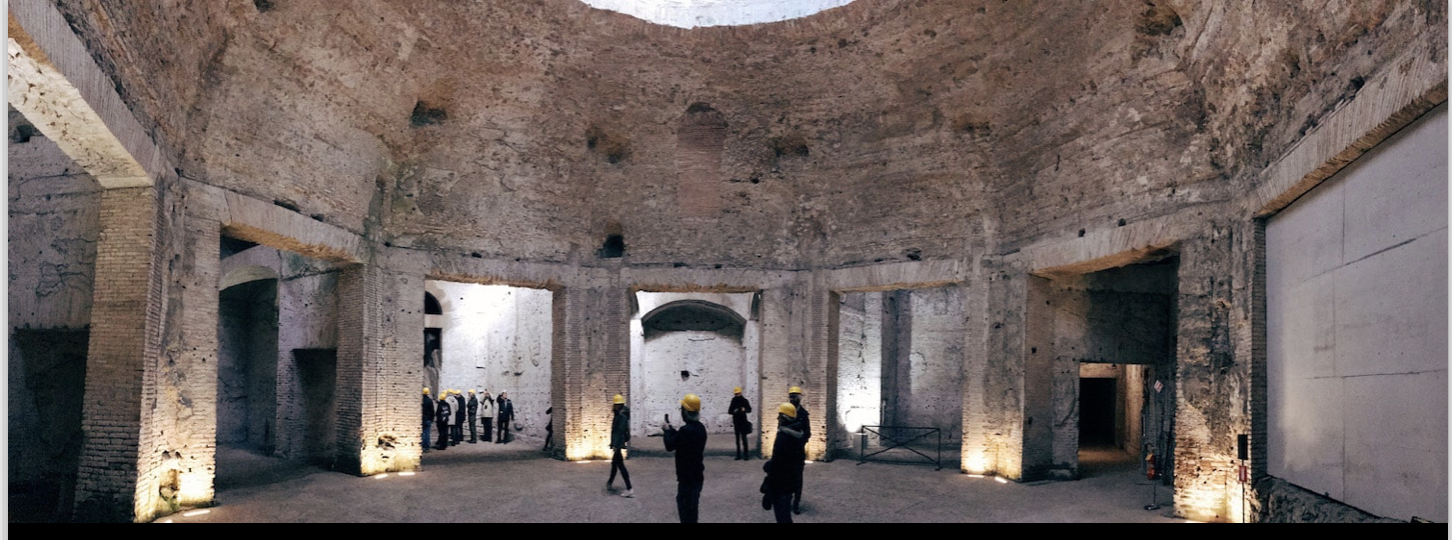
Octagonal Dining Room
A distinctive room in Nero's Golden House designed for dining, showcasing advanced architectural design.
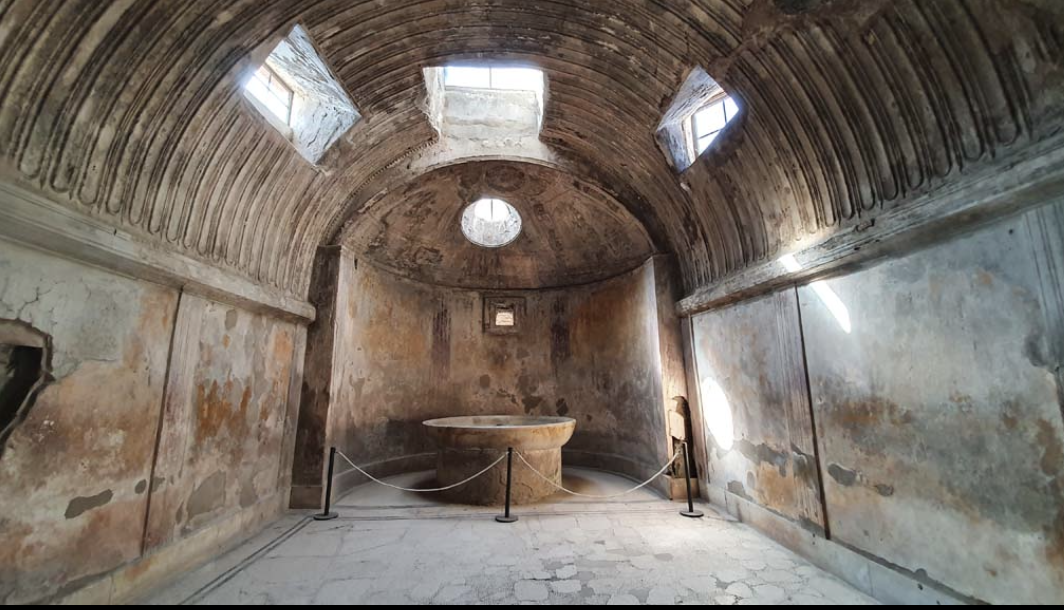
Caldarium (hot room)
Forum Baths Pompeii, ca 80BCE
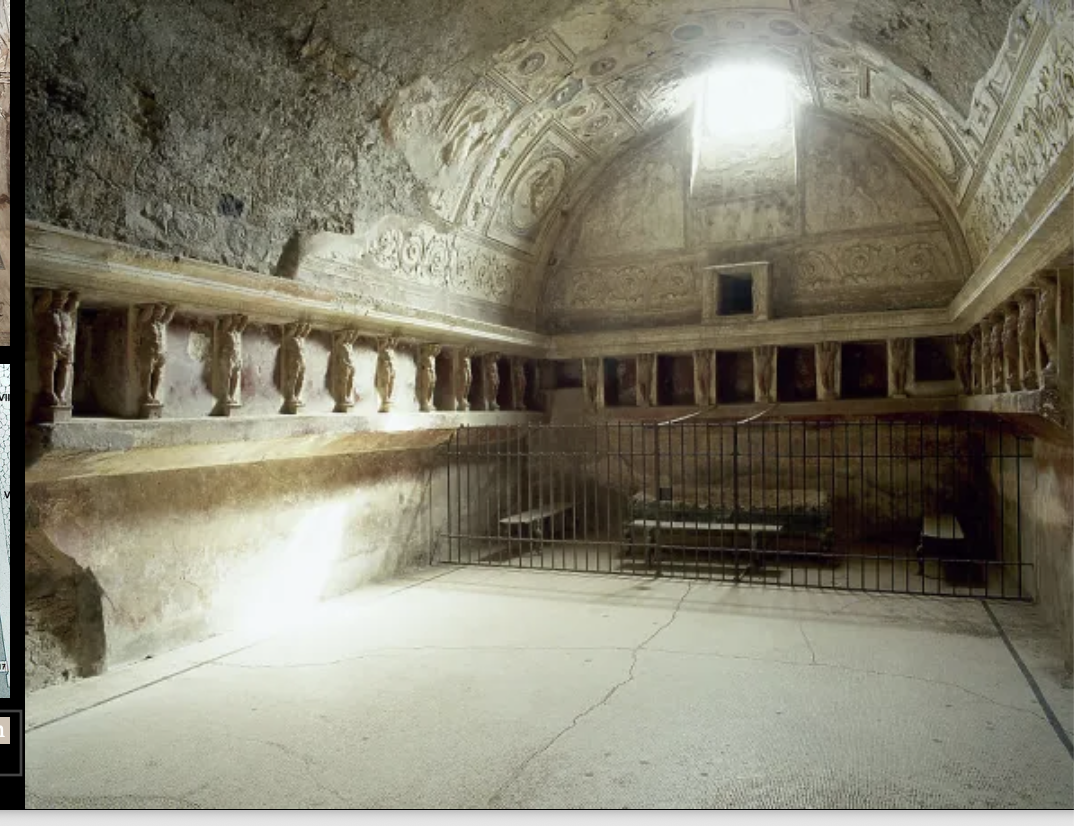
Tepidarium (warm room),
Forum Baths Pompeii, ca. 80 BCE.
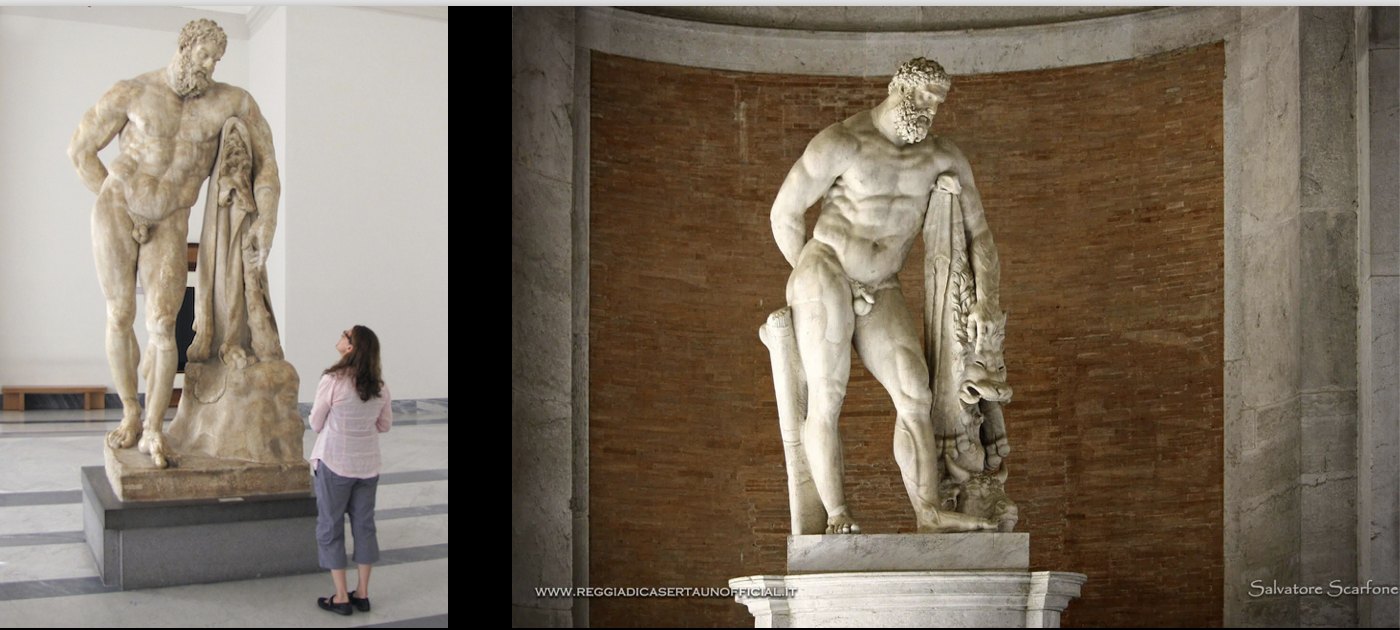
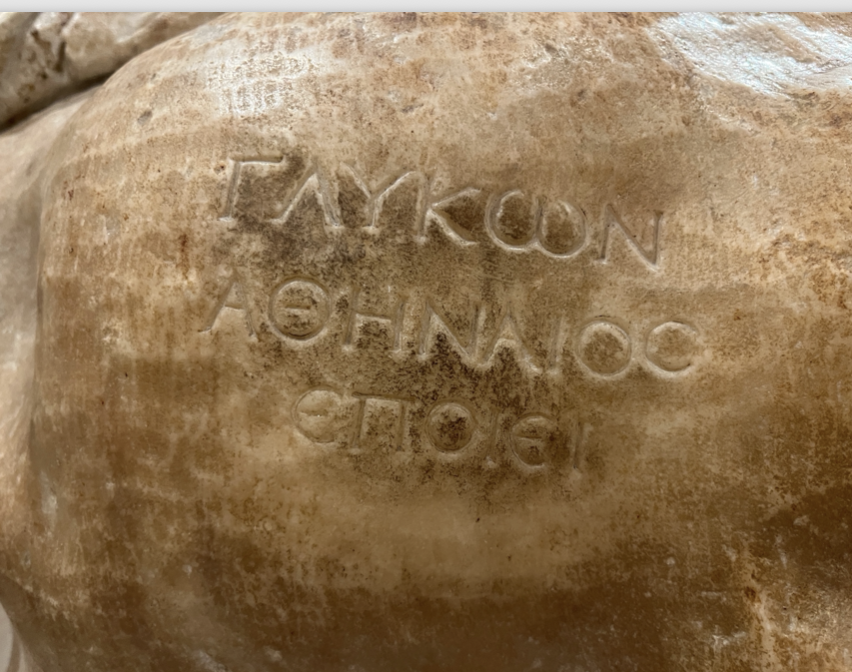
Farnese Hercules
Naples Archaeological Museum. From the Baths of Caracalla, Rome, ca. 212-216 CE.
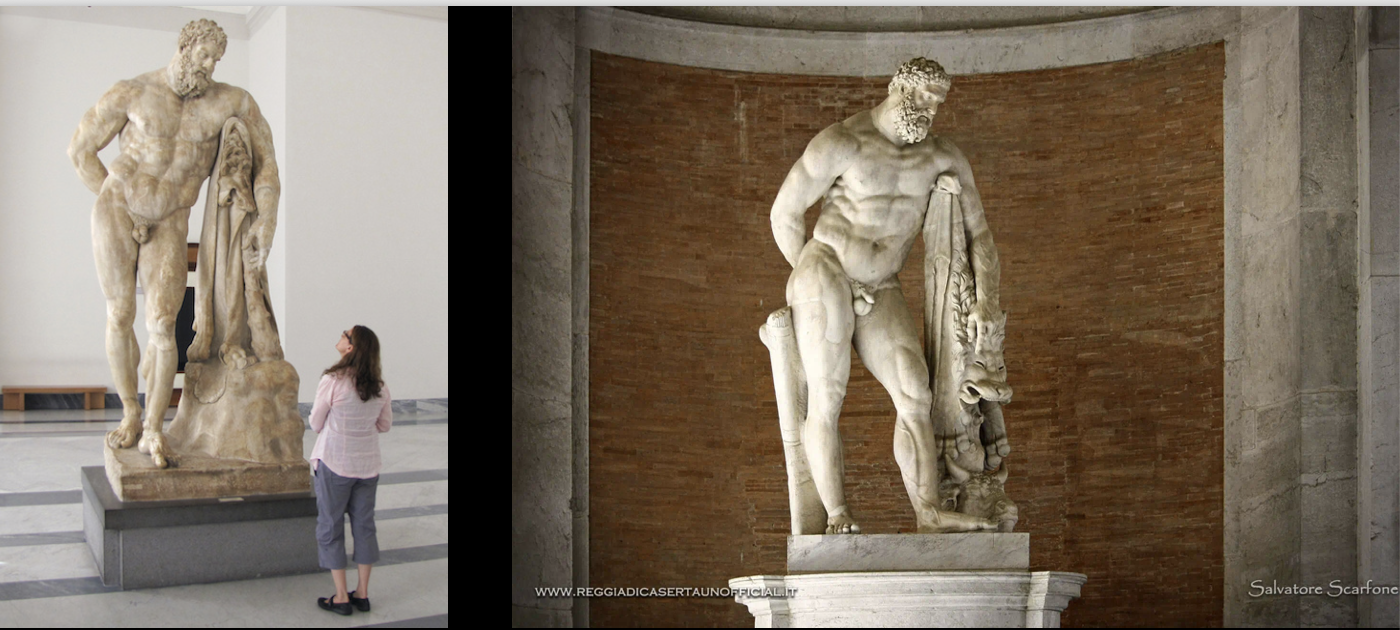
and Latin Hercules
Reggia di Caserta. From the Baths of Caracalla, Rome, ca. 212-216 CE.
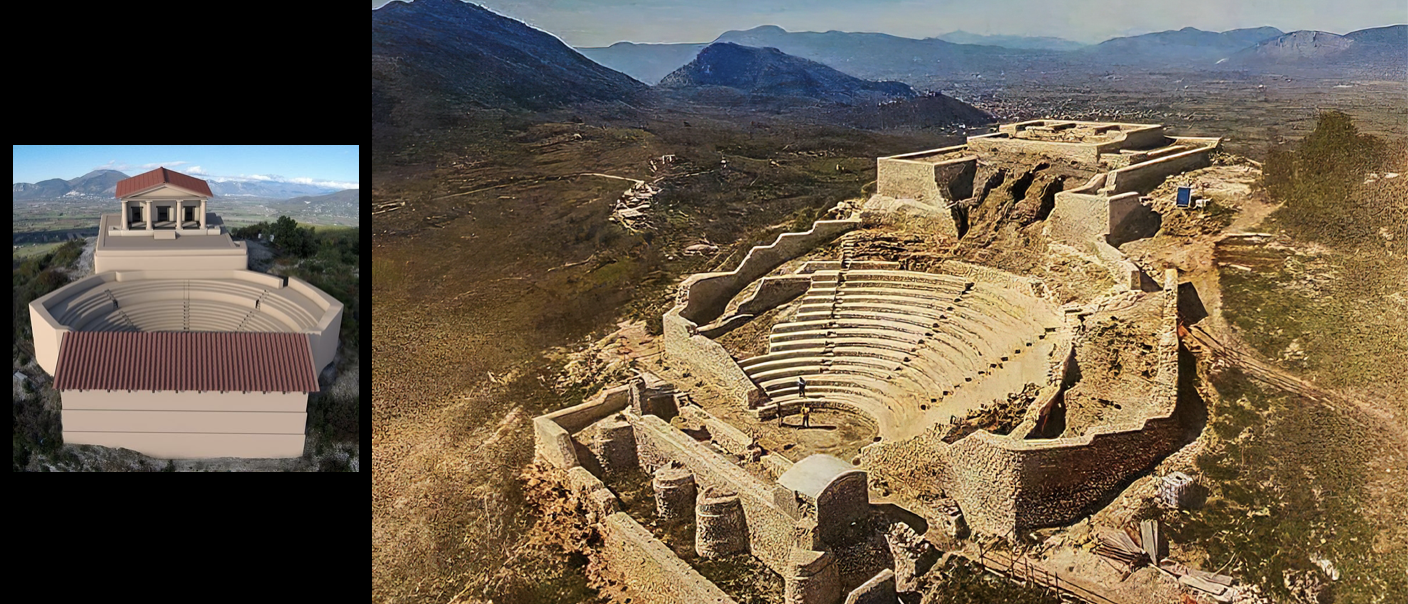
Temple-theatre complex,
Pietravairano, Italy. ca. 100 BCE.
Discovered 2001 after brush fire.
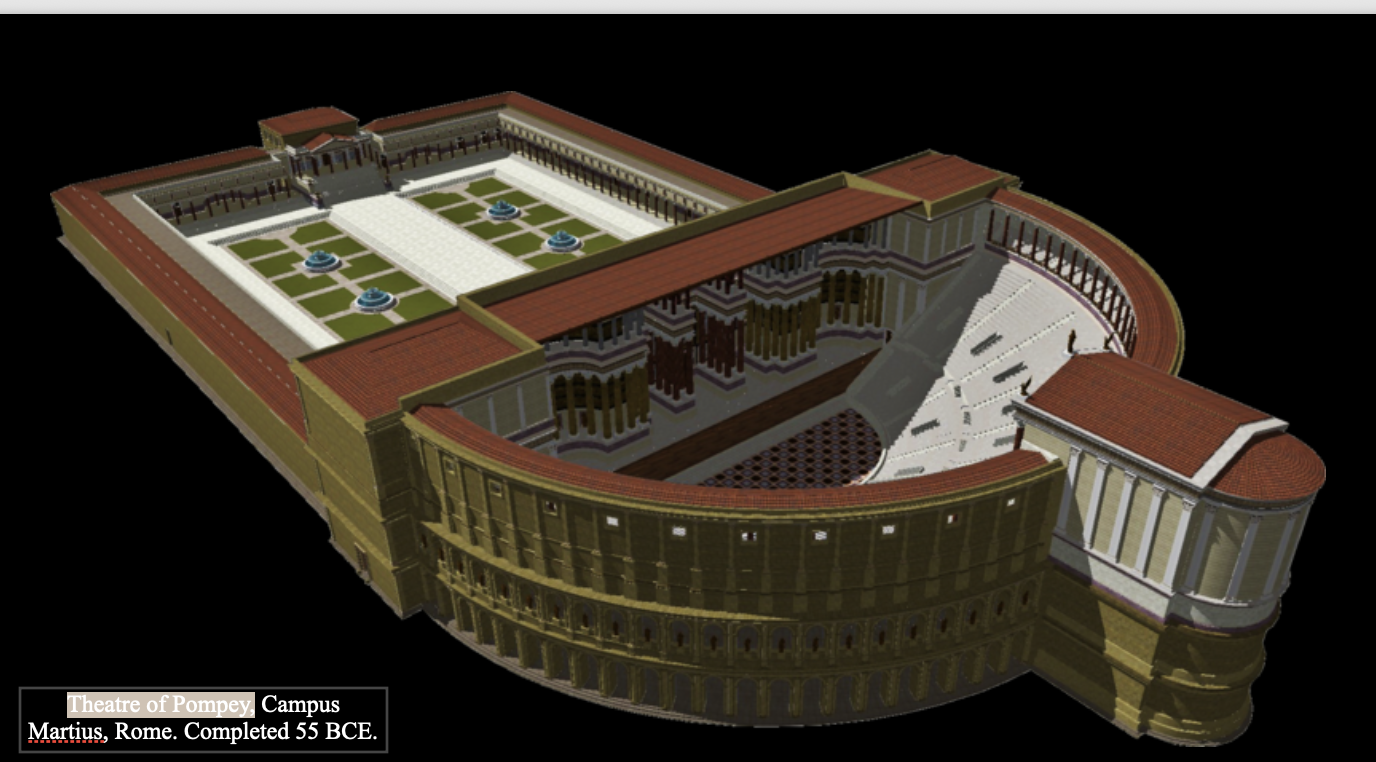
Theatre of Pompey,
Campus Martius, Rome. Completed 55 BCE.
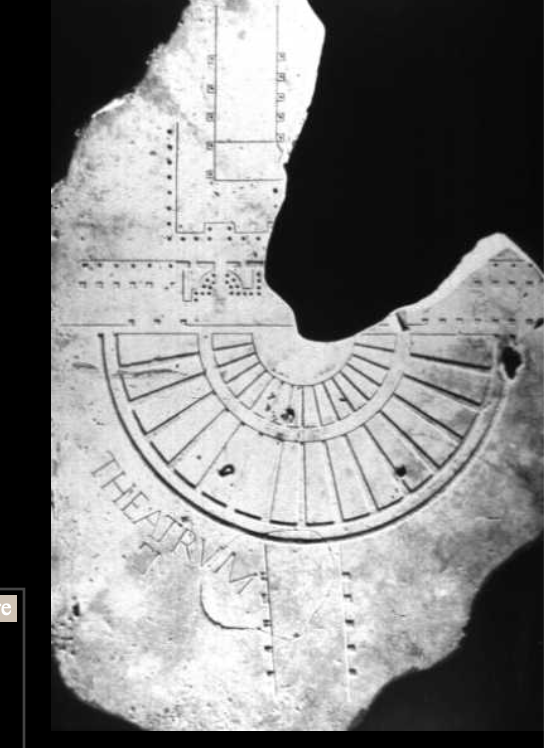
Severan Marble Plan showing Theatre of Pompey, ca. 200 CE.
Scale 1:240. Plan spread over 250 marble slabs, 18x13m, Temple of Peace, Rome.
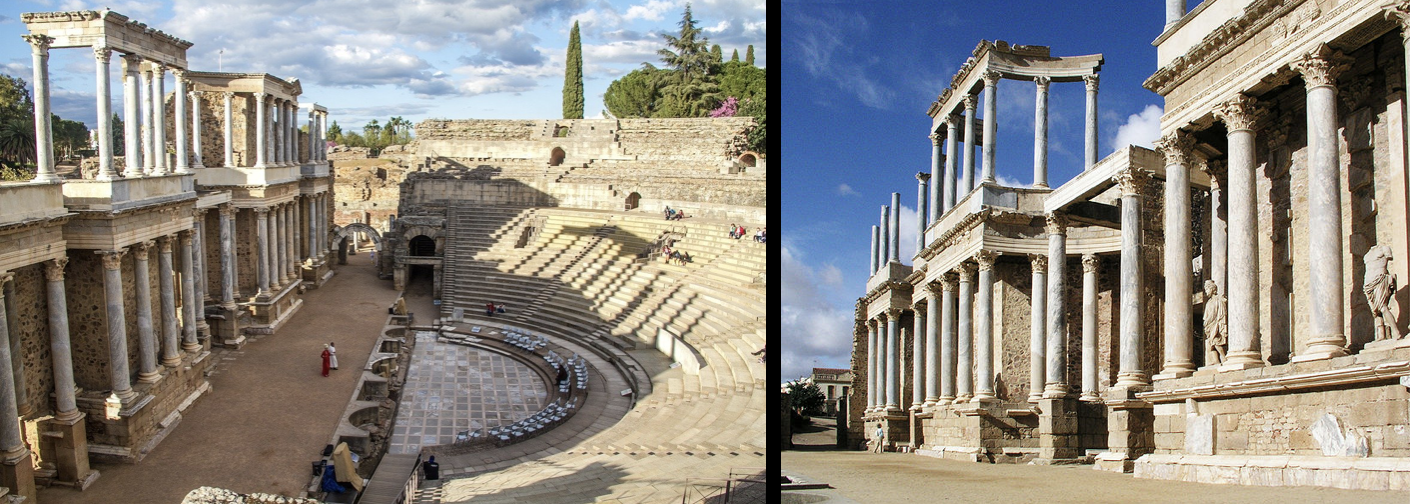
Augusta Emerita (Mérida
Theatre, Augusta Emerita (Mérida), Spain. 16-15 BCE.
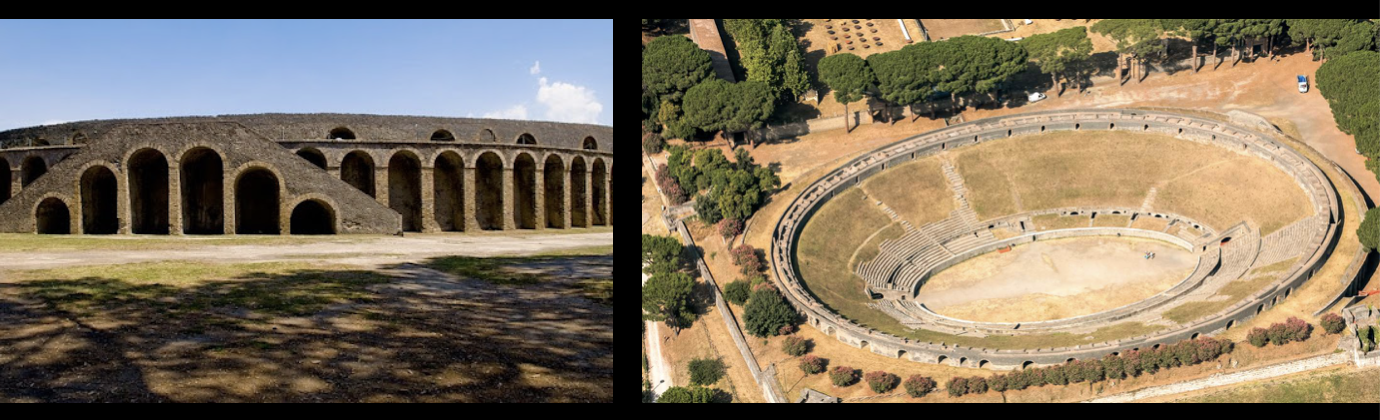
Amphitheatre, Pompeii,
Italy, ca. 70 BCE. View of the outside and from above.
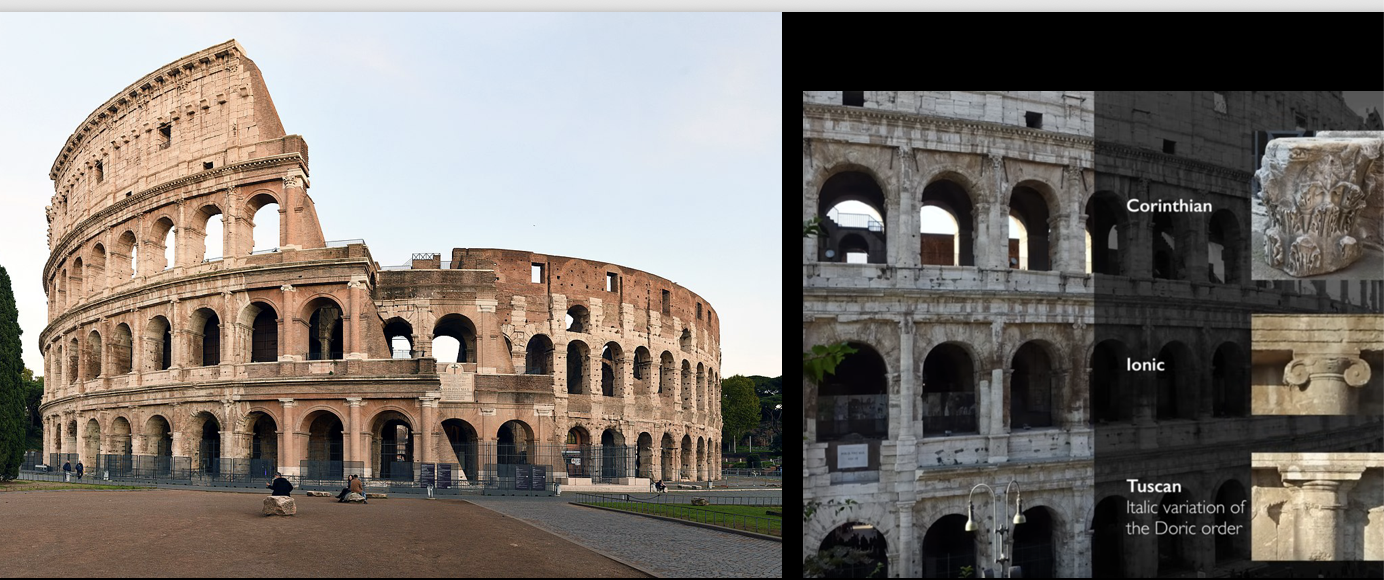
Flavian Amphitheatre (Colosseum)
Flavian Amphitheatre (Colosseum), Rome. Completed 80 CE.
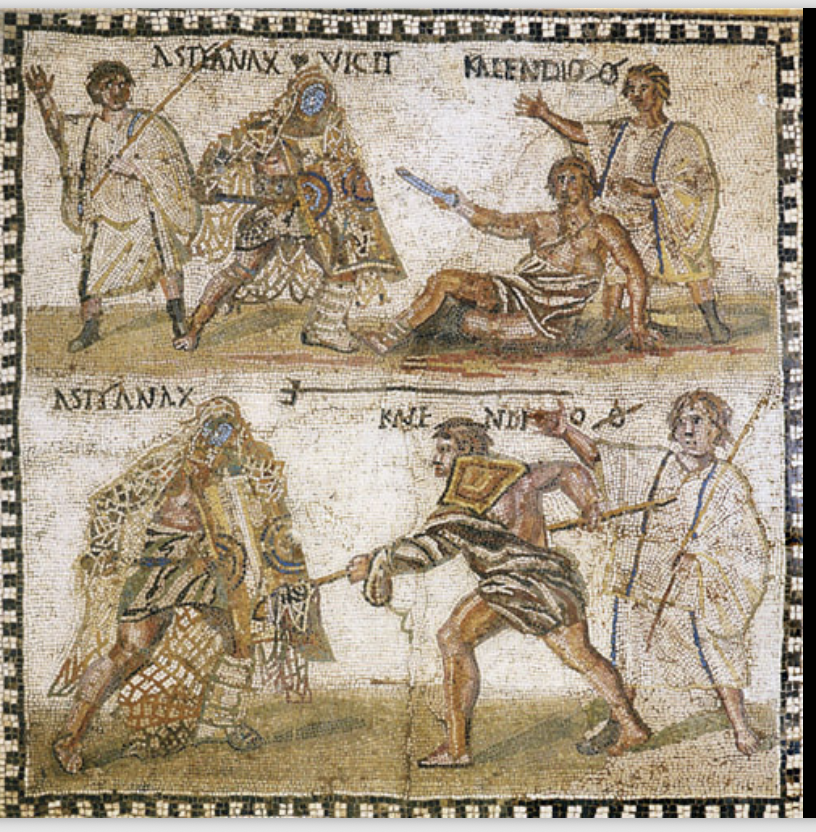
Retiarius vs Secutor.
Astyanax fights Kalendio, floor mosaic, Madrid, third century CE.
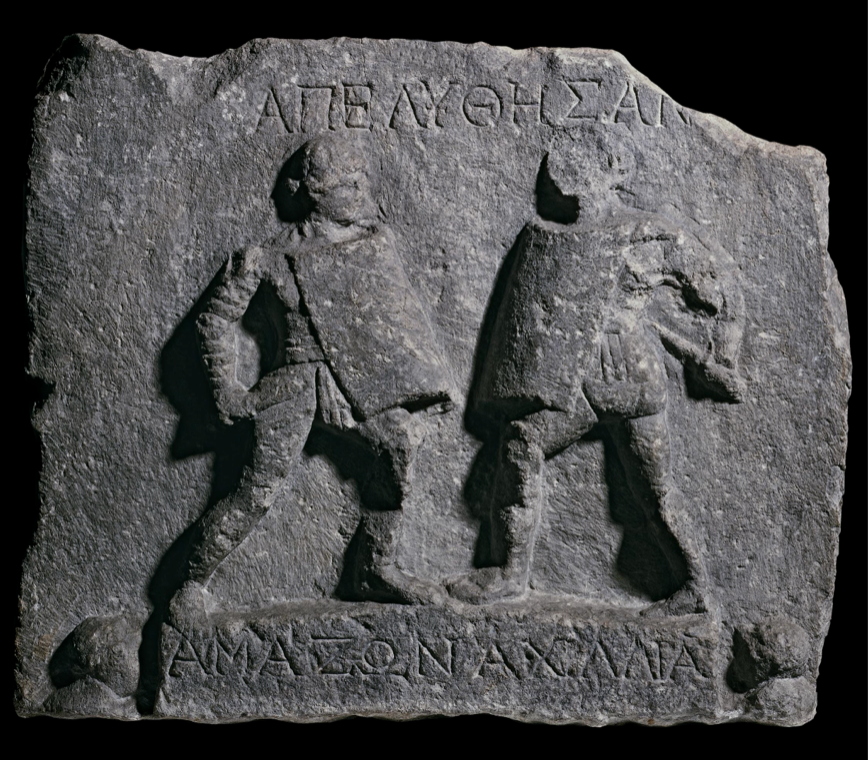
A possible scene of ‘missio’ (release after a draw)
Amazon and Achillia, marble relief, from Halikarnassos, modern Turkey, first-second century CE. British Museum, 1847,0424.19.
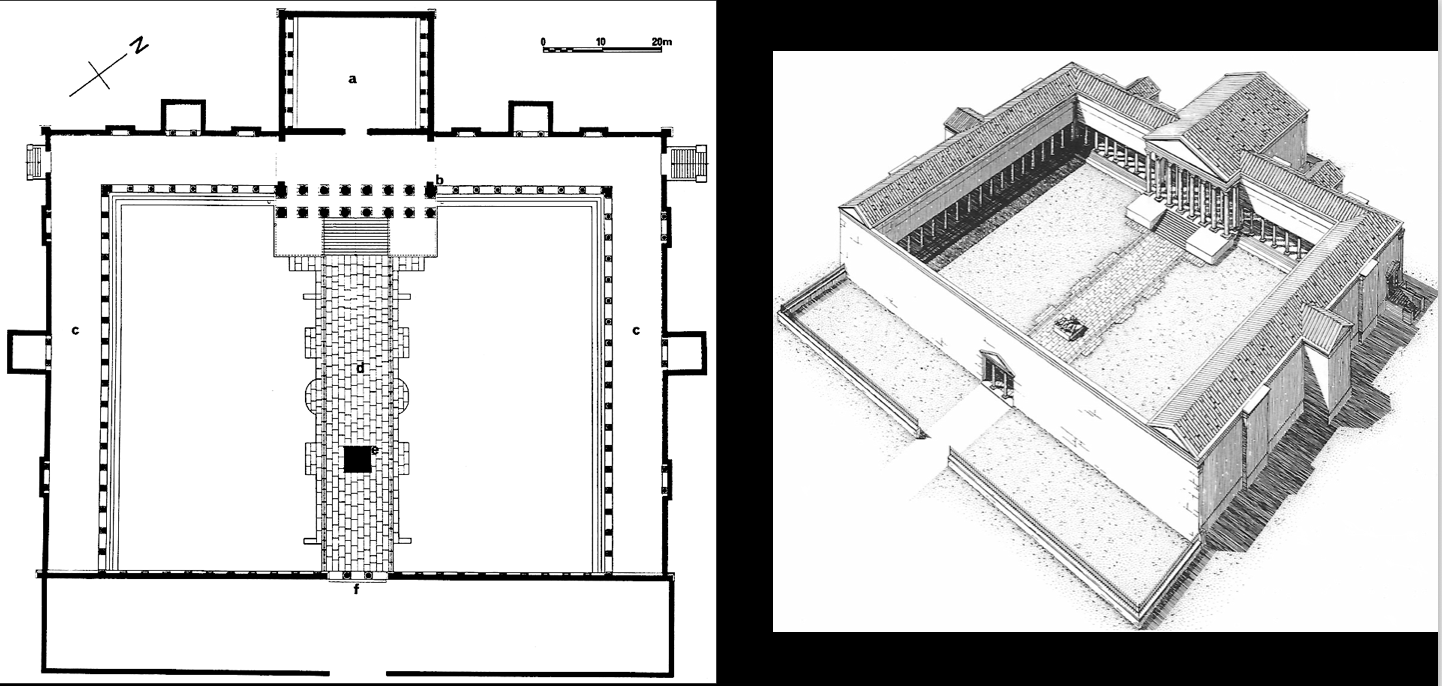
Cigognier (“Stork”) Temple, Aventicum (Avenches, Switzerland).
Trees for the foundation of the temple felled in 98 CE.
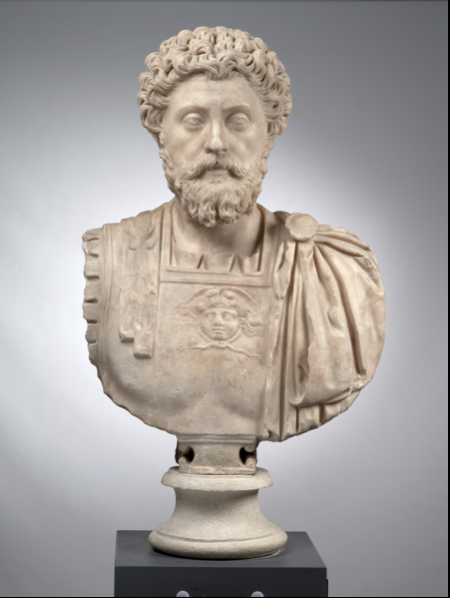
Marcus Aurelius, ruled 161-180 CE. Toulouse.
Marcus Aurelius, ruled 161-180 CE. Toulouse.
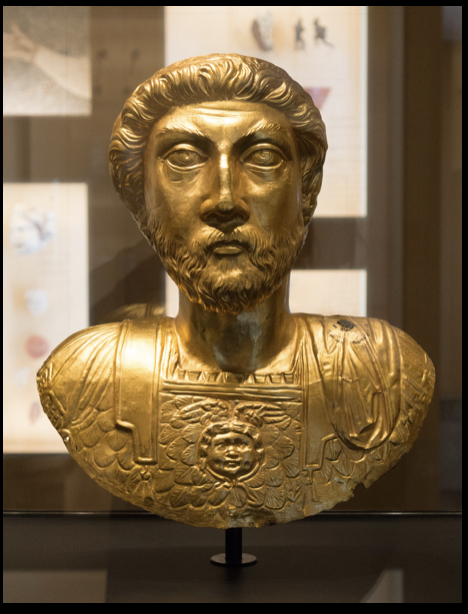
(Copy of) Golden bust of a Roman Emperor,
(Copy of) Golden bust of a Roman Emperor, probably Marcus Aurelius, Cigognier Temple, Aventicum (Avenches, Switzerland). Second century CE
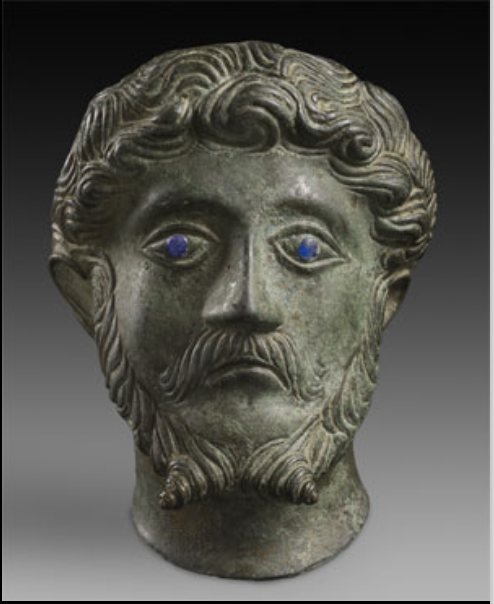
Marcus Aurelius, ruled 161-180 CE,
Marcus Aurelius, ruled 161-180 CE, bronze with cobalt-glass eyes. From Steane, Brackley, Northamptonshire, UK. Oxford, Ashmolean Museum. 16.2cm high.
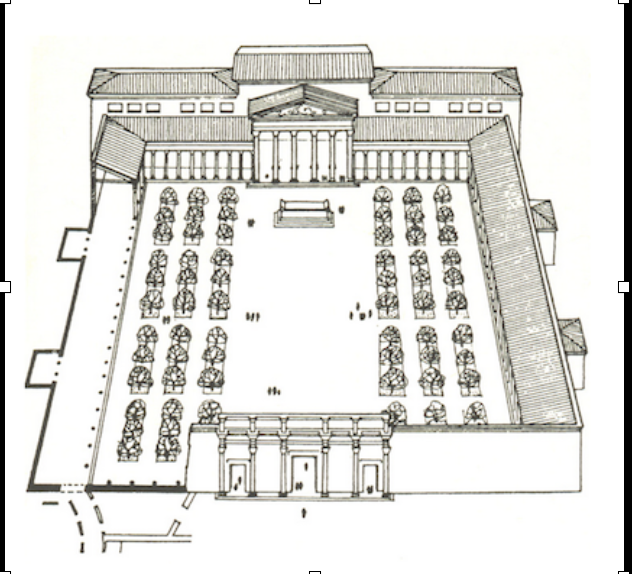
Templum Pacis, Rome.
Built by the Emperor Vespasian in 71 CE, displaying spoils from the Temple in Jerusalem.
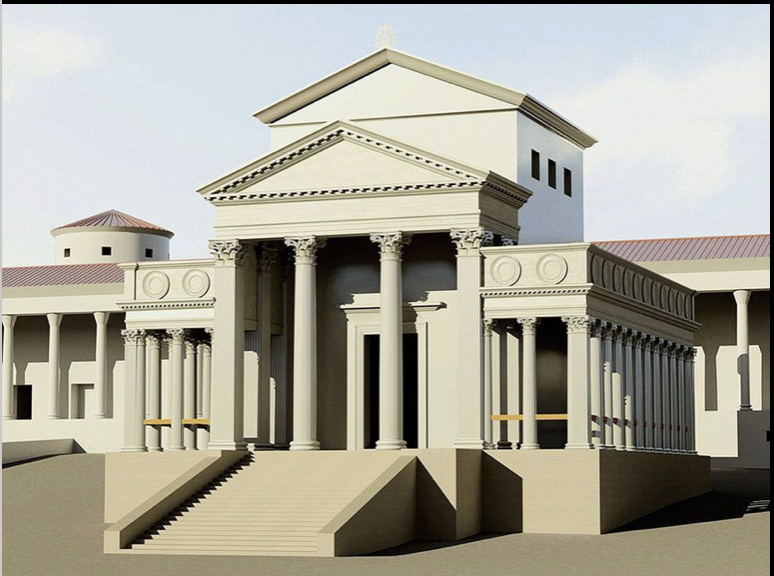
Temple of the Grange des Dîme
Temple of the Grange des Dîmes, Aventicum (Avenches, Switzerland), ca. 100 CE.
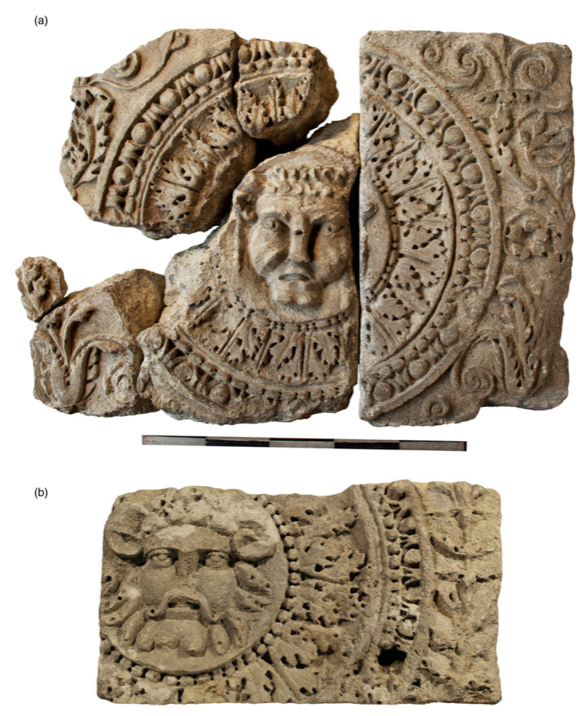
Clip from Avneches
a) probable river god b) Jupiter Ammon
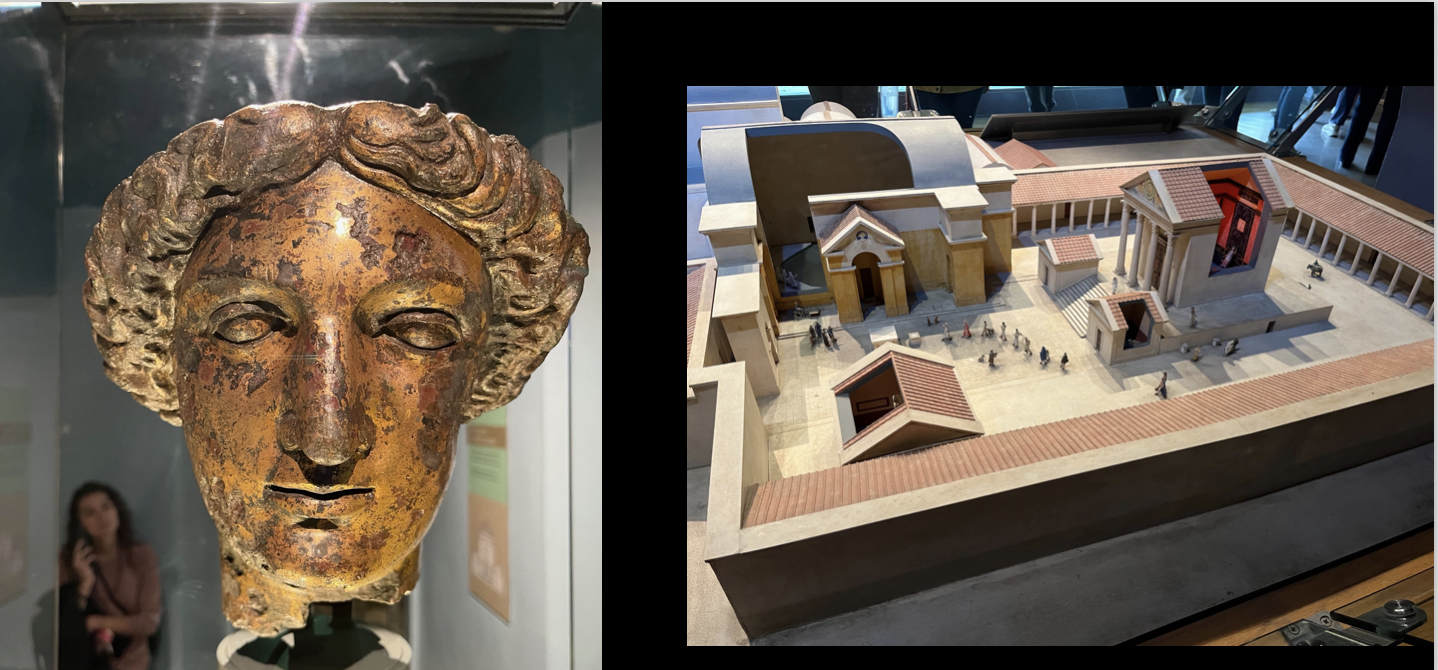
Cult statue of a Sulis Minerva
Cult statue of a Sulis Minerva, gilded bronze, ca. 100 CE, Bath, UK.
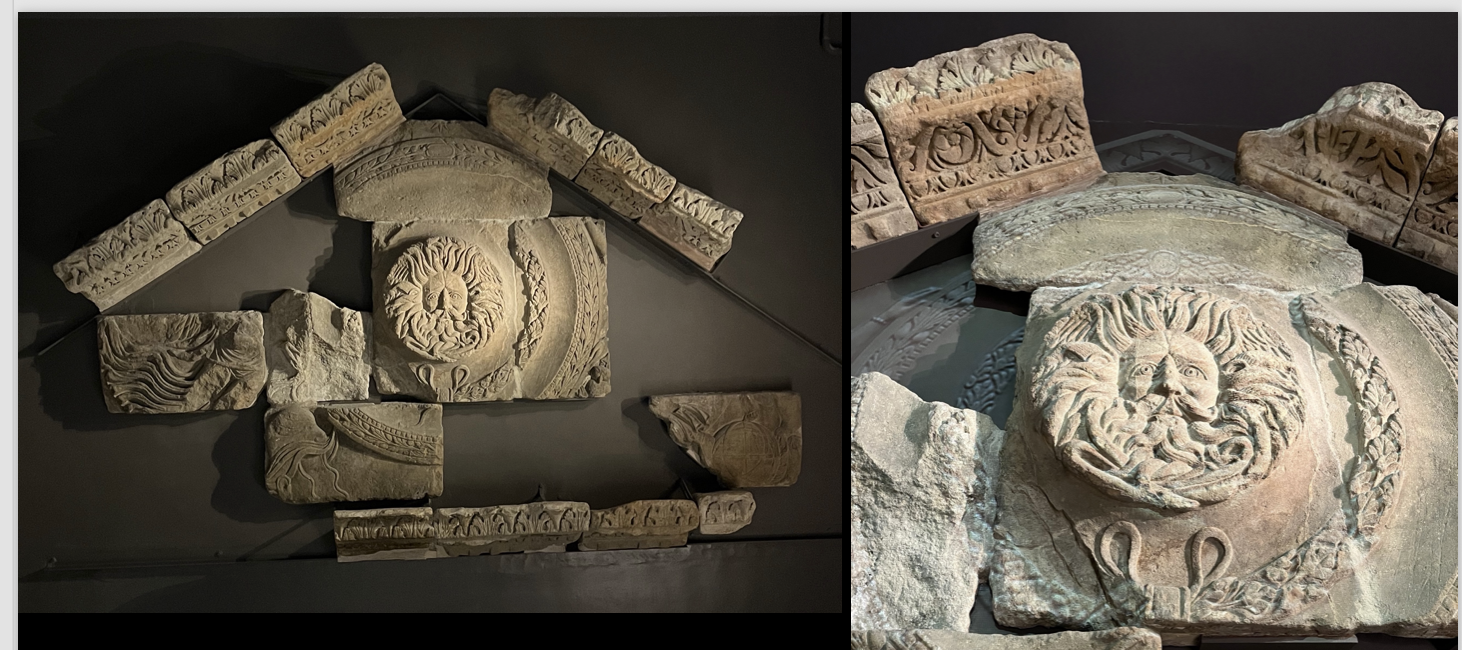
Pediment of the Temple of Sulis Minerva
Pediment of the Temple of Sulis Minerva, stone, ca. 100 CE, Bath, UK.
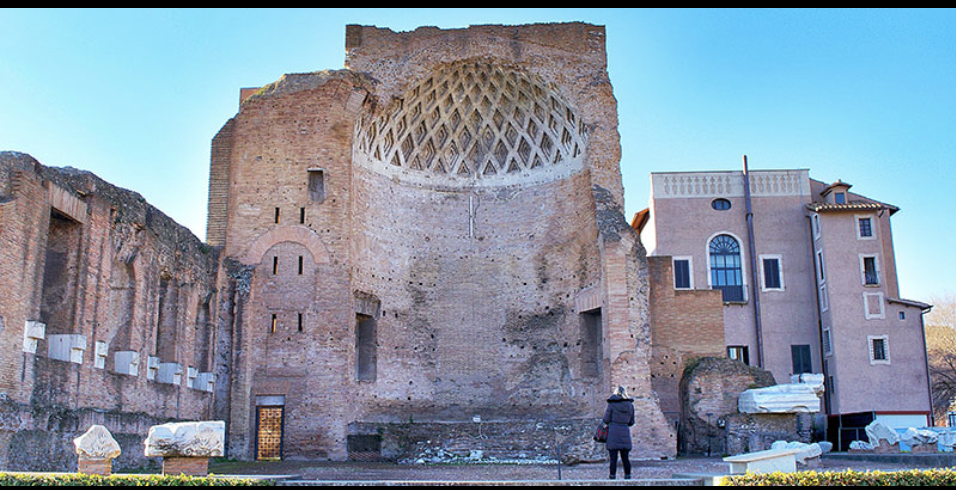
Temple of Venus and Roma
Temple of Venus and Roma, Rome, 121-141 CE.
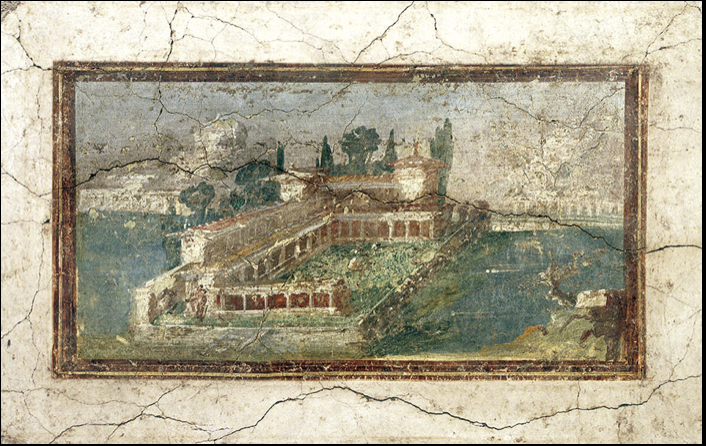
Wall painting depicting a seaside villa
Wall painting depicting a seaside villa, Stabiae, 1st Century CE. Naples Archeological Museum.
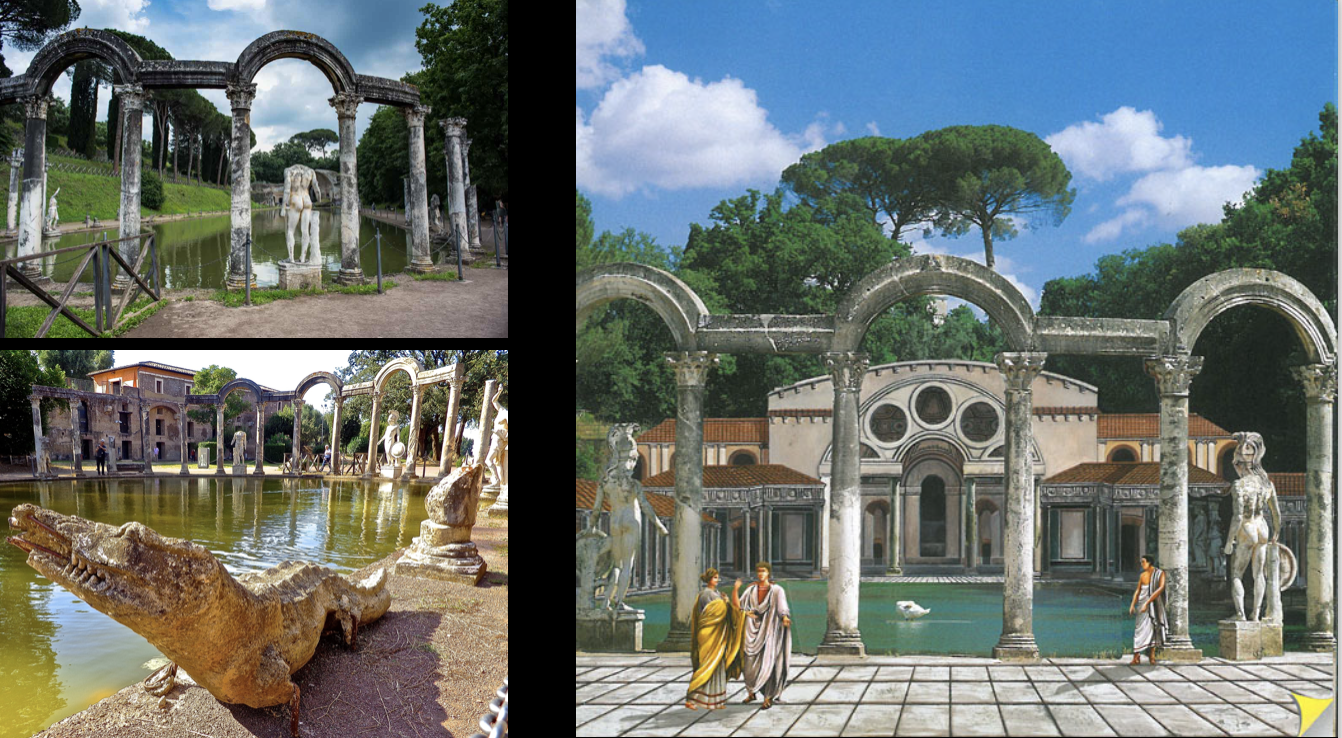
The Canopus at Hadrian’s Villa, Tivoli. 120s CE.
Canopus refers to a famous canal in Egypt, near Alexandria
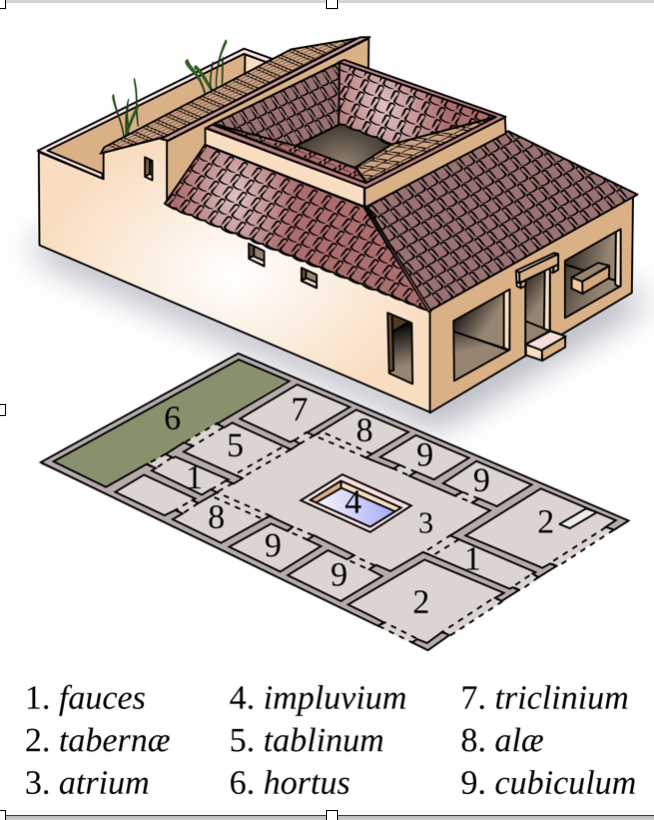
‘Typical’ Roman domus (single-family house).
‘Typical’ Roman domus (single-family house).
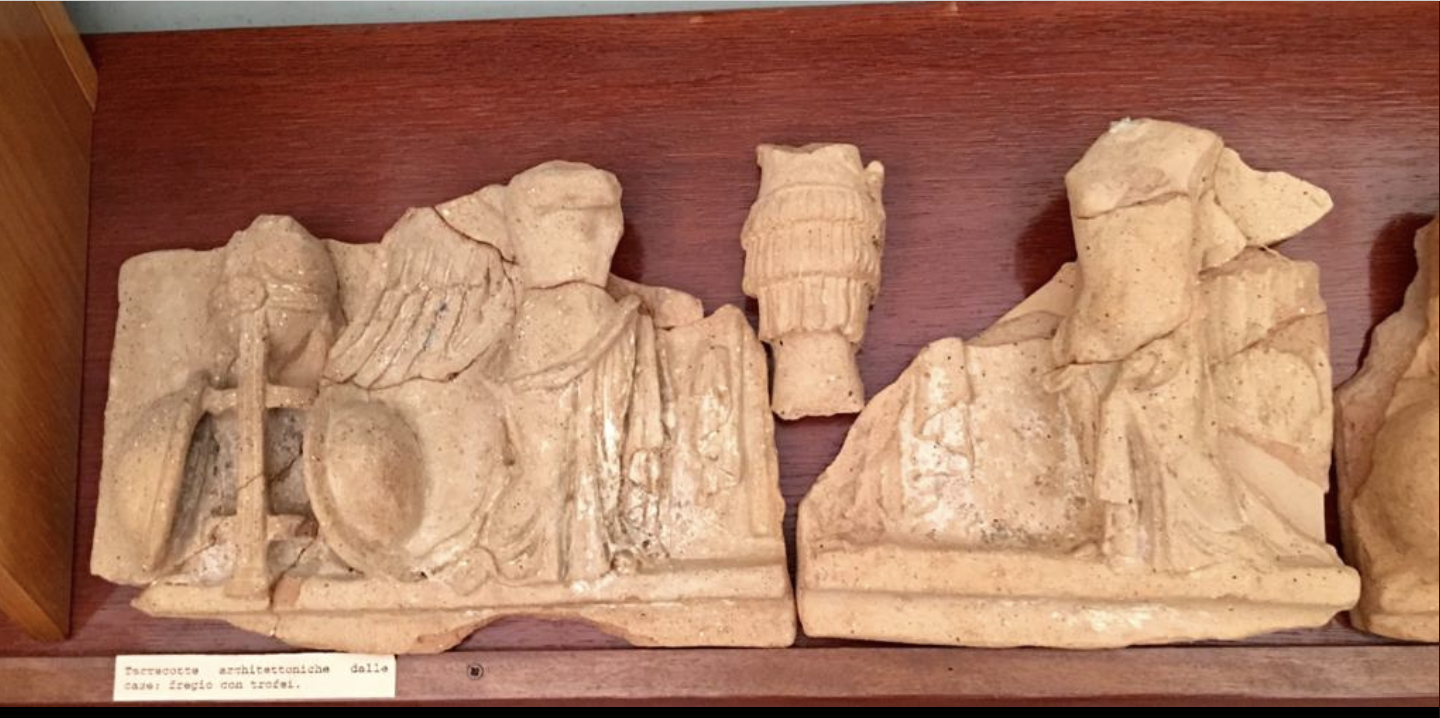
Victories with trophies
Victories with trophies, terracotta hand-made plaques, protection and decoration for a compluvium, perhaps referencing a historical event. Fregellae, atrium house, second century BCE.
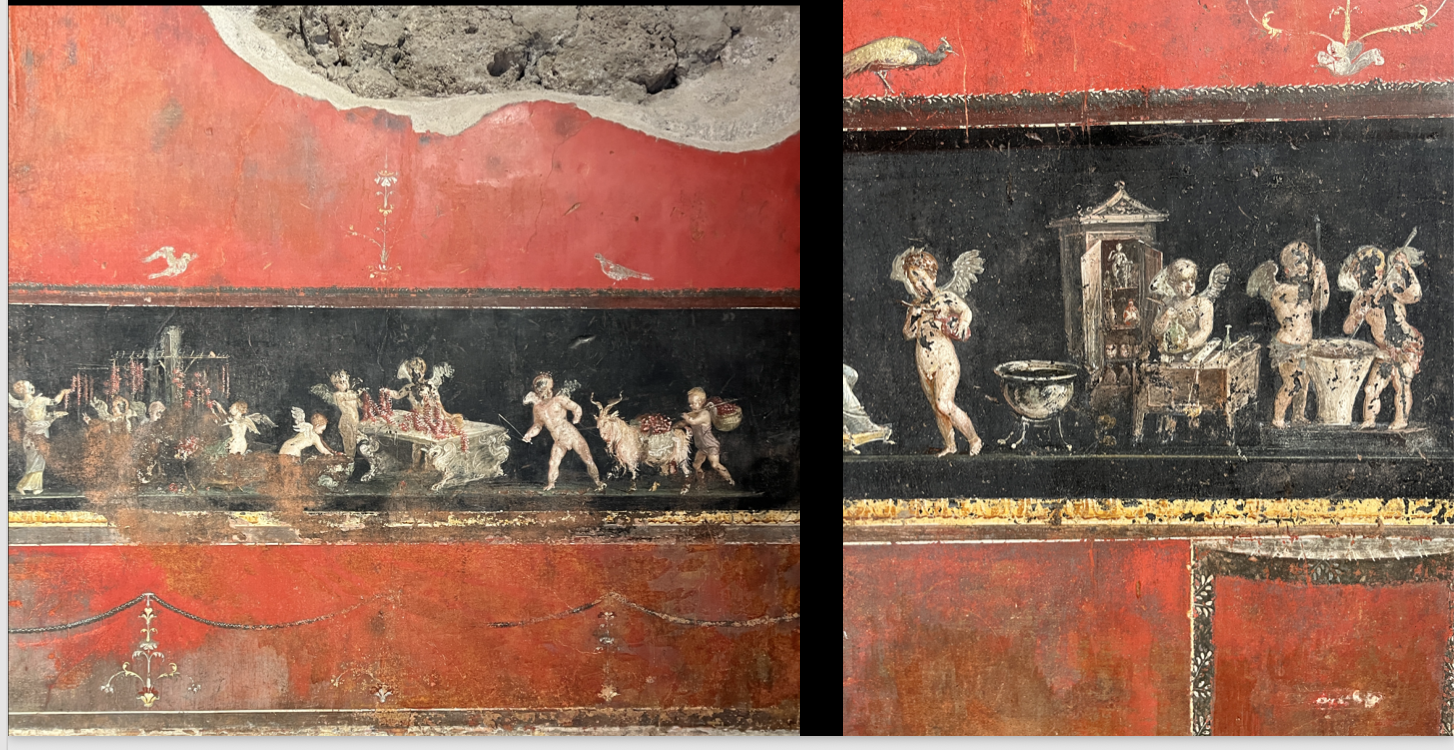
Reception room Q
Reception room Q, decorated with cupids.
House of the Vettii, Pompeii, first century CE.
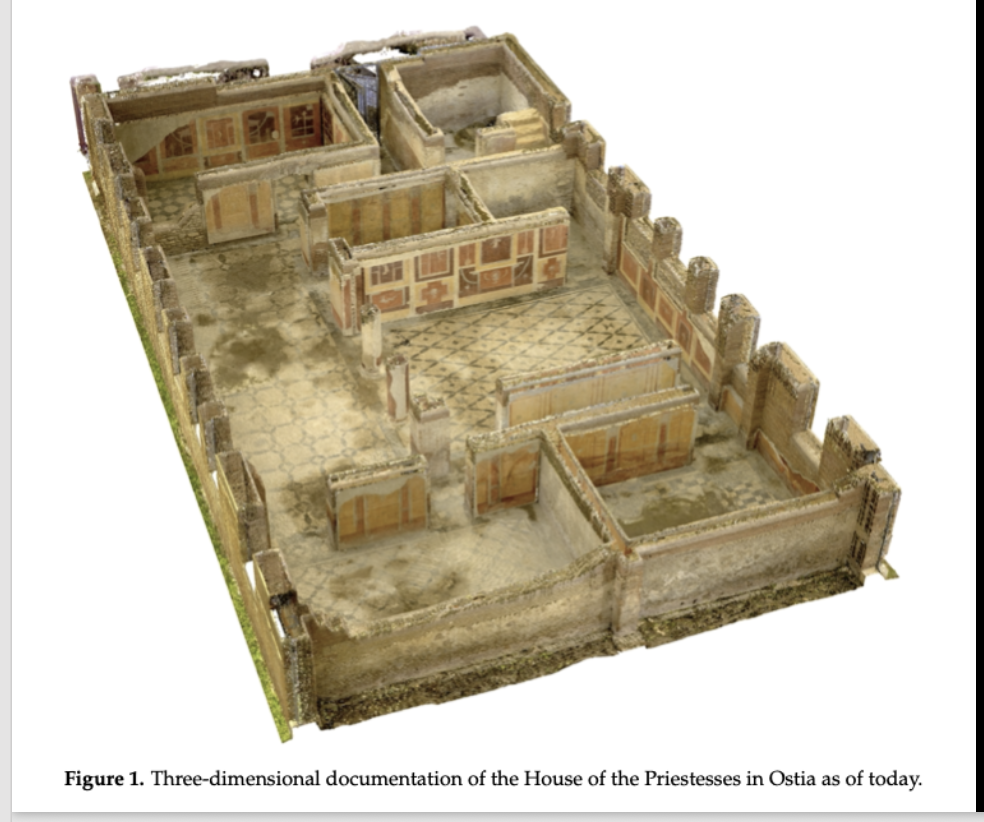
Luxury ‘medianum-style’ apartment, ‘Garden Houses’
Luxury ‘medianum-style’ apartment, ‘Garden Houses’, Regio III, Insula IX, Ostia, second century CE.
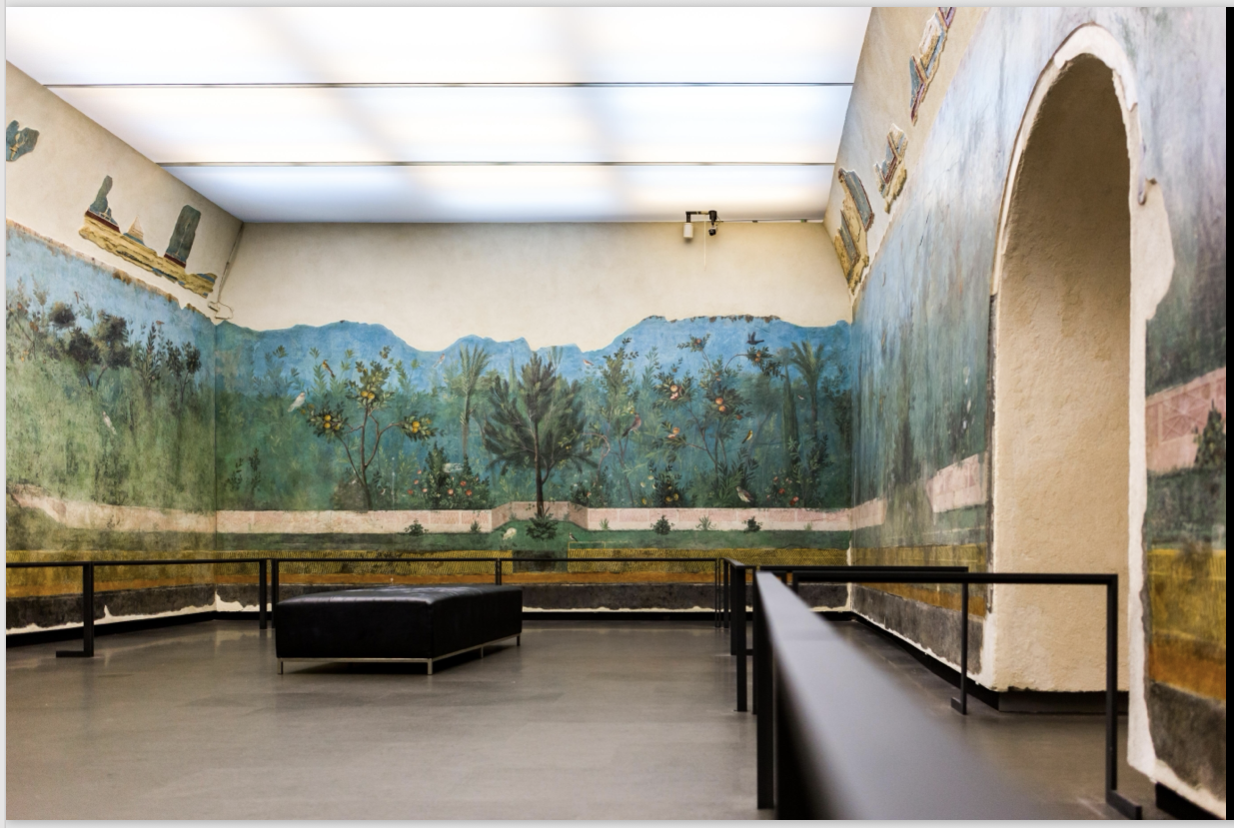
Garden triclinium from the Villa of Livia at Primaporta,
Garden triclinium from the Villa of Livia at Primaporta, painted plaster, late first century BCE. Now Rome, Palazzo Massimo.
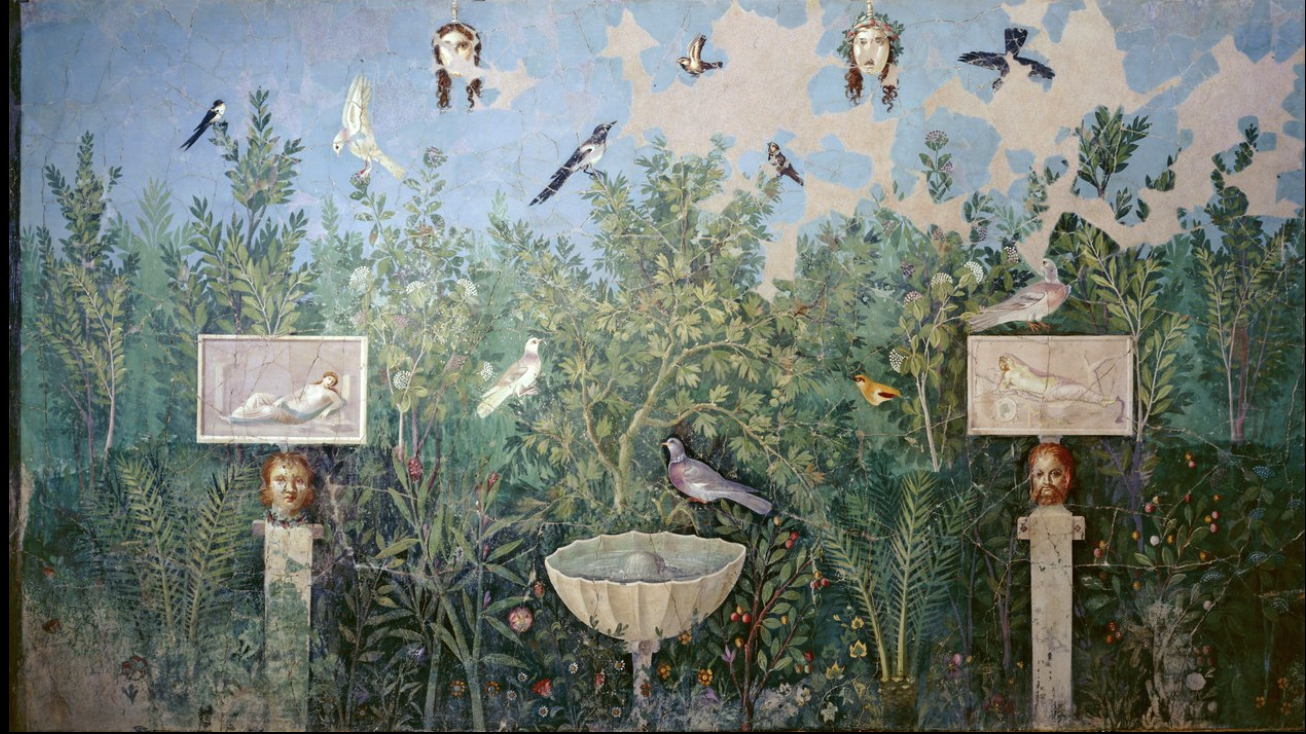
Garden Room (north wall),
Garden Room (north wall), painted plaster, from the House of the Golden Bracelet (VI.17.42), Pompeii, early first century CE.
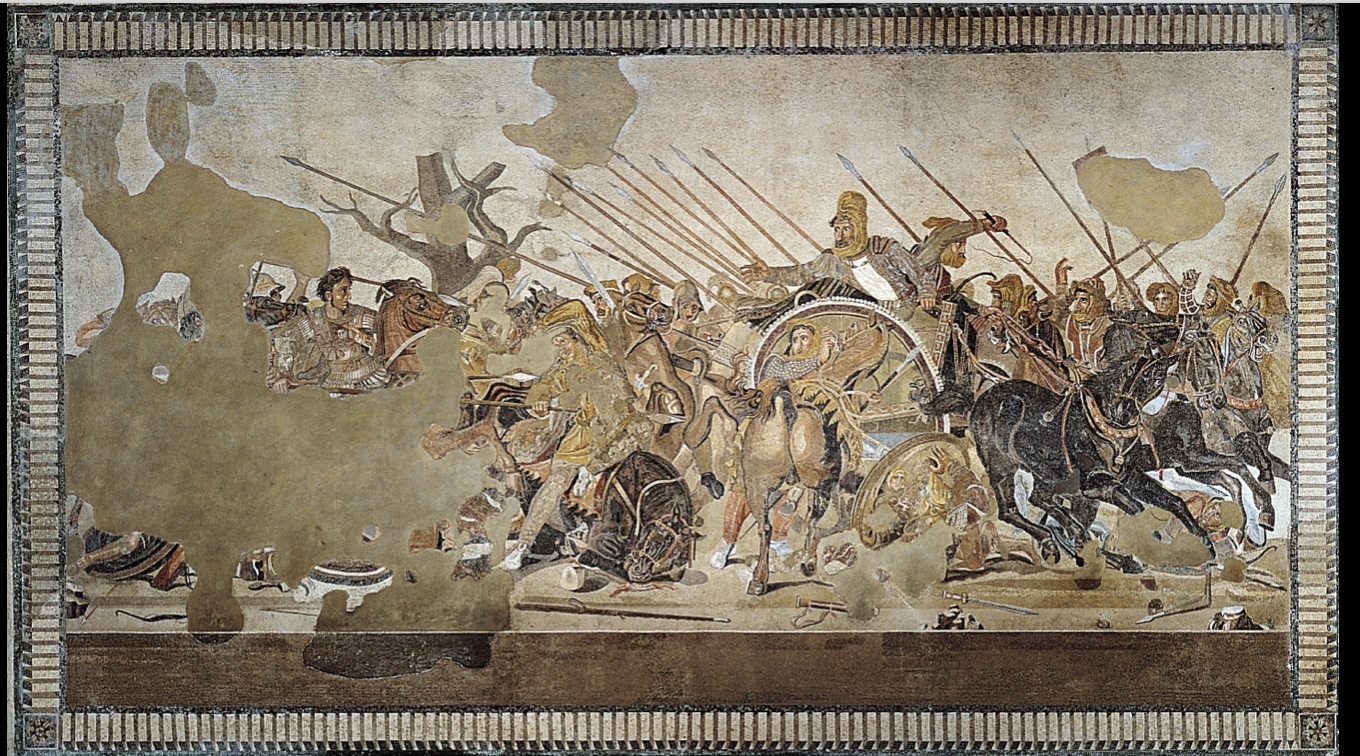
Alexander Mosaic,
Alexander Mosaic, stone tesserae, House of the Faun, Pompeii, ca. 100 BCE. 272cm x 513cm (ca. 9ft x 17ft)
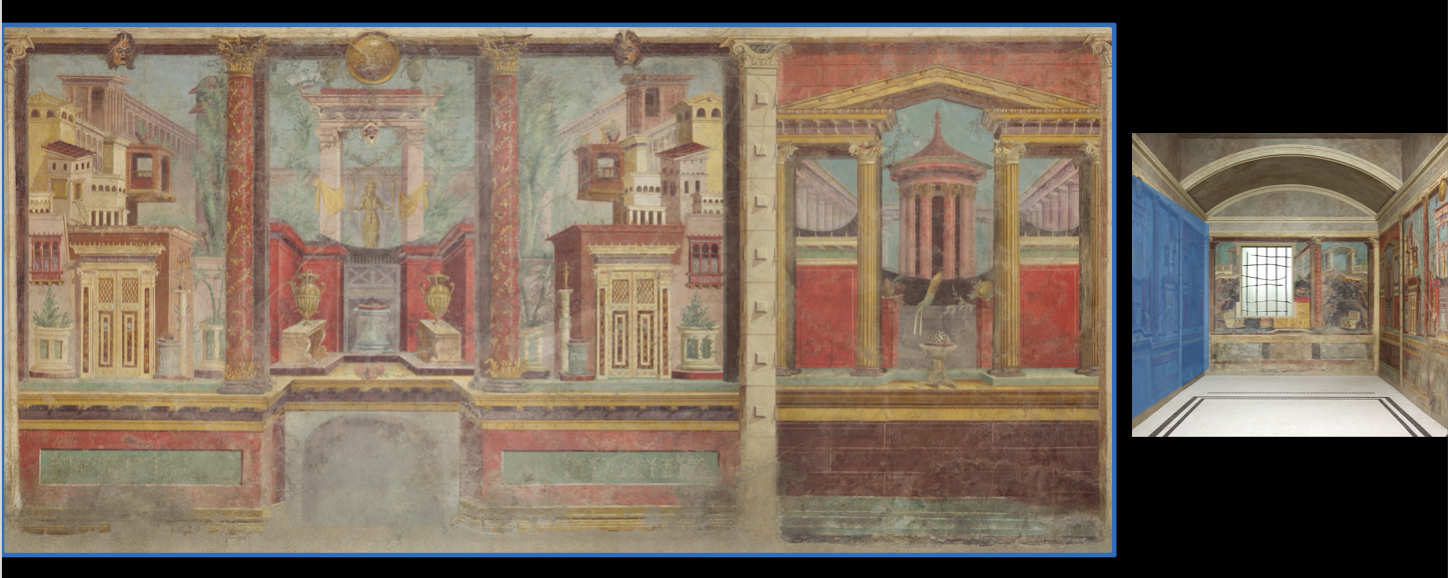
Detail of cubiculum (bedroom) with architectural scenes
Detail of cubiculum (bedroom) with architectural scenes, painted plaster, from Boscoreale (near Pompeii), ca. 50-40 BCE. Now in New York, Metropolitan Museum of Art.
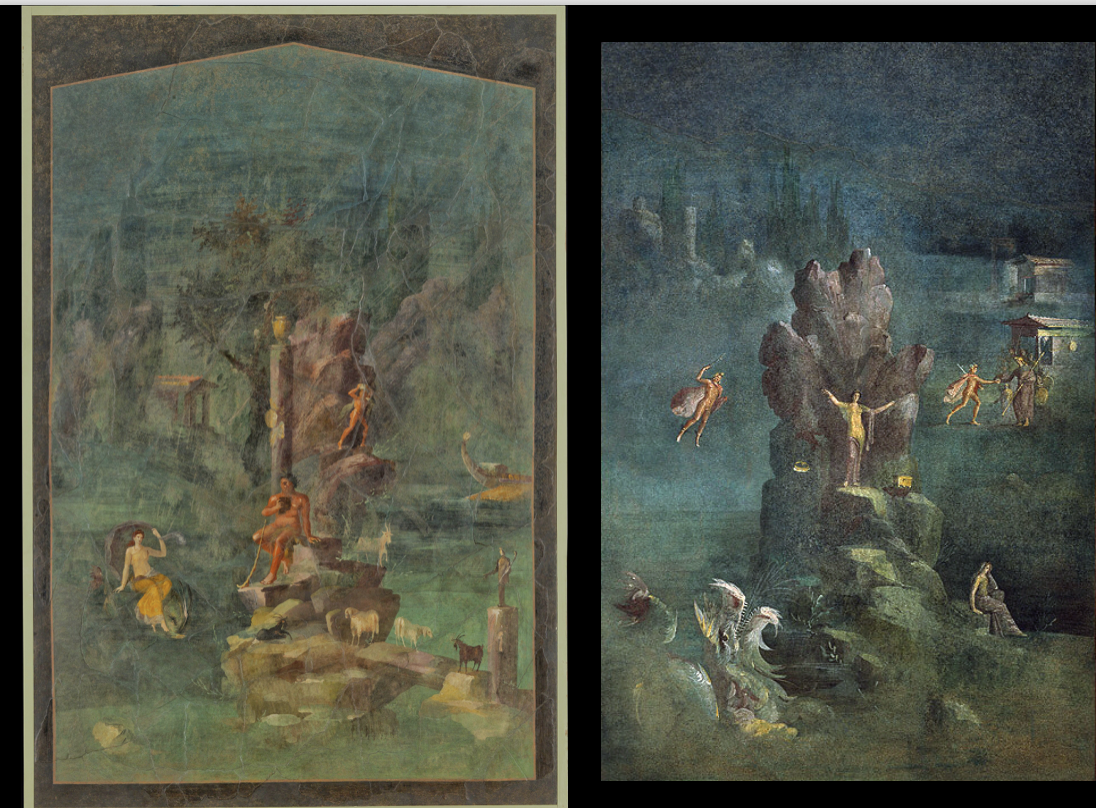
Mythological scenes,
Mythological scenes, painted plaster, from the Villa of Agrippa Postumus at Boscotrecase (near Pompeii), ca. 10 BCE. Approx. 180x120cm each. Now in New York, Metropolitan Museum of Art.
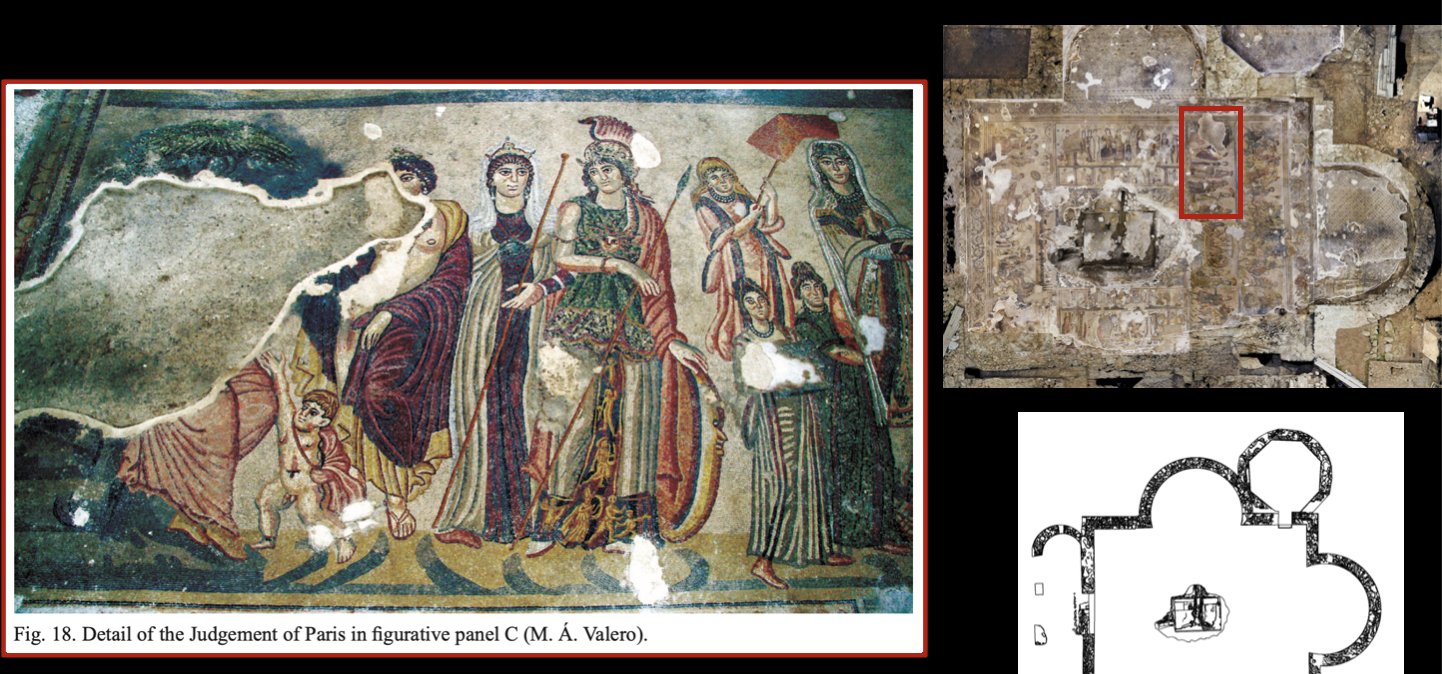
Judgement of Paris
Judgement of Paris, dining room with three exedras, Roman villa of Noheda, Spain, fourth century CE.
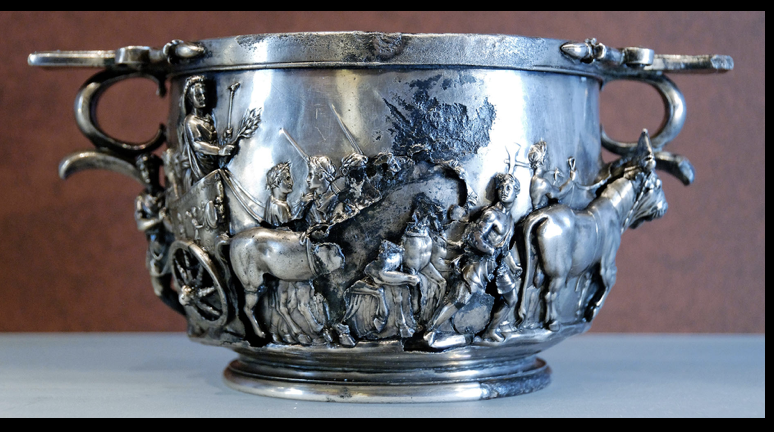
Triumphal procession of Tiberius
Culminating sacrifice,
Triumphal procession of Tiberius, silver cup, Boscoreale (near Pompeii), Augustan period. Now Paris, Louvre.
Culminating sacrifice, silver cup, Boscoreale (near Pompeii), Augustan period. Now Paris, Louvre.
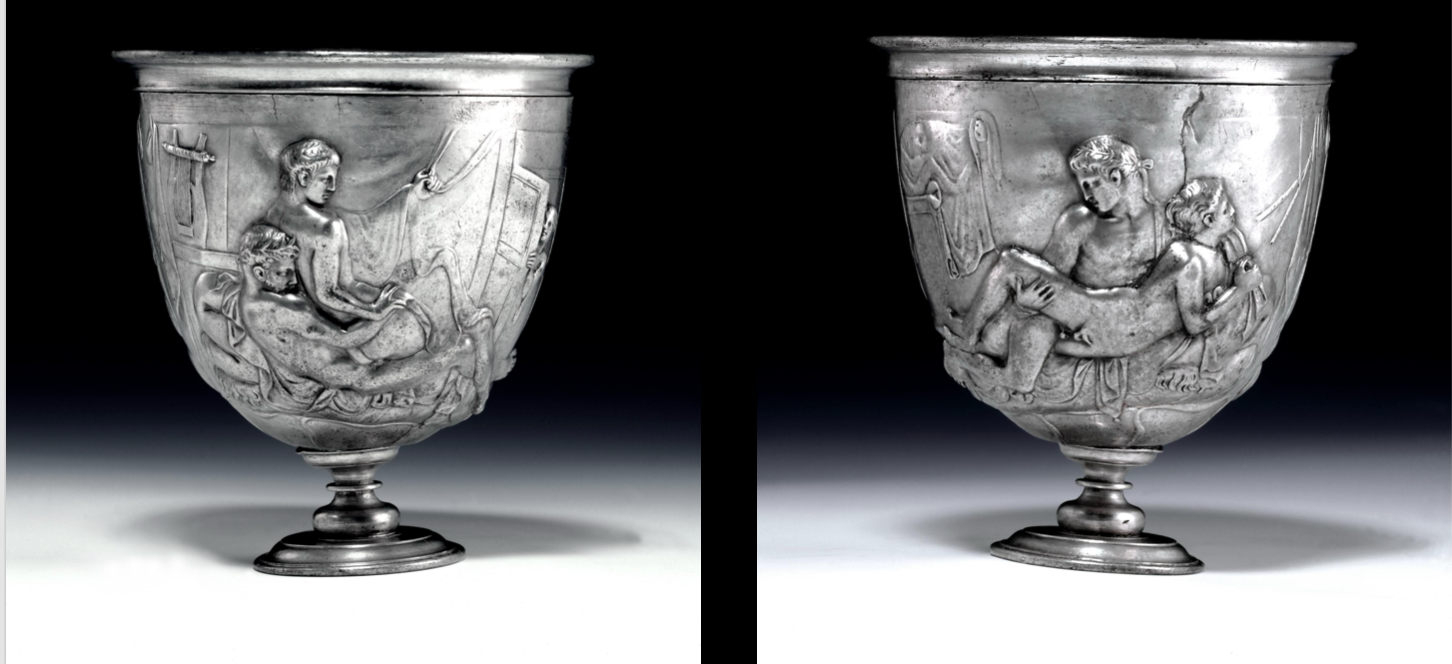
The ‘Warren Cup’
The ‘Warren Cup’, named after Edward Perry Warren, silver, Augustan period, 11cm high.
Now London, British Museum, inv. 1999,0426.1.
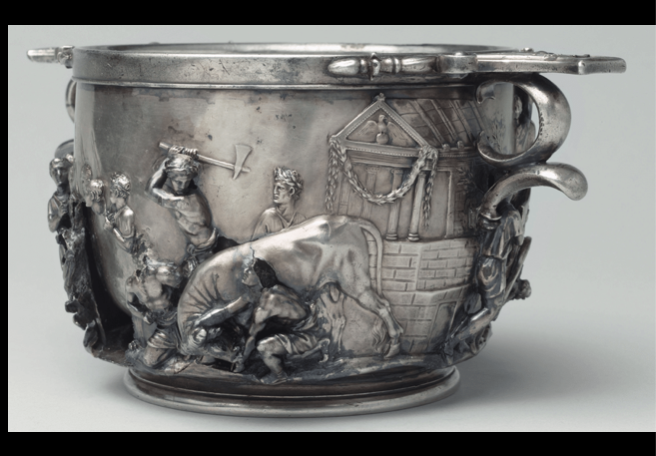
Cup, Arretine ware (aka terra sigillata),
Cup, Arretine ware (aka terra sigillata), terracotta, made in Arezzo (Italy),
Augustan period. YUAG 1913.514.
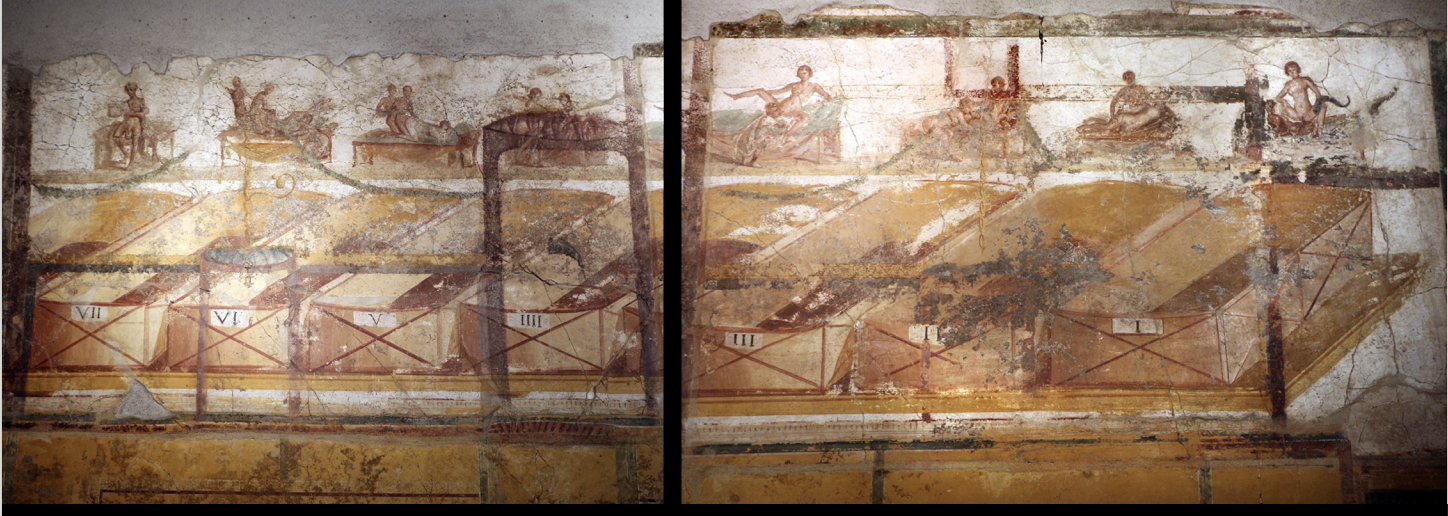
Scenes of varied sexual activities,
Scenes of varied sexual activities, changing room of the Suburban Baths (VII.16.a) Pompeii. Room 7, upper south wall.
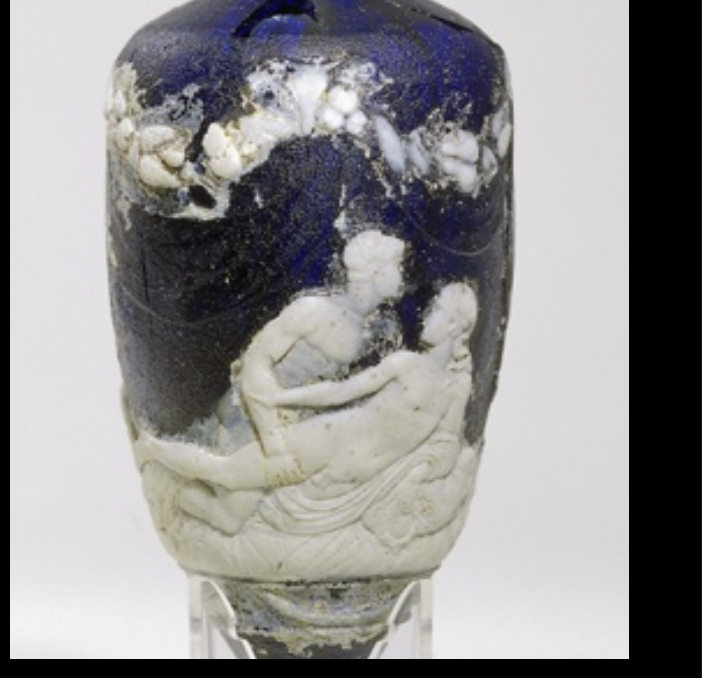
Bottle with sexual scene,
Bottle with sexual scene, cameo glass, probably from Spain, 14cm high, Augustan Period. George Ortiz Collection.
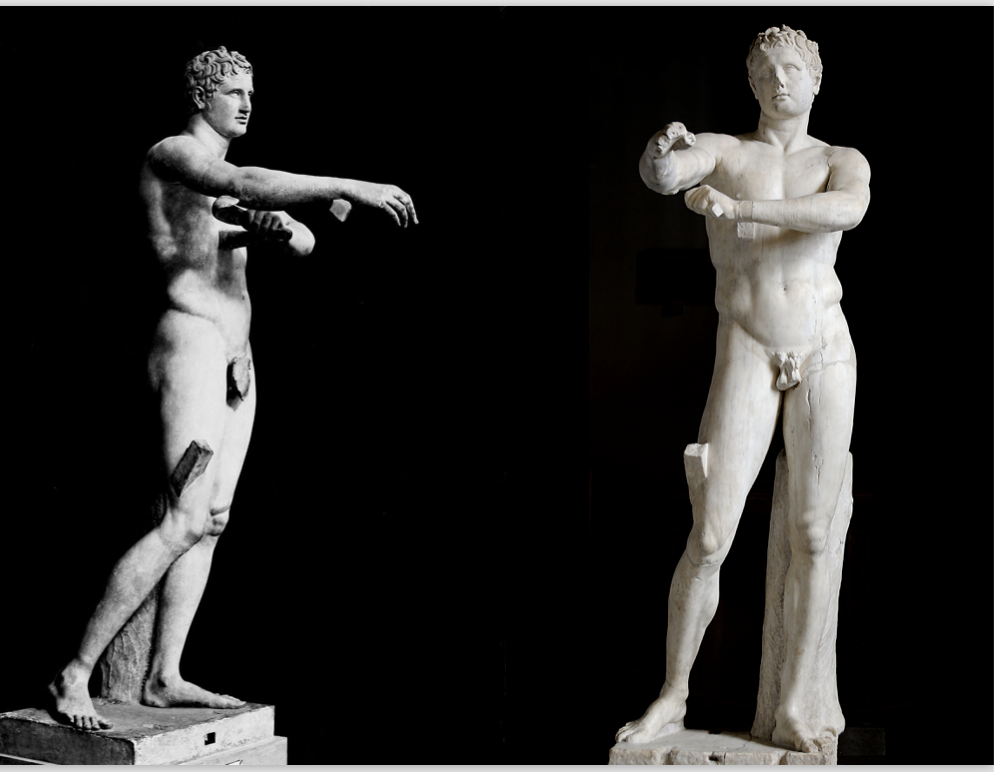
Apoxyomenos
Apoxyomenos, marble, ca. 50 CE, from Trastevere (Rome). Now Vatican Museums.
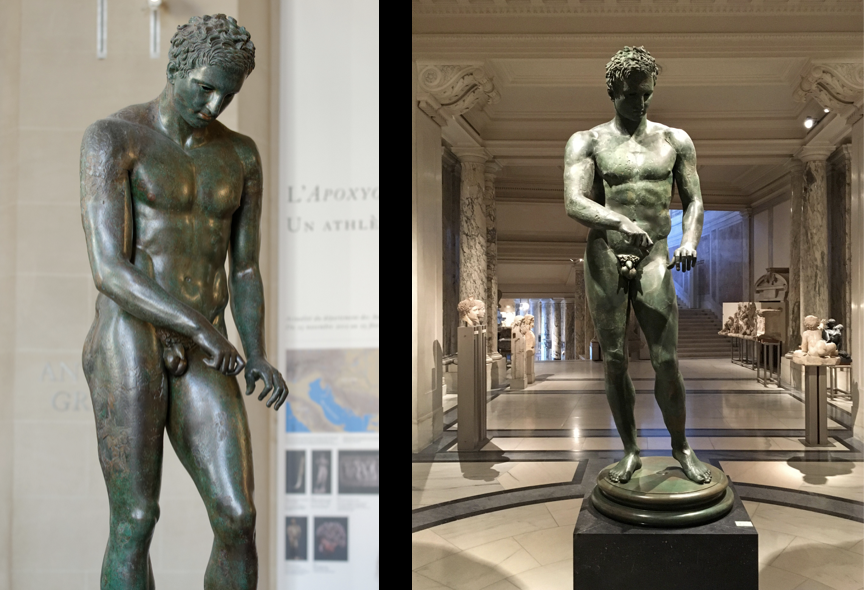
Apoxyomenos in bronze
Above: Apoxyomenos, bronze, found in Ephesos (Turkey) in 1896. Now Vienna.
Left: Apoxyomenos, bronze, found in the Adriatic in 1996, 192cm high. Now Mali Lošinj, Croatia.
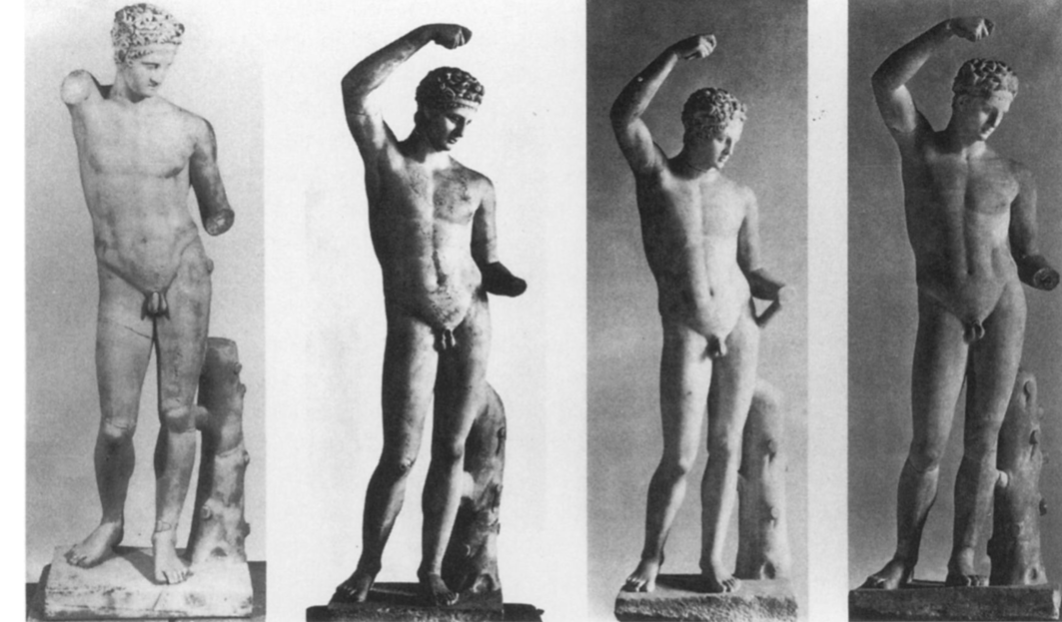
Four pouring satyrs,
Four pouring satyrs, marble, from Castel Gandolfo (near Rome), first century CE.
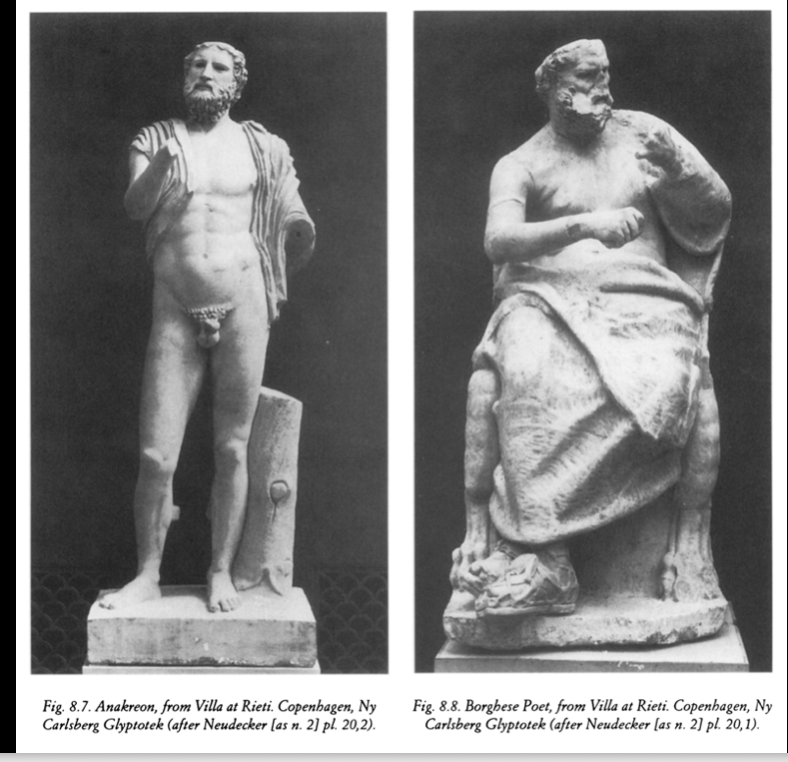
Two poets
Two poets, marble, from a villa at Rieti (Italy), second century CE.
Now Copenhagen, Ny Carlsberg Glyptotek.
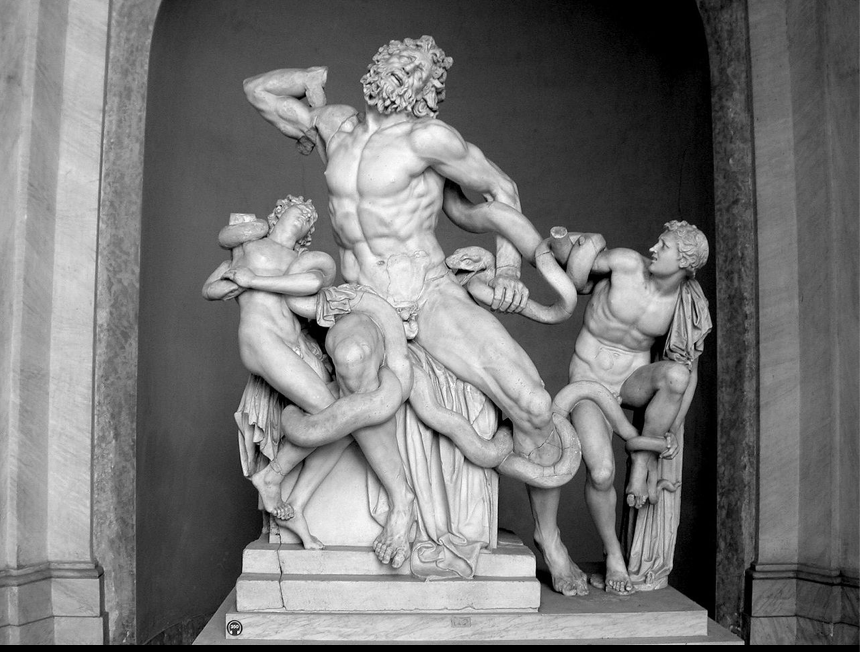
Laocoon
Laocoon, marble, first century CE(?), excavated in Rome in 1506, 208cm high.
Vatican Museums.
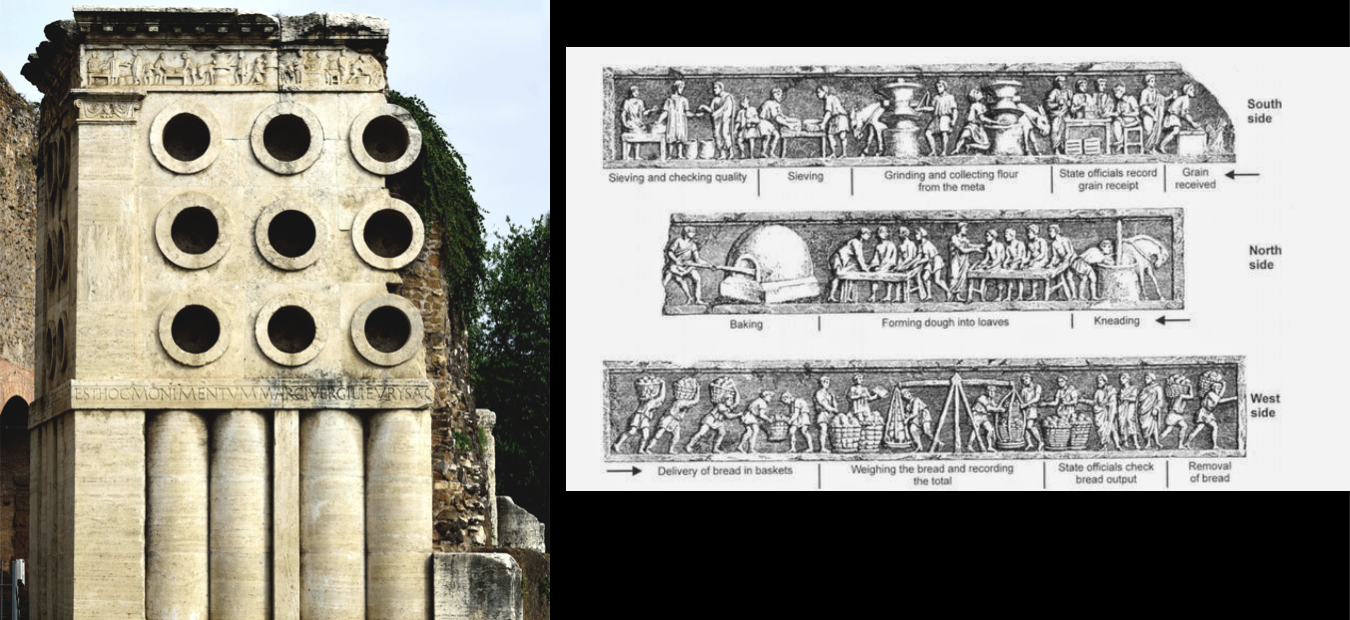
Tomb of Marcus Vergilius Eurysaces and Atistia
Tomb of Marcus Vergilius Eurysaces and Atistia, south side, travertine for the façade, Rome, Porta Maggiore, late first century BCE.
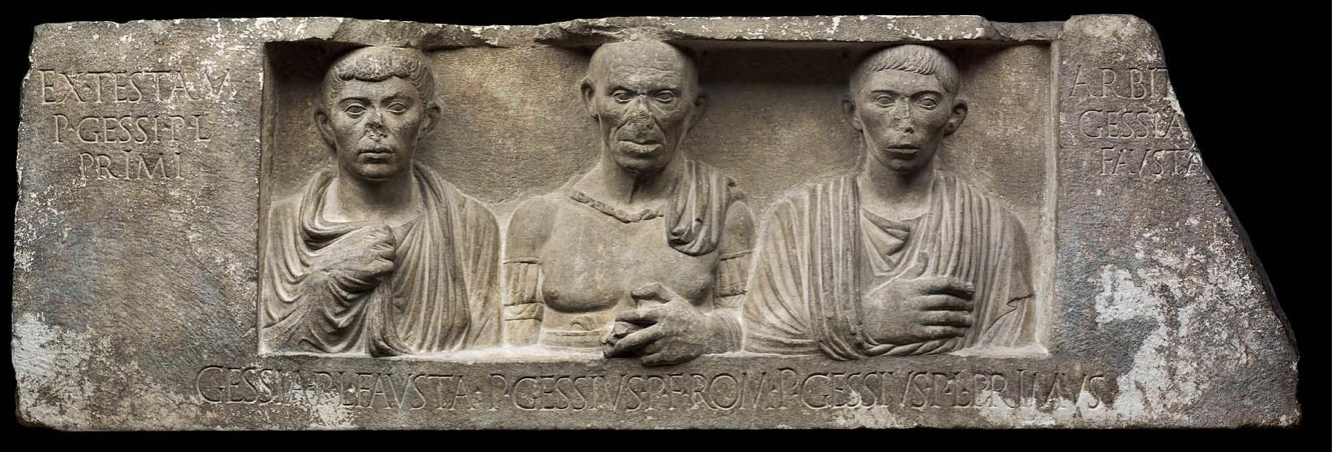
Gessius Relief,
Gessius Relief, marble, late first century BCE. MFA Boston 37.100. 2.05m wide.
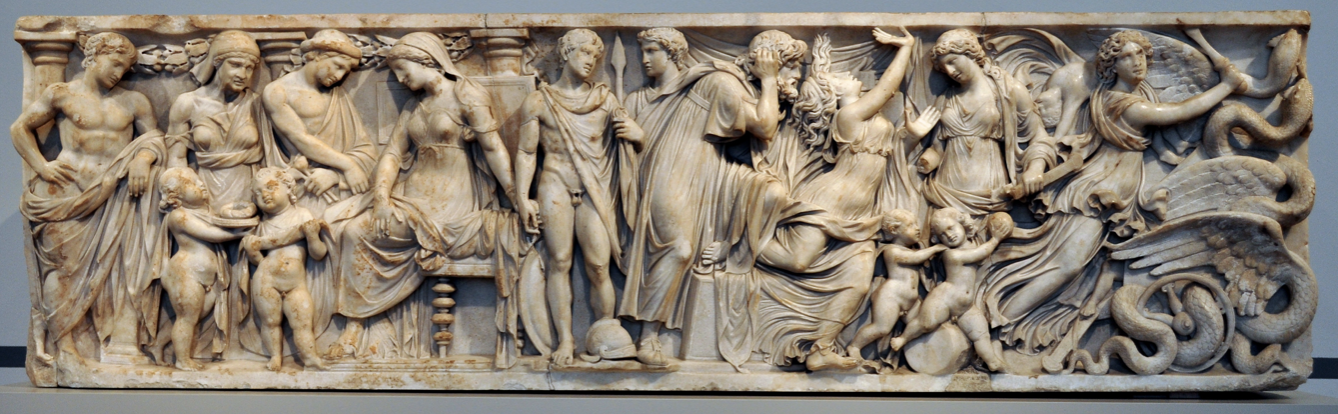
Sarcophagus with scenes from the myth of Medea
Sarcophagus with scenes from the myth of Medea, marble, mid-second century CE, 2.27m wide.
Now Berlin, Altes Museum.
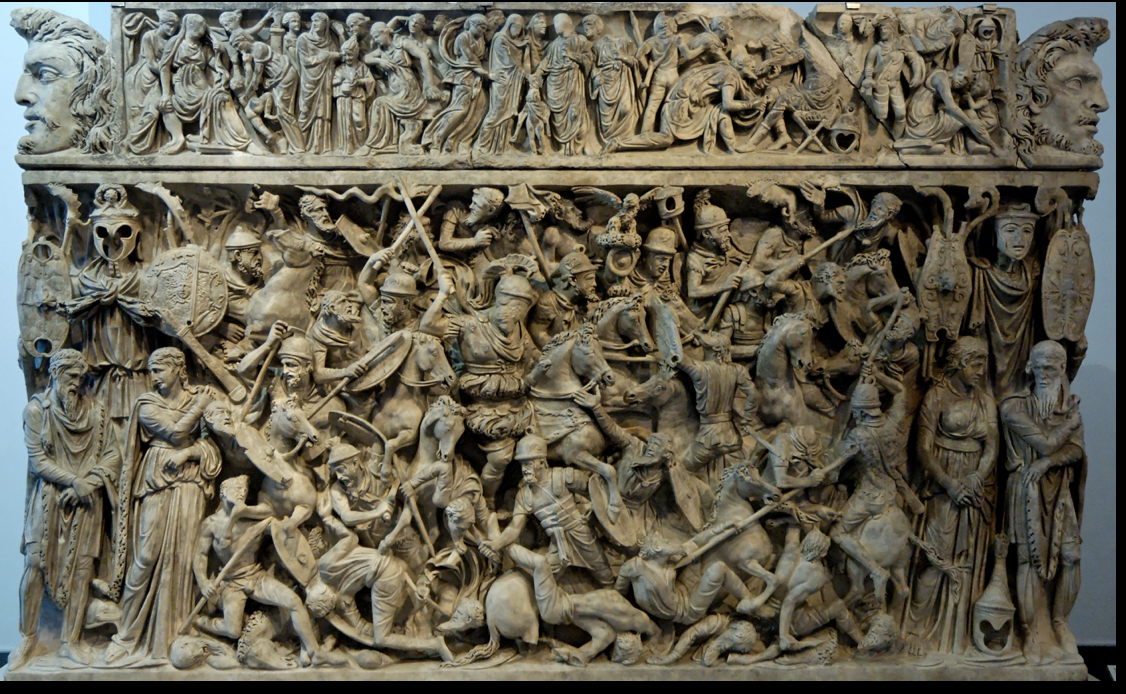
Battle sarcophagus
Battle sarcophagus, from Portonaccio (Rome), marble, late second century CE, 2.39m wide.
Now Rome, Palazzo Massimo alle Terme.
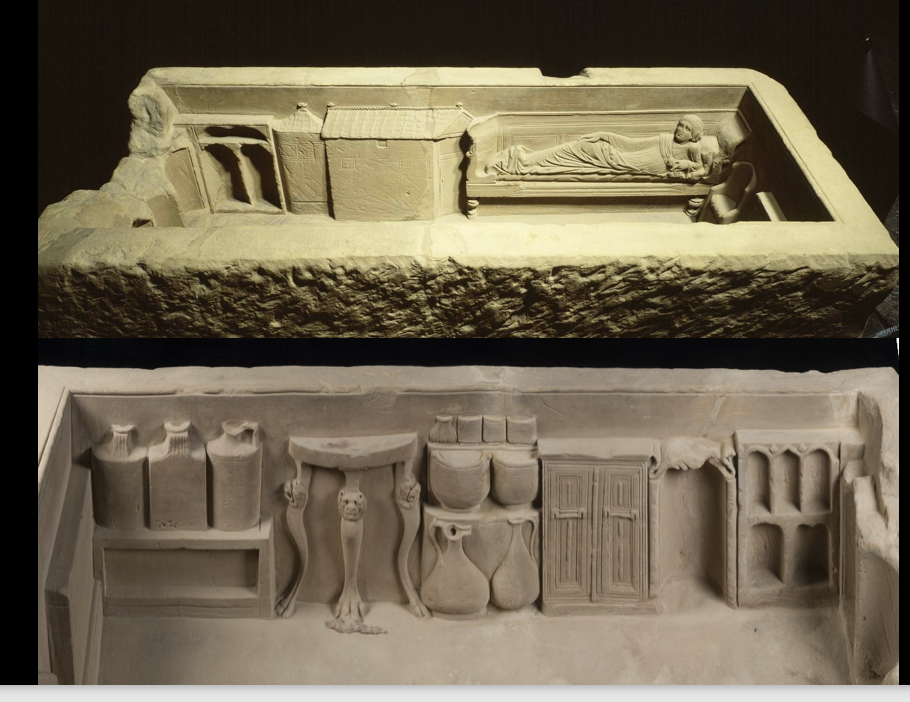
Sarcophagus from Simpelveld
Sarcophagus from Simpelveld, Netherlands, sandstone, ca. 200 CE.
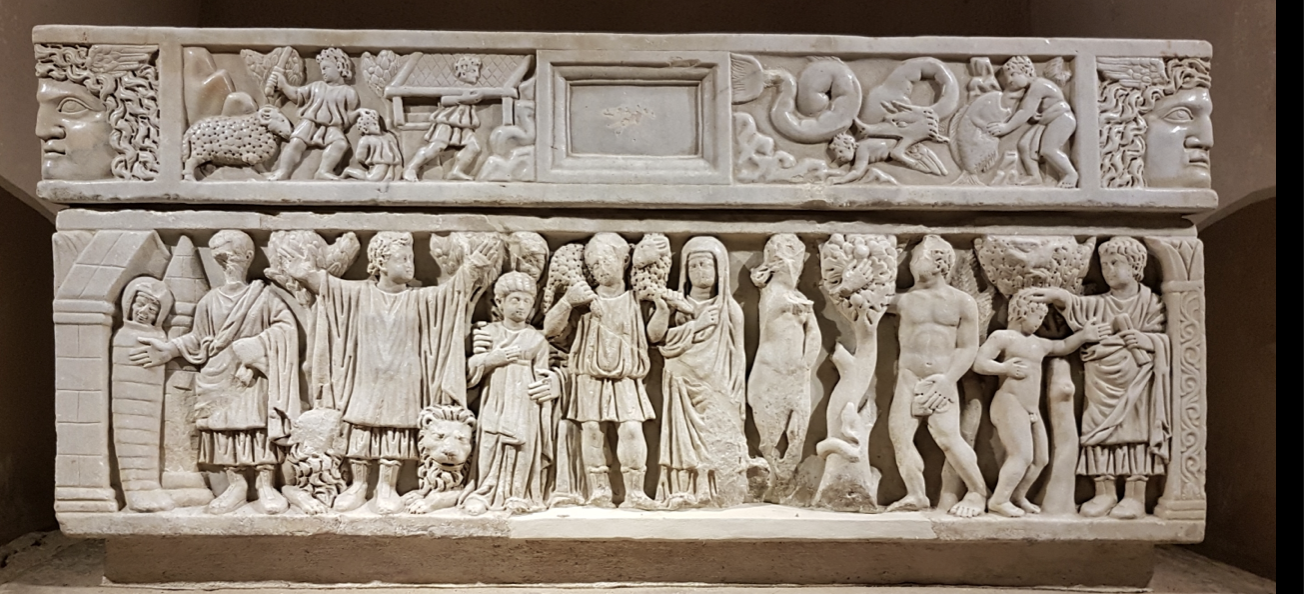
Sarcophagus from Aire-sur-l’Adour,
Sarcophagus from Aire-sur-l’Adour, France, marble, fourth-fifth century CE. 212 cm wide.
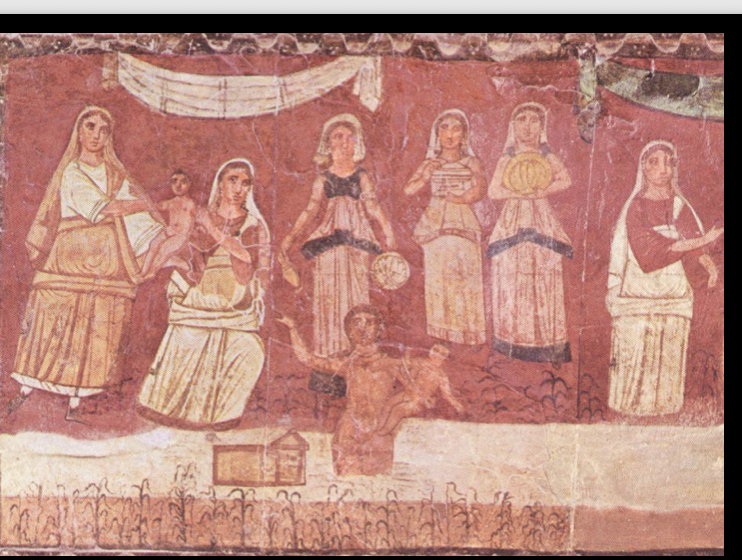
Pharoah’s Daughter finding the baby Moses
Pharoah’s Daughter finding the baby Moses. Fresco from the West Wall of the Synagogue. Dura-Europos. 245-6 AD.
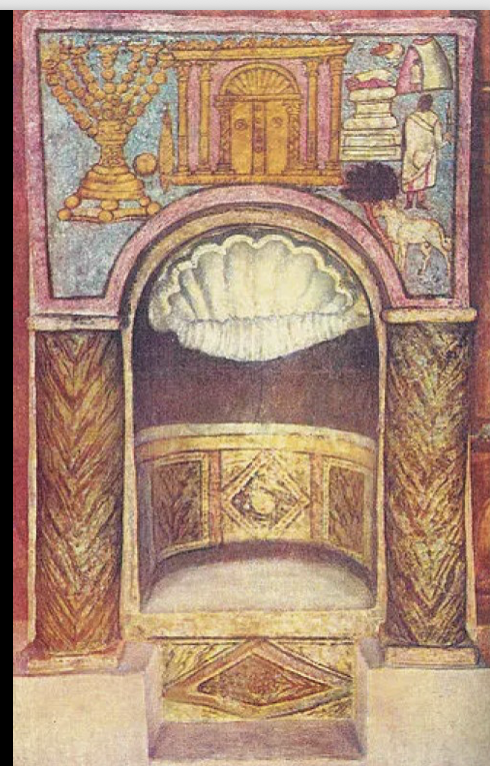
Fresco above the aedicula from the west wall of the synagogue
Fresco above the aedicula from the west wall of the synagogue, 3rd century A.D. Dura-Europos, Syria.
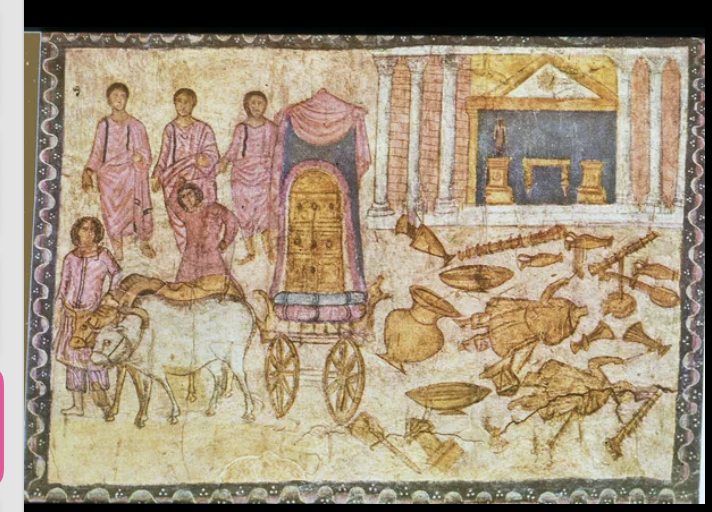
Temple of Dagon and the Return of the Ark of the Covenant.
Temple of Dagon and the Return of the Ark of the Covenant. Fresco from the West Wall of the Synagogue. Dura-Europos. 245-246. AD.
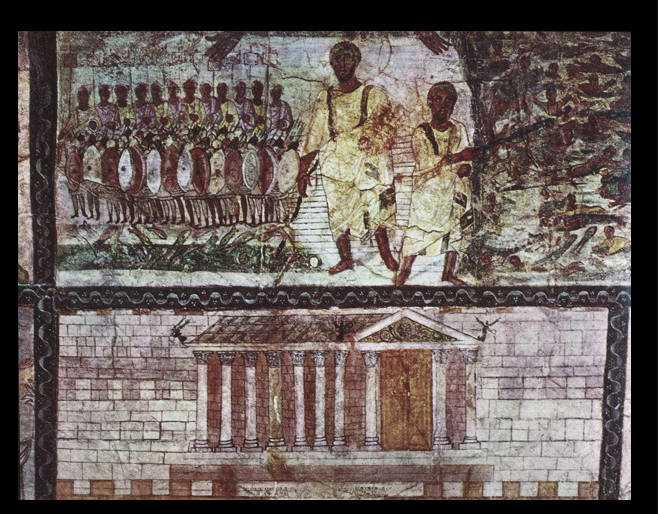
Crossing the Red Sea.
Crossing the Red Sea. Fresco from the West Wall of the Synagogue. Dura-Europos. 244-245 AD.
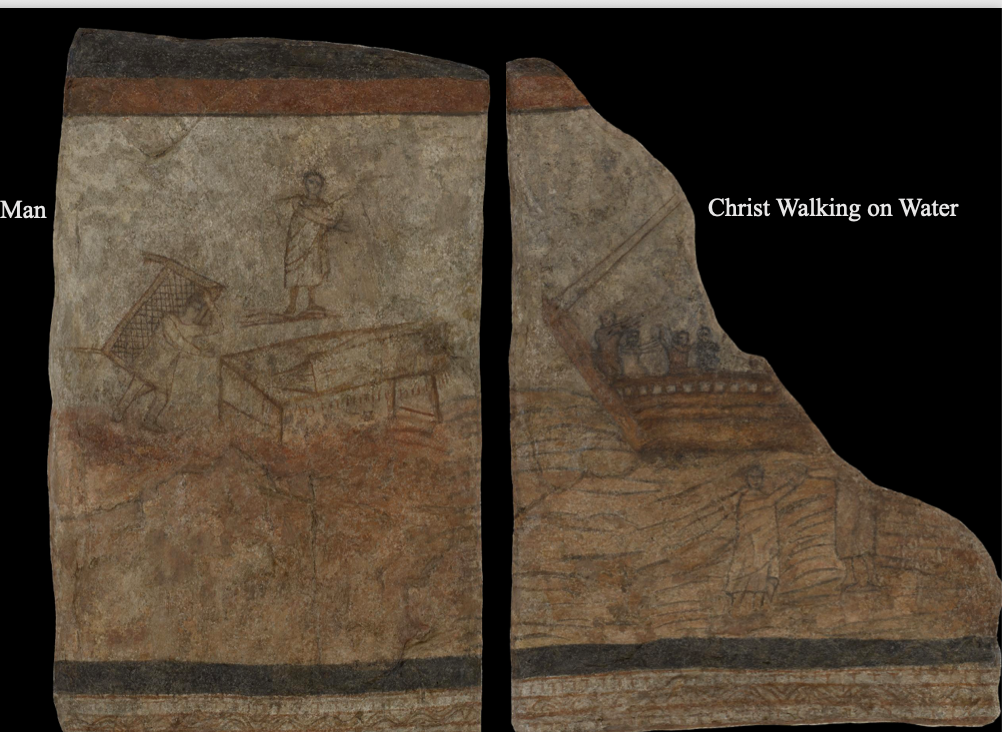
Frescoes from the Baptistery of the Christian building.
Frescoes from the Baptistery of the Christian building. Dura-Europos. c. 232 AD.
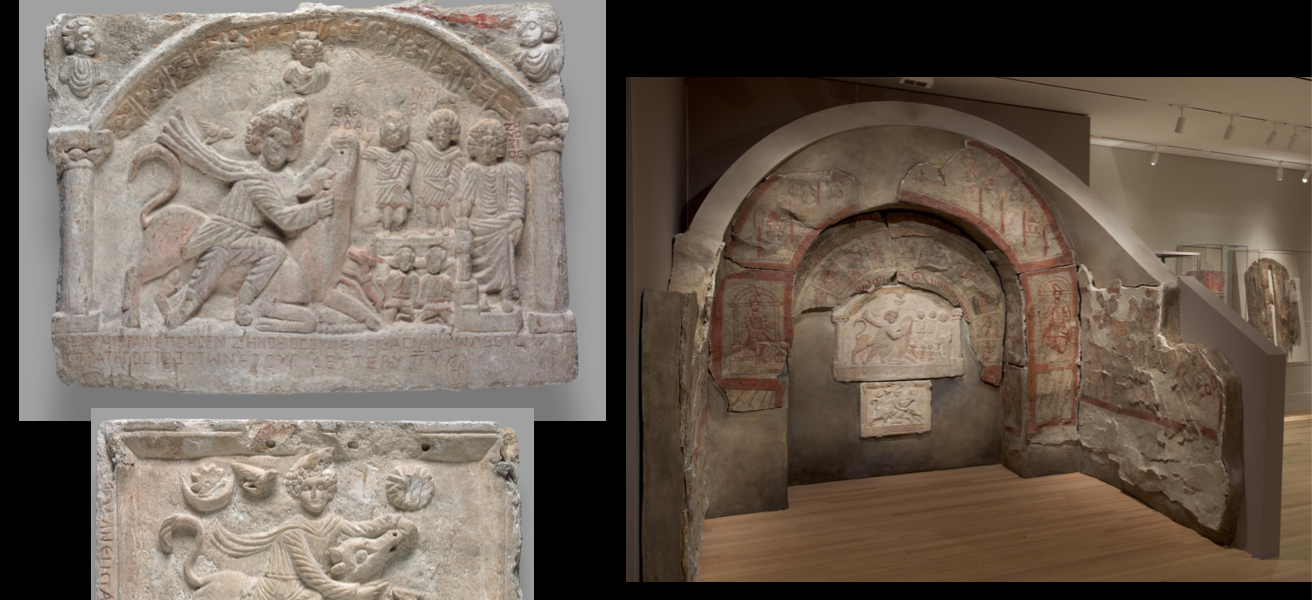
Tauroctony relief (Mithras slaying the bull).
Tauroctony relief (Mithras slaying the bull). Temple of Mithras. Gypsum. Dura-Europos.
Upper relief: 170-171 AD
Lower relief: c. 168 AD
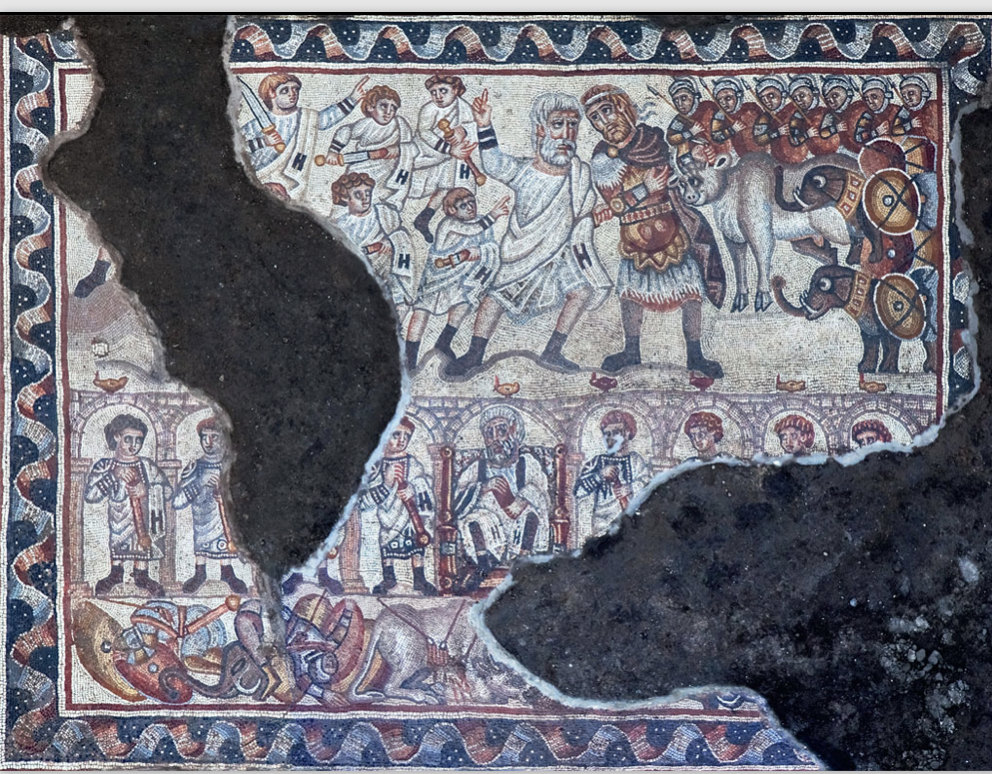
“Elephant panel,”
“Elephant panel,” mosaic, from the Huqoq Synagogue, fifth century CE. 120x112cm.
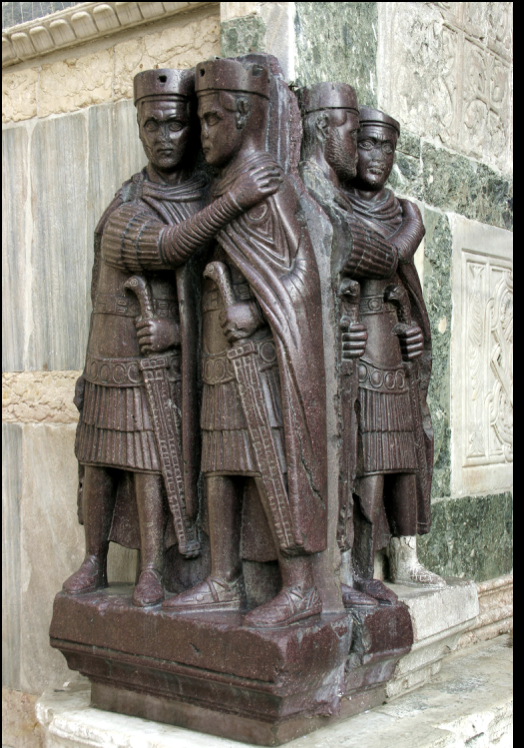
The Tetrarchs,
The Tetrarchs, porphyry, originally from Constantinople, ca. 300 CE. Now Venice, Piazza San Marco.
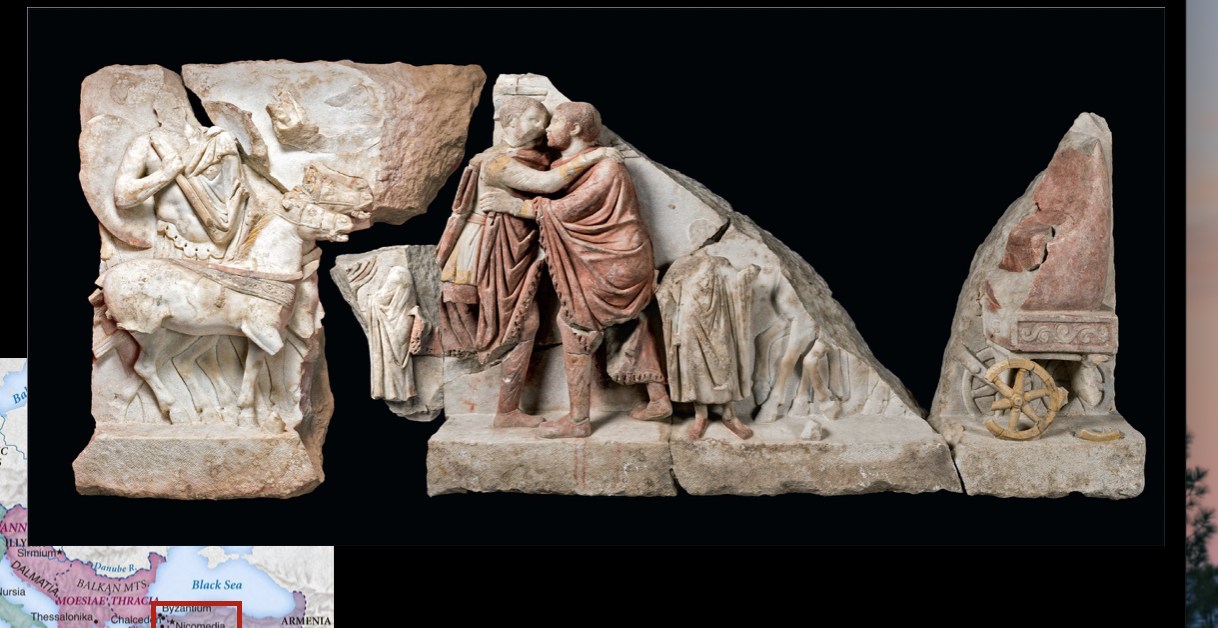
Imperial adventus (arrival) scene showing the reunion of Diocletian and Maximian,
Imperial adventus (arrival) scene showing the reunion of Diocletian and Maximian, marble, from the Palace at Nicomedia, late third century CE.
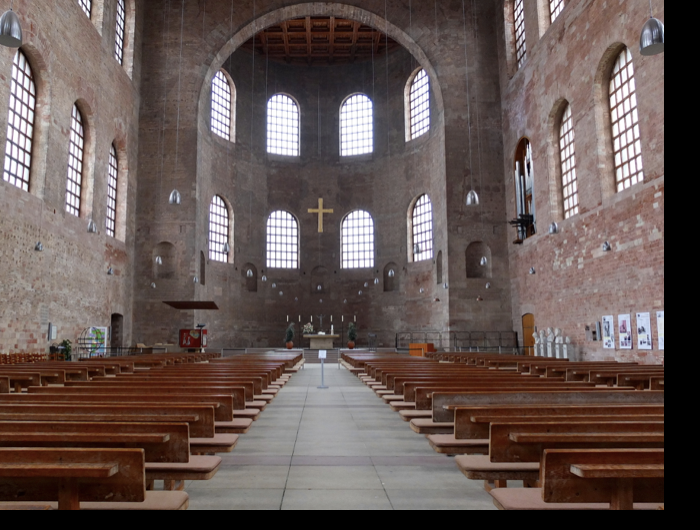
Aula Palatina (audience hall)
Interior view of the Aula Palatina (audience hall), Trier (now in Germany), brick. Started by Constantius Chlorus, ca. 300 CE.
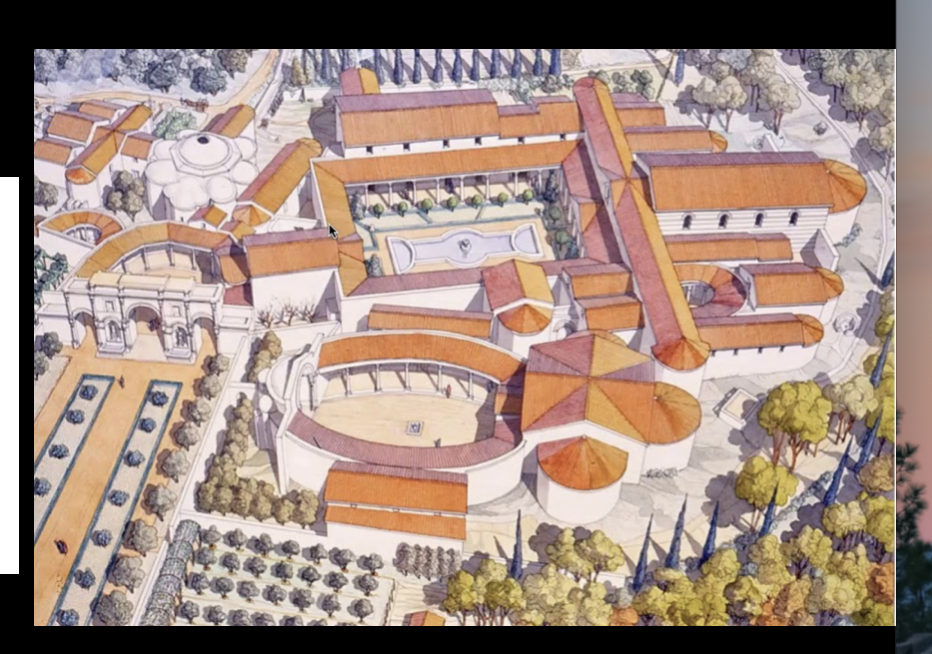
Villa Romana del Casale
Villa Romana del Casale, Piazza Armerina, Sicily, ca. 300 CE.
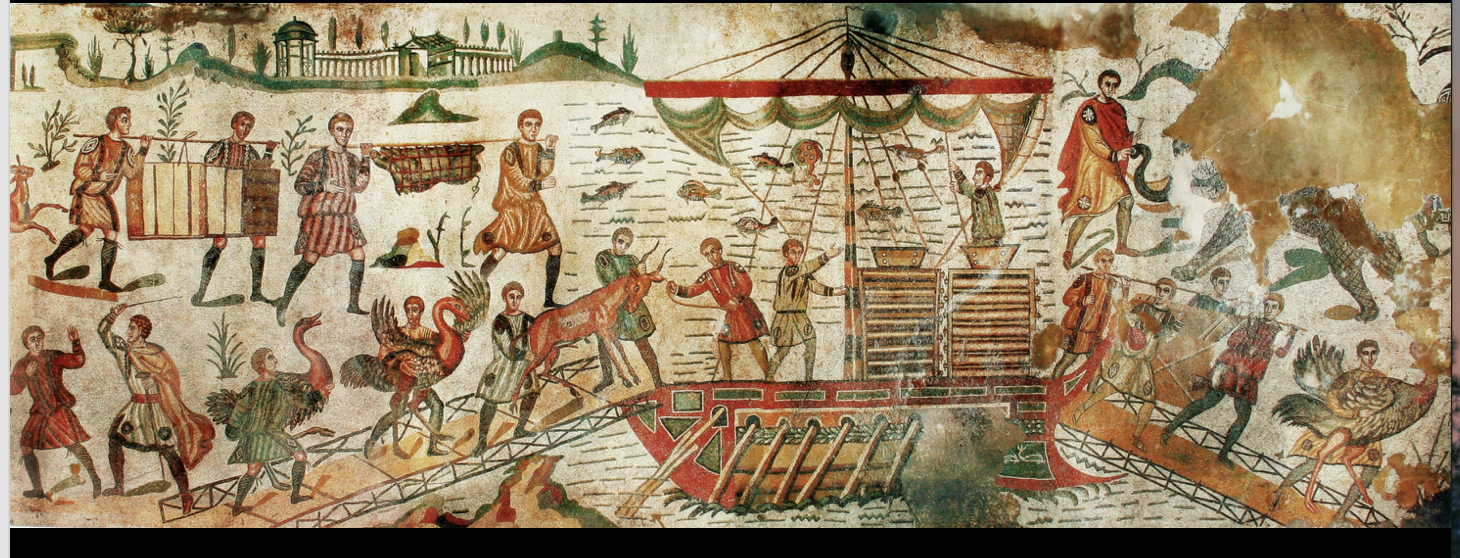
transport of exotic animals from Africa
Transport of exotic animals from Africa, mosaic. Villa Romana del Casale, Piazza Armerina, Sicily, ca. 300 CE.
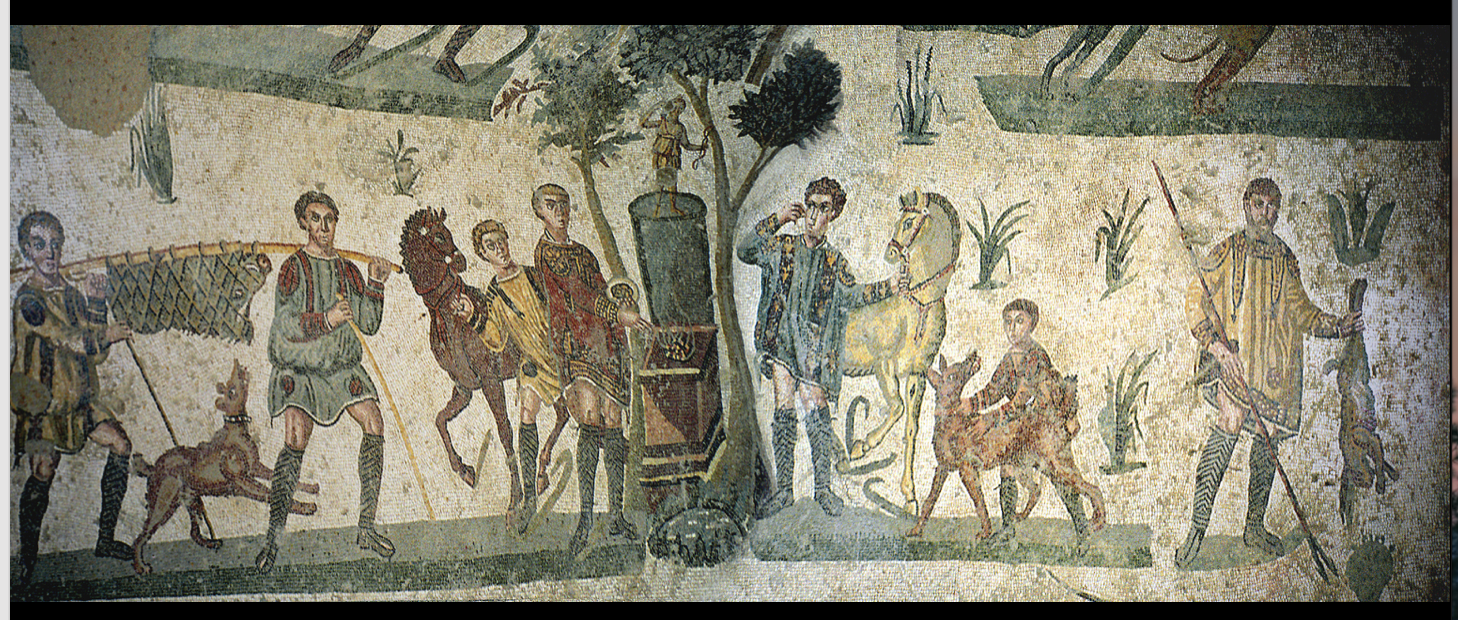
Hunting Scene
Hunting Scene, mosaic. Villa Romana del Casale, Piazza Armerina, Sicily, ca. 300 CE.
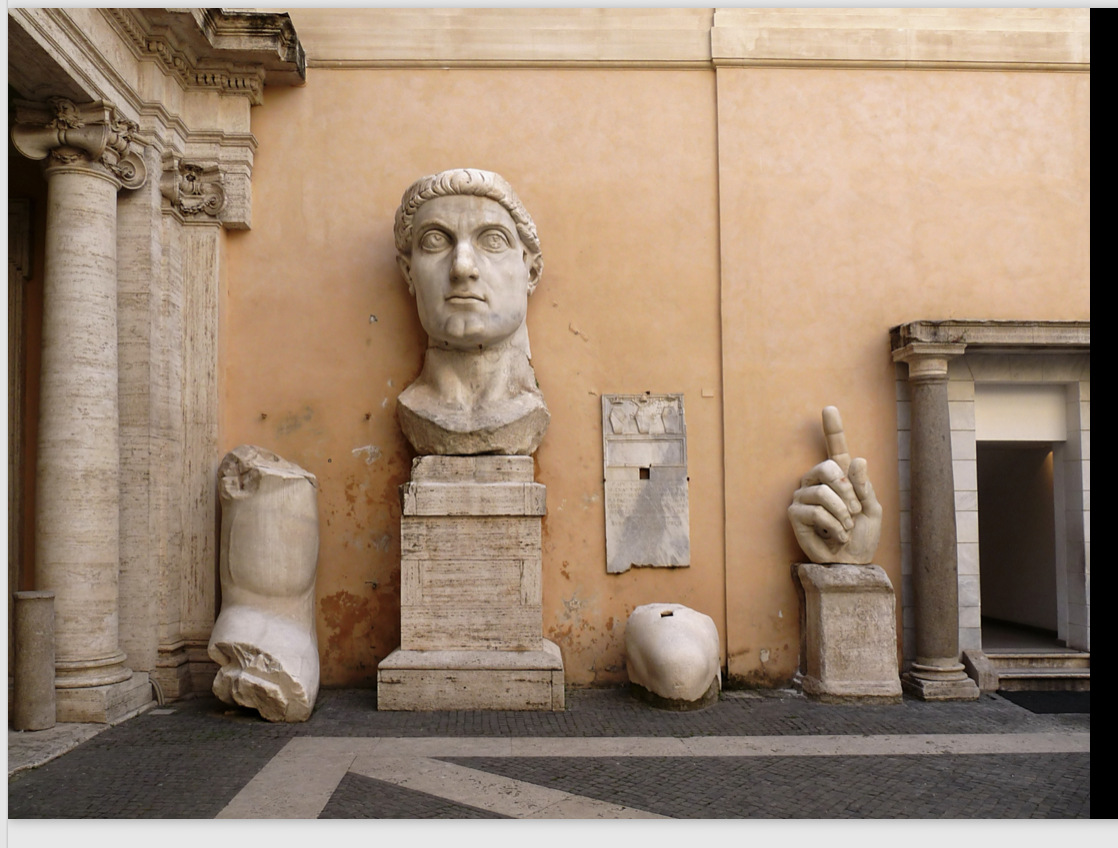
Fragments of the Colossus of Constantine,
Fragments of the Colossus of Constantine, marble, from the Basilica Nova, originally approx. 14m high, ca. 315–330 CE.
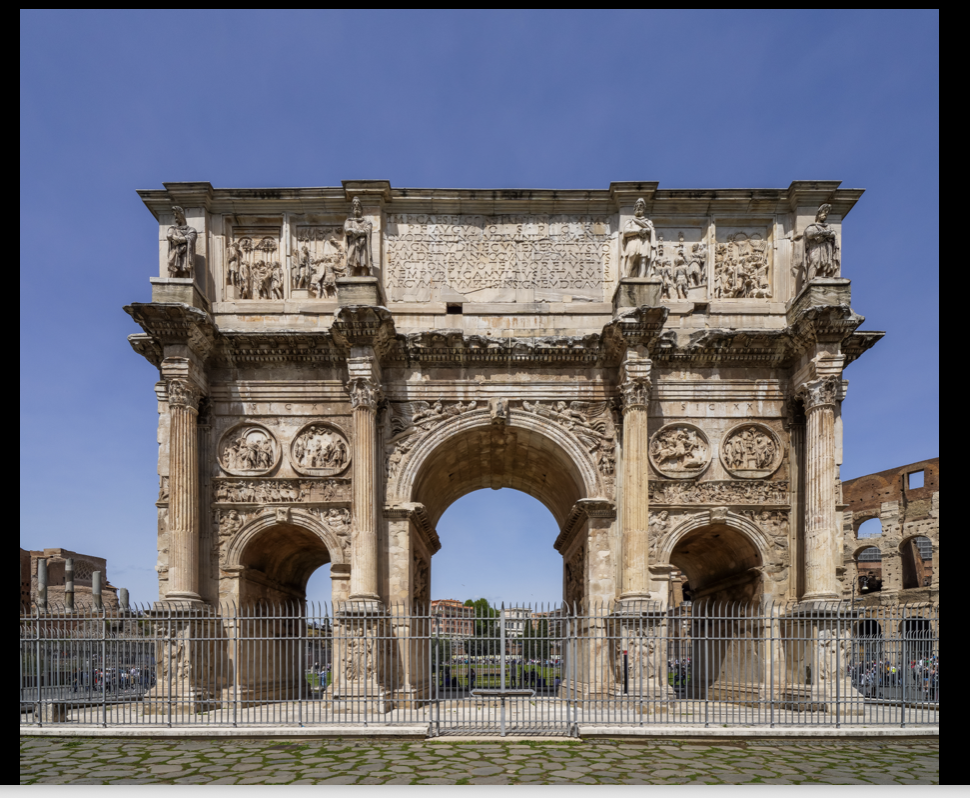
Arch built in honour of Constantine,
Arch built in honour of Constantine, brick-faced concrete covered in marble, 21m high x 25.9m wide, dedicated 315 CE.
View of the South Side along the Triumphal Route.
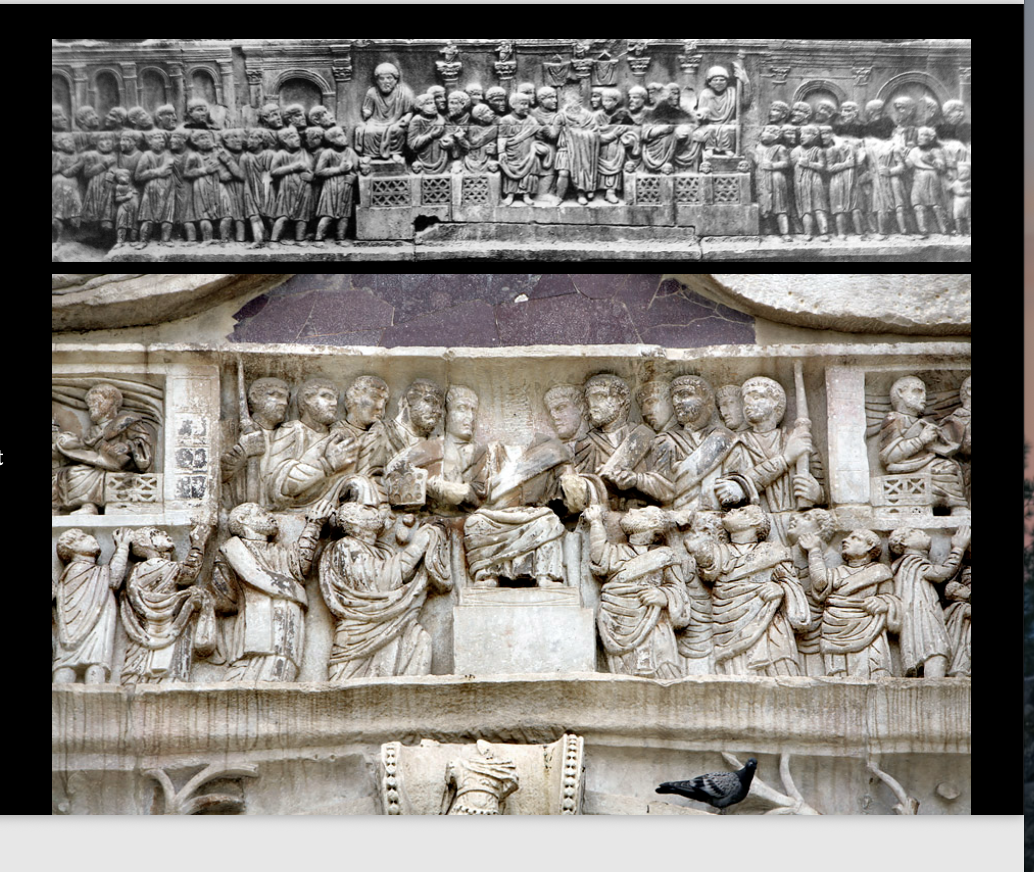
Arch built in honour of Constantine,
‘Oratio’ (Constantine speaking in the Forum Romanum). Fourth century.
‘Liberalitas’ (Constantine handing out money). Fourth century.
Arch built in honour of Constantine, brick-faced concrete covered in marble, dedicated 315 CE.
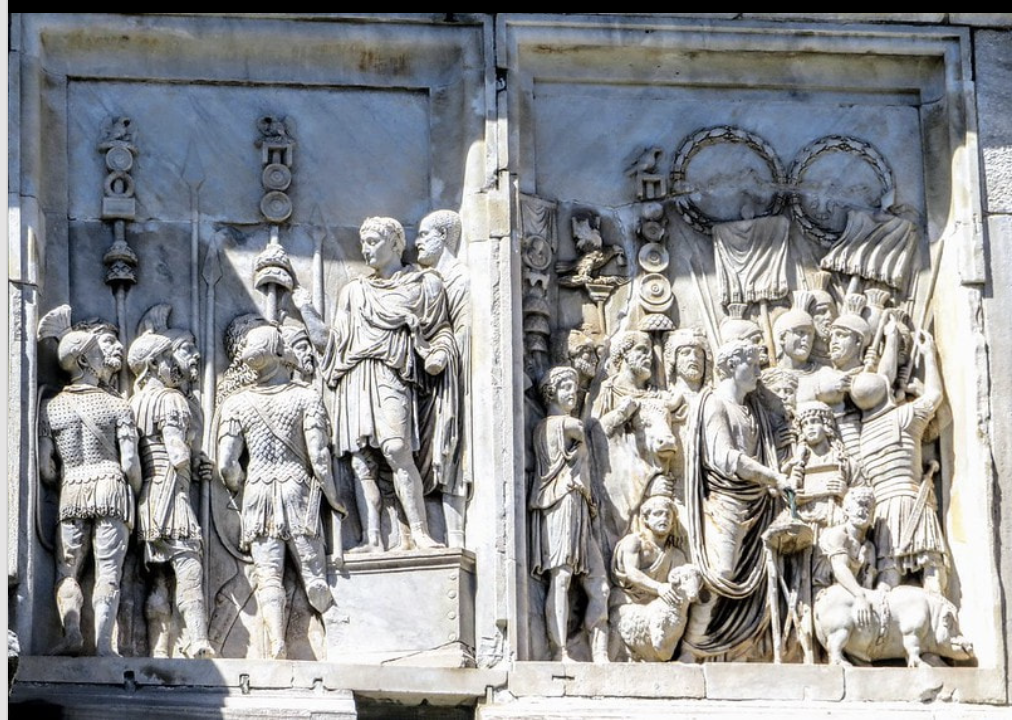
Arch built in honour of Constantine,
Relief panels dated to the age of Marcus Aurelius showing an address to the troops and a sacrifice scene, recut to show Constantine in antiquity, replaced with heads of Trajan in modernity.
Arch built in honour of Constantine, brick-faced concrete covered in marble, dedicated 315 CE.
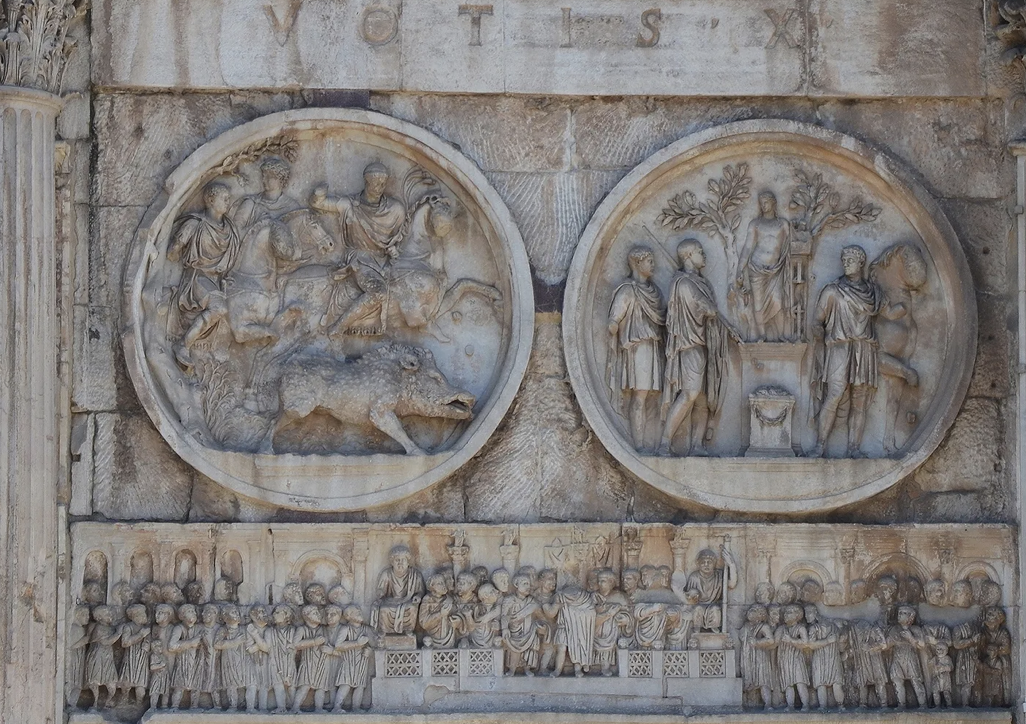
Arch built in honour of Constantine
Roundels dated to the age of Hadrian showing scenes of hunting, recut to show Constantine (left) and Licinius (right).
Arch built in honour of Constantine, brick-faced concrete covered in marble, dedicated 315 CE.
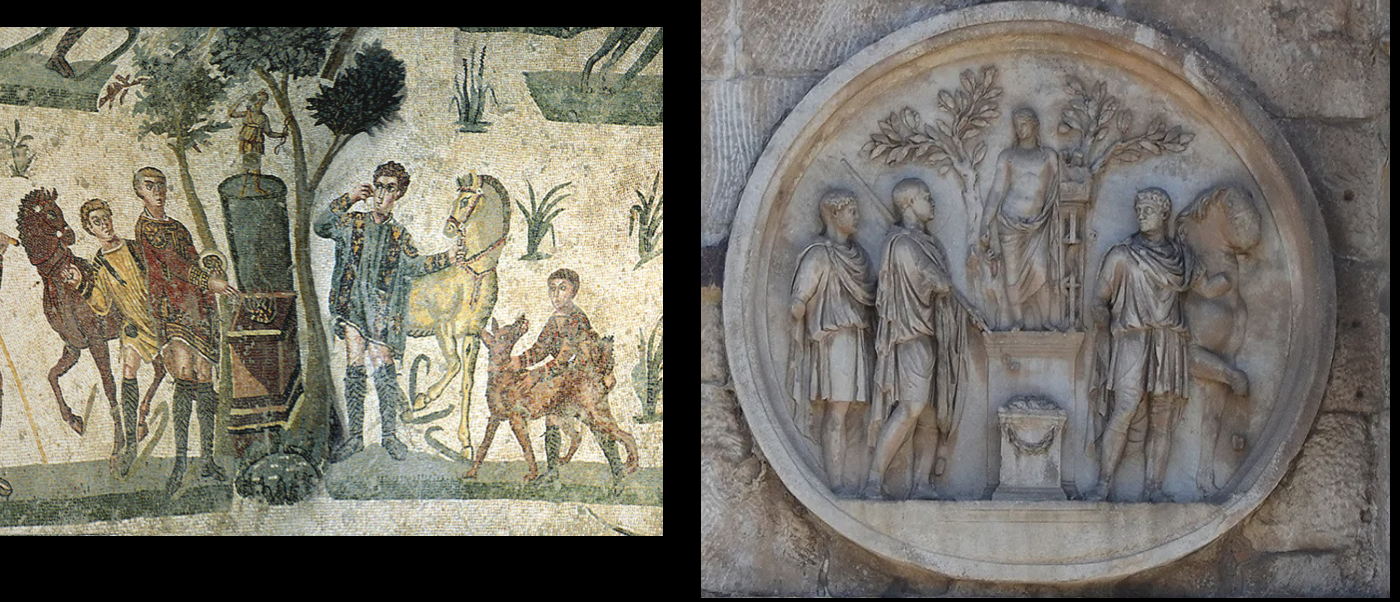
Sacrifice to Apollo after the Boar Hunt
Sacrifice to Apollo after the Boar Hunt. Roundels dated to the age of Hadrian showing scenes of hunting, recut to show Licinius, Constantine’s co-emperor ruling in the east.