med term ch3
 Call Kai
 Learn
Learn Practice Test
 Spaced Repetition
 Match
Match Flashcards
 Knowt Play
1/42

There's no tags or description
Looks like no tags are added yet.
Name | Mastery | Learn | Test | Matching | Spaced | Call with Kai |
|---|
No analytics yet
Send a link to your students to track their progress
43 Terms
6 main elements of human body
oxygen
carbon
hydrogen
nitrogen
calcium
phosphorous
selectivity
cell membrane
receive nutrition and dispose waste
stem cells
precursor of body cells
can divide and renew for long periods
unspecialized
can give rise to specialized cell types
found in embryos, adult tissues, umbilical cord blood
can be grown and transformed into specialized cells through cell culture and regenerative medicine
four types of tissue
epithelial tissue
connective tissue
muscle tissue
nerve tissue
epithelial tissue
outer surfaces, lines body cavities
forms secreting portion of glands and ducts
protection, absorption, excretion, diffusion
connective tissue
most abundant
supports organs, sheaths muscles, connects muscles to bones, bones to joints
bone is a dense form of connective tissue
muscle tissue
movement
skeletal (voluntary) muscle is striated and effects locomotion
smooth (involuntary) muscle is found in walls of organs
nerve tissue
made of nerve cells/neurons and supporting cells/neuroglia
excitability and conductivity
control and coordination
anatomical position
body is erect
head forward facing
arms by sides with palms to front
superior
above, upward
inferior
infer/o
below, downward
anterior
anter/o
front or before
posterior
toward back
cephalic
cephal/o
pertaining to the head, superior in position
caudal
caud/o
pertaining to tail, inferior in positon
medial
medi/o
nearest in the midline or middle
lateral
later/o
to the side, away from middle
proximal
proxim/o
nearest point of attachment or near point of origin
distal
dist/o
away from the point of attachment/origin
sagittal plane
vertically divides r and l sides
midsagittal plane
divides into r and l halves
transverse/horizontal plane
divides into superior and inferior positions
coronal/frontal planes
divides body into front and back positions
cavity
hollow space containing body organs
2 types of cavities
ventral/anterior (front side of body)
dorsal cavity/posterior (back side)
Ventral cavity
hollow part of torso
extending from neck to pelvis
thoracic cavity
abdominal cavity
pelvic cavity
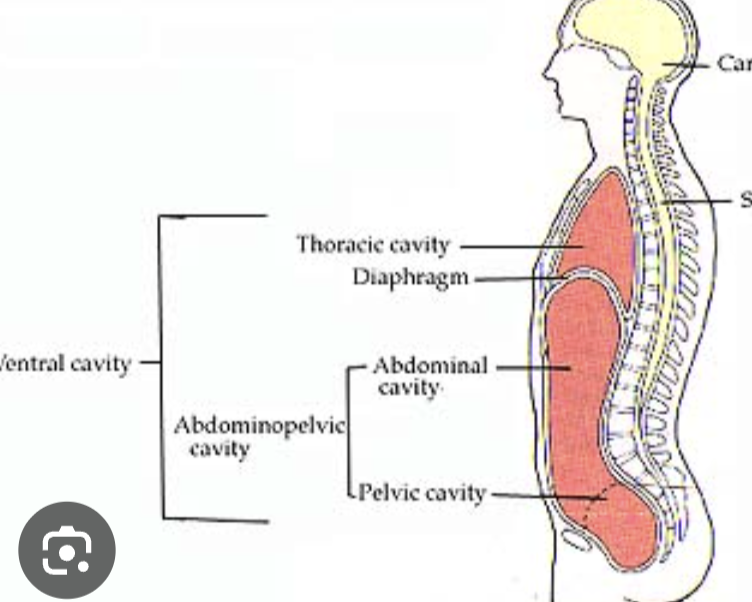
thoracic cavity
chest area
* pericardial cavity surrounds heart
* pleural cavity surrounds lungs
abdominal cavity
below diaphragm
pelvic cavity
formed by pelvic bones
dorsal cavity
nervous structures
cranial cavity
spinal cavity
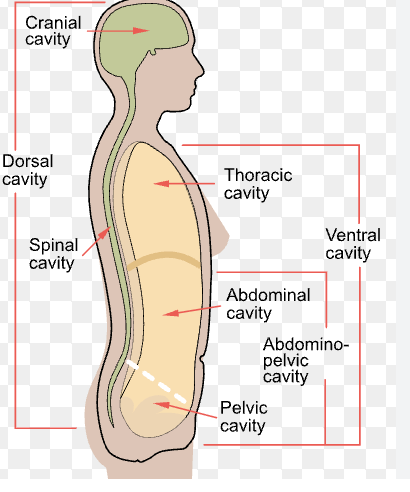
cranial cavity
inside skull
spinal cavity
inside bony spinal column
abdominopelvic cavity
combination of two ventral cavities (abdominal and pelvic)
9 regions of abdominopelvic cavity
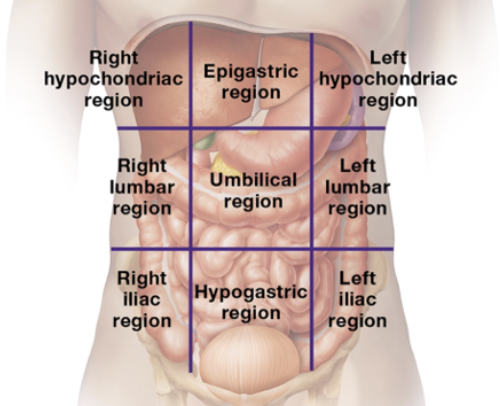
4 regions of the abdomen
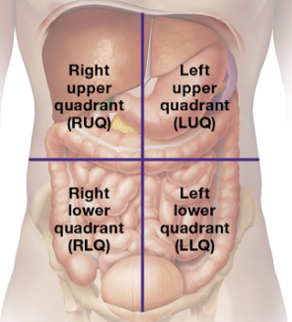
trunk
chest, back, shoulders, abdomen
heart and lungs in upper chest
abdomen with most digestive organs …liver, small intestine, gallbladder
kidneys, ureters, urethra, reproductive organs
therapeutic drugs
relieve symptoms
diagnostic drugs
help locate a disease process
curative drugs
kill or remove agents of disease
replacement
drugs replace or supplement missing substances
preventative drugs
prevent or lessen the severity of a disease
medication order
includes drug name, dosage (amount prescribed), form (liquid, solid, semisold, tablet, capsule, patch), time/frq of admin, route of admin (way it enters the body)