Cardiac Auscultation Sites Study Guide
 Call Kai
 Learn
Learn Practice Test
 Spaced Repetition
 Match
Match Flashcards
 Knowt Play
 Podcast
1/11

Earn XP
Description and Tags
These flashcards cover key concepts in cardiac auscultation, detailing locations, sounds, clinical tips, and usage of the stethoscope.
Name | Mastery | Learn | Test | Matching | Spaced | Call with Kai |
|---|
No analytics yet
Send a link to your students to track their progress
12 Terms
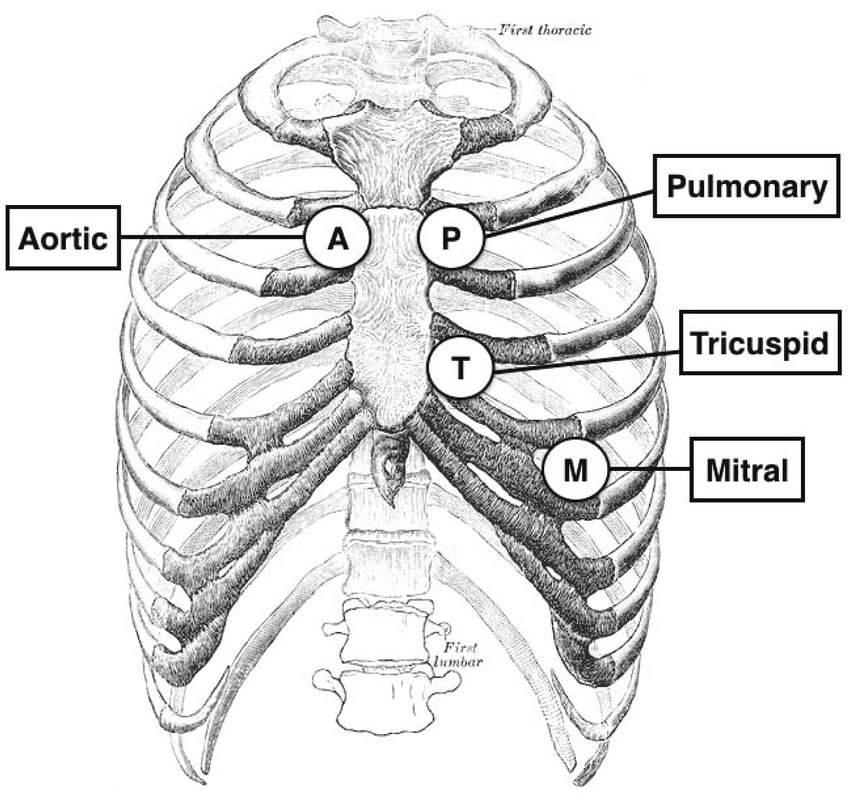
Aortic Valve Area
Located at the 2nd intercostal space (ICS), right sternal border; best for hearing aortic valve closure (A2) and aortic stenosis murmur.
Pulmonic Valve Area
Located at the 2nd intercostal space (ICS), left sternal border; best for hearing pulmonic valve closure (P2) and pulmonic stenosis murmur.
Tricuspid Valve Area
Located at the 4th–5th intercostal space, left sternal border; best for hearing tricuspid murmurs, right-sided S3 and S4.
Mitral (Apical) Area
Located at the 5th intercostal space, left midclavicular line (apex); best for hearing S1 (loudest here), mitral regurgitation, S3, and S4.
Clinical Tip for Aortic Valve
Loudest A2 component of S2 is heard at the aortic valve area.
Clinical Tip for Pulmonic Valve
Best area to hear physiologic split S2.
Clinical Tip for Tricuspid Valve
Right-sided murmurs increase with inspiration.
Clinical Tip for Mitral Valve
Use the bell for low-pitched sounds like S3, S4, and mitral stenosis.
Stethoscope Diaphragm Usage
Use for S1, S2, most murmurs, and high-pitched sounds.
Stethoscope Bell Usage
Use for S3, S4, mitral stenosis, and low-pitched sounds.
Memory Trick for Auscultation Areas
All People Try Medicine (Aortic, Pulmonic, Tricuspid, Mitral); follow a Z-pattern down the chest.
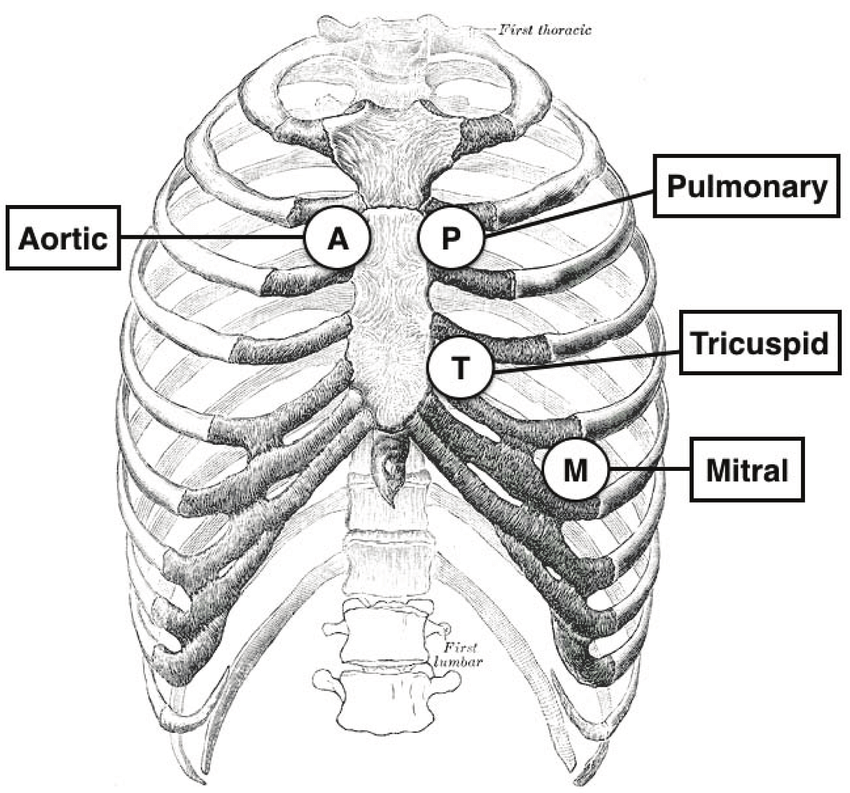
spaces to asucllate