24 - liquid oral environment - definition. Sal
 Call Kai
 Learn
Learn Practice Test
 Spaced Repetition
 Match
Match Flashcards
 Knowt Play
1/9

There's no tags or description
Looks like no tags are added yet.
Name | Mastery | Learn | Test | Matching | Spaced | Call with Kai |
|---|
No analytics yet
Send a link to your students to track their progress
10 Terms
Liquid oral environment definition
Liquid in the oral cavity, washes over the mucosa and enamel. It consists of saliva, gingival fluid, peeling epithelial cells and products, microorganism and products
What is saliva?
A complex fluid that represent the immediate
Function of saliva
Moistens mouth and lubricates food
Facilitates speech
Helps with taste by acting as a solvent for food molecules and acts as a buffer to maintain pH of oral cavity
Contains digestive enzymes - amylase
Cleanses the mouth, contains antibodies and antimicrobial substances
Composition of saliva
600-1000 ml a day, 99% is made up of water
Electrolytes
secretory proteins
immunoglobulins - IgA, IgG, IgM
Cellular composition
basic secretory units - acini, serous acini, mucous acini
Epithelial cells
Neutrophils
Lymphocytes
Bacterial flora
Formation and secretion of saliva
produced by salivary glands, acini are located in them, they can be mucous or serous
Serous cells - secrete watery enzyme rich fluid
Mucous cells - secrete mucus for lubrication
Myoepithelial cells - contractile cells which help propel saliva in oral cavity
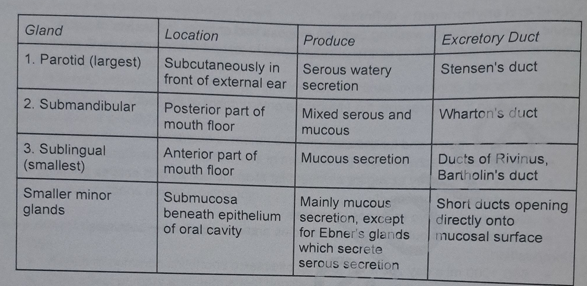
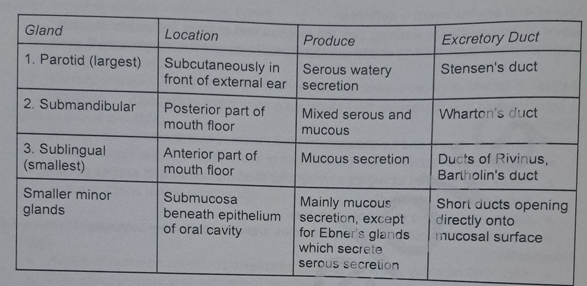
Structure of salivary glands
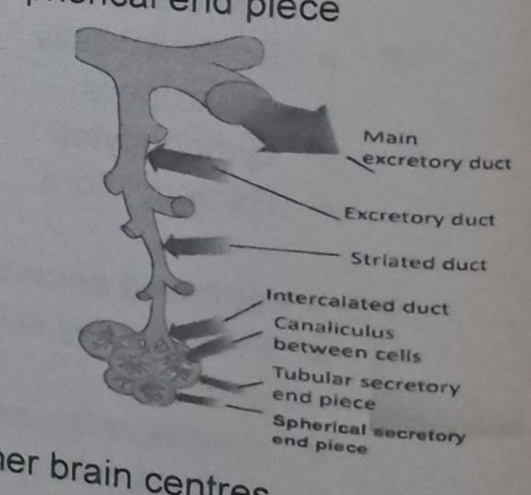
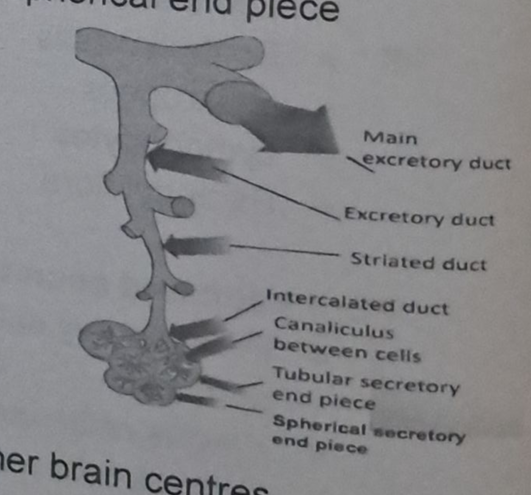
lobular organisation - lobules divided by thick portions of connective tissue known as septae
Organisation from main excretory duct (empties into oral cavity) to spherical end piece (salivary gland)
main excretory duct
excretory duct
striated duct
Intercalated duct
Tubular secretory end piece
Spherical secretory end piece
Regulation of salivary secretion
thought, sight, smell, taste
Facial nerve and glossopharyngeal nerve send input to higher brain centres
Sending impulse to submandibular, otic (optic?) and cervical ganglions which further send these impulses to make the salivary glands produce saliva