Bio 6.1 definitions
 Call Kai
 Learn
Learn Practice Test
 Spaced Repetition
 Match
Match Flashcards
 Knowt Play
1/22

There's no tags or description
Looks like no tags are added yet.
Name | Mastery | Learn | Test | Matching | Spaced | Call with Kai |
|---|
No analytics yet
Send a link to your students to track their progress
23 Terms
Behavior
internally coordinates responses to internal and/or external stimuli
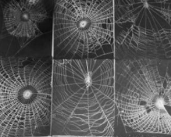
is a spiders web a decision or an instinct?
Both!
Spiders have species-specific designs ( they don’t have to be taught how to build a web), but they can learn to tune their web depending on the environment. Both the insticnt and capacity to build the web evolve, change, and can be selected for.instinct
Ethology (European)
The study of Ethos (behavior)
Focus on observation studies and the study of instinct
start of nature argument
interested in innate
How behavior evolved: studied animals for animals’ sake
ex: Niko Tinbergen
Comparative Psychology (USA)
Focus on lab studies and understanding the neurological process for learning
start of nurture argument
learning about innate instict/
How behavior developed rather; studied animals for humans’ sake
ex: Pavlov
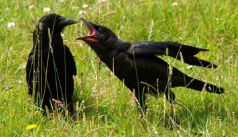
Behavioral ecology
an evolutionary and ecological approach
a behavioral approach to the study of ecology and evolution
An integrative field that blurs the line between comparative psychology and ethology (nature and nurture build on one another)
What conditions are needed for natural selection to occur?
Variation among individuals for a trait
Trait must be heritable
Trait has a fitness impact (survival and reproductive)
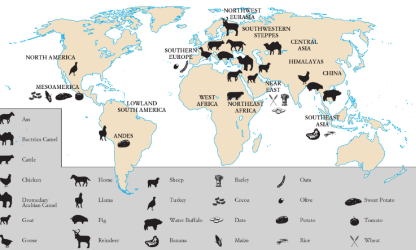
Ancient History of the study of behavior
Humans have had a longstanding innate understanding of animal behaviors,
everything from hunting, recognizing/ knowing how to find animals, interpreting animal behavior, such as “prey is fleeing, meaning predator nearby.”
The process of domestication shows the fundamentals of animal behavior
large-scale process of taking animals with certain friendly characteristics and breeding them together until, over many generations, you end up with nice animals such as cattle and dogs
Fitness
the relative number of alleles contributed by an individual to the next generation
how much your genes get into the next generation
usually measured in terms of reporductive success
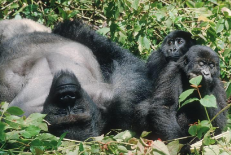
observation
define and record behaviors and relate them to the organisms’ environment and /or physiology
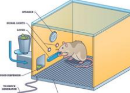
experimental design
manipulate the organism or its environment to test causal relationships among traits
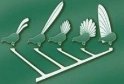
Comparative approach
inferring adaptive basis of behaviors from patterns shared among species
Adaptation (process)
the increase in frequency of a trait that conveys greater fitness, due to natural selection. Occurs over generations.
Adaptation (trait)
a product of the process of adaptation (natural selection)
Adaptive behavior
a behavior that increases the fitness of the individual performing it, relative to a nearby alternative.
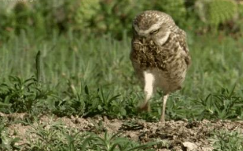
maladaptive behavior
a behavior that reduces the fitness of the individual performing it, relative to nearby alternatives
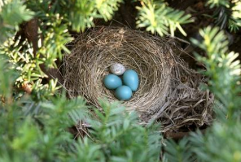
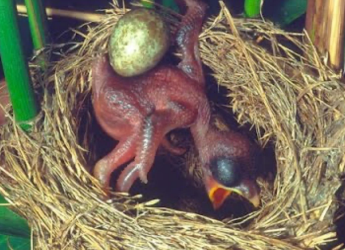
brood parasites
birds that lay their eggs in the nest of another species
proximate questions
immediate, underlying reason of HOW behavior happens
Ultimate questions
A historical reason for WHY behavior happens
Development (proximate)
How genetic-developmental mechanism generate a behvaior
EX: How does the behvaior develop in organism?
genetic
instic and learning
endocrinology
Mechanism (proximate)
neuronal-hormonal mechanism that control behvaior
what (internal or external) stimuli trigger the behavior?
pychology
endocrinology
neurobiology
Evolutionary History (ultimate)
Behavioral traits affected by descent from ancestral species
along what phylogenetic pathway did the behavior evolve?
evolutionart origins, transitions, and precursors
phylogentic contraints
Adaptive function (ultimate)
net fitness benefit of a behavior influenced by natural selection
Does the behavior convey a fitness advantage, and if so, how?
fitness benefits and costs (curvival, mating success)
Proximate vs Ultimate
Proximate explanations DO NOT COMPETE with ultimate explanations, or vice versa. They are different levels of analysis.
proximate mechanisms are a result of ultimate processes.