L8 Management (variance VMOH & sale)
 Call Kai
 Learn
Learn Practice Test
 Spaced Repetition
 Match
Match Flashcards
 Knowt Play
1/22

There's no tags or description
Looks like no tags are added yet.
Name | Mastery | Learn | Test | Matching | Spaced | Call with Kai |
|---|
No analytics yet
Send a link to your students to track their progress
23 Terms
What are the two types of variances regarding VMOH?
Efficiency variance: quantity
Spending/ expenditure variance: price
How do you find efficiency variance?
(SH - AH) x SR
How do you find spending variance?
(SR - AR) x AH
What is the diagram to represent efficiency and spending variance
NOTE: Standard hours based on total production units, not per unit/hour
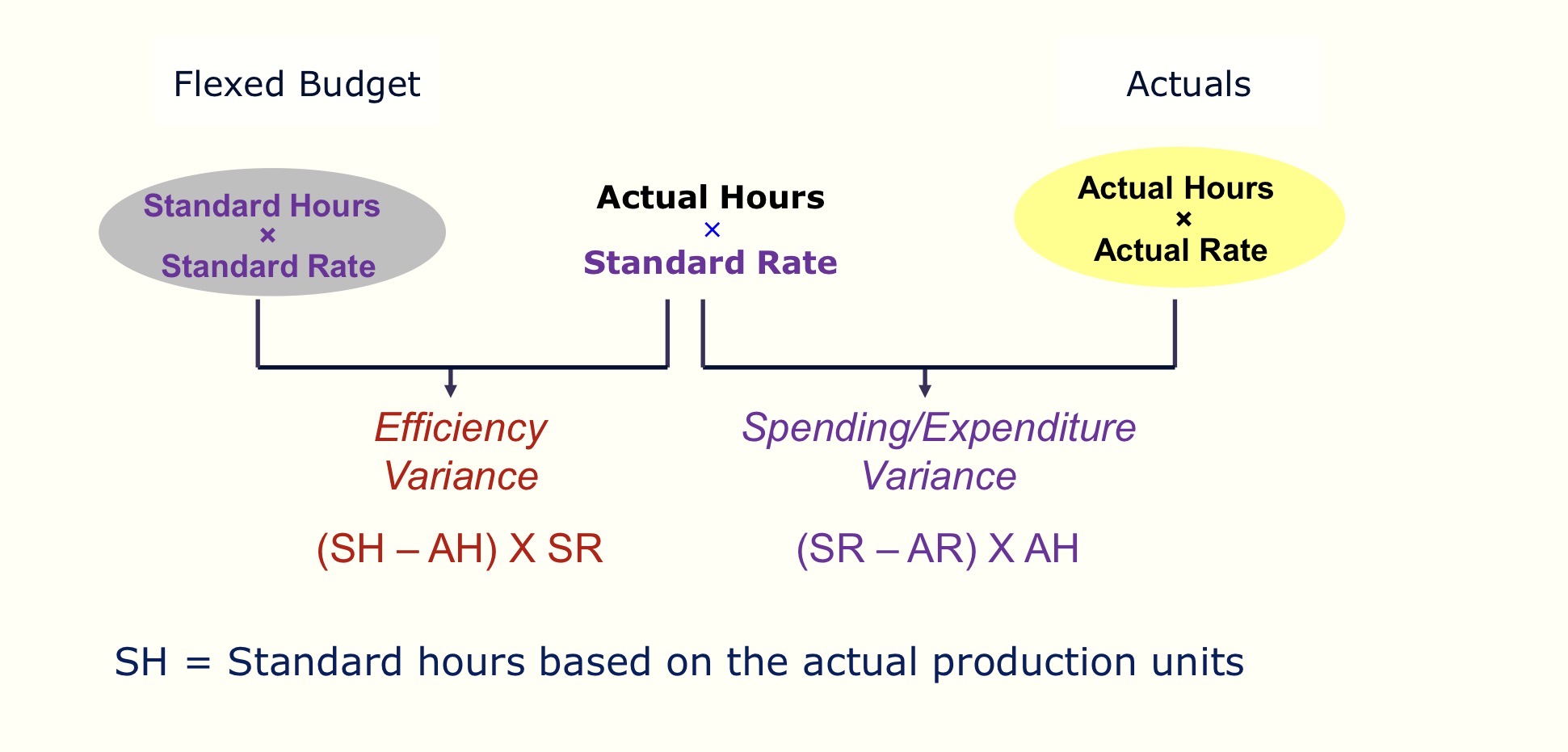
How do you find total VMOH variance
Efficiency variance + spending variance
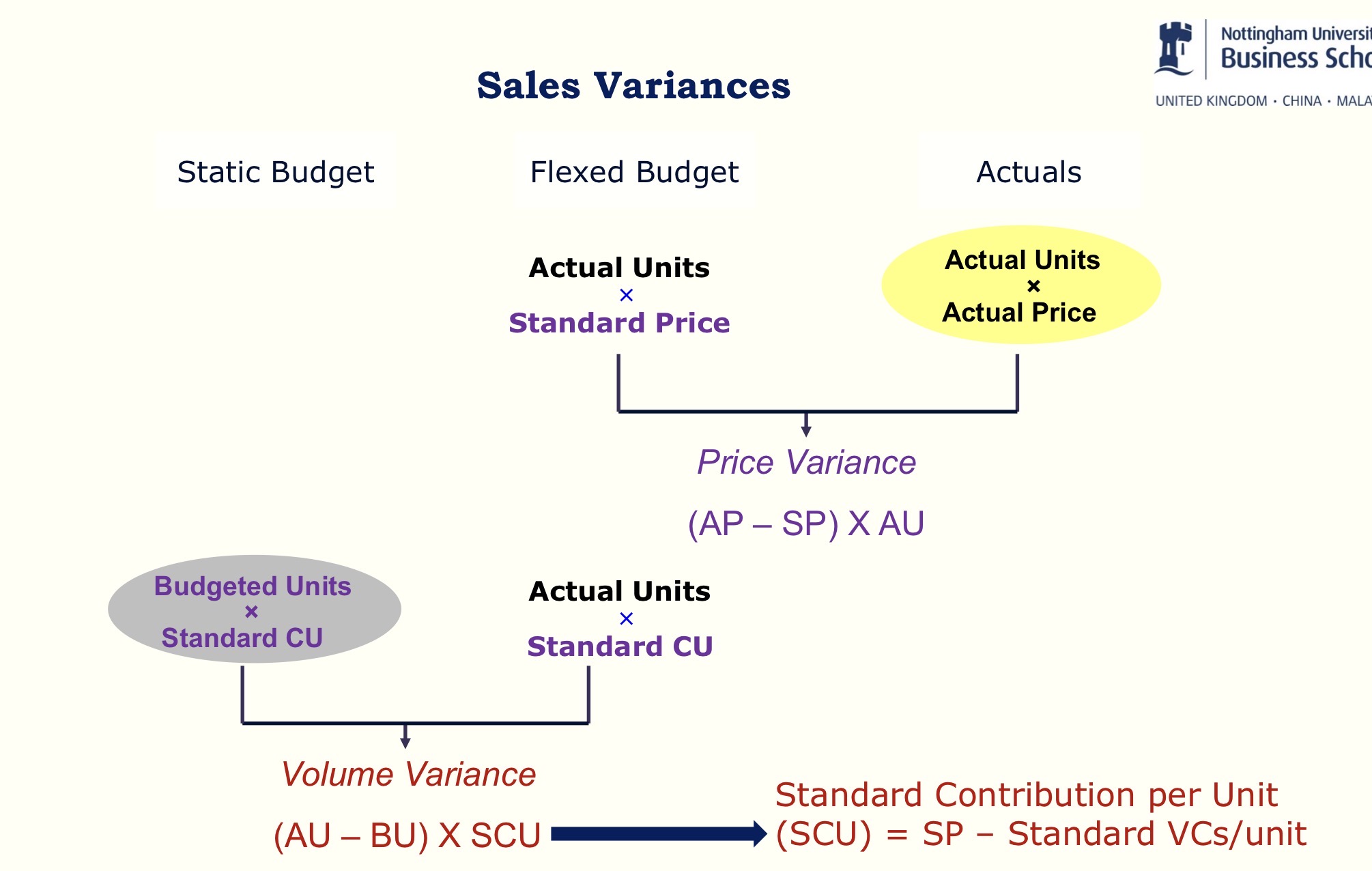
How do you find sales price variance?
Difference between Flexed budget and Actuals budget
(AP - SP) x AU
(U = units)
What does sales price variance show?
The effect different selling prices have on PROFIT
How do you find sales volume variance?
Difference between static budget and flexed budget
(AU - SU) x SCU
SCU = standard contribution per unit
How do you determine if sales variance is favourable or unfavourable?
Actual > Standard / budgeted → F
Actual < Standard / budgeted → U
NOTE; this is different to with costs, write as Standard < Actual etc
How do you fid the standard contribution per unit (SCU)?
SCU = SP - Standard VCs/unit
SP = Standard selling prices
VC = standard variable costs
What diagram relates sales price variance and sales volume variance?
NOTE;
Top row = difference in sales revenue in budgets
Bottom row = difference in contribution in budgets
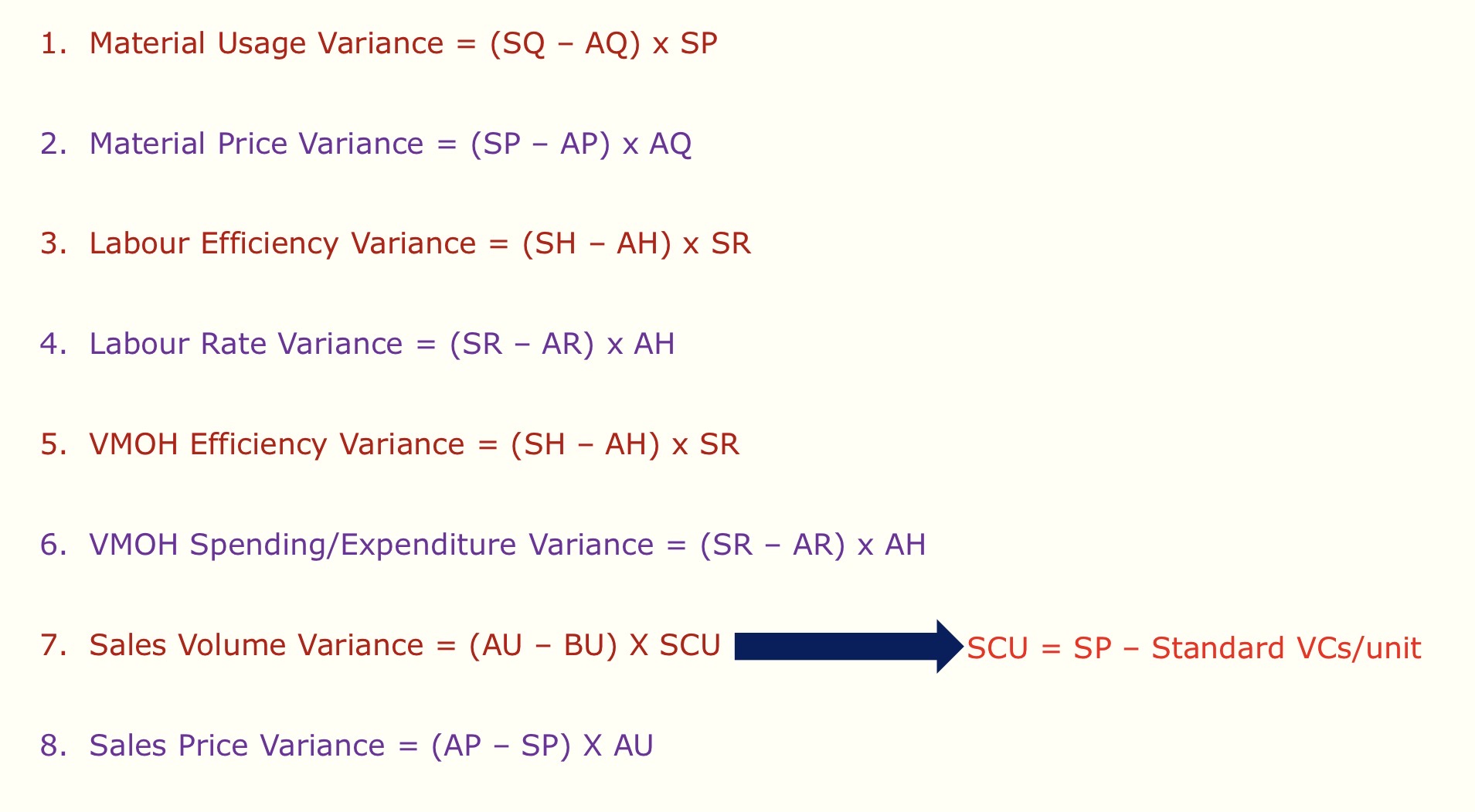
What are ALL of the variance formulas?
Note: first 6 all cost variance, standard first. Last two are sales variance, actua first)
(S_ - A_)
Vs
(A_ - S_)
What is SP?
CAREFUL:
In cost analysis: SP = Standard purchase price
In sales analysis SP = Standard selling price
What is the reconciliation report?
Report including all variances, helps management clearly see
Describe what this report looks like, what is it showing?
Note favourable variance in favourable column, likewise for unfavourable
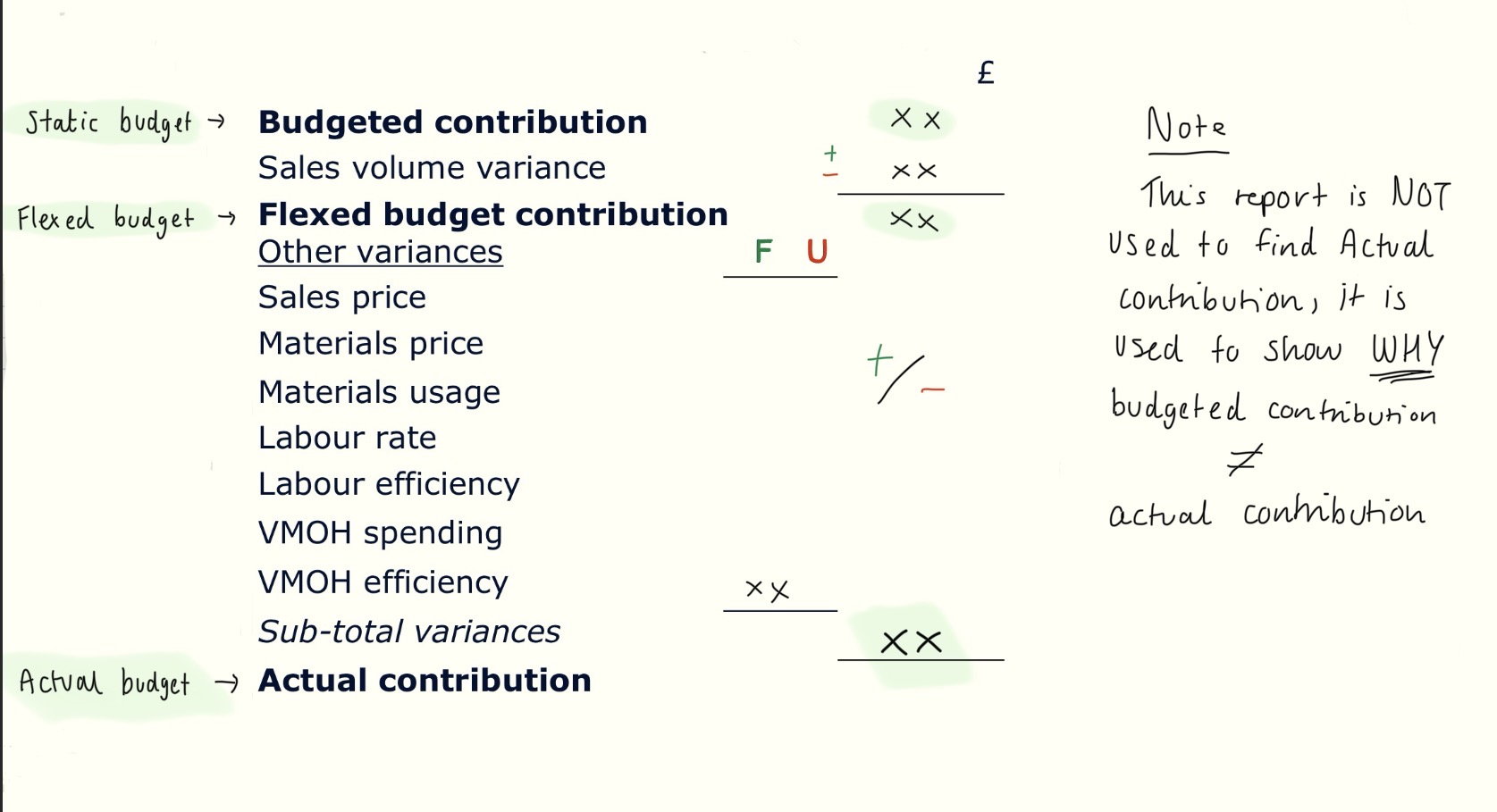
How do you calculate material price variance in reconciliation?
Based on AQ used
(SP - AP) X AQ USED
[Rather than AQ purchased]
How do you find budgeted contribution?
BU x SCU
What is management by exception?
Identifying unfavourable variances, like people underperforming
What are the advantages of standard costing?
Management by exception
Better info for planning & decision making
Improved cost control
Can lead to reduction in production cost
What are the limitations of standard costing?
Time consuming, little value given to time to prepare (some for budgeting)
Variances can’t be seen in isolation → can be misinterpreted
Emphasising standards may exclude other important objectives
Standard costs reports may not be timely (done at end of period)
Focusing on negative variances may negatively impact employee morale.
Why can’t variances be seen in isolation?
Cause there can be external reasons for favourable / unfavourable variances.
E.g. favourable material price variance (paying less than expected), could be due to buying low quality materials or from negotiation - don’t know.
What does this mean: “Emphasising standards may exclude other important objectives”
E.g. Standard material usage could be 4kg, once workers achieve this might just continue doing that
However, it could be possible to reduce waste even further and use 3.8kg of material for one unit. Should instead encourage improvement
Why is material price variance usually calculated when materials are purchased/received rather than when they are used?
Timely evaluation of purchasing decisions
Inventory is stored at STANDARD COST:
Do raw materials inventory + material price variance = actual value