Encounters with Material Culture
 Call Kai
 Learn
Learn Practice Test
 Spaced Repetition
 Match
Match Flashcards
 Knowt Play
1/138

There's no tags or description
Looks like no tags are added yet.
Name | Mastery | Learn | Test | Matching | Spaced | Call with Kai |
|---|
No analytics yet
Send a link to your students to track their progress
139 Terms
What is pottery?
human made
vessel
made of ceramic / clay (finest particles of soil)
Four key ingredients of pottery
clay
water
inclusions/temper
heat
Inclusions v. temper
Inclusions
larger
either organic or non-organic
maybe naturally occurring
all-inclusive term for everything added to clay
Temper
deliberately added by humans to the recipe
more consistent/regularised
Both are used strengthen vessels during the drying phase and in creation/shaping
Pottery recipes
Each potter would eventually develop their own recipes, which would be passed down through workshops - specific technical choices can therefore be linked to particular groups of potters
Pottery making process
acquire/process raw materials
form into vessels
dry
decorate
dry again
kiln firing
Pottery - acquire and process raw materials
identify areas with high concentration of clay
ethnographically rare for potters to go more than half a day away from their workshops to mine clay
largely found in rivers, acqueous environments, collected/pooled water, chemical weathered enviromnents
could add particular desirable qualities through addition of temper
kneading clay - wetness critical, like making bread dough or pasta
Pottery - methods of forming into vessels
Potters wheel
uses centripetal force to create symmetrical tubular vessels
can form relatively quickly
useful for simple vessels
Handmade traditions
common even throughout the Roman period
Coil building
prepare clay into coils to form shape of vessel
paddle and anvil used if a hammer was used to flatten coils together
Slab building
cut sections of clay to join together
more common in south-east Asia than in the Classical World
Mould made
from encounters with glass blowers
pressing clay into a mould
Pottery - first drying
need to get rid of as much water as possible before pottery goes in the kiln
reaching the leather-hard stage = outside surface dry, plastic-y
Pottery - decoration
done when pottery at the leather-hard stage
surface of the vases given treatments at this point - eg. burnishing (rubbing it to bring fine particles to surface)
Attic red and black = effectively painting clay slip onto a clay vessel - easy to see what’s what (white = dry surface, orange = what’s being added, black cloak = added red, different pigment)
solidly glazed vases the most common - dipped or painted
Pottery - second drying
90-95% water out of the pot - steam in the kiln could cause cracks or explosions
significant time investment and seasonally dependent - needed dry weather for a prolonged period
Pottery kilns
Updraft kilns = almost exclusively referenced in relation to the ancient world
bottom part = stones, reused
dome = mud bricks and clay, dismantled after every firing
had to carefully stack vessels within the kiln to maximise space within the kiln
need heat to be able to circulate evenly around the vessels in order to avoid hot/cold spots / under or over firing
Pottery kiln fuel
Charcoal
burns hotter and more intensely than regular wood
often can be produced as a by-product
Animal manure
hay partially broken down
high burning and long lasting fuel source
particularly used if shortages of wood would be a concern
Pottery - firing
1) paint vase with iron rich clay slip
2) oxiding phase firing at ~800C
3) reducing phase raising temperature ~950C where clay slip begins to sinter (turn glassy)
4) reoxidising phase where temperature is slowly reduced - background clay (not sintered) turns back into a deep orange-red colour
Pottery - spalling
Bits of clay flaking off, during or post firing - crystals haven’t broken down, then came into contact with water and flaked off
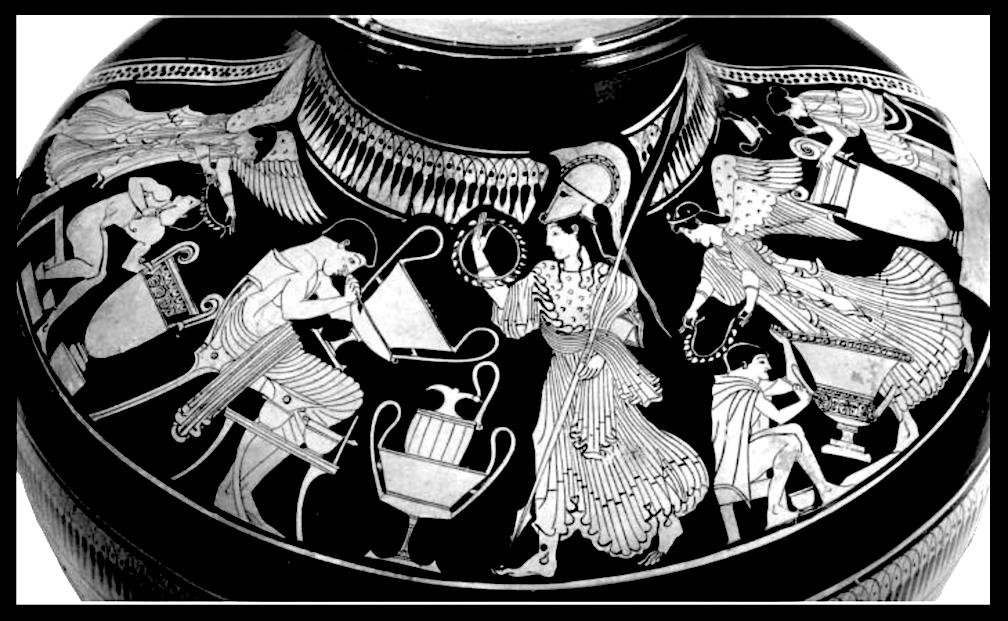
Caputi Hydria
attributed to Leningrad painter
ca. 470-450BCE
shows a pottery workshop
evidence for master-apprentice model (large male figure at center, smaller men flanking him)
master painting the base, apprentices doing subsidiary work
only depiction of a woman in a pottery workshop - forming vessels or subsidiary decoration? No female artists who have signed Attic vases
Signed works
Greek potters among the earliest artists to sign their works
some signed by enslaved people or metics
eg. “Amasis made me” - Amasis likely an altered Egyptian name, definitely not Greek
Graphsene inscriptions = distinguish the potter who made the vase and the individual who painted it - if only one signature present don’t know which it is
can link to specific kilns/cities or chronologically
Connoisseurship
ways of accessing artists without their signatures
particularly able to identify those doing figure work
uses overall iconography, positioning of figures, etc.
leading proponent = Beesly (Beesly database) - some unsigned works linked to signed works - some groups collated without an assigned artist
Millin = scholar originally associated to some works rather than the ancient artist
can be difficult to determine if it’s the same individual or the same workshop
Pottery - qualification methods
Total counts
count all individual fragments of a particular shape
Total weights
collectively weigh all fragments of a particular shape
Fragmentation
how small the pieces are in your assemblage
divide total weight by total counts
Feature counts
count only rims, bases, etc.
‘compare apples to apples’
Pottery - minimum number of vessels
standardised method of comparing pottery across different deposits
use of defining traits (something there’s only one of)
quantify the number of bases or rims preservered >50%
only effective when fragments are well-preserved or large
Pottery - estimated vessel equivalencies
fragments of rims or bases are individually quantified using a rim diameter chart
total percentage for assemblage establishes a minimum number of vessels
can be used even with very fragmentary assemblages
can compare rims and bases - will provide a range for MNV
Pottery - gray burnished ware at Mitrou
joins modern quantification methods, stratigraphic excavation, and seriation to document development of most common class of Middle Helladic pottery
battleship curves
demonstrates trends, evolution, consumption - introduced, increased popularity, dies out
can demonstrate cyclical patterns of behaviour - eg. renewed popularity
Pottery - scientific methods of study
Ceramic petrography
cut a thin slice of pottery
polish it to several microns thick
place on slide
look under a polarised light microscope (direction of light particles controlled)
different mineral fluoresce at different angles, so can see which are present
NNA (neutron activation analysis)
powdered pottery
exposed to nucleur radiation
XRF and pXRF
irradiate something
non-destructive
SEM (scanning electron microscopy)
extremely high resolution digital picture
can identify technology used to add pigment to base and firing temperature
Pottery - House of Many Colours at Olynthus
Olynthus destroyed 4th century BCE - destroyed and abandoned within a very short period
large area of the Olynthus site excavated 1950s/60s
houses with large collections of pottery in situ, as they were abandoned
pottery not necessarily where it would have been used in daily life
distribution of pottery mirrors what we would expect
bottom right = gathering of large pithoi, likely a storage room
top right = used for symposia, krate in antechamber
left = plausibly identified as kitchen
Pottery - from Eleon, with carbon stains
exposed to fire post firing - vessels came from burnt destruction lair - household destroyed by fire
vessels tell us where they were at the time of destruction
unburnt areas demonstrate what was shielded from the fire (eg. bottom unburnt = placed on ground)
material buried very quickly - sharp joins - not disturbed until excavation
Pottery - features/identifiction of technical choices
Handmade
irregular and textured interior
interiors reveal original methods of construction, as do break edges
carefully burnished/polished exterior, finely treated
Wheel made
interior marked by parallel striations from finger grooves while spinning
deeper grooves likely indicate coil building, finished by wheel
Mold made
identified by standardised designs
3D decoration
inside smoothed by hand (uneven) or by use of wheel (smoother, some traces of centripetal motion)
Pottery - types of vessels (coarseness)
Fine ware
less gritty inclusions
often painted
used for consumption of food/drink
Coarse ware
lots of gritty inclusions
used for transport and storage
amphorae, pithoi
Cook ware
coarse
traces of use wear eg. burning on surface
produced with a specific paste recipe
Coinage - Why do governments issue money?
standardised method of exchange
creating/enforcing a cohesive/national identity
to present specific images/messages
control - money = images = power
convenience, portability
to make state payments
Coinage - Strabo 15.3.21
Roman author - adjacent to geography book
made up - lots of Persian coinage
Coinage - material
Gold and silver
difficult to obtain / relatively rare
can be remelted/reshaped/converted
easily malleable
doesnt decay with storage
Coinage - production
controversy over whether the metal was heated or not
lower die placed in stationary anvil
upper die struck with hammer
metal placed inbetween upper and lower die, called blank/flan
Coinage - terms
Obverse = head, image from upper die
Reverse = image from lower die
Legend = writing on coin
Exergue = space at the bottom on the reverse, mainly contains information
Field = blank space
Type = image
Coinage - beginning
began as cut up bits of silver
“hacksilber” = technically pre-coinage
no designs
Coinage - electrum
alloy/mix of gold and silver (naturally occuring in riverbeds in Lydia)
earliest coins made of electrum
variation in gold:silver ratio, standardised weight
incuse = stamp going straight up into coin - demonstrate same material throughout? different combinations = further meaning?
stamp accepted as a sign on value rather than amount of gold/siler = potential for profit
variety of designs eg. griffin, ram’s head, scorpion, etc.
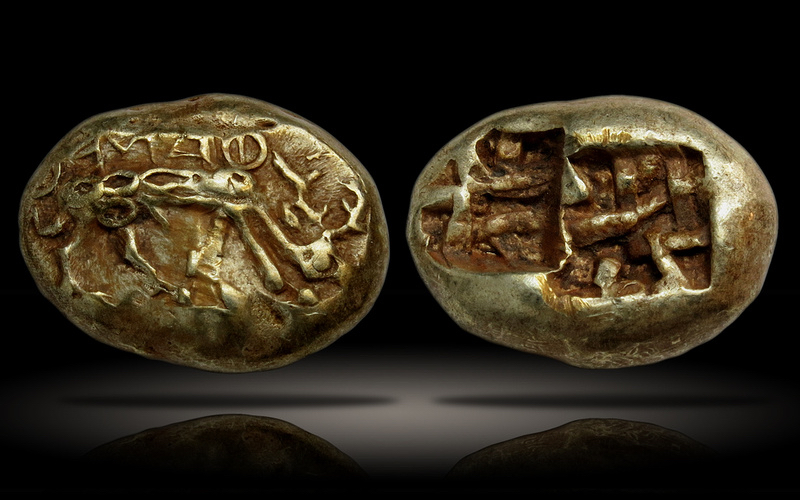
Coinage - Ephesus (?) electrum state
c. 630BC
“I am the badge (or seal) of Phanes”
likely made by Phanes - coin minting wider than just kings
retrograde Greek inscription = written right to left
stamping of coins likely coming from seal stamps - generally imprinted into soft materials eg. wax, lead
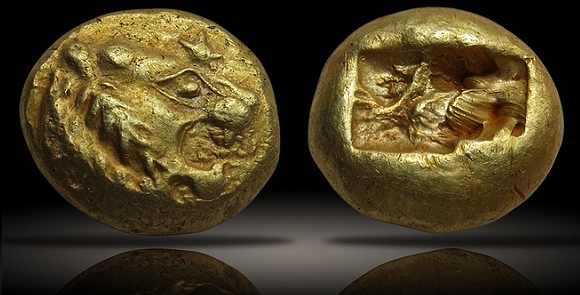
Coinage - Lydian staters
head(s) of roaring lion(s)
writing in Lydian on early coins = likely King’s names
can identify mint locations from find spots only - small denominations less likely to move, larger coins used for trade so travelled further
Coinage - denominations
Stater = 14.16g
Trite = 4.72g
Hecte = 2.36g
1/12 = 1.18g
1/24 = 0.59g
1/48 = 0.295g
1/96 = 0.1475g
goes all the way to 1/192 (0.08g)
names from historians, not antiquity
majority of finds are big coins, easier to be spotted, more likely to be found in hoards
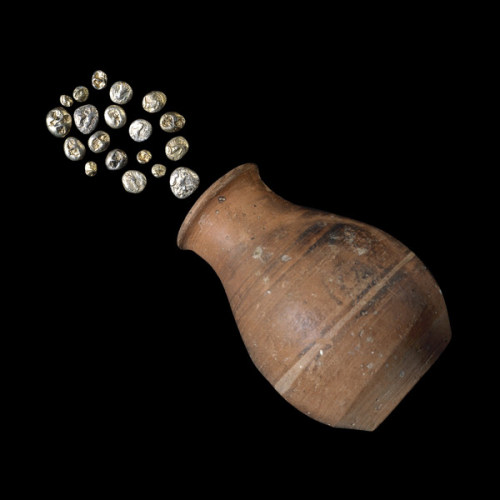
Coinage - Ephesus Artemision hoard
108 EL coins with die links between them
also includes unstamped nuggets, jewellery, and other artefacts
most recent archaelogical works suggests c.650BC electrum coins
transitional period = some stamped, some not
foundation deposit - an offering before the building of the Temple of Artemis at Ephesus
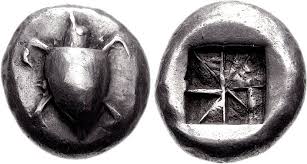
Coinage - Aegina
Stater c. 550-525BC
Sea turtle motif eventually changed to a sea tortoise (??)
Aegina the first to mint coinage in Greece - Siphnos used silver as a trade commodity
Coinage - hoards
important to see developments in coinage and use
general lack of information
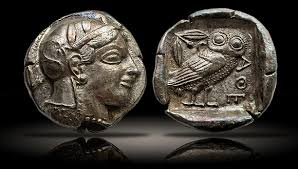
Coinage - Athens
coinage began to be struck in the name of the city after the discovery of the Laurion silver mines c.520BC
enormous increase in coin production throughout 5th century BC
mining was done by private operators who leased mines from the state and were presumably taxed on the amount of metal uncovered
head of Athena on obverse; reverse had owl standing with an olive branch and AOE = Athens
money affected the identity/presentation of the identity of the Athenians - used it to create an empire - philosophy, tragedy, and coinage all influencing each other
Coinage - Athens, money, and empire
used Laurion silver to purchase a fleet
Delian League treasury was transferred to Athens
Athens received tribute from other Greek cities
Athenian standards/curency decree = all allies had to standardise to Athenian coins, weights, and measures - except those using electrum coinage - old coinage could be reminted at mint of Athens for a fee
use of money for power and control
Athenian coins were famous for being pure silver, supposedly reflecting the purity of Athenian citizens - became their downfall as coins began to be increasingly impure
Coinage - contemporary views on Athenian coinage
Aristophanes Frogs
citizens and coinage as interchangeable in a way - changes in one mimic those in another
contamination = attack on citizenry - as coins become more impure so does Athens
Aristophanes = anti-ginger
Lucan Nigrinus
equivalent to ‘sending coal to Newcastle’ (pointless, have so much)
Athenian coins widely respected
Xenophon Poroi
goods brought both ways in trade to make a profit
largely trade in goods not currencies - but from Athens could take silver/coins
Coinage - imitations of Athenian currency
profit could be made through imitations
some more inspired, some clearly direct imitations/counterfeits
possibly an attempted association with Athenian ‘brand’ - trusted currency
wouldn’t have to pay exchange rates/fees
potentially a way of complying with Athenian standardisation while still maintaining local/individual identities
chisel marks on some imitations (mostly in Palestine region) - testing silver? to keep it within borders?
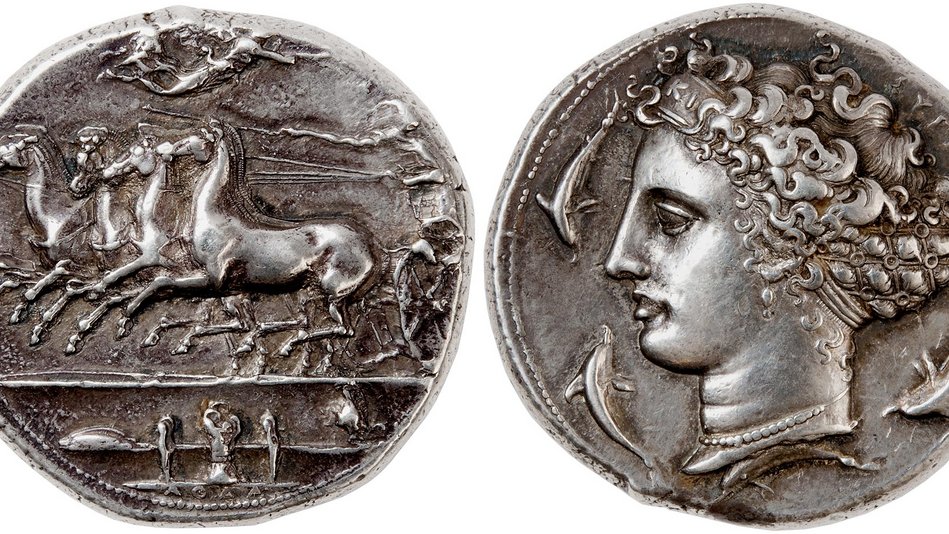
Coinage - Decadrachm of Syracuse
signed by Kimon (on dolphin)
c.405-400BC
worth ten drachmae, huge coin
writing = on the right of the head, on the bottom dolphin
right = Arethusa (nypmh), surrounded by dolphins
left = charioteer in victory, being crowned by Nike
part of the era of signing artists - huge level of detail in coins - some of the most beautiful coins ever made?
Coinage - era of signing artists
c. 413-399BC
intensity of the phenomenon was unique
most occurrences in Syracuse and surrounding area
extensive die links demonstrate an intense and short period of minting in Syracuse
a result of competitions with Athens/Athenian coinage?
demonstrates evolution of art - more movement - matches evolution of other areas of art
because of sponsorship/commissions?
pride in own work, or cities pride in artists?
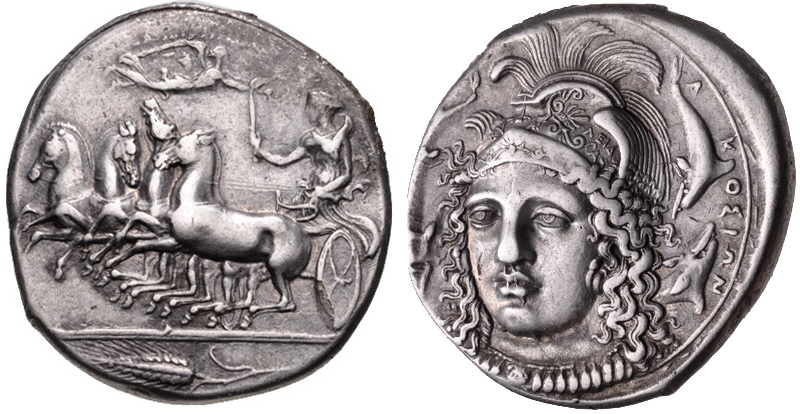
Coinage - Coin of Syracuse (Eukleidas)
silver tetradrachm
c. 413-399BC
found as part of the Ognina hoard
Obverse
quadriga driving left
female charioteer (Persephone?) holding flaming torch
Nike flying to crown charioteer
ear of wheat in exergue
Reverse
Head of Athena wearing Phrygian helmet with three crests
signature almost hidden in helmet details
Epigraphy - inscriptions
memorialisation
commemoration
self-promotion
often alongside a statue or other monument
meant to endure past an individual’s lifetime
What is epigraphy?
science that studies, identified, clarifies, classifies inscriptions
key tool in study of history and archaeology as an analysis of primary sources
usualy divided into linguistic ‘regions’ - eg. Latin epigraphy, Greek epigraphy, etc.
What are inscriptions?
‘to write on’
a piece of writing or lettering on something, especially a legend, description, or record traced upon some hard surface for durability
What does epigraphy study?
‘a subdiscipline created by convenience and compromise’ (Cooley 2012)
doesn’t include coins, papyri, or gems by customs/practice even if technically inscriptions
boundaries are blurry, set only by convention, so permeable and flexible discipline
about analysing inscriptions in context
Epigraphy - categorisation of inscriptions
can be done in many ways - function, type of text, material, method, etc.
all categorisation methods imperfect, allowing for exception or irregularities
categorisations always incomplete
Epigraphy - funerary inscriptions
most common Latin inscription in ancient world (just over 2/3)
meant to commemorate the dead
commonly include deceased’s name, age at death (often to closest multiple of 5), biographical details, character descriptor and/or expression of loss, name of dedicator(s)
sometimes accompanied by images that projected the deceased’s identity
inscriptions were expensive - therefore an expression wealth
Epigraphy - honorific inscriptions
inscriptions which accompany the honour of a statue given to an individual - statues more likely to be removed/repurposed so not preserved
often presented a (subjective) account of person’s career
usually erected by family, clients, or associates, or by local town with public money
reveal aspects of social relationships
Epigraphy - building inscriptions
meant to commemorate the completion of a public building
recorded the name(s) of those who paid for costs of the building project
elites wanted their names recorded as great benefactors, so would pay for buildings and have inscriptions set up to them
found in both rural and urban settings
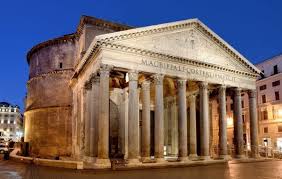
Epigraphy - Agrippa’s Pantheon
“Marcus Agrippa, son of Lucius, consul for the third time, made this”
not the original inscription as Pantheon damaged in some way so had to be rebuilt
Agrippa’s inscription reinstated as already famous
Epigraphy - milestones
combined elements of honorific and building inscriptions - would often commemorate building/sponsor of road as well as marking distances along a route
tall cyclindrical or quadrangular form, located alongside a road
not all had distances inscribed - maybe painted?
originate in Italy in the 2nd century BC, conspicious in Roman roads until late antiquity
Epigraphy - juridical inscriptions
laws, senatorial decrees, treaties, imperial edicts, oaths of loyalty, municipal and colonial charters, etc.
also includes private legal transactions (inscribed in wax tablets, few survive), and military diplomas (small bronze tablets, grants of privilege to soldiers/units)
usually inscribed in bronze and meant to be set up in public places
Epigraphy - religious inscriptions
varied inscriptions meant to communicate with the gods
prayers, ritual actions, oracles, dedications, vows, curses - could also be sacred laws or even calendars
insight into not only an individual’s relationship with the divine but also local cult practices and social groups
Christian religious epigraphy became dominant in late antiquity
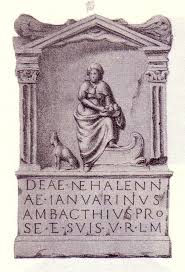
Epigraphy - AE 1973, 367
“To the goddess Nehalennia. Lucius Sattonius Victorinus has willingly and deservedly fulfilled his vow”
example of religious inscriptions
only know about Nehalennia through inscriptions dedicated to her - safe passage through rivers?
Epigraphy - Instrumentum Domesticum
catch-all category
used for portable items that bear inscriptions, from amphorae to silverware or gems
could be stamps or graffiti upon objects at the latest stages of production by craftsmen or workshops
Epigraphy - graffiti
texts or images scratched upon a hard surface
many types - simple names, drawings accompanied by letters, love poems, subversive texts, etc.
uneasy category for inscription as not really meant to endure - written spontaneously, spatial context irrelevant
ancient graffiti a neutral term, negative associations began in Victorian era
many found in Pompeii due to its preservation
Epigraphy - Roman epigraphic habits
inscriptions a distinctive feature of Greco-Roman civilisation
epigraphy grew as Rome expanded throughout the Mediterranean
cultural phenomenon tied to Romanisation, urbanisation, and desires for self-representation and memory
‘sense of audience’ as people expected their insriptions to be seen BUT also found in private contexts
explosion of epigraphic activity generally dated to Augustus - transformed epigraphy into an Empire-wide vehicle of ideology
Epigraphy - Res Gestae Divi Augusti
set up on Augustus’ order, after his death in 14AD, in Rome and in provinces
three copies remain (Greek and Latin) from modern-day Turkey
narrates Augustus’ accomplishments (from his perspective, deeply subjective)
usage of epigraphy as an ideological vehicle
Epigraphy - Res Gestae Divi Augusti 1-2
an epitaph, laudatory inscription, political testament, rendering of accounts, description of new political system, justification of actions, boast
commemoration of his death and career, written by him, dedicated by the Senate
bronze usually used for laws or important proclamations which were also placed in temples - therefore he’s putting himself on the same level as the law
justified and glorified Augustus’ actions, giving a specific ideological reading of recent history
Epigraphy - literacy
traditional literacy rates estimated at about 10% - caveats for different locations and social groups (men>women, East>West, rich>poor)
inscriptions like curse tablets and graffiti can demonstrate lower-class literacy
individual inscriptions could serve to inform specific historical events
What does ‘sculpture’ encompass?
Different materials
stone
marble
bronze
ivory
wood
precious metals
terracotta
Different forms
free-standing
architectural (pediments, metopes, friezes)
reliefs
Different contexts
funerary
religious
public
domestic
Different content
deities
heroes/mythological characters
humans (athletes, everyday life)
Sculpture - how is it studied?
What is it?
type of object
material used to create it
Who made it and when?
if artists sign their work this can be used to date / identify multiple similar works
make use of literary sources, may identify artists
Form/style/technique
style = shape, eg. naturalistic or schematic representation of human body
were/what specific techniques used?
Content and iconography
what does it show?
some sculptures accompanied by an inscription
iconography through attributes - deities always presented with the same/similar attributes as a way to identify them
Context and function
where was it made/found/displayed?
what was its purpose?
consider if it could be moved, eg. free-standing statues
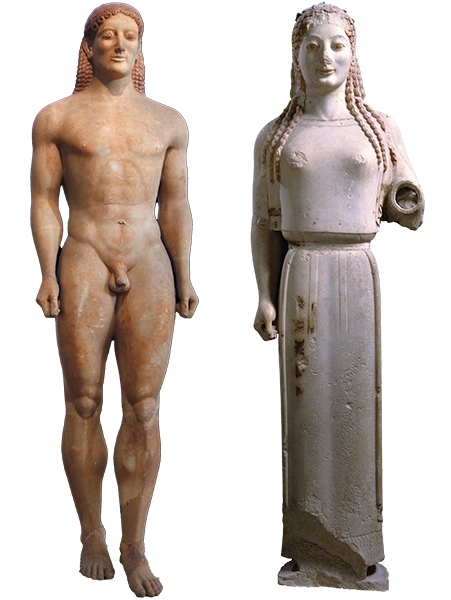
Sculpture - Kouroi and Korai
derived from Egyptian statuary
rigid arms, stance, similar stylised hair
shift from schematic to more naturalistic - deliberate?
potentially meant to represent Apollo? lots found in his sanctuaries, but also others
meant to represent an idealised human?
not portrait faces - meant to embody youth and prowess?
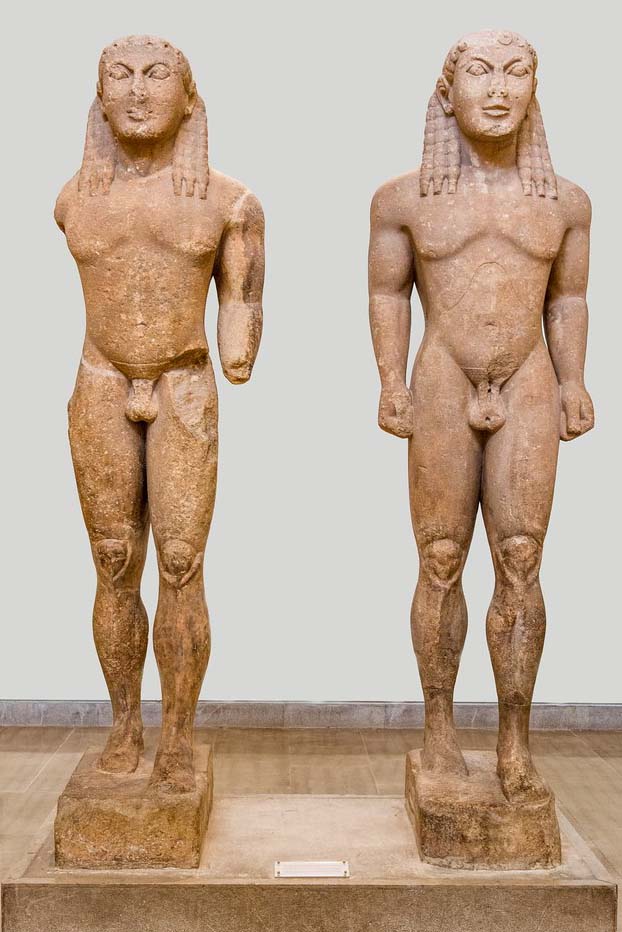
Sculpture - ‘Kleobis and Biton’ kouroi
signed by Polmedes of Argos, ca. 600-575BC
found in Delphi
potentially represented certain individuals - identities debated, but clearly meant to be taken together (Herodotus)
maybe represent Castor and Pollux?
stylistically = different to typical kouroi as had bigger heads, more muscular, maybe wearing boots
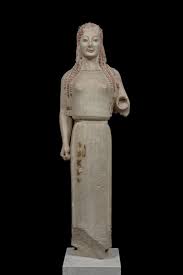
Sculpture - Korai
from Athenian Acropolis
generally stylistically similar to kouroi but with more rounded features
often depicted carrying an offering (bird, fruit, flower, etc.)
likely a representation of generalised/idealised aristocratic maidens
‘La delicate’ = beginning of stylistic change?
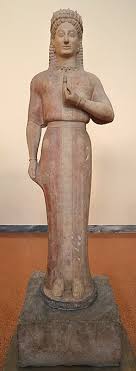
Sculpture - Phrasikleia Kore
from cemetery at Merenda, Attica ca. 550BC
inscription on base - context of when she died and name of sculptor BUT base/inscription may not correlate to statue
unopened lotus flower = offering
patterned clothing
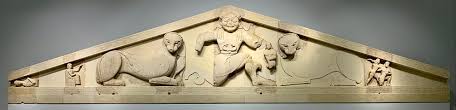
Sculpture - pediment of Temple of Artemis at Corfu
ca. 600-575BC
from left to right = god and giant? Priam? Medusa, Pegasus, and Chrysaor in middle, Zeus and giant
one of the earliest examples of pedimentary sculpture
Doric temple, two limestone pediments
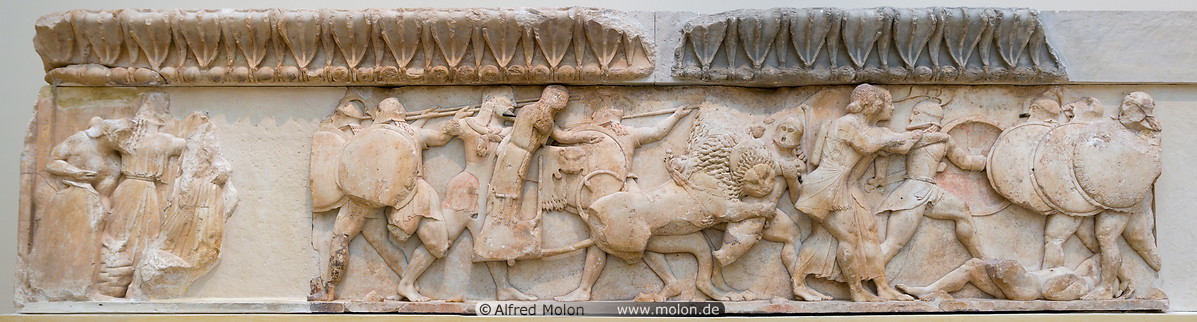
Sculpture - north frieze of Siphnian Treasury
Delphi, ca. 525BC
wealthy because of mining gold and silver
treasury = decorated in detail
pediment shows Herakles and Apollo fighting for Delphic staff
portrayal of the Gigantomachy - triumph over disorder and barbarism
right = well armed giants, left = advancing gods, some with painted labels
stylistically = more in profile
larger range of movement in figures BUT still stiff torso/legs
closer to naturalistic movement, more dynamism
Sculpture - Classical v Archaic style
Classical
defined muscles
clearer facial features
clearer placement of weight
Archaic
stiff
not naturalistic
smiling
distinctive/weird hairstyle
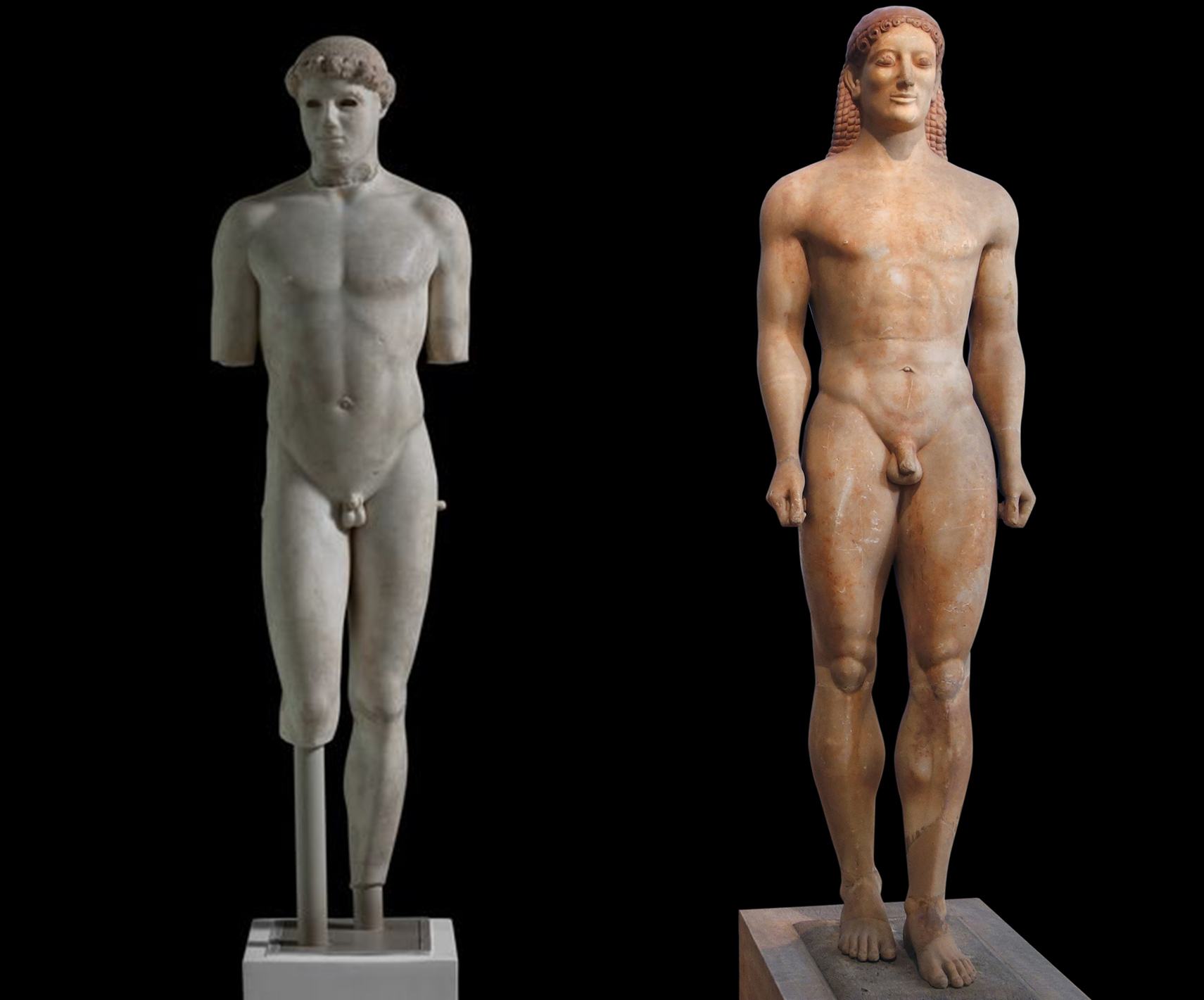
Sculpture - Kritios boy
after 480BC
found near Acropolis
attributed to, and named after, sculptor Kritios
demonstrates change from Archaic style to more naturalistic portrayal
main difference = change in weight distribution
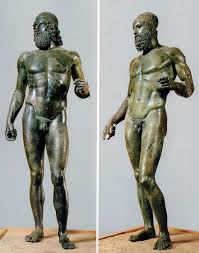
Sculpture - Riace bronzes
ca. 460-430BC
found off coast of Riace, Calabria, Italy
full size bronze statues of two male figures
left = 2.05m tall, right = 1.98m tall
more realistic/natural than Kritios boy
more defined musculator, more movement
IDEALISED
bearded = no longer youths
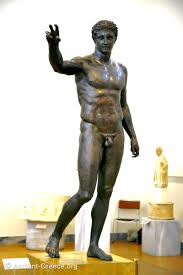
Sculpture - Antikythera youth
ca. 350-330BC, found as part of Antikythera shipwreck ca. 80BC
maybe Perseus? BUT no winged sandals, hat, or sword - held in hands and then lost?
play with proportion and perspective - typical of work by Lysippus (Hellenistic, created portraits of Alexander the Great)
Sculpture - Athenian Parthenon
building started in 447BC
metopes and colonnade built 447-442BC, cella and frieze 442-438BC
inaugurated 438BC
pediment sculptures created 432BC
south metopes = centauromachy
lapiths = defined musculator, uniformity
centaurs = more diverse, hairs/beards central part of characterisation
Lapiths = civilised, Centaurs = wild
Frieze = attempts of humans to control animals
Sculpture - Hellenistic period
323-31BC
from naturalism to realism to hyperrealism
‘Baroque’ style
theatrical, emotive, dramatic
Sculpture - Roman period
31BC - 4/5th century BC
Greek influence and historical attitudes
different styles to choose from - no real unity of style at any point, disparate/diversity makes dating/locating more difficult
veristic portraits, historical reliefs, provincial styles
context = baths, theatres, domestic
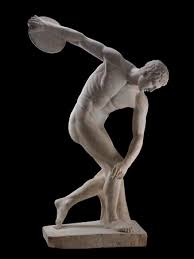
Sculpture - Townley Discobolus
from Hadrian’s villa at Tivoli
head either restored incorrectly OR found near the body but doesn’t actually correlate to it
similar to the ‘Lancelotti Discobolus’
Sculpture - veristic portraiture
Faces realistic NOT idealised MAYBE a characterisation
Sculpture - changing depictions of the human body
Archaic
static, schematic depictions of the body
characterised by frontal appearance, archaic smile, large eyes
Classical
naturalistic
sense of movement and narrative
Hellenistic
exaggerated forms
drama, theatricality, emotive
Roman
all of the above
Domestic decoration - Roman wall painting historical background
panel paintings imported into Rome in the wake of Roman conquests - largely from Greece - included in spoils of war and therefore processions
owning and displaying this art a symbol of Roman power
earliest private displays attempted to recreate public picture galleries
Domestic decoration - Vitruvius De Architectura
architect, civil/military engineer in first century BC
describes buildings and types
fortifications, temples, theatres, baths, aqueducts
materials, machinery, instruments, materials, heating systems
Book 6 describes/discusses domestic architecture
Book 7 includes building recommendations
focus on buildings and them being fit for purpose - architectural viewpoint - sometimes has a moralising tone
Domestic decoration - Pompeii
Vesuvius eruption 79CE, earthquake 62CE
snapshot in time
Potential issues
situation means items moved from normal locations
affected by looting over time
haphazard excavations and paintings - not as highly valued as other artworks
reconstructions and wartime bombings
some paintings/mosaics physically removed by being cut out of the walls
Domestic decoration - Roman domus
Played a major role in social and political communication and demonstrated social standing
patronage = domus was where prominent men received their clients/hosted others
patrons received clients in the atrium and possibly tablinum
dinner held in triclinium (further inside the house)
Wall paintings (and mosaics) in the domestic context allowed the elite to:
project their economic and social prosperity/status
express their tastes and ideas related to social ideology
reflect patron’s erudition (knowledge of Greek myths/epics/plays)
Domestic decoration - wall paintings in Pompeii
Frescoes
colours applied to wet plaster, pigments penetrated the plaster and fixed as it dried
rare find as plaster not durable - many left in situ have faded
Content
religion - deities, rituals, related objects
architecture
natural world - landscapes, still life
mythology
everyday life
Paintings classified into four styles
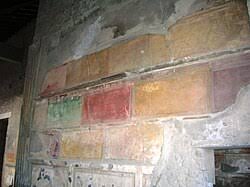
Domestic decoration - first style
‘structural’ / ‘masonry’ style
2nd century BC
painted blocks, resemble masonry and marble
3D effect created by each rectangle being surrounded by stucco moulding
vivid colours
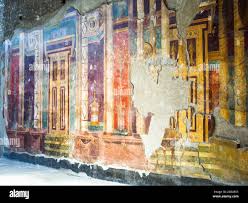
Domestic decoration - second style
‘architectural’ style
ca. 110-80BC to 20-10 BC
some mythological imagery, mostly in friezes
‘architectural’ details = columns, buildings, doors, gates (inspired by stage sets?)
sometimes incorporated first style marble blocks at base of wall
illusion of looking through window to outside, perspective to create depth
realistic feel - still life imagery, focal figures framed in alcoves
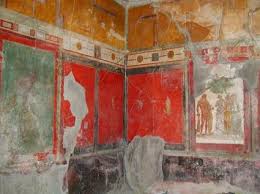
Domestic decoration - third style
‘ornate’/’ornamental’ style
colourful and finessed
ca. 12BC to 40CE
illusionary depth disappears, walls divided into horizontal and vertical zones, divided by columns, folliage
larger expanses of same colour on walls - black, red, and yellow popular, as is green and blue
Egyptian influences - Nile scenes, deities, birds, lotus flowers
central picture panels - often vertical oblongs
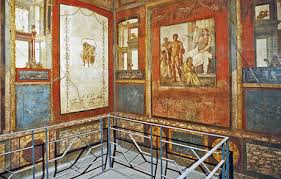
Domestic decoration - fourth style
‘intricate’ style
40CE onwards
effect of a mosaic of framed pictures on a wall
eclectic, elements of previous styles in combination
mythological imagery in central pictures, more square and generally smaller than third style
stencil type of patterns used as borders on a single colour
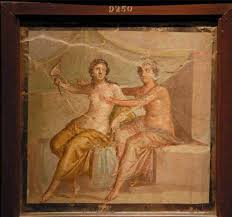
Domestic decoration - House of Meleager
Venus and Mars
shield and spear
red cloak on Mars’ lap
winged cupids
right cupid holding a a jewellery casket
dove on the building
Mars’ hand position = sexual? possessive?
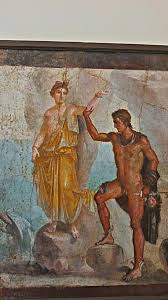
Domestic decoration - House of Dioscuri
Perseus and Andromeda
Medusa’s head
special sword
dead sea monster
Andromeda shackled to rock, one breast bared
Domestic decorations - Greek mosaics
earliest patterned/figurative mosaics appeared around late 5th - early 4th centuries BC
made from small natural pebbles so limited colours
finest extant examples from houses in mainland Greece - Olynthos, Eretria, Pella, Vergina
subjects include drinking/dining, vegetation, wild/marine animals - potentially allude to Dionysus
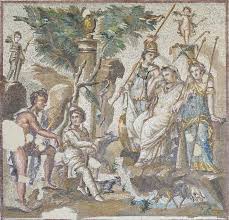
Domestic decoration - Judgement of Paris
choosing which goddess to give the apple to
Paris is the seated figure, exotic style clothing, surrounded by animals
Hermes with winged shoes, caduceus, winged headpiece
Athena with helmet and spear
Hera seated, matronly figure
Aphrodite
Cupid and Psyche
Domestic decoration - Hinton St Mary Mosaic
4th century CE
Bellerophon and Pegasus
early depiction of Christ? Pomegranetes = eternal life, lettering?
potential representation of Emperor Constantine or Maxentius
pomegranates positioned poorly = mistakes/issues in laying
Architecture - definition
The art and technique of designing and building - includes conceiving, sketching, planning, designing, and constructing buildings and other constructoins (eg. city walls).
Major architectural works are perceived as cultural symbols and works of art.
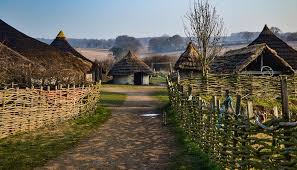
Architecture
Butser Ancient Farm, Hampshire
architecture of Roman Britain
Ancient British buildings usually circular - Roman buildings tended to be quadrangular
Architecture - negative features
Postholes
usually used to define/delineate roundhouses
Robber trenches
can demonstrate where buildings are