Wildlife-Vehicle Collisions and Mitigation
 Call Kai
 Learn
Learn Practice Test
 Spaced Repetition
 Match
Match Flashcards
 Knowt Play
1/9

Earn XP
Description and Tags
Disease -> anything that makes you unwell
Name | Mastery | Learn | Test | Matching | Spaced | Call with Kai |
|---|
No analytics yet
Send a link to your students to track their progress
10 Terms
Background
Over 1 million collisions annually
Cause mortality in almost 25,000 animals and 200 people each year
51,522 WVC recorded in TX between 2010-2016
Most in rural roads, high speed limits
Leading cause of mortality for Ocelots in South Texas
Most likely occurred during dawn and dusk hours
Some species cross roadways during daily pursuit of meals
Grey squirrels, white-tailed deer
Others only cross during migration
Mule deer, Pronghorn, Black bears, Moose
Mitigation History
Infrastructure Investment and Jobs Act of 2021
Federal Highway Administration created Wildlife Crossing Pilot Program
$125 million in grants during FY24-25
Lead to increased construction of wildlife crossing structures
Create habitat corridors to connect one side of the road to the other
Used for a variety of species
Terrestrial and aquatic
Tools for Mitigation
Structures include:
Underpass/Wildlife benches
Tunnels
Culverts
Overpasses/Ecoducts
Drift fences
Fences
Cattle guards
Animal Detection systems
Used individually or in combination
Underpasses
Can include wildlife benches
Allows animals to cross even during periods of flood
Often paired with fences to prevent animals from getting onto roads
Range in price from $500,000 to $2.7 million
Utilize game cameras to conduct studies to monitor usage and effectiveness
Limit light, can make it more difficult for bats and birds and other species to use
Tunnels
Habitat is continuous from one side of the roadway to another
Largest crossing structure allowing the widest variety of species
Minimum: 230 ft wide
Can be single or double tunnel
Often cut through mountains or hills
Also known as landscape bridges
More used to connect the habitat and they provide a flyover guide for birds and insects
Culverts
Allows reptiles, amphibians, and aquatic species to cross roadways
Can range in size from as small as 1ft wide to greater than 10ft
Come in a variety of shapes and materials
Overpasses/Ecoducts
Allow animals to cross over the roads
Similar to tunnels but not as wide
Minimum: 130-165ft wide
Can also be modified to work for humans and wildlife
More used for ungulates/carnivores
Cattle Guards
Paired with fences to prevent animals from going around (getting on road)
Often on on-ramps
Used for ungulates
Sometimes include culverts or modified drainages underneath to allow small animals to get out
Be able to exit underneath the road
Animal Detection Systems
Sensors used to detect animals and activate signage to alert drivers
Infrared, thermal, motion-activated
Usually used for larger animals
Human prevention
Implementation
Not as common in Texas
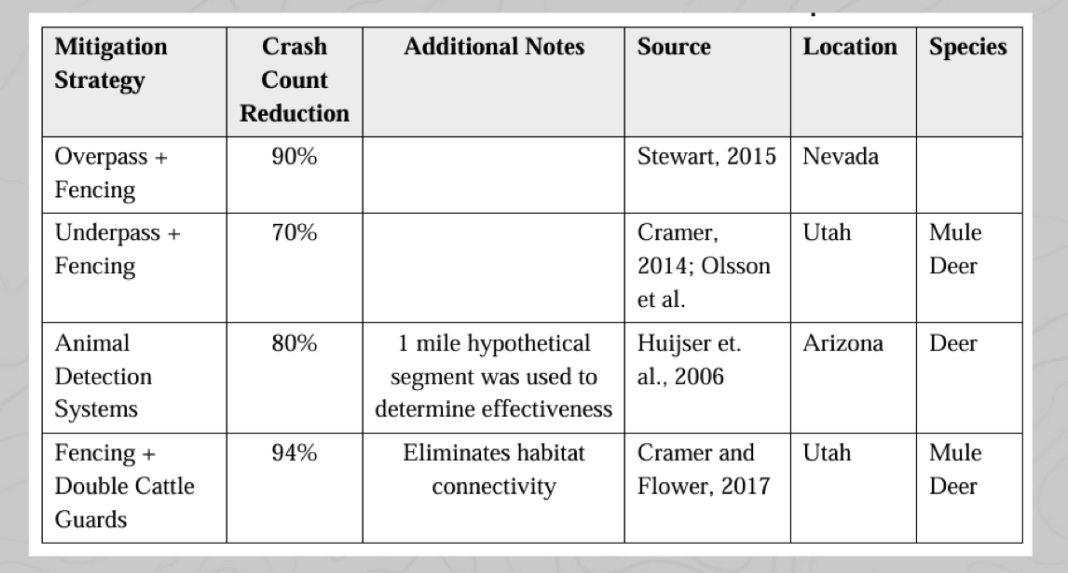
Pretty high crash reduction just by preventing animals from being on the road in the first place
Cattle guards having the highest crash reduction