Chapter 20- Weight Management
 Call Kai
 Learn
Learn Practice Test
 Spaced Repetition
 Match
Match Flashcards
 Knowt Play
1/21

Earn XP
Description and Tags
final
Name | Mastery | Learn | Test | Matching | Spaced | Call with Kai |
|---|
No analytics yet
Send a link to your students to track their progress
22 Terms
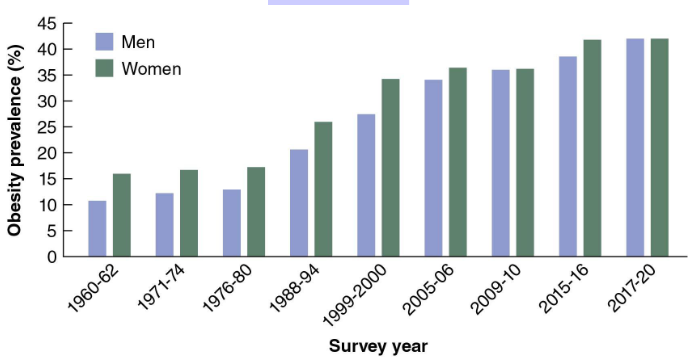
Prevalence of Obesity Among American Adults
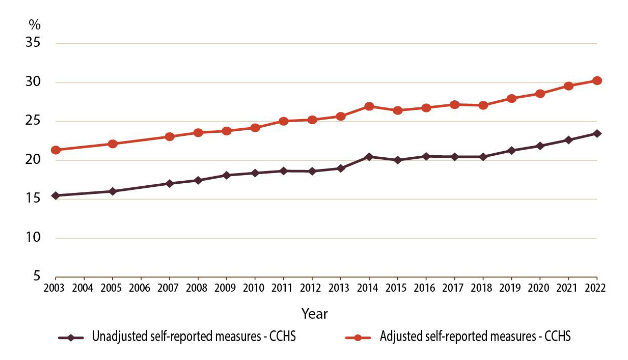
Canadian Community Health Survey BMI ≥ 30 kg/m2
obesity
Characterized by excessive fat mass
Causally linked to adverse health outcomes
Labeled as a disease in 2013
• Intended to decrease weight bias and stigma
defining obesity
BMI often used even though it does not directly measure
body fat
BMI ≥30 kg · m−2 considered obese
• Grade 1 obesity: 30.0 to 34.9 kg · m−2
• Grade 2 obesity: 35.0 to 39.9 kg · m−2
• Grade 3 (extreme) obesity: 40 kg · m−2 or higher
Waist circumference is used as a screen for obesity:
• ≥102 centimeters (40 inches) for men
• ≥88 centimeters (35 inches) for women
etiology of obesity
Obesity is a complex, multifactorial disease, with many
factors contributing to its development.
Positive caloric balance leads to increased body weight
genetic, lifestyle, and environmental factors
etiology of obesity- genetics
Monogenic or polygenic
Inheritance responsible for 40% to 70% of the interindividual
variation in obesity
Approximately 25% of variance in percent body fat attributable to
genetics
Even with genetic predisposition, great capacity on the part of the individual to affect body weight and fat (e.g., twin studies)
etiology of obesity- lifestyle and environment
Energy intake
• Increases over time
Energy expenditure
• Includes basal metabolic rate, thermic effect of food, and PA
• Decrease in occupational energy expenditure
• Relationship between low levels of physical activity and increased likelihood of weight gain and development of obesity
weight loss goals
Target a loss of 1 to 2 pounds (0.45 to 0.9 kilograms) per week.
General guidelines recommend a calorie deficit of 3,500 to 7,000 kcal per week.
NOTE: Energy expenditure is a dynamic process; 3,500 kcal = 1
pound is an estimate rather than a rule.
weight loss: PA
Standard testing modes and protocols individualized based
on fitness, ambulatory capacity, and current PA
Important to have a comfortable and safe environment
Dose–response relationship with increasing levels of
physical activity, resulting in greater weight loss
General relationship between physical activity and weight
loss:
• Physical activity >150 minutes per week: modest weight loss of ~2 to 3 kilograms
• Physical activity >225 to 420 minutes per week: weight loss of 5 to 7.5 kilograms
Resistance training also important
• May maintain or increase lean mass
Exercise is also important for weight-loss maintenance.
• ACSM recommends >250 minutes per week of moderate-intensity PA
national weight control registry
This source provides information on the habits of adults
who successfully lose weight and maintain weight loss.
• Over 85% used exercise.
• A common approach involved a diet low in total calories and low
in fat.
• Weight was monitored frequently.
• Most exercised about 1 hour per day (80% used walking).
weight loss: dietary aspects
Helpful to know the number of calories needed to sustain current body weight
Estimate daily caloric need:
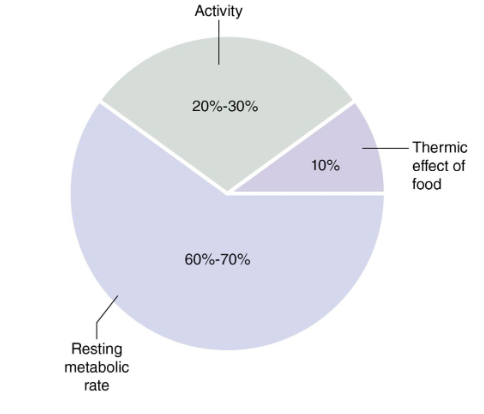
• Resting metabolic rate (RMR)
• Thermic effect of food
• Energy expended in daily activities
contributors to daily caloric need
calculating daily energy needs
Formulas exist to estimate daily caloric needs.
Equations are based on the following factors:
• RMR is proportional to body size.
• RMR decreases with age.
• Muscle is more metabolically active than fat.
Additional equations exist when fat-free mass (FFM) is known:
RMR (kcal · day−1) = 370 + (21.6 × FFM in kg)
Why is sex unimportant in an equation such as this?
dietary changes
Focus on healthy patterns.
Core foods to eat:
• All types of vegetables
• Fruits (especially raw)
• Grains (at least half of which are whole grains)
• Dairy (if tolerated)
• Protein foods (animal- and plant-based sources)
• Oils at appropriate calorie levels
scope of practice
Fitness professionals are not Registered Dietitians, meaning they should not be providing medical nutrition therapy to clients.
Fitness professionals should only provide information based on established nutrition guidelines, such as the 2020-2025 Dietary Guidelines for Americans.
Pharmacological and Surgical Weight Management Options
Nutrient-stimulated hormone therapies have been found to be effective for weight loss (e.g., GLP-1RA).
Bariatric surgery may be an option for individuals with extreme obesity.
Exercise programming is recommended following recovery from surgery; diet and exercise should be overseen by medical professionals.
gaining weight
Focus on accumulating FFM.
Add resistance training to the exercise routine.
Ensure there is no other underlying condition causing weight loss or struggles with gaining weight
tips to increase weight over time
Increase caloric intake by 200 to 1,000 kcal · day−1 by increasing meal size, number of meals, or number of between-meal snacks.
Add resistance training to daily routine.
When training intensely, make sure to consume 1.5 grams of protein each day for each kilogram of body weight.
anorexia nervosa
A preoccupation with body weight that leads to self starvation
Criteria:
• Restriction of energy intake relative to requirements, leading to significantly low body weight
• Intense fear of gaining weight or of becoming fat, or persistent behavior that interferes with weight gain, despite being at a very low weight
• Disturbance in the way in which one’s body weight or shape is experienced, undue influence of body weight or shape on self-
evaluation, or persistent lack of recognition of the seriousness of the current low body weight
bulimia nervosa
Characterized by recurrent episodes of binge eating and
recurrent inappropriate compensatory behaviors to prevent weight gain
Diagnostic criteria: must have engaged in behavior at least once
per week for 3 months
binge eating disorder
Characterized by consuming large amounts of food in a
short time
Not associated with purging
Diagnostic criteria: must engage in binging at least once per week for 3 months
disorder eating
A subclinical condition of unhealthy eating patterns
May lead to a clinical eating disorder
Important for fitness professionals to be aware of signs of
disordered eating