L21 Enhancing Nutrient Bioavailability
 Call Kai
 Learn
Learn Practice Test
 Spaced Repetition
 Match
Match Flashcards
 Knowt Play
1/37

There's no tags or description
Looks like no tags are added yet.
Name | Mastery | Learn | Test | Matching | Spaced | Call with Kai |
|---|
No analytics yet
Send a link to your students to track their progress
38 Terms
What foods have shown the success of fermentation throughout history?
chocolate, coffee, wine, beer, yogurt, cheese, bread
What is the biggest challenge associated with protein?
it is not sustainable to grow foods to feed animals, and then eat the animals (as the animals concentrate the protein from the plants and build themselves from it) for 8 billion people
protein is the limiting macronutrient amongst everyone
How are people trying to make protein intake more sustainable?
eat plants and accept that there are less proteins in some sources
make use of micro live stock
increases efficiency
feeding plants to microorganisms
What are three forms of nutritional improvements?
protein complementation
enrichment
fortification
What are limiting amino acids?
the amino acids that are limiting relative to the amount thats in the food
to your actual essential amino acid requirements
What are three different ways to measure the quality of protein sources?
Amino Acid Score (AAS)
Protein Digestibility-Corrected Amino Acid Score (PDCAAS)
Protein Efficiency Ratio (PER)
What is the Amino Acid Score (AAS)?

reference protein is an ideal protein that contains all the essential amino acids in sufficient amounts
does’t take into consideration digestibility
What is the Protein Digestibility-Corrected Amino Acid Score?

number one utility today in terms of determining quality of different sources
take into account the digestibility of protein
What is the Protein Efficiency Ratio?
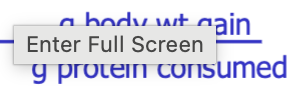
measurement that has been used historically involving rodent trials
compares how much rodents grow in weight as a function of the amount of protein that they were given
not adequate in predicting how well humans will perform on these proteins
What four amino acids tend to be limiting and are especially important when considering the growth of children? What kind of foods are typically limited in these sources?
1) lysine
2) s-amino acids (methionine and cysteine)
3) threonine
4) tryptophan
these are primarily limiting in plant-based sources of proteins
Building structure from proteins in the human body is limited by what?
we can only build structure as big as the first limiting material/amino acid
these amino acids that build this structure comes from protein breakdown
the closer the initial structure that is being broken down is to the final composition/protein, the easier it is to build
What plant protein sources are low in lysine? Which are high in lysine?
low →corn and cereals
high → legumes, soybeans, nuts
Which plants sources are high in s-amino acids (methionine and cysteine)? Which one’s are low?
low → legumes (beans)
high → cereals (whole grain)
The concept of limiting amino acids from different food sources for a complete diet is also true for?
vitamins
minerals
essential fatty acids
all of the above
none of the above
all of the above
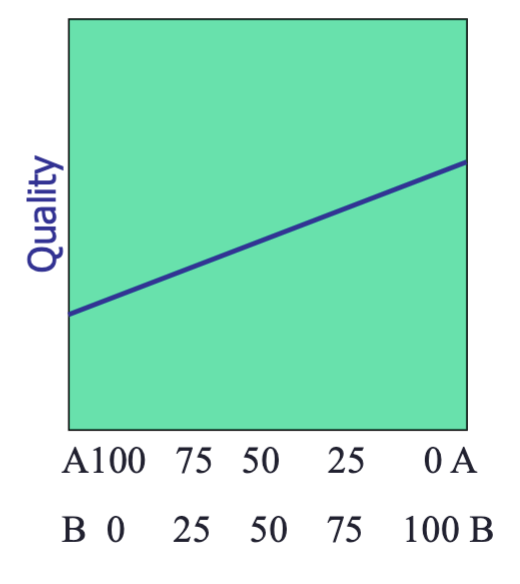
What are the four different types of protein quality derived from mixing protein sources?
1) Type I
2) Type II
3) Type III
4) Type IV
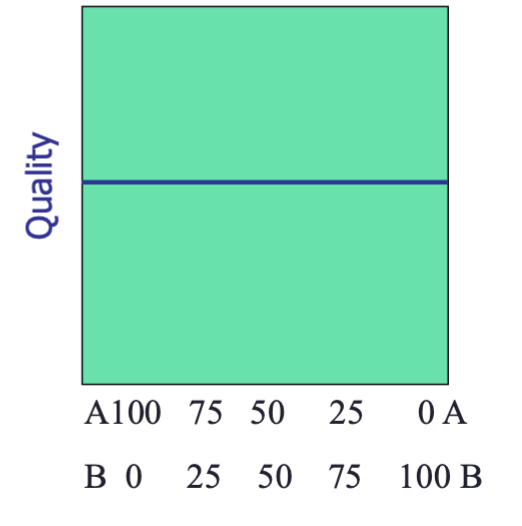
What is type I?
both amino acids have similar limitations in terms of the essential amino acids
has no effect
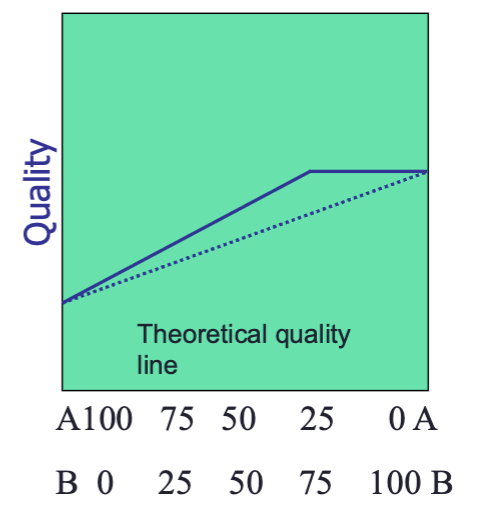
What is type II?
supplementation
quality of protein B is better than protein A (but A is still pretty good, just not as good)
add so much B that it plateaus because that’s as good as its going to get (as good as B can be)
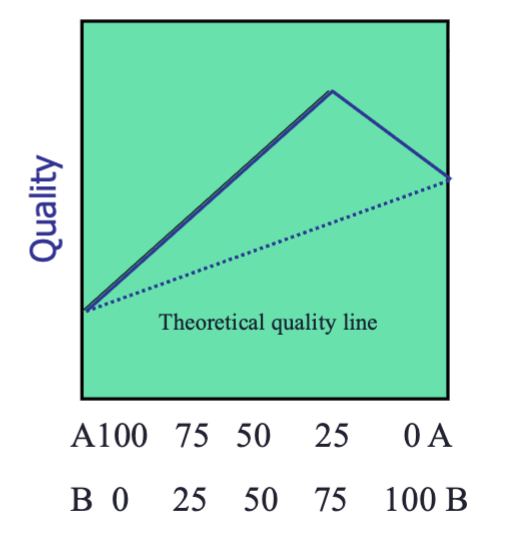
What is type III?
true complementation
quality of protein A + B is better than their individuals parts
True complementation occurs when?
a high quality and a low quality protein mix
two proteins of intermediate quality mix
enzymes break down proteins
meats and plant proteins mix
none of the above
two proteins of intermediate quality mix
What is type IV?
supplementation
protein B is so superior to protein A that every time you add B you get increased protein quality
primarily drive by how low of quality A is, not really about how good B is
Why do we add additional nutrients to foods?
nutritional deficiency
restoration of nutrient loss
improving the quality of a replacement food
balance nutrient content of food
compensate for decreased bioavailability
What is the definition of fortification?
refers generally to nutrient addition in food
What is the definition of enrichment?
addition of thiamin, riboflavin, niacin, and iron to cereal products
enrichment now includes folic acid
What is the definition of compensation?
new term used to describe nutrient addition to compensate for reductions in bioavailability
What is an example of us adding nutrient to food due to nutrient deficiency?
iodine in salt
What is an example of us adding nutrient to food due to restoration of nutrient loss?
cereal enrichment
tend to process cereal, therefore we enrich it
What is an example of us adding nutrient in order to improve the quality of a replacement food?
adding vitamin A in margarine
What is an example of us adding nutrient to food in order to balance nutrient content of food?
meal replacers/instant breakfast
What is an example of us adding nutrient to food in order to compensate for decreased bioavailability?
fat-soluble vitamin in olean (fat substitute)
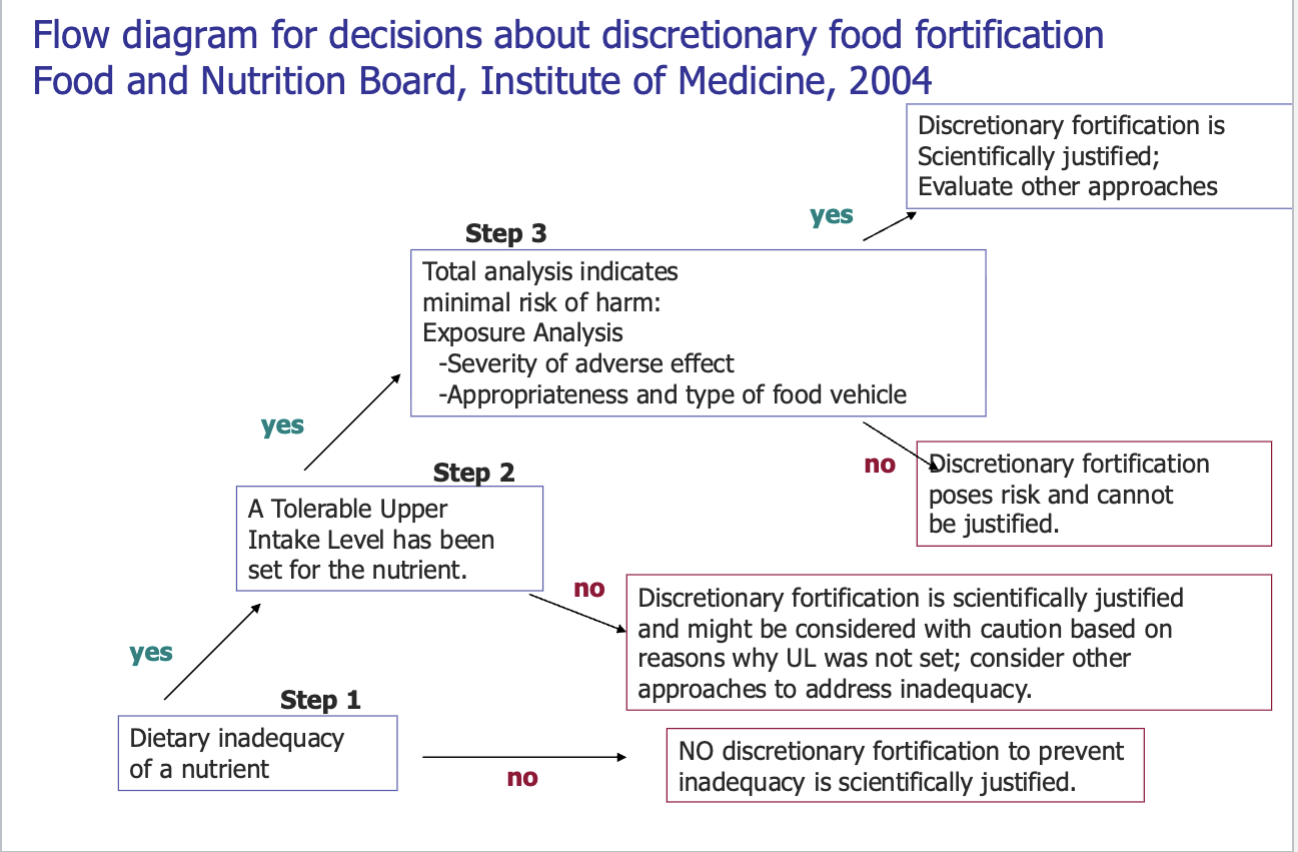
What are rules surrounding nutrient fortification?
intake of nutrient (in absence of fortification) is below the desirable level in the diet of a significant number of people
fortified food is consumed in sufficient quantity to contribute significantly to the diet of the population
addition of the nutrient is unlikely to create an imbalance of essential nutrients
nutrient is stable under proper conditions of storage and use
nutrient is physiologically available from food to which it will be added (bioavailable after addition)
there is reasonable assurance against intake sufficiently in excess to be toxic
responsibility of industry to prove this to the government
Is food fortification an easy process?
No
takes long have to assess many factors
What is the issue with dietary reference intakes?
population is diverse with varying nutritional needs
overdose people while taking into consideration upper limit
What is NOAEL?
no observed adverse effect level (upper limit)
What is LOAEL?
lowest observed adverse effect level (minimum need for adverse effects)
What are some challenges surrounding fortification?
changes in sensory attributes of food (color, taste, aroma, texture)
stability in food
uniform distribution in food
risk of approaching upper level of recommended intake
What things do you need to follow/document once you have developed a nutritionally fortified food?
contribution food makes to nutrient intake amongst populations and that it is solving the nutritional problem
potential nutrient interactions
stability of nutrients vs. handling and processing conditions to maintain safety and quality
Describe the changes in nutrient specific disease from the 20th century to now. Why did this change?
early 20th century, people were dying largely from infectious diseases that were food borne
led to the branded product business model that sold food along with the guarantee of safety
now, people are dying due to non-infectious/contagious metabolic diseases (heart disease, cancer, obesity, diabetes) but these are still driven by diet
need to incentivize industry to make foods healthier
What is nutrient labeling?
the ongoing process of monitoring and regulating the industrialization of nutrition in food products