Biol 213 chapter 16
 Call Kai
 Learn
Learn Practice Test
 Spaced Repetition
 Match
Match Flashcards
 Knowt Play
1/43

There's no tags or description
Looks like no tags are added yet.
Name | Mastery | Learn | Test | Matching | Spaced | Call with Kai |
|---|
No analytics yet
Send a link to your students to track their progress
44 Terms
Yeast cells respond to mating factor secreted from cells of the
opposite mating type (a or α) by growing toward the source of the signal
Signal Transduction
the process of converting one type of signal to another
Receptors =
signal
Signal molecules
Proteins, peptides, amino acids, steroid hormones, fatty acids, sugars, nucleotides, inorganic compounds, gases.
can be anything
Signal recognition
Receptor proteins (receptors)
receptor is always protein
The general styles of cell communication
Short distance, local distribution
Long distance, wide distribution
Long distance, cell specific
Cell-cell specific
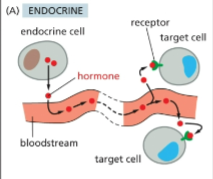
endrocine type of cell communication
long distance, wide distribution
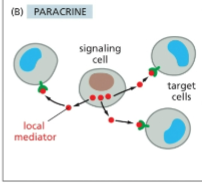
paracrine type of cell communication
Short distance, local distribution
Long distance, wide distribution cell communication
short distance, local distribution cell communication
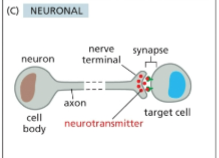
long distance, cell specific cell communication
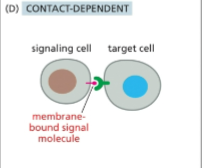
cell-cell specific
Broadcast to anyone who’s listening cell communication
long distance, wide distribution
short distance, local distribution
Closed circuit intended for specific audience cell communcation
long distance, cell specific
cell-cell specific
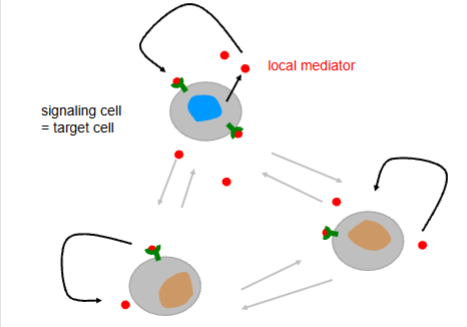
autocrine signaling
short distance, local distribution
like paracine but self-signaling
epinephrine (adrenaline) site of origin
adrenal gland
epinephrine(adrenaline) chemical nature
derivative of the amino acid tyrosine
epinephrine (adrenaline) some actions
increases blood pressure, heart rate, and metabolism
cortisol site of origin
adrenal gland
cortisol chemical nature
steroid (derivative of cholesterol)
cortisol some actions
affects metabolism of proteins, carbs, and lipids in most tissues
estradiol site of origin
ovary
estradiol chemical nature
steroid (derivative of cholesterol)
estradiol some actions
induces and maintains secondary female sexual characteristics