BIO 5.1 - RESPIRATION & PHOTOSYNTHESIS
 Call Kai
 Learn
Learn Practice Test
 Spaced Repetition
 Match
Match Flashcards
 Knowt Play
1/25

There's no tags or description
Looks like no tags are added yet.
Name | Mastery | Learn | Test | Matching | Spaced | Call with Kai |
|---|
No analytics yet
Send a link to your students to track their progress
26 Terms
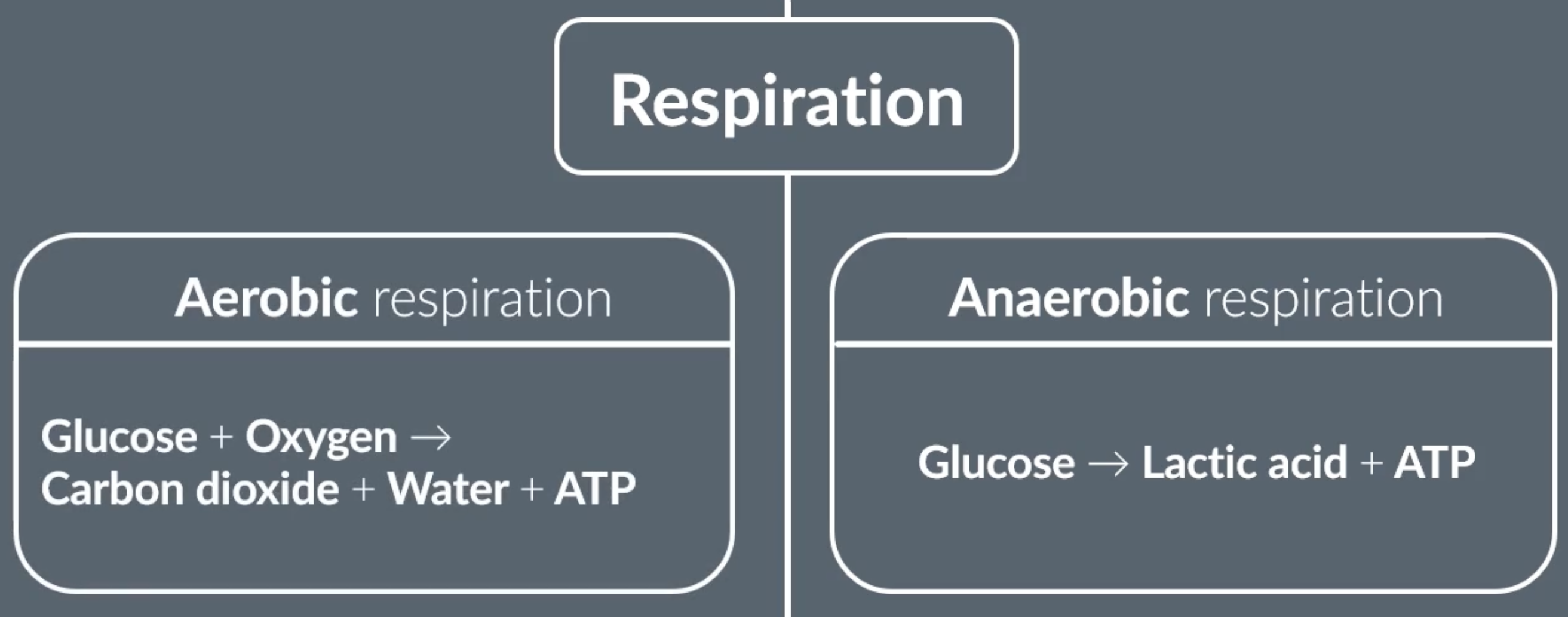
aerobic respiration:
glycolysis → link reaction → Krebs cycle → oxidative phosphorylation
anaerobic respiration:
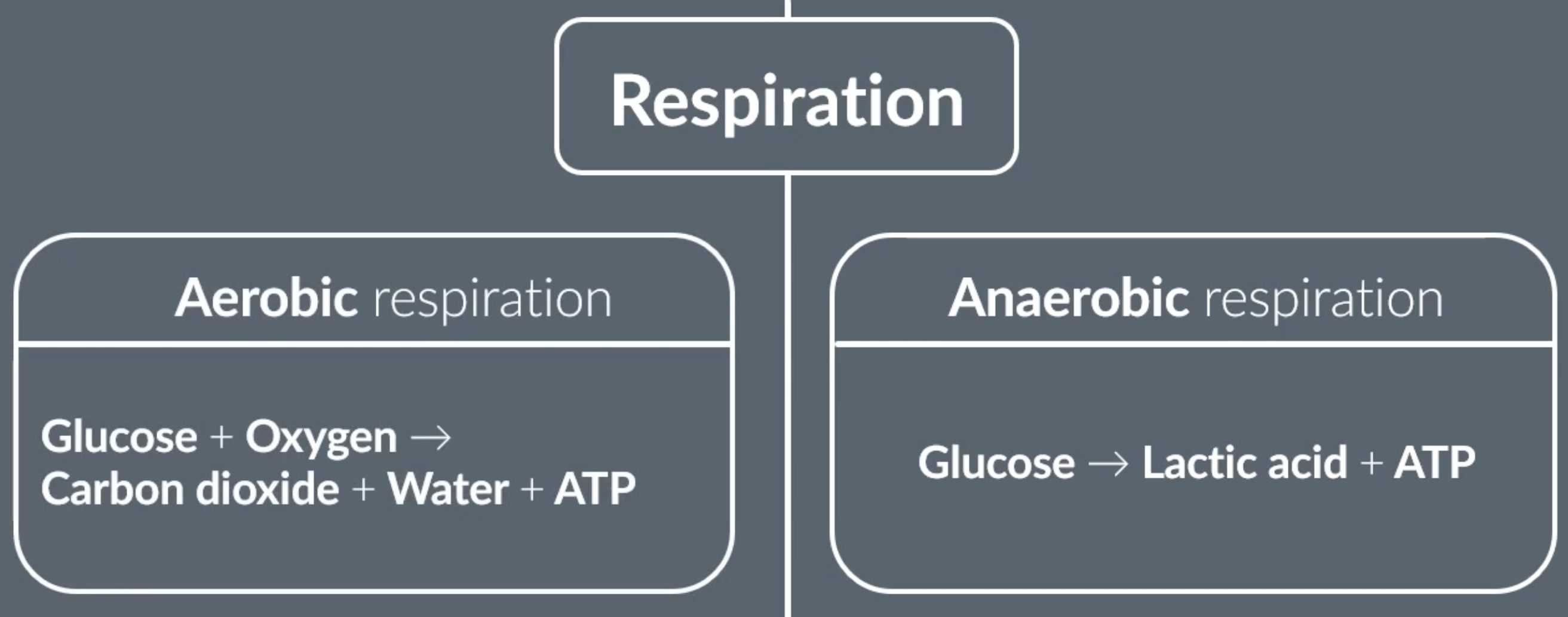
glycolysis
first stage of aerobic and anaerobic respiration
takes place in the cytoplasm
doesnt require oxygen
converts glucose into pyruvate (3C)
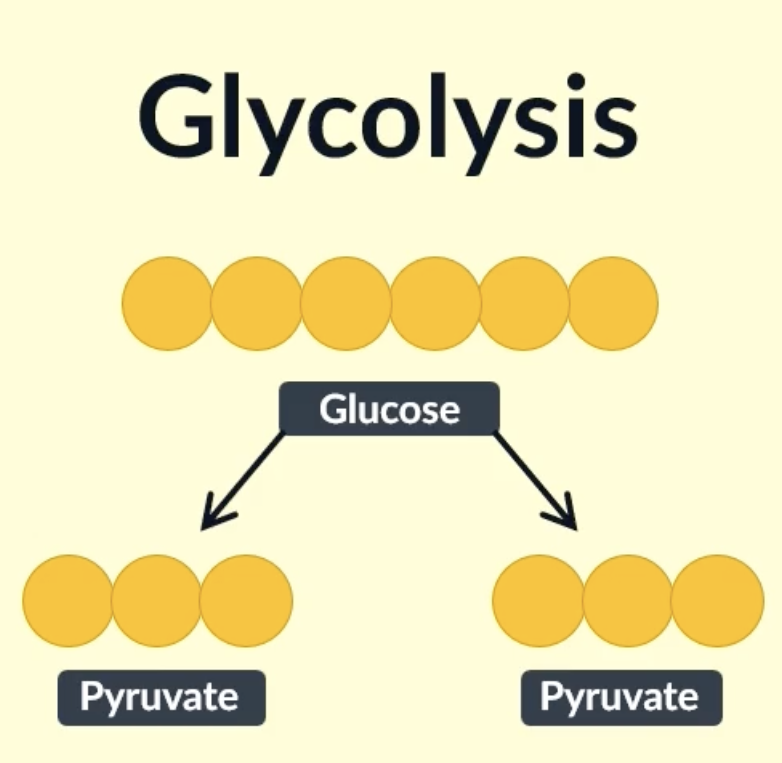
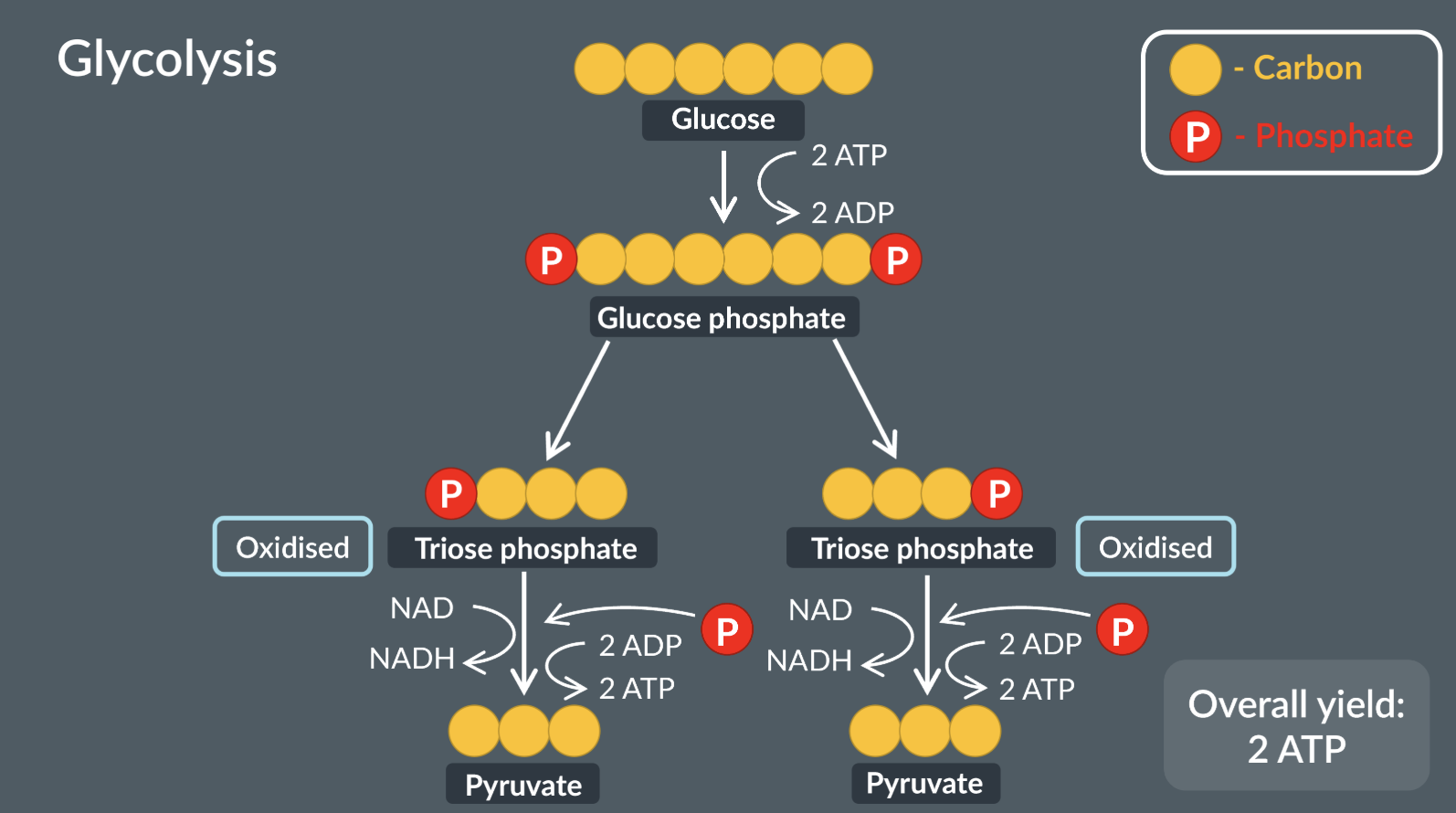
stages of glycolysis
glucose enters the cytoplasm by facilitated diffusion
an enzyme adds 2 phosphate groups onto the glucose by phosphorylation, forming a molecule of glucose phosphate. these phosphate groups come from the breakdown of 2 ATP molecules
glucose phosphate breaks down into 2 molecules of triose phosphate
each molecule of triode phosphate is oxidised to pyruvate. the conversion of each triose phosphate molecule produces 2 ATP molecules by substrate level phosphorylation
per each triose phosphate molecule, 1 NAD molecule is reduced to NADH
for every glucose molecule theres an overall yield of 2 ATP molecules (bc 2 are used in step 2 and 4 are produced in step). also 2 NADH molecules produced
why phosphate groups are added in the first step of glycolysis
glucose phosphate is more difficult to transport
glucose enters the cytoplasm of the cell through facilitated diffusion, requires a transport protein specific to glucose. however, if there is a higher concentration of glucose in the cell than outside it, then glucose could end up leaving the cell again = glucose can’t be used for respiration. by adding phosphate groups, this converts glucose into glucose phosphate, which can’t travel through the transport protein
oxidation-reduction reactions during glycolysis
triose phosphate looses a H, so gets oxidised
NAD gains a H, so gets reduced → NADH/ reduced NAD
aerobic respiration - link reaction
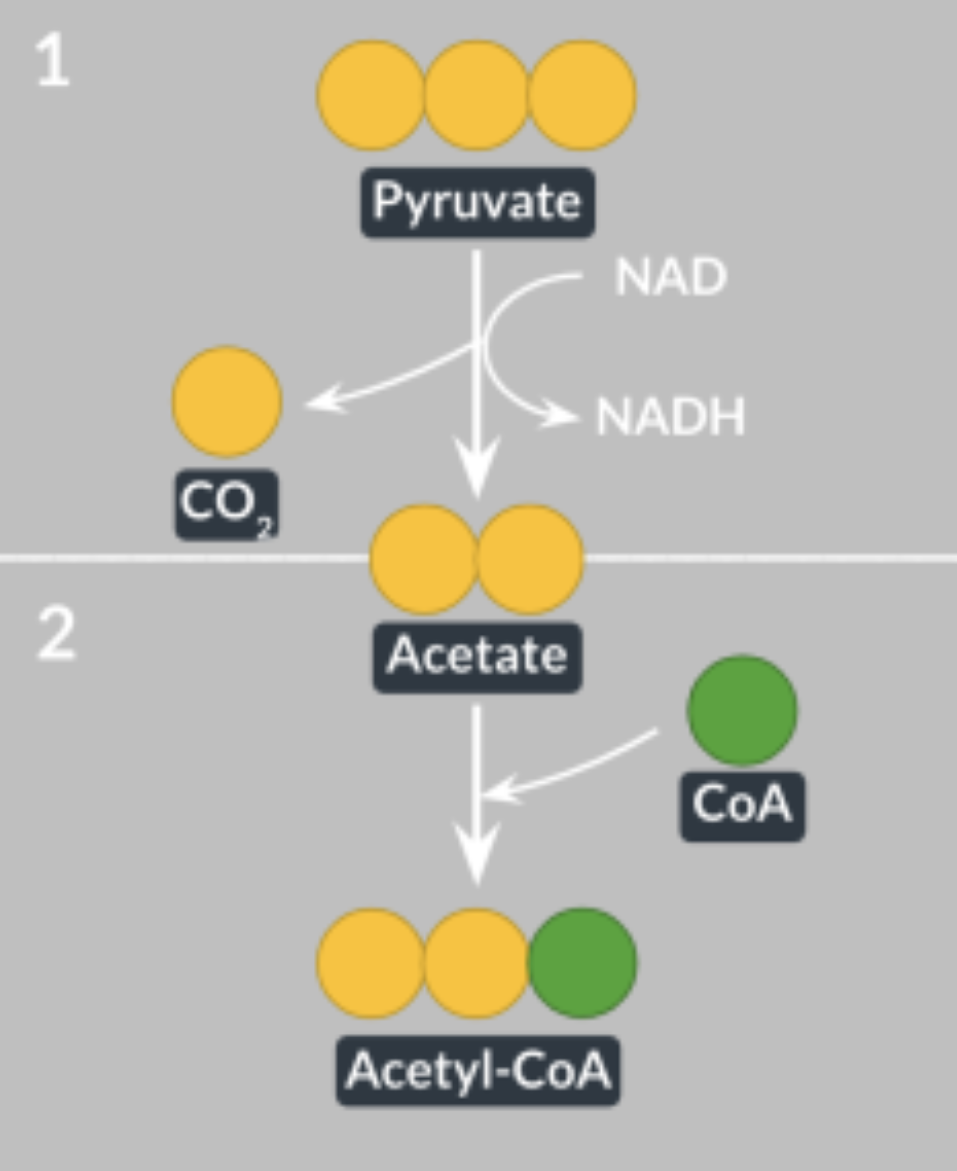
pyruvate moves into the mitochondrial matrix by active transport
pyruvate looses carbon in the form of CO2 and gets oxidised (looses H)
the H reduces a molecule of NAD→NADH
this leaves behind a molecule of acetate
coenzyme A is added, which converts acetate into acetyl CoA
doesnt produce ATP, purpose is to produce acetyl-CoA
coenzyme A isn’t the only co enzyme used, NAD is also a coenzyme
why is coenzyme A added?
in the Krebs cycle, the reaction of the 4C molecule with acetyl-CoA is catalysed by an enzyme. to function properly, this enzyme needs a coenzyme = coenzyme A
aerobic respiration - Krebs cycle
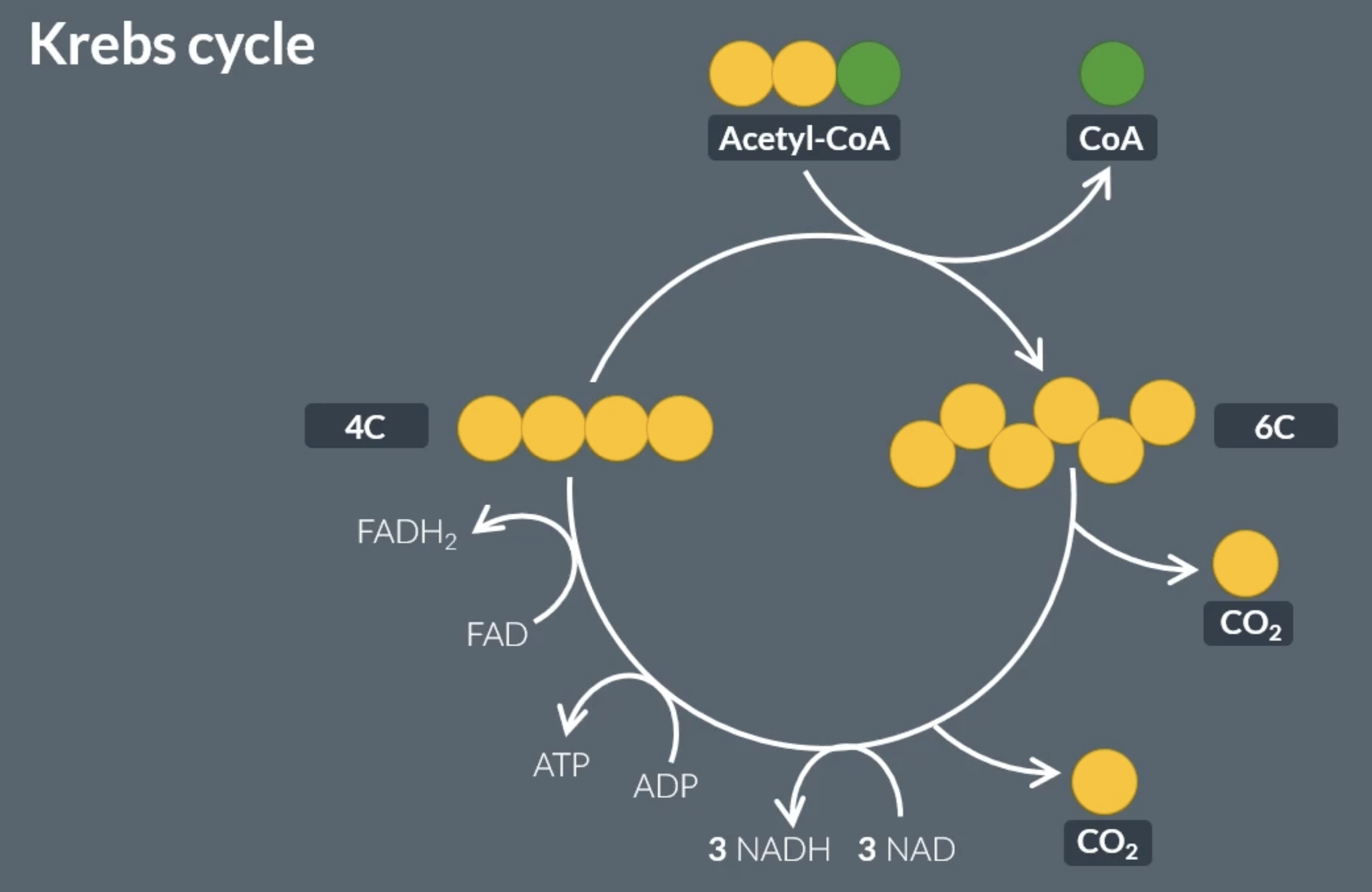
acetyl CoA enters the Krebs cycle
it reacts with a 4C molecule, which forms a 6C molecule called citrate
CoA is removed and returns back to the link reaction
the 6C molecule looses 2 carbons in the form of CO2
an ATP molecule is formed by substrate level phosphorylation
3 NAD molecules are reduced to form 3 NADH molecules
1 FAD molecule is reduced to form 1 FADH2 molecule
takes place in the mitochondria
products of Krebs cycle:
-CO2 ×2
-ATP x1
-NADH x3
-FADH2 x1
→ this is not per glucose molecule because the Krebs cycle turns twice for every glucose molecule
triglycerides in respiration
triglycerides are made up of glycerol and 3 fatty acids
glycerol has 3 carbons, and can be converted into triose phosphate, and take part in glycolysis
a single fatty acid can form acetyl-CoA, and take part in the Krebs cycle
amino acids in respiration
amino group is removed, and the rest of the molecule can be used depending on how many carbons it has
the ones containing 3 carbons are converted to pyruvate, and used in the link reaction
the ones containing 4 or 5 carbons are converted into molecules used in the Krebs cycle
aerobic respiration - oxidative phosphorylation
chemiosmosis
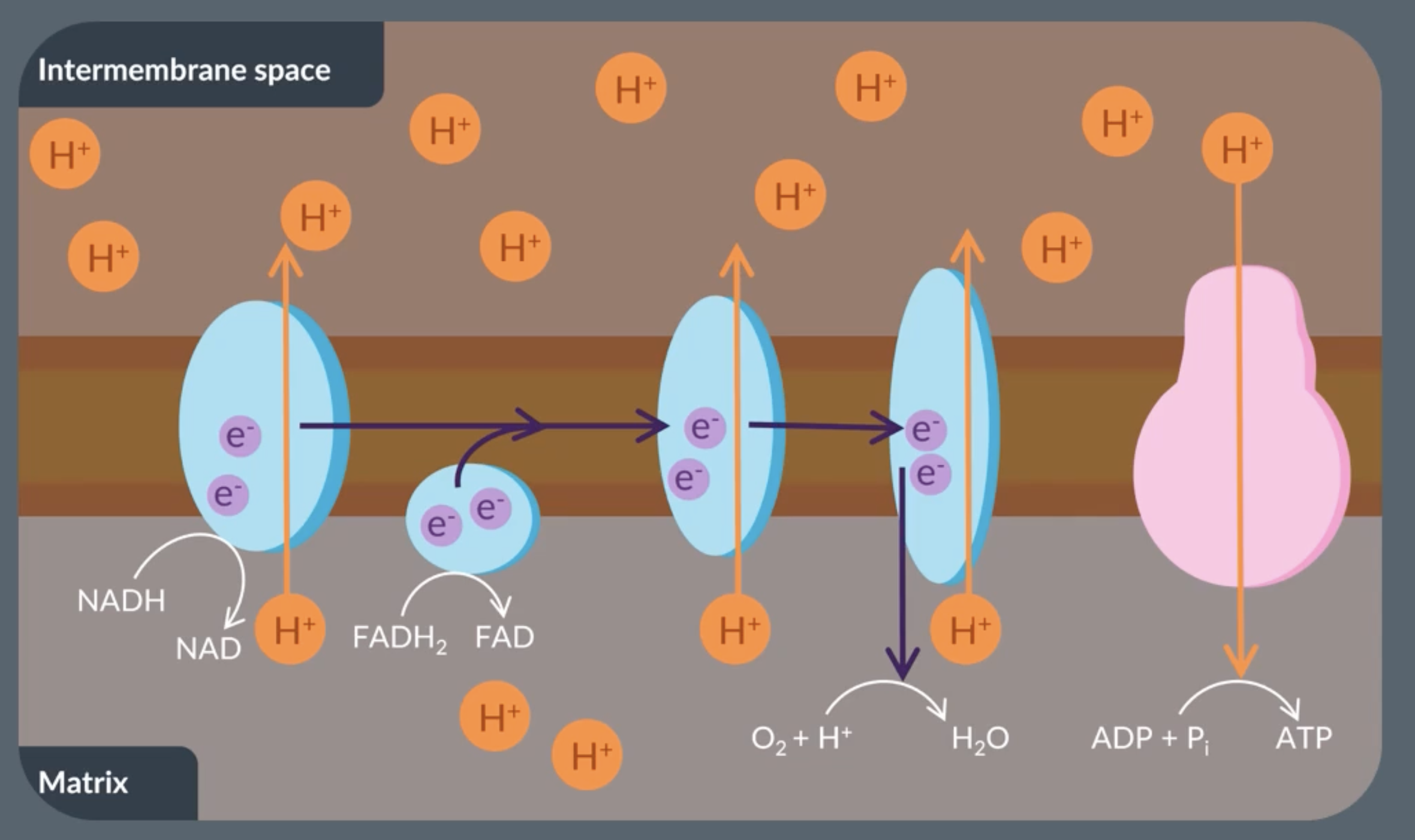
chemiosmosis = the movement of hydrogen ions down an electrochemical / proton gradient through ATP synthase, producing ATP. this occurs from the intermembrane space into the matrix
ATP synthase is an enzyme that catalyses the production of ATP. to catalyse the production of ATP, ATP synthase needs energy, which is supplied by chemiosmosis
aerobic respiration - oxidative phosphorylation
how is the proton gradient maintained?
to maintain the proton gradient, protons are actively transported from the matrix to the intermembrane space. this ensures that there’s always a higher concentration of protons in the intermembrane space compared to the matrix.
however this process of active transport requires energy, which is supplied by electrons:
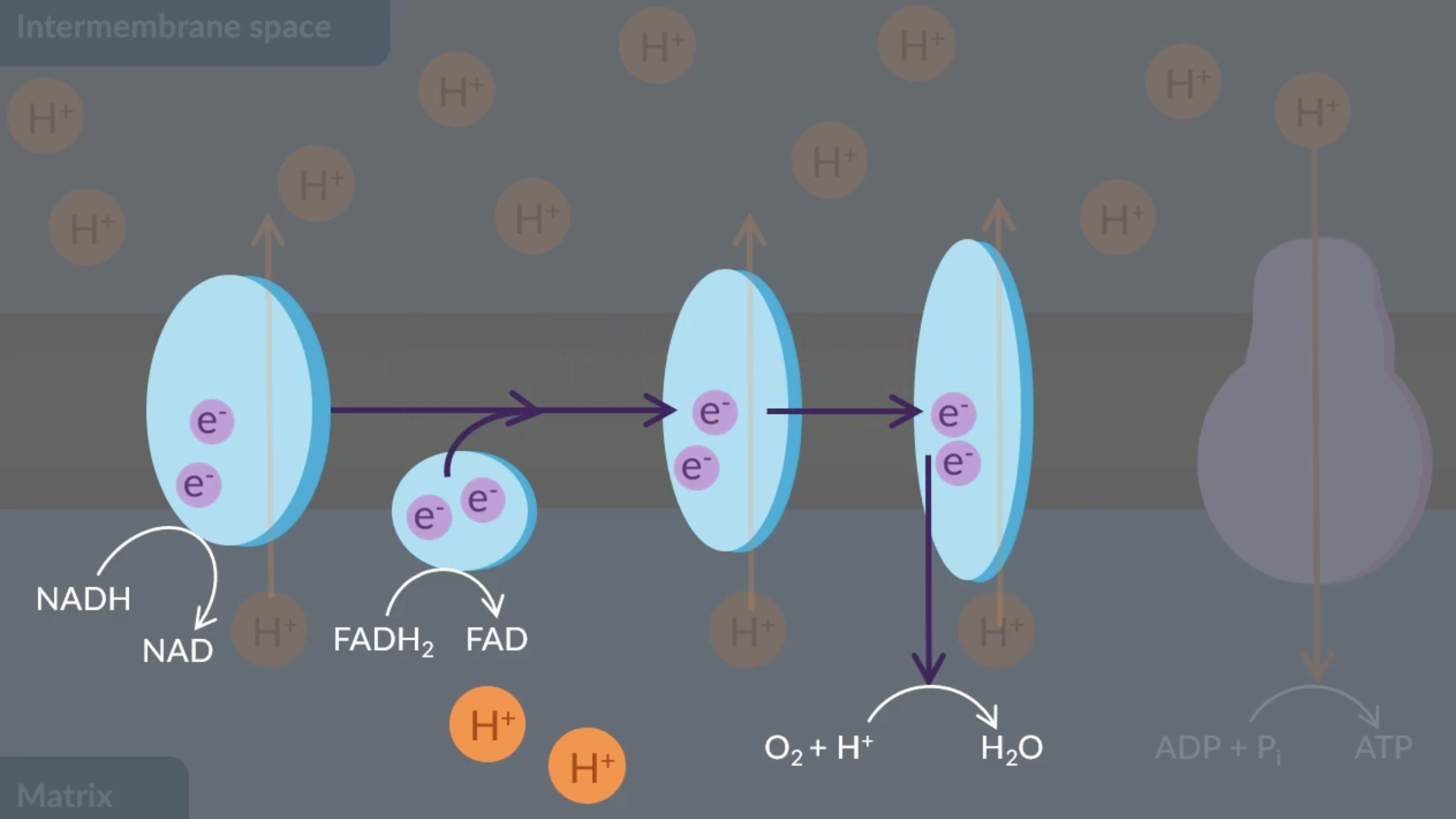
NADH and FADH2 get oxidised (lose H and e-) and donates electrons to a membrane protein, so the protein is reduced. the electrons move down the electron transfer chain across proteins by a series of oxidation-reduction reactions. these reactions release the energy which is transferred to the proteins for the active transport of protons out of the matrix
NAD and FAD can be recycled back to their reactions in aerobic respiration
aerobic respiration - oxidative phosphorylation
final electron acceptor
at the final protein in the ETC, oxygen reacts with the electrons in the final protein and with protons in the matrix that haven’t been actively transported yet → forms water. this ensures that the ETC flows continuously
this occurs during aerobic respiration as it needs oxygen. in this reaction, oxygen is the ‘final electron acceptor’
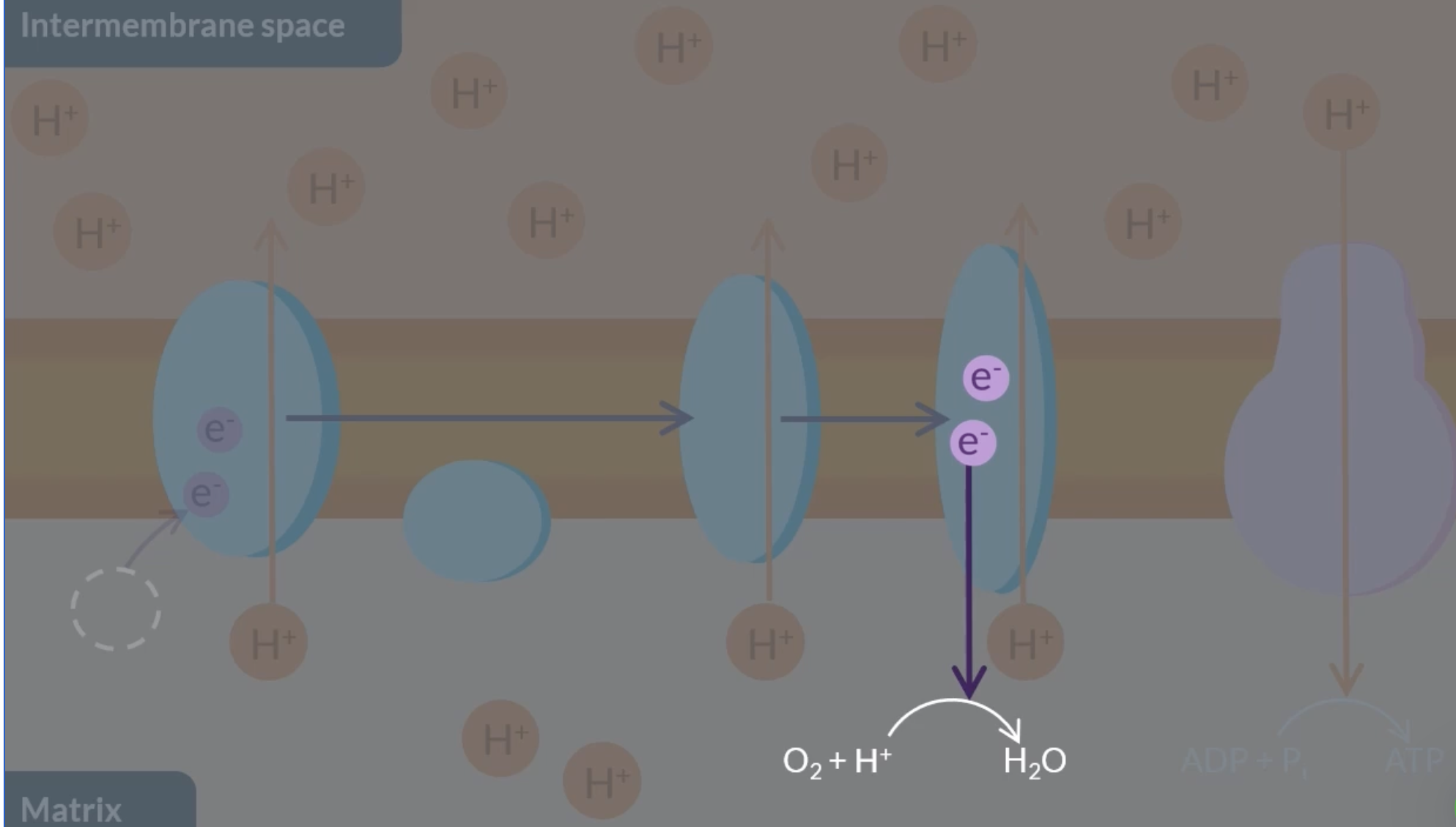
aerobic respiration - oxidative phosphorylation summary
In oxidative phosphorylation, electrons supplied by reduced NAD and reduced FAD are transferred through the electron transfer chain via a series of oxidation-reduction reactions.
Next, these oxidation-reduction reactions provide energy to the electron transfer chain. As a result, protons move from the matrix to the intermembrane space via active transport. This ensures that a proton gradient is maintained across the inner membrane.
Additionally, the electrons in the final inner membrane protein react with oxygen and protons to form water. Through this reaction, oxygen is also known as the final electron acceptor.
Finally, chemiosmosis through ATP synthase results in the production of ATP
mitochondria adaptations for respiration
because oxidative phosphorylation takes place in the inner mitochondrial membrane: the cristae increase the surface area of the membrane, which increases the space available for oxidative phosphorylation = lot of ATP can be made at one time
the number of cristae can vary depending on the amount of ATP that a particular cell needs. for example, heart cells need more ATP than liver cells. so, mitochondria in heart cells have a larger number of cristae than mitochondria in liver cells
anaerobic respiration in animals
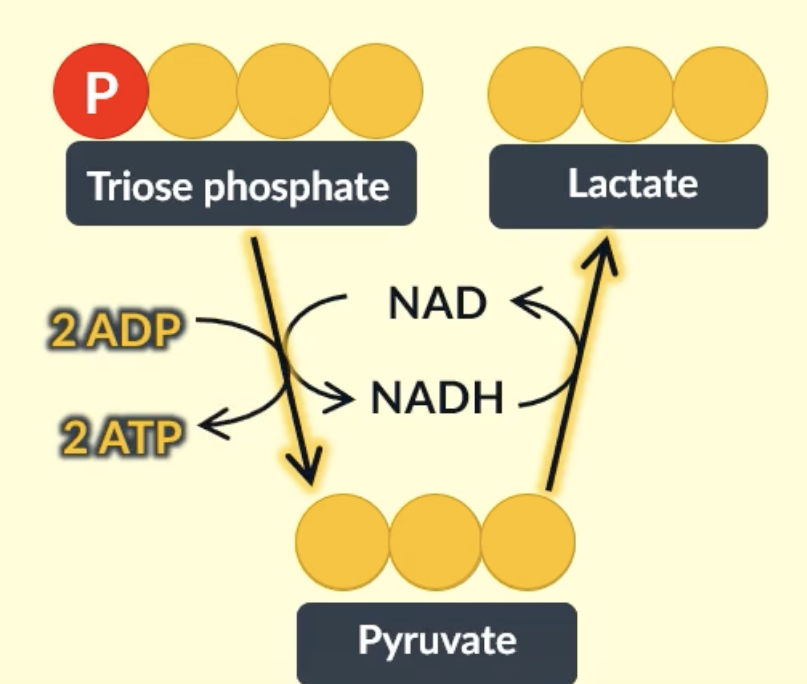
first stage is glycolosis in the cytoplasm
pyruvate is reduced as a molecule of NADH donates a H (NADH gets oxidised), so pyruvate is converted into lactate
the NADH used is the same one produced from glycolysis
anaerobic respiration in plants and microorganisms
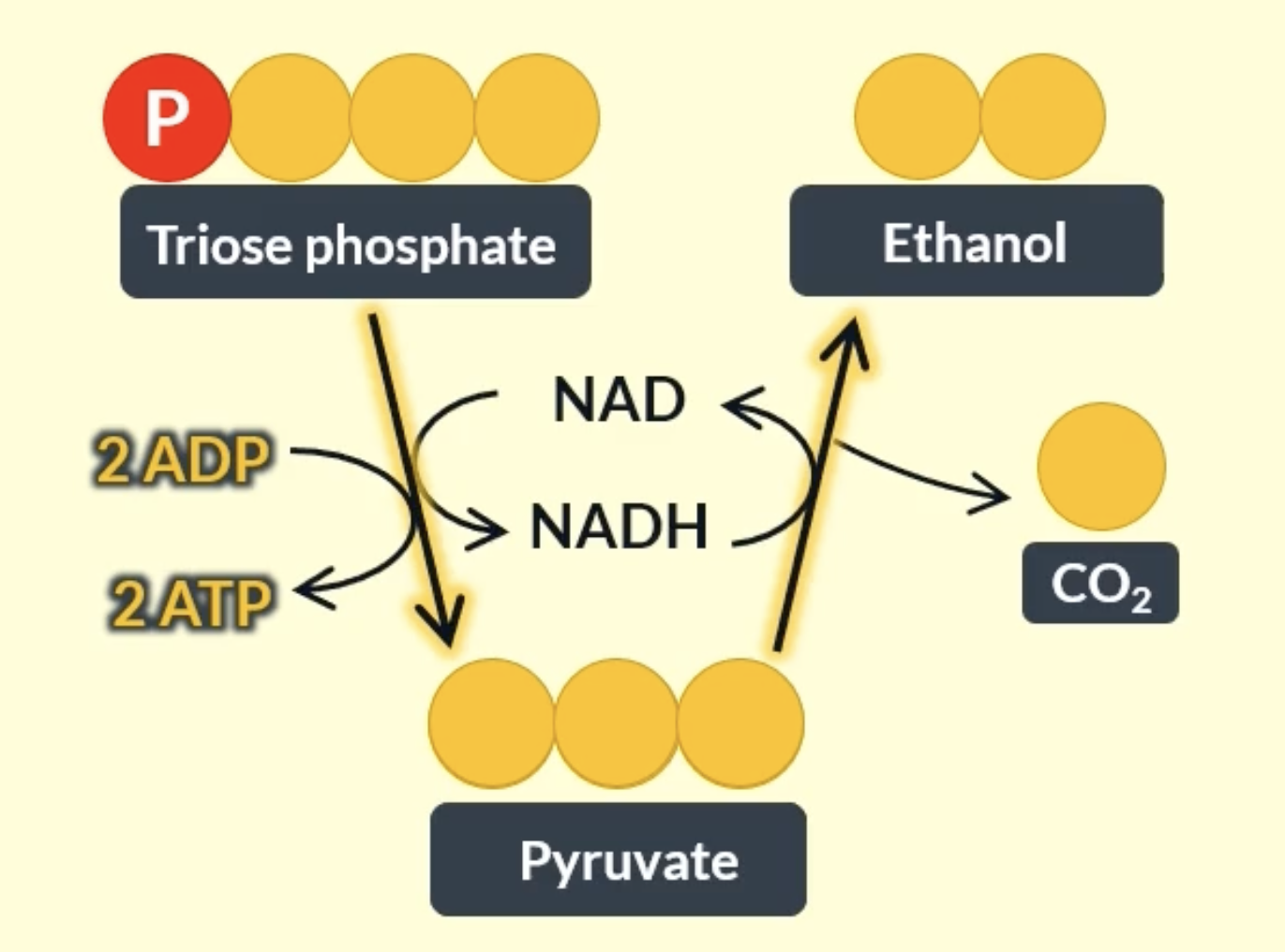
first stage is glycolosis in the cytoplasm
pyruvate is reduced as a molecule of NADH donates a H (NADH gets oxidised), so pyruvate is converted into ethanol and CO2
the NADH used is the same one produced from glycolysis
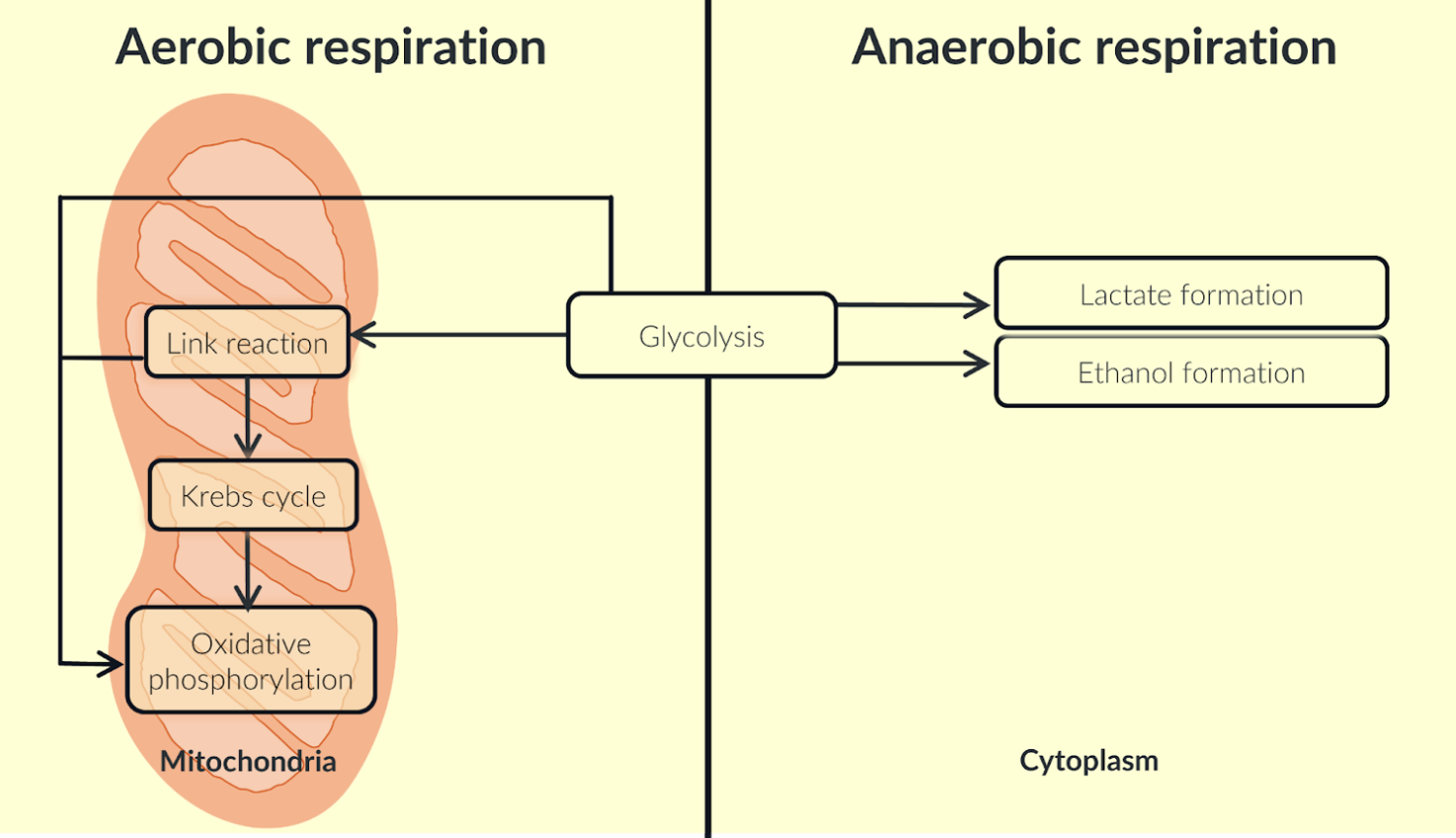
aerobic:
takes place in cytoplasm and mitochondria
yield of over 30 ATP molecules per glucose molecule (4 from glycolysis and Krebs cycle)
anaerobic:
takes place in the cytoplasm
yield of 2 ATP molecules per glucose molecule
photosynthesis
6CO2 + 6H2O → C6H12O6 + 6O2
carbon dioxide + water → glucose + carbon dioxide
occurs in the chloroplast
stages of photosynthesis:
-light dependent reaction → thylakoid membranes
-light independent reaction → stroma
photosynthesis -light dependent reaction
photoionisation
takes place in the thylakoid membrane
products: ATP and NADPH → used for light independent reaction
photophosphorylation = the production of ATP using light energy during photosynthesis. process:
theres a higher concentration of protons in thylakoid than stroma. so chemiosmosis occurs where protons diffuse along their proton gradient. this provides energy for ATP to be produced from ATP synthase. to maintain the proton gradient, protons are actively transported from the stroma to the thylakoid space.
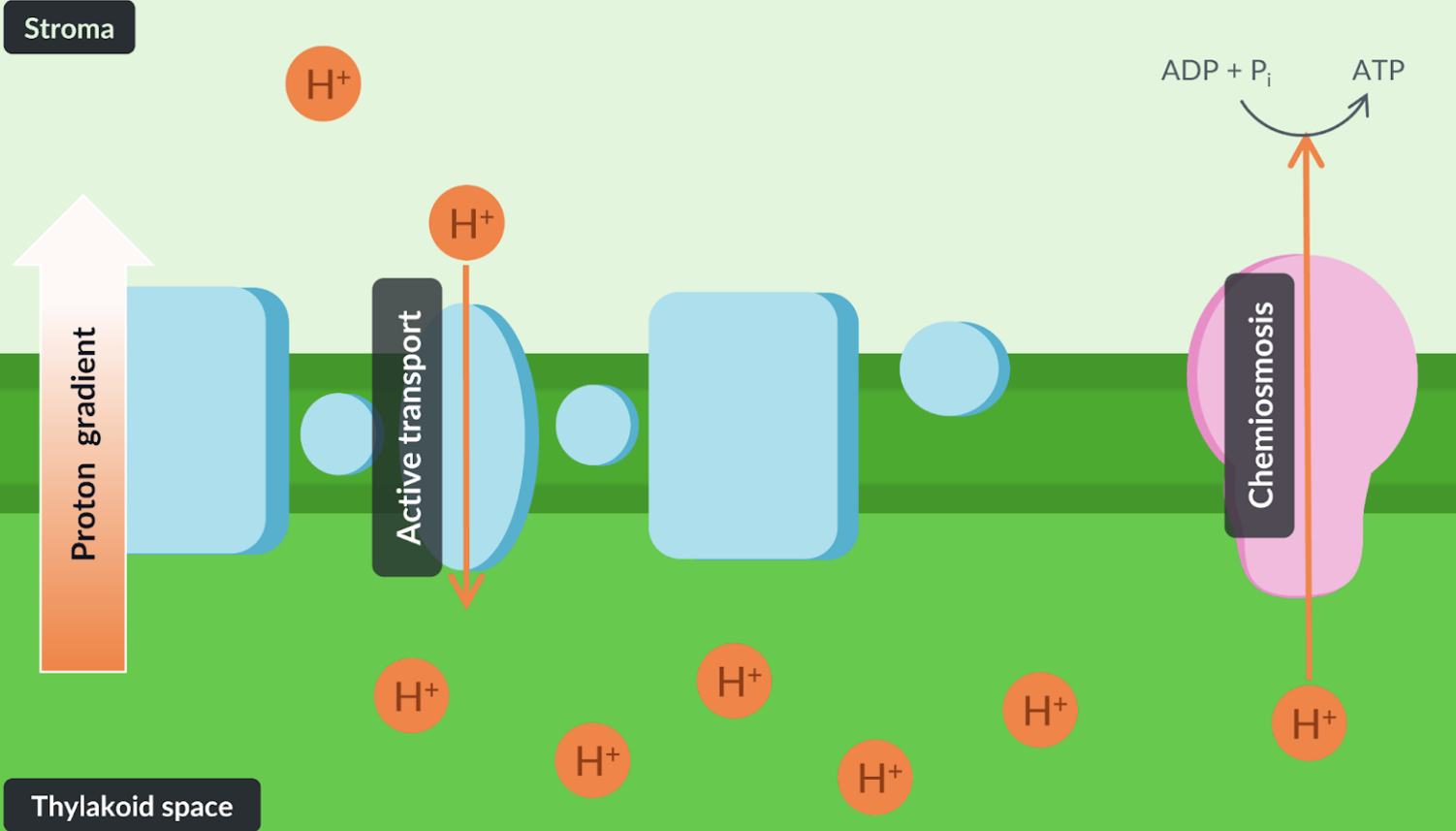
photosynthesis -light dependent reaction
photoionisation and ETC
photoionisation = when light energy excites electrons in chlorophyll, causing the electrons to leave the chlorophyll
to maintain the proton gradient, protons are actively transported from the stroma to the thylakoid space. the energy needed for this active transport is provided by electrons
when light hits the leaf, chlorophyll absorbs the light. the light energy gets transferred to electrons in the chlorophyll. when electrons gain energy, theyre in an excited state. the chlorophyll gets oxidised as the electrons leave, leaving the chlorophyll to be positively charged. the electrons move though the ETC by a series of oxidation-reduction reactions, which provides each protein with energy for active transport of protons from the stroma into the thylakoid.
photosynthesis -light dependent reaction
end of ETC
at the end of the ETC,
at the final protein in the ETC, NADP gets reduced as it reacts with the electrons in the final protein and with protons in the stroma that haven’t been actively transported yet → forms NADPH. this ensures that the ETC flows continuously
in this reaction, NADP is the ‘final electron acceptor’
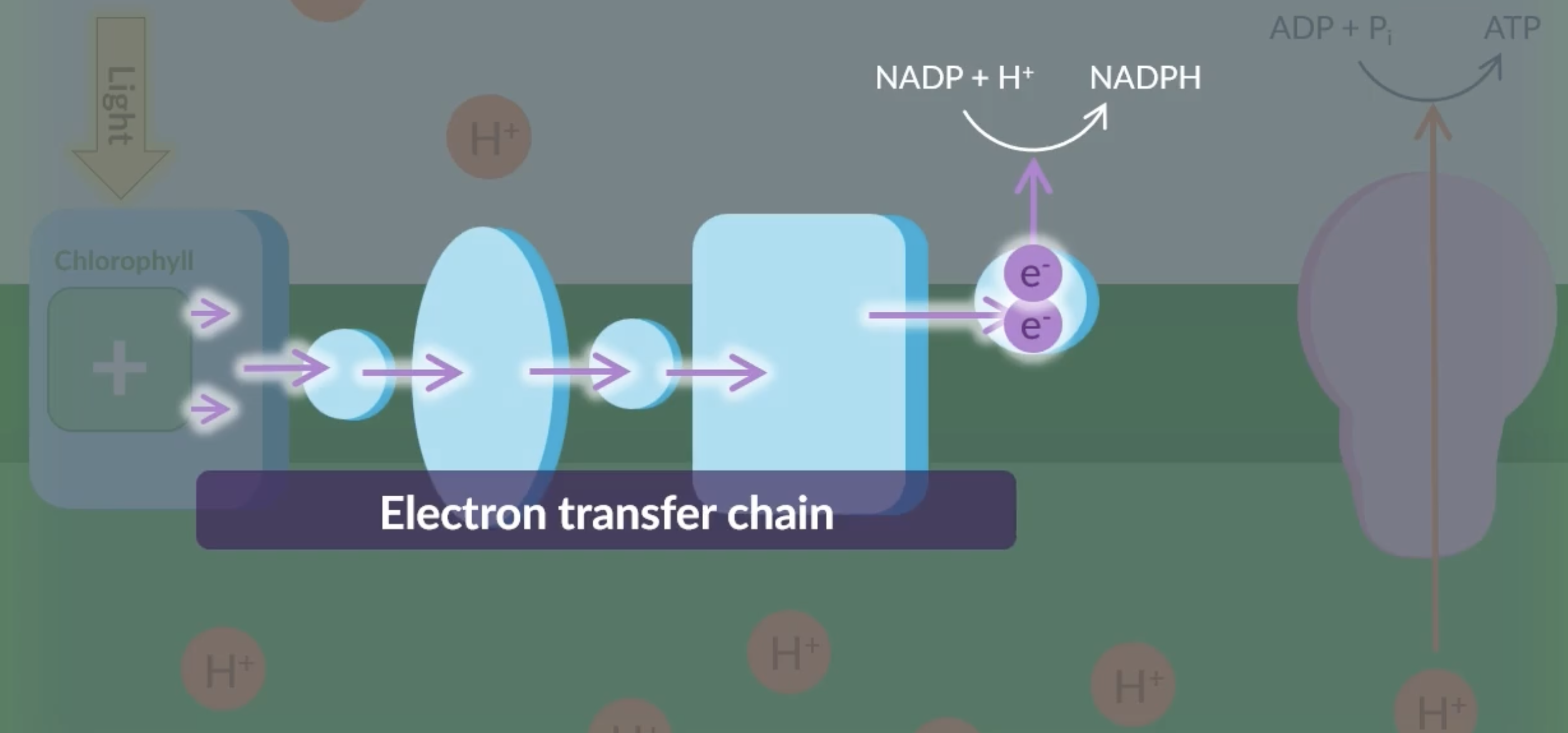
photosynthesis -light dependent reaction
photolysis
the electrons lost from the chlorophyll during photoionisation need to be replaced to ensure the continuous flow of the ETC. when light hits the leaf, it splits water into: H2O → 2H+ + 2e- + ½ O2.
the electrons formed can be use to replace the ones lost.
the protons can be used to maintain a high concentration of protons in the thylakoid space.
the oxygen can either diffuse out of the plant or be used in respiration
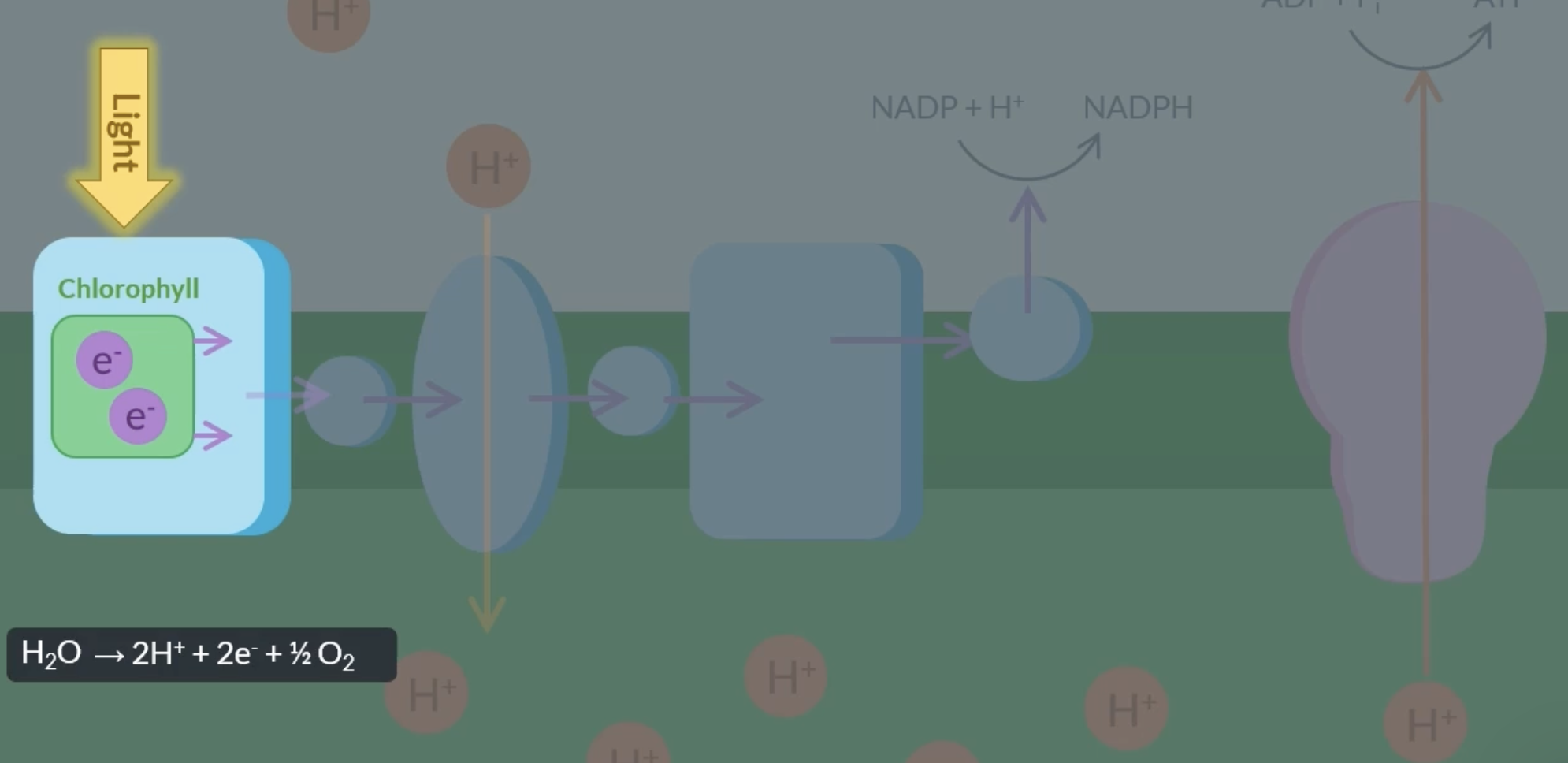
adaptations of the chloroplast for photosynthesis
-thylakoid membrane has a large surface area for molecules involved in the light-dependent reaction. maximises the amount of ATP and NADPH made
-proteins in the grana hold the chlorophyll in such a way that the maximum amount of light can be absorbed at one time
-chloroplasts contain both DNA and ribosomes. this means that proteins involved in the light-dependent reaction can be quickly produced
photosynthesis - light independent reaction
calvin cycle
CO2 enters the stroma and reacts with RuBP, forming glycerine-3-phosphate (GP). this reaction is catalysed by the enzyme rubisco
GP is reduced by NADPH and covered into triose phosphate (TP). this reduction reaction required energy, which is provided by ATP. ATP breaks down into ADP + Pi
the NADP, ADP and Pi can return back to the thylakoid membranes where theyre reformed in the light dependent reaction
the triose phosphate can be made into organic compounds. most of the triose phosphate is used to reform RuBP, which also requires energy in the form of ATP, forming ADP + Pi. they can also return back to the thylakoid membranes
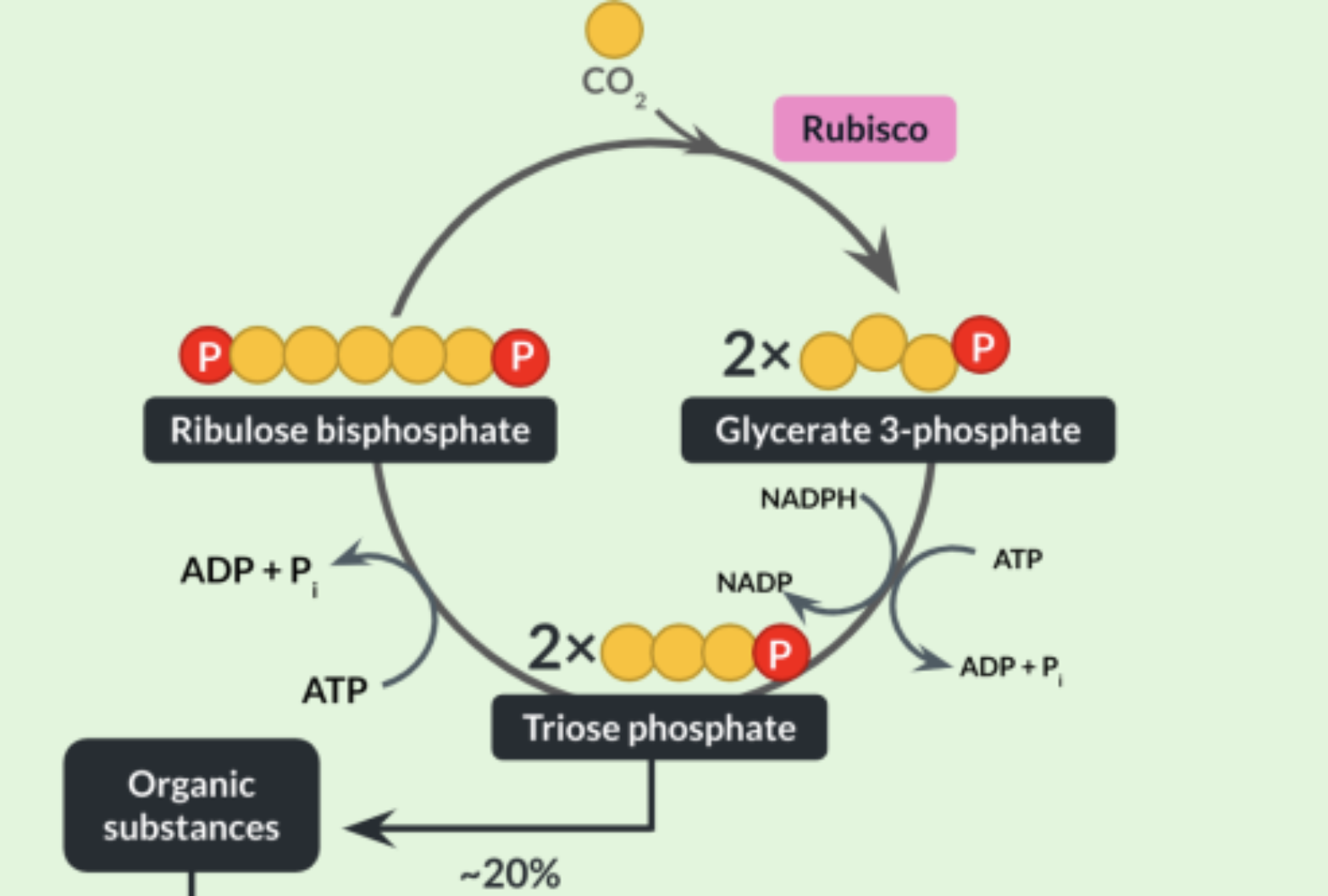
organic substances formed by triose phosphate
-reform RuBP
-can form glucose which can be used in aerobic respiration
-produces amino acids which are used to make proteins
-produces glycerol, which combines with 3 fatty acids to form triglycerides
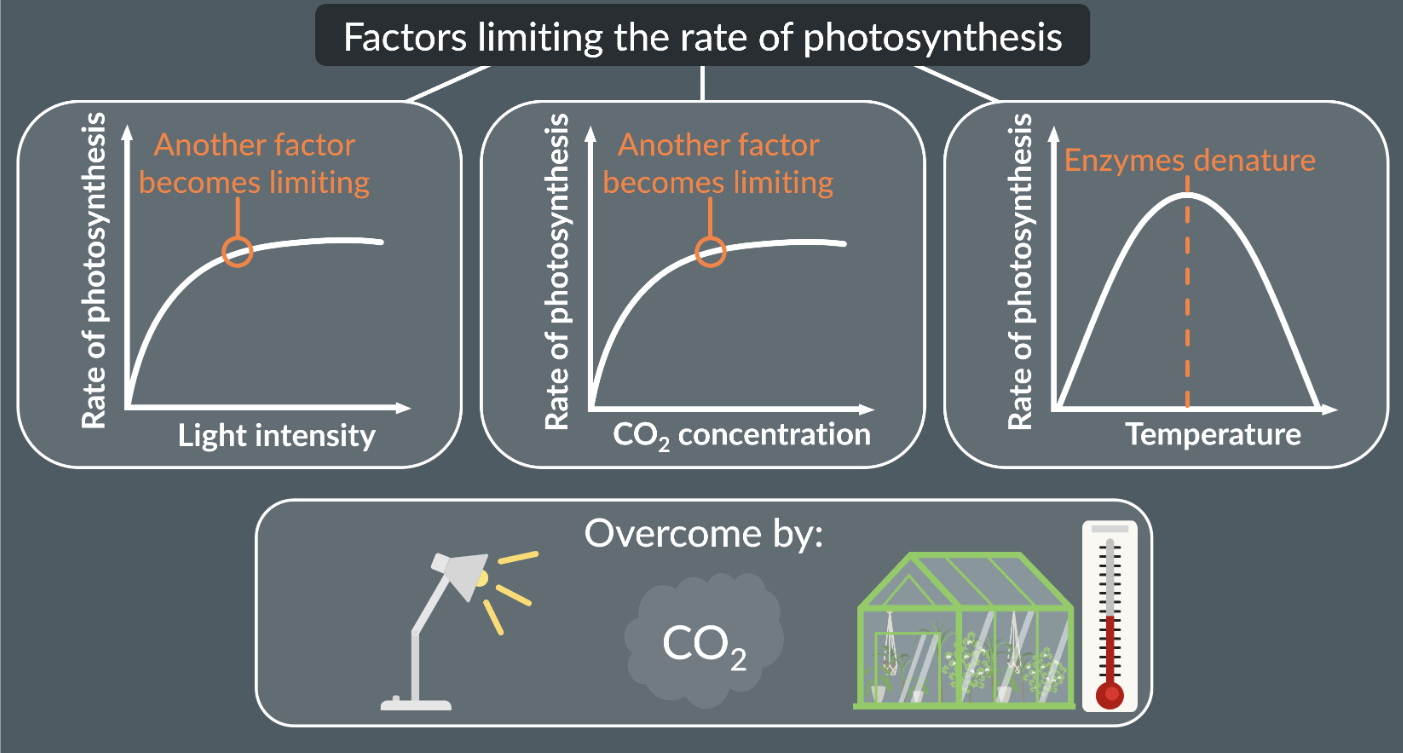
factors that limit the rate of photosynthesis
-increased light intensity = increases photosynthesis because more light is absorbed into chlorophyll, more photoionisation and photolysis → more ATP and NADPH produced
-increased CO2 concentration = increases photosynthesis because more CO2 is available to convert RuBP into GP → light independent reaction occurs faster
-increase in temperature can increase rate of the enzyme rubisco in the light independent stage. however too high of an increase can cause the enzyme to denature and damage proteins in the ETC, which prevents the light dependent stage from functioning
to overcome these limiting factors, farmers use artificial light, CO2 waste and green housed with specific temperatures