plant poop week 8
 Call Kai
 Learn
Learn Practice Test
 Spaced Repetition
 Match
Match Flashcards
 Knowt Play
1/40

There's no tags or description
Looks like no tags are added yet.
Name | Mastery | Learn | Test | Matching | Spaced | Call with Kai |
|---|
No analytics yet
Send a link to your students to track their progress
41 Terms
Dicots
Cotyledon
Vasculature
Stem (Herb/Wood?)
Leaf type
Venation
Leaf insertion
Roots
Flower parts
Pollen
2
Ring bundles
Vascular cambium
Both
Simple or compound
Net veined
Narrow
Primary to secondary, Adventitious, Taproot
4 or 5 parted, 3 to many stamens
Mono or tri aperturate
Monocots
Cotyledon
Vasculature
Stem (Herb/Wood?)
Leaf type
Venation
Leaf insertion
Roots
Flower parts
Pollen
1
scattered bundles
no vascular cambium
herb
simple
straited
broad, sheathing
primary, adventitious, fibrous
3 parted
monosulcate
What major order (above family) is important for food plants? (rice, maize, corn, wheat, barley, etc)
Poales
What major order is important for ginger, cardamom, turmeric, bananas, plantains, arrowroot, galangal?
Zingiberales
What major order is important for coconut and palms
Arecales
What major order is important for asparagus, onion, garlic, leek, vanilla, tequila?
Asparagales
What order is for lilies, tulips, etc?
Liliales
What order are pandan, yams, and ube part of?
Pananales/Dioscoreales
What order is marshy, aquatic plants, taro, anthuriums, seagrass, arrowhead, marine angiosperm etc?
Alismatales
2 major groups within monocots
Commelinids and petaloid
commelinids
many wind pollinated
petaloid monocots
many animal pollinated
What are the 6 family members of Liliaceae s.l? (Hint: AAALMT)
Asparagaceae (Asparagales)
Amaryllidaceae (Asparagales)
Asphodelaceae (Asparagales)
Liliaceae (Liliales)
Melanthiaceae (Liliales)
Tofieldiaceae (Alismatales)
Petaloid monocots (4) hint LAOI
Liliaceae, Araceae, Oridaceae, Iridaceae
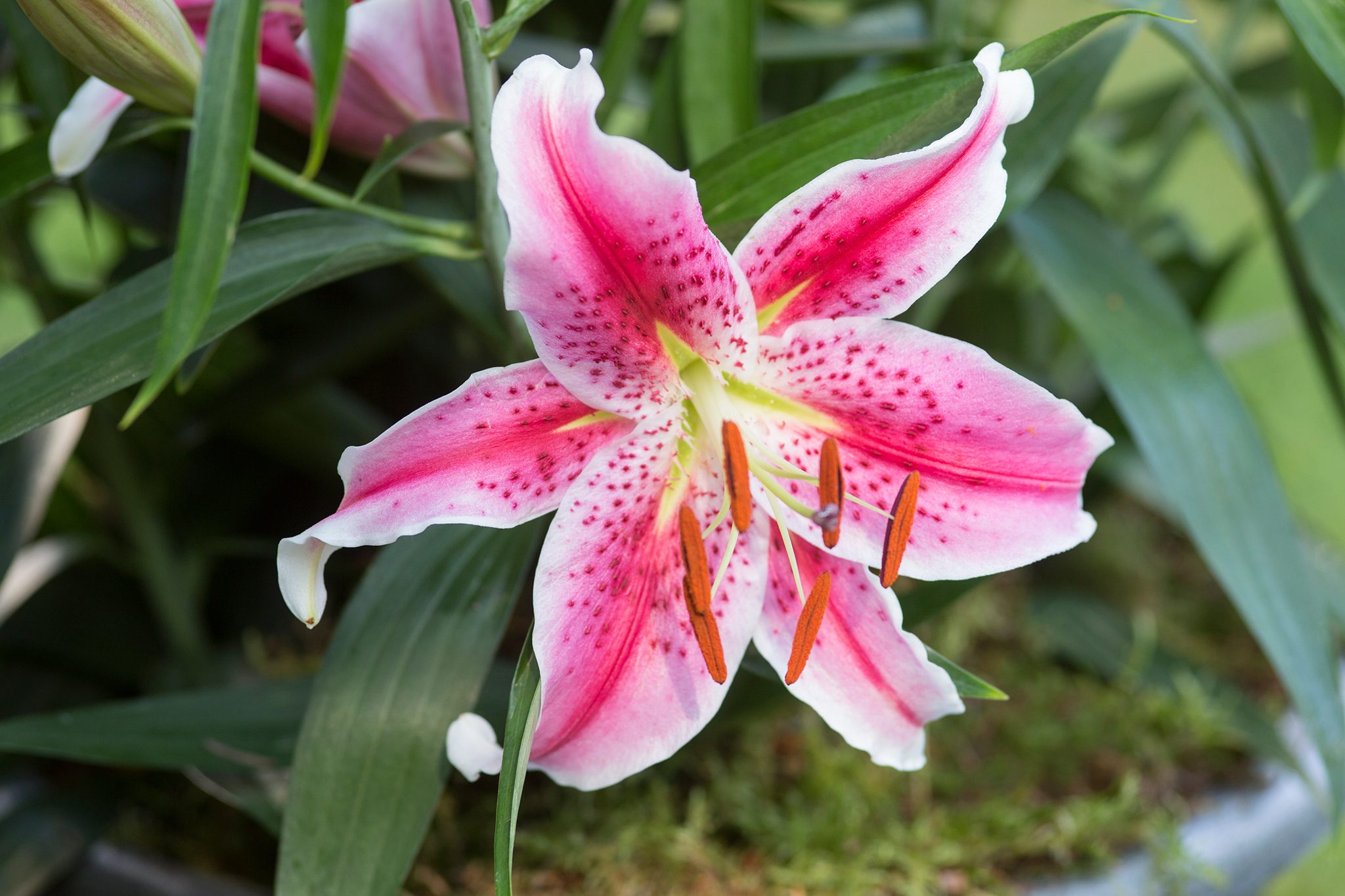
Liliaceae
-Leaves are…
-Size of flower
-Number of tepals with what
-___ on the base of tepals
-number of stamen
-ovary
-variable
-large
-6 free with spots
-nectaries
-6
-superior
Floral formula of Liliaceae
*, T6, A6, G3; capsule/berry
Open vs shady traits correlate with habitats
Open, seasonal habitats favor traits like bulbs, showy flowers, wind-dispersed seeds, and narrow leaves because they help plants survive drought, attract pollinators in exposed areas, and reduce water loss. Shady habitats favor rhizomes, broad leaves, and animal-dispersed seeds because these traits help plants capture limited light and reproduce more effectively in dense forest environments.
Iridaceae
-plant type
-unique thing
-leaves
-flower symmetry
-style has…
-ovary
-herb with rhizomes, corms, bulbs
-spathe-like bracts
-equitant with a unifacial blade
-bilateral or radial
-petaloid style with stigma flap
-inferior
Iridaceae floral formula
*/X, 3, 3, 3, 3; capsule
Orchidaceae
-type of herb
-drought adaptations
-flower symmetry
-3 unique parts (l, c, p)
-seeds germination
-ovary
-terrestrial or epiphytic
-velamen roots, pseudobulbs
-bilateral
-labellum, column, pollinia
-need fungi to germinate
-inferior
Vanilla bean is part of which family?
Orchidaceae
Orchidaceae is considered… m…
mycoheterotropic
Orchidaceae floral formula
X, K3, C3, A1-2, G3; capsule
Rarity
naturally uncommon because it occupies a specialized habitat
Endangered
human or catastrophic event dramatically reducing a population
What data is needed to know if a plant is rare or endangered
need to see the timeline of population changing over time
Araceae
-plant type
-leaf type
-has a apparent…
-what does it have to defend itself from herbivory
-herb
-simple or compound
-petiole
-calcium oxalate
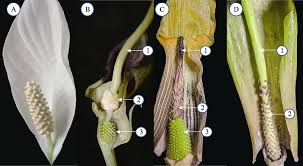
Araceae
-inflorescence consisting of
-sex of flowers
-number of tepals
-ovary
-smell?
-spathe, spadix, appendix
-unisexual or bisexual
-4-6 or 0
superior or inferior
-stinks
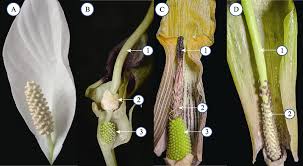
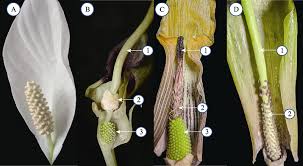
spathe
colorful bract surrounding the flowers
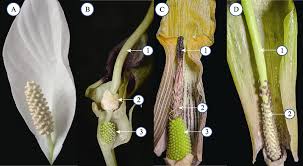
spadix
axis on which the flowers are borne (male above, female below when both present)
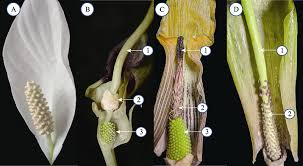
appendix
sterile extension above
Araceae floral formula
*, T4-6 or 0, 1-6 (12), 2-3; berry
What are the 3 parameters to measure rarity
geographic distribution
habitat specificity
population size
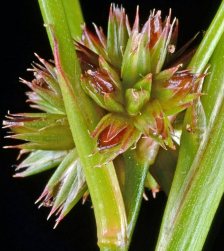
Juncaceae (tiny lilies)
-__ ranked leaves
-__ parted
-tepals are
-stamens
-carpels
-habitat
-stems
-3
-3
-present 6
-3 or 6
-3 fused
-terrestrial or aquatic
-round and solid
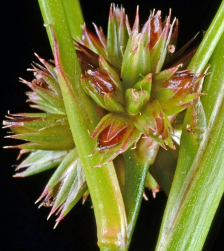
floral formula of juncaceae
*, 3, 3, 3 or 6; capsule
Cyperaceae
-stems
-___ ranked
-sheaths are…
-infl are…
-perianth
-stamens
-carpel
-habitat
-specialness
-triangular
-3
-closed
-spikelets with bracts
-reduced
-1-3
-2-3 fused
-wetlands
-perigynium
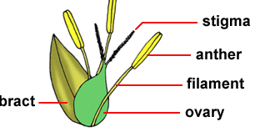
floral formula for cyperaceae
*, 0, 0, 1-3, 2-3; achene
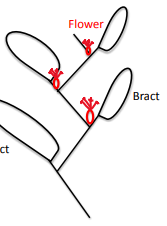
spikelet
Poaceae
-stems
-___ ranked
-sheaths are
-growth
-infl
-enclosed by
-staments
-carpels
-known for…
-circular, hollow
-2
-open
-intercalary meristem
-spikelets, enclosed by glumes
-lemme and palea
-1-3
-2-3 fused
-cereal
intercalary meristem growth is adaptive for
grazing because it is located at the base of the leaf rather than the tip, which herbivores graze and bite off. So plant can regrow without lethal damage
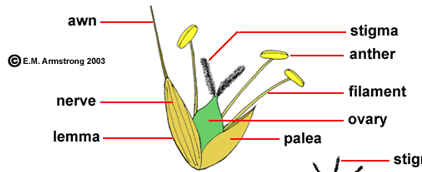
floral formula of poaceae
X, 0, 0, 1-3, 2-3; grain