Chapter 3 and 4: Bacteria and Archaea cell structure
 Call Kai
 Learn
Learn Practice Test
 Spaced Repetition
 Match
Match Flashcards
 Knowt Play
1/70

Earn XP
Description and Tags
MCB 3020C
Name | Mastery | Learn | Test | Matching | Spaced | Call with Kai |
|---|
No analytics yet
Send a link to your students to track their progress
71 Terms
prokaryotes
bacteria and archaea
lack a nucleus and do not have membrane-bound organelles or an endomembrane system
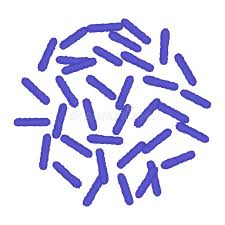
what is this cell shape called?
rods (bacilli)
some short and wide that they appear to be ovals (coccobacilli)
most rods occur singly but some for pairs or chains
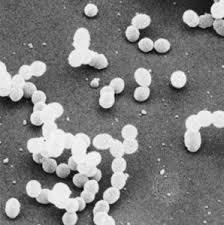
what is this cell shaped called?
spheres (cocci)
during reproduction, some cocci remain attached to each other to form pairs (diplococci), chains, clusters, square planar configurations (tetrads), or cubic configurations
describe the structure and function of the: glycocalyx
sugar coat that surrounds the cells
describe the structure and function of the: flagella
filamentous appendage to give motility
describe the structure and function of the: axial filaments
bundles of fibrils that arise at the ends of the cell beneath an outer sheath and spiral around the cell
produces a movement for spirochetes
describe the structure and function of the: fimbriae
they allow a cell to adhere to surfaces
describe the structure and function of the: pili
longer than fimbriae and help with DNA transfer
glycocalyx
external to the cell wall
viscous and gelatinous
made of polysaccharide and/or polypeptide
two types:
capsule
slime layer
contribute to virulence
capsule: glycocalyx
neatly organized and firmly attached
slime layer: glycocalyx
unorganized and loose = sticks along together
how does glycocalyx contribute to virulence (envade and exist inside host cells)
capsules prevent phagocytosis
extracellular polymeric substance helps form biofilms
flagella
filamentous appendages external of the cell
propel bacteria
made of protein flagellin
three parts:
filament
hook
basal body
filament of flagella
outermost region
hook of flagella
attaches to the filament
basal body of flagella
consists of rod and pairs of rings
anchors flagellum to the cell wall and membrane
arrangements of bacterial flagella
peritrichous: all over
monotrichous and polar: one
lophotrichous and polar: multiple on one side and curve
amphitrichous and polar: both sides and spiral
purpose of flagella
allow bacteria to move toward or away from stimuli
allows bacteria to rotate to run or tumble
proteins are H antigens and distinguish among serovars
serovars
same subspecies distinguished by antigen properties
motility in prokaryotes
responses are made to temperature, light, oxygen, osmotic pressure and gravity
flagella rotate or create motion to help run and tumble
basal body is the motor that drives the flagellum powered by a proton motive force
archaeal flagella
rotate in both direction, run and tumble movement not observed
chemotaxis
directed movement of bacteria either toward a chemical attractant or away from a chemical repellent
chemotaxis in prokaryotes
concentrations of attractant and repellents are detected by chemoreceptors in the periplasmic space or plasma membrane
directional travel toward a chemoattractant is caused by lowering the frequency of tumbles = lengthening the runs when traveling up the gradient, but allowing tumbling to occur at normal when traveling down the gradient
directional travel away from chemorepellent involves similar but opposite responses
flagella and bacterial motility
run → tumble → run → tumble → tumble → run → run
axial filaments
endoflagella
found in spirochetes (spirals)
anchored at one end of a cell
rotation causes cells to move like a corkscrew
wrapped around the outer of the spirochete
fimbriae
hair like appendages that allow for attachment
cells connect and allow for growth and reproduction
pili
gliding and twitching motility
conjugation pili involved in DNA transfer from one cell to another
fimbriae: lab relevance
attachment of bacteria to other cells
mostly found in gram negative
lab strains tend to lose the feature during subculturing
fimbriae: medical relevance
attachement to erythrocytes, causing clumping
attachment of neisseria gonorrhoeae in the urogenital tract (cilia attach to the tract’s walls)
bind to oligosaccharides in the endothelial cell surface receptor
increases host cell specificity
inhibit oligosaccharides in vitro by attachment of bacteria with fimbriae to epithelial cells
use of cranberry juice
a-type proanthocyanidins isolated from cranberry juice and d-mannose demonstrated an anti-adhesion activity against E. coli binding to urinary tract epithelial cells
concentration of E.coli will affect the anti-adhesion effects along with metabolism
bacillus magaterium
collects magnetites (magnets) in high-density areas
structures of a prokaryotic cell
cell wall
periplasmic space
plasma membrane
nucleoid
ribosomes
inclusion bodies
flagella
capsules
slime layers
cell organization of a prokaryotic cell
morphologically simpler than eukaryotic cells
bacteria and archaea are surrounded by a cell envelope with complex cell walls
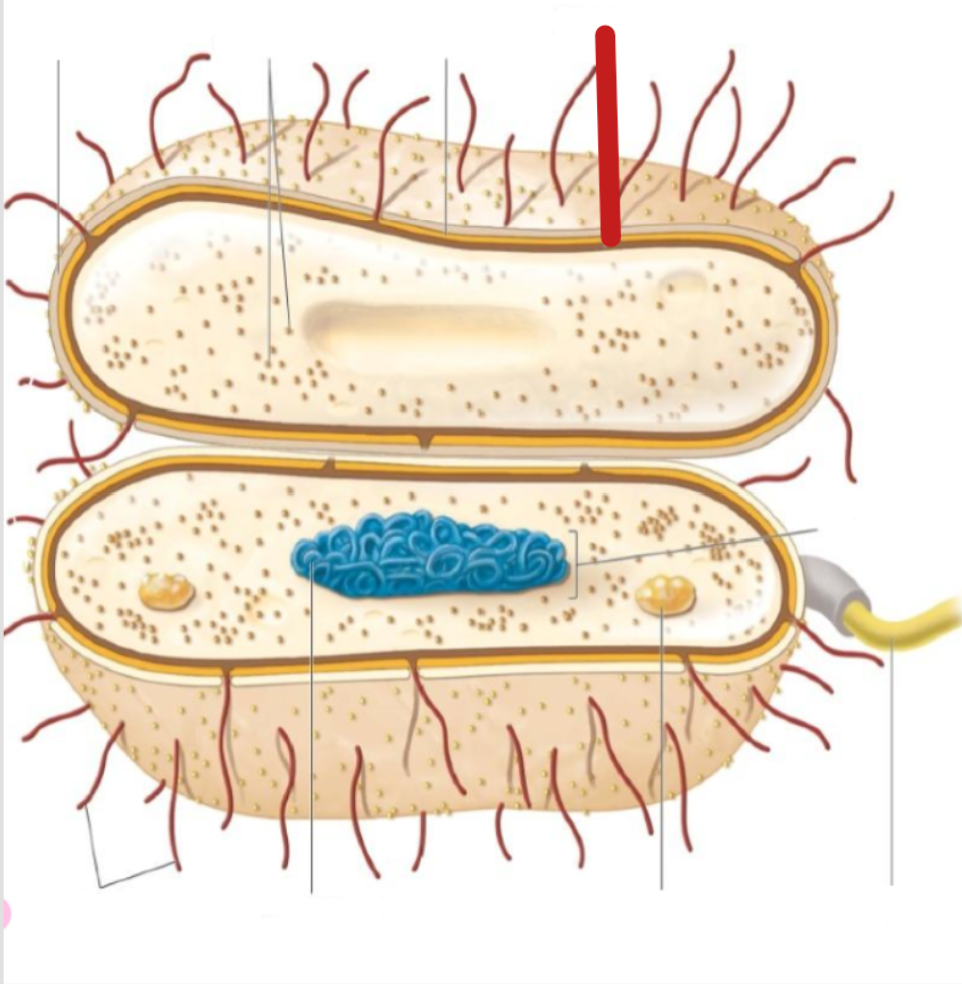
plasma membrane
selectively permeable barrier
mechanical boundary of cell
nutrient and waste transport
location of many metabolic processes (like respiration and photosynthesis)
detection of environmental cues for chemotaxis
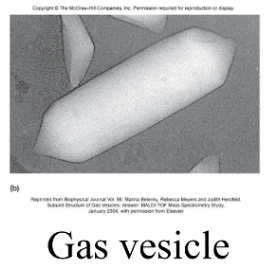
gas vacuole
buoyancy for floating in aquatic environments
not all, only aquatic envrionment
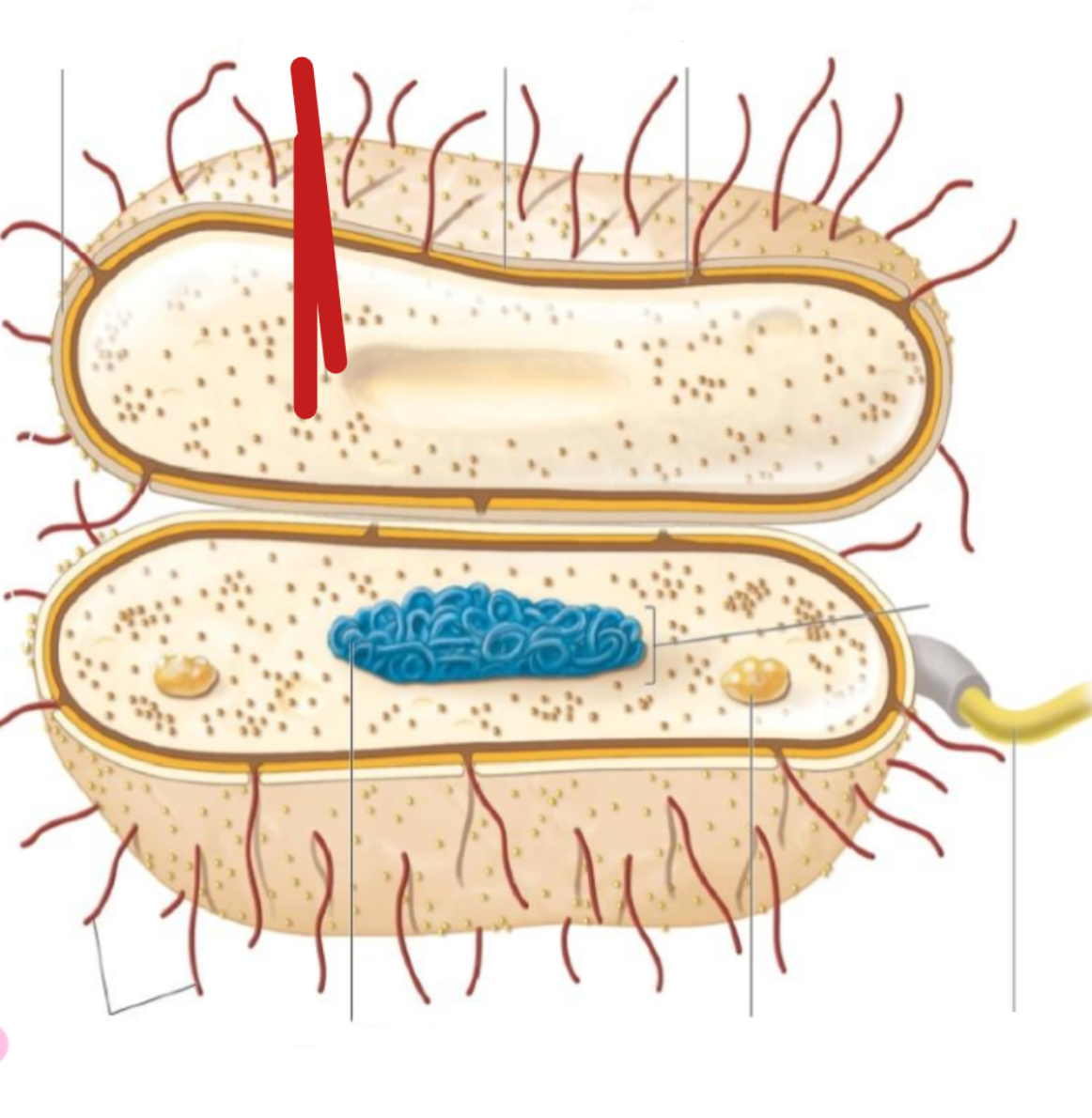
ribosomes
protein synthesis (translation)
complex structure with protein and rRNA
prokaryotes are 70S with 50S and 30S subunits
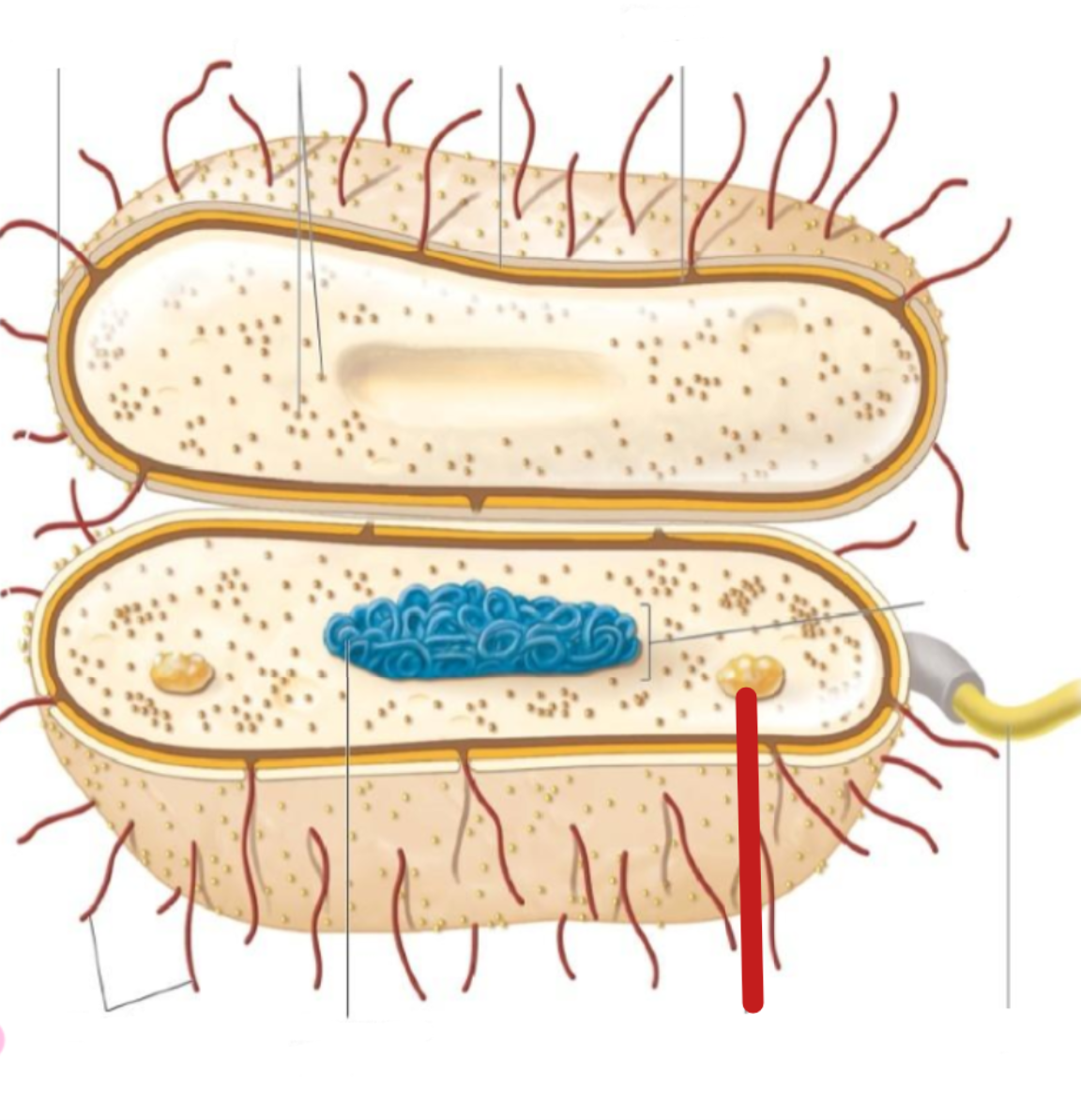
inclusions
granules of organic or inorganic material for future use:
carbon (glycogen and poly b-hydroxybutyrate)
phosphorus (polyphosphate granules)
wastes (sulfur globules)
cyanophycin granules (nitrogen in cyanobacteria)
contains:
carboxysomes
gas vacuoles
magnetosomes
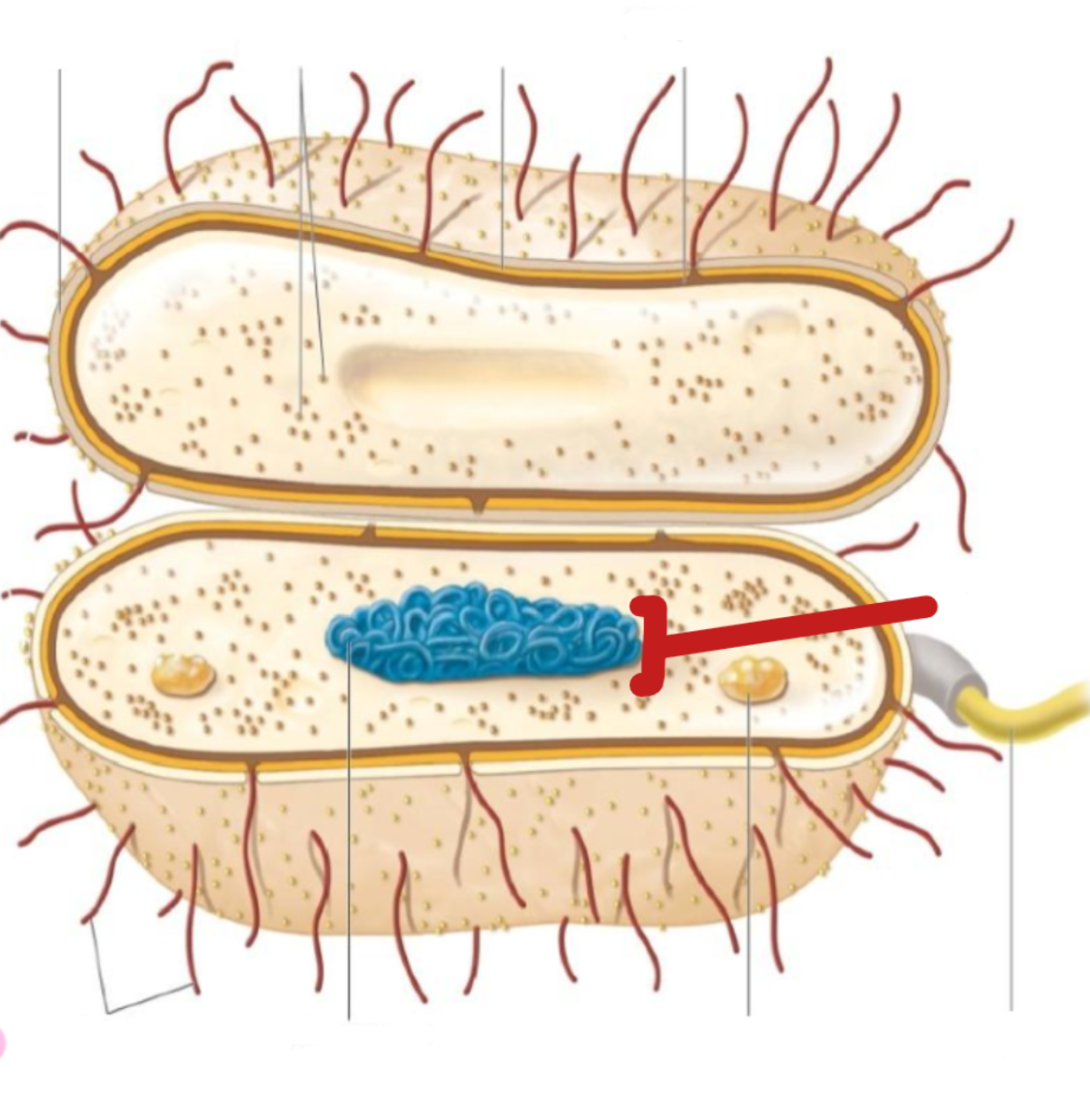
nucleoid
localization of genetic material (DNA)
irregularly shaped region where the chromosome of the prokaryote is found
a single circular chromosome and is not membrane bound
DNA molecule is looped and supercoiled extensively with histone like proteins
periplasmic space
gram negative bacteria
hydrolytic enzymes and binding proteins for nutrient processing and uptake
gram positive bacteria or archaeal cells
smaller or absent
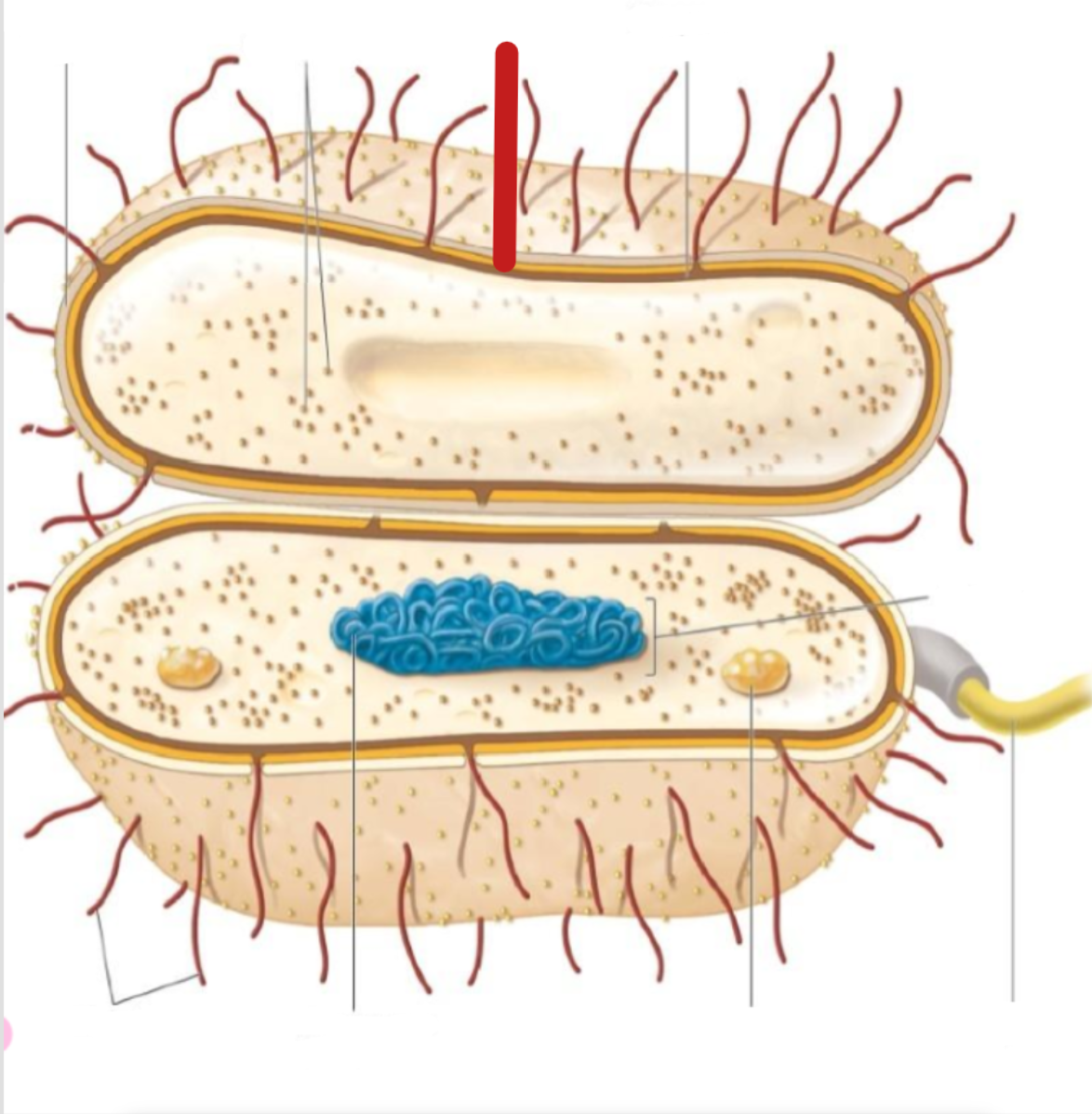
cell wall
provides shape and protection from osmotic stress (structure)
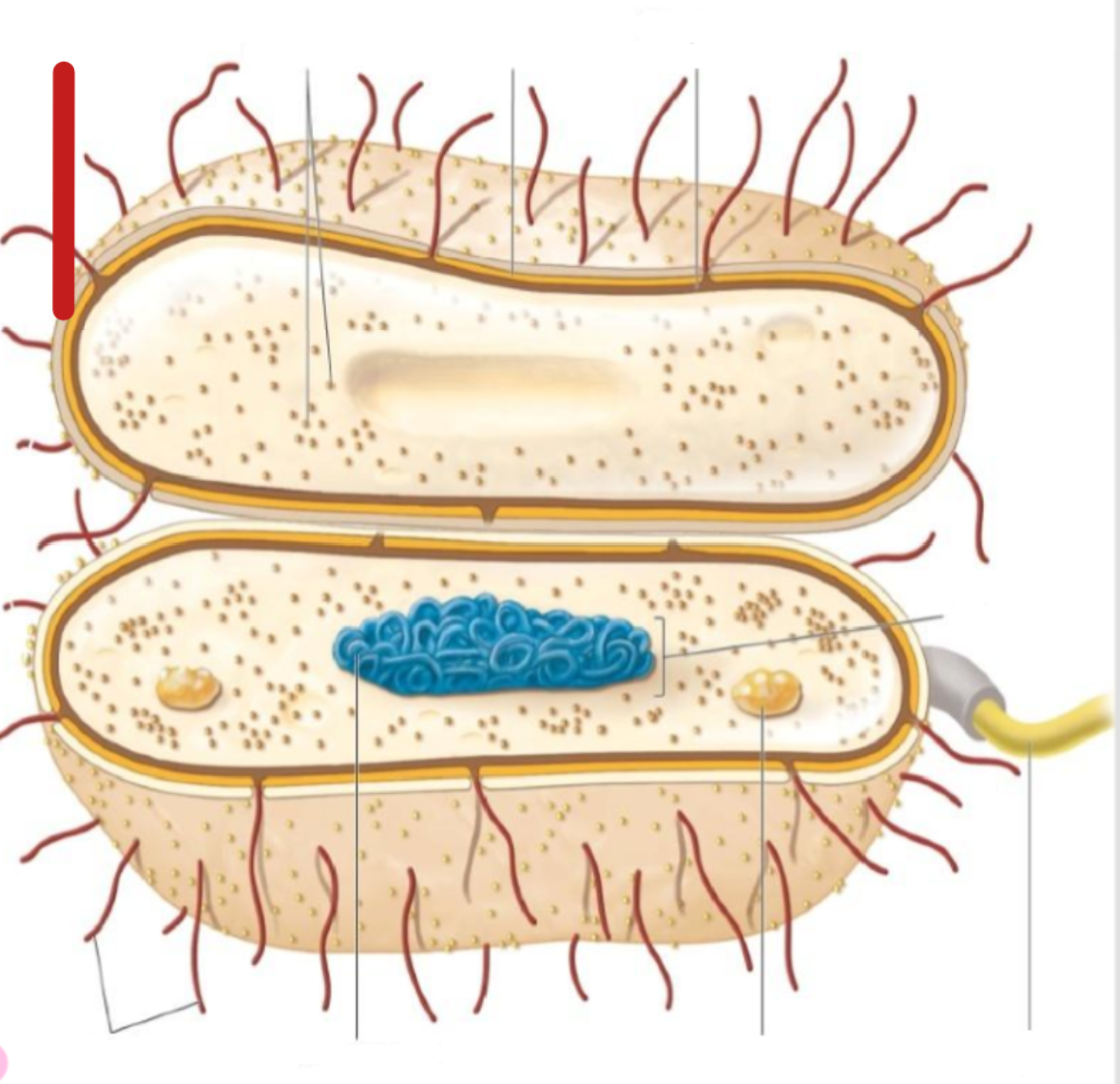
capsules and slime layers
known as glycocalyx = layers of polysaccharides lying outside the cell wall
resistance to phagocytosis, desiccation, viral infection and hydrophobic toxic materials
adhere to surfaces and gliding motility
rare in archaea
capsules: well organized
slime layers: diffuse and unorganized
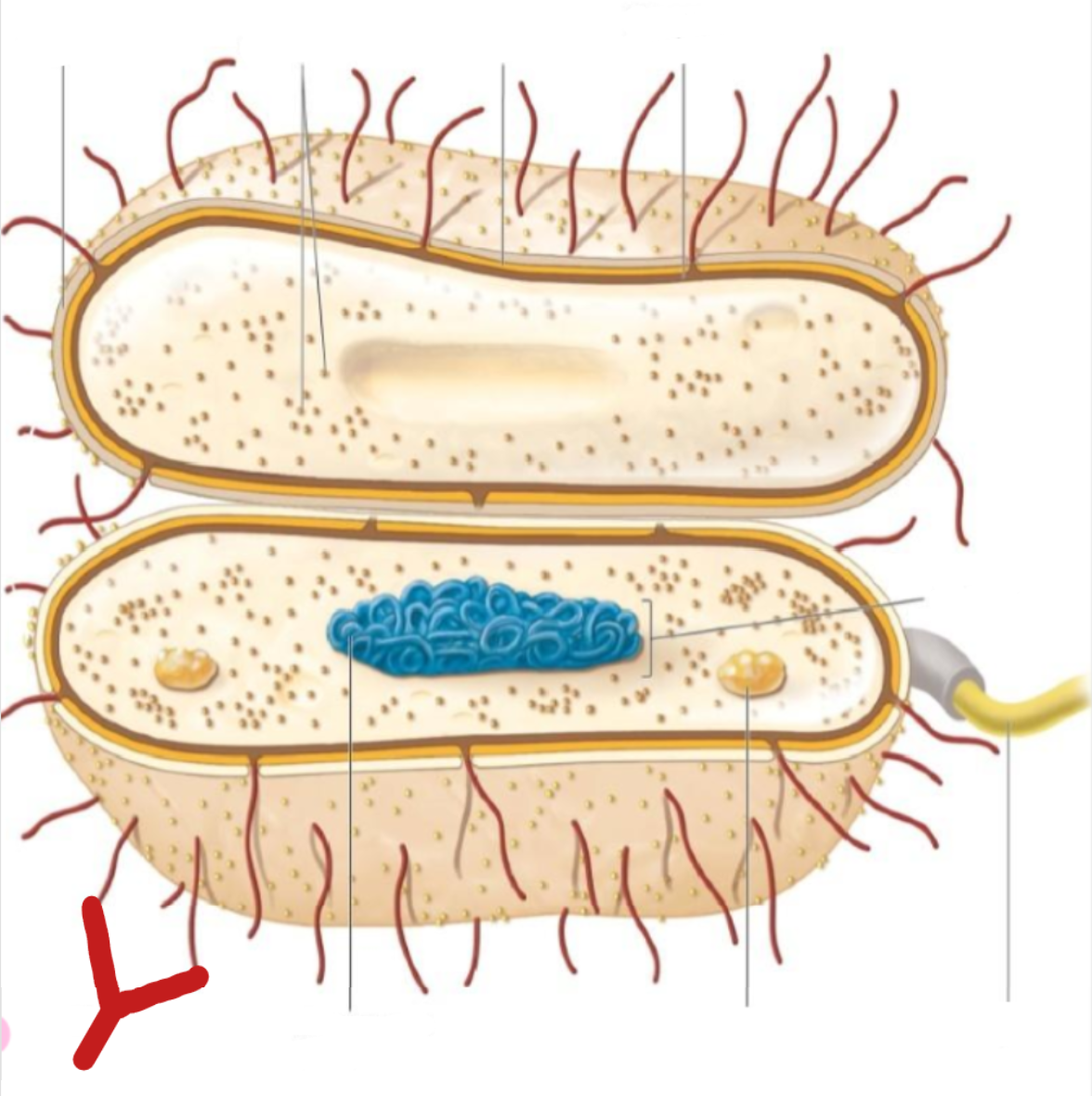
fimbriae and pili
attachment to surfaces
bacterial conjugation and transformation
twitching and gliding motility
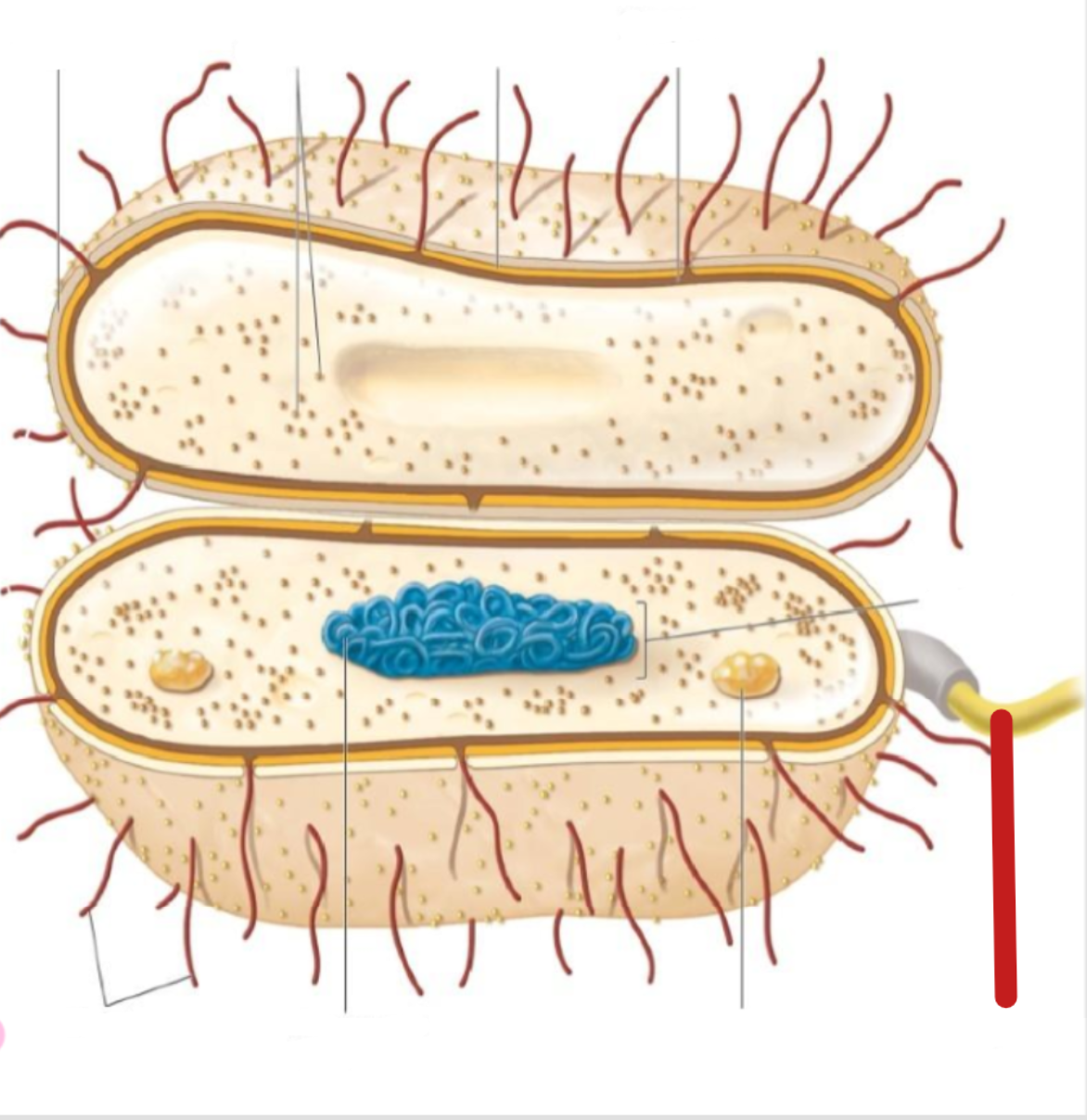
flagella
swimming motility
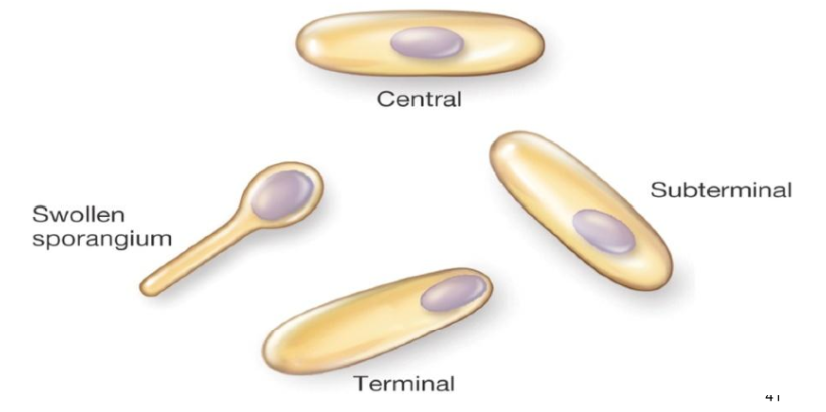
endospore
resistant, dormant structure that enables them to survive under harsh environmental conditions
sporulation
transformation process from dormant endospore into active vegetative cells is a complex, multistage process:
preparation: activation of the endospore
germination: breaking of the endospore’s dormant state
outgrowth: emergence of the new vegetative cell
only observed in bacteria
bacterial cell envelope
retains the cytoplasm and separates the cell from the environment
selective permeable barrier
contains transport systems (nutrient uptake, waste excretion, protein secretion)
site of metabolic processes (respiration, photosynthesis, lipid synthesis, cell wall synthesis)
fluid mosaic model
lipid bilayers with floating proteins
cell membranes are thin
lipids are amphipathic
hydrophilic heads (face outside)
hydrophobic tails (face inside)
two types of proteins:
peripheral (loosely associated and easily removed)
internal (embedded within the membrane and not easily removed)
bacterial cell walls
rigid structure gives shape
protects from osmotic lysis, toxins, and increases pathogenicity
contains peptidoglycan
alternating NAG and NAM moieties (attachment zones are where the activity is)
peptidoglycan
linear helical polysaccharide chain polymer composed of two sugar derivatives with peptide linkers
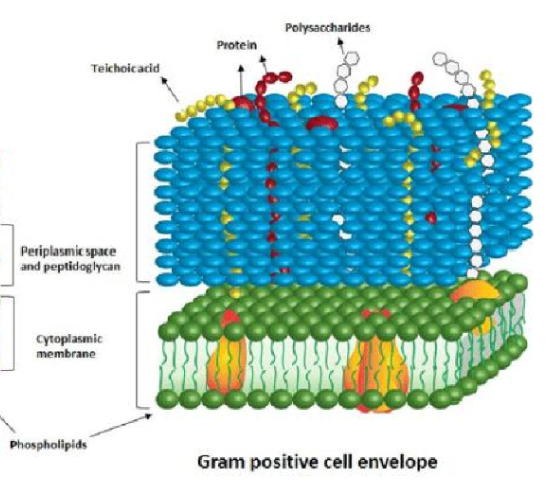
gram positive bacteria
thick peptidoglycan with many layers and large amounts of teichoic acids
s-layer proteins on the outer surface that aide in cell wall synthesis and virulence
acid fast bacteria have mycolic acids in their cell walls
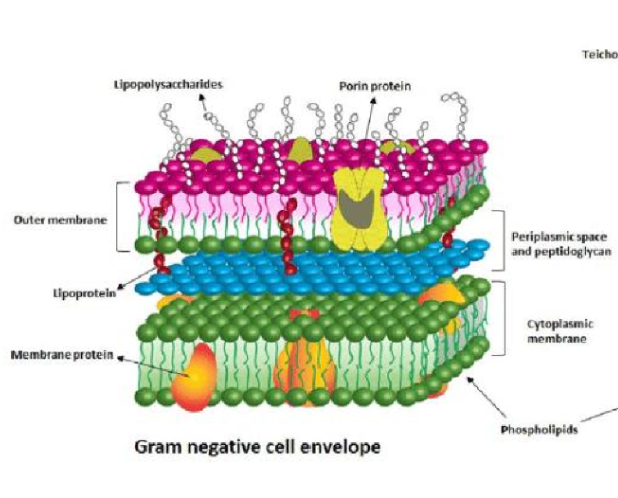
gram negative bacteria
thin peptidoglycan and outer membrane
more complex
periplasmic space is wide and contains many different proteins
outer membrane is composed of lipids, lipoproteins and lipopolysaccharides
techoic acids
polymers with a glycerol and phosphate backbone that span the cell wall and enhance structural stability
lipopolysaccharides
large complex molecules composed of lipid A, core polysaccharides, and O antigen carbohydrate side chain
stabilize the outer membrane, protect against some toxins, and cause strong host immunological responses = like an endotoxin
outside the cell wall: S-layers
structured layers of protein or glycoprotein
protect against ion and pH fluctuations, osmotic stress, and hydrolytic enzymes
maintain cell shape and envelope rigidity, promote cell adhesion, and protect against host defenses
archaeal cell envelopes
plasma membrane
lipids have branched hydrocarbons attached to glycerol by ether links
seen in bacteria and eukaryotes
smaller membrane layers are due to environmental harsh conditions
archaeal cell wall
archaea can stain Gram+ or Gram -, but their cell wall structure differs more than bacteria
S-layer is the most common cell wall made up of protein/glycoprotein
protein layers or chondroitin-like materials found outside s-layer
pseudomurein between plasma membrane and s-layer
amino acids in its cross links
uses N-acetyltalosaminuronic acid
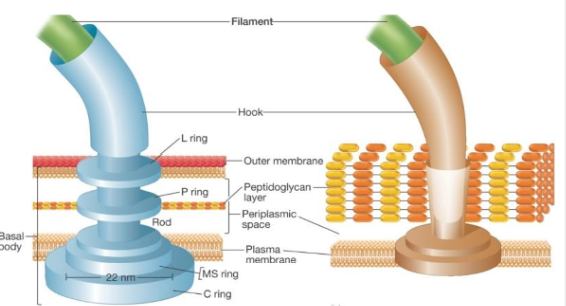
bacterial flagella
extends outward from plasma membrane and cell wall
hollow filament, single flagellin
hook is short, curved segment = links filament to the basal body with rings that drives rotation
powered by proton motive force
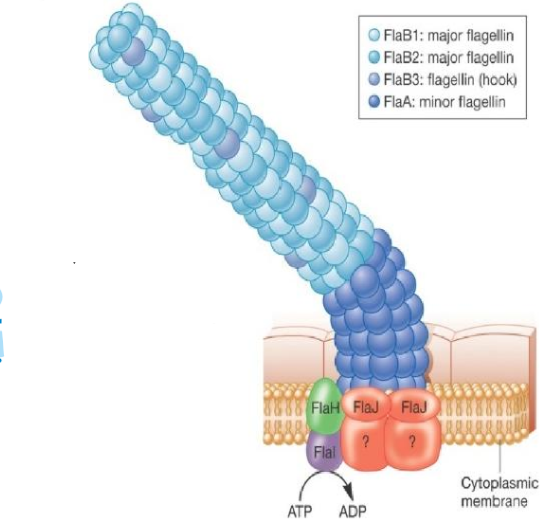
archaeal flagella
thinner
more than one type of flagellin subunit
not hollow, unique hook and basal body analogs
powered by ATP hydrolysis
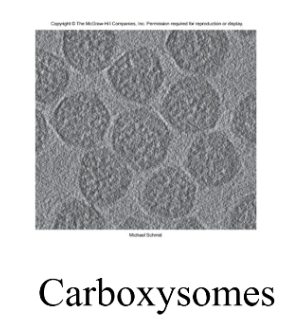
carboxysomes
microcompartments that accumulate CO2 and enzyme ribulose-1,5-biophosophate carboxylase
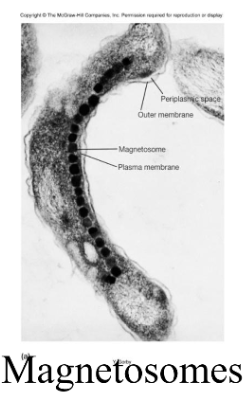
magnetosomes
magnetite granules that provide orientation in the earth’s magnetic field
plasmids
small circular DNA molecules
their own replication origins, replicate autonomously and are stably inherited
episomes
conjugative plasmids
resistance plasmids
episomes
plasmids that can exist either with/out being integrated into the host chromosome
conjugative plasmids (F plasmids)
episomes that usually have genes for sex pili and can transfer copies of themselves to other bacteria during conjugation
resistance plasmids (R plasmids)
genes for resistance to various antibiotics
R factors can be transferred to other cells even across species lines = spreading antibiotic resistance
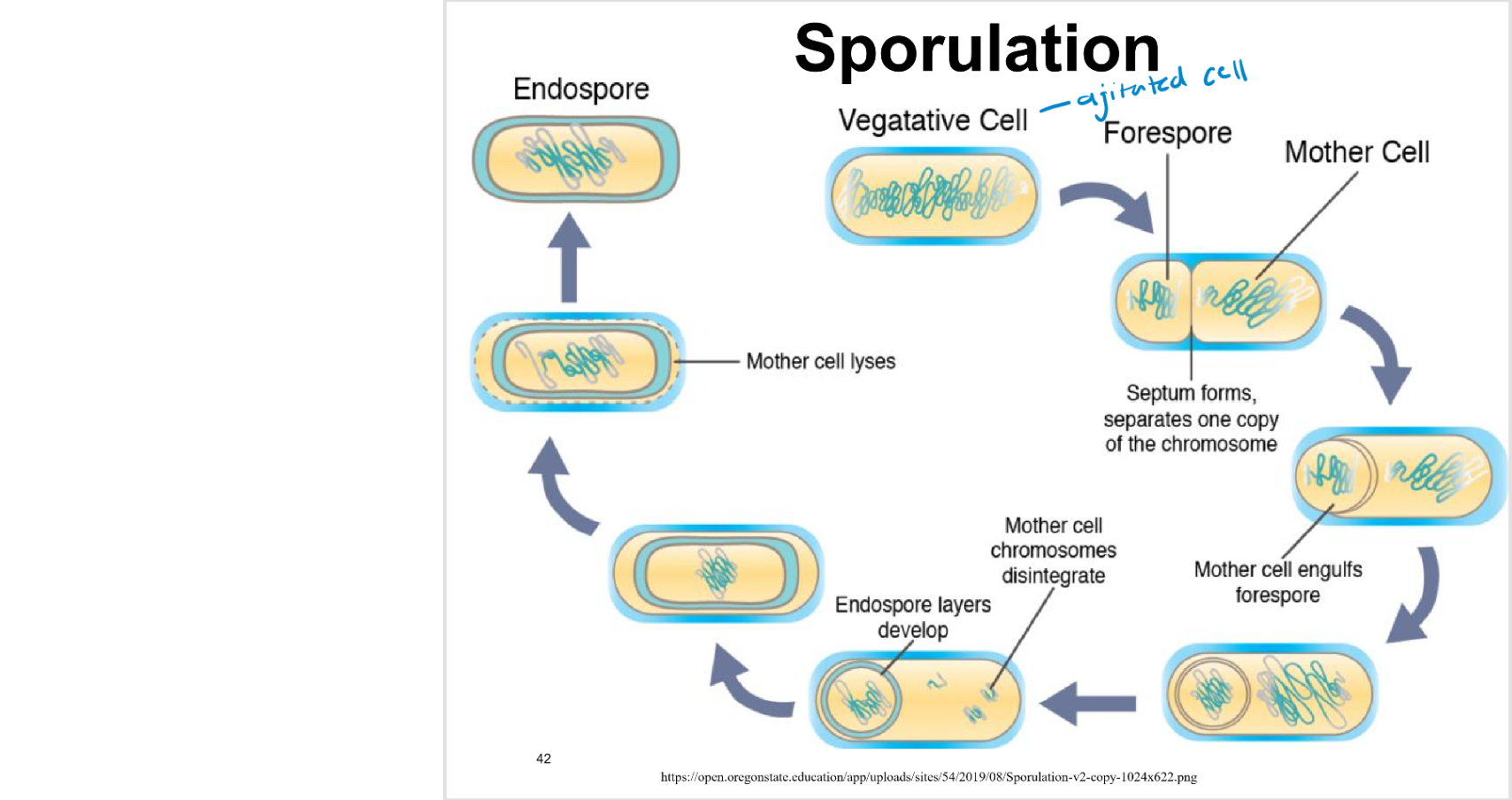
sporulation
process is initiated when growth ceases due to a lack of nutrients or a change in the environment
properties of bacteria
circular chromosome
plasmids
introns are rare
ester linked phospholipids and hopanoids
some have sterols
flagella is submicroscopic in size, composed of one protein fiber
peptidoglycan in cell walls
ribosome is 70S in size
rudimentary cytoskeleton
gas vesicles
properties of archaea
some DNA complexed with histones
one circular chromosome
plasmids are very common
introns are rare in genes
glycerol diethers and diglycerol tetraethers
flagella is submicroscopic in size, composed of a fiber made from multiple different flagellin proteins
no peptidoglycan in cell walls
ribosome is 70S in size
rudimentary cytoskeleton
gas vesicles
properties of eukarya
true membrane-bound nucleus
DNA complex with histones
more than one chromosome, chromosomes are linear
plasmids are rare
introns in genes
nucleolus
mitochondria
chloroplasts
ester-linked phospholipids and sterols
flagella microscopic in size, membrane bound, usually 20 microtubules in 9 + 2 pattern
endoplasmic reticulum
golgi apparatus
no peptidoglycan in cell walls
ribosome 80S in size
lysosomes
cytoskeleton
no gas vesicles
prokaryotic cell’s size
vary in size, generally 1 to 5 um
nanobacteria’s size
0.2 um to less than 0.05 um in diameter
prokaryotes in size
up to 750 um in diameter
why smaller cells have higher surface/volume ratio?
small size provides advantages, greater s/v ratios
have higher s/v ratio = better nutrient uptake and diffusion
large size provides resistance to predation
have a smaller s/v ratio = increase their s/v ratio by having convoluted plasma membranes (increase in surface)