Meiosis, Punnet Squares, Pedigrees, and Karotypes
 Call Kai
 Learn
Learn Practice Test
 Spaced Repetition
 Match
Match Flashcards
 Knowt Play
1/50

There's no tags or description
Looks like no tags are added yet.
Name | Mastery | Learn | Test | Matching | Spaced | Call with Kai |
|---|
No analytics yet
Send a link to your students to track their progress
51 Terms
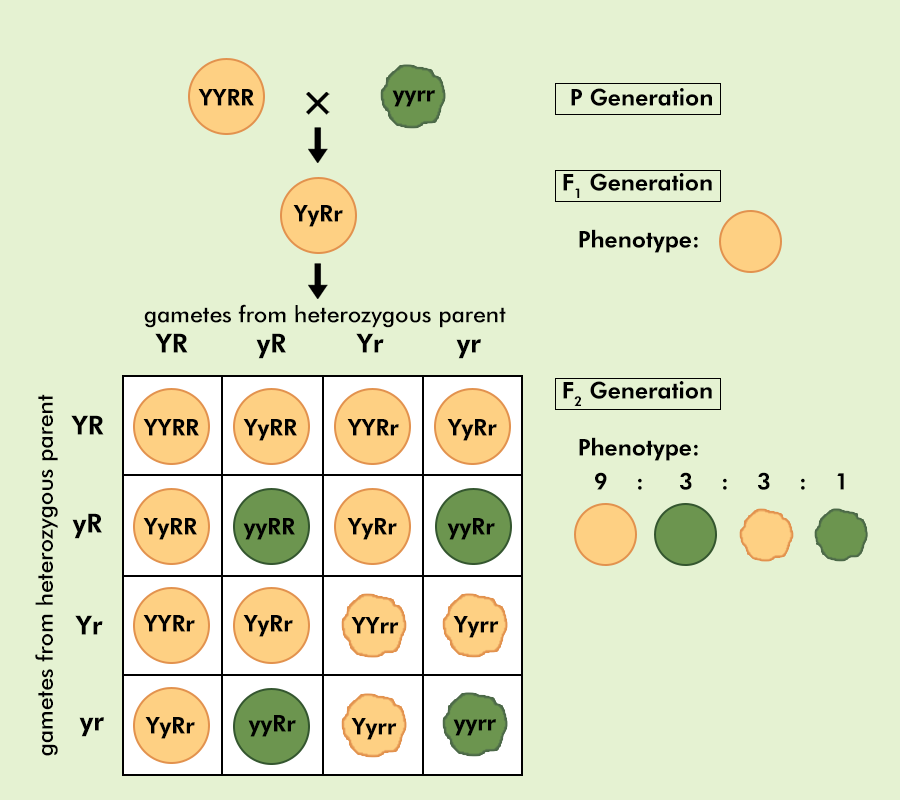
Dihybrid Crosses
Genetic crosses that examine the inheritance of two different traits, typically involving two different genes. This type of cross helps predict the genotype and phenotype ratios of offspring.
Principle of Independent Assortment
States that genes for different traits can segregate independently during the formation of gametes. This accounts for genetic variation observed in plants and animals even when they have the same parent.
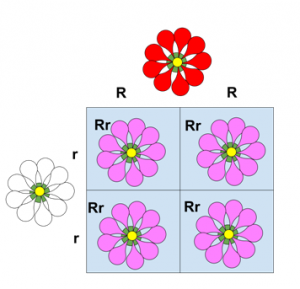
Incomplete dominance
also called blended inheritance, two alternative forms of a gene that are both dominant resulting in a blending of traits
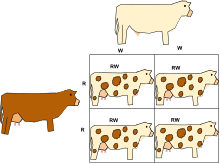
Co-dominance
two forms of a gene contribute to the phenotype in such a way that both traits are fully expressed in the offspring. Ex. speckled chickens (has some black and some white feathers)
Multiple Alleles
traits for which there are more than two forms of a particular gene Ex. human blood type
Polygenetic Traits
trait is controlled by the interaction of 2 or more genes Ex. skin, eye, and hair color in humans
Chromosome Theory of Hereditary
states that chromosomes are the carrier of genes
sex chromosomes
paired chromosomes that are different between the sexes; determines the sex of most organisms, female matching pairs are XX and males are XY.
autosomes
any chromosomes that are NOT sex chromosomes
Ex. Fruit flies: 1 set sex chromosomes, 3 sets autosomes
Humans: 1 set sex chromosomes, 22 sets of autosomes.
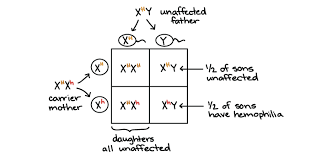
sex-linked characteristics
a trait that is determined by genes found only on the X chromosome or Y chromosome
Ex. colorblindness, hemophilia, and Duschenne MD
carrier
always a hybrid (one dominant, one recessive), recessive trait never shown but can passed on, with sex linked traits only females can be carriers
Meiosis
a form of sexual cell division, used to make gametes or sex cells such as sperm and egg, 4 cells are produce each with half the original chromosome number and are genetically unique
Resulting cells of meiosis
are haploid gametes, containing half the chromosome number while the parents are diploid
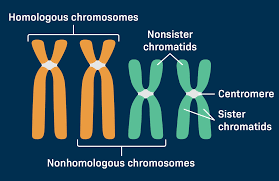
Homologous Chromosomes
chromosome pairs that code for the same trait
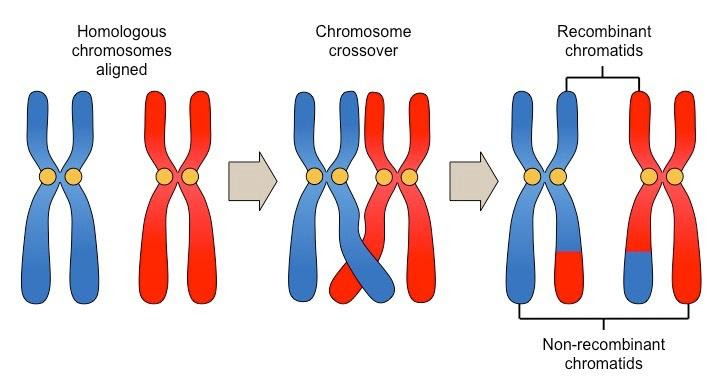
Crossing Over
the homologous pairs of the chromosomes exchange genetic information resulting in genetic variation
Interphase 1
The DNA of the cell will replicate as it prepares for cell division
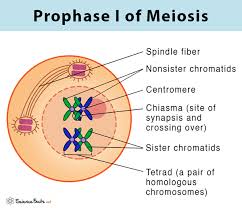
Prophase 1
Nuclear envelope begins to break down and chromosomes condense, Centrioles start moving to opposite poles and spindle fiber begins to form, Homologous chromosomes pair up, Crossing over occurs
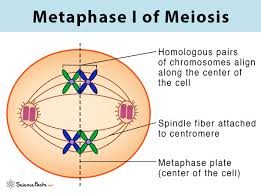
Metaphase 1
Spindle Fibers attach to paired Homologous chromosomes, Paired chromosomes line up along the middle of the cell
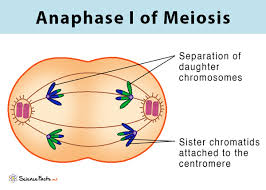
Anaphase 1
Spindle fibers shorten and the chromosomes of each Homologous pairs start to separate from each other, One chromosome of each pair moves toward one pole of the cell and the other chromosome moves toward the opposite pole
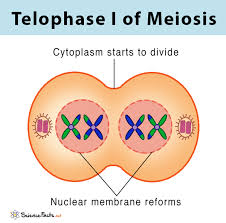
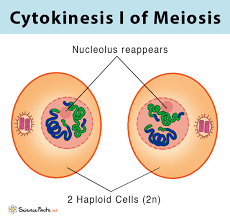
Telophase and Cytokinesis 1
The spindle fiber breaks down and new nuclear membranes form, The cytoplasm of the cell divides and 2 haploid daughter cells result, Daughter cells each have random assortment of chromosomes, one from each Homologous pair
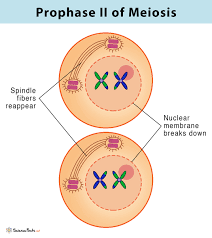
Prophase 2
The nuclear envelope breaks down and the spindle fiber begins to form in each haploid daughter cell from Meiosis 1, The centrioles start to separate
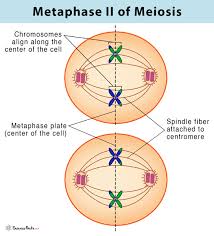
Metaphase 2
Spindle fibers line up the sister chromatids of each chromosome along the equator of the cell
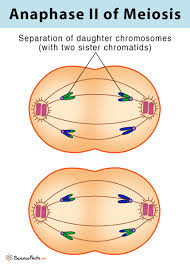
Anaphase 2
Sister chromatids separate and move to opposite poles
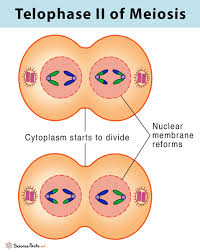
Telophase and Cytokinesis 2
The spindle fiber breaks down and the new nuclear membrane forms. The cytoplasm of each cell divides and 4 haploid cells result, each cell has a unique combination of chromosomes
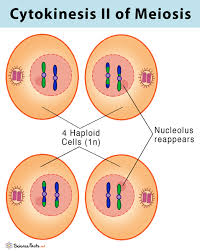
Meiosis in Humans
Humans have 46 chromosomes, their sex cells (sperm and egg) have 23 chromosomes
Meiosis in Males
In males, four viable sex cells are produced
Meiosis in Females
In females, only 1 viable sex cell is produced and the other 3 are wasted
What is the difference between incomplete dominance and codominance?
Incomplete dominance results in a blend of traits, while codominance means both traits are fully expressed.
Epistatic genes
are genes that can mask or alter the expression of other genes in an organism's phenotype.
Karotypes
A karyotype is a visual representation of an individual's chromosomes, arranged and displayed in pairs, used to identify chromosomal abnormalities and the sex of the organism.
What is a pedigree chart?
Show a record of the family of an individual, can be used to study the transmission of hereditary condition, often reveals a carrier
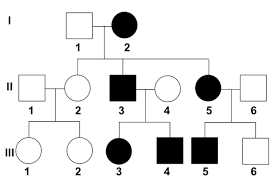
Symbols used in Pedigree charts
include shapes like circles for females and squares for males, with lines indicating relationships and affected individuals shaded, carrier of a trait are half-shaded or marked differently, generations are showed by roman numerals.
Mutation
a change in the chromosomes or the genes of DNA that may affect the phenotype
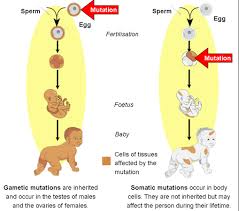
Germ cell mutation
mutation that occurs in the sex cells; sperm or egg
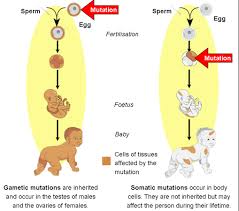
Somatic Mutation
mutation that takes place in a body cell
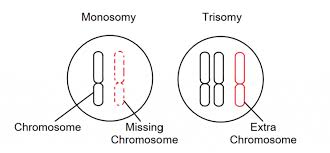
Monosomy
a genetic condition resulting from the absence of one chromosome from a pair, leading to an organism having only one copy of a particular chromosome rather than the usual two.
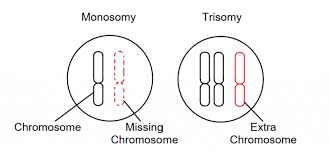
Trisomy
a genetic condition resulting from the presence of an extra chromosome in a pair, leading to an organism having three copies of a particular chromosome instead of the usual two.
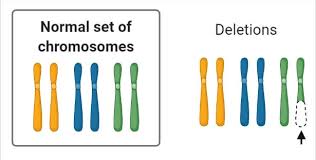
Deletion
when a part of a chromosome is lost
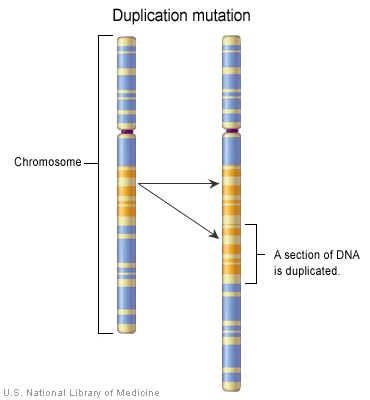
Duplication
a part of a chromosome is repeated
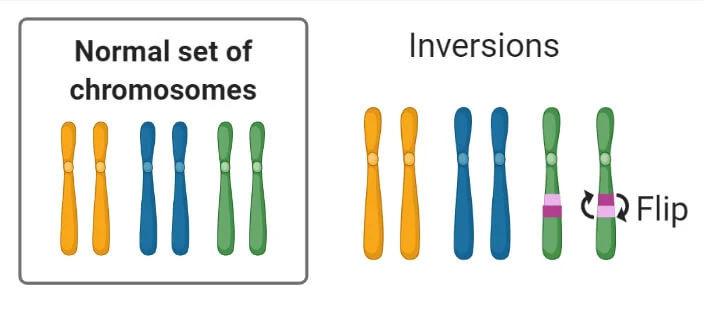
Inversion
a segment of the chromsome gets oriented in the opposite direction
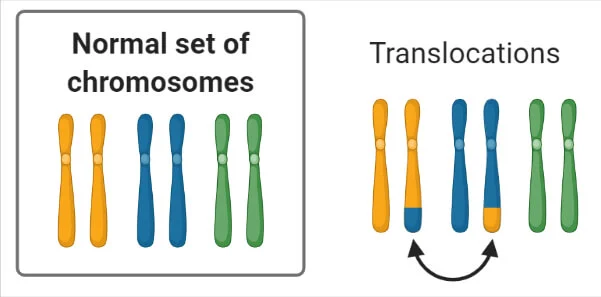
Translocation
When a segment from one chromosome breaks and reattaches too another chromosome
Nondisjunction
Occurs when chromosomes fail to separate properly during meiosis. This can result in missing chromosomes or too many chromosomes (Polyploidy)
Carrier
heterozygous for a trait, they do not express the trait, but they can pass it on to their offspring
Mutagen
environmental factors that damage DNA and cause a mutation
Ex. overexposure to sunlight, cigarette tar, asbestos, certain viruses, Radiation
What is a genotype?
A genotype is the genetic constitution of an individual, representing the alleles they carry for a given trait. For example, in pea plants, the genotype for a plant with purple flowers can be either homozygous dominant (PP) or heterozygous (Pp).
What is a phenotype?
A phenotype refers to the observable characteristics or traits of an individual, resulting from the interaction of their genotype with the environment. For example, the phenotype of a pea plant may be purple flowers, which is determined by its genotype.
Who is Gregor Mendel?
A scientist known as the "father of genetics", who studied inheritance patterns in pea plants and established the foundational principles of heredity.
If the body cells of a plant has 20 chromosomes. How many would be found in the gametes of the plant?
The gametes of the plant would have 10 chromosomes, which is half the number of chromosomes found in body cells due to meiosis.
gamete
A reproductive cell that carries half the genetic information, produced through meiosis, and combines with another gamete during fertilization to form a zygote.
What is a hybrid?
A hybrid is an offspring produced from the crossbreeding of two different varieties or species, often exhibiting traits from both parent organisms.
How are genetic disorders passed on to offspring? Do both parents have to have the disease?
Genetic disorders can be inherited through dominant or recessive genes. Both parents do not necessarily need to have the disease; one parent with a dominant disorder can pass it on, while two carriers can transmit a recessive disorder.