Unit 12 - 15 ( spring )
 Call Kai
 Learn
Learn Practice Test
 Spaced Repetition
 Match
Match Flashcards
 Knowt Play
1/37

There's no tags or description
Looks like no tags are added yet.
Name | Mastery | Learn | Test | Matching | Spaced | Call with Kai |
|---|
No analytics yet
Send a link to your students to track their progress
38 Terms
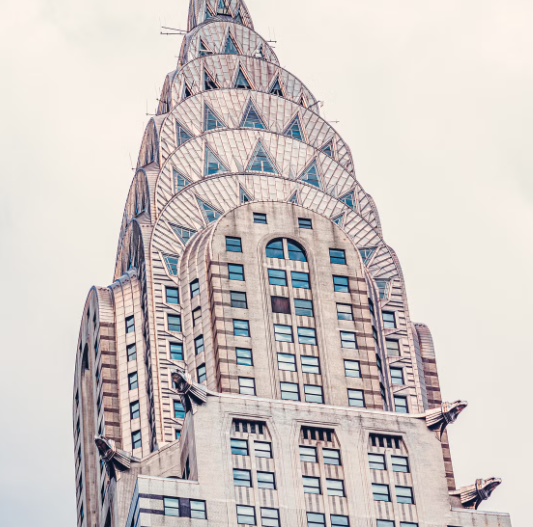
art deco
a modern design style from the 1920s -1930s known for bold geometric shapes, symmetry, and shiny modern materials like chrome, aluminum, stainless steel, and glass. It was first shown at the 1925 Paris Exposition, but the name Art Deco wasn’t used until the 1960s. (examples like the Chrysler Building)
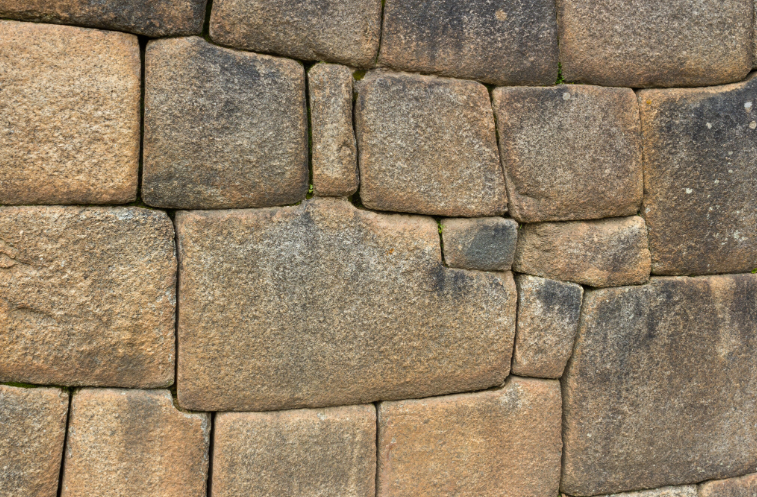
ashlar masonry
finely cut, smooth, rectangular stone blocks that are all uniform in size and laid in even, regular rows with very thin joints. ( examples like: the Parthenon )
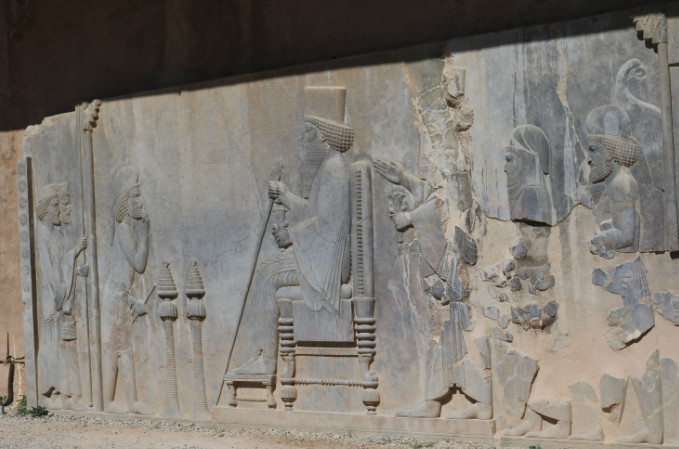
bas relief
a sculptural technique where images are slightly raised from a flat surface. It’s also called low relief ( examples like: Rockefeller Center in New York)
streamlining
In industrial design means shaping objects with smooth, rounded, aerodynamic forms to suggest speed, efficiency, and modernity. It began in the 1930s for fast‑moving machines like trains, airplanes, and cars, but designers soon applied it to everyday objects like radios, clocks, vacuum cleaners, and even buildings (examples like the streamlined pencil sharpener(Loewy)).
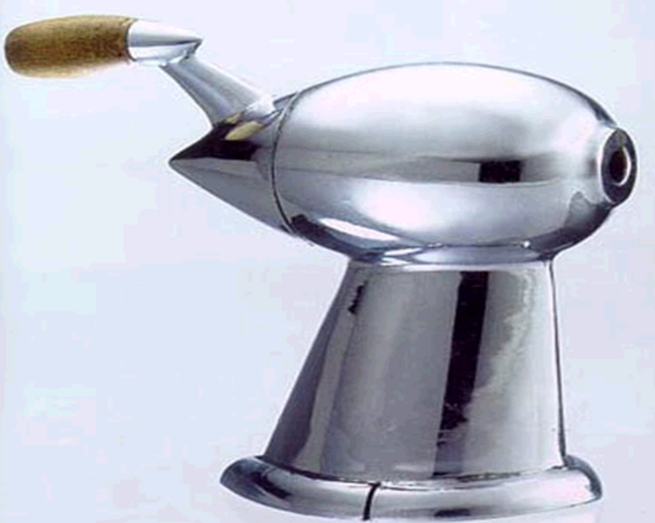
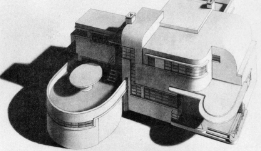
streamlined moderne
also called Art Moderne, is a 1930s style with rounded aerodynamic shapes, smooth surfaces, and a strong horizontal look. Inspired by aerodynamics and speed, it made even stationary buildings, appliances, and furniture appear modern, efficient, and in motion. ( example like the house of tomorrow)
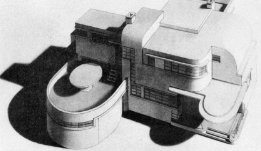
Equitable Building, Ernest Graham, New York, New York, USA, 1915
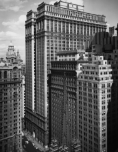
Chrysler Building, William van Alen, New York, New York, USA, 1928
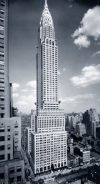
Empire State Building, Shreve, Lamb, and Harmon, New York, New York, USA, 1931
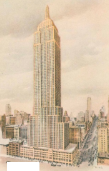
RCA Building (Rockefeller Center), Raymond Hood, New York, New York, USA, 1933
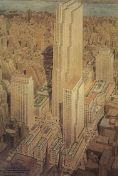
Horizons, Norman Bel Geddes, USA, 1932

House of Tomorrow, Norman Bel Geddes, USA, 1932
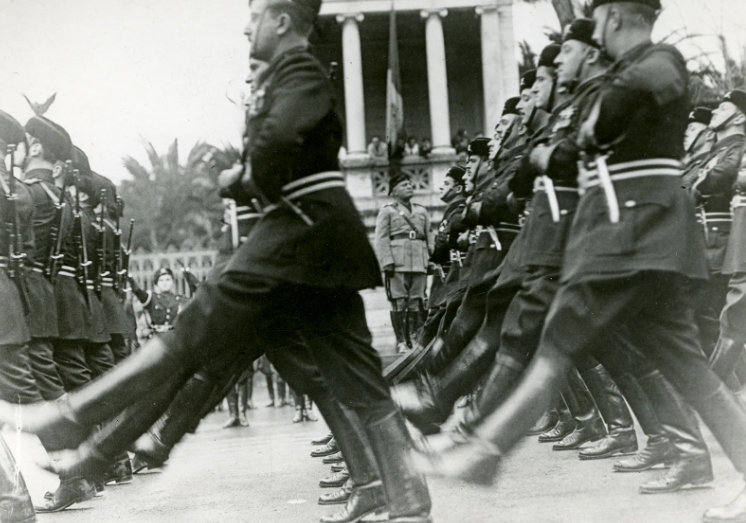
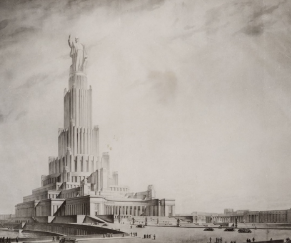
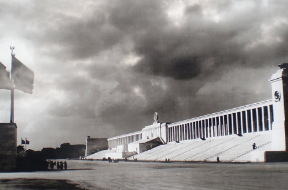
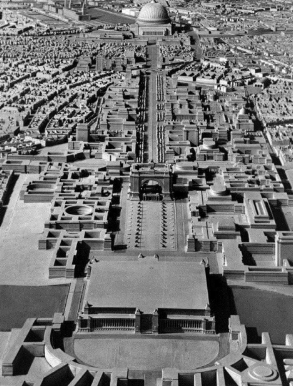
fascism
a political ideology that centers on strong centralized authority, nationalism, and social unity, often suppressing individual freedoms in order to maintain control and promote the power of the state
socialist realism
a state-sponsored artistic style that uses clear, realistic imagery to present idealized scenes of workers, leaders, and everyday life to promote the values and goals of the socialist state
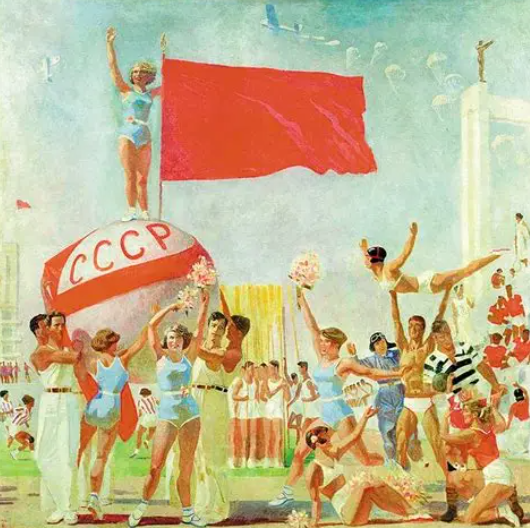
Palace of the Soviets, Boris Iofan, Russia, 1934
Zeppelinfeld, Albert Speer, Nuremberg, Germany,
1934
Plan for Berlin, Albert Speer, Germany, 1937
universal space
The free plan is the idea of creating open, flexible interior spaces that can support many different activities. It removes fixed walls and structural barriers so the space can stay fluid, adaptable, and easy to reconfigure. (examples like Le Corbusier Villa Savoye)
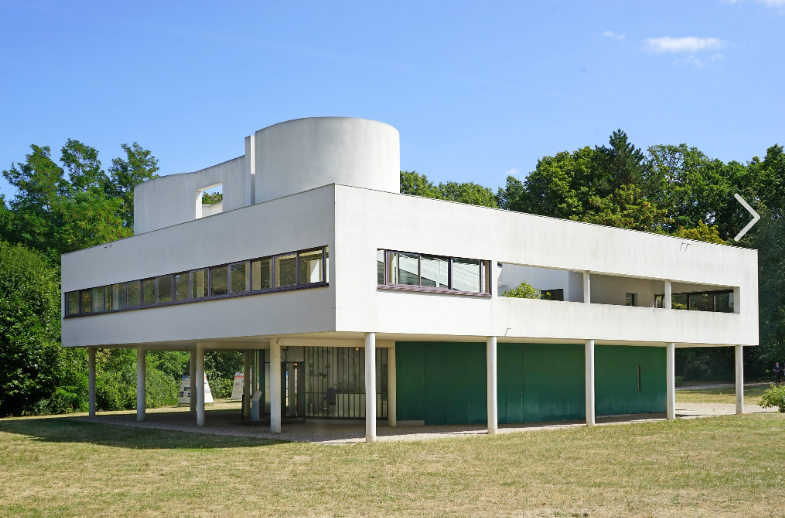
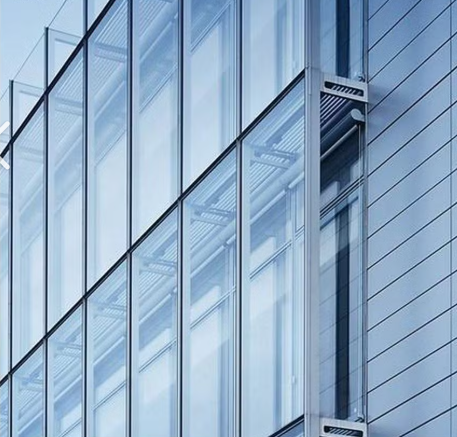
curtain wall
is a non‑load‑bearing exterior wall that hangs from a building’s structural frame and acts as a protective and decorative skin. It is usually made of lightweight materials like glass, aluminum, or steel. The curtain wall does not support the building’s weight, only its own. Its key idea is separating the structure from the cladding, which allows for large areas of glass and smooth modern façades. Curtain walls became common in postwar modernist architecture and helped make glass skyscrapers possible. ( examples like Lever House in New York)
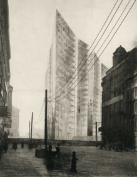
Project for a Glass Skyscraper, Ludwig Mies van der Rohe, Germany, 1921
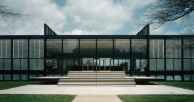
Crown Hall, Ludwig Mies van der Rohe, Chicago, Illinois, USA, 1956
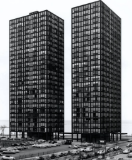
Lake Shore Dr. Apartments, Ludwig Mies van der Rohe, Chicago, Illinois, USA 1948
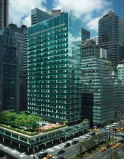
Lever House, SOM, New York, New York, USA, 1951
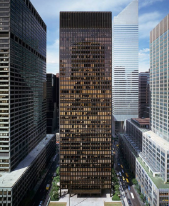
Seagram Building, Ludwig Mies van der Rohe and Philip Johnson, New York, New York, USA, 1958
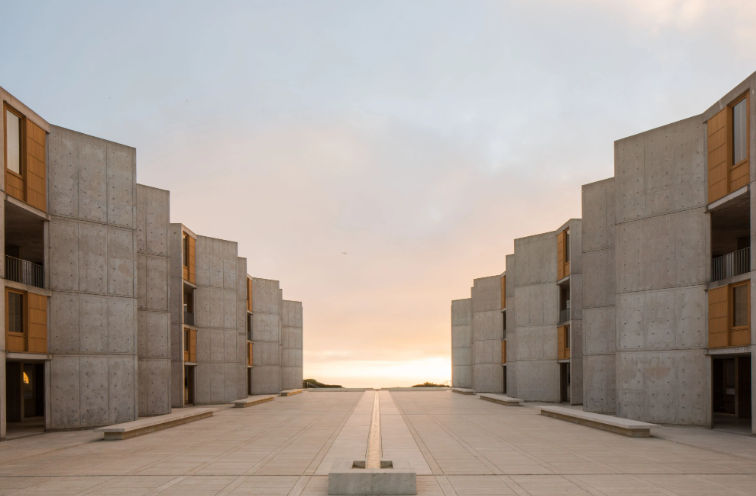
served/servant space
The main, occupied, and important areas of a building. Servant spaces are the supporting areas that help the served spaces function, such as mechanical rooms, circulation, and bathrooms. ( Example like Salk Instutiton By louis Kahn )
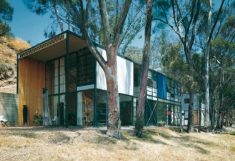
Case Study House No. 8, Charles and Ray Eames, Los Angeles, California, USA, 1949
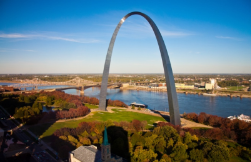
Gateway Arch, Eero Saarinen, St. Louis, Missouri, USA, 1947
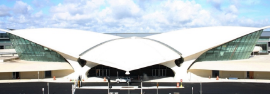
TWA Terminal, Eero Saarinen, New York, New York, USA, 1955
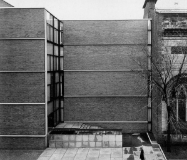
Yale University Art Gallery, Louis Kahn, New Haven, Connecticut, USA, 1950
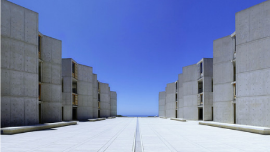
Salk Institute, Louis Kahn, La Jolla, California, USA, 1959
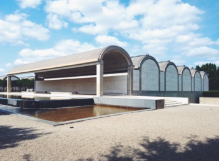
Kimbell Art Museum, Louis Kahn, Fort Worth, Texas, 1969
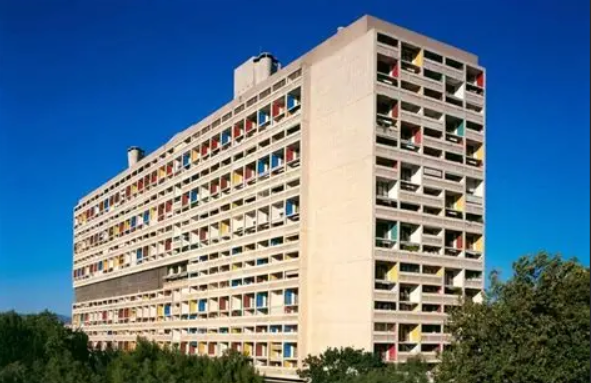
béton brut:
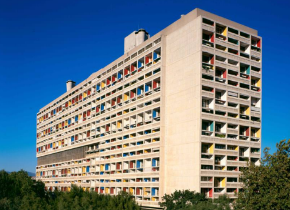
the raw concrete. It is concrete left exposed after the formwork is removed, often showing the texture or grain of the wooden molds. The surface is not polished or covered, so the material appears natural and unfinished. (example like Le Corbusier Unite d’Habitation)
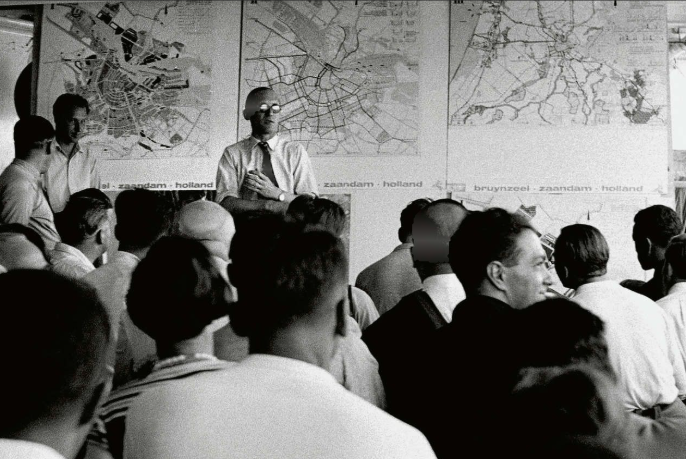
CIAM
Founded in 1928 and became the main group spreading modernist ideas about architecture and city planning. Under Le Corbusier in the 1930s, it promoted functionalism and rational planning. The 1933 Athens Charter argued that cities should separate the main functions of life: living, working, recreation, and circulation. These ideas shaped many modernist plans, and Brasilia is one of the clearest examples of CIAM principles in a real city.
Team X
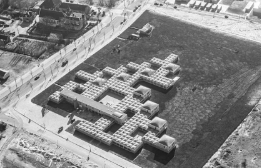
The younger generation of CIAM in the 1950s who rejected the dogmatic ideals of its founders
Unité d’Habitation, Le Corbusier, Marseilles, France, 1947
Legislative Assembly Building, Le Corbusier, Chandigarh, India, 1951

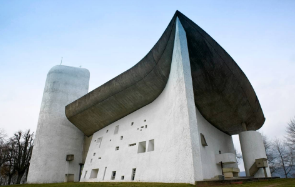
Chapel of Notre-Dame-du-Haut, Le Corbusier, Ronchamp, France, 1950
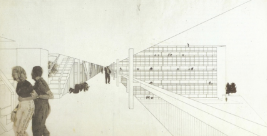
Golden Lane Housing, Alison and Peter Smithson, England, 1952
Amsterdam Municipal Orphanage, Aldo Van Eyck, Amsterdam, Netherlands, 1955-