(MAIA KATHARINA A. SERO) INTRODUCTION TO PSYCHOLOGY MIDTERM REVIEWER
 Call Kai
 Learn
Learn Practice Test
 Spaced Repetition
 Match
Match Flashcards
 Knowt Play
1/215

There's no tags or description
Looks like no tags are added yet.
Name | Mastery | Learn | Test | Matching | Spaced | Call with Kai |
|---|
No analytics yet
Send a link to your students to track their progress
216 Terms
Sensation
—the process of detecting, receiving, converting and transmitting information resulting from stimulation of sensory receptors.
- IS THE PROCESS OF DETECTING AND ENCODING STIMULUS IN THE WORLD
- When neural impulses reach the particular area in the brain, they are changed into meaningless bits of information, which involves the detection of sensory stimuli.
Perception
- the process of selecting, identifying, organizing and interpreting sensory input into a useful and meaningful mental representation of the world in the light of relevant memories from past experiences
- These meaningless bits of information are then changed into meaningful and complete images, the interpretation of sensory stimuli.
- To identify a pattern of sensory input is to categorize it, in which various expectations, motives, and experiences are brought into play.
Example: If this is a mouse, it is afraid of cats.
Detection
The basic function of sensation, of sensory stimuli
Basic function
Our senses tell us something is out there. Our perception tell us what something is.
The_____ of sensation is sensation of sensory stimuli, whereas perception generally involves interpretation of the same stimuli.
Vision
(sense of sight) sensitive to LIGHT ENERGY.
Auditory
(sense of hearing) stimulated by SOUND ENERGY
Olfaction
(sense of smell) stimulates our nostrils by CHEMICAL ENERGY
Gustation
(sense of taste)
Tactile
(skin senses for pressure, temperature, pain) THERMAL ENERGY
Vestibular
(sense of balance)
Kinesthesia
(sense of posture and movement)
Organic
(sensation from internal organs such as hunger, thirst, drowsiness)
Information
(e.g. light, sound)—activate our sense receptors in the sensory organs which receive and process sensory information from environment.
Transduction
—after stimuli enter sensory organs, the sense receptor will change/covert the stimulus into electrical signals called neural impulses which are sent to the brain.
sense organs
- translate physical energy from the environment into electrical impulses processed by the brain.
For example, light, in the form of electromagnetic radiation, causes receptor cells in our eyes to activate and send signals to the brain.
Sensory reduction
- the process in which we filter and analyze sensory information before they are sent to the brain.
Why do we need to reduce
the amount of sensory
information we receive?
So that the brain is not overwhelmed with unnecessary information because it needs to be free to respond to stimuli that have meaning for survival.
All species have evolved selective receptors that suppress or amplify information to allow survival
Synesthesia
literally means “mixing of senses,” people with _____ routinely blend their sensory experience
Sensory adaptation
— repeated or constant stimulation decreases the number of sensory messages sent to the brain, which causes decreased sensation.
Threshold
—refers to a point above which a stimulus is perceived and below which it is not perceived.
—It determines when we first become aware of a stimulus.
Difference threshold
—or just noticeable difference, is the smallest change in stimulus that we can detect.
Example: An artist might detect the difference between two very similar shades of color.
Absolute threshold
— the smallest amount of stimulus that can be detected.
When a stimulus has more energy than the ______, we can detect its presence.
When a stimulus has less energy than the _______, we cannot detect its presence
percepio
The word perception comes from the Latin.
meaning "receiving, collecting, action of taking possession, apprehension with the mind or senses.”
selection
- First step
The first step in perception is _______ choosing where to direct our attention.
Attention
—is the direction of perception toward certain selected objects.
Attention is selective
we focus on specific and important aspects of experience while ignoring others.
Attention is shiftable
—we may focus from one specific object to another
Nature
—whether visual or auditory, words or images, animate or inanimate objects
Reality
Real, concrete things are more attention-getting than hypothetical, abstract, or mental
Familiarity
People pay more attention to things that are familiar
Location/promixity
We pay attention to things that are near than those that are far
Novelty
We pay attention to things that are new and different in contrast to what is customary
Suspense
People pay attention to things that build suspense
Conflict
—people pay attention to a good fight.
Humor
people pay attention to things that are funny.
The vital
—people nearly always pay attention to matters that affect their health, reputation, property, or employment.
Activity
—things that move, flash or blink
Intensity
sounds that are louder are more attention-getting than soft music
Organize
Second
Having selected incoming information, we _____ it into patterns and principles that will help us understand the world
interpretation
- After selectively sorting through incoming sensory information and incoming sensory information and organizing it into patterns, the brain organizing it into patterns, the brain uses this information uses this information to explain and to explain and make judgments make judgments about the external about the external world.
- this is the final stage of perception.
- Where perception generally involves ______ of the same stimuli
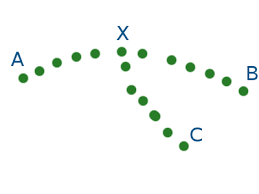
Continuity Rule
The law of continuity leads us to see a line as continuing in a particular direction, rather than making an abrupt turn.
We tend to favor smooth or continuous paths when interpreting a series of points And or lines
proximity rule
- In mentally organizing stimuli, objects that are physically close to one another are grouped together or seen as a unit.
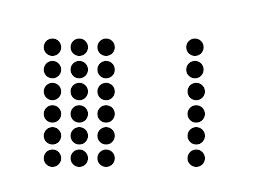
similarity rule
In organizing stimuli, elements that appear similar in color, lightness, texture, shape, or any other quality are grouped together.

law of continuity
leads us to see a line as continuing in a particular direction, rather than making an abrupt turn.
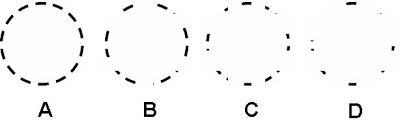
closure rule
In organizing stimuli, we tend to fill in any missing part or incomplete figures and see them as complete figures.
principle of symmetry
In organizing stimuli, we tend to favor symmetrical objects or relationships.

Figure-Ground Rule
Perception does not only involve organization and grouping, it also involves distinguishing an object from its surroundings.
Once an object is perceived, the area around that object (figure) becomes the background.
In organizing a stimuli, we tend to automatically distinguish between a figure or foreground (object with more details) and a ground (has less detail).
explains how the brain separates a visual scene into a focused figure (foreground object) and the less important ground (background), allowing us to perceive distinct objects and simplify complex visuals
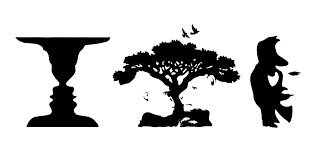
reversible figure
- are those objects that are so shaped that both may be seen as either the figure or the ground—the object that the individual is set to perceive will probably be noticed first.
- Gestalt psychologists have devised ambiguous figure-ground relationships—that is, drawings in which the figure and ground can be reversed—to illustrate their point that the whole is different from the sum of its parts.
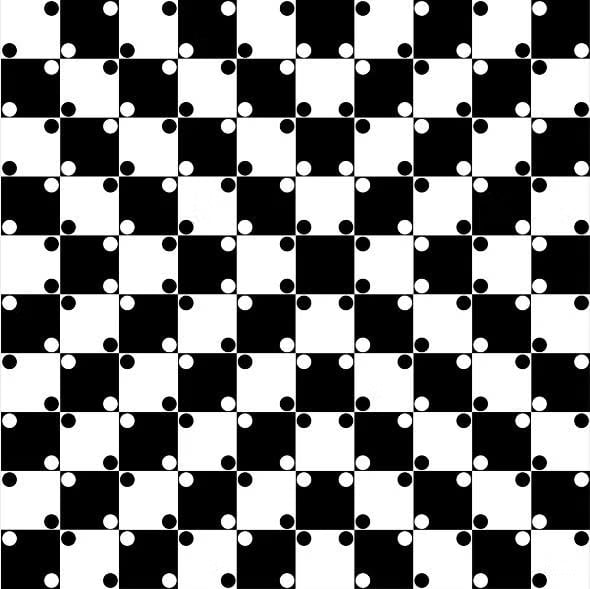
- is a type of optical illusion where a two-dimensional drawing can be perceived in two or more distinct ways
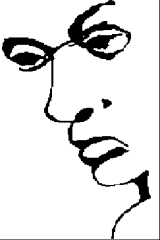
up-down perception
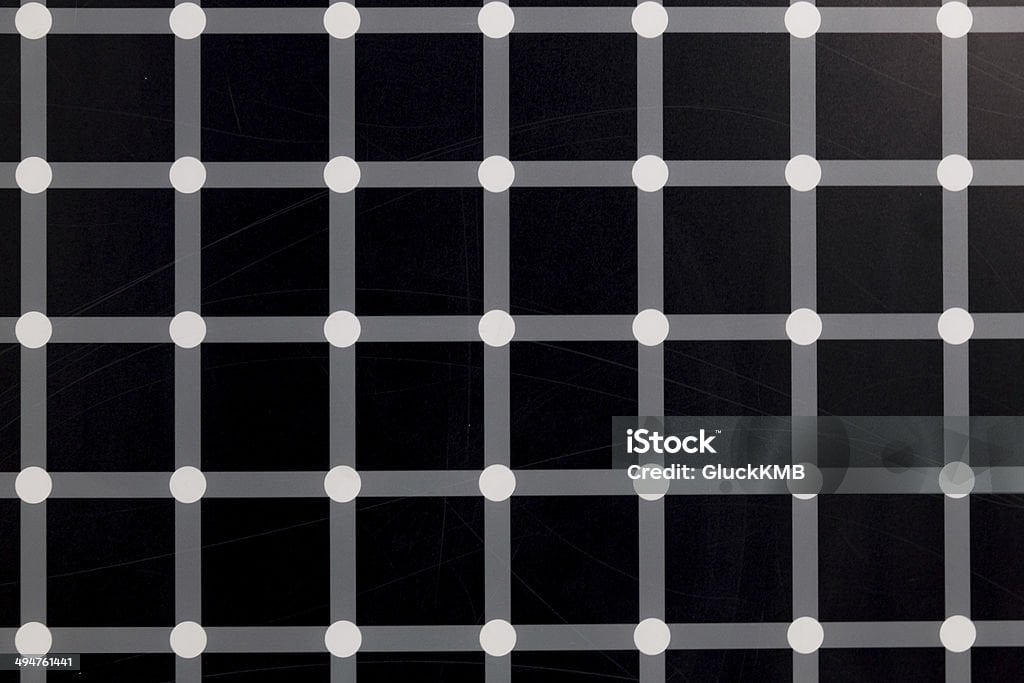
perception of flashing gray spots
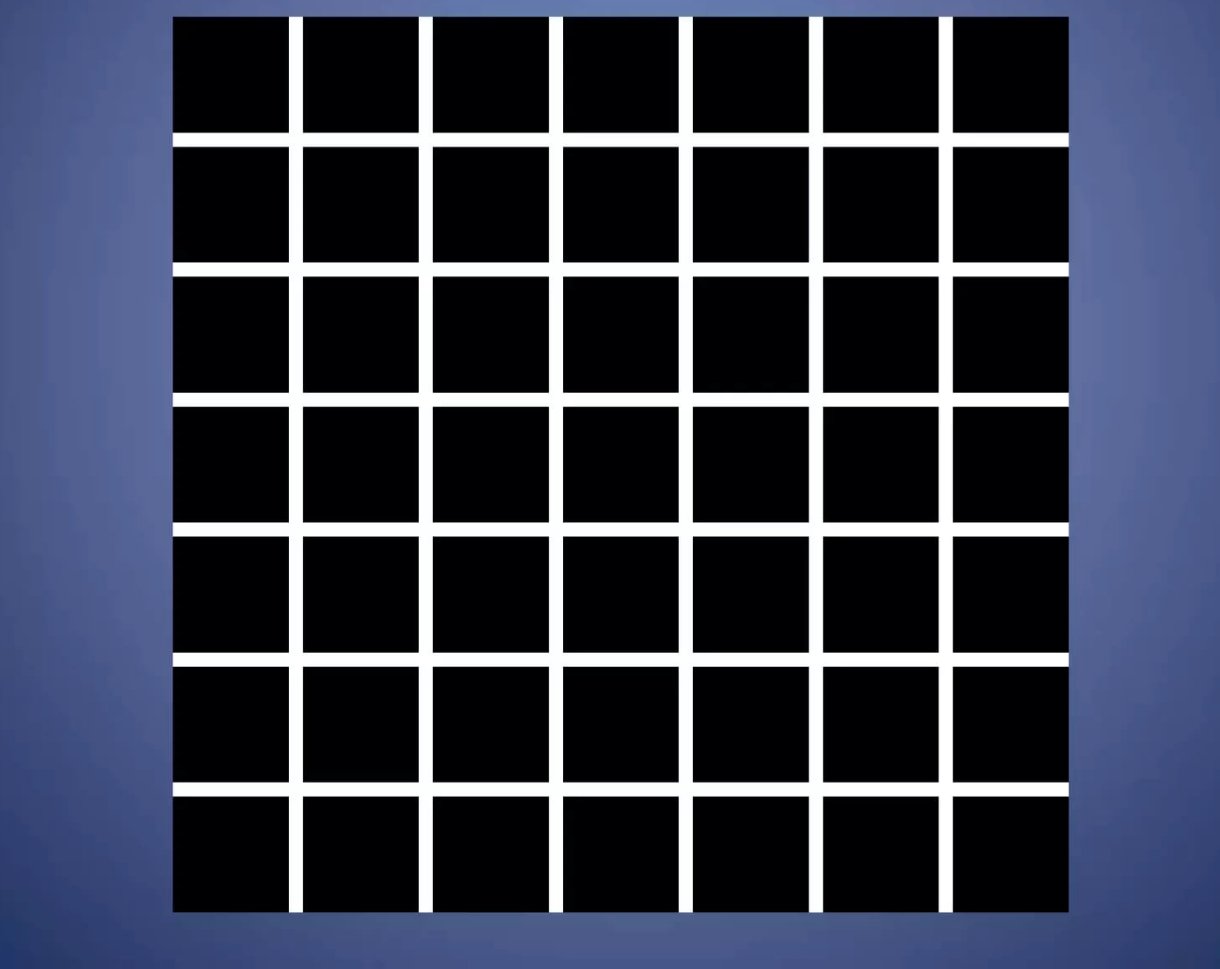
perception of flashing black dots
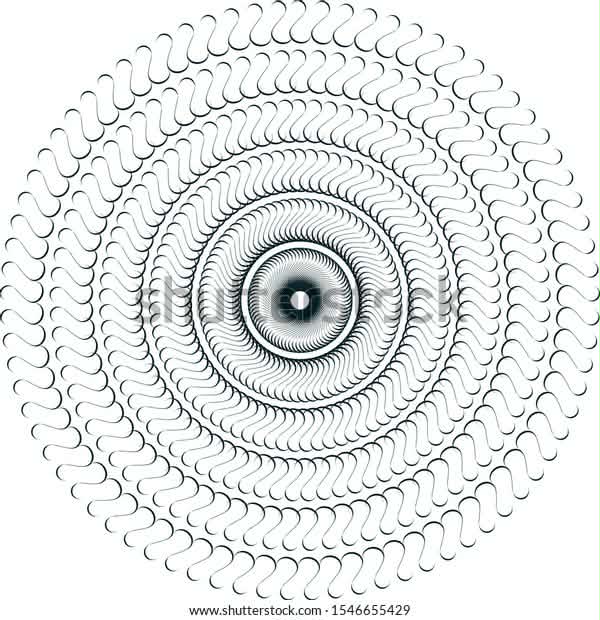
bulge like perception
Extrasensory perception (ESP)
IT IS A PERCEPTION WITHOUT THE MEDIATION OF THE SENSES.
CLAIRVOYANCE
– IS EXTRA SENSORY AWARENESS OF OBJECTS.
– CONTACT BETWEEN THE MIND OF THE PERSON AND ON THE OJECT.
TELEPATHY
– IS A THOUGHT TRANSMISSION FROM ONE MIND TO ANOTHER.
PRECOGNITION
– IS FOREKNOWLEDGE OF SPECIFIC EVENTS WITHOUT ANY RATIONAL MEANS.
PSYCHOKINESIS
– (MIND OVER MATTER) INCLUDES MENTAL OPERATIONS THAT INFLUENCES A MATERIAL BODY OR AN ENERGY SYSTEM.
Klinefelter Syndrome
= a genetic condition in MALES with an extra X chromosome, causing varied symptoms like small testes, infertility, reduced muscle mass, delayed speech, and sometimes learning difficulties.
Simple definition. A condition where a male has an extra X chromosome.
Example. A boy has learning delays and doctors find he has XXY chromosomes.
Sex Determination
= is the process by which an organism’s biological sex (male or female) is decided based on genes and chromosomes. In humans, it occurs at fertilization when the sperm and egg fuse.
Simple definition. The process that decides if a baby becomes male or female.
Example. If the sperm carries Y, the baby becomes male.
SRY Gene
= The SRY gene on the Y chromosome triggers male development by directing testes formation and male hormone production.
Simple definition. A gene that starts male body development.
Example. Presence of the SRY gene leads to formation of testes.
Sex-Linked Traits
= are inherited traits controlled by genes on sex chromosomes (especially the X chromosome) and show different patterns in males and females.
Simple definition. Traits passed through the X chromosome.
Example. Color blindness often affects males more than females.
X-linked Recessive
= Males with a mutated gene on their one X show the trait. Females need two copies to show the trait.
Simple definition. A trait that appears easily in males because they have one X.
Example. A boy inherits hemophilia from his mother.
X-linked Dominant
= A single copy can cause the trait in both males and females.
Simple definition. One affected gene is enough to show the trait.
Example. A parent with the gene passes the condition to a child.
Chromosomal Aberrations
= are changes in chromosome number or structure that can affect development and health.
Simple definition. Errors in chromosomes.
Example. Down syndrome results from an extra chromosome.
Numerical Aberrations
= These involve extra or missing chromosomes.
Simple definition. Wrong number of chromosomes.
Example. Trisomy 21.
Structural Aberrations
= These involve changes to the structure of chromosomes.
Simple definition. Chromosome pieces are changed.
Example. A chromosome segment is missing.
Nondisjunction
= failure of chromosomes to separate properly during meiosis.
Simple definition. Chromosomes fail to separate during cell division.
Example. Leads to trisomy conditions.
Developmental Psychology
= is the scientific study of how and why humans change, grow, and adapt across their entire lifespan, from conception to old age.
Simple definition. Study of how people grow and change.
Example. Studying how babies learn to talk.
Human Growth and Development
development refer to the physical, cognitive, emotional, and behavioral changes that occur in an individual from birth throughout the lifespan.
Development
= refers to the progressive acquisition of skills, abilities, and behaviors.
Simple definition. Improvement of skills and abilities.
Example. Learning to read.
Growth
involves measurable physical changes such as height and weight.
Cephalocaudal Principle
= development progresses from the head downward to the lower parts of the body.
Simple definition. Control develops from head to feet.
Example. Babies control the head before walking. infants are able to hold up their heads before they can sit, crawl, or walk.
Proximodistal Principle
= development proceeds from the center of the body outward toward the extremities.
Simple definition. Control develops from center to fingers and toes.
Example. A child waves the arm before using fingers.
General to Specific
= general movements appear before more specific skills.
= (Development Proceeds from General to Specific)
Simple definition. Big movements come before fine movements.
Example. Scribbling before writing letters.
Simple to complex
= children acquire simple skills before more complex abilities.
= (Development Proceeds from Simple to Complex)
Simple definition. Easy skills come first.
Example. Drawing lines before drawing shapes.
Development is Continuous
= Development is a continuous and ongoing process.
Simple definition. Growth never stops.
Example. Skills build over time.
Erik Erikson’s Psychosocial Theory
- is a well-known model of human development that describes how individuals evolve emotionally and socially from infancy through old age.
- According to this theory, development continues throughout the lifespan and consists of eight stages, each marked by a central psychological conflict or “crisis.”
- Successfully resolving these conflicts leads to the development of key strengths or virtues that contribute to a healthy personality.
Trust vs Mistrust
= (Infancy: Birth – 1 Year)
= infants learn whether the world is safe and predictable. In the first stage, infants learn whether the world is a safe and predictable place. If caregivers consistently meet the infant’s basic needs for nourishment, comfort, and affection, the child develops trust and the virtue of hope. If care is inconsistent or neglectful, the infant may develop mistrust and insecurity.
Simple definition. Babies learn to trust caregivers.
Example. Baby cries and caregiver responds.
Autonomy vs Shame and Doubt
= (Early Childhood: 1 – 3 Years)
= toddlers strive for independence. When caregivers encourage their efforts and provide appropriate support, children develop autonomy and the virtue of will.
Simple definition. Toddlers try to do things alone.
Example. A child wants to feed self.
initiative vs guilt
= (Play Age: 3 – 6 Years)
= children initiate activities and express curiosity. During early childhood, children initiate activities, express curiosity, and begin to assert themselves socially. Successful experiences that allow active play and imagination foster initiative and the virtue of purpose. Too much restriction or punishment can lead to guilt and hesitation.
Simple definition. Children start activities.
Example. Child starts pretend play.
industry vs inferiority
= (School Age: 7 – 11 Years)
= children strive for competence. At school age, children learn new skills and strive for competence. When children receive encouragement and recognition for their achievements, they develop industry and the virtue of competence. Lack of support or repeated failures can result in feelings of inferiority.
Simple definition. Children want to succeed in school.
Example. Finishing homework proudly.
identity vs role confusion
= Adolescence: 12 – 18 Years)
= Adolescence involves exploring different roles, values, and beliefs to form a coherent sense of self. Successful resolution of this stage results in identity and the virtue of fidelity, whereas failure can lead to confusion about one’s role and future direction.
Simple explanation. Teenagers try to figure out who they are and what they believe.
Example. A senior high student explores different career paths and beliefs before choosing psychology as a life goal.
intimacy vs isolation
= Early Adulthood: 18 – 40 Years)
=In young adulthood, the focus shifts to forming close relationships and emotional bonds with others. Successfully establishing supportive and loving relationships leads to intimacy and the virtue of love. Difficulty forming these bonds can result in isolation and loneliness.
Simple explanation. Young adults focus on building deep and close relationships.
Example. A young professional builds a healthy, committed relationship with a supportive partner.
generativity vs stagnation
= (Middle Age: 40 – 65 Years)
= Middle adulthood involves contributing to society and future generations, often through work, family life, and community involvement. When adults feel productive and connected, they develop generativity and the virtue of care. If they feel unproductive or disconnected, they may experience stagnation.
Simple explanation. Adults focus on helping others and making a positive impact.
Example. A parent mentors younger employees and actively supports their children’s education.
integrity vs despair
= (Old Age: 65 Years and Up)
= In late adulthood, individuals reflect on their life and achievements. A sense of fulfillment and acceptance leads to integrity and the virtue of wisdom. In contrast, regret or dissatisfaction may result in despair.
Simple explanation. Older adults look back on their life and judge if it was meaningful.
Example. A retired teacher feels proud of the students she helped and accepts her life with peace.
human development
is a complex process influenced by the interaction of heredity, maturation, and environment.
heredity
= Genetic traits passed from parents to children that provide the basic blueprint for development.
= refers to the genetic traits passed from parents to their children.
= provides the basic blueprint for development, setting the range of possibilities within which a person can grow. However, genes alone do not determine outcomes; their expression is influenced by maturation and environmental experiences.
Simple explanation. Traits you inherit from your parents.
Maturation
= the natural biological process of growth and development that occurs according to a genetically programmed timetable.
= ensures that the body and brain are physically ready to acquire new skills.
= It explains why certain skills emerge at predictable ages, such as sitting before walking or babbling before speaking.
Simple definition. Natural body readiness: The body becomes ready for new skills over time.
Example. Muscles mature before walking.
environment
= External influences such as family, culture, school, peers, nutrition, and life experiences that affect development.
= includes all external influences that affect development, such as family, culture, school, peers, nutrition, and life experiences.
= play a crucial role in shaping how inherited traits and maturational potential are expressed.
Simple explanation. Everything around you that shapes how you grow.
rooting reflex
= Turning the head toward stimulation to facilitate feeding.
Simple explanation. Baby turns head to find milk.
Blink Reflex
= Closing eyes in response to bright light to protect vision.
Simple explanation. Eyes close quickly when light is bright.
Withdrawal reflex
= Pulling the leg away from a painful stimulus.
Simple explanation. Baby pulls away from pain.
Grasp reflex
= Curling fingers around an object placed in the palm.
Simple explanation. Baby automatically holds objects.
habituation
= Researchers use techniques such as _____ to study infant cognition.
= In these experiments, infants show decreased interest in repeated stimuli but renewed interest in new ones, revealing their ability to distinguish differences in the environment — even in early infancy.
= Decreased interest in repeated stimuli but renewed interest in new ones.
Simple explanation. Babies get bored with repeated things but notice new ones.
example. babies as young as six months can detect numerical differences in simple patterns.
Sensorimotor stage
= (Birth to ~2 years)
= Infants learn through sensory experiences and physical interactions with objects. They gradually develop object permanence, the understanding that objects exist even when out of sight.
Simple explanation. Babies learn by seeing and touching.
preoperational stage
= (2–7 years)
= Children begin using language and mental imagery. Though imaginative, they think intuitively rather than logically.
Simple explanation. Young children think using imagination
concrete operational stage
= (7–11 years)
= Logical thinking improves; children understand concepts like conservation—recognizing that quantity remains the same despite changes in shape.
Simple explanation. Children start thinking logically about real things.
formal operational stage
= (11 years onward)
= Adolescents develop abstract and systematic thought, allowing for scientific reasoning and hypothetical problem-solving.
Simple explanation. Teens think about ideas and possibilities.
Social-emotional development
refers to a child’s ability to understand and manage emotions, build healthy relationships, and interact positively with others.
Simple explanation. Learning how to manage feelings and relate to others.
SCHEMAS
= Mental frameworks for organizing knowledge.
Simple explanation. Mental folders for information.
ASSIMILATION
= Interpreting new information using existing schemas.
Simple explanation. Fitting new ideas into what you already know.