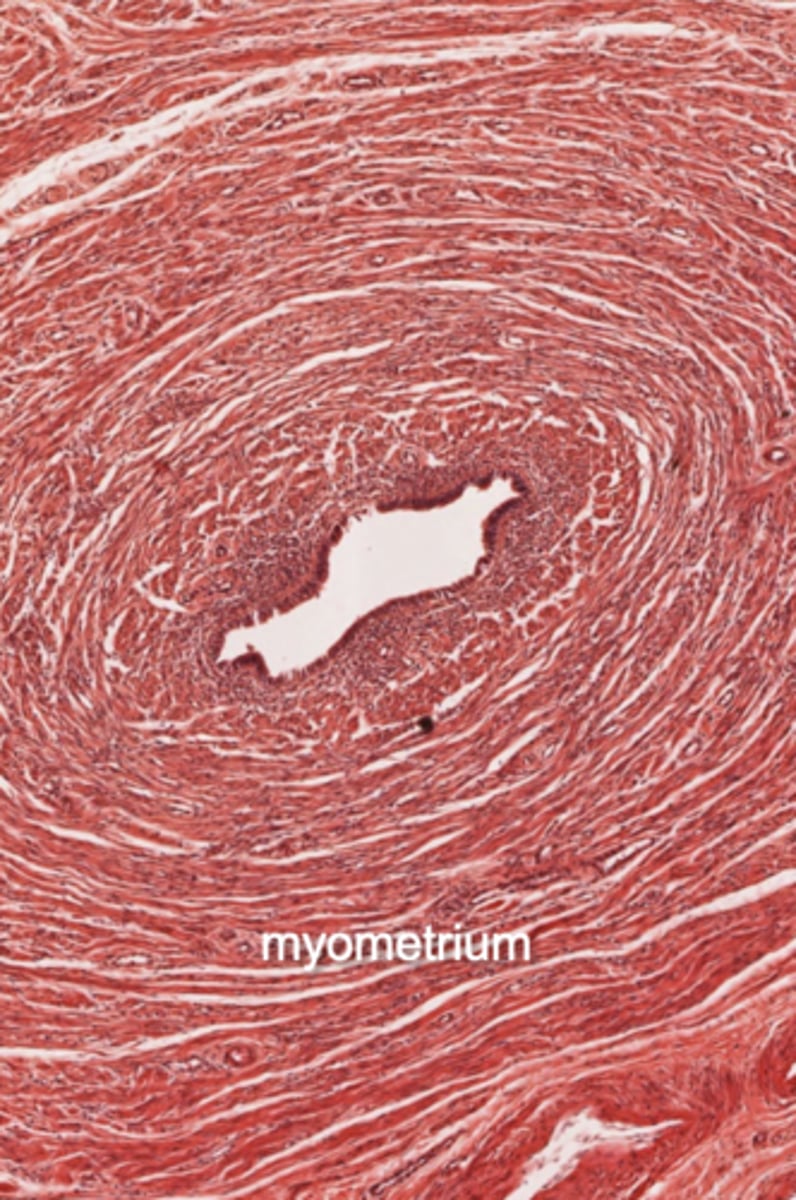
6: Female Histology (Dr. Sun)
 Call Kai
 Learn
Learn Practice Test
 Spaced Repetition
 Match
Match Flashcards
 Knowt Play
1/159

There's no tags or description
Looks like no tags are added yet.
Name | Mastery | Learn | Test | Matching | Spaced | Call with Kai |
|---|
No analytics yet
Send a link to your students to track their progress
160 Terms
prophase I
At birth, all gametes are arrested in what phase of meiosis?
puberty (~8 years old)
Define the following:
The process of sexual development (initiation of sexual development)
initiation of menstrual cycle (menarche: ~12.7 years)
What marks the end of puberty?
28-30 days
How long is the menstrual cycle?
One egg; secondary ooctye
How many eggs are ovulated per cycle? What type of egg?
51.4 years (range: 45-55)
What is the mean age for menopause?
diploid
The primary and secondary oocyte are diploid or haploid?
- secondary oocyte
- polar body
After a primary oocyte goes through meiosis I, what are the products?
- 1 haploid ootid
- 3 secondary polar bodies
After a secondary oocyte and first polar body undergo meiosis II, what are the products?
primordial follicle
What type of follicle is the initial follicle?
primary follicle
What is the follicle that follows the primordial follicle?
vesicular (secondary) follicle
What is the follicle that follows the primary follicle?
mature vesicular follicle
After a vesicular follicle forms, what does it develop into?
ruptures and releases oocyte
At ovulation, what happens to the mature follicle?
corpus luteum
What does the ruptured follicle turn into?
corpus albicans
What is the final stage after corpus luteum matures?
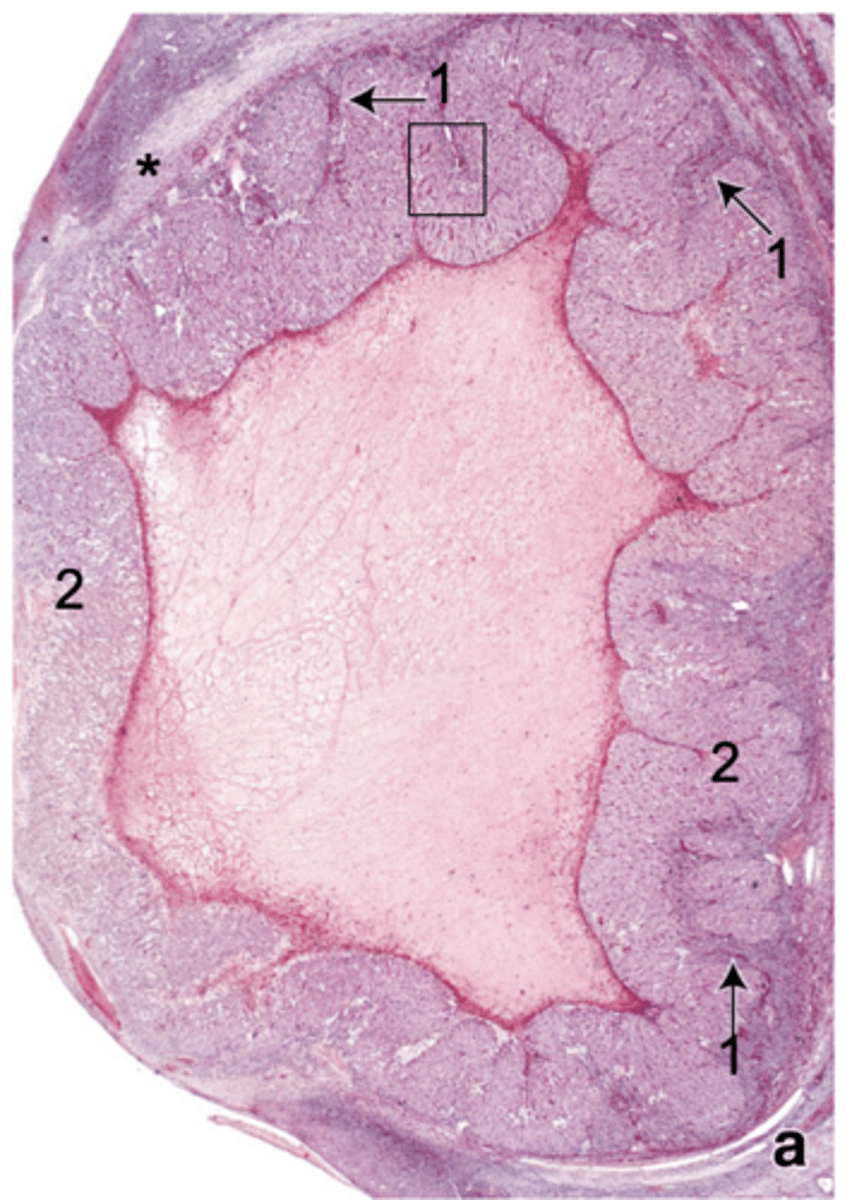
ovary
What organ?
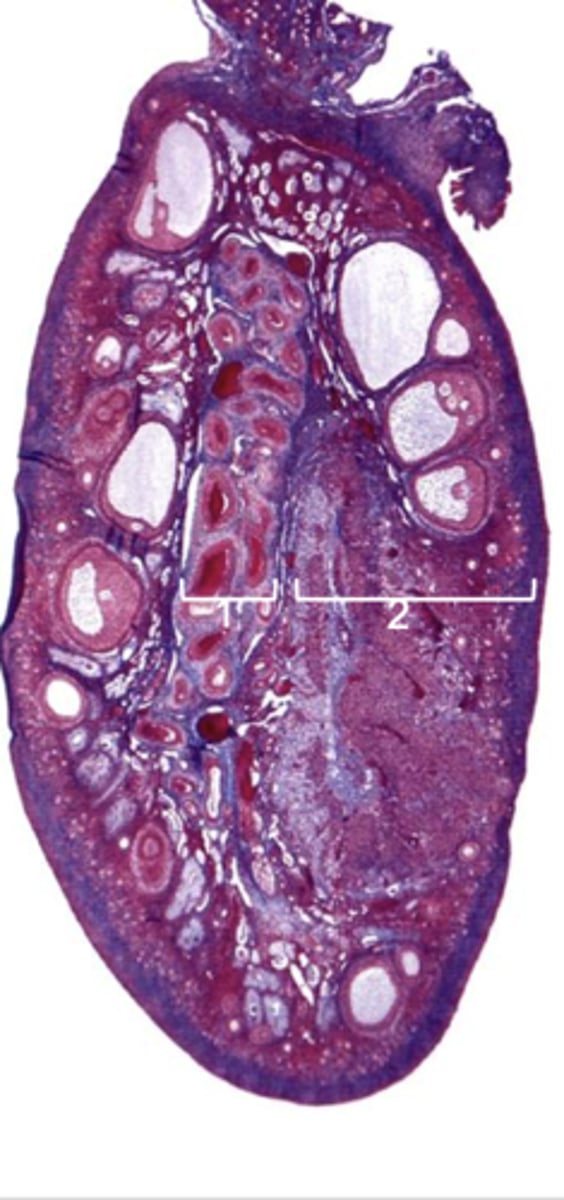
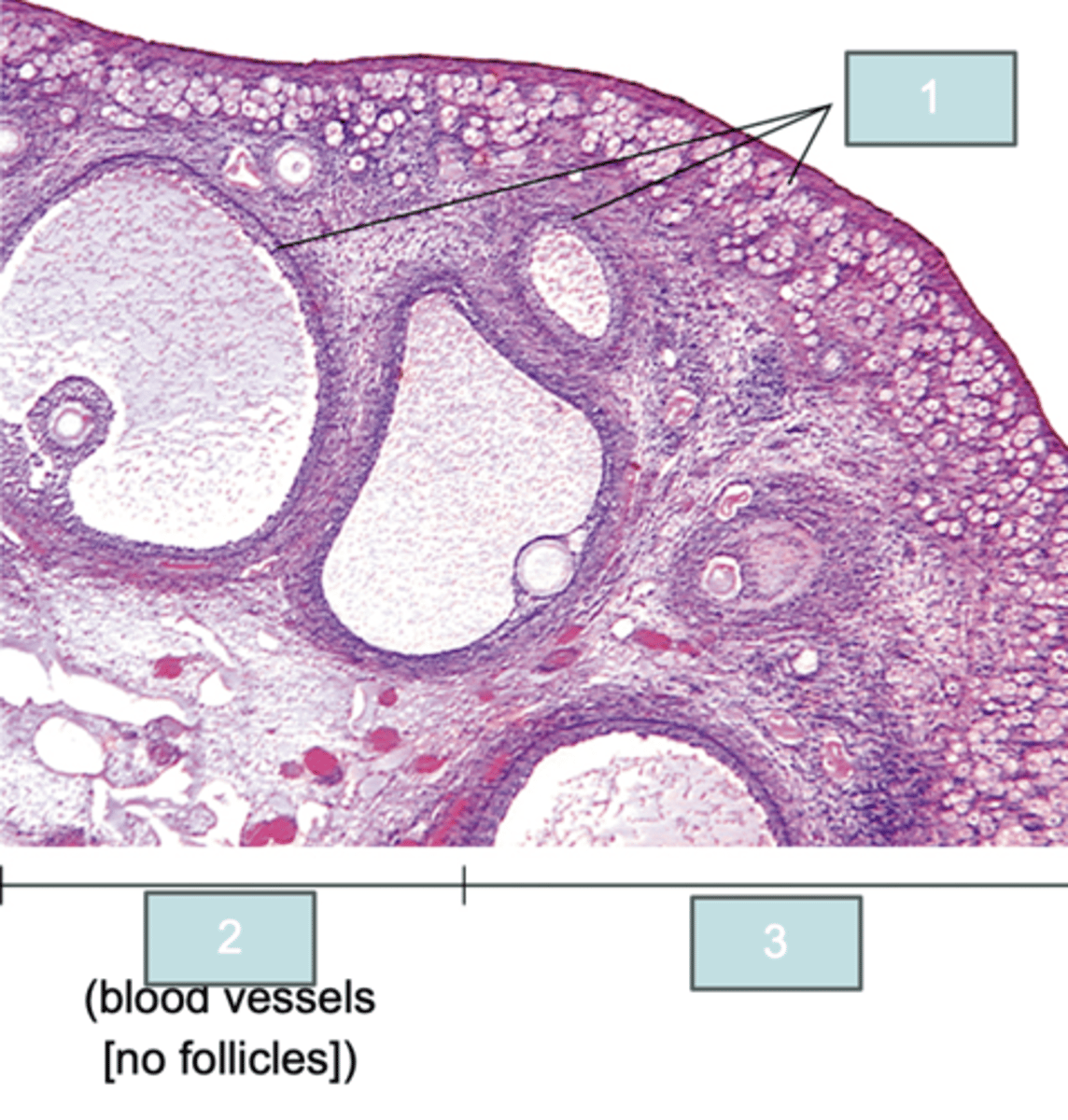
medullary region (blood vessels, nerves, lymphatics)
What is 1?
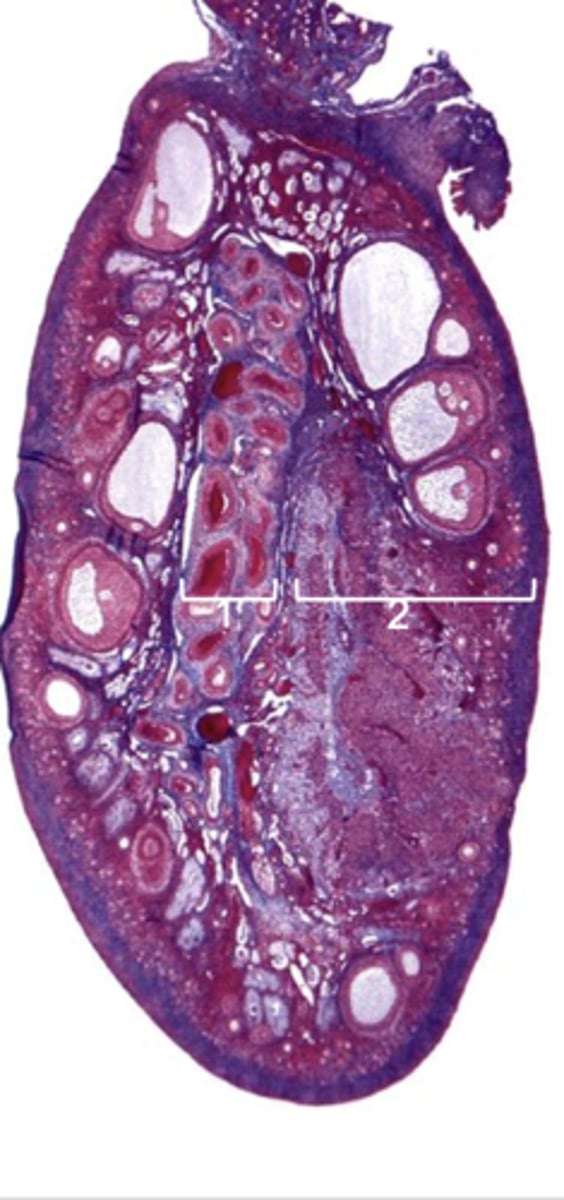
cortical region (follicles)
What is 2?
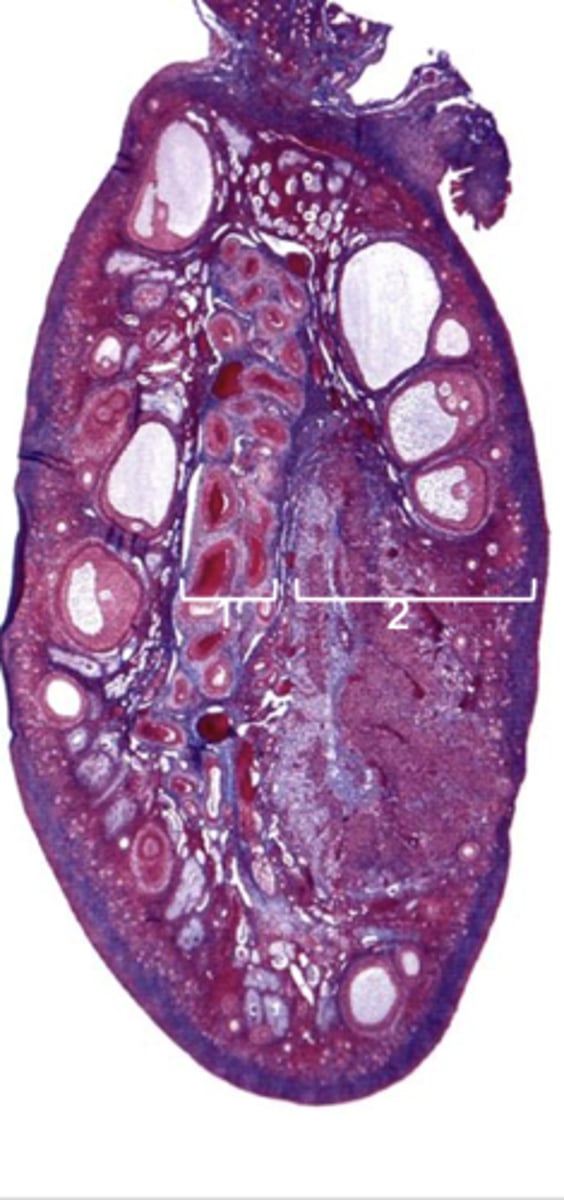
ovarian follicles
What is 1?
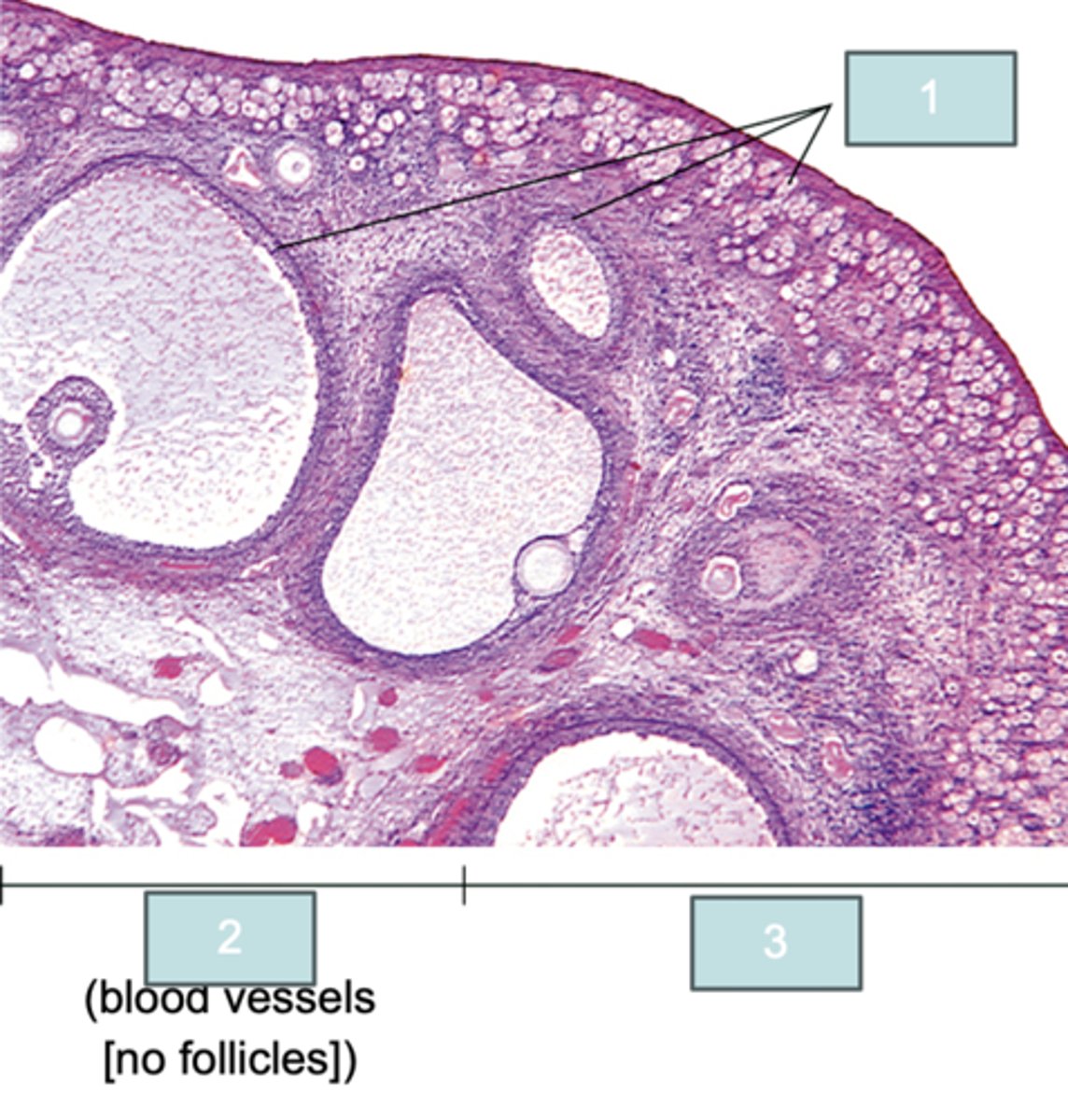
medullary region
What is 2?
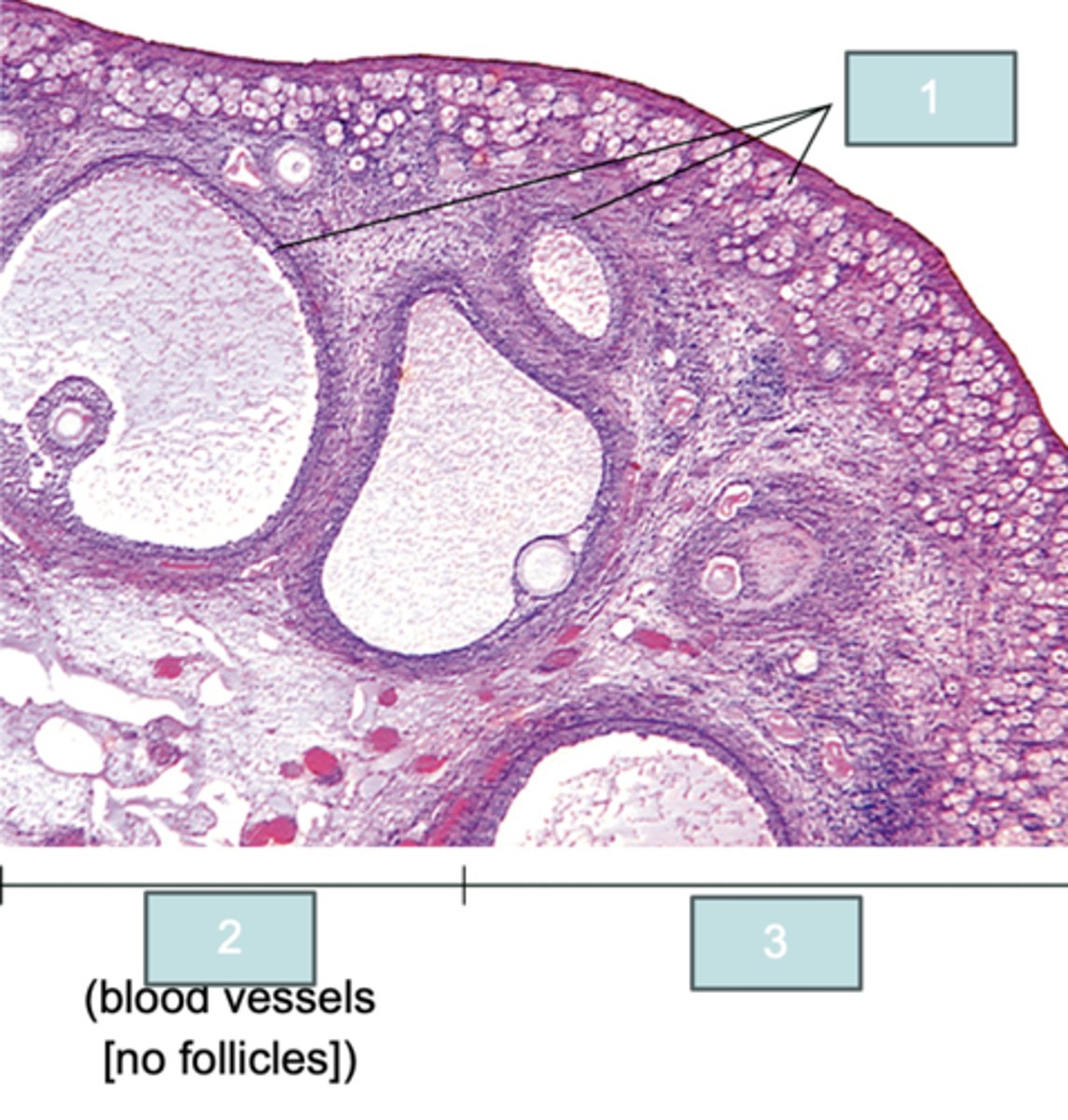
cortical region
What is 3?
tunica albuginea (TA)
What part of the ovary is the ?
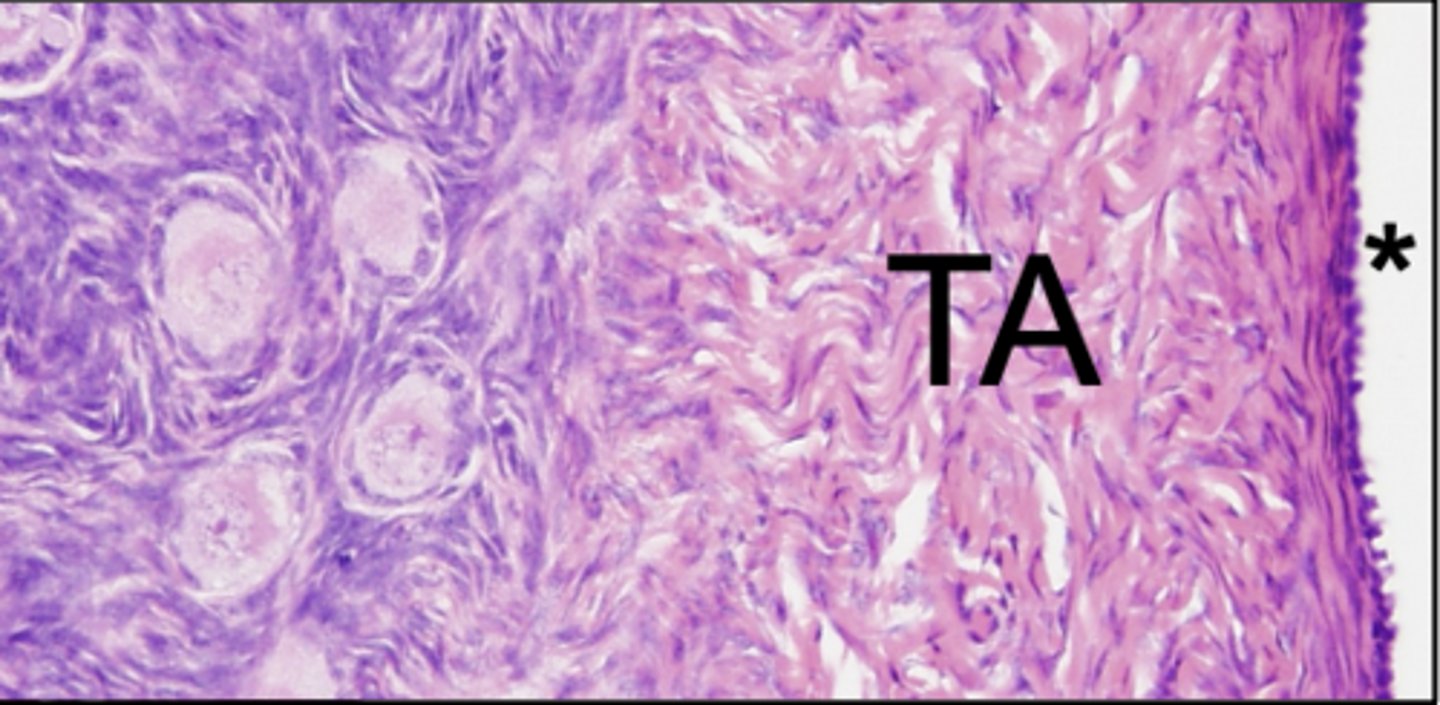
Mesothelium
What part of the ovary is at the *
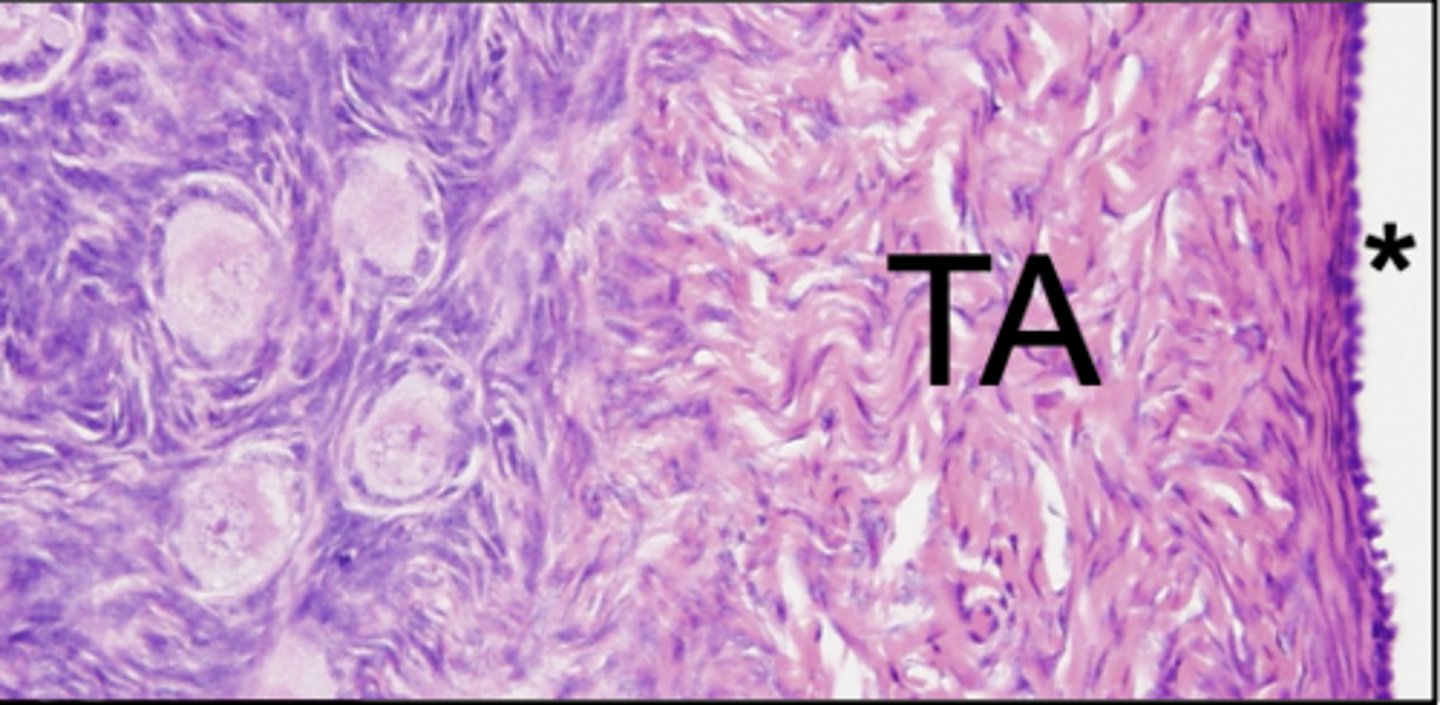
ovary
All of the following are parts of what?
- Mesothelium
- CT capsule
- Cortex
- Medulla
cortex
What layer of the ovary are ovarian follicles found in?
Cortex
What layer of the ovary are interstitial tissue (stroma) found in?
medulla
Which layer of the ovary contains:
- Blood vessels
- Nerves
- Fibroelastic CT
mesothelium
What part of the ovary do 70% of ovarian tumors form in?
primordial follicles
What do these show?
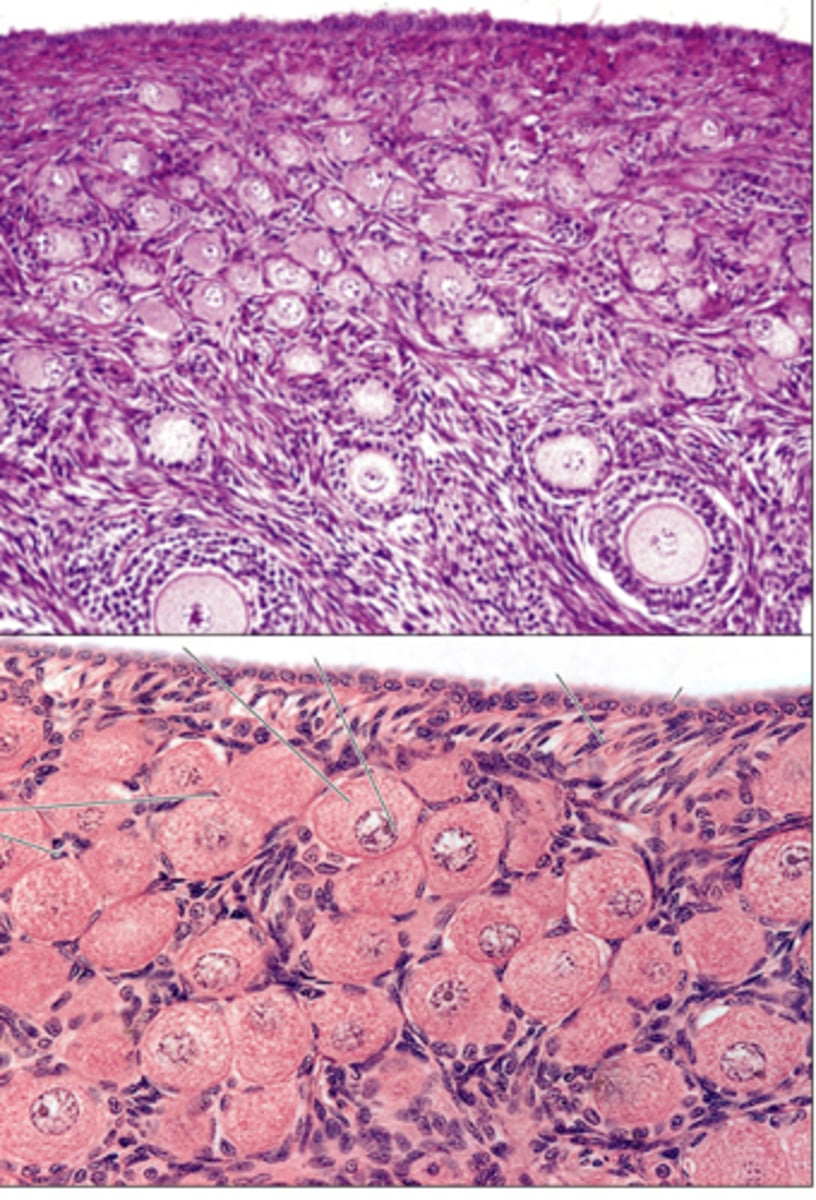
primordial
What type of follicle?
- Single layer, flattened follicle cells
- 600-800K at birth
- Primary oocyte (1° - MI not complete)
- Prophase of meiosis I
- Duplicated chromosomes (4n DNA) (post-crossing over)
primary (early) follicle
What type of follicle?
- Single layer, cuboidal follicle cells (FC)
- Primary oocyte (1°)
- Zona pellucida appears
- Prominent basal lamina
- Stromal cells begin to condense around follicle
primary (early) follicle
What type of follicle is this?
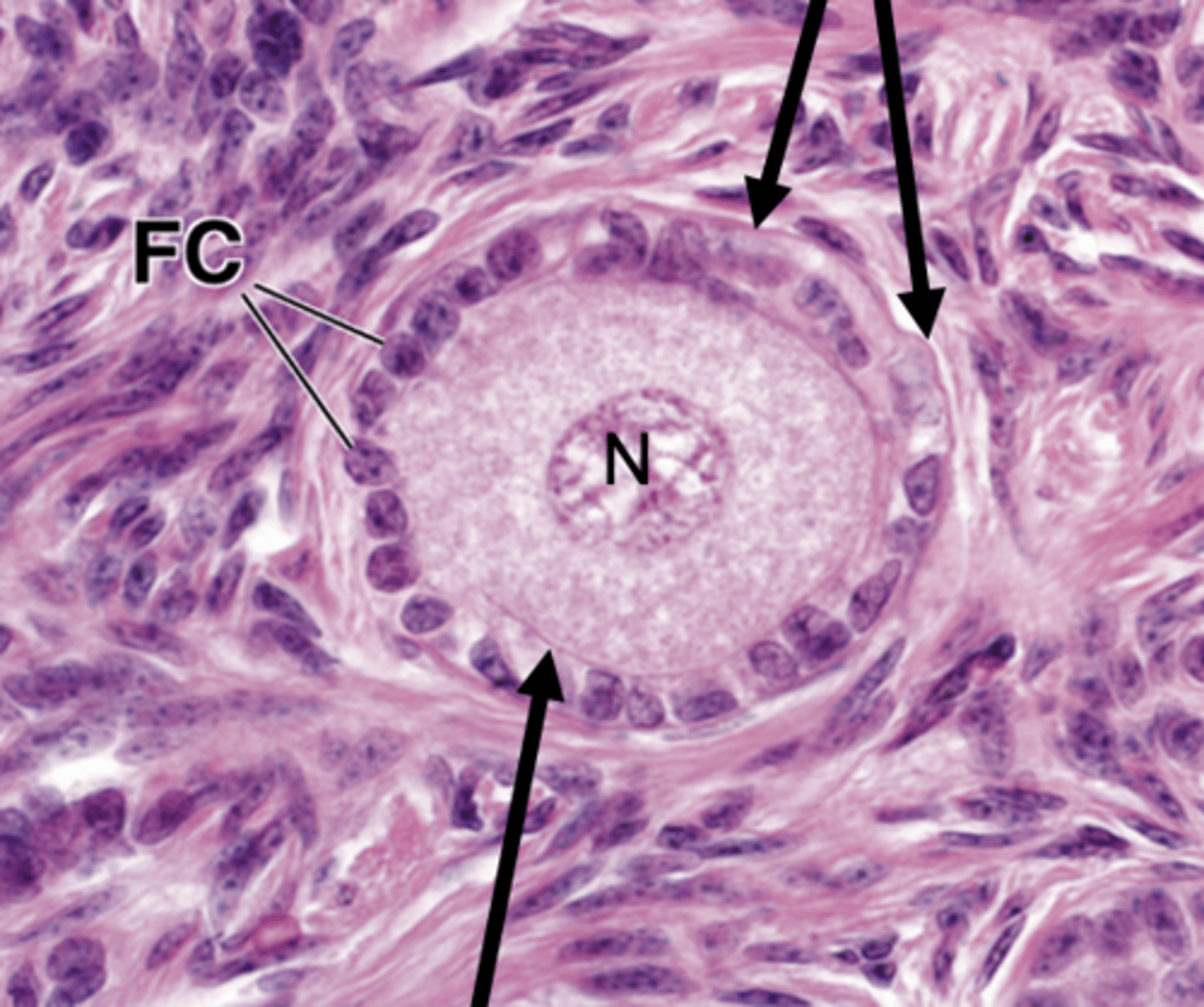
primary (late) follicle
What type of follicle?
- Obvious growth of oocyte
- Several layers of follicular cells - called granulosa cells (GC). Possibly pseudostratified
- Zona pellucida well developed
- Perforated by microvilli from oocyte and granulosa cells
- Gap junctions between microvilli
primary (late) follicle
What type of follicle?
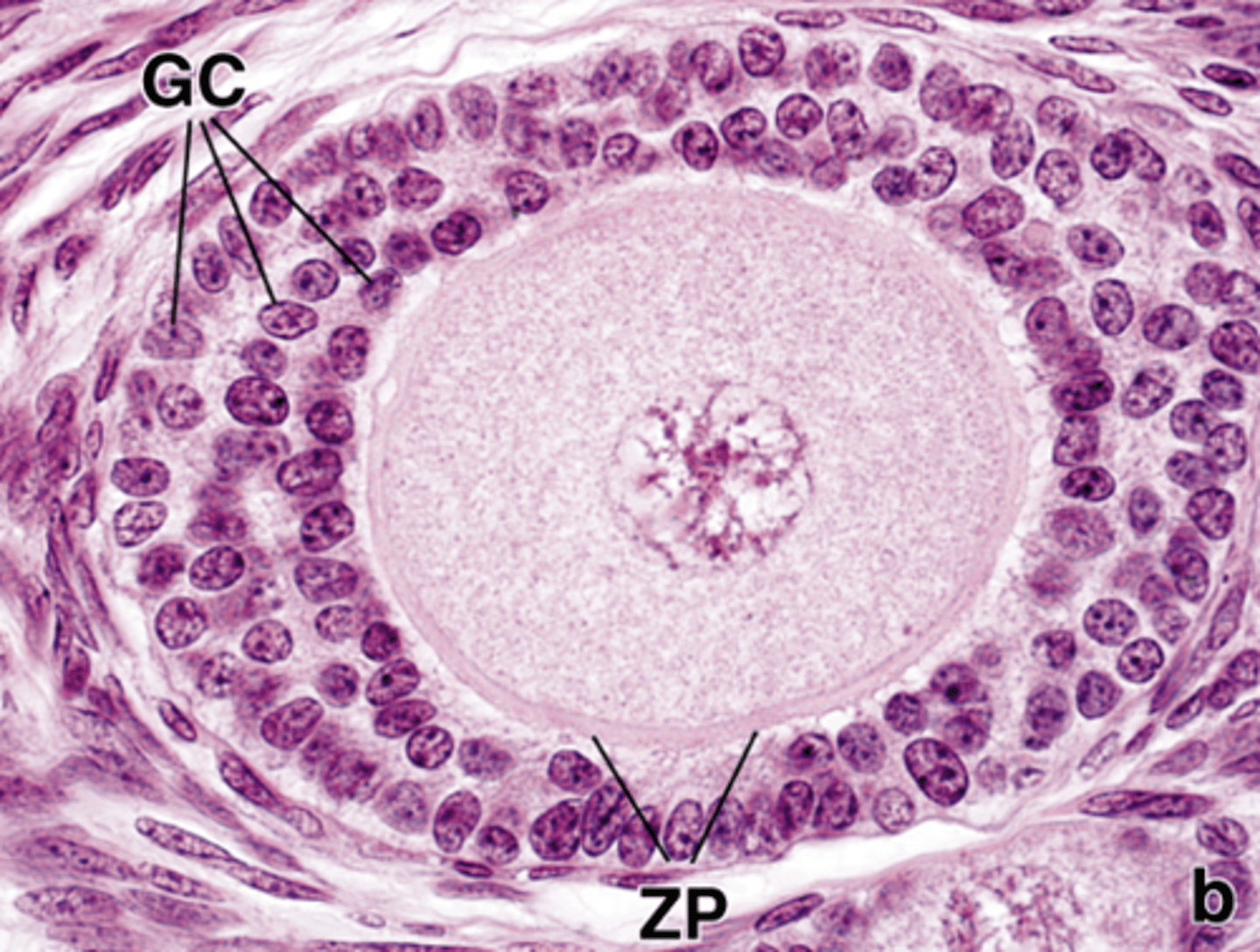
zona pellucida
What structure?
- Meshwork of glycoproteins, including ZP1-3
- ZP3 binds sperm; note perforations for microvilli
secondary (antral)
What type of follicle?
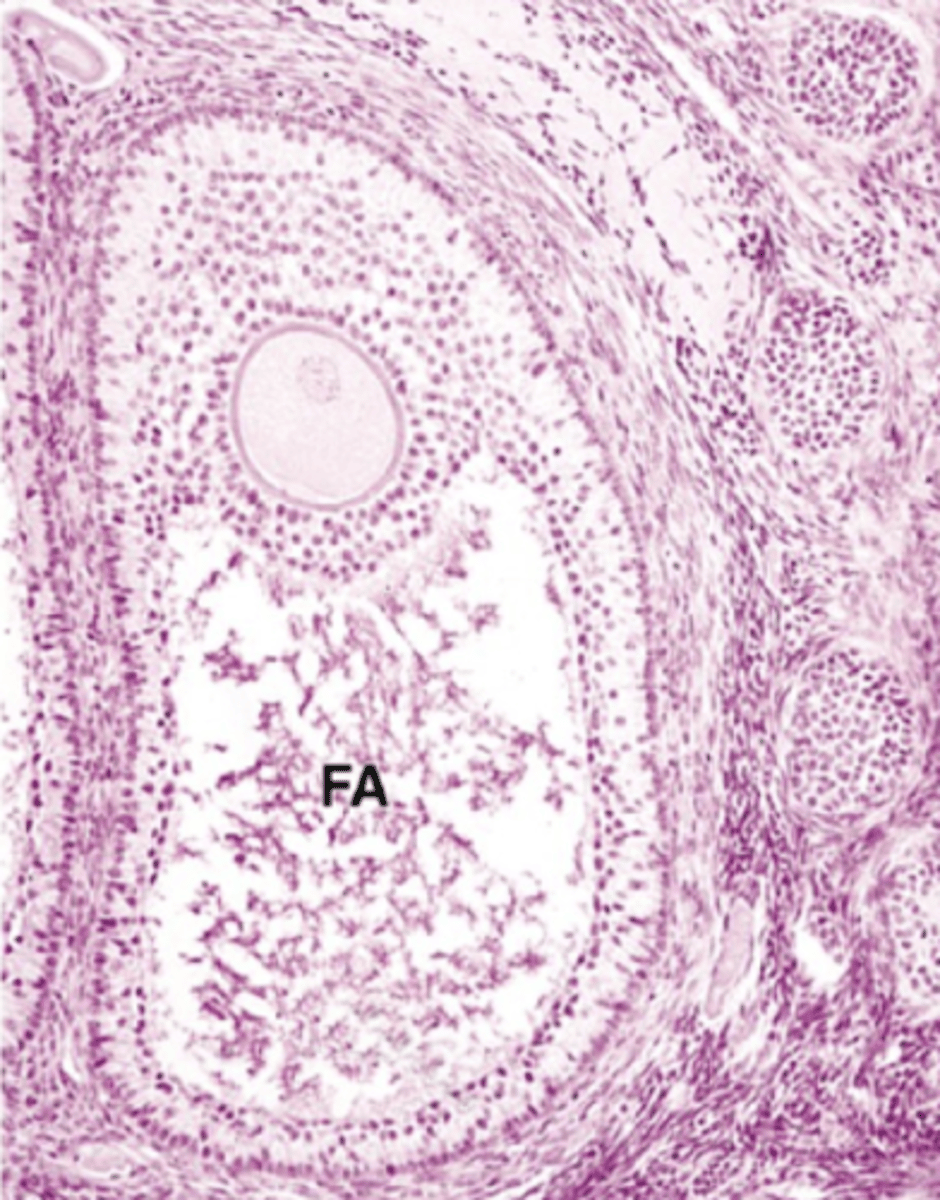
secondary (antral)
What type of follicle?
- Appearance of follicular fluid
- Theca interna (TI) and externa (TE) develop (steroidogenic cells and myofibroblasts, respectively)
secondary (antral)
What type of follicle?
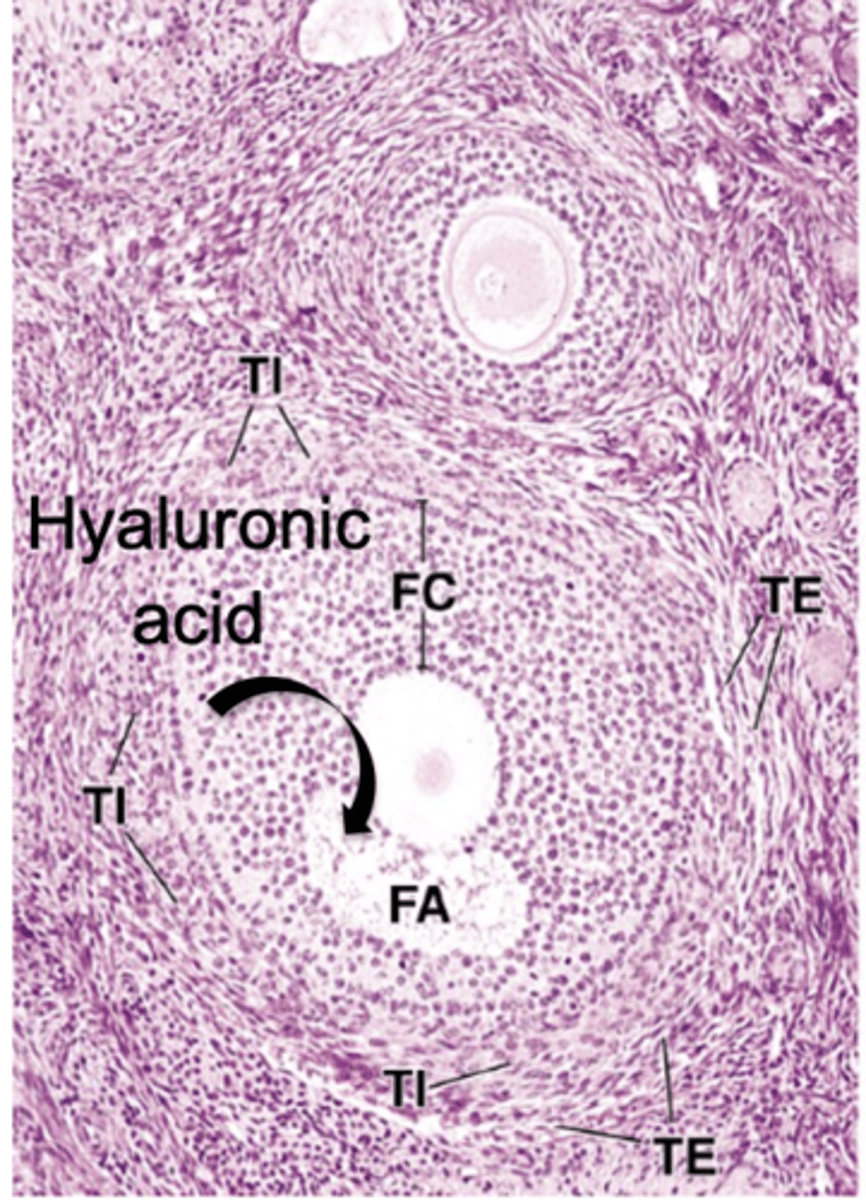
estrogen
What hormone is concentrated in the antrum?
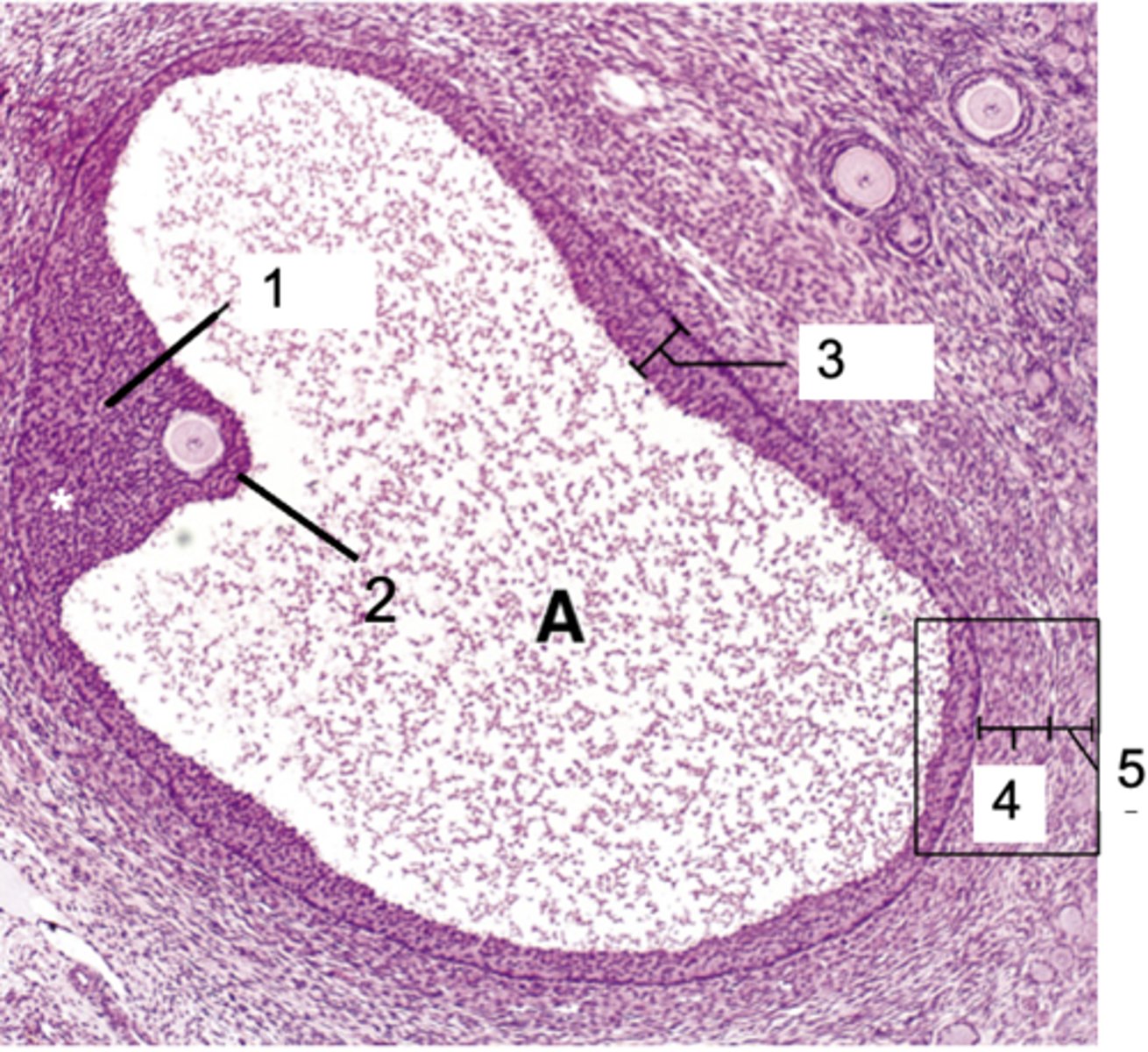
cumulous oophorus
What is 1?
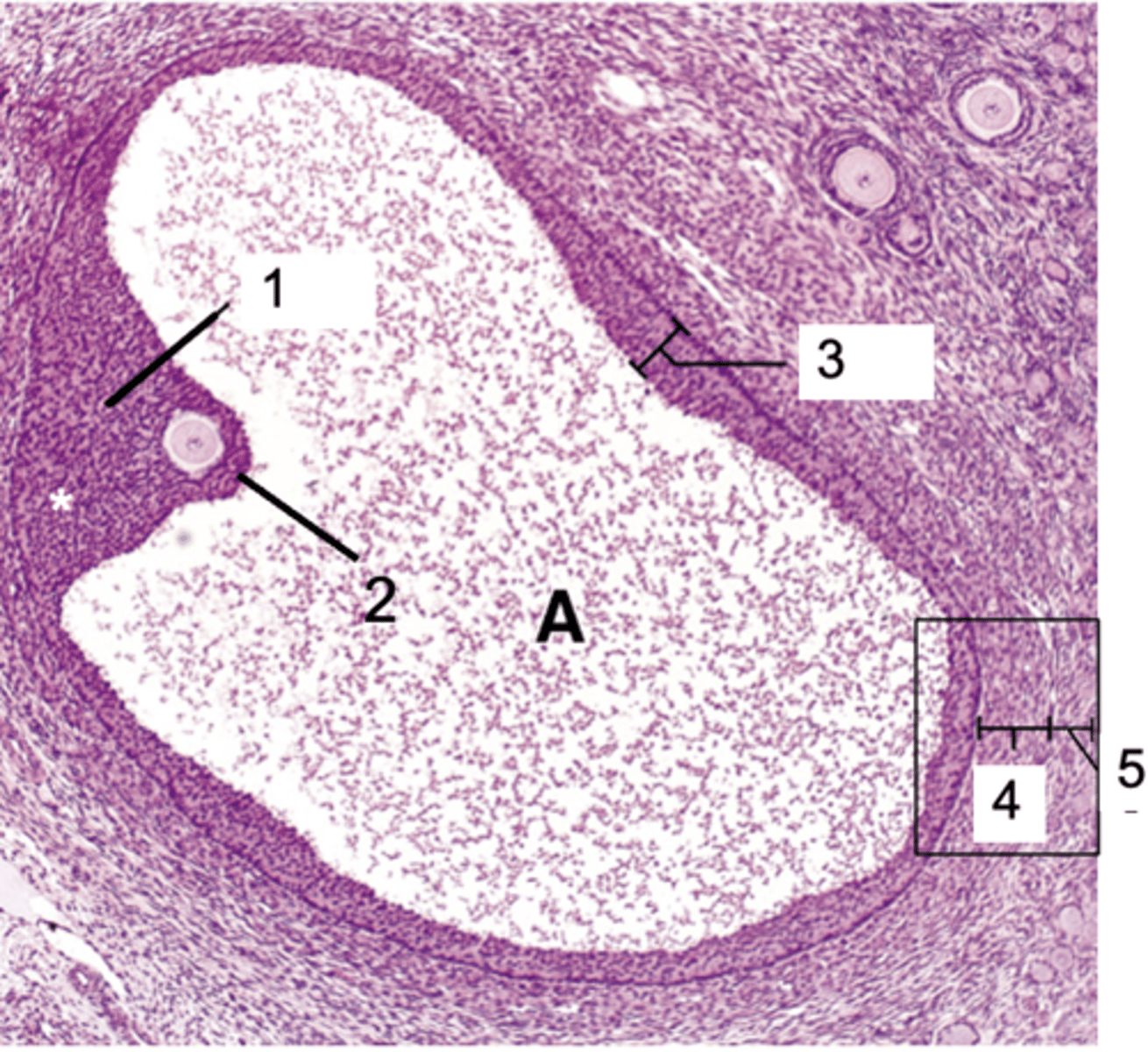
future corona radiata
What is 2?
stratum granulosum
What is 3?
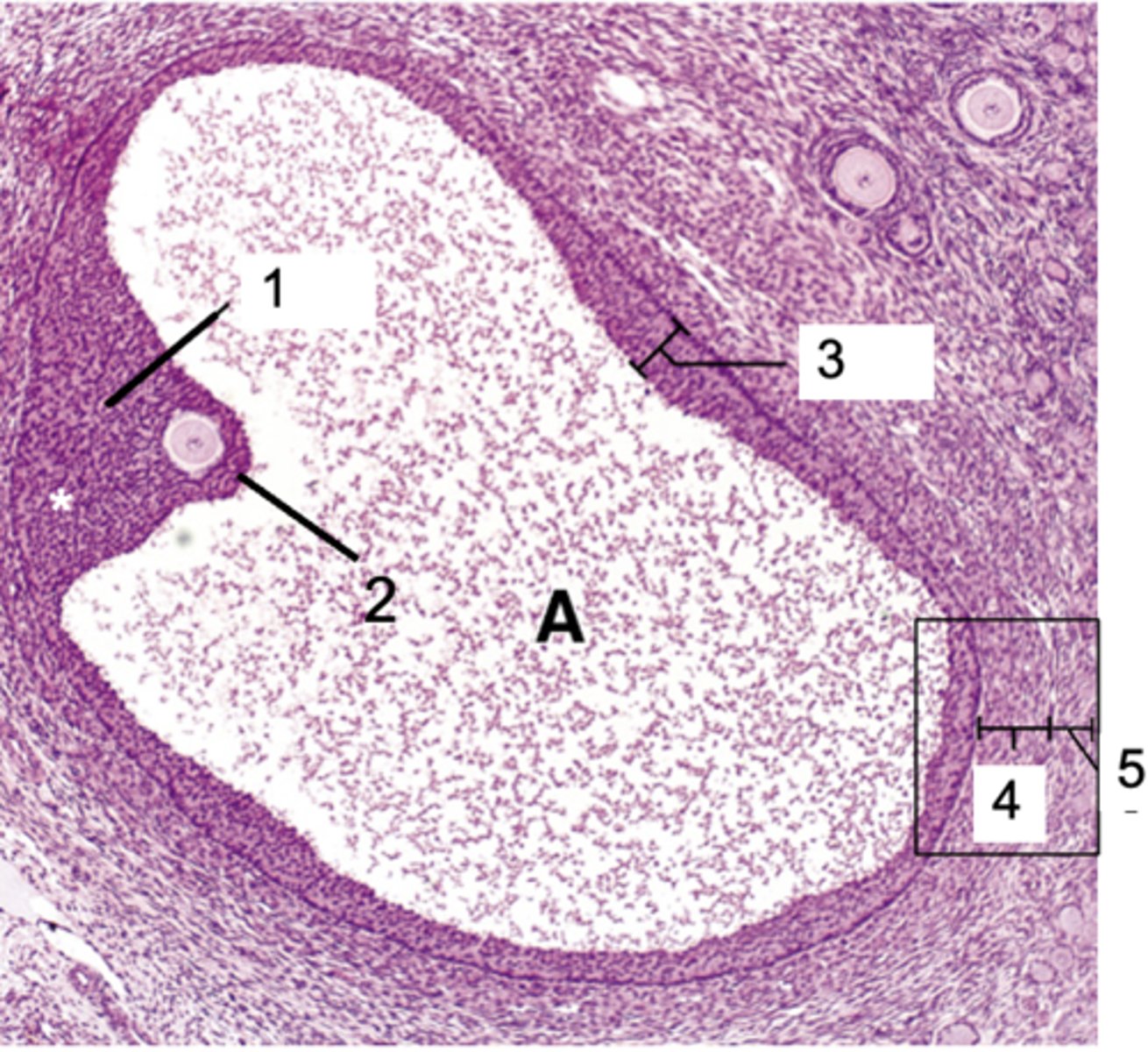
Theca interna (TI)
What is 4?
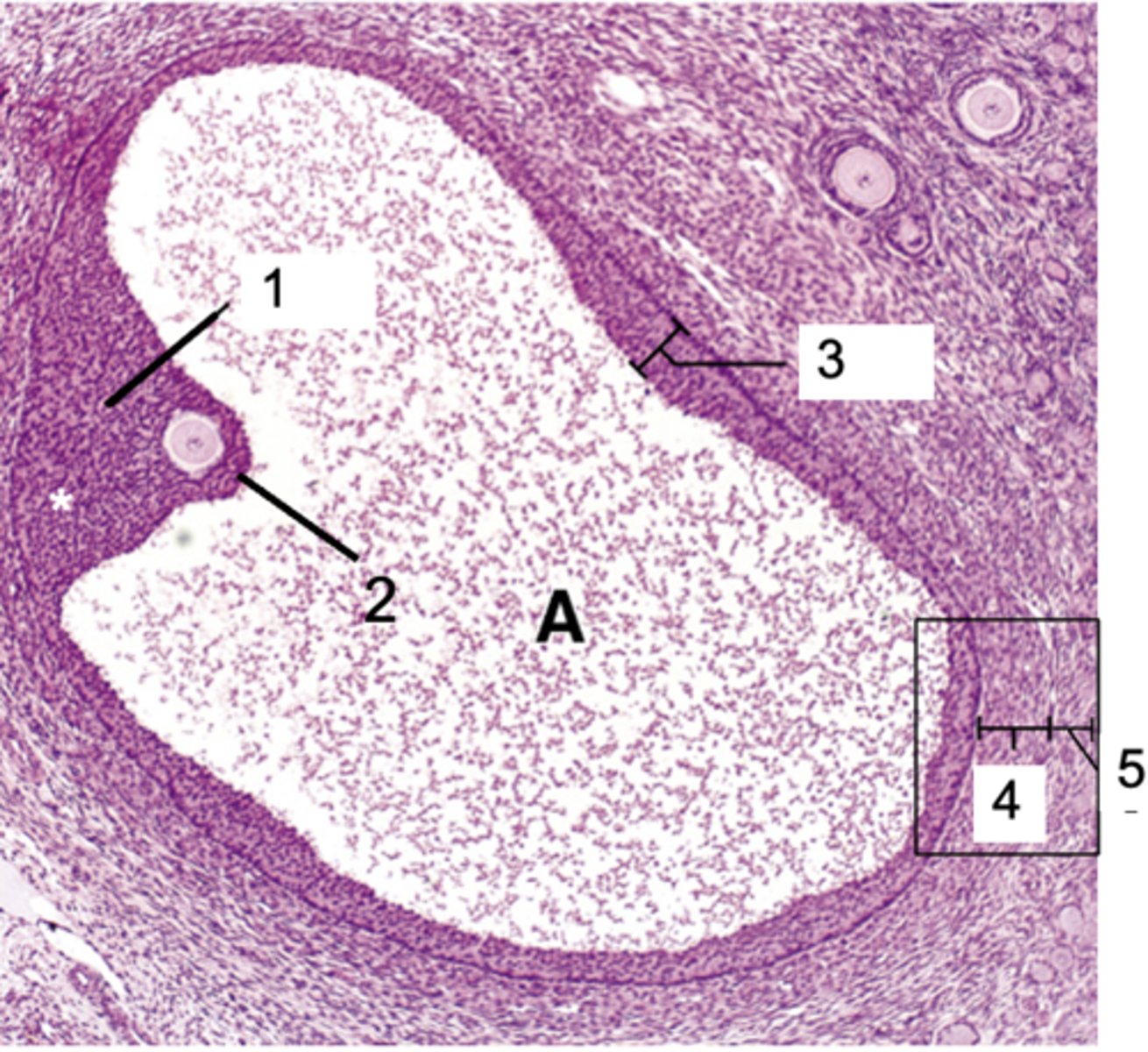
Theca externa (TE)
What is 5?
synthesize androgens (via LH stimulation)
What is the function of the TI?
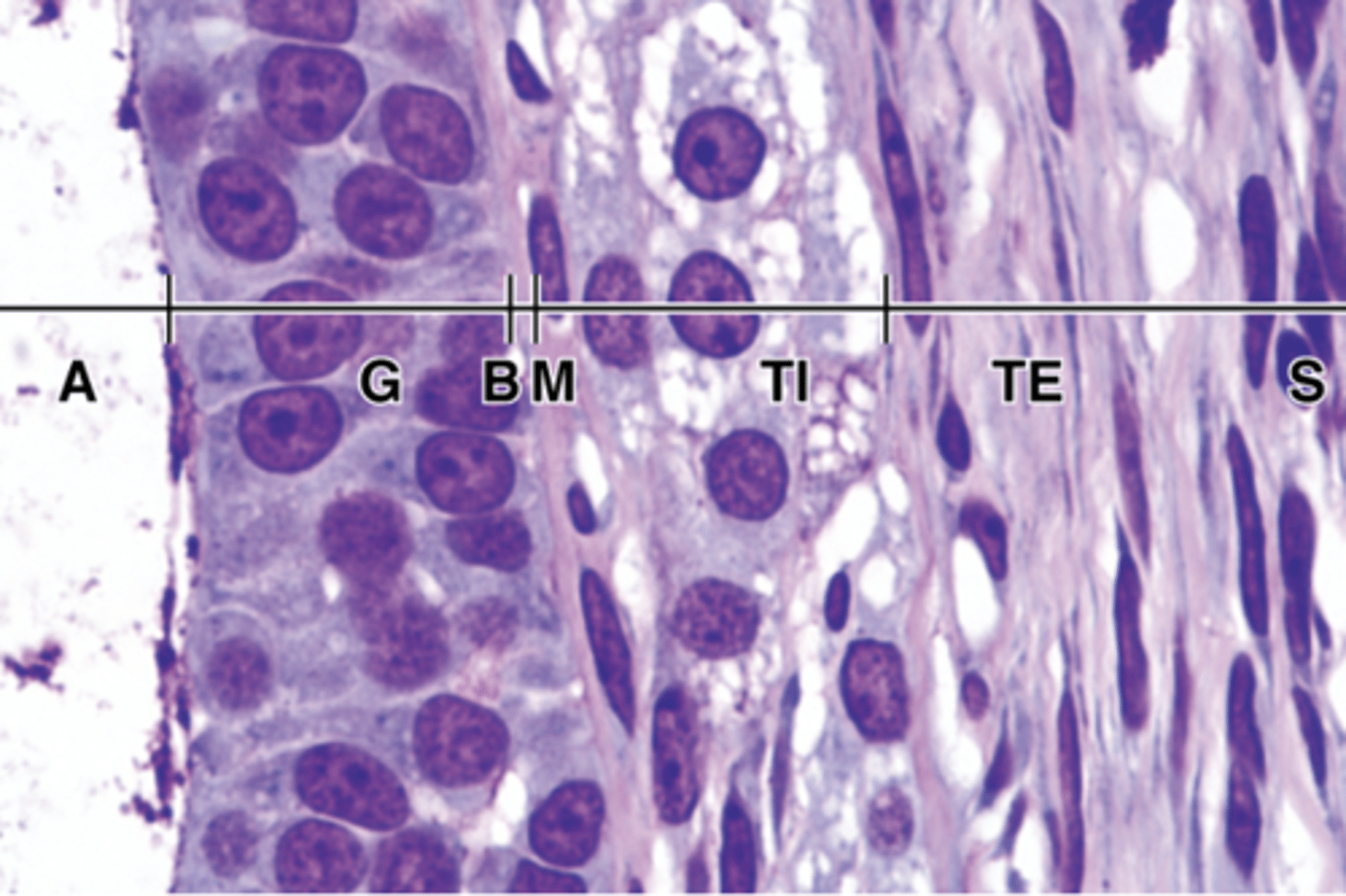
antrum
What is 1?
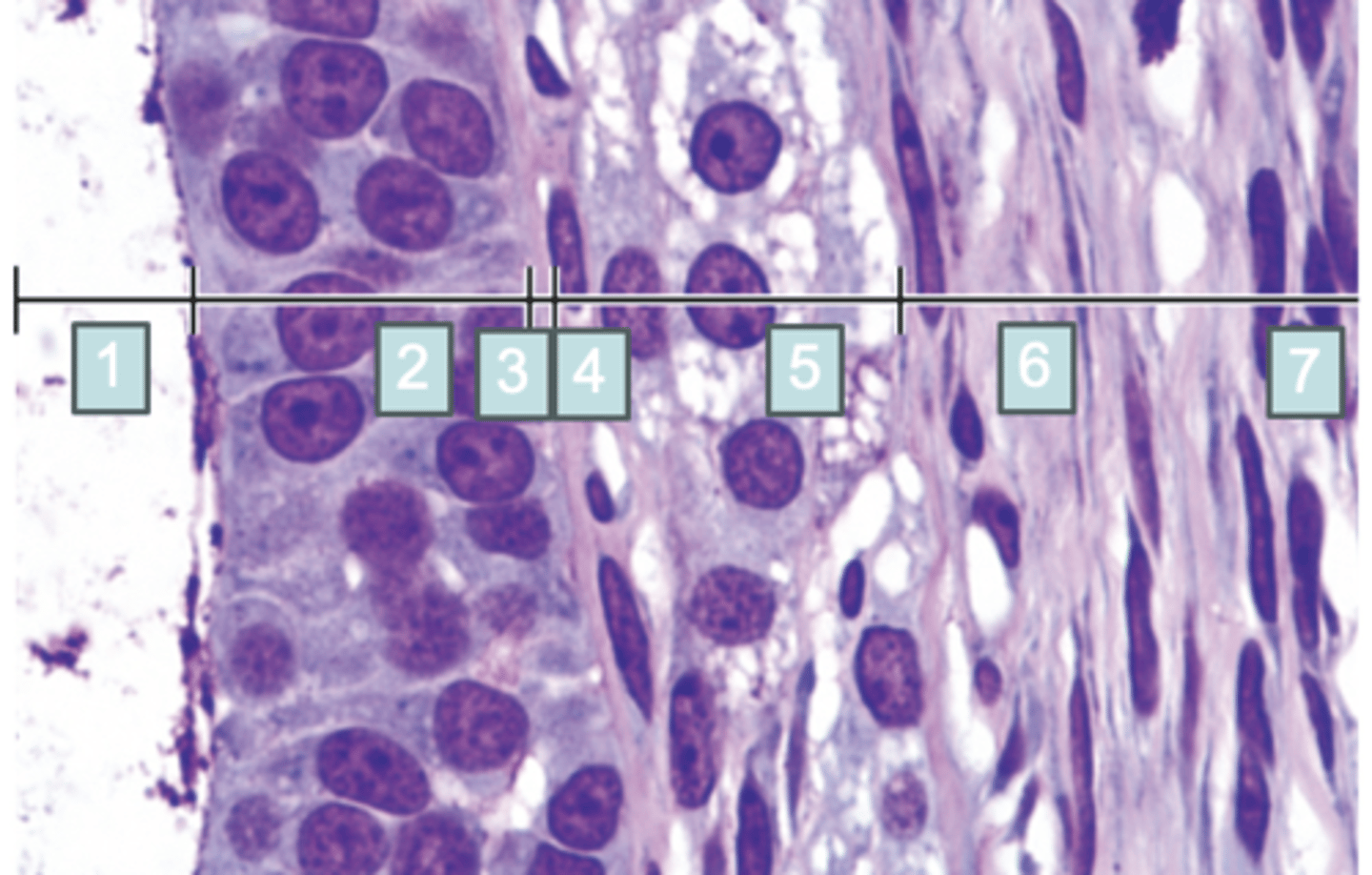
granulosa cells
What is 2?
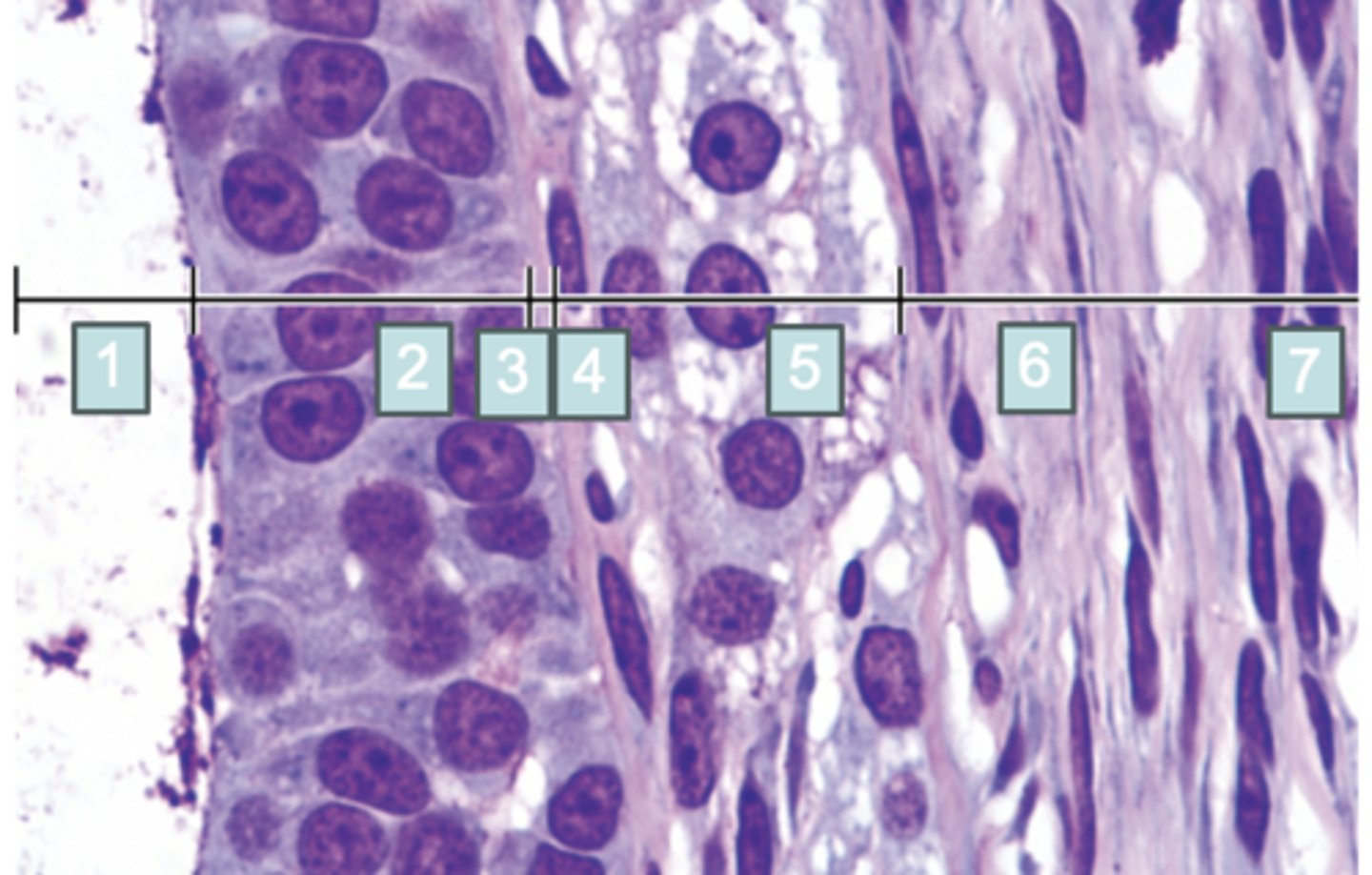
Basement membrane (BM)
What is 3-4?
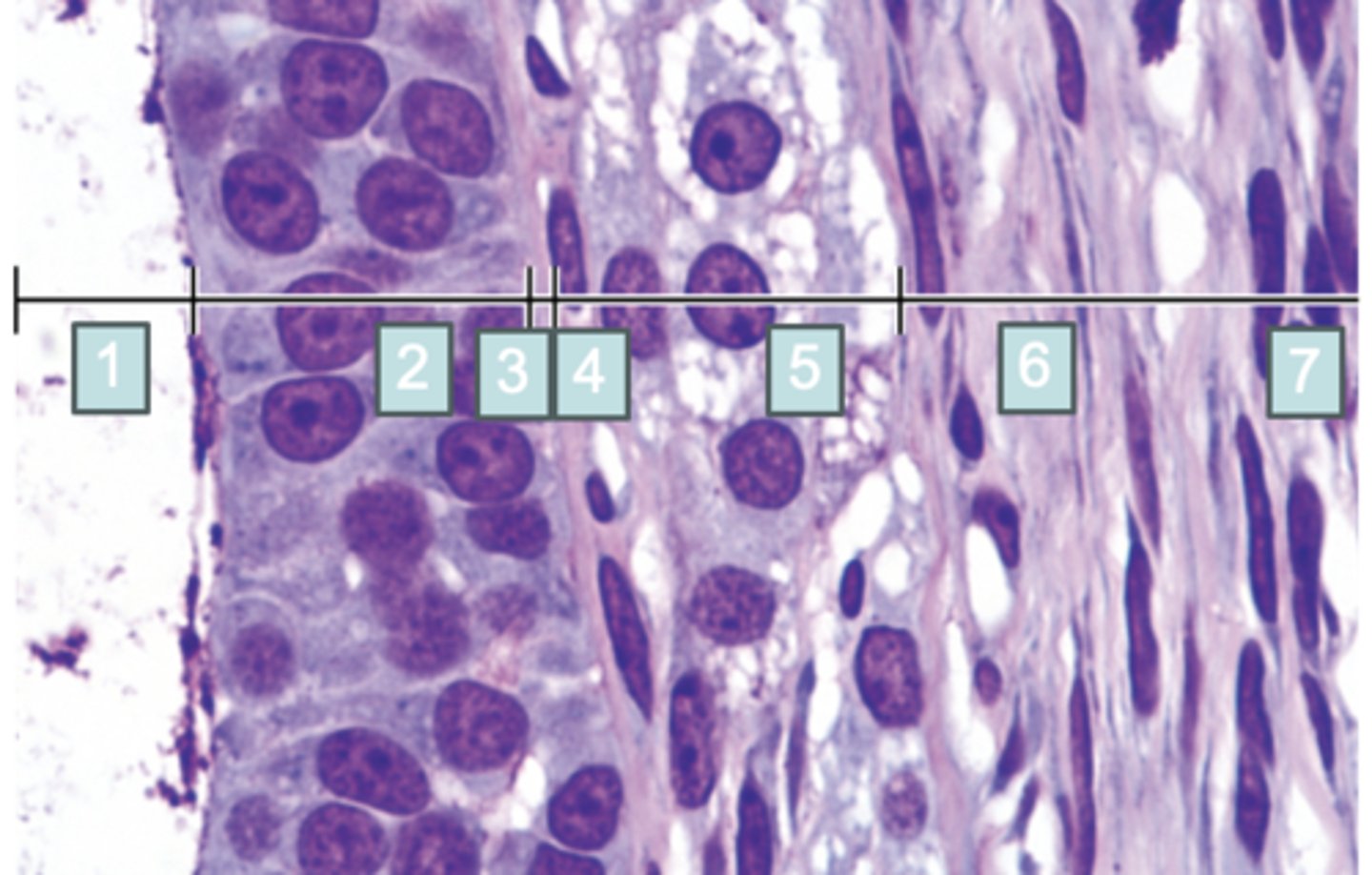
Theca interna (TI)
What is 5?
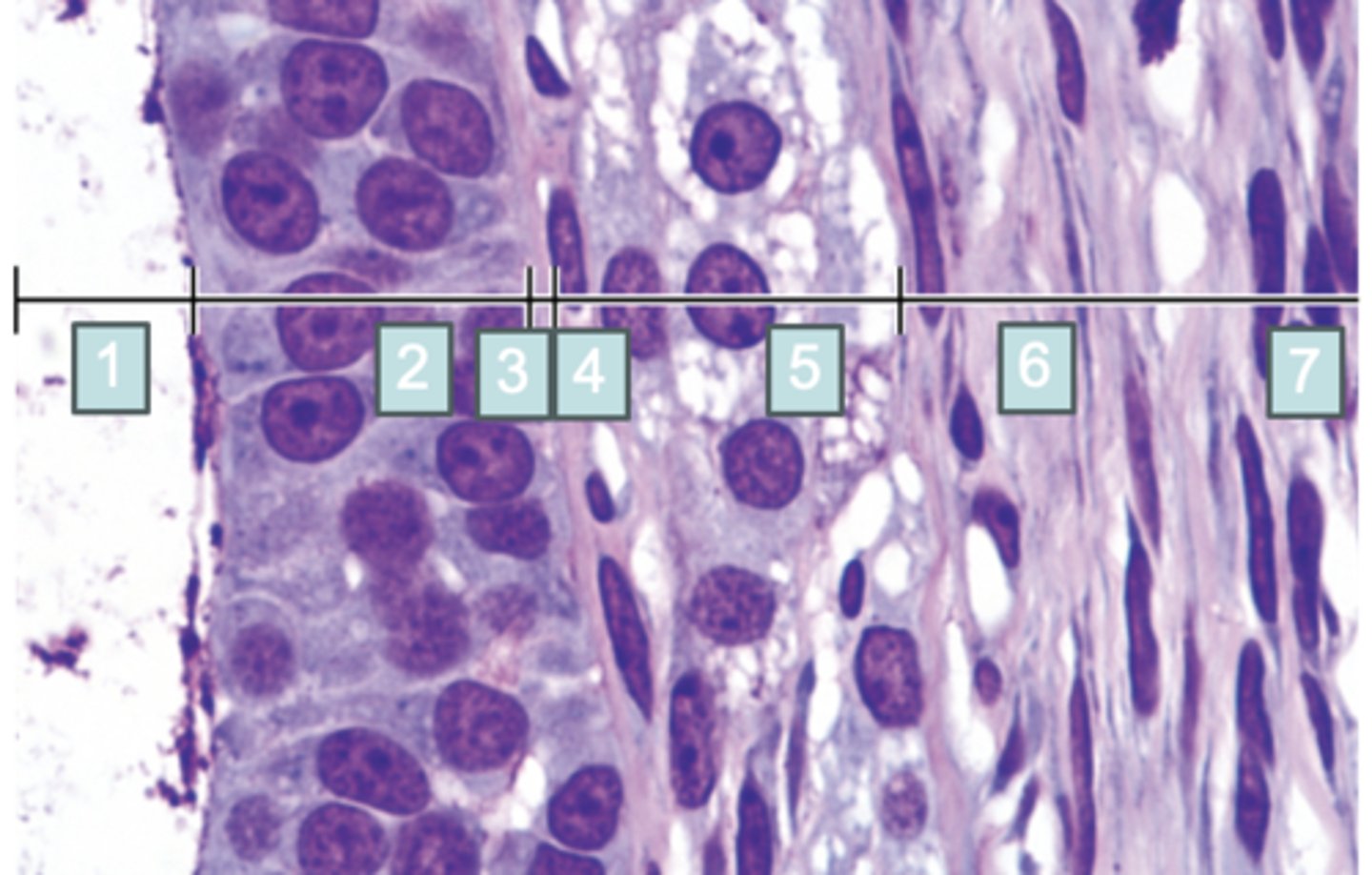
Theca externa (TE)
What is 6?
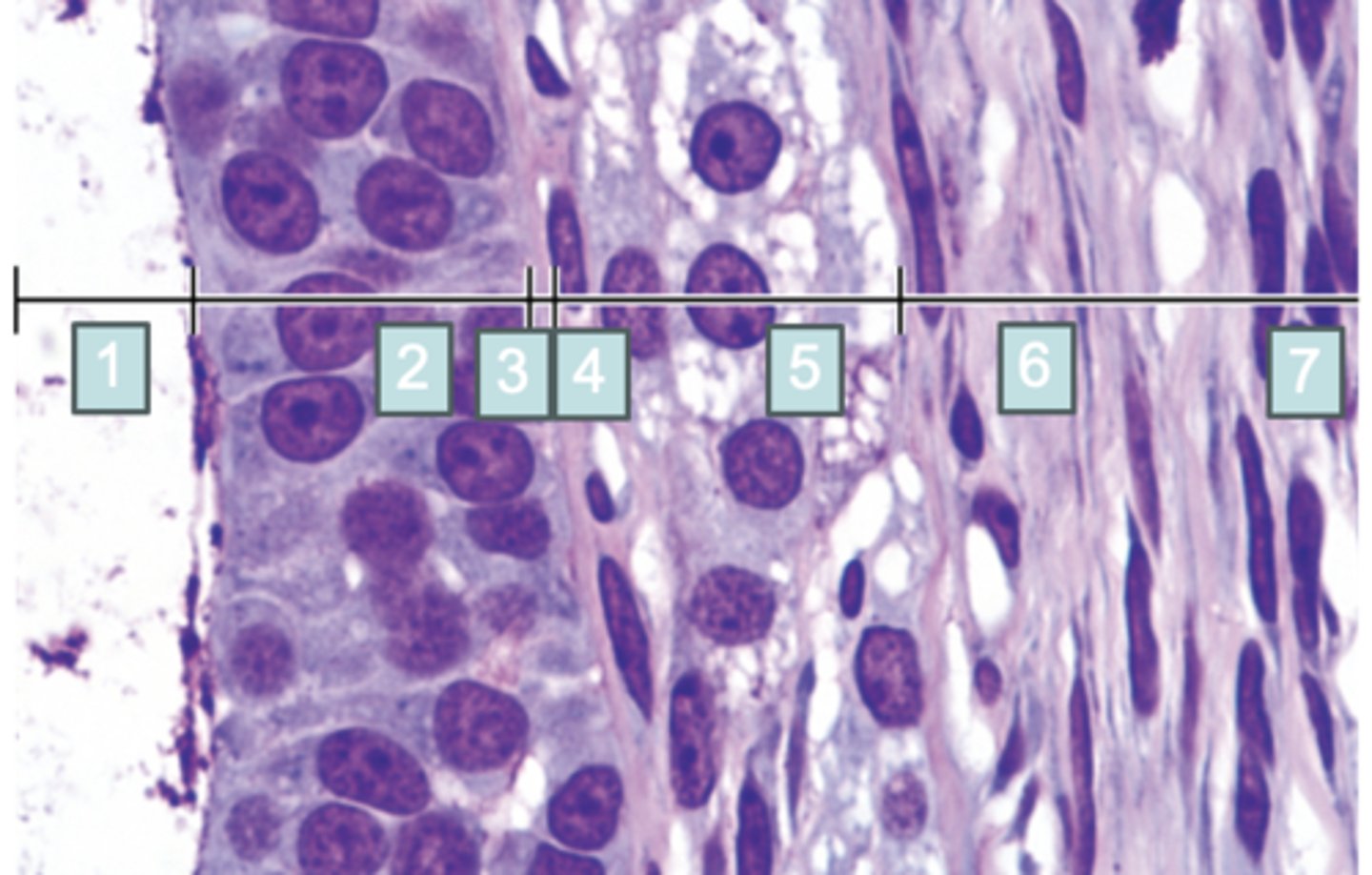
stroma
What is 7?
androgen
Theca interna (TI) cells release what to granulosa cells?
aromatase
What do granulosa cells release to aid in estrogen release?
- Theca interna (TI)
- Granulosa
What two cells work together to release estrogen?
- Endometrial gland proliferation
- LH surge
What do rising estrogen levels stimulate?
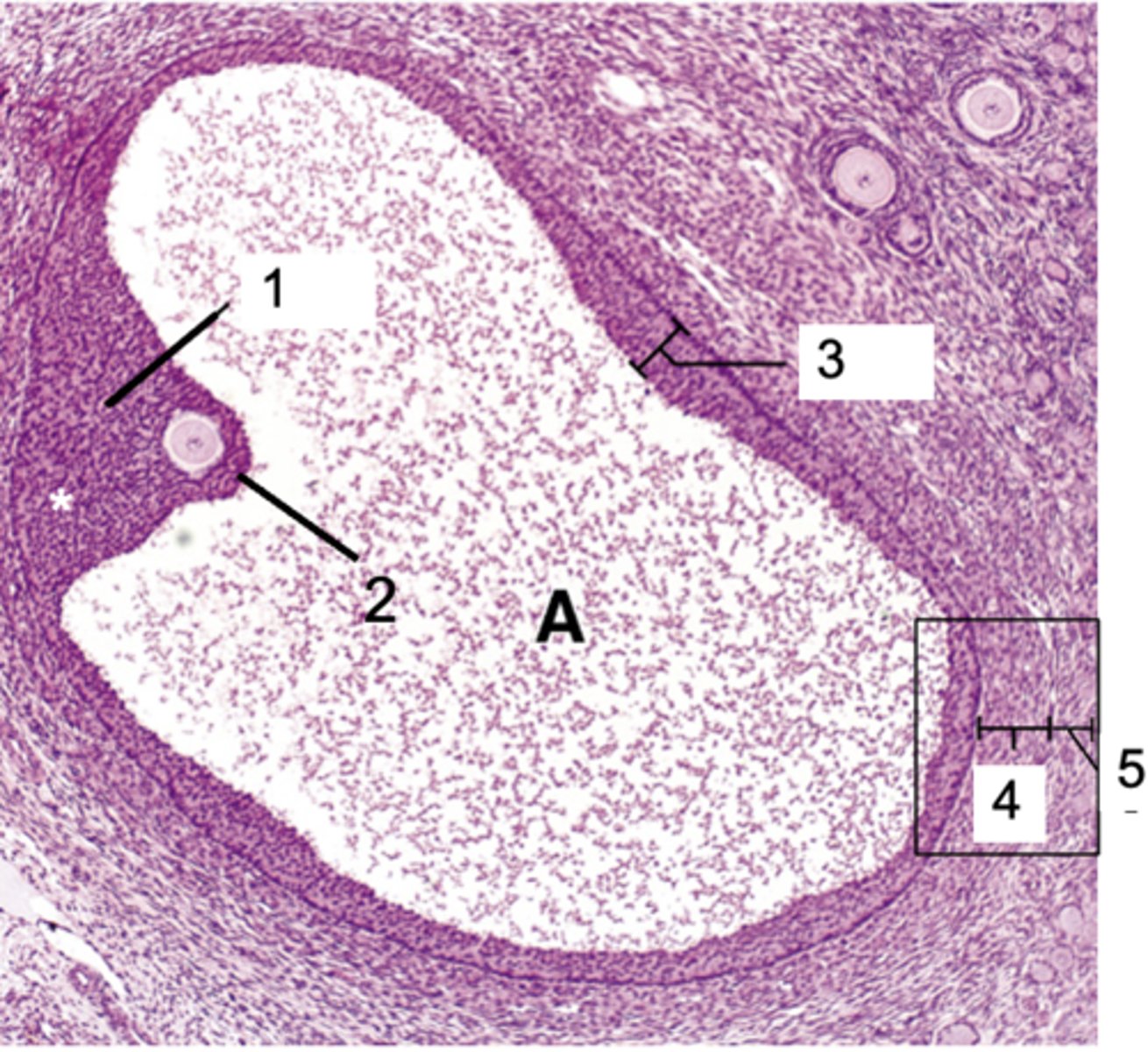
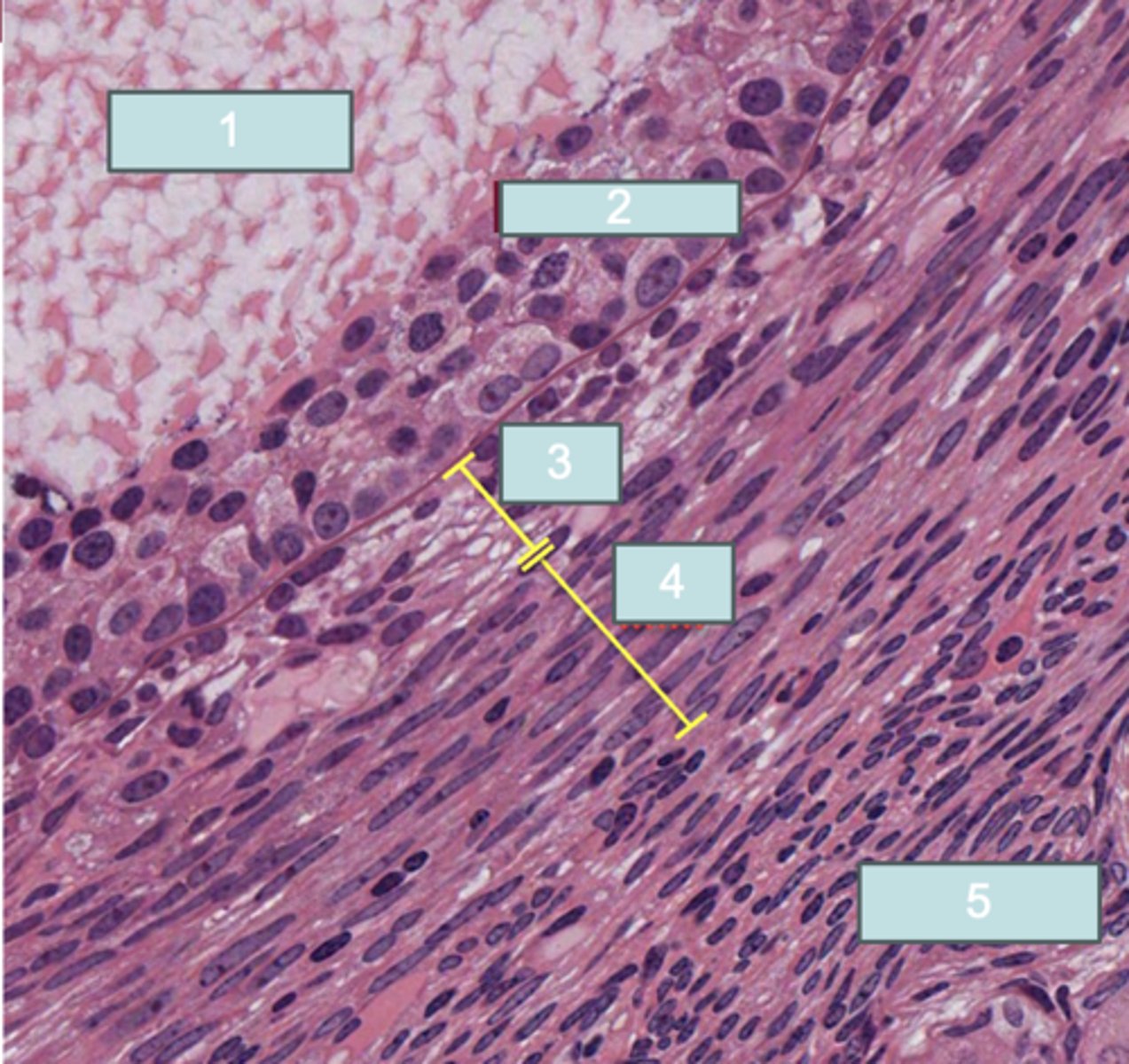
antrum
What is 1?
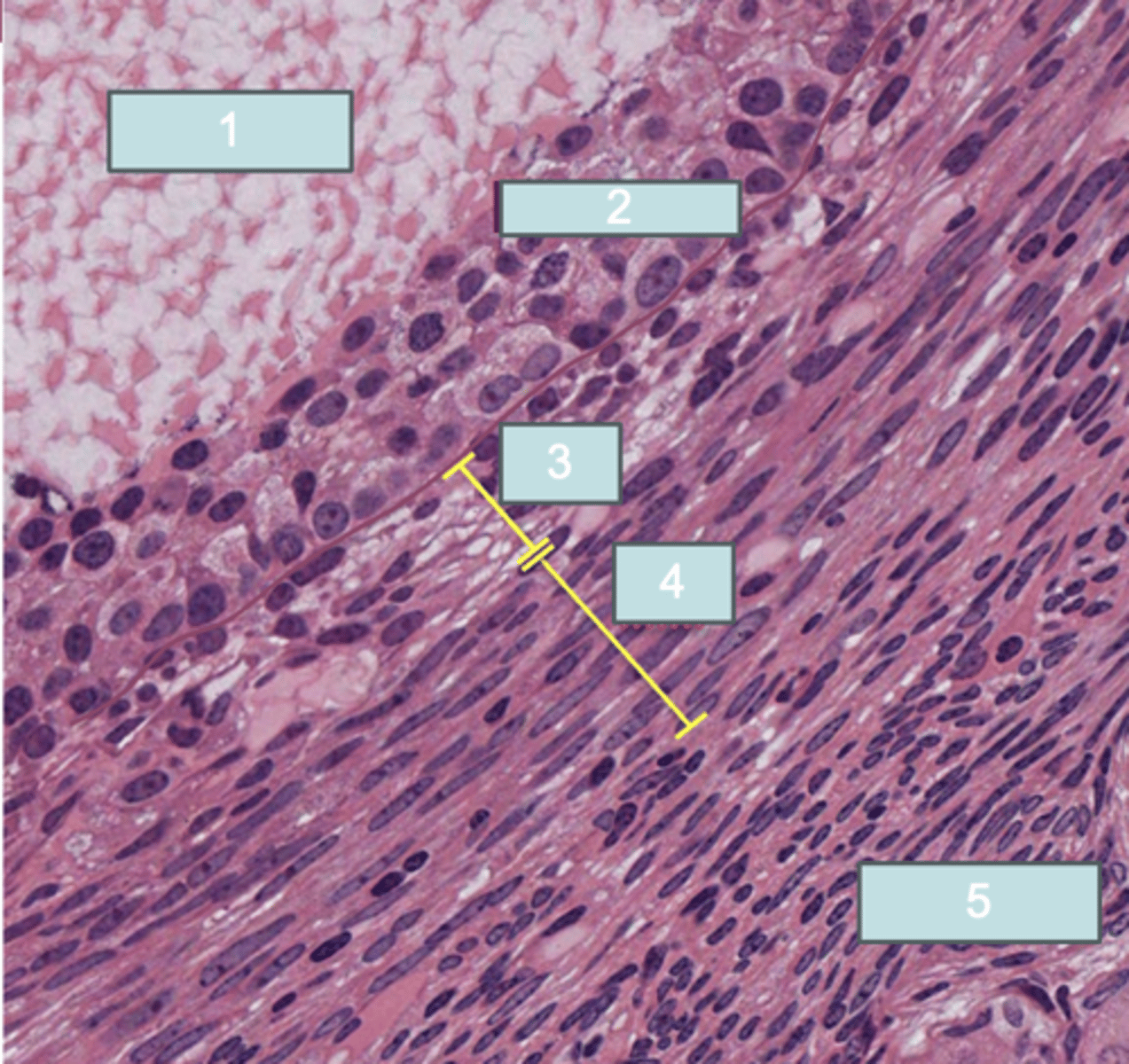
granulosa cells
What is 2?
Theca interna (TI)
What is 3?
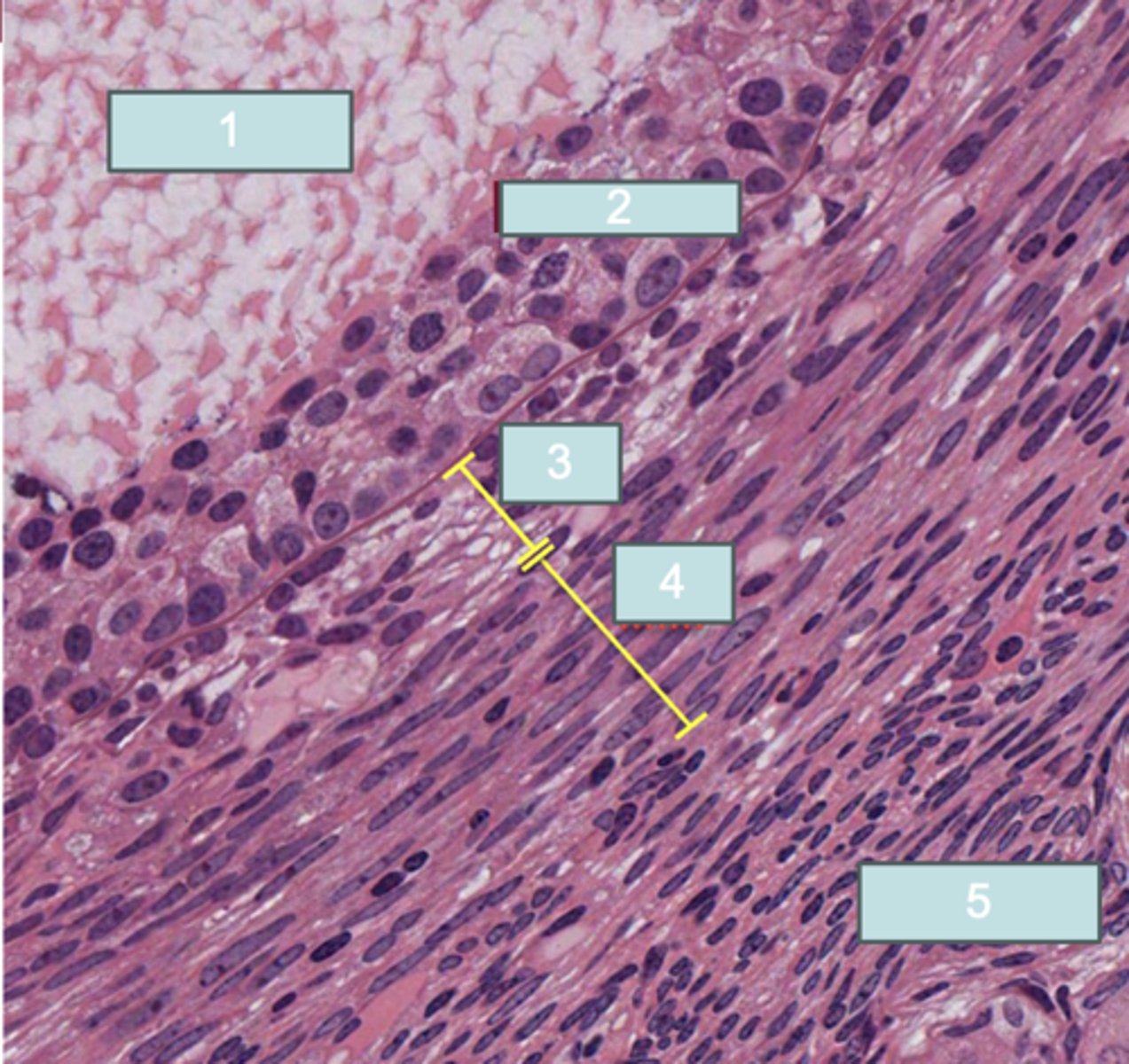
Theca externa (TE)
What is 4?
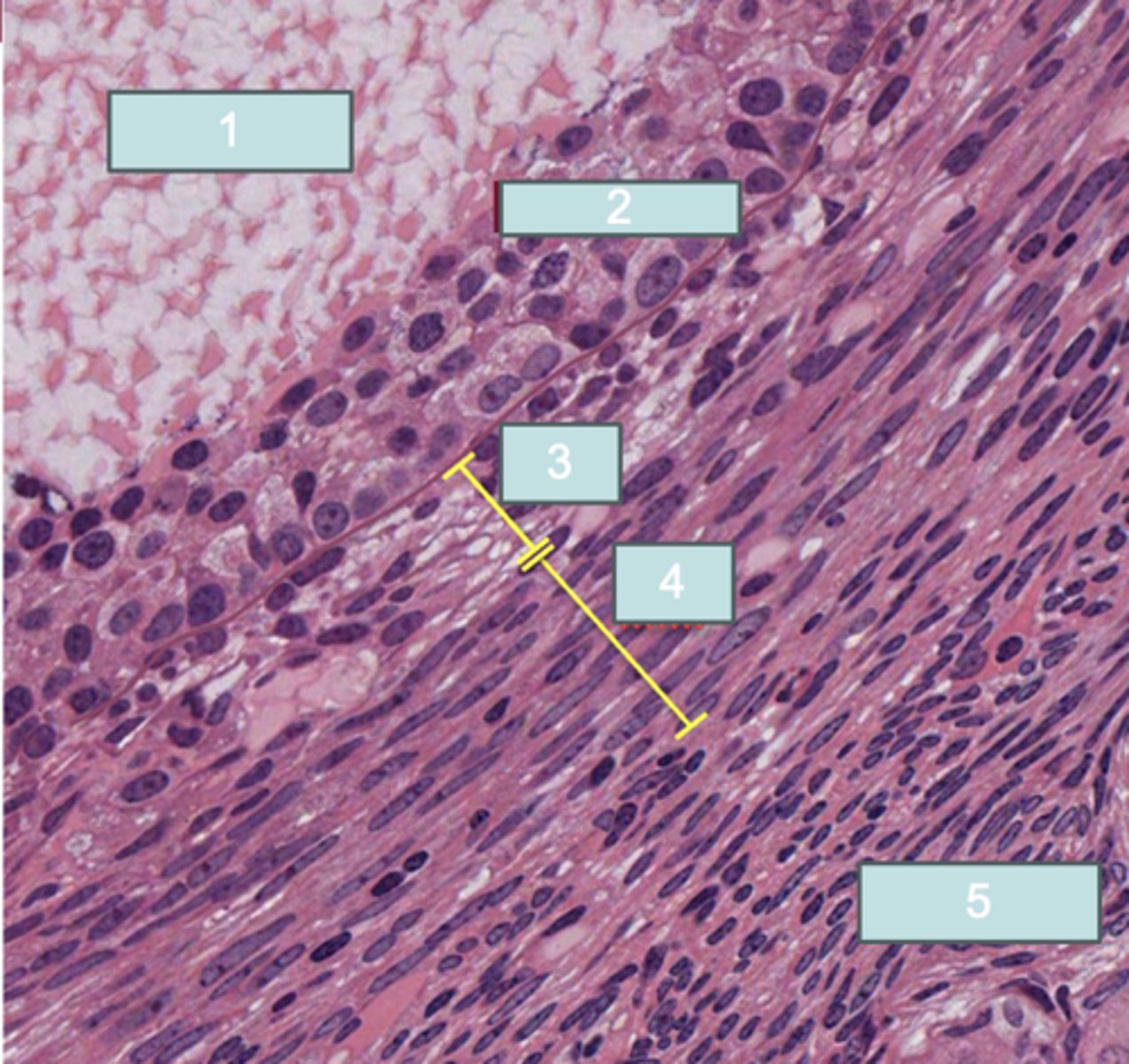
stroma
What is 5?
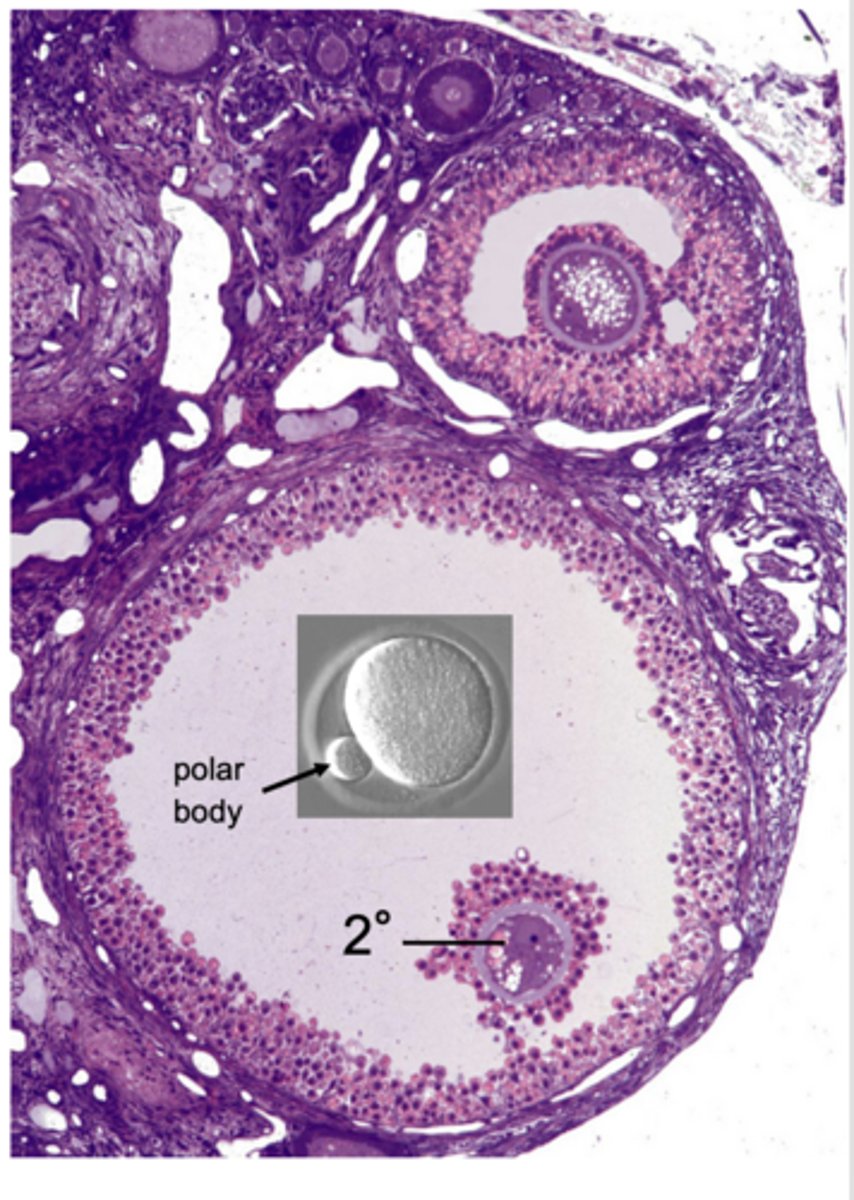
mature follicle
What type of follicle?
- Secondary (2°) oocyte (meiosis I [reduction division] has completed)
- Unequal cytokinesis gives rise to first polar body
- Still 2n DNA - will become 1n at the completion of meiosis II*)
Mature vesicular follicle (Graafian follicle)
What does this show?
after LH surge
When does ovulation occur?
Theca externa myofibroblasts
Contraction of what expel the ovum during ovulation?
germinal epithelium
Constant rupture and repair of what may predispose epithelial tumor development?
corpus luteum
What structure?
- Breakdown of follicle basement membrane
- Ingrowth of blood vessels
- Proliferation and infolding of GCs and theca interna (TI) (appears "brain-like")
- Differentiation of theca interna cells and granulosa cells into:
- - Theca lutein cells
- - Granulosa lutein cells
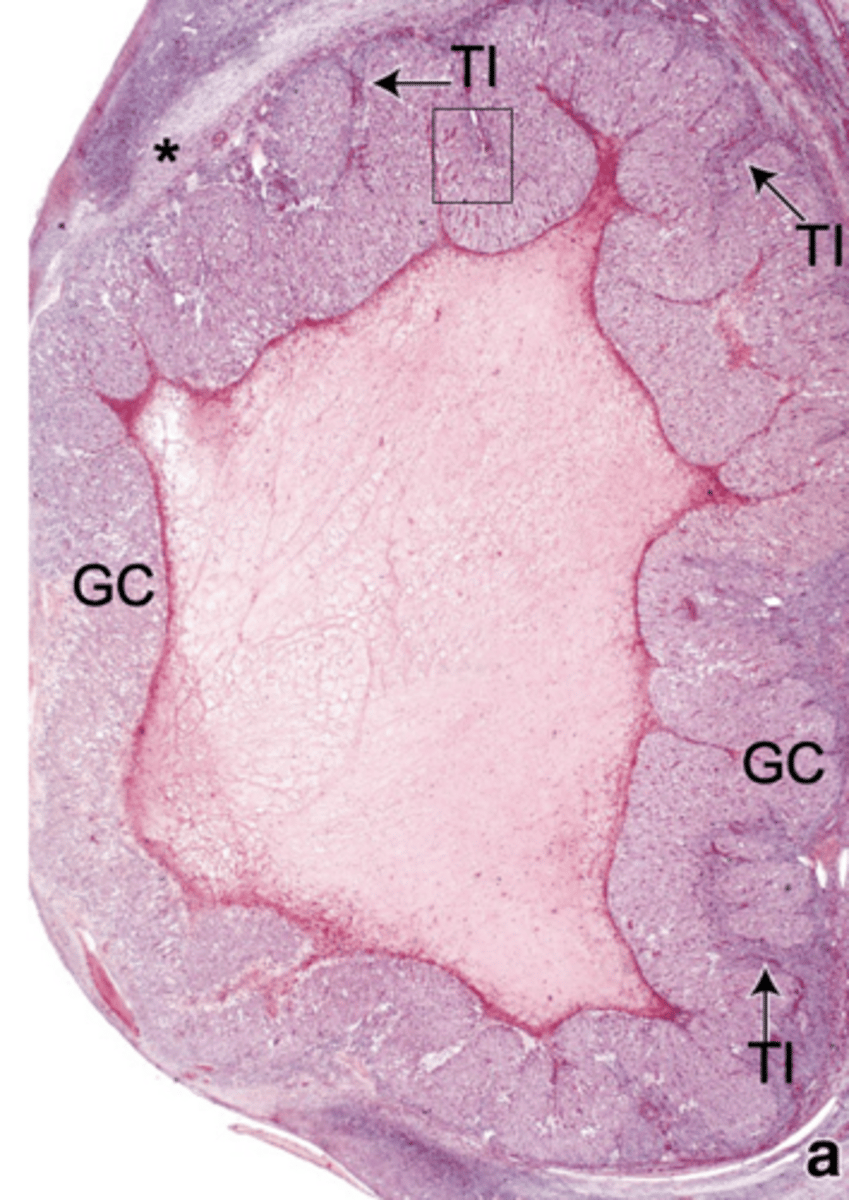
Theca interna (TI)
ID #1
Granulosa cells
ID #2
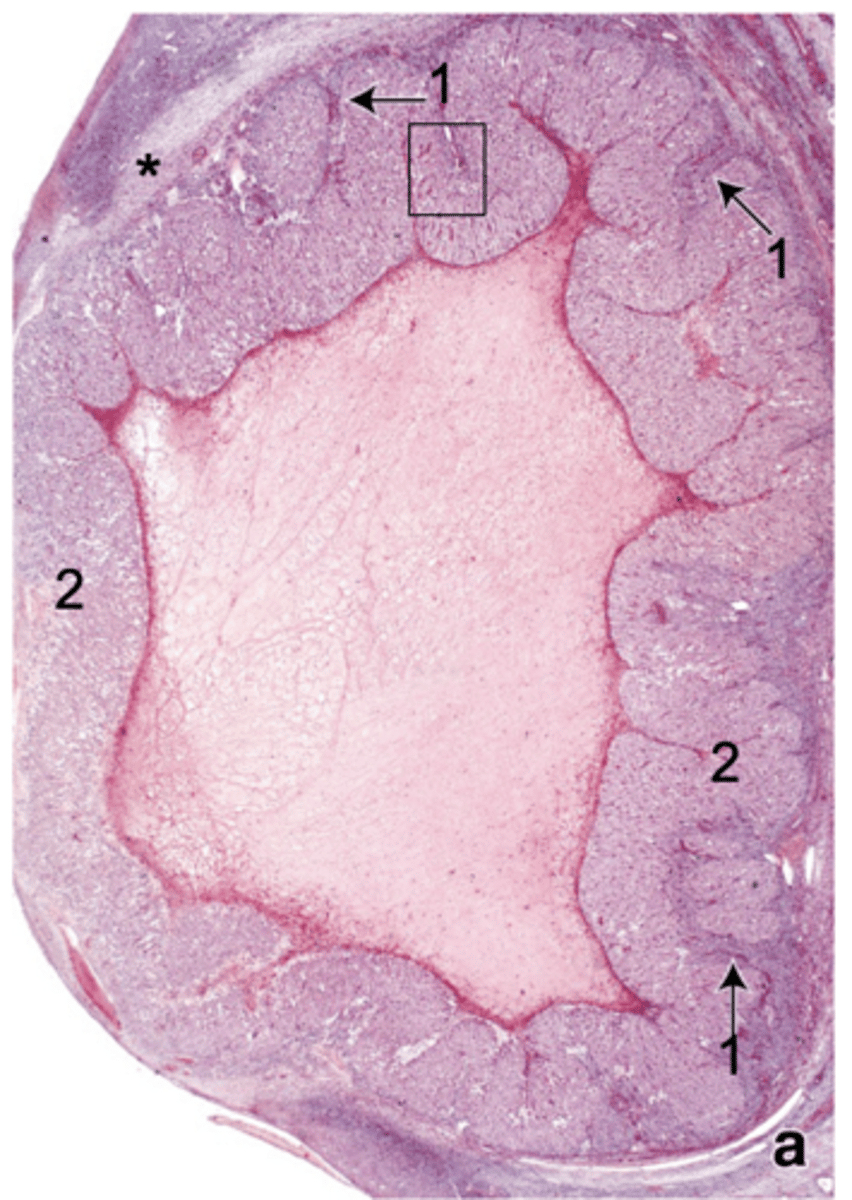
LH
What hormone stimulates theca lutein cells and granulosa lutein cells?
Once corpus luteum ruptures
When does the ingrowth of blood vessels occur?
corpus luteum
What structure is this?
granulosa lutein cells
What corpus luteum cell type is A ?
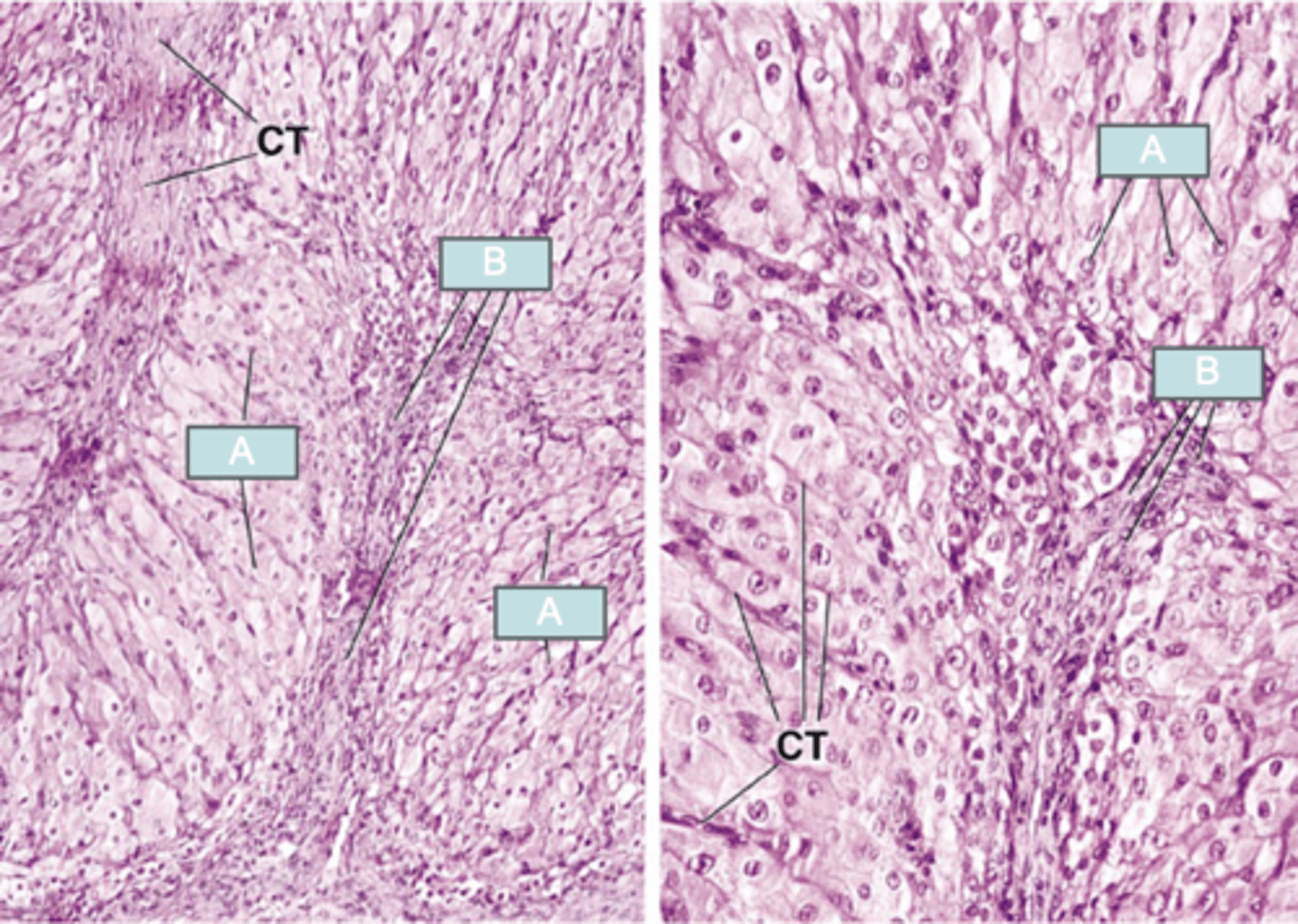
theca lutein cells
What corpus luteum cell type is B?
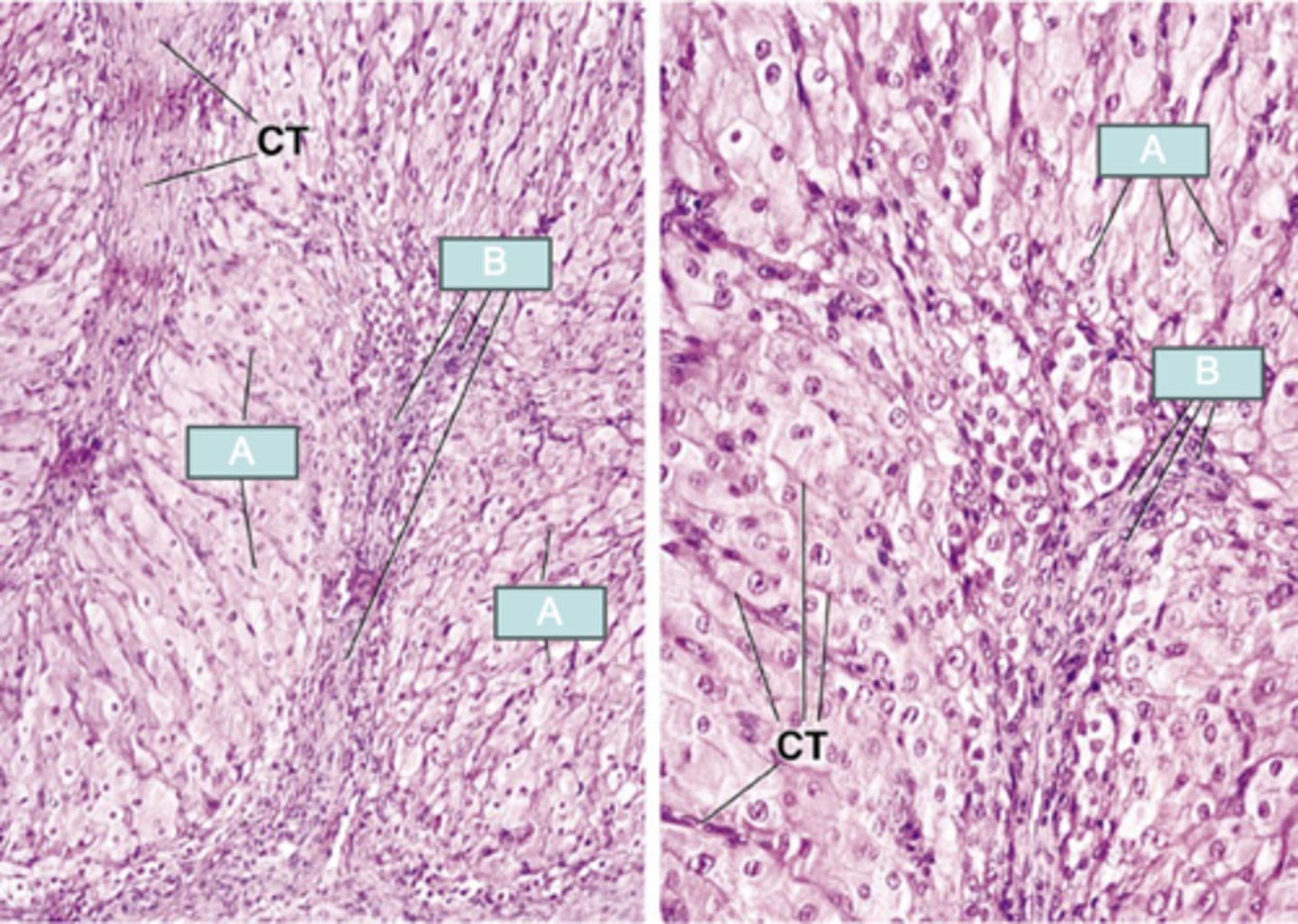
Endometrial
Rising progesterone levels will stimulate what gland secretion?
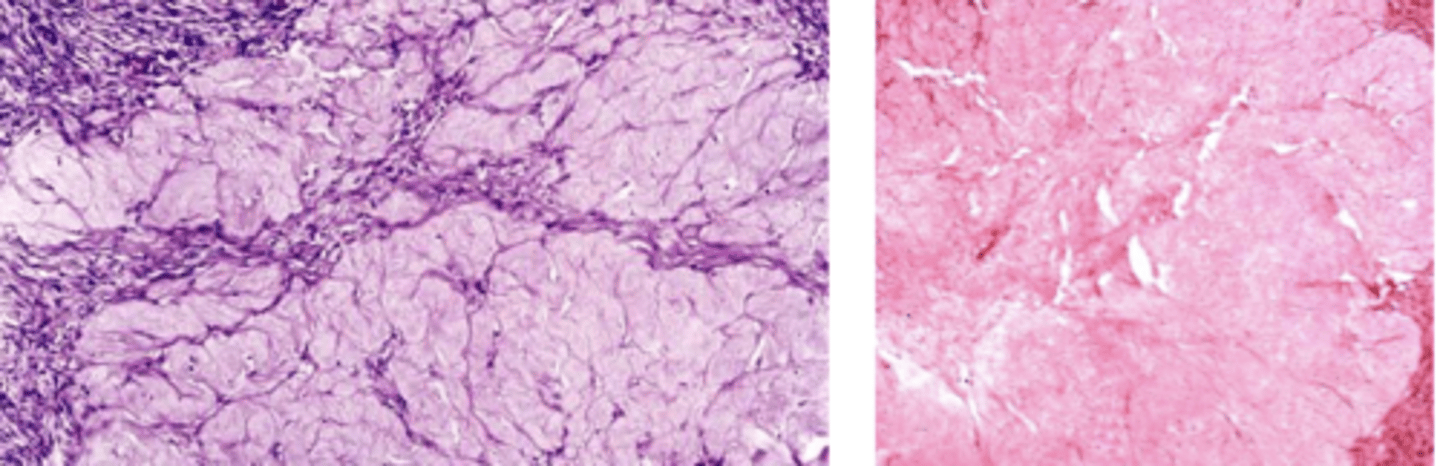
corpus albicans
What type of cell?
- Form each cycle and following pregnancy
- After ~10d degeneration leads to drop in progesterone
- Corpus luteum cells die & replaced by collagenous scar
- Few cells (thus homogeneous eosinophilia)
- Appears "cloud-like"
Corpus luteum
If pregnancy occurs, what will persist ~6 months due to placental chorionic gonadotropin. The continued ____________ progesterone secretion will maintain the uterine lining.
corpus albicans
What cell type?
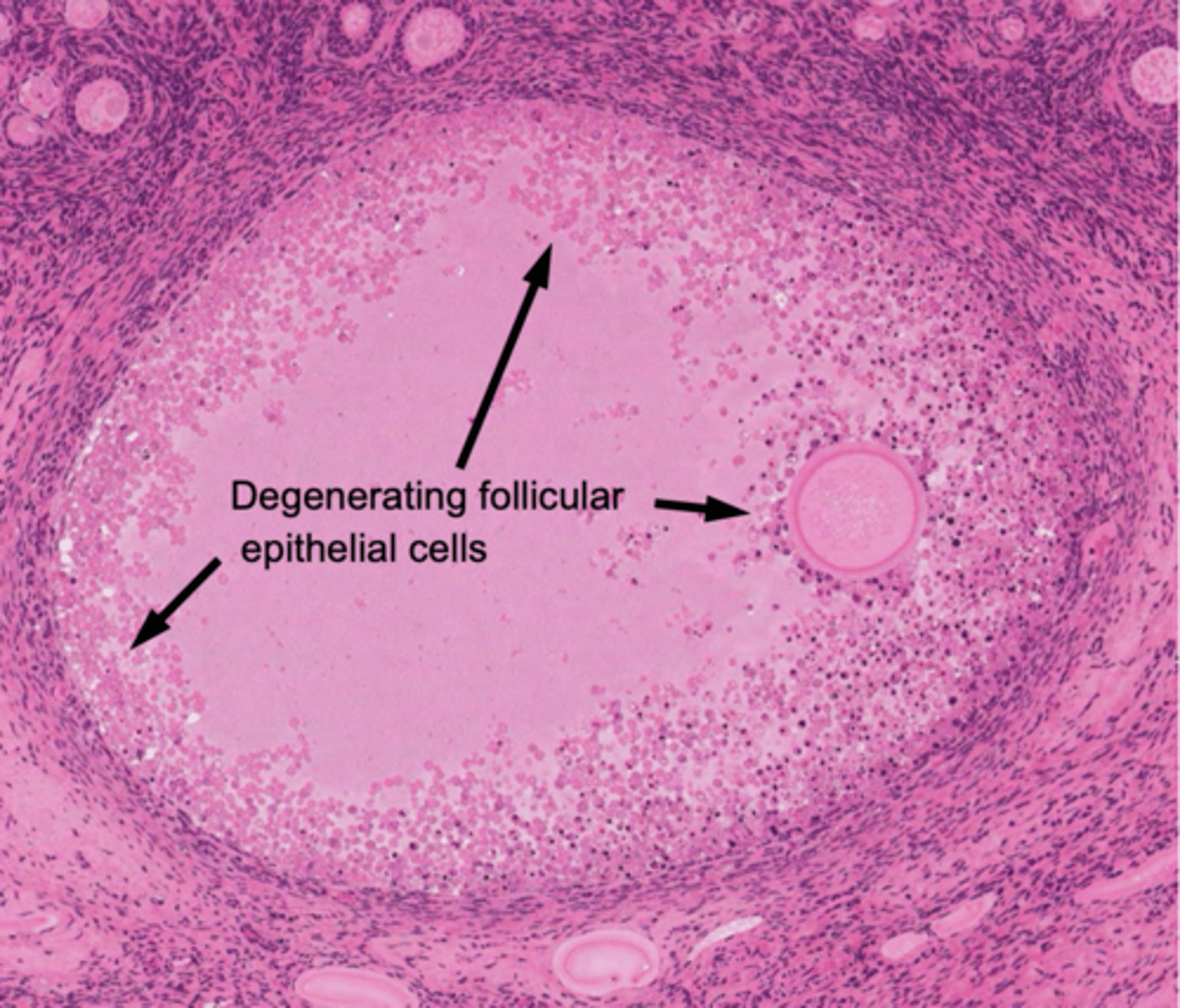
follicular atresia
What is death and resorption of the follicle?
Follicular atresia
What has the following characteristics:
- Can occur at any stage of folliculogenesis
- 98% of follicles will become ________
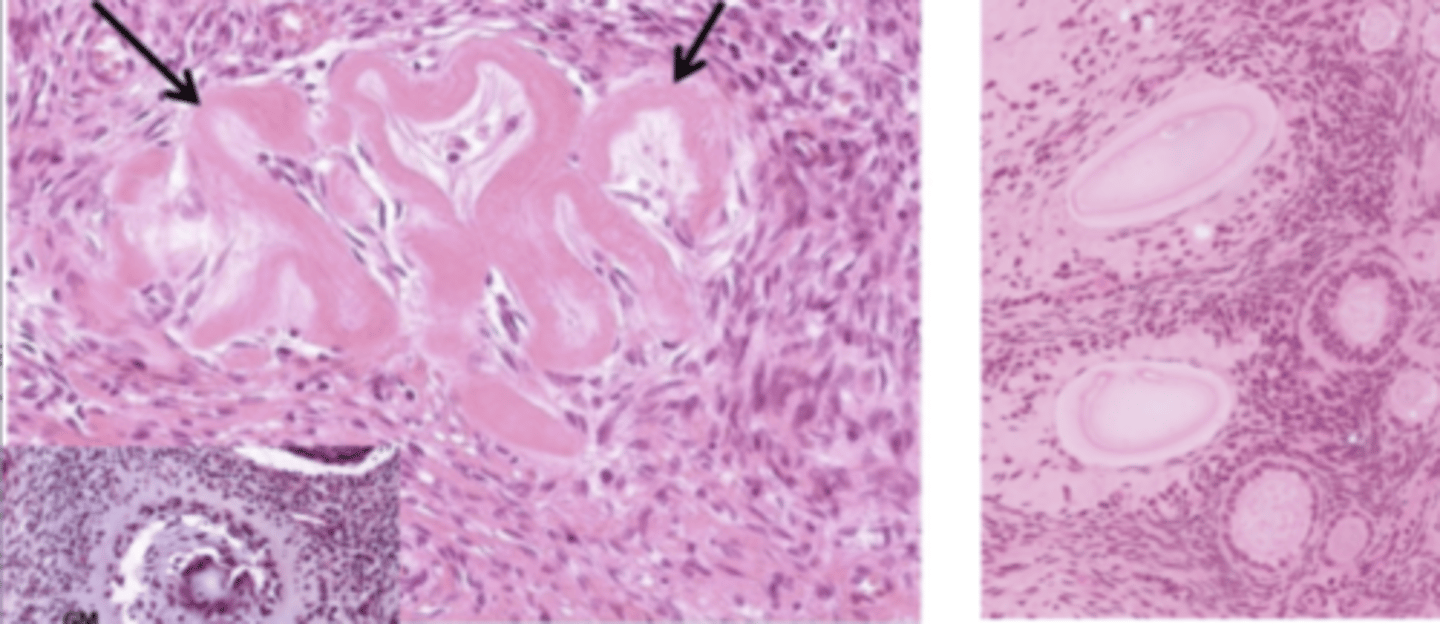
- Frequent remnant is the "glassy membrane" (former basement membrane)
glassy membrane (follicular atresia)
The arrows are showing what?
Primordial follicles
ID the cell:
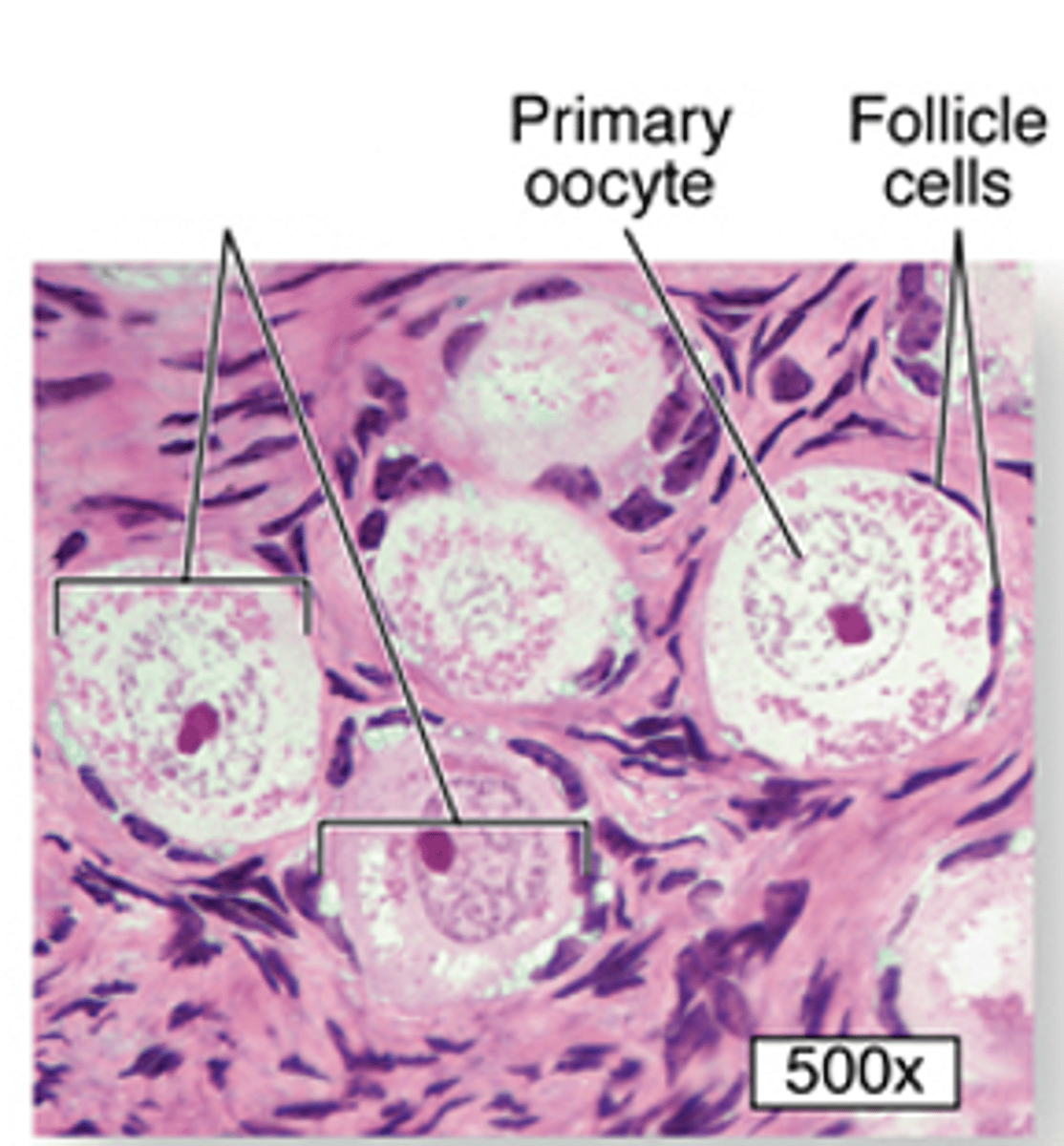
Primary follicle
ID the cell:
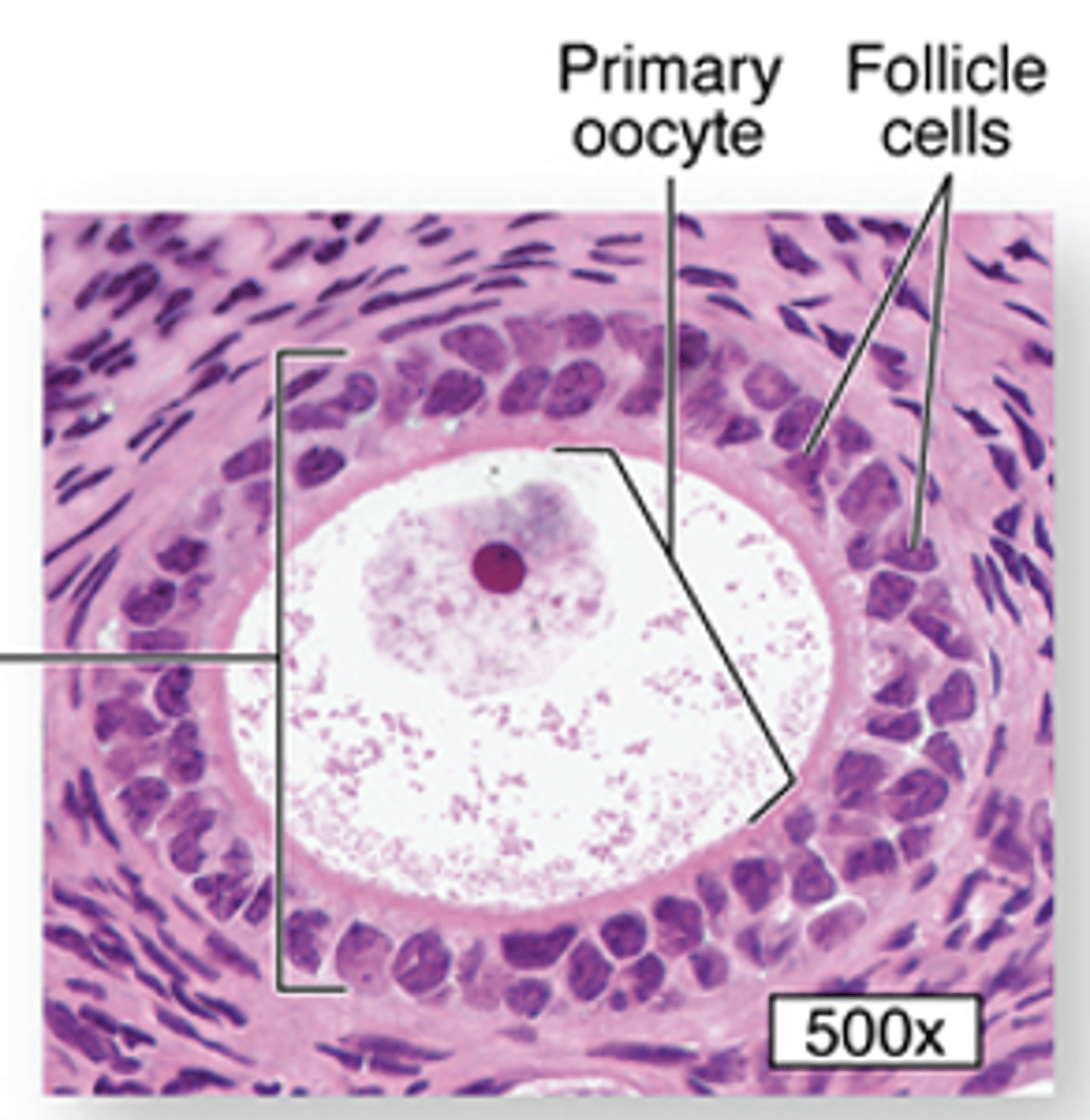
Secondary follicle
ID the cell:
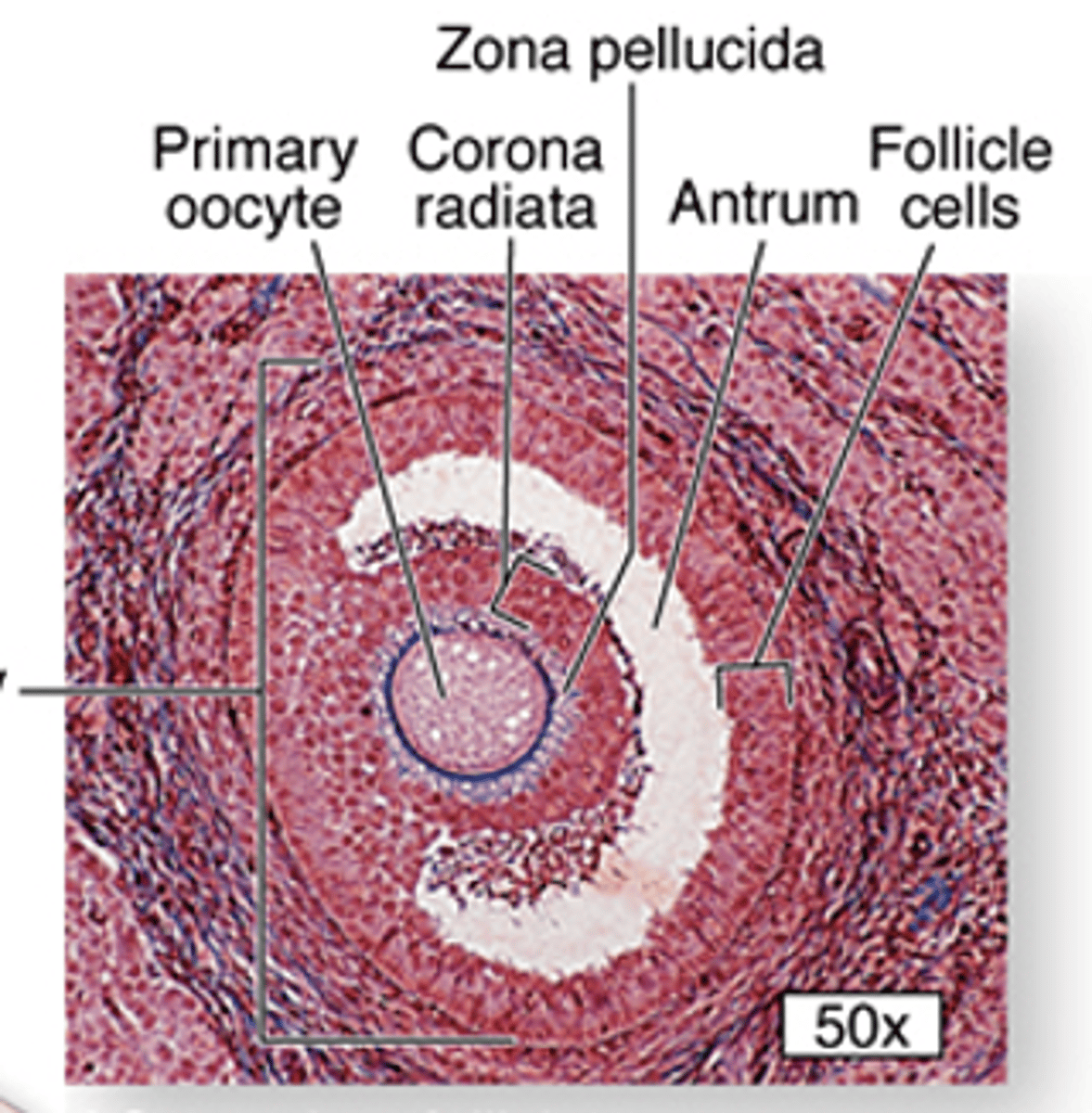
Mature vesicular follicle
ID the cell:
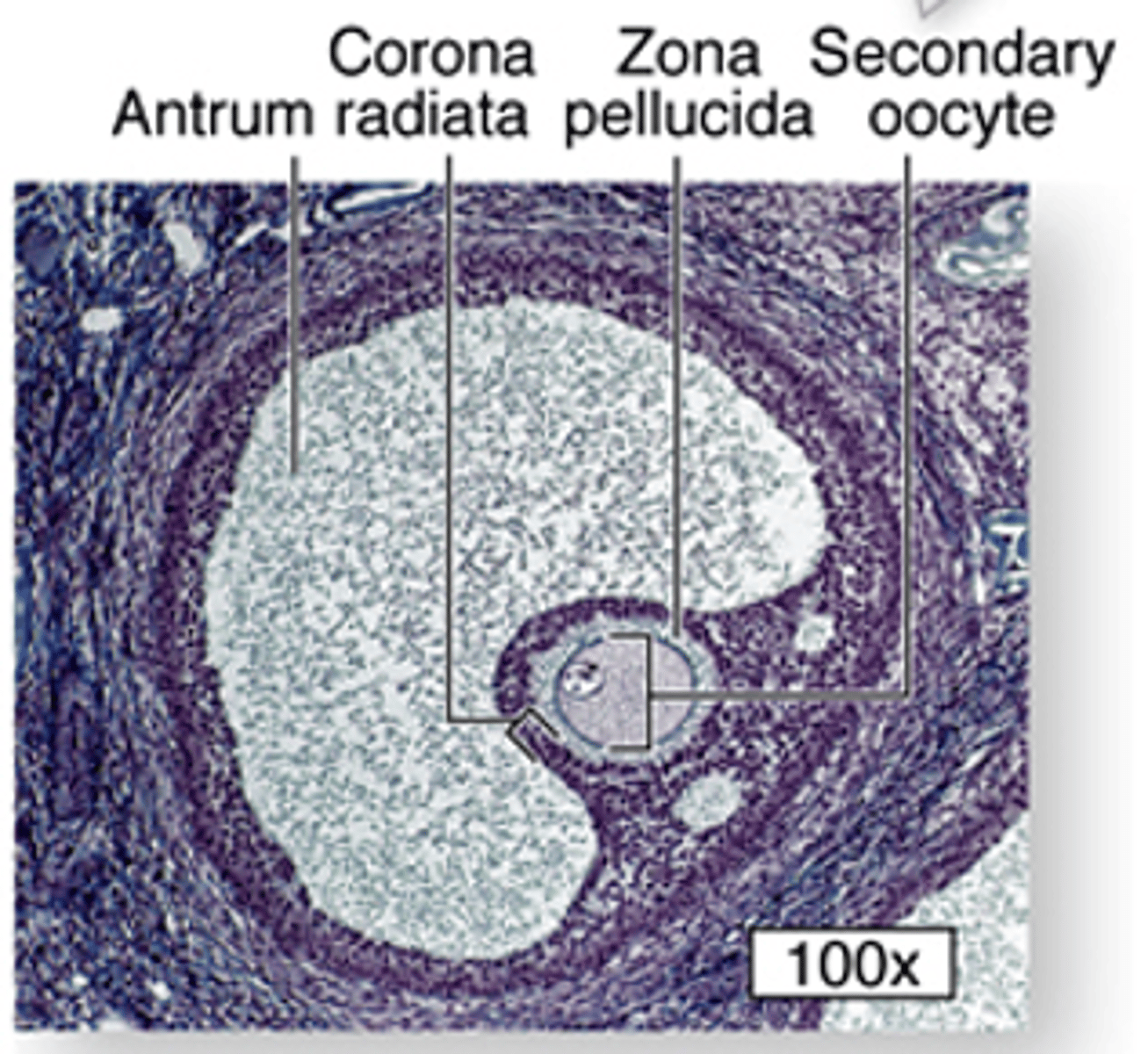
Corpus luteum
ID the cell:
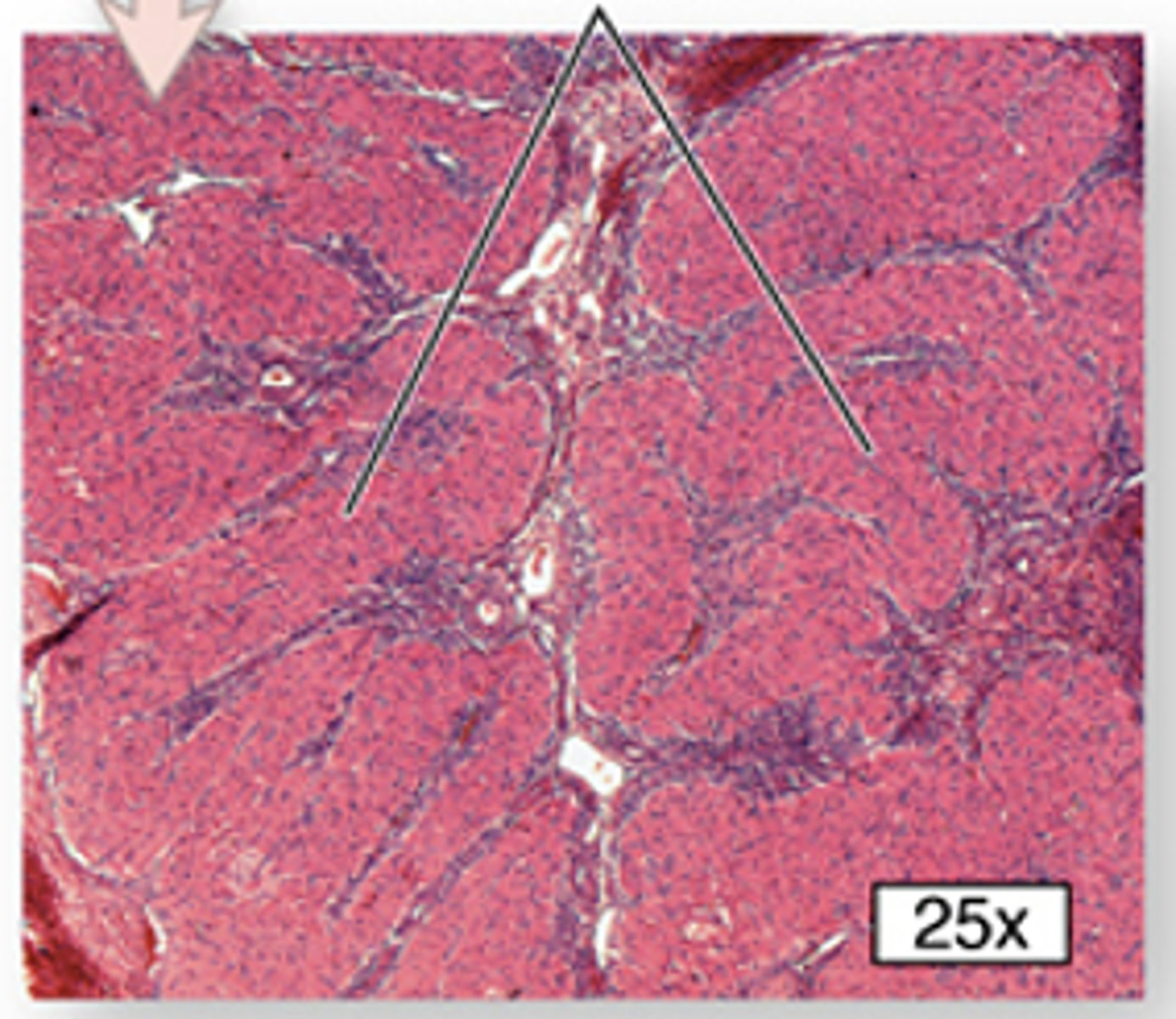
Corpus albicans
ID the cell:
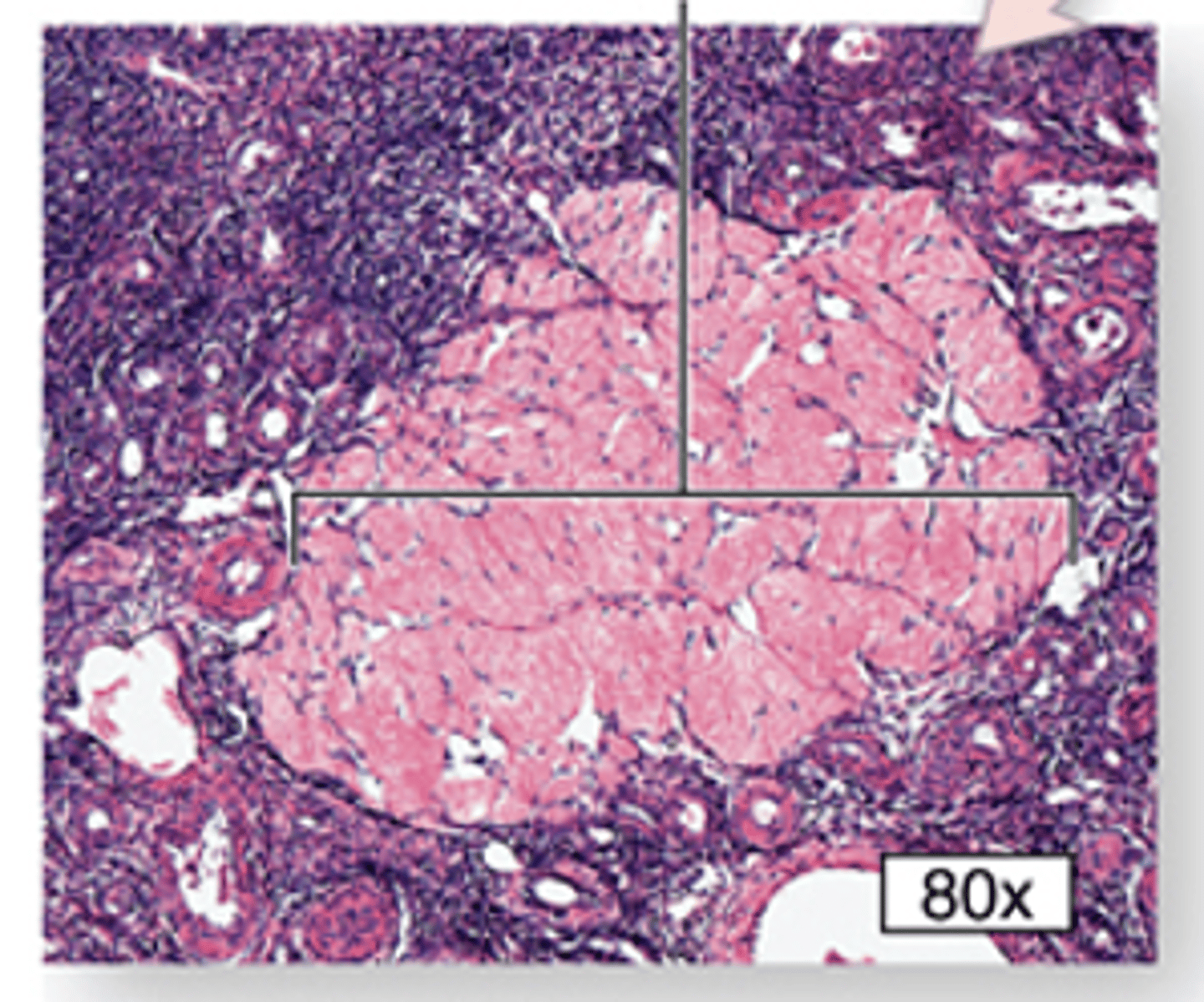
- Infundibulum
- Ampulla
- Isthmus
- Intramural
What are the four tube segments of the uterine tube?
Fimbriae
What has the following characteristics:
- Many ciliated cells
- "Catches" ovum
- Ovum (towards uterus)
- Sperm (away from uterus)
What does the uterine tube provide bidirectional transport mechanisms for?
- Serosa
- Muscularis
- Mucosa
- Epithelium
What are the four parts of the oviduct wall structure?
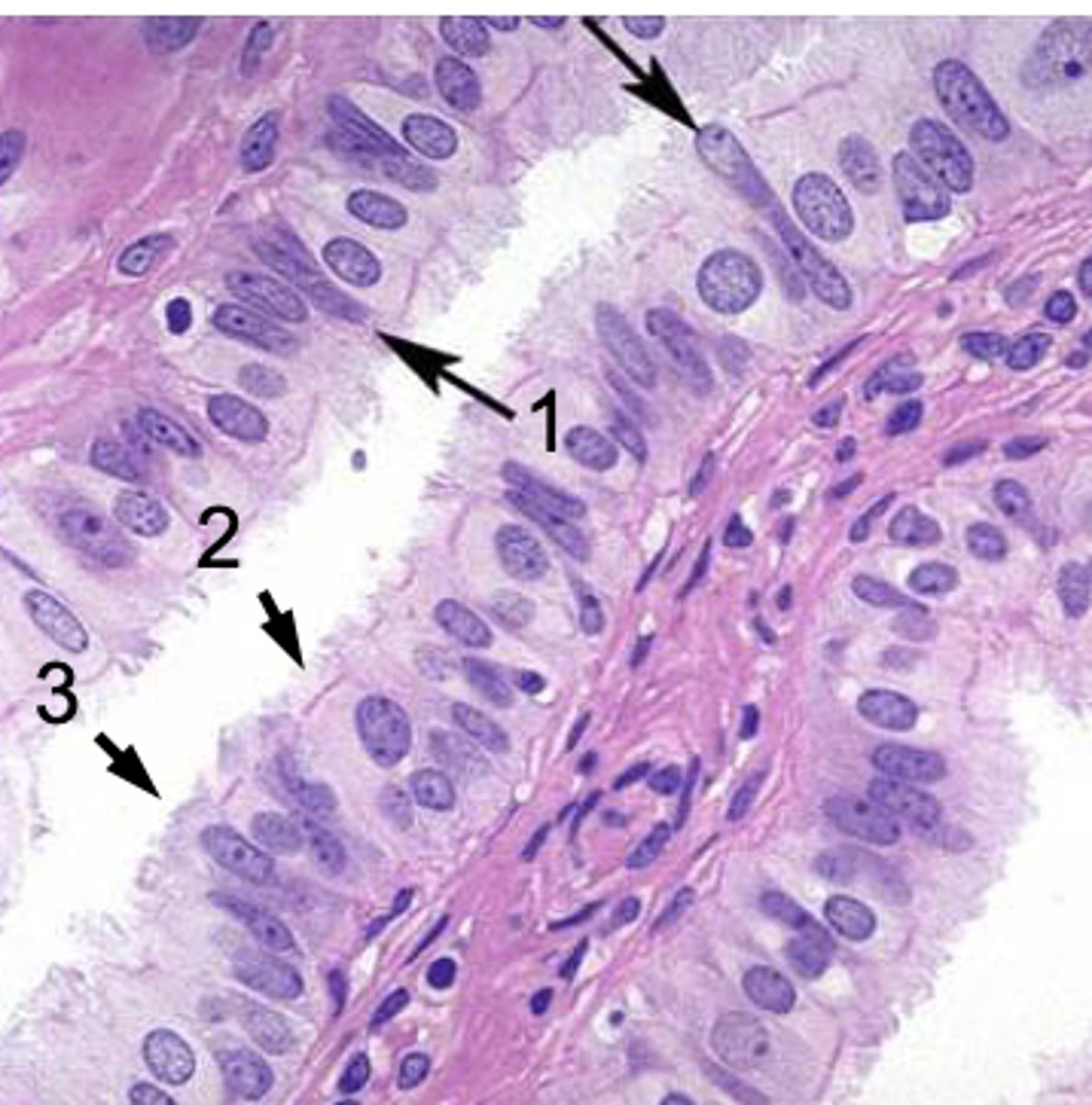
peg cell
What is 1?
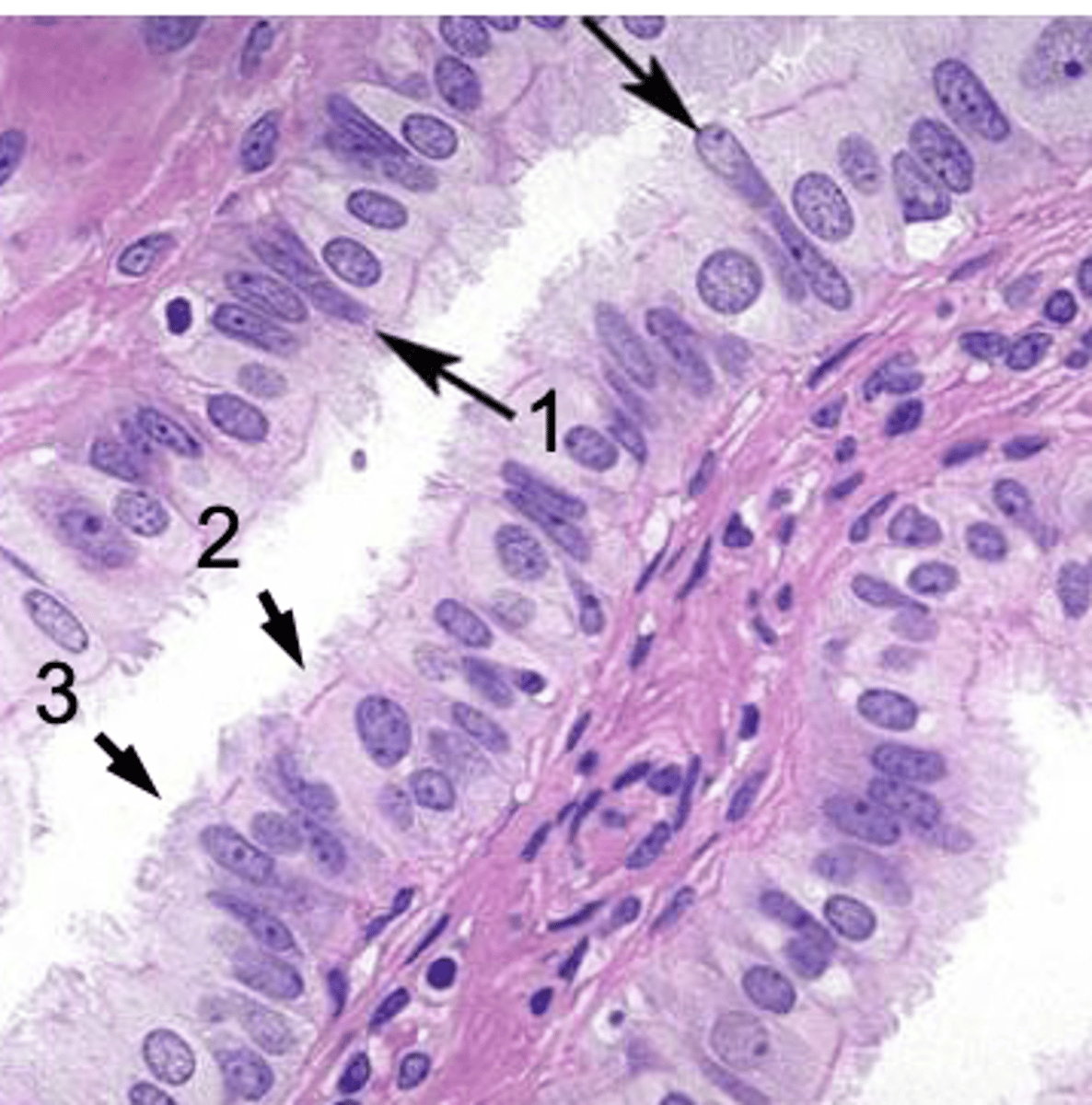
ciliated cell
What is 2?
secretory cell
What is 3?
ampulla
What structure?
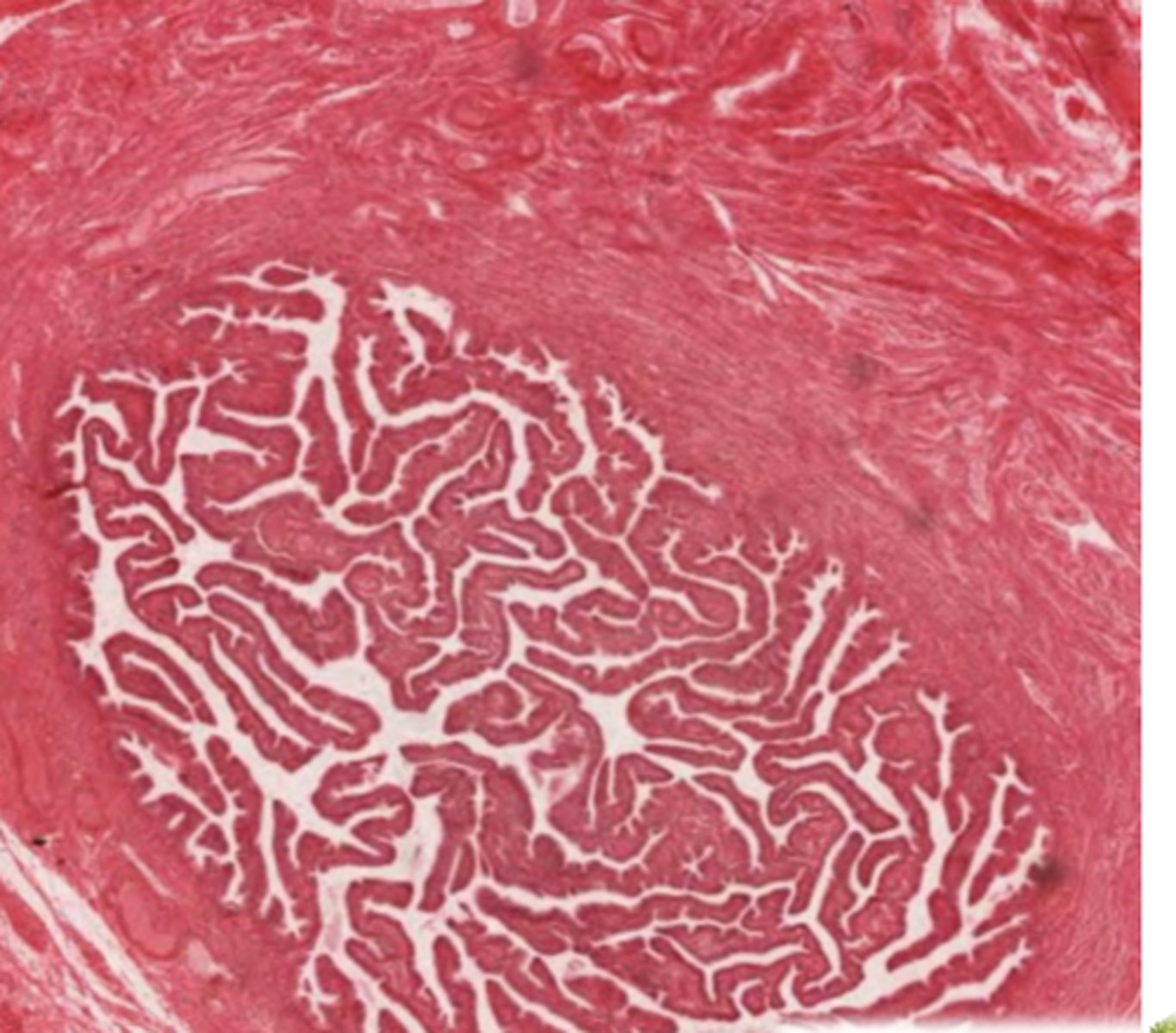
ampulla
What is the site of fertilization?
estrogen
What increases ciliogenesis?
progesterone
What increases secretory cell proliferation and production?
ithsmus
What segment of the uterine tube?
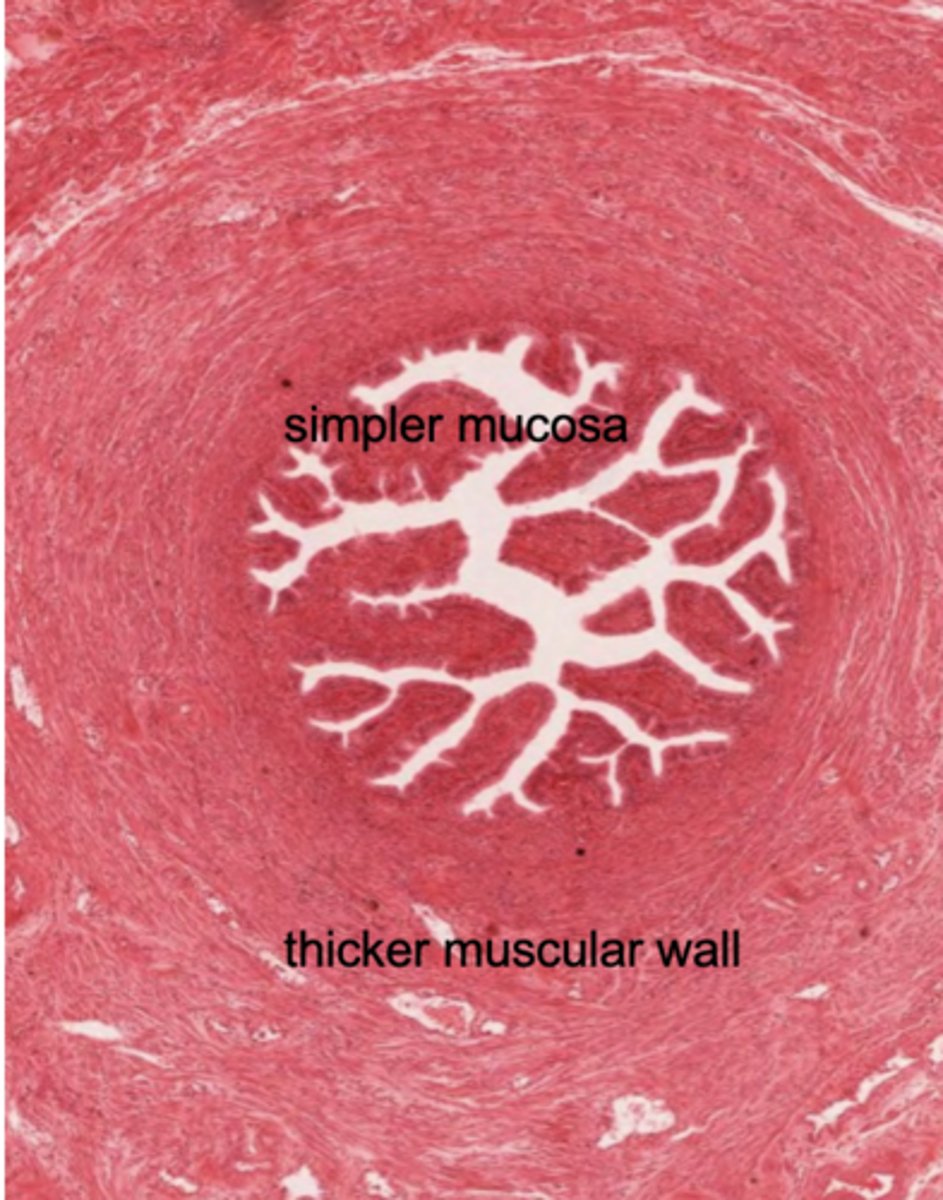
intramural
What segment of the uterine tube?