electrophoresis
 Call Kai
 Learn
Learn Practice Test
 Spaced Repetition
 Match
Match Flashcards
 Knowt Play
1/10

There's no tags or description
Looks like no tags are added yet.
Name | Mastery | Learn | Test | Matching | Spaced | Call with Kai |
|---|
No analytics yet
Send a link to your students to track their progress
11 Terms
what is electrophoresis used for?
used to separate DNA fragments
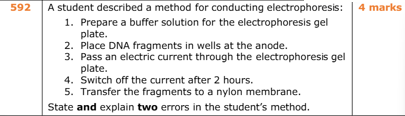
are the wells placed at the positive or negative electrode? explain why?
negative electrode
→DNA fragments are negatively charged due to their phosphate groups
→DNA fragments are attracted to the positive electrode
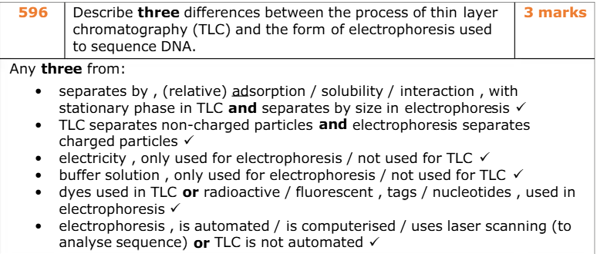
method for conducting electrophoresis
-create wells in gel tray
-Place gel tray into tank
-add buffer solution
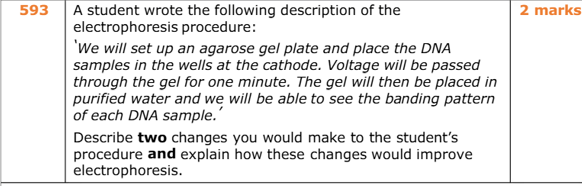
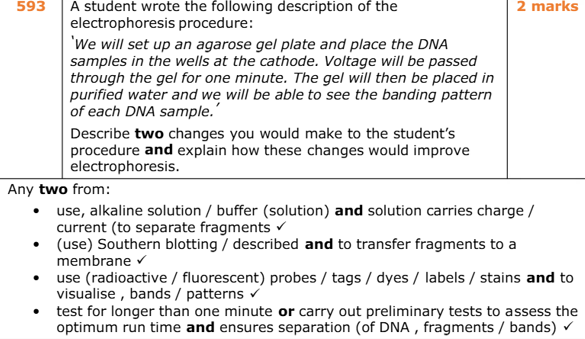
-place the DNA fragments into the wells at the negative electrode (cathode)
-Apply an electric current
-DNA fragments move towards the positive electrode.
-Smaller fragments move further than larger fragments
Why is a buffer/alkaline solution used in electrophoresis?
buffer solution carries current
how is DNA visualised in gel electrophoresis?
-fluorescent tags used→ DNA fragments are detected by UV light →helps visualise the bands formed
-radioactive tags
DNA fragments are separated by what?
DNA fragments are separated by length
→smaller fragments travel further as they have less mass so have less resistance in gel
→larger fragments move slowly
electrophoresis can also be used to separate mixtures of proteins. The gel contains a substance called SDS, which has a negative charge. SDS binds to proteins.
→Suggest why proteins are heated before being placed in the electrophoresis gel.
→Suggest why the binding of SDS to proteins is necessary for protein electrophoresis.
1st q
-Heating denatures the protein, exposing hydrophobic region
2nd q
-different proteins have different overall charges
-SDS binds to proteins to make all the proteins negatively charged
-proteins are separated by length/ mass only [not charge]
practice Q
note: in bio cathode is negative and anode is positive
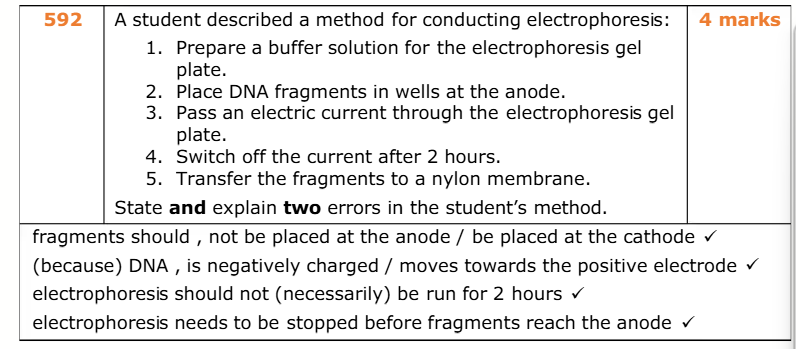

Practice Q


Practice Q