AP PSYCH U5 VOCABS
 Call Kai
 Learn
Learn Practice Test
 Spaced Repetition
 Match
Match Flashcards
 Knowt Play
1/227

There's no tags or description
Looks like no tags are added yet.
Name | Mastery | Learn | Test | Matching | Spaced | Call with Kai |
|---|
No analytics yet
Send a link to your students to track their progress
228 Terms
health psychology
a subfield of psychology that explores the impact of psychological, behavioral, and cultural factors on health and wellness.
psychoneuroimmunology
the study of how psychological, neural, and endocrine processes together affect our immune system and resulting health.
stress
the process by which we perceive and respond to certain events, called stressors, that we appraise as threatening or challenging.
stress appraisal
The events of our lives flow through a psychological filter. How we appraise an event influences how MUCH stress we experience & how effectively we respond
Eustress
a good stress, a positive, manageable, and short-term stress response that enhances performance, motivation, and well-being.
distress
a state of severe pain, anxiety, sorrow, or physical suffering
How can stress harm us?
can trigger risky decisions and unhealthy behaviors
3 categories of stressors
catastrophes, significant life changes, daily hassles
catastrophes
unpredictable large-scale events (e.g. earthquakes, etc). After such events, damage to emotional and physical health can be significant.
significant life changes
life transitions are keenly felt, regardless of it being happy or sad events
daily hassles
anything that impedes your progress/reroutes your plan or causes you anxiety
approach and avoidance motives
the drive to move toward (approach) or away from (avoid) a stimulus.
How does age impact stress?
stress levels decrease as you get older, women experience more stress
How do we respond & adapt to stress
Hormones (cortisol & adrenaline) are released by the adrenal glands
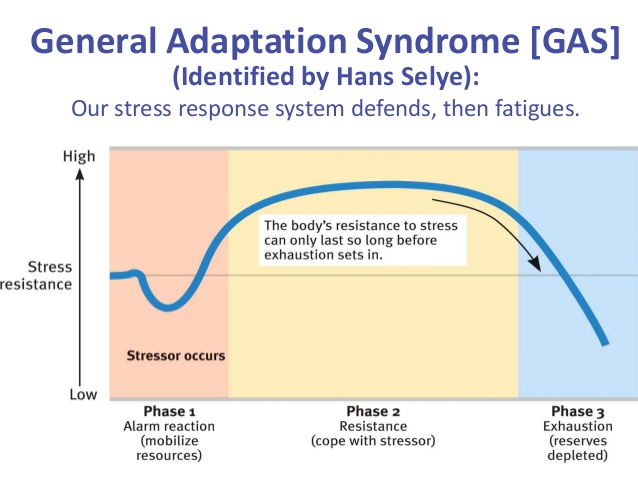
GAS (General adaptation syndrome)
(By Selye) The body’s adaptive response to stress in three phases — alarm, resistance, exhaustion.
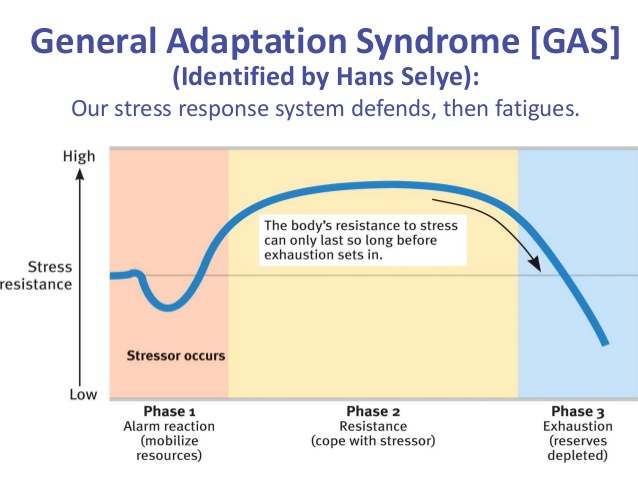
Phase 1 of GAS (ALARM STAGE)
Sympathetic NS is activated, heart rate zooms, blood is diverted to the skeletal muscles, ready to fight back
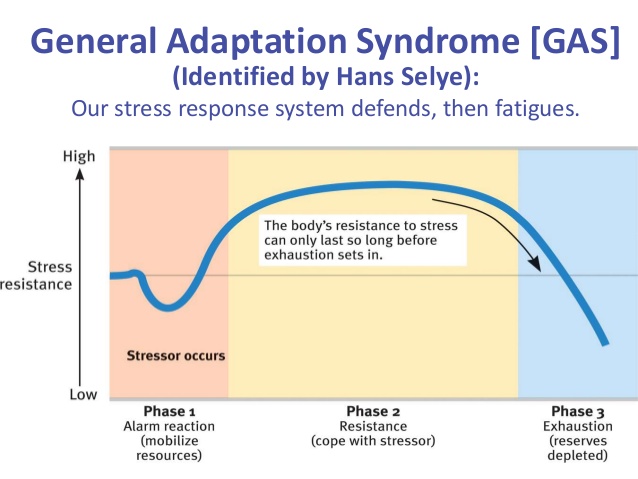
Phase 2 of GAS (RESISTANCE STAGE)
Your temperature, blood pressure and respirations remains HIGH
your endocrine system pumps EPINEPHRINE and NOREPINEPHRINE into your blood stream
you are fully engaged
BUT as time passes, your body’s reserves dwindle.
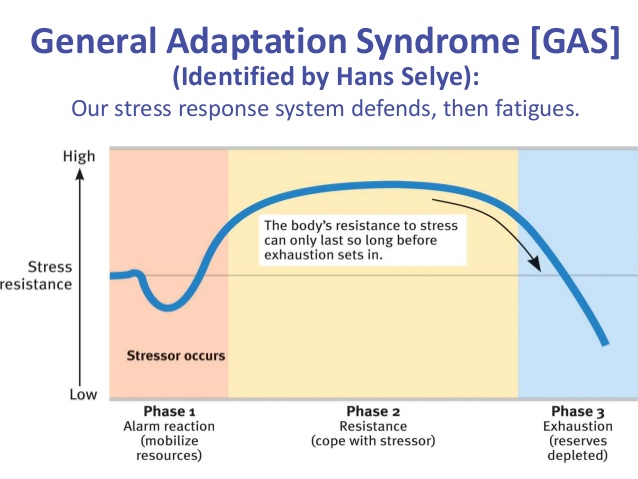
Phase 3 of GAS (EXHAUSTION STAGE)
the body becomes more vulnerable to illness or even collapse and death
Different gender’s response to stress
MEN -> self isolating, withdraw from loved ones, conserve energy. WOMEN -> tend-and-befriend
Tend-and-befriend
nurturing, talking to friends, bonding together
How does stress response work
The immune system is a complex surveillance, maintains health by isolating & destroying bacteria, viruses, etc
How does stress increase vulnerability to diseases?
surgical wounds heal slower with stress, more prone to colds when stressed, can hasten the course of disease
coronary heart disease
the clogging of the vessels that nourish the heart muscle; a leading cause of death in many developed countries.
Type A
Term for competitive, hard-driving, impatient, verbally aggressive, and anger-prone people. (Friedman & Rosenman)
Type B
Term for easygoing, relaxed people. (Friedman & Rosenman)
Catharsis
the idea that “releasing” aggressive energy (through action or fantasy) relieves aggressive urges.
Coping
alleviating stress using emotional, cognitive, or behavioral methods.
2 types of coping
problem-focused & emotion-focused coping
Problem-focused coping
attempting to alleviate stress directly — by CHANGING the stressor or the way we interact with that stressor.
emotion-focused coping
attempting to alleviate stress by AVOIDING or IGNORING a stressor and attending to emotional needs related to our stress reaction.
personal control
our sense of controlling our environment rather than feeling helpless.
learned helplessness
the hopelessness and passive resignation humans and other animals learn when unable to avoid repeated aversive events.
In what particular situations do people thrive?
living in conditions of PERSONAL FREEDOM & EMPOWERMENT
external locus of control
the perception that outside forces beyond our personal control determine our fate.
internal locus of control
the perception that we control our own fate.
self-control
the ability to control impulses and delay short-term gratification for greater long-term rewards.
How does an optimistic outlook affect health and longevity?
people with an optimistic view are more likely than pessimists to have optimal health, to be successful and to live longer
How does social support promote good health?
calms us, improves our sleep, reduces blood pressure, stronger immune functioning.
positive psychology
the scientific study of human flourishing, with the goals of promoting strengths and virtues that foster well-being, resilience, and positive emotions, and that help individuals and communities to thrive.
subjective well-being
self-perceived happiness or satisfaction with life. Used along with measures of objective well-being (e.g. how rich you are) to evaluate people’s quality of life.
feel-good, do-good phenomenon
people’s tendency to be helpful when in a good mood.
3 pillars of positive psychology
Positive well-being, positive traits, positive groups
Positive well-being (1st pillar of positive psychology)
satisfaction with the past, happiness with the present, and optimism about the future
Positive traits (2nd pillar of positive psychology)
exploring and enhancing creativity, courage, compassion, integrity, self-control, leadership, wisdom and spirituality.
Positive groups (3rd pillar of positive psychology)
communities and cultures seeks to foster a positive social ecology.
Money and happiness
Low incomes DO lead to less happiness, but NOT always true.
Income satiation
the point at which additional income no longer increases an individual’s happiness or emotional well-being
adaptation-level phenomenon
our tendency to form judgements (of sounds, lights, income) making new situations feel normal over time based on our past experiences.
relative deprivation
feeling worse off compared to others you compare yourself to.
happiness set point
a baseline level of happiness that people tend to return to after life events.
6 Things that predict happiness
having high self-esteem
optimistic outgoing & agreeable
having close, positive relationships
have work and leisure that involves their skills
have an active religious faith
sleep well and exercise
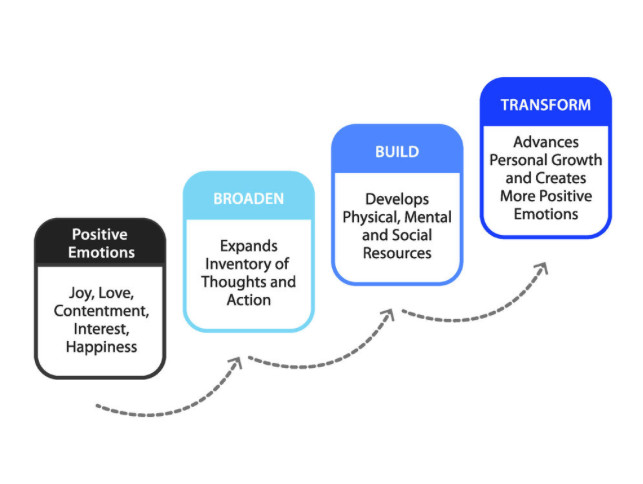
broaden-and-build theory
the idea that positive emotions expand our awareness, thus helps us build meaningful skills and resilience that improve well-being.
character strengths and virtues
a system to identify positive traits;
wisdom
courage
humanity
justice
temperance
transcendence.
resilience
the personal strength that helps people cope with stress and recover from adversity and even trauma.
aerobic exercise
sustained physical activity that increases heart and lung fitness and improves mental health.
mindfulness meditation
a practice of focusing on the present moment in a nonjudgmental and accepting way.
gratitude
a feeling of appreciation for what one has or receives from others.
faith factor
the observed correlation between religious involvement and better health. Optimism, community, healthy behavior
social support
help and connection from others that improves well-being and reduces stress.
flow
a state of deep engagement and focus in an activity that challenges but doesn’t overwhelm you.
biofeedback
a technique that helps people control bodily processes by monitoring physiological signals.
relaxation response
a state of calm produced by relaxation techniques that reduce stress.
psychological disorder
a disturbance in people’s thoughts, emotions, or behaviors that causes distress or suffering and impairs their daily lives.
medical model
the concept that diseases have physical causes that can be diagnosed, treated, and, in most cases, cured, often through treatment in a hospital.
diathesis-stress model
mental disorders result from an interaction between a pre-existing vulnerability (diathesis) and environmental stressors.
epigenetics
environmental influences on gene expression that occur without a DNA change
Biological influences to psychological disorder
evolution, individual genes, brain structure & chemistry
psychological influences to psychological disorder
stress, trauma, learned helplessness, mood-related perceptions and memories
social-cultural influences to psychological disorders
roles, expectations, definitions of disorder
DSM-5
a widely used system for classifying psychological disorders.
Criticism for DSM-5
widening the extent of disorder to normal people
Power of labels
Labels can stigmatize. (e.g. labeling someone as mentally ill -> potentially violent)
NSSI (Non-suicidal self injury)
most adolescents and females cut, burn their skin, hit themselves or insert objects under their nails or skin to attract attention and get help
3D’s to classify disorders
Distress (Worrisome, causing anxiety)
Dysfunctions (Impairment or disturbance in behavior)
Deviance (Not typical of one’s society’s normal behavior)
Anxiety disorders
a group of disorders characterized by excessive fear and anxiety or dysfunctional behaviors that reduce anxiety.
anxiety
A feeling of worry or tension about a possible future threat (symptoms
social anxiety disorder
intense fear and avoidance of social situations
generalized anxiety disorders
a person worries about many things they cannot control and is continually tense and uneasy
panic disorder
an anxiety disorder marked by unpredictable, minutes-long episodes of intense dread where a person experiences chest pain, choking, frightening sensations AND fears the next attack
specific phobias
a person is intensely and excessively afraid of something
agoraphobia
a fear or avoidance of situations (crowds, wide open places) where one may experience a loss of control and panic
comorbidity
two disorders happening at the same time
phobia
an anxiety disorder marked by a persistent, irrational fear and avoidance of a specific object/activity or situation
Fears vs Phobias
FEARS:
necessary for survival
triggered by real dangers
passes after the source is gone
PHOBIAS:
maladaptive
triggered by perceived threats
can linger for months
OCD
a disorder characterized by unwanted repetitive thoughts, actions or both
hoarding disorder
a persistent difficulty parting with possessions, regardless of their value.
PTSD
a disorder characterized by:
haunting memories
nightmares
hypervigilance
avoidance of trauma-related stimuli
social withdrawal, jumpy anxiety
numbness of feeling
insomnia that lingers for a long time after the traumatic experience.
trauma- and stressor-related disorders
a group of disorders in which exposure to a traumatic or stressful event is followed by psychological distress.
Factors that impact the development of PTSD
brain chem, genetics, cognitive factors, etc
anterior cingulate cortex
the brain region that monitors our actions and checks for errors
BEHAVIORAL perspective approach to disorders
the causes of mental disorders focus on maladaptive learned associations between stimuli and responses (ex. a person develops a phobia of dogs after being bitten as a child)
EVOLUTIONARY perspective approach to disorders
the causes of mental disorders focus on behaviors and mental processes that reduce the likelihood of survival (ex. excessive anxiety may stem from once-adaptive fear responses that are now overactive)
PSYCHODYNAMIC perspective approach to disorders
the causes of mental disorders focuses on unconscious thoughts and experiences, often rooted in childhood (ex. a person’s anxiety is linked to unresolved childhood conflict with a parent)
SOCIOCULTURAL perspective approach to disorders
the causes of mental disorders focuses maladaptive social and cultural relationships and dynamics (ex. a person develops stress, depression due to poverty, discrimination or cultural pressure)
HUMANISTIC perspective approach to disorders
the causes of mental disorders focuses on a lack of social support and an inability to fulfill one’s potential (ex. a person experiences depression due to feeling disconnected and unable to achieve personal goals)
BIOLOGICAL perspective approach to disorders
the causes of mental disorders focuses physiological or genetic factors (ex. a person develops depression due to genetic predisposition or neurotransmitter imbalances)
COGNITIVE perspective approach to disorders
the causes of mental disorders focuses on maladaptive thoughts, beliefs, attitudes or emotions. (ex. a person with depression consistently interprets events in a negative, self-defeating way)
depressive disorders
a group of disorders characterized by an enduring sad, empty, or irritable mood, along with physical and cognitive changes that affect a person’s ability to function.
bipolar disorders
a group of disorders in which a person alternates between the hopelessness and lethargy of depression and the overexcited state of mania.
major depressive disorder
a disorder in which a person experiences FIVE or more symptoms (from DSM-5) lasting TWO OR MORE WEEKS, in the absence of drug use or a medical condition.