3- Diagnosis and treatment of aortic dissection
 Call Kai
 Learn
Learn Practice Test
 Spaced Repetition
 Match
Match Flashcards
 Knowt Play
1/15

There's no tags or description
Looks like no tags are added yet.
Name | Mastery | Learn | Test | Matching | Spaced | Call with Kai |
|---|
No analytics yet
Send a link to your students to track their progress
16 Terms
what is an aortic dissection
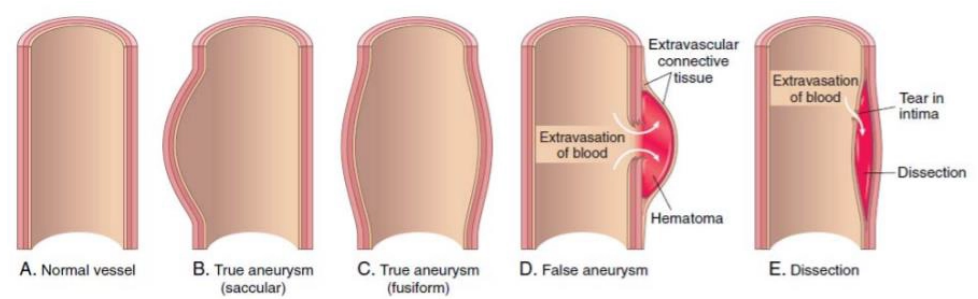
rupture in the intimal layer of the aorta → blood into medial layer
what is the etiology of aortic dissection
hypertension in patients of 40-60yo
CT disorders- Mafans, Ehlers, Danlos
atherosclerosis, chest trauma, pregnancy
what is the morphology
what are the symptoms of aortic dissection
can be asymptomatic
tearing chest pain that radiates to the back
migrating pain
different BP
what are the risk factors for AD
HTN
CT disease
what are the complciations of AD
rupture → pericardial, pleural, peritoneal cavity
haemothorax, haemopericardium, tamponade, RSHF
what is the mechanism of AD
intimal tear of aorta leads to dissection of layers of aorta creating a false lumen
what are the classifications of AD
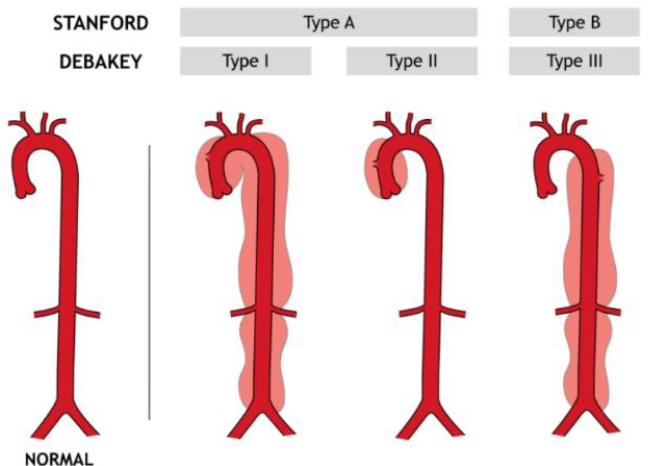
stanford A→ proximal aorta
De Bakey t1- ascending, arch and descending aorta
De Bakey t2- only ascending aorta
stanford B/ De Bakey t3- only dscending aorta
what are the findings in physical exam for AD
HTN
aortic murmur
pulse difference
neuro deficits
if up to carotid
what are the signs of AD in imaging
wide mediastinum on CXR
CT angio chest
echo
TTE and TOE
aortography
what do you have to consider when doing imagine tests in AD
risk of invasive diagnostic tests
renal function
gravidity
allergy to contrast media
what are the signs of AD on ECG
ischemia, coronary involvement
what are the lab tests done in AD
necroenzymes
WBC
d dimer
coagulation
what is the triple rule out in AD
rules out most dangerous causes of acute chest pain in 1 CT scan
MI, AD, PE
What is the management of AD
HR and BP monitoring
pain relief
lowering BP by BB or in COPD CCB
ICU transport
ideal SBP 110-120mmHg
what is a TEVAR
thoracic endovascular aortic repair
minimally invasive to treat descending thoracic aortic aneurysm