Aquatic Therapy
 Call Kai
 Learn
Learn Practice Test
 Spaced Repetition
 Match
Match Flashcards
 Knowt Play
1/32

There's no tags or description
Looks like no tags are added yet.
Name | Mastery | Learn | Test | Matching | Spaced | Call with Kai |
|---|
No analytics yet
Send a link to your students to track their progress
33 Terms
Indications for aquatic therapy
- ROM
- Resistance training
- Facilitate weight bearing
- Enhance technique of manual therapy
- Cardiovascular endurance
- Functional activity replication
- Minimize risk of injury
- Enhance relaxation
Precautions to aquatic therapy
- Fear of water
- Neurological disorders (ataxia, heat intolerance, epilepsy)
- Respiratory disorders (lung expansion inhibited in water)
- Cardiac dysfunction (angina, abnormal BP, heart disease, compromised pump mechanisms)
Can patients with wounds and/or lines participate in aquatic therapy
Small open wounds, tracheotomies are covered with waterproof dressings
IV lines, Hickman lines are clamped and fixated
Large open wounds and infections are contraindicated
Contraindications to aquatic therapy
Unstable angina
Respiratory dysfunction
Severe peripheral vascular disease
Open wounds without dressings
Bowel & bladder incontinence
Menstruation without internal protection
Water and airborne infections
Uncontrolled seizures
Weight bearing with immersion
C7- 10%
Xiphoid- 33%
ASIS- 50%
Buoyancy meaning
Upward force in water
Buoyancy significance
- Dec weight, joint unloading
- Resistance to movement
- Obese patients are more buoyant
Hydrostatic pressure meaning
"squeezing" of water on the body
Hydrostatic pressure significance
- Reduces effusion, assists venous return, induces bradycardia, centralizes peripheral bloodflow
- Inc depth = inc pressure
Viscosity meaning
Friction between molecules causing resistance to flow
Viscosity significance
Resistance with all active movements
Inc velocity = inc resistance
Inc surface area = inc resistance
Surface tension meaning
Surface of a fluid acts as a membrane
Surface tension significance
An extremity moving through surface performs more work than if kept under water
Hydromechanics meaning
Characteristics of fluid in motion
Hydromechanics significance
Moving water past the patient requires patient to work harder
Application of equipment increases drag
Thermodynamics meaning
Water tempurature's impact on the body
Thermodynamics significance
A patient moving through water loses temperature faster than a person at rest
Center of buoyancy meaning
Similar to center of gravity on land
Center of buoyancy significance
In water, COB is at sternum
Posterior places buoyancy device causes patient to learn forward; vice versa
Unilateral LE amputation makes patient lean towards residual limb
General water temperature principles (what temperature range must pool be kept in)
25dgs C to 37dgs C
For general flexibility, strengthening, gait training, relaxation, water should be kept between
26 - 35dgs C
For cardiovascular training, aerobic exercise, water temp should be kept between
26 - 28dgs C
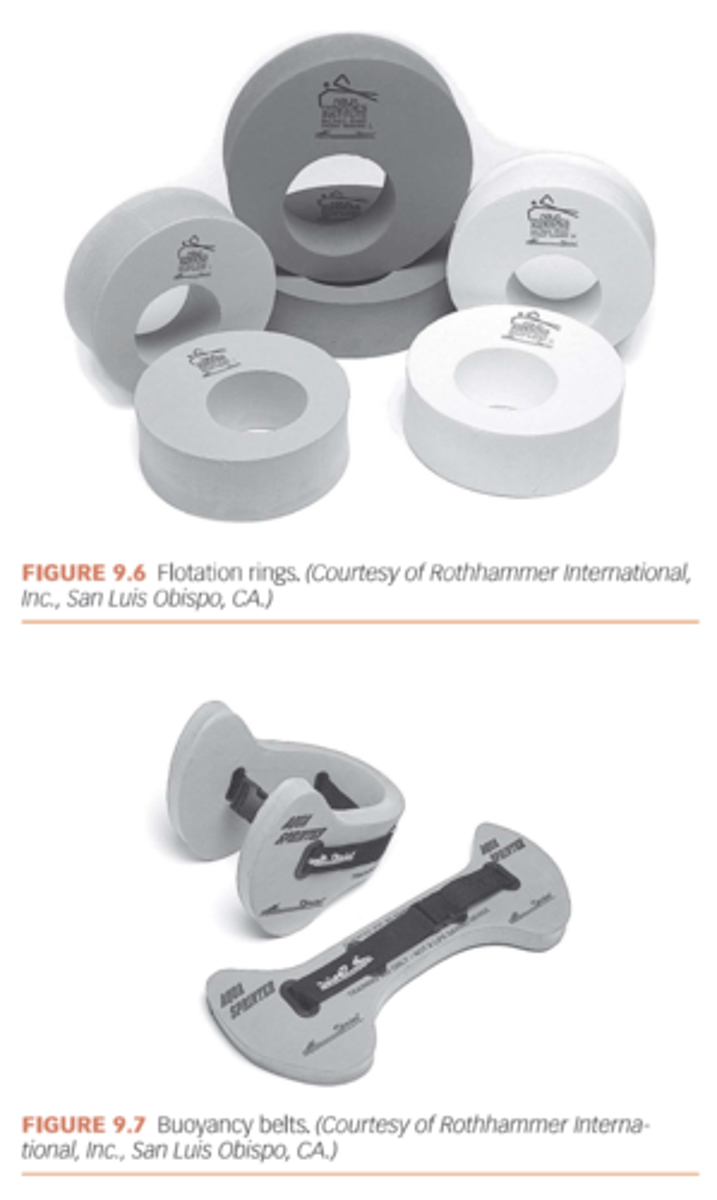
Collars, rings, belts, vests are used to
assist with patient positioning by providing buoyancy
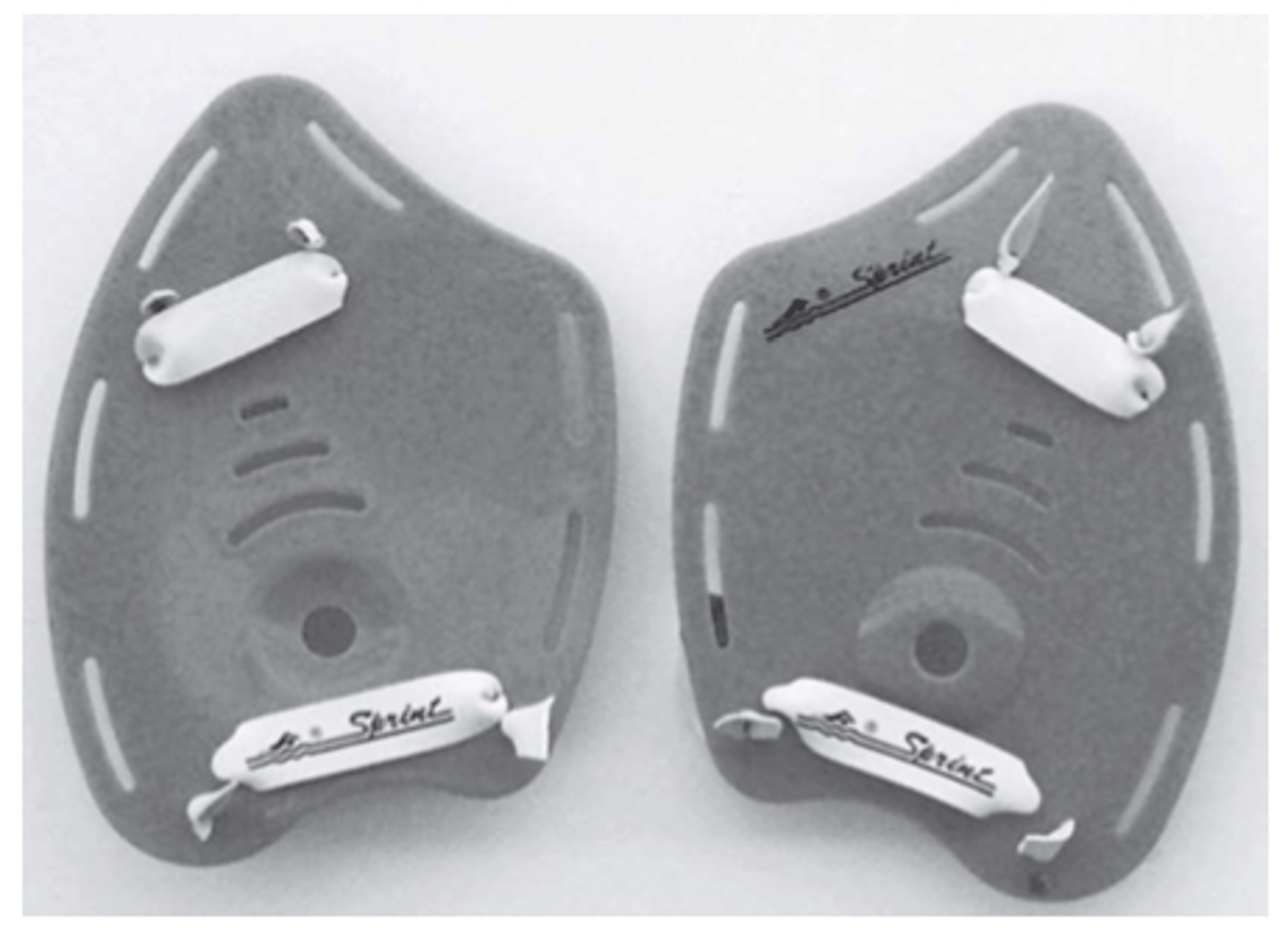
Gloves, hand paddles, and hydro-tone bells are used to
Create resistance to UE movements
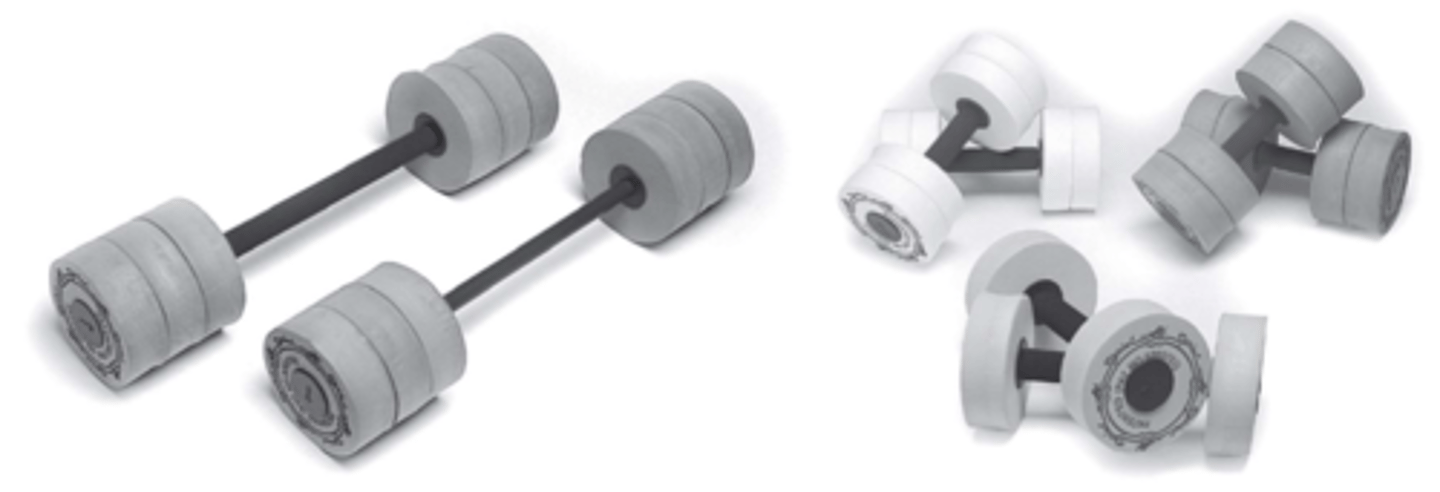
Swim bars are used to
Support the upper body or trunk in upright positions or the LE in supine or prone
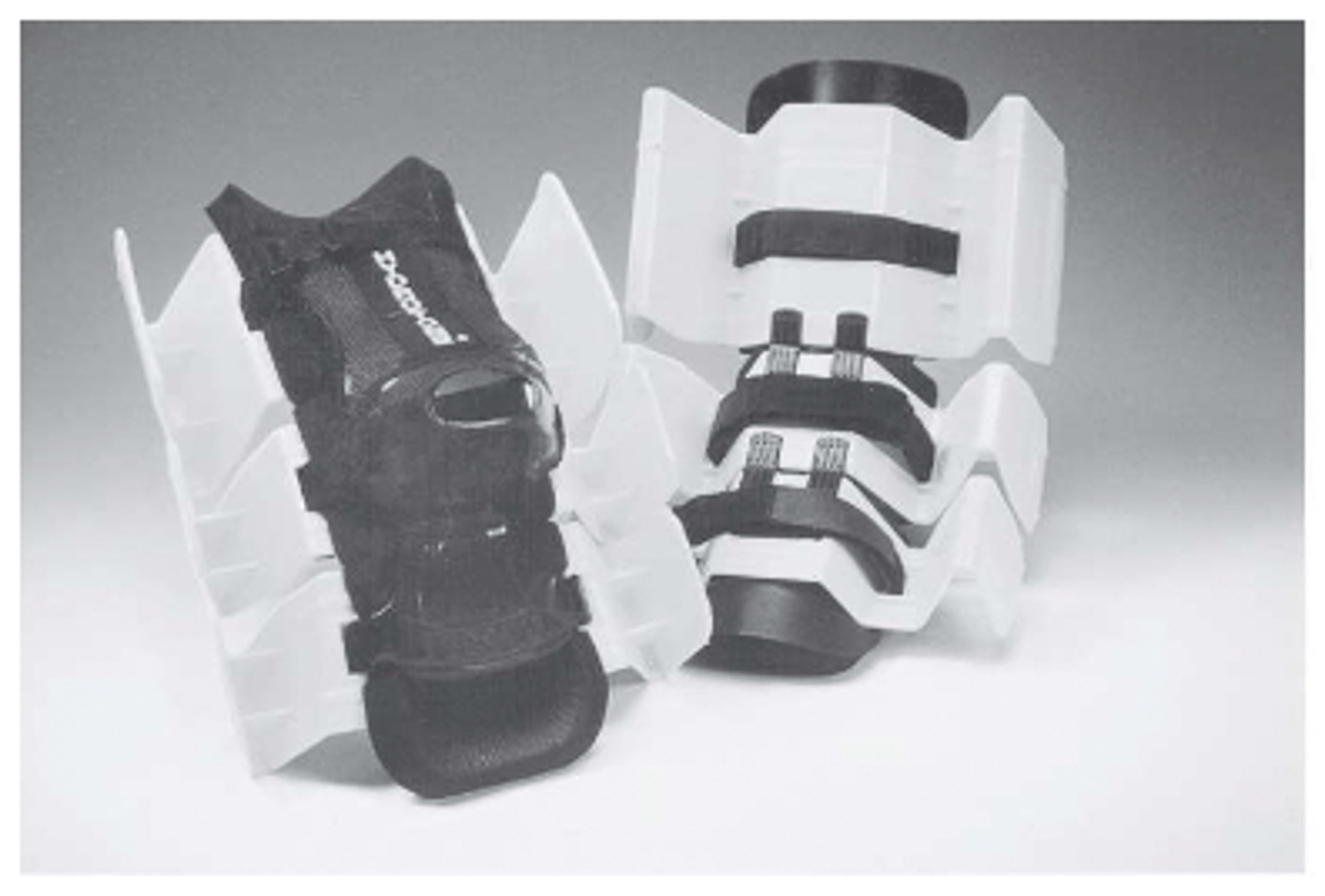
Fins and hydro-tone boots are used to
Create resistance to LE movements
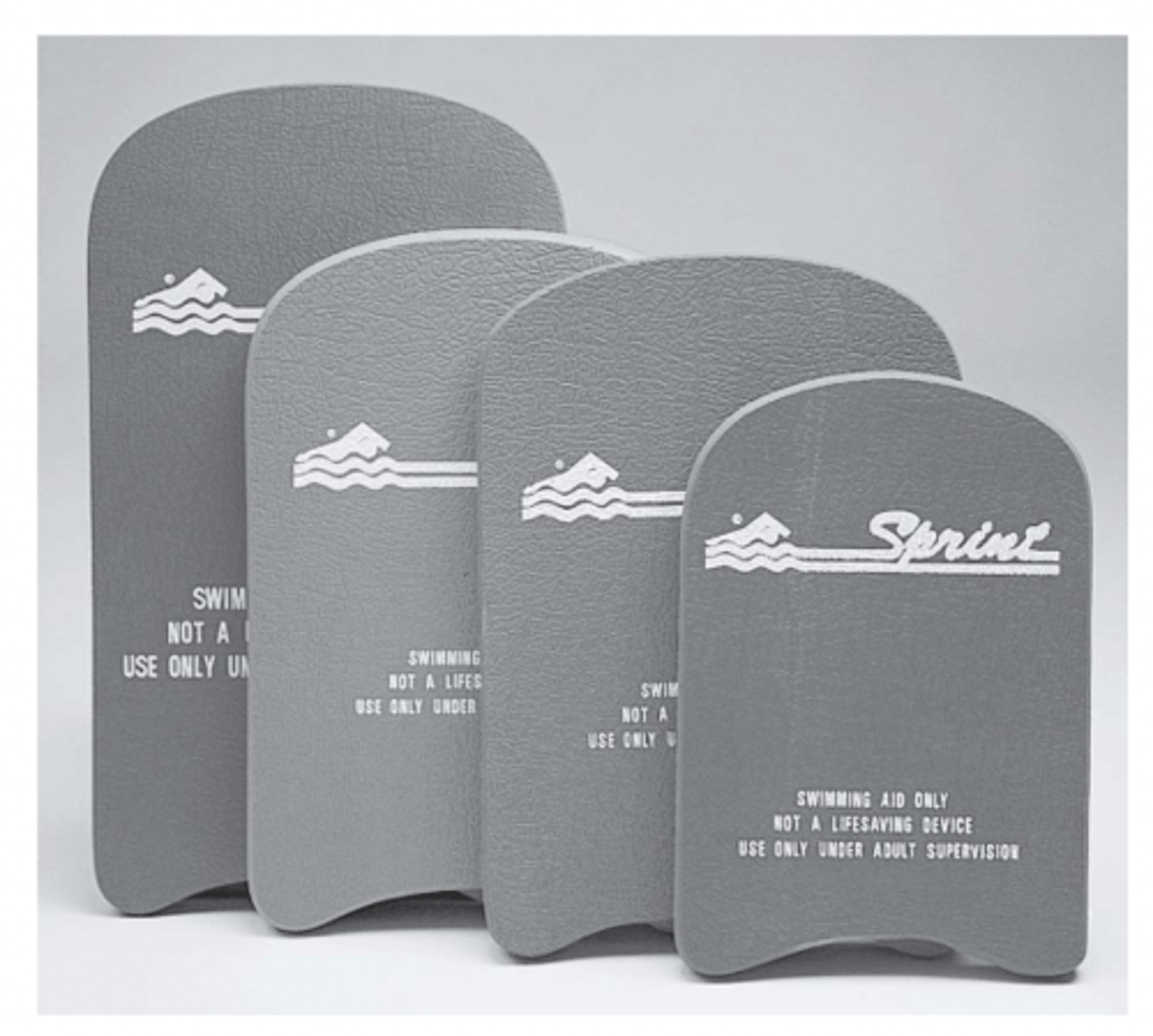
Kickboards are used to
Provide buoyancy in prone or supine positions
Create resistance to walking patterns in shallow water
Challenge seated, standing, kneeling balance in deep water
What infection is common around therapeutic pools
Pseudomonas aeruginosa
CP response to water immersion: SV
increase
CP response to water immersion: CO
increase
CP response to water immersion: HR
stay same or decrease
CP response to water immersion: IRV
decrease
CP response to water immersion: FVC
decrease