5.4: pregnancy & childbirth
 Call Kai
 Learn
Learn Practice Test
 Spaced Repetition
 Match
Match Flashcards
 Knowt Play
1/22

There's no tags or description
Looks like no tags are added yet.
Name | Mastery | Learn | Test | Matching | Spaced | Call with Kai |
|---|
No analytics yet
Send a link to your students to track their progress
23 Terms
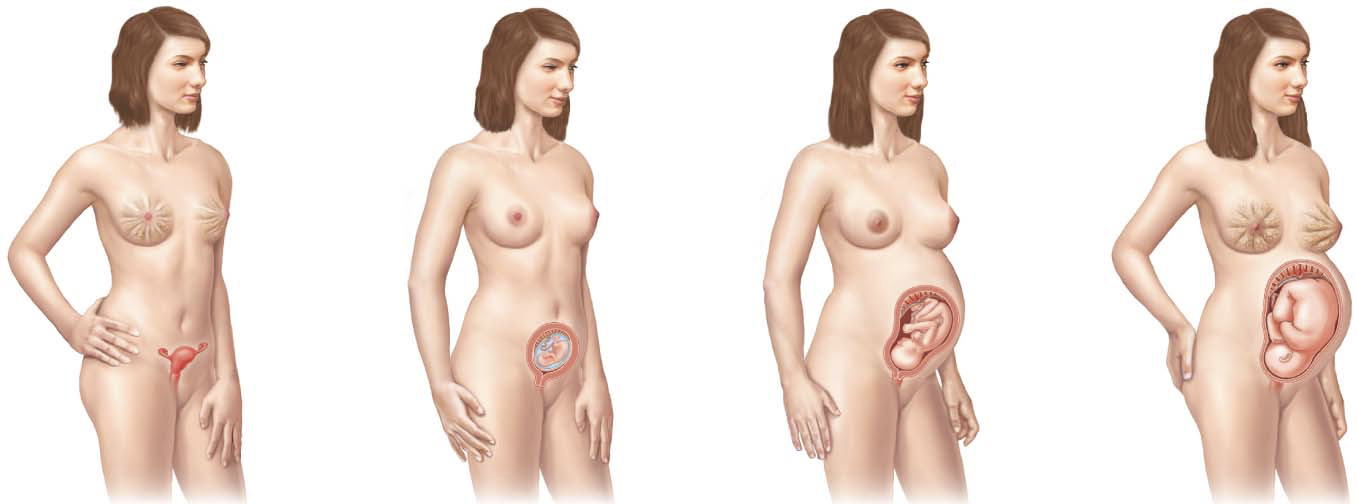
pregnancy
gestation
measures from ____
__ trimesters
changes mediated by hormones
secreted ___
corpus luteum ___, ____ takes over
gestation
measures from 1st day of last menstrual period → 40 weeks
3 trimesters
changes mediated by hormones
secreted by corpus luteum & placenta
corpus luteum degenerates during weeks 7-17, placenta takes over
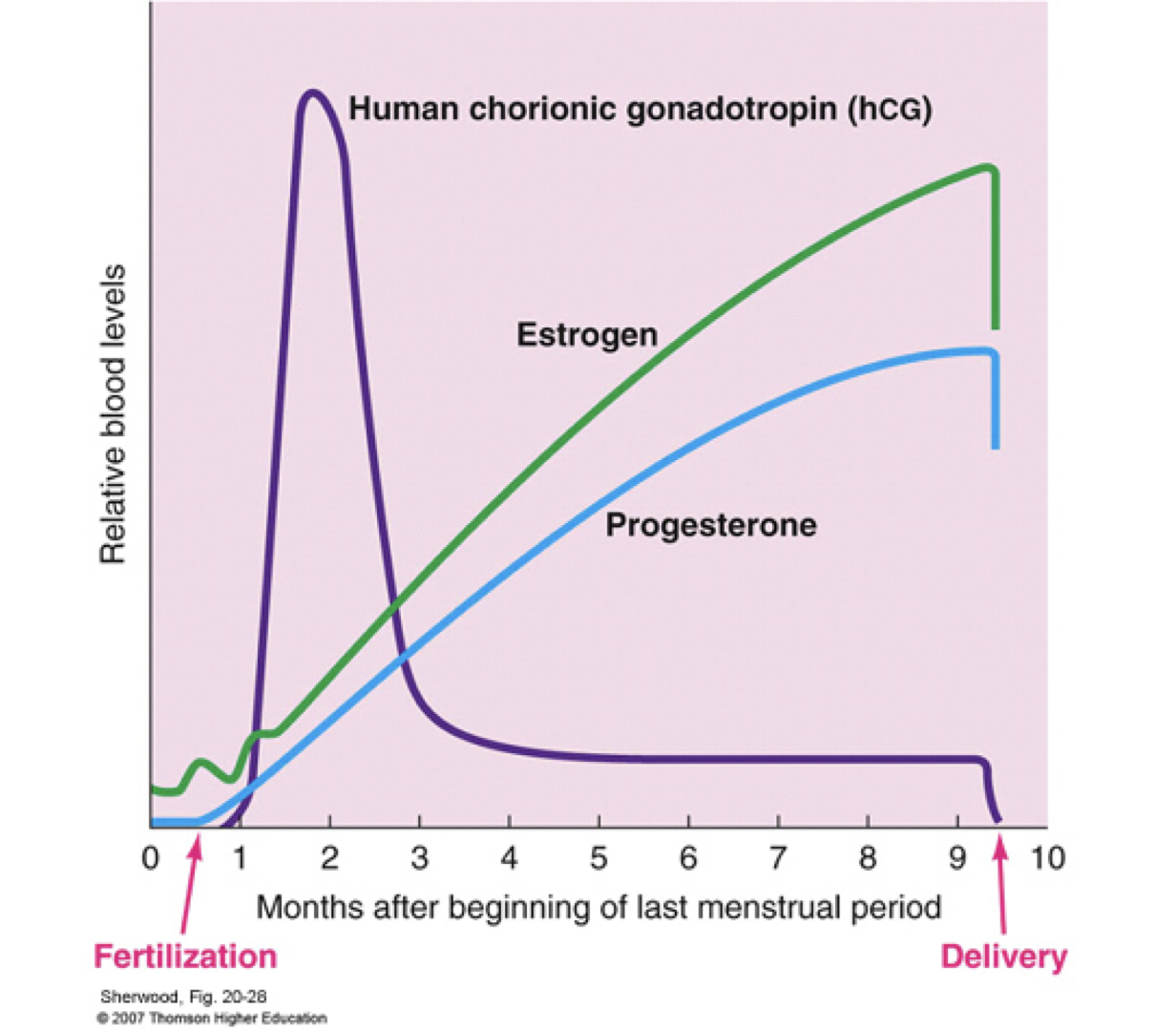
hormones of pregnancy
human chorionic gonadotropin (HCG)
secreted by ___
detected by ___
HCG peaks ~___ weeks, then low for remainder of pregnancy
stimulates growth of ___
atrophies w/o HCG
human chorionic gonadotropin (HCG)
secreted by embryo/ placenta after implantation
detected by home pregnancy test
HCG peaks ~10-12 weeks, then low for remainder of pregnancy
stimulates growth of corpus luteum
atrophies w/o HCG
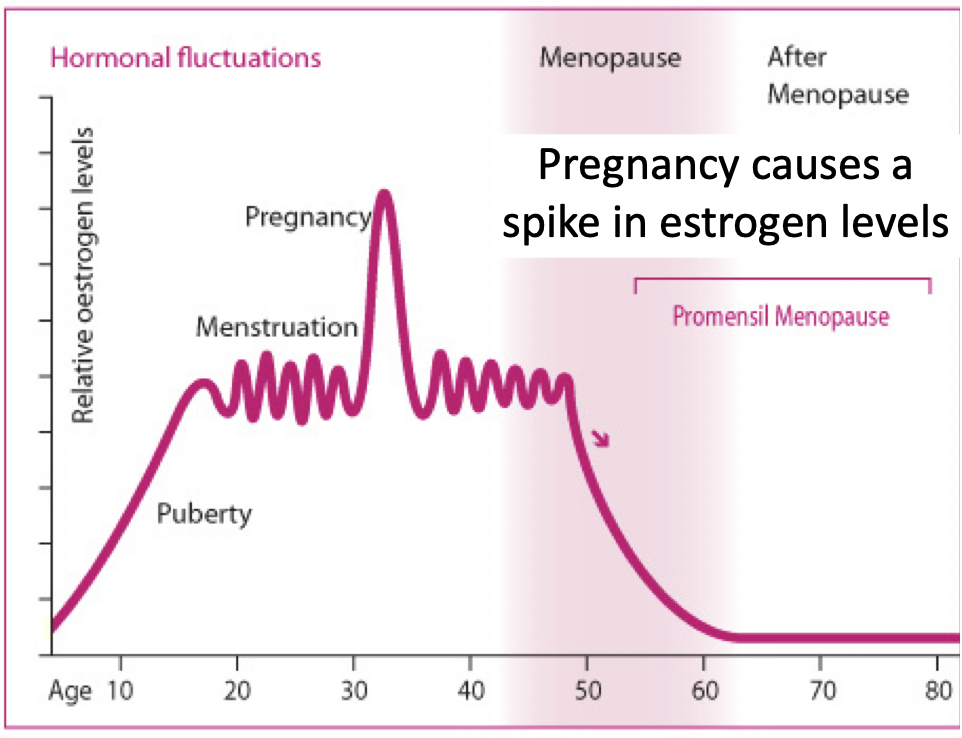
hormones of pregnancy
estrogen
30x usual amount secreted by end of ___
stimulates ___
enlargement of breasts & uterus
growth of mammary ducts
increased elasticity/ flexibility of pelvic joints
estrogen
30x usual amount secreted by end of gestational period
stimulates tissue growth
enlargement of breasts & uterus
growth of mammary ducts
increased elasticity/ flexibility of pelvic joints
hormones of pregnancy
progesterone
suppresses ___
suppresses __
promotes ___
stimulates ___
progesterone
suppresses secretion of gonadotropins: prevents ovulation & menstruation
suppresses uterine contractions
promotes proliferation of functional layer: forms maternal placenta
stimulates development of mammary glands
hormones of pregnancy
.
hormones of pregnancy
oxytocin
stimulates __
stimulates ___
relaxin
relaxes __
stimulates ___
promotes __
parathyroid hormone
maintains __
aldosterone
increases __
oxytocin
stimulates uterine contractions
stimulates contractions of myoepithelial cells in mammary glands
relaxin
relaxes pelvic ligaments and pubic symphysis
stimulates growth of functional layer
promotes growth of blood vessels in uterus
parathyroid hormone
maintains maternal blood calcium levels
aldosterone
increases maternal blood volume
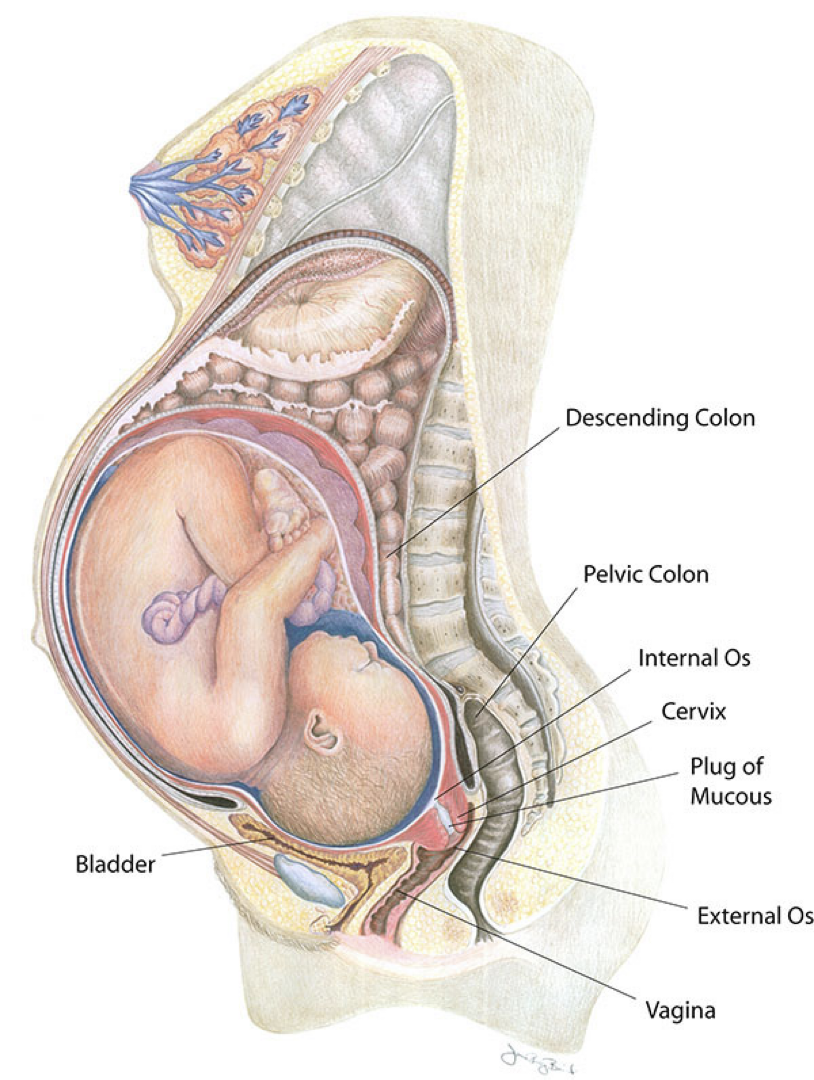
anatomical changes
uterus greatly ___
abdominal organs ___
increasing ___
lordosis can develop:
enlargement of ___
uterus greatly increases in size
abdominal organs crowded up against diaphragm: ribs flare
increasing abdominal projection changes center of gravity
lordosis can develop: increased curvature of lumbar spine
enlargement of breasts
physiological changes: digestive system
nausea
potentially from decreased ___
potentially adaption to __
potentially from elevated __
hyperemesis gravidarum:
nausea
potentially from decreased intestinal motility
potentially adaption to protect fetus from ingested toxins
potentially from elevated hormones
hyperemesis gravidarum: severe nausea and vomiting that may require hospitalization
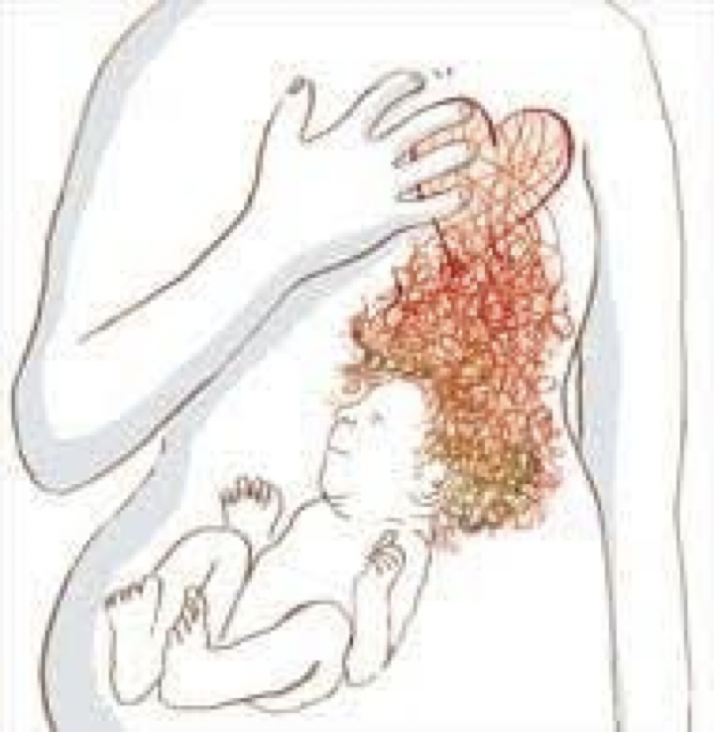
physiological changes: digestive system
constipation: ___
heartburn
enlarged uterus compresses stomach
___ relax lower esophageal sphincter
costigan et al 2006 research showed: heartburn severely associated with newborn hair volume
constipation: reduced intestinal motility
heartburn
enlarged uterus compresses stomach
relaxin & estrogen relax lower esophageal sphincter
costagin et al 2006 research showed: heartburn severely associated with newborn hair volume
physiological changes: circulatory & urinary system
___ increase 30-40%
aldosterone promotes ___
can lead to edema
___ increases 50%
disposal of increased maternal & fetal wastes
growing uterus compresses bladder: more frequent ___
blood volume & cardiac output increase 30-40%
aldosterone promotes water & salt retention
can lead to edema
glomerular filtration rate increases 50%
disposal of increased maternal & fetal wastes
growing uterus compresses bladder: more frequent micturitioin reflex
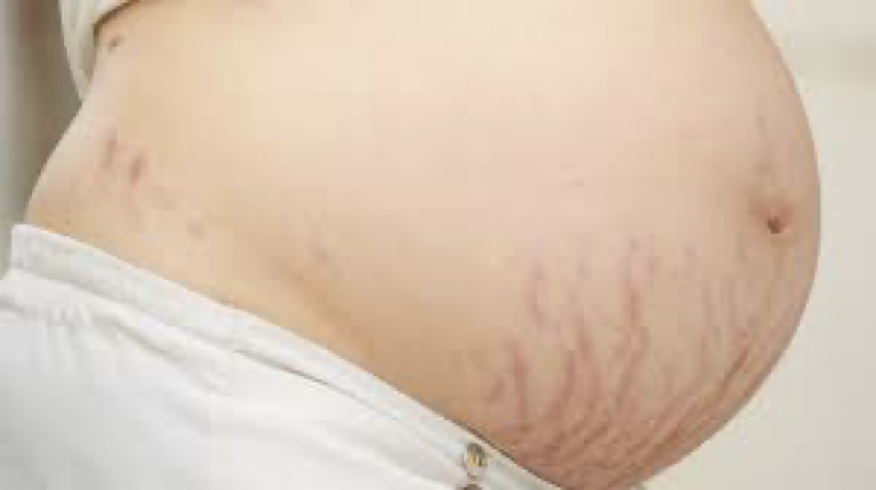
phsiological changes: integumentary system
abdominal skin stretches
expansion of abdomen
fat disposition
stretch marks: ___
linea negra (formation of line down the stomach), chloasma (darkening of cheeks, chin, forehead): due to ___
abdominal skin stretches
expansion of abdomen
fat disposition
stretch marks: tearing of subcutaneous connective tissue
linea negra (forms down center of stomach), chloasma (darkening of cheeks, chin, forehead): due to increased melanocyte activity darkens some areas of skin
gestational diabetes
develops 1-3% of pregnant women
due to ___
insulin insensitivity
__& __
risk of excessive fetal size
increased ___ risk
usually controlled through diet & exercise
often reverses after delivery of infant
but 40-60% develop T2D w/ 15 years
develops 1-3% of pregnant women
due to hormonal changes & placental physiology
insulin insensitivity
hyperglycemia (elevated blood glucose), glucosuria (reabsorption of glucose impaired)
risk of excessive fetal size
increased C section risk
usually controlled through diet & exercise
often reverses after delivery of infant
but 40-60% develop T2D w/ 15 years
childbirth
parturition: ___: usually within 15 days of due date
fetus normally turns into ___ in 7th gestational month
childbirth begins with ___
parturition: final stage of pregnancy: usually within 15 days of due date
fetus normally turns into vertex position in 7th gestational month
begins with onset of labor
initiation of labor
largely triggered by ___
surge in ____ triggers ___
corresponding surge in placental estrogen: ___
rising estrogen/ decreased progesterone
prepares cervix for ___
prepares myometrium for ___
formation of gap junctions
Braxton Hicks contractions
increases sensitivity of ___
induce true labor contractions
largely triggered by fetal hormones
surge in fetal cortisol in final weeks triggers final maturation of lungs
corresponding surge in placental estrogen: weakens action of progesterone
rising estrogen/ decreased progesterone
prepares cervix for dilation
prepares myometrium for contraction
formation of gap junctions
Braxton Hicks contractions (practice contractions of the uterus)
increases sensitivity of myometrium to oxytocin & prostaglandins
induce true labor contractions
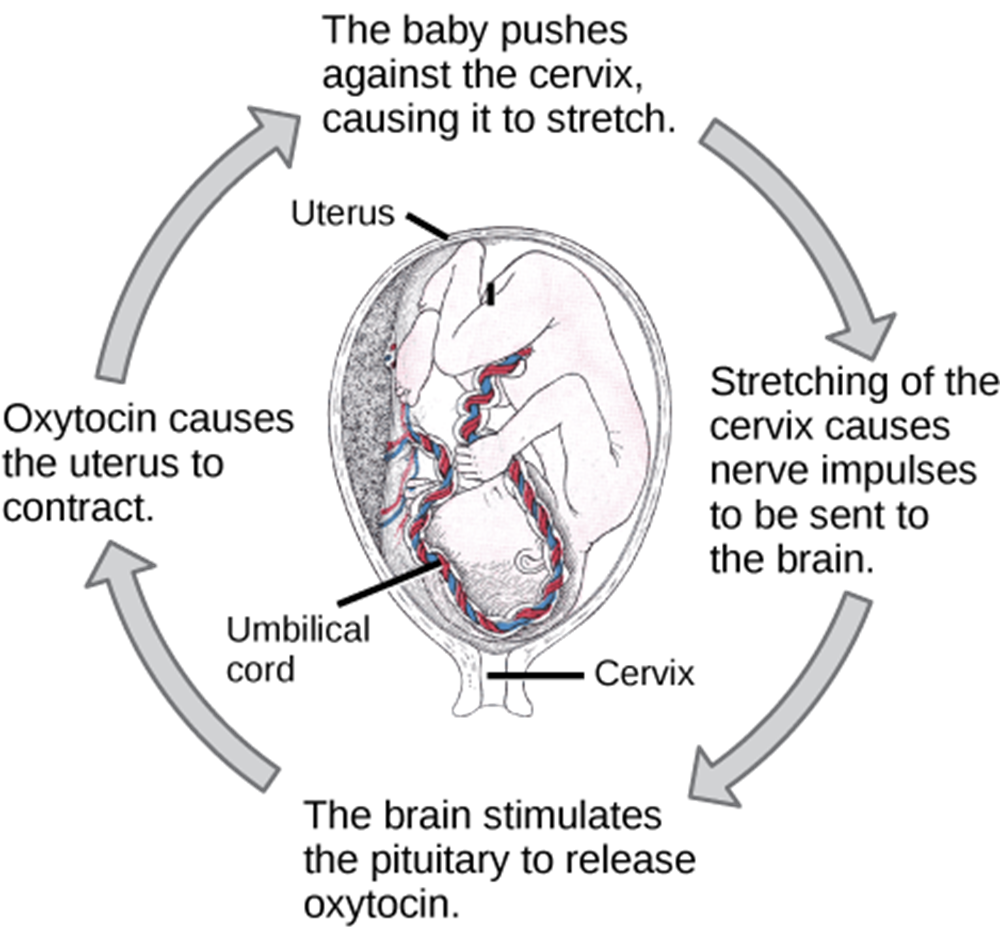
labor contractions
begins ~30min apart
strongest in ___, weaker near ___: pushes fetus downwards
oxytocin
stimulates ___
stimulates ___
positive feedback mechanism
uterine ___
neuroendocrine reflex: ___
oxytocin induces ___
begins ~30min apart
strongest in fundus, weaker near cervix: pushes fetus downwards
oxytocin
stimulates myometrium to contract
stimulates fetal tissue to secrete prostaglandins
positive feedback mechanism
uterine contractions push fetus down: stretches cervix
neuroendocrine reflex: oxytocin released in response to stretch
oxytocin induces uterine contractions
induced labor
stimulation of contractions prior to onset of labor
frequently in response to ___
pitocin: ___
increased risk of ___
stimulation of contractions prior to onset of labor
frequently in response to post-term pregnancy, premature rupture of amniotic membranes, uterine infection, preeclampsia
pitocin: synthetic oxytocin administered to progress labor
increased risk of C section or post-delivery uterine bleeding
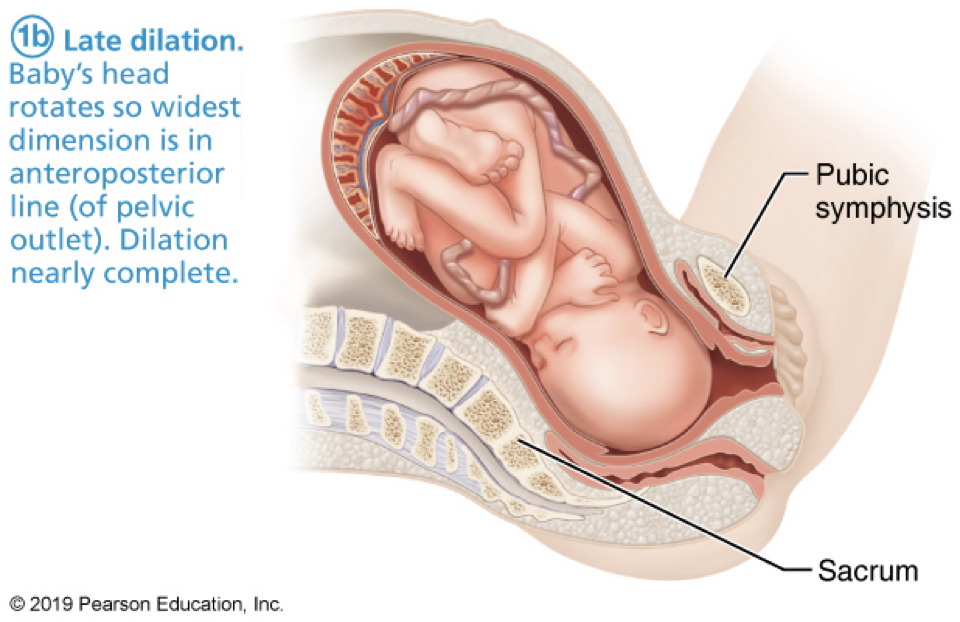
labor: dilation stage
longest stage
contractions 15-30 min apart, last for 10-30 seconds
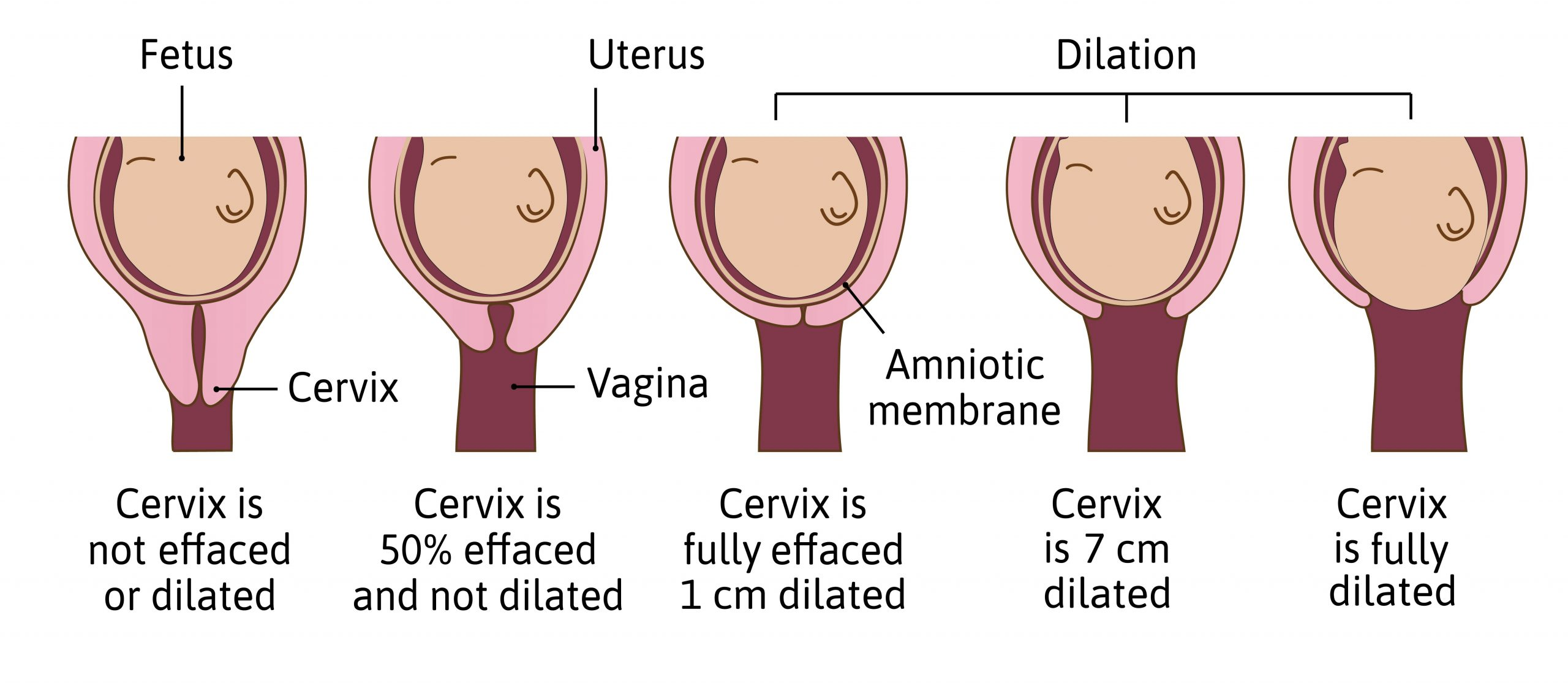
dilation (widening) of ___ & effacement (thinning) of ___
from pressure of ___
maximum diameter of 10cm
engagement: ___
longest stage
contractions 15-30 min apart, last for 10-30 seconds
dilation (widening) of cervical canal & effacement (thinning) of cervix
from pressure of fecal head w/ each contraction
maximum diameter of 10cm
engagement: infants head begins to descend through birth canal
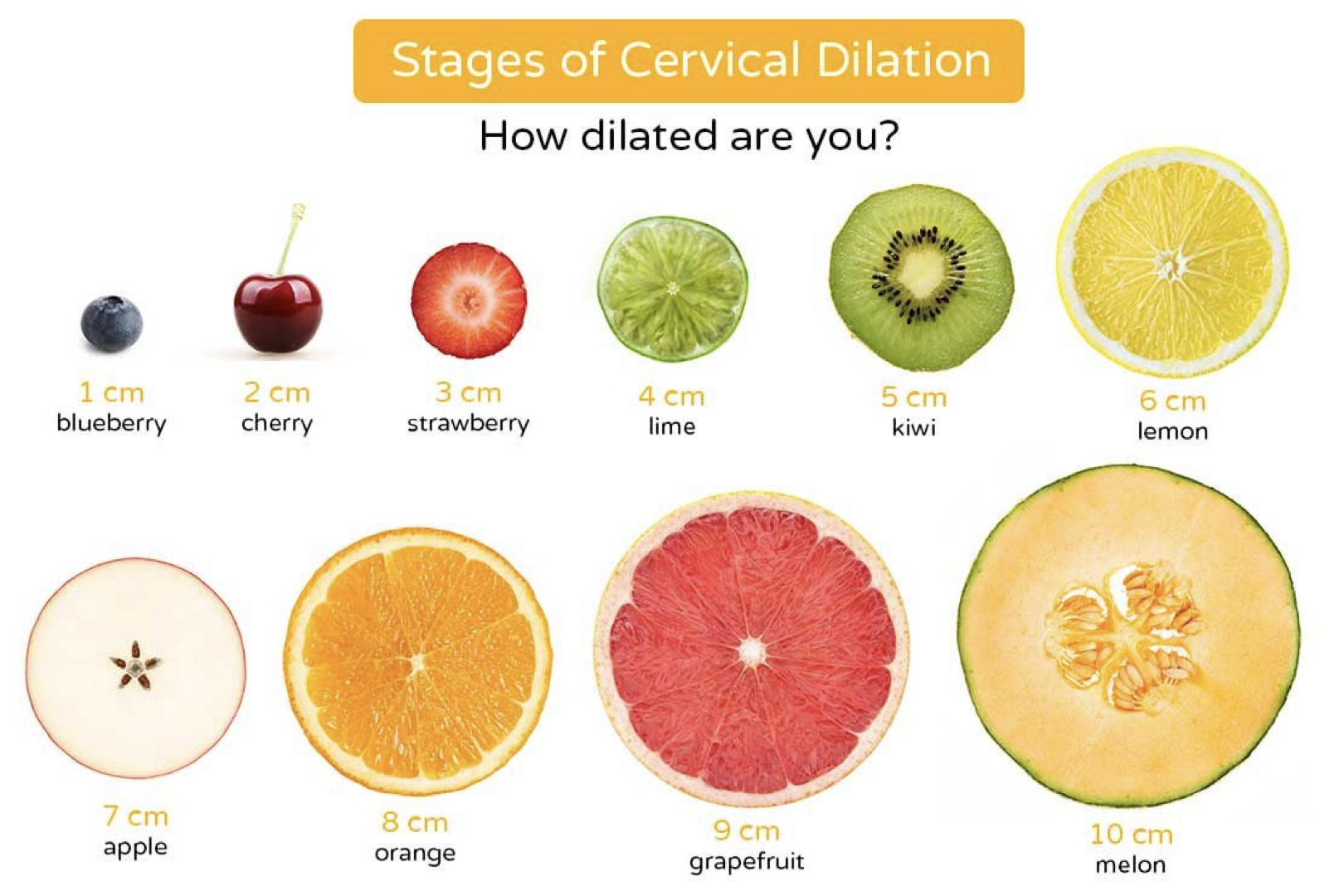
dilation
.
.
epidural
local anesthetic to ___
reduced sensation to ___
may cause drop in ___: IV fluids given
local anesthetic to nerves of lumbar spinal cord
reduced sensation to lower body
may cause drop in blood pressure (bc sympathetic innervation to blood vessels decreases & they vasodilate): IV fluids given
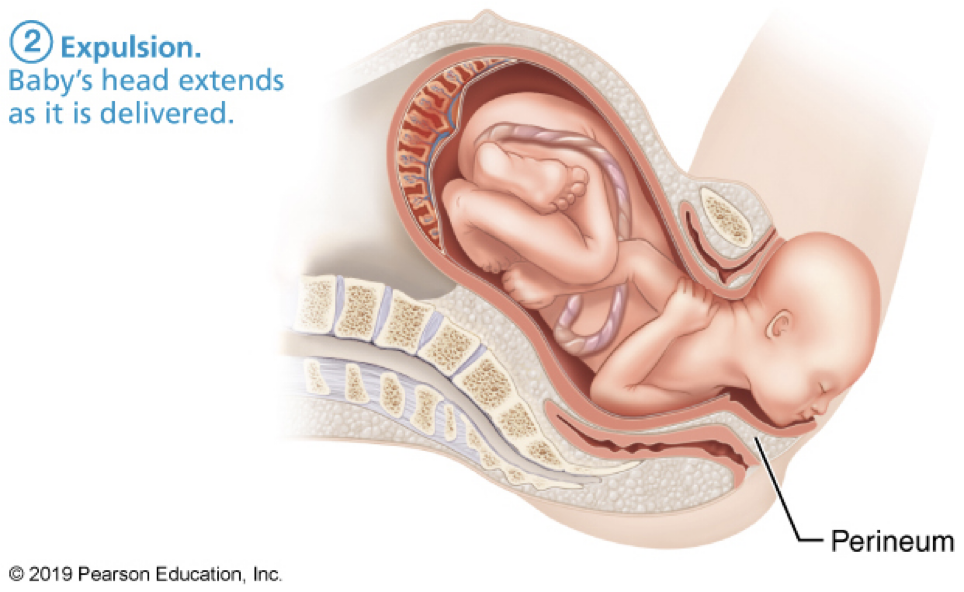
labor: expulsion stage
cervix fully ____
typically 1-2 hrs at 1st birth, shorter for subsequent births
strong contractions every 2-3 min, last ~1 min
crowning: ___
cervix fully dilated
typically 1-2 hrs at 1st birth, shorter for subsequent births
strong contractions every 2-3 min, last ~1 min
crowning: top of baby’s head is visible
caesarian section
surgical delivery of baby through maternal abdominal wall
due to health concerns, large fetal size, adverse fetal position, multiple births
incision made through fat, skin, abdominal fascia, peritoneum, uterus, amniotic sac
abdominal muscles retracted
longer recovery time, increased risk of complications than vaginal delivery
.
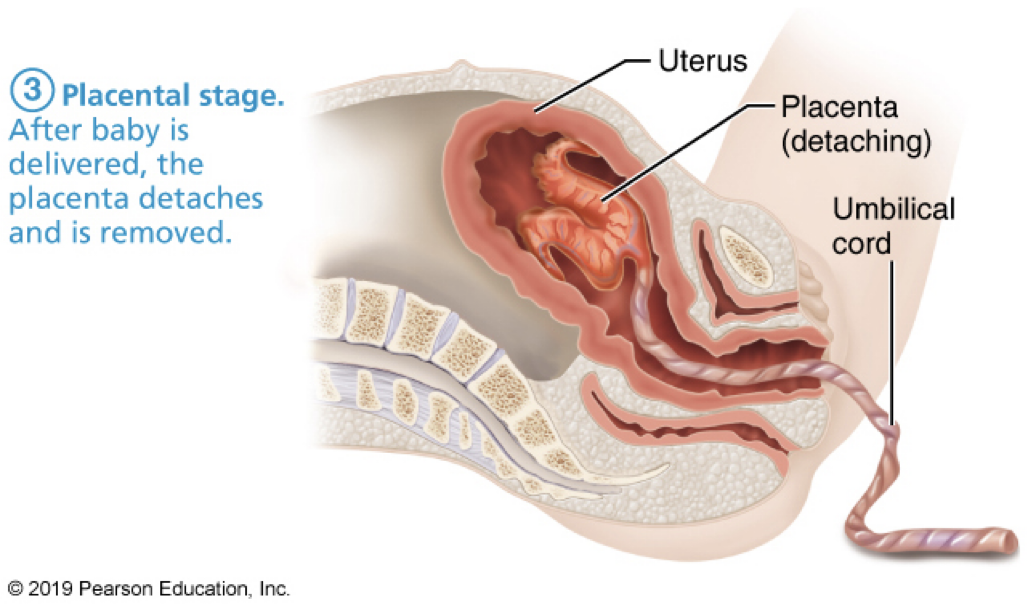
labor: placental stage
uterus continues to ___
contractions of myometrium ___
placenta & amniotic sac (afterbirth) ___
uterus continues to contract: placenta detaches
contractions of myometrium compress blood vessels (prevent excess bleeding)
placenta & amniotic sac (afterbirth) expelled