Coral Reef
 Call Kai
 Learn
Learn Practice Test
 Spaced Repetition
 Match
Match Flashcards
 Knowt Play
1/45

There's no tags or description
Looks like no tags are added yet.
Name | Mastery | Learn | Test | Matching | Spaced | Call with Kai |
|---|
No analytics yet
Send a link to your students to track their progress
46 Terms
Tropical coral reefs
most biodiverse marine community
30 degrees north and south
laltitudes where tropical coral reefs are found
20 degrees
temperature that tropical coral reefs thrive in (stable)
west currents of gyres
where on a gyre would tropical coral reefs be found (warm side, opposite to kelps)
35 degrees
max temperature for tropical coral reefs before symbiotic relationships start to die
higher salinity
what is a result of the coral reefs being atht e equator where there is warmer weather and more evaporation
subtidal
What tidal zone are tropical coral reefs found in?
cnidocytes
cells that hold nematocyst in corals polyps
zooplankton
the prey of corals
zooxanthellae
what tropical corals form a symbiotic relationship with that is essential to them
coral bleaching
when zooxanthellae die off and tropical corals loose their color from them (the first sign of heat stress)
budding
name of asexual reproduction tropical corals do
broadcast spawning
name of sexual reproduction tropical corals do
calyx
plase where the polyp of a coral sits (cup shape)
Theca
everything below/around the calyx that is stoney from calcium carbonate
compact/massive
shape that is stable/slow growth/reef creators
branching
shape that is fragile/rapid growth/creates niches
hermatypic
reef builder coral that secrete calcium carbonate (stony corals)
scleractinian
stony/true corals that are reef builders
ahermatipic
any non-reef building coral (soft corals)
deep sea coral reefs
more fragile corals found at a deeper depth
lack zooxanthellae
what makes deep sea corals the most different from tropical
suspension feeding and diffusion
tactics of deep sea corals to feed/obtain nutrients (two)
coralline algae
another organism that can produce CaCO3 for a good reef bed
bioerosion
the process of pieces being scraped off the reef by fish/urchin
refreshes reef
positive side of bioerosion
prevents photosynthesis and the ability of larvae to attatch
what happens when sediment covers corals (two things)
high nutrient levels
what is something that corals are HIGHLY susceptible to
reef flat
zone closest to land that has the lagoon and back reef
lagoon zone
soft substrate bed with more algae and wave protection from reef crest (waves)
more runnof
what is an additional stress due to a zone being closer to land
back reef
section behind the reef crest with more stones/boulders and minimmal wave action
reef crest
middle coral zone that protects others from waves but is high in action itself
algae
what can take over if the reef crest is too stressful for corals due to wave action and exposure to air?
for reef zone
coral zone farthest from land with the buttress and reef wall
butress
takes wave impact, gradually gets deeper and the more coral is found at shallower lighter zones (upper fore reef zone)
reef wall
drop off zone where there are now more sponges than corals (lower fore reef zone)
fringing reef
surrounding/offshore from an island with a small/no lagoon and a long reef flat
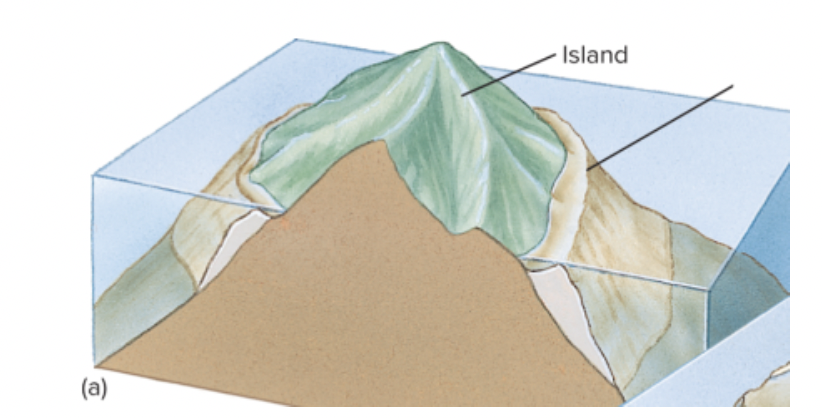
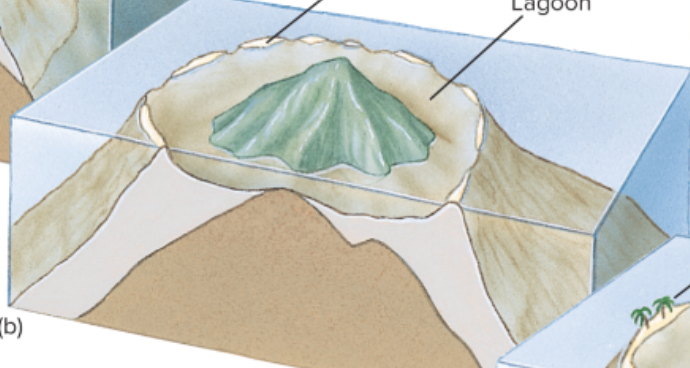
barrier reef
island slightly sunk creating a lagoon with the reef surrounding that
spur and groove
found on reef slope due to wave and wind action
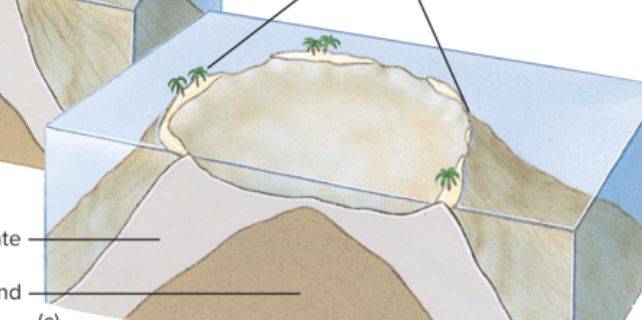
atoll
island is fully gone and patchy small islands are left that surround a big lagoon, the reefs in between these
coral and gall crab
commensalism example for corals (one benefits, other in unaffected)
coral and flatworm
parasitic relationship with coral where the coral gets eaten
space/light
big stress in coral leading to some eating each other, fast growth, blocking out others light, and shape changing
pre-settlement
hypothesis that says corals come from larvae settlement that was due to the presence of fish or not
post-settlement
hypothesis that says corals come from the ability to compete for resources