HORT 2030: Exam #2
 Call Kai
 Learn
Learn Practice Test
 Spaced Repetition
 Match
Match Flashcards
 Knowt Play
1/217

There's no tags or description
Looks like no tags are added yet.
Name | Mastery | Learn | Test | Matching | Spaced | Call with Kai |
|---|
No analytics yet
Send a link to your students to track their progress
218 Terms
What are the three primary axis flowers in a symmetrical triangle design?
They define the framework of the design, with the sides being mirror images of each other.
How does an asymmetrical triangle design differ from a symmetrical one?
It uses objects or flowers of unequal size, number, or weight placed on opposite sides of a vertical axis.
What is the defining characteristic of a right-angle floral design?
The tall main line is perpendicular to the base.
What distinguishes a scalene triangle design?
The central axis is at an oblique angle to the base, resulting in unequal sides and angles.
Which floral design shape is characterized as egg-shaped and appears the same from all viewing angles?
The oval design.
What is the minimum number of flowers required for the framework of a fan-shaped design?
Five flowers.
What container is required for a Hogarth curve (S-curve) design?
A compote container.
What is the primary aesthetic goal of a Hogarth curve design?
To express flowing grace, gentleness, softness, style, and fashion.
How are flowers positioned in a horizontal design?
The line of the flowers is parallel to the surface, typically in a low, long container.
What is the 'Mille de fleur' style of floral design?
A 'thousand flowers' style that is multicolored and rounded or fan-shaped, expressing opulence and abundance.
What are the defining features of a Biedermeier design?
It is compact, rounded or conical, and features concentric rings of flowers where each row uses the same flower or pattern.
What is the structure of a Phoenix design?
It features a rounded base with tall, flowering branches or line flowers in the center.
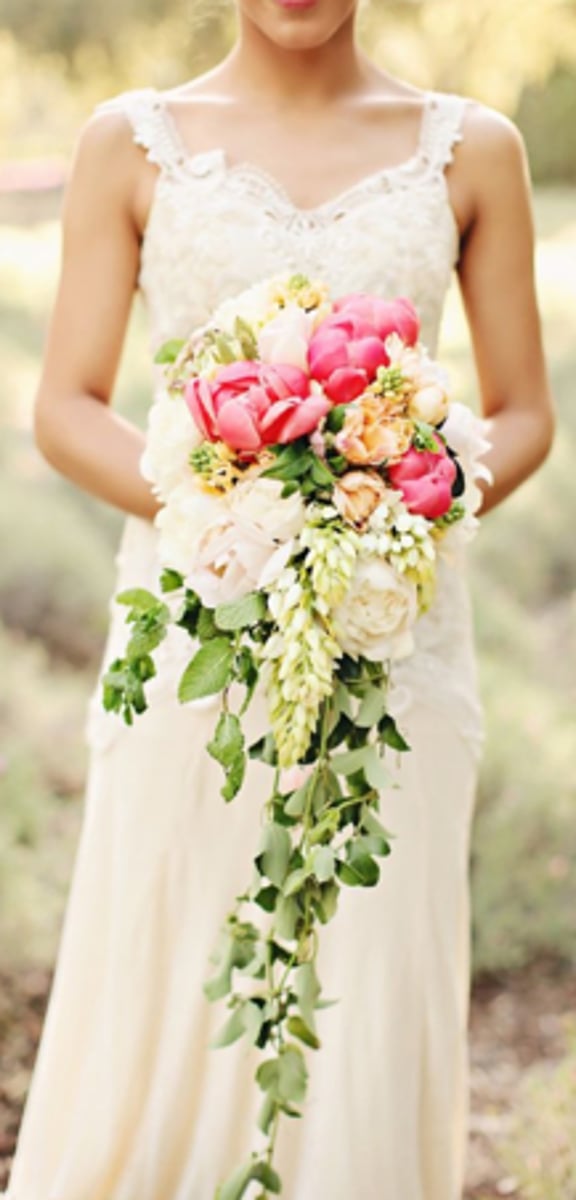
What characterizes a Waterfall design?
It features a downward flow of materials from the center of the design, requiring a compote container.
What is the focus of a Botanical design?
The study of the life of a plant, where all parts including buds, blossoms, foliage, stems, bulbs, and roots are visible.
How does a Vegetative design differ from a Landscape design?
Vegetative design presents plants as they grow in nature in a 'simulated slice' of nature, whereas Landscape design depicts a larger, groomed garden area.
What is a key requirement for 'Formal Linear' or 'Art Deco' designs?
Negative space is critical, and they use a minimum number of shapes and quantities.
In modernistic designs, what defines a 'Sheltered' arrangement?
The flowers are protected within the container, below the rim, requiring the viewer to peer down into the design.
What is the 'Pave' style of floral design?
A style where materials are placed closely together in a flat, jewel-like pattern with no floral foam visible.
What characterizes the 'New Wave' style of floral design?
It involves manipulating materials through painting, gluing, folding, or curling to create bizarre configurations with no set rules.
Define 'Harmony' in the context of floral design.
A pleasing quality created by the careful selection of parts for a composition, ensuring all elements go well together.
What is the difference between scale and proportion in floral design?
Proportion refers to the relationship of parts to each other and the whole, while scale refers to the size relationship between the design and its environment.
What is the purpose of a focal point in a floral arrangement?
It serves as the accent or center of interest to draw the viewer's eye.
What are the three main components of the design process?
The client, the function/environment, and the designer's input.
What is the definition of unity in floral design?
The state of being one, where the relationship of parts produces a single, general effect and the whole design is predominant over individual components.
What are three ways to achieve unity in a floral arrangement?
Proximity, repetition, and continuation/transition.
How can you achieve unity with variety?
By repeating colors in different tints, tones, and shades, or by repeating shapes in different sizes.
What is the primary purpose of a focal point in a floral design?
To serve as a center of interest that directs the viewer's eye.
Where are the traditional locations for a focal point in a design?
Low in the design or in the intermediate area.
What is the easiest way to create a focal point?
Using color contrast, such as bright, intense, or warm colors that differ from the rest of the design.
Define rhythm in floral design.
The flow or movement characterized by the regular recurrence of elements, expressing a feeling of motion without confusion.
What is the difference between physical and visual balance?
Physical balance refers to the design being mechanically sound and self-supporting, while visual balance refers to a feeling of stability and equilibrium.
What are the four types of visual balance?
Symmetrical, asymmetrical, radial, and open.
Describe symmetrical balance.
Identical flowers and foliages are repeated in similar positions on either side of an imaginary central axis, creating a formal, restful, and stable effect.
What characterizes asymmetrical balance?
Dissimilar elements on each side of a central axis that provide equal visual weight, creating an informal and natural look.
What is radial balance?
A design where all elements radiate from a common central point, creating an immediate and obvious focal point.
What are the standard proportion guidelines for plant material in a tall container?
The plant material should be at least 1 1/2 to 2 times the height of the container.
What are the standard proportion guidelines for plant material in a low, flat container?
The plant material should be at least 1 1/2 to 2 times the width of the container.
Define 'basing' in advanced floral design.
The technique of attractively detailing a design's base to provide visual stability, balance, and maximum visual appeal.
What is the difference between clustering and grouping?
Clustering involves placing materials closely together (often at the base), while grouping involves placing similar types together to emphasize form and color, often with negative space between groups.
What is the difference between banding and binding?
Banding is a decorative technique to draw attention to an area, while binding is the physical act of joining or fastening stems together.
What is the purpose of 'shadowing' or 'mirroring' in floral design?
Placing identical materials closely behind and below the taller materials.
Why is floral preservative important when using clear glass containers?
Because glass is transparent, the preservative helps keep the water clear and free of debris.
What are the four primary functions of a retail flower shop display?
To attract attention, create interest, turn interest into desire, and generate sales.
What is the purpose of a 'vignette' display in a flower shop?
To allow different themes and types of products to be showcased together.
Where should refrigerators be located in a retail flower shop layout?
Towards the back of the store.
What is the definition of scale in floral design?
The overall size of an object compared with other objects, such as flowers to the container or the arrangement to its surroundings.
What is 'sequencing' in floral design?
When materials move in a progressing pattern.
What is the main advantage of plastic containers in floristry?
They are low cost, lightweight, 'unbreakable,' and come in a wide variety of styles that can mimic other materials like glass or ceramic.
What are the four standard cost percentages in floral business management?
Cost of goods (30%), Operational expenses (35%), Labor (20%), and Profit (15%).
What is the definition of a 2:1 or 3:1 markup in floral pricing?
A pricing strategy where the retail price is set at two or three times the wholesale cost of the goods.
What is the oldest known school of floral design in Japan?
Ike-no-bo.
What does the term 'Ikebana' translate to?
Living flowers.
In Japanese floral design, what do the terms Shin, Soe, and Tai represent?
Shin is the tallest central group, Soe is the harmonizing group, and Tai is the shortest group.
What is the difference between Nageire and Moribana styles of Ikebana?
Nageire uses deep containers to express the natural state of the flower, while Moribana uses low, flat containers to 'pile up' flowers.
Which ancient civilization is credited with being the first to have professional florists?
The Greeks.
What was the significance of the lotus flower in Egyptian culture?
It was considered a sacred flower.
What is the origin of the modern 'May Day' celebration in relation to floral history?
It originated from the Roman 'Floralia' festival, which honored the deity Flora.
What characterizes the Byzantine style of floral design?
Symmetrical, tree-style designs using foliage, flowers, and fruit, often with analogous color schemes accented by a complementary color.
What was the primary purpose of gardens during the Middle Ages?
Utility purposes (food and medicine), though monks continued the use of flowers.
What defines the Renaissance style of floral design?
Formal bouquets with heads turned outward, stems covered by leaves, and a stiff, conical arrangement where only blossoms are visible.
What is the 'Hogarth curve' in floral design?
An S-shaped curve popularized during the Baroque and Dutch Flemish period.
What was a 'bough pot' in the English-Georgian period?
A floral arrangement placed in the fireplace.
What are the defining features of the Victorian era in floral design?
Large masses of flowers, foliage, and grasses; round or oval shapes; and highly ornamental containers.
What characterizes Art Nouveau floral design?
Creative, curved lines inspired by nature, applied to both the arrangements and the containers.
What defines the Art Deco style of floral design?
A blend of Egyptian, Aztec, and industrial influences featuring strong lines and geometric forms.
What is the 'Geometric mass design' style of the 1960s and 70s?
Arrangements that combine line and mass in very tight, geometric shapes.
Which dynasty in China is considered the first recorded dynasty?
The Shang dynasty (1600-1046 BC).
What is the indigenous religion of Japan?
Shinto, also known as 'The Way of the Gods'.
During which Japanese period were representative art forms like Ikebana and tea ceremonies developed?
The Muromachi period (1333-1568).
What is the fundamental rule regarding stem placement in Ikebana?
Stems should leave the container as a single growing unit to express natural growth.
What is the primary difference between the Greek and Roman use of wreaths?
While both used them, Roman garlands and wreaths were generally more elaborate than those of the Greeks.
What is the 'Sho-fu-ryu' school of Ikebana?
A 'modern' school that incorporates European tastes into traditional Japanese design.
What is the significance of the 'Cornucopia' in floral history?
It originated during the Greek period.
What is the primary philosophy of Japanese floral design regarding nature?
Flowers should express the role of harmonizing man and nature, spirit and matter, rather than being merely decorative.
What are the three major professional resources listed for florists?
AIFT (American Institute of Floral Designers), SAF (Society of American Florists), and Allied & State Florists' Associations.
what are the factors used to help choose design shape of an arrangement?
Placement, location
Table size and shape
Viewing level
Flowers and foliage
Container
Occasion
formal, equilateral, man-made; sides have mirrored images; 3 primary axis flowers; additional material within framework
symmetrical triangle
Objects or flowers of unequal size, number, or weight placed on opposite sides of a vertical axis
asymmetrical triangle
what are the 2 types of asymmetrical triangles most commonly used in floral design?
right angle design
scalene triangle design
tall main line is perpendicular to the base; 3 primary axis flowers
right angle design
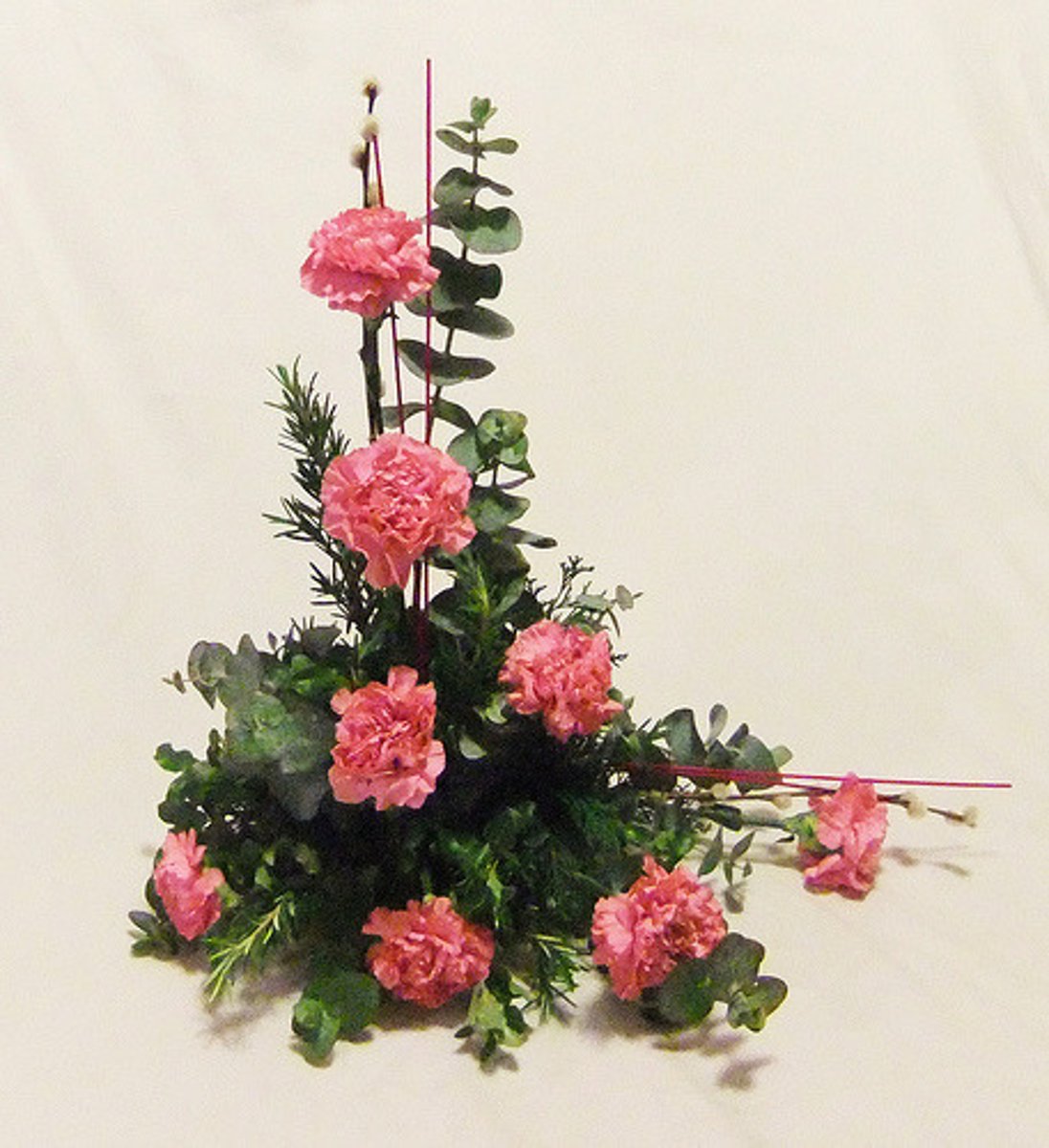
Central axis is at an oblique angle to the base; Unequal sides and angles
scalene triangle
Appears the same on all sides and from all viewing angles(if all sided); Does not have a focal point; more egg shaped
Round/Oval design
line flowers are equal in length; half-circle or fan; 3 main axis flowers; they dont have to have a focal point, but if they do it should be bottom center; 5 flower minimum for framework
fan shaped design
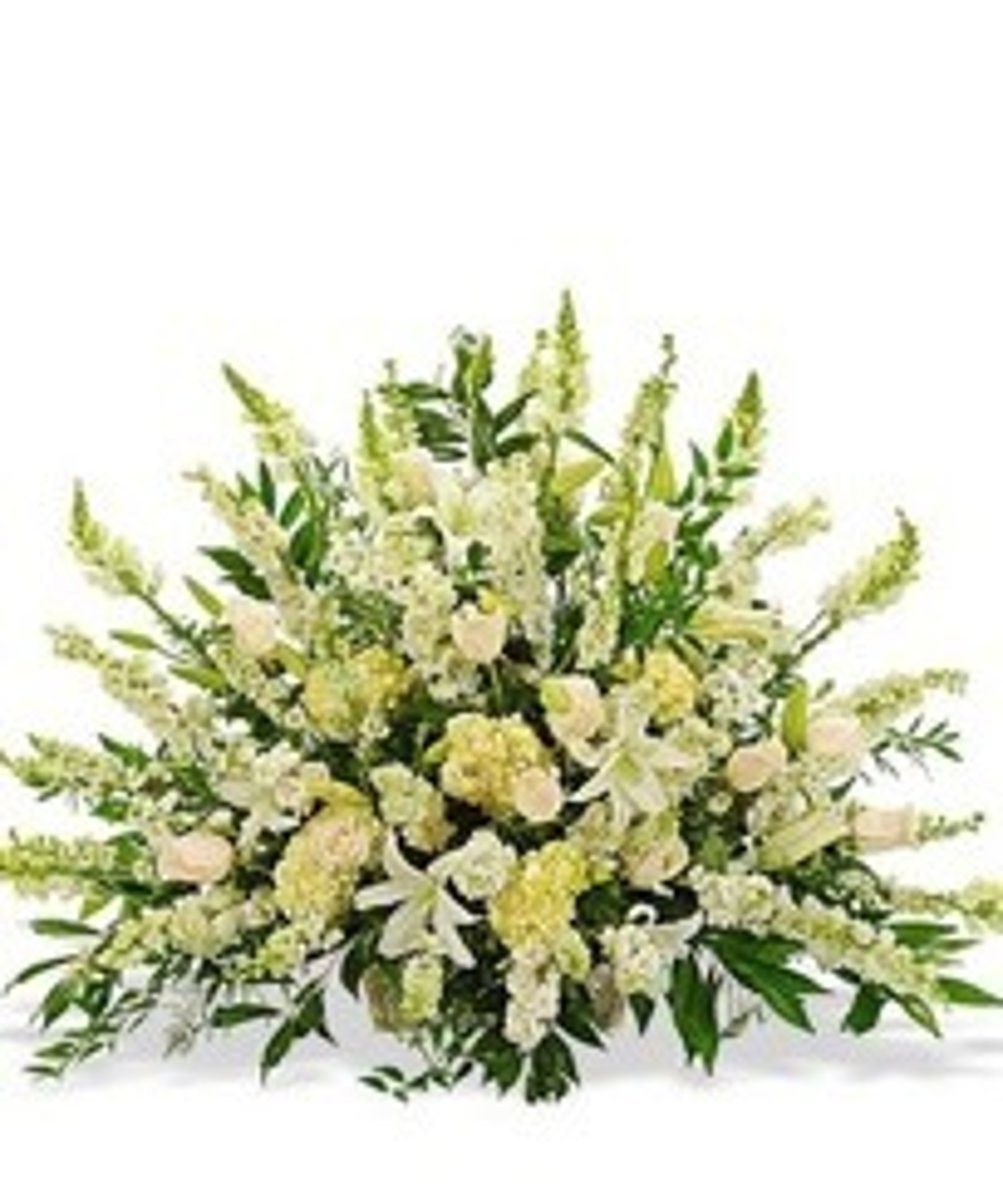
Portion of a circle ; Lines radiate from a point on the circumference; Use about ⅔ of the space of the "circle" for things like a wreath and such; asymmetrical
crescent design
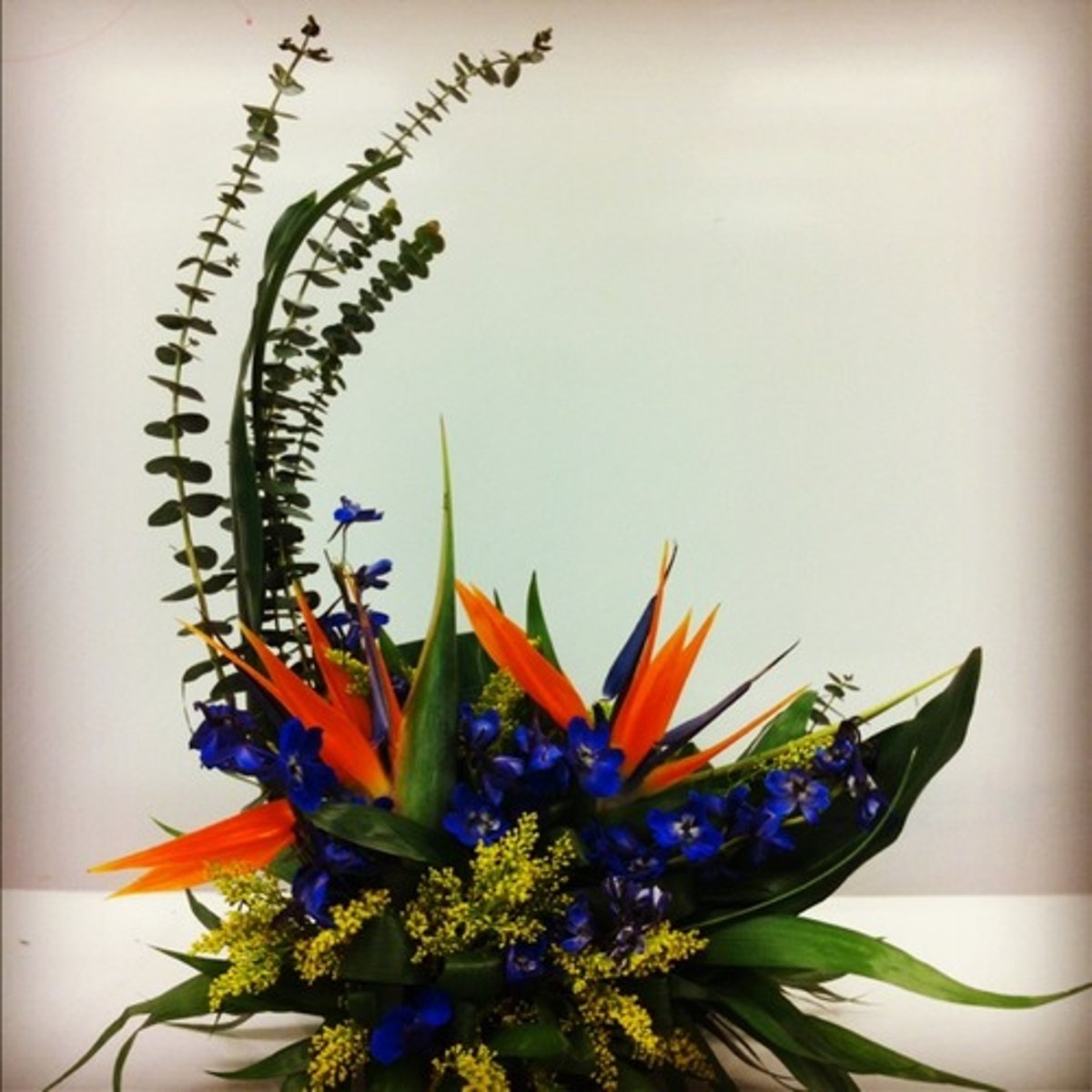
S-curve; named after William Hogarth (early 1700s);Flowing grace, gentleness, softness, style and fashion; Needs compote container
hogarth curve
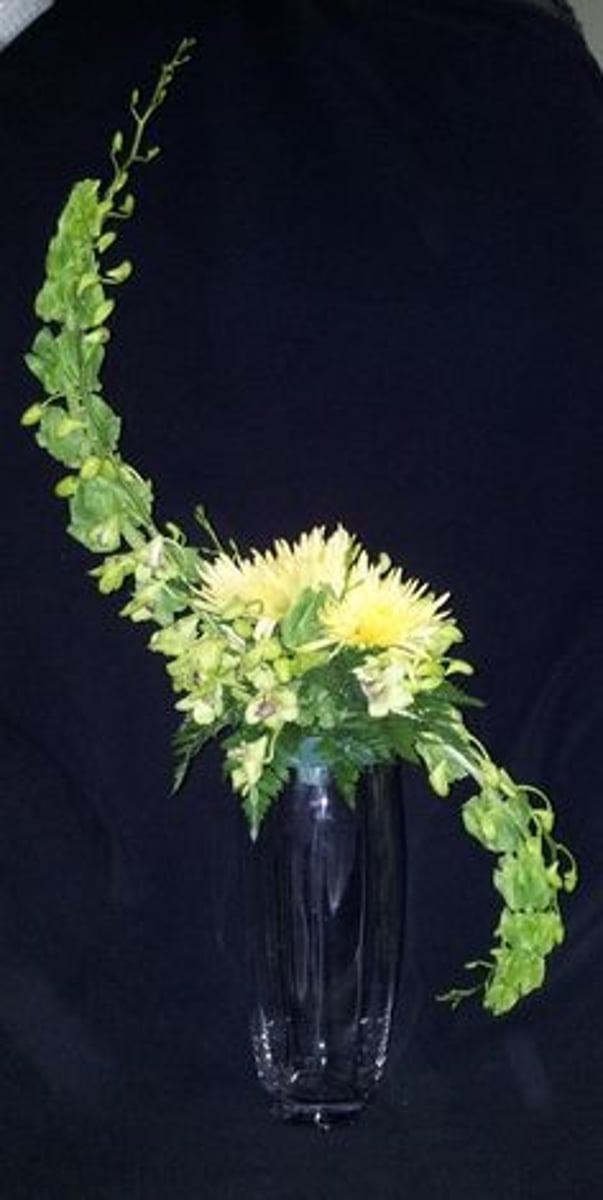
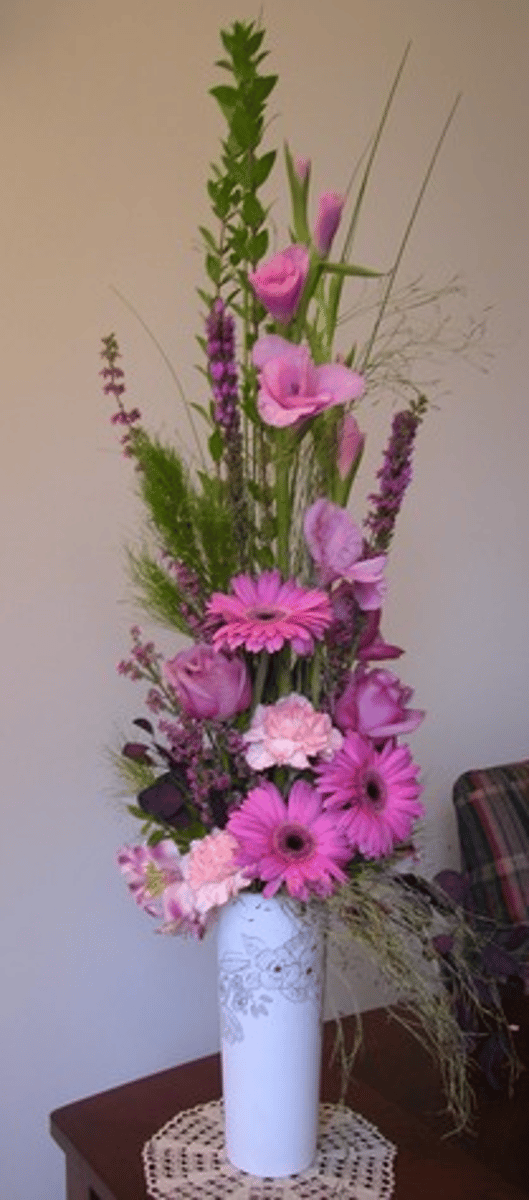
has Perfect equilibrium ; isDramatic; has Linear flowers
Vertical design
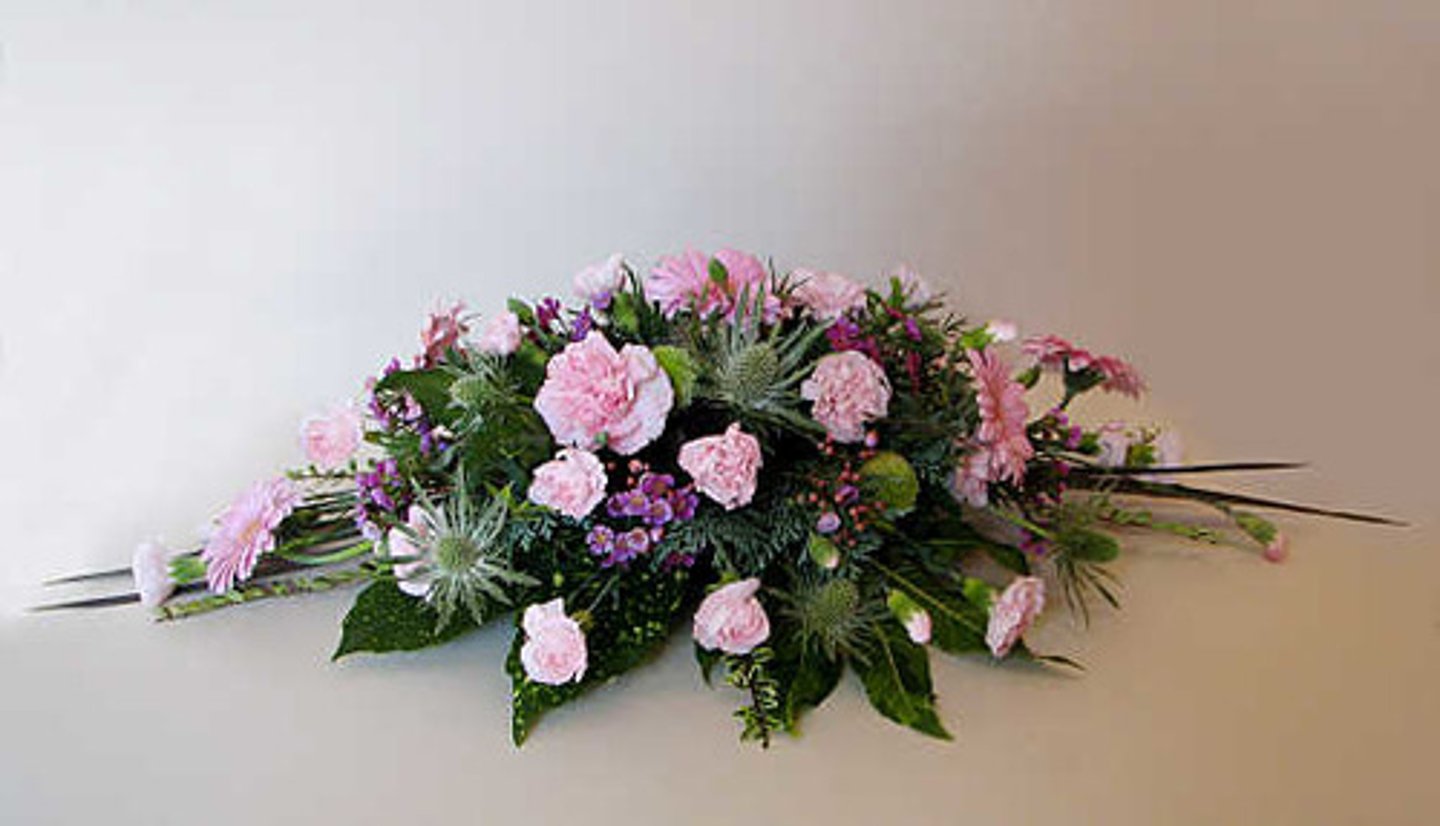
has Line parallel to surface ; Low, long containers
horizontal design
what are the advanced design shapes?
1. Classic design
2. Naturalistic design
3. Linear design
4. Modernistic design
what are the classic designs?
Circular, oval, triangular, and fan-shaped bouquets
Mass bouquets
A thousand flowers
Multicolored
Rounded or fan-shaped
Express opulence and abundance
Mille de fleur
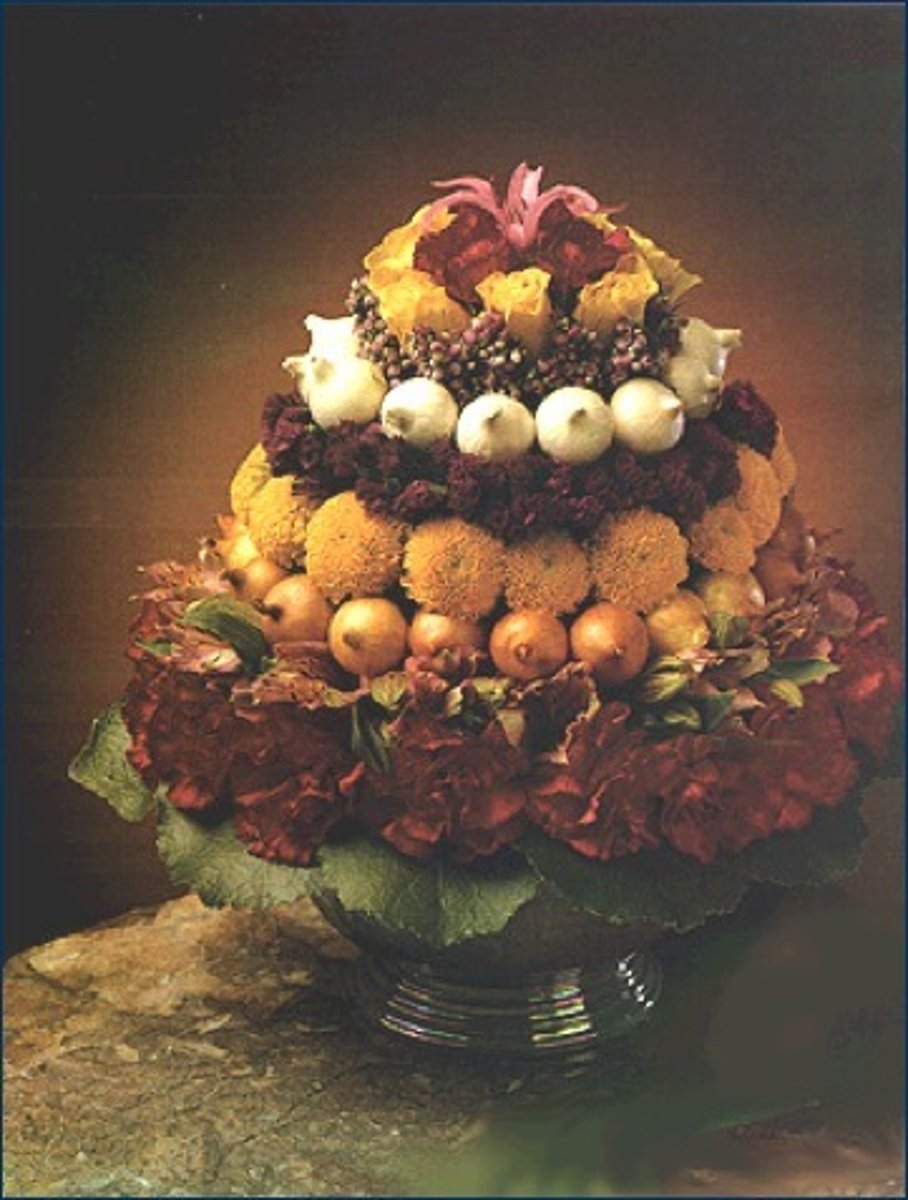
Compact, rounded, or slightly conical in shape
Concentric rings of flowers
Each circular row has the same flower or pattern
Austria and Germany - 1815-1848
Biedermeier
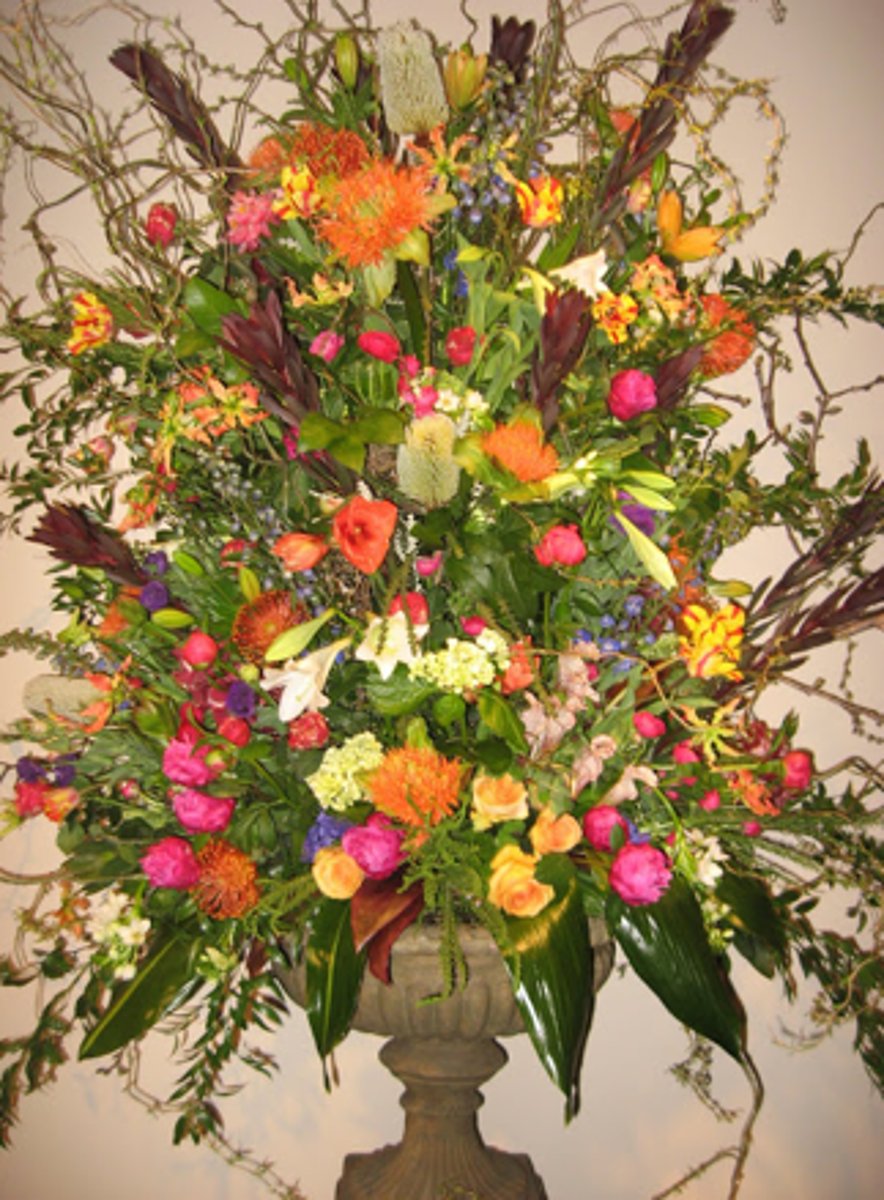
Based on the ancient Egyptian mythological bird
Base - rounded
Center- tall, flowering branches or line flowers
Party centerpiece, home decoration
phoenix
Early 1900s - Bridal Bouquets in Europe
Romantic and naturalistic
Downward flow of materials
Flow from center of design - out and over
Needs a compote container (like hogarth)
Waterfall
what are the naturalistic design styles?
botanical
vegetative
landscape
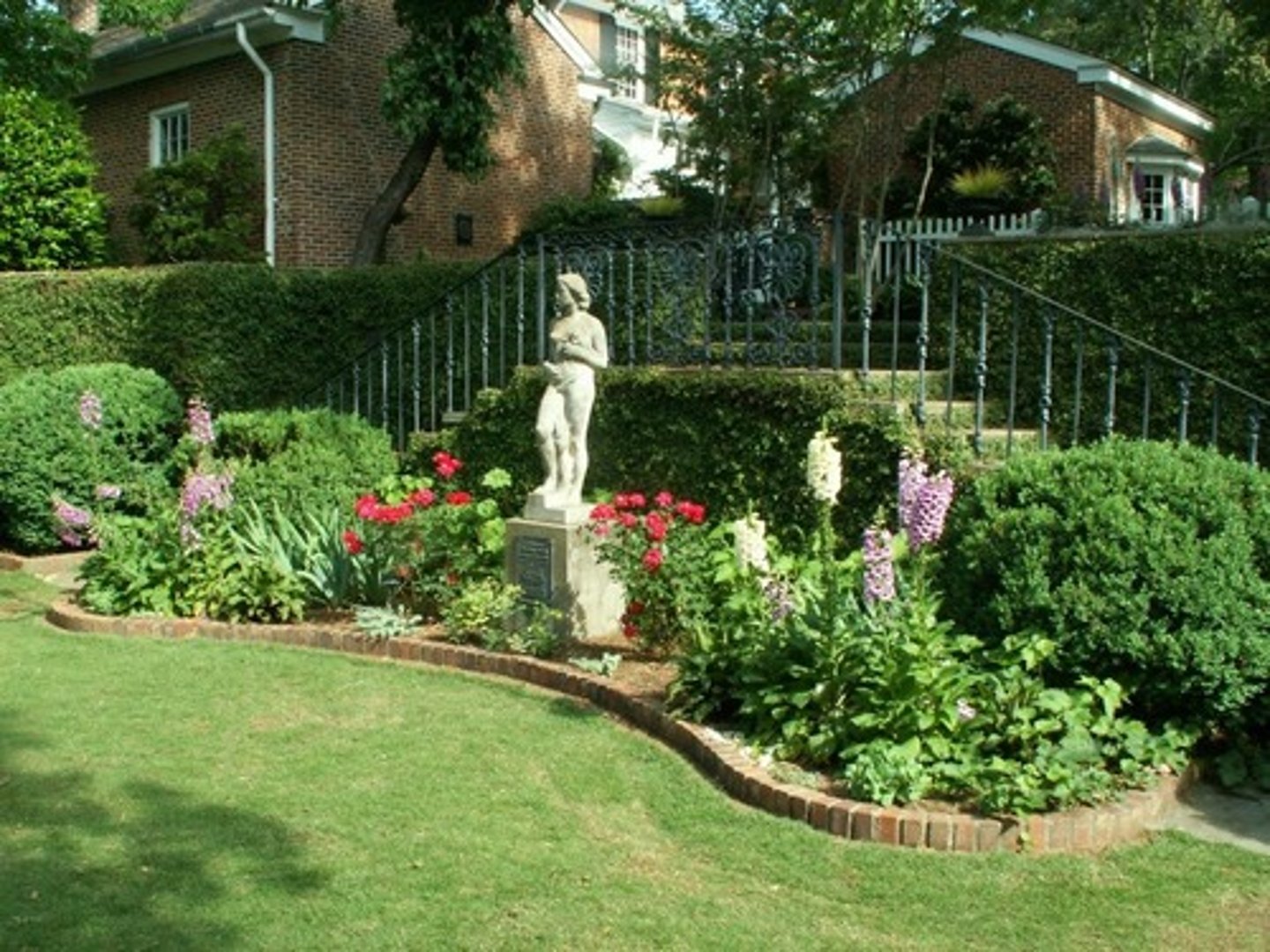
Based on nature
Slice of outdoors
Containers must harmonize
Low container
naturalistic design
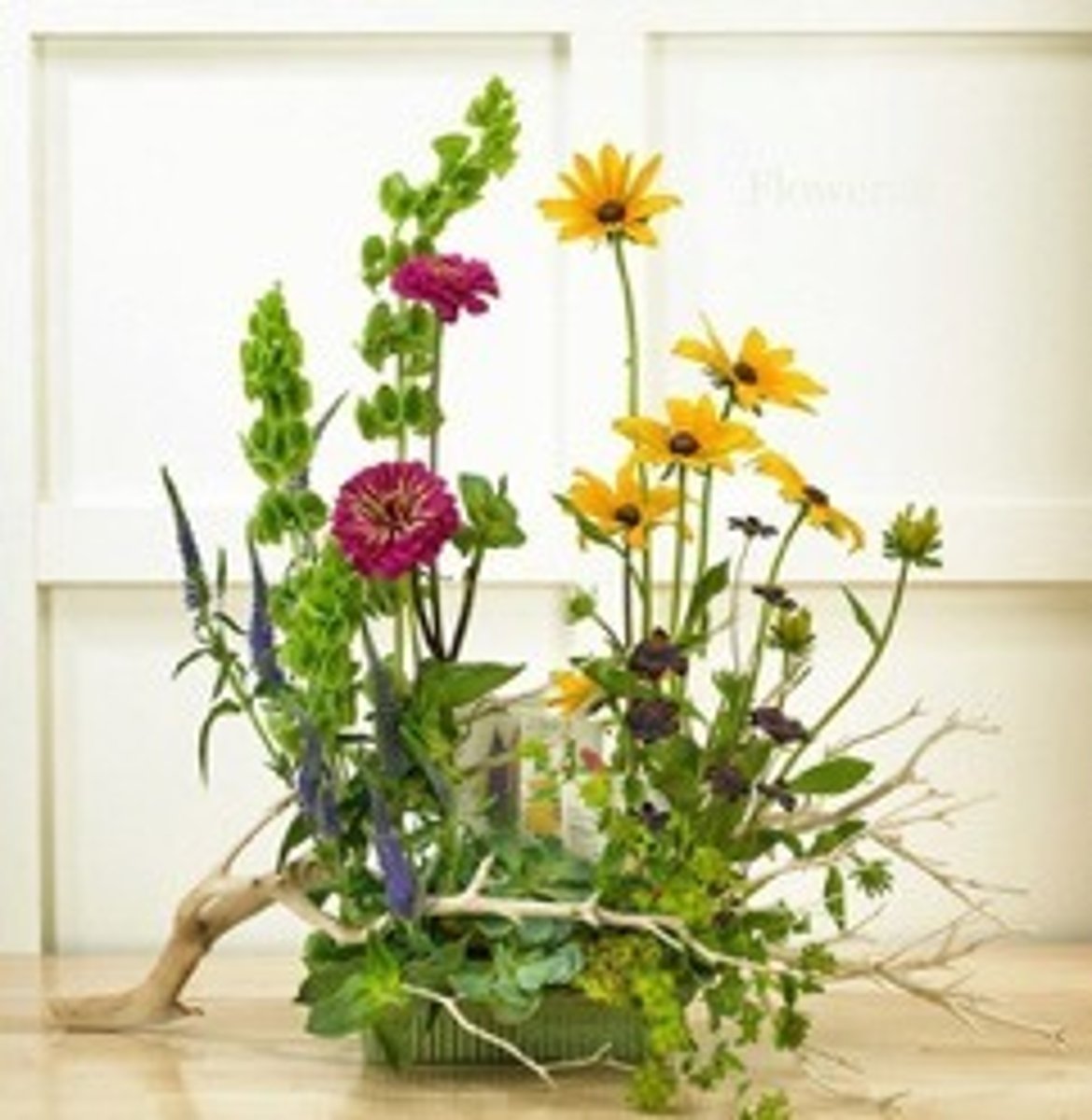
Study of the life of a plant
Bulb flowers contain
Buds, blossoms, foliage, stems, bulbs, and roots are visible
Generally all-sided
botanical design
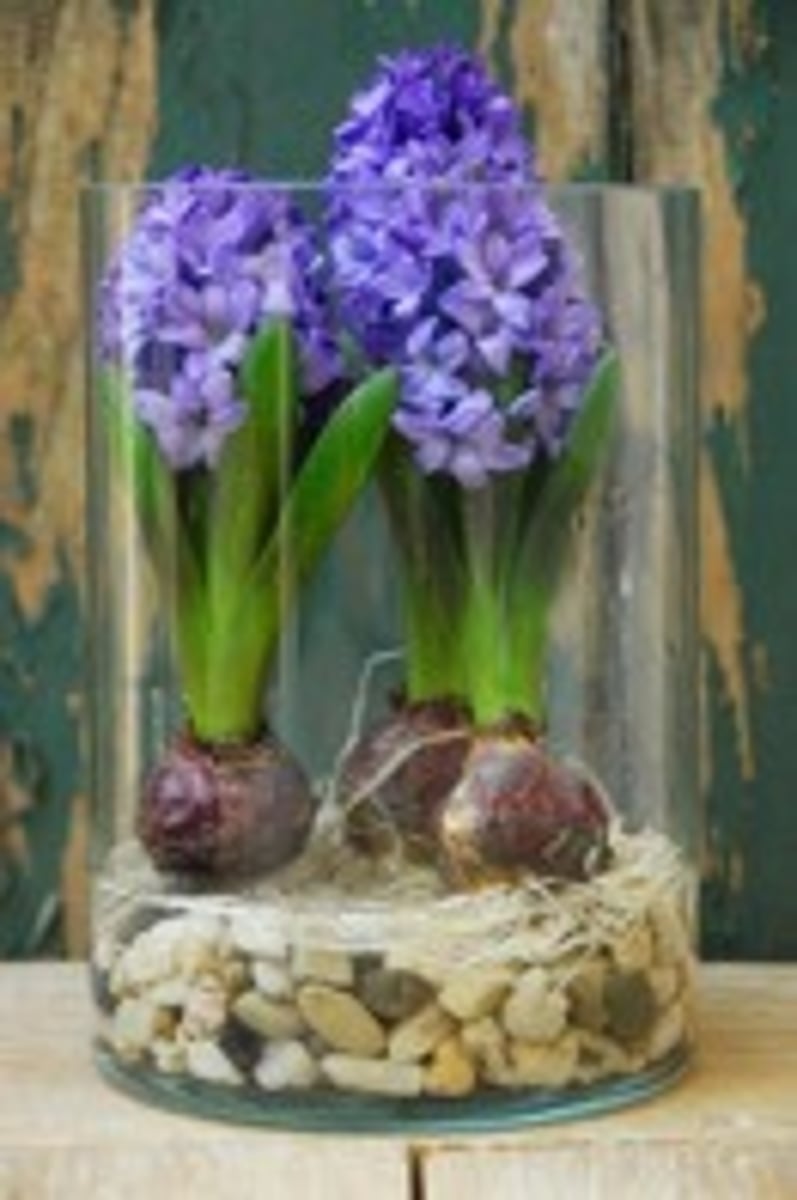
Presents plant as they grow in nature
Simulated slice of nature
Generally all-sided
Work from top downward
Place tall flowers off center
Do not alter flowers, buds leaves, or stems
Layer heights, bunch similar materials together
vegetative design
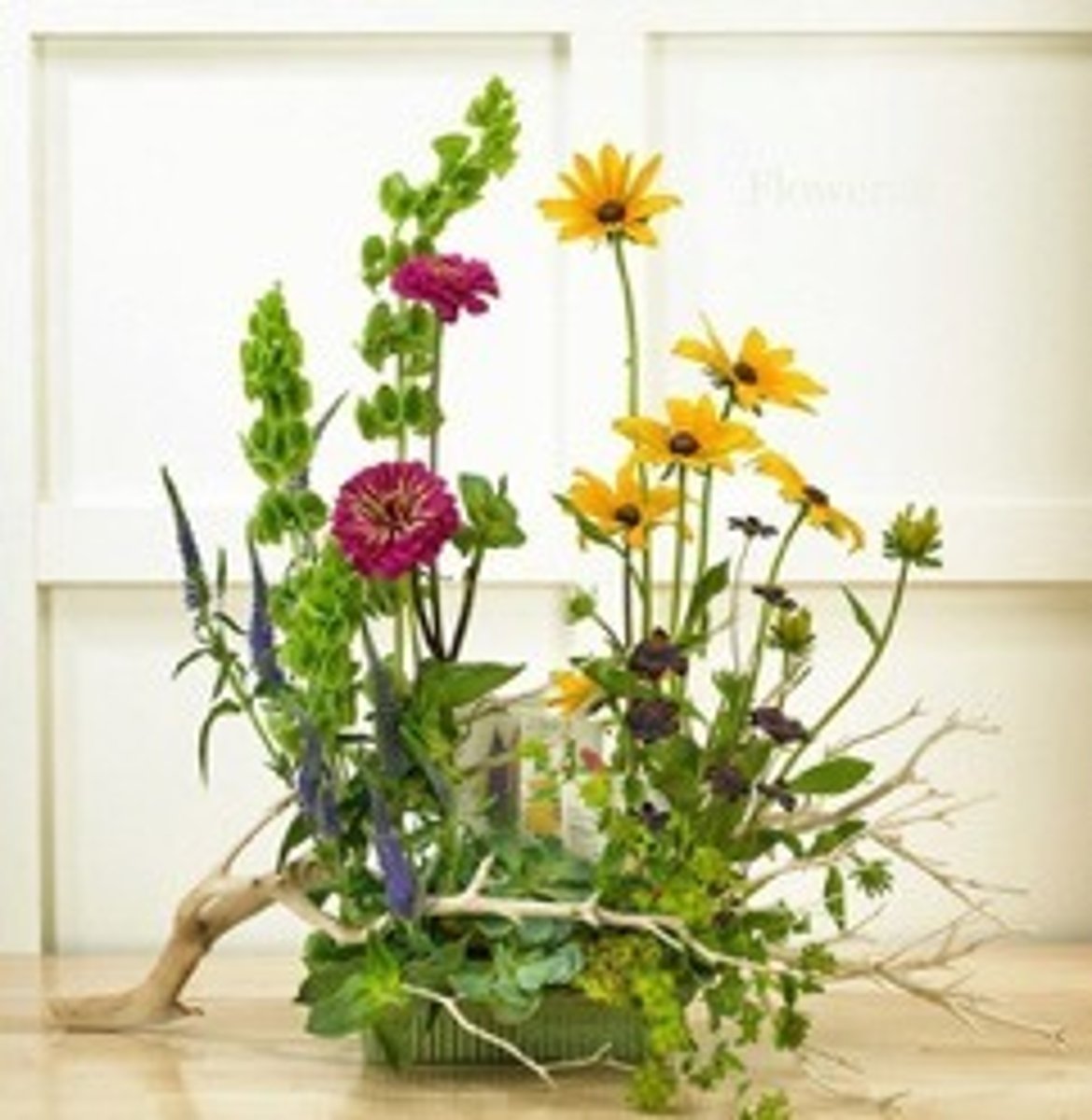
Depicts larger area of nature
Groomed garden
Organized in color groupings
Season and environment are evident
Generally one-sided
Tall materials in back
Asymmetrical positioning
Landscape design
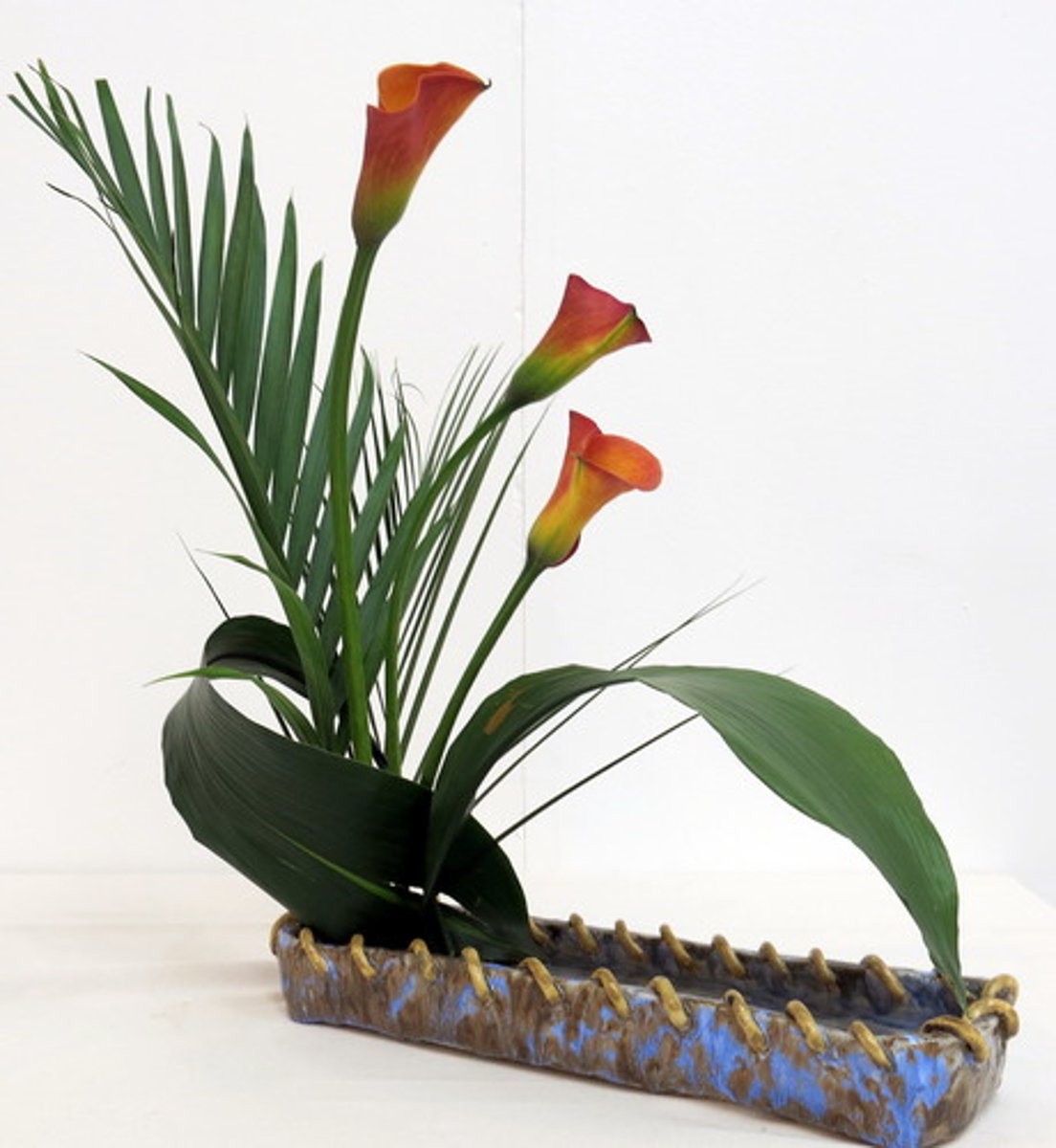
linear designs
Emphasize line and visual movement
Clean lines with essential negative space
what styles do linear designs include?
parallel systems
new convention
formal linear