Lecture 30: Meat Quality
 Call Kai
 Learn
Learn Practice Test
 Spaced Repetition
 Match
Match Flashcards
 Knowt Play
1/18

There's no tags or description
Looks like no tags are added yet.
Name | Mastery | Learn | Test | Matching | Spaced | Call with Kai |
|---|
No analytics yet
Send a link to your students to track their progress
19 Terms
What is meat quality
Properties that identify what the consumer cares about when purchasing or eating meat product
Visual components: Colour, marbling
Palatability components: tenderness, juiciness, flavour
Factors impacting meat quality
Genetics/breed
Nutrition
Maturity (age)
Animal stress (lower pH)
Post-slaughter handling → cooling, aging
Review of conversion of muscle to meat
Starts when animal is harvested
Attempt to maintain cellular homeostasis
ATP production
Through Phosphagen system
Glycogenolysis
Glycolysis
Acidification of muscle
Hydrolysis of ATP → H ions produced and accumulated in muscle
Lowers pH
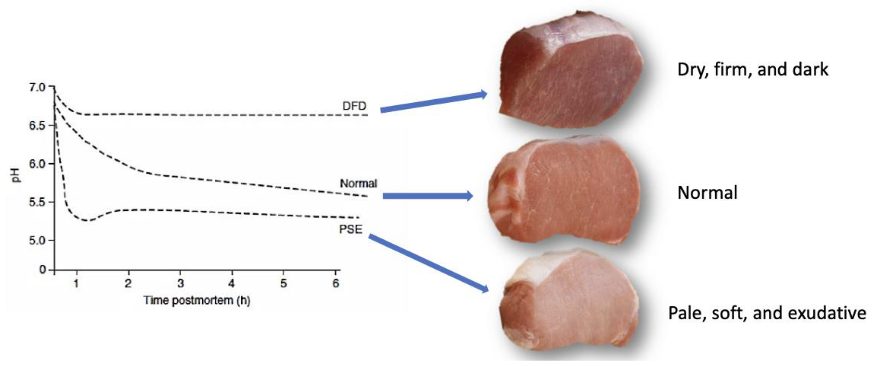
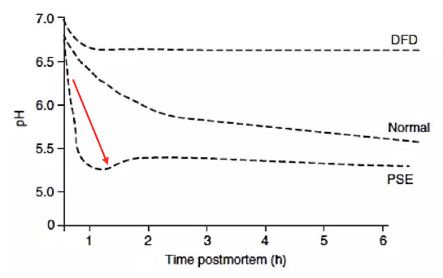
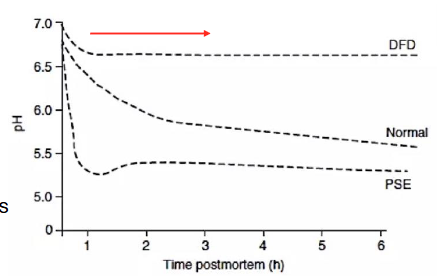
How energy production affects pH
Normal meat is around 5.5
DFD (Dry, firm, dark) meat is over 5.5
PSE (pale, soft, exudative) is under 5.5
Energy production in meat after slaughter
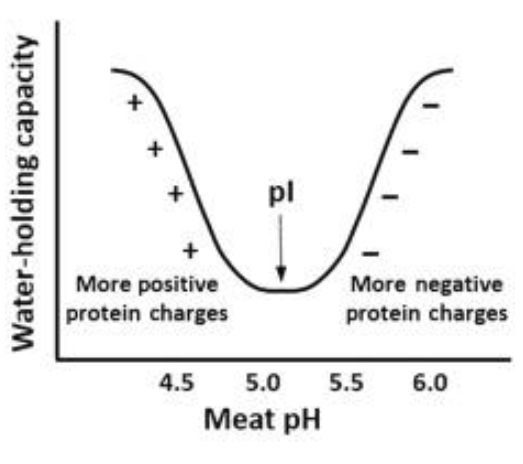
Met pH can interact with electrical charges on muscle proteins
Influences Water Holding Capacity
PI = Isoelectric point
Number of positive and negative charges are equal
This will be lowest water holding capacity
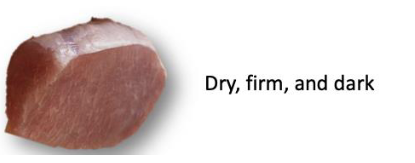
DFD Meat
Limited energy available
pH very high and stay high
Muscle glycogen deficiency
Chronic exposure to pre-slaughter stress
Glycogen stores are used up prior to slaughter because of stress
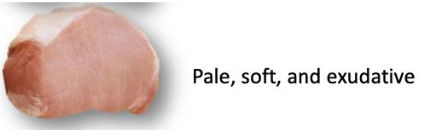
PSE meat
Rapid metabolism immediately after slaughter
Carcass temperature still elevated
pH drops in muscle
Low pH and high temperature leads to extreme denaturation of sarcoplasmic myofibrillar proteins in muscle
Gives meat cloudly look
Preslaughter stress
Effects of stress on meat quality both acute and long term, arise from release of stress hormones → Epinephrine
Once released, hormones initiate series of biochemical reactions
Mobilize energy to meet demands of stress
Acute stress
Accelerates glycogenolysis
Rapid decline pf pH
Chronic stress
Glycogen stores consumed
Lack sources for glycolysis postmortem
Temperature
Temp of muscle immediately after slaughter affect metabolic reactions that critically impact two meat quality development
Associated with low muscle temperature prior to onset of rigor mortis
Thaw Rigor
Cold-shortening
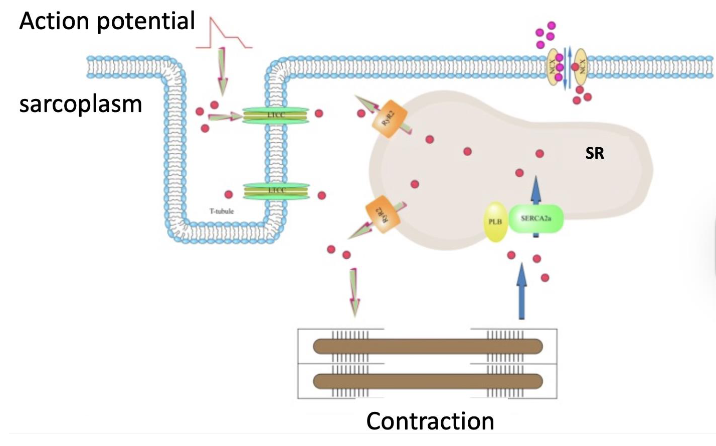
Temperature and Ca release
Colder temp causes changes is capacity of sarcoplasmic reticulum to control Ca in sarcoplasm
Causes Ca to stay stuck is SR
If it occurs before all glycogen is depleted, more severe contraction
Causes more long lasting contracting because Ca is stuck
Thaw rigor
Muscle frozen before going into rigor mortis
Then thawed (glycogen is still present)
During freezing
Ice crystal form
Crystals damage sarcoplasmic reticulum
When muscle saws, damaged SR releases a lot of Ca
Causes greater muscle contractions because glycogen still present
Tougher meat
Cold shortening
Meat chilled to quickly before rigor mortis
Ca will leak out of sarcoplasmic reticulum
Ca builds up in muscle cell
ATP still available
Muscles will contract but cant relax properly
Less severe than thaw rigor
Tougher meat
Cold shortening
Red muscles are more likely to cold shorten
Because less developed SR
White muscles
Better developed SR
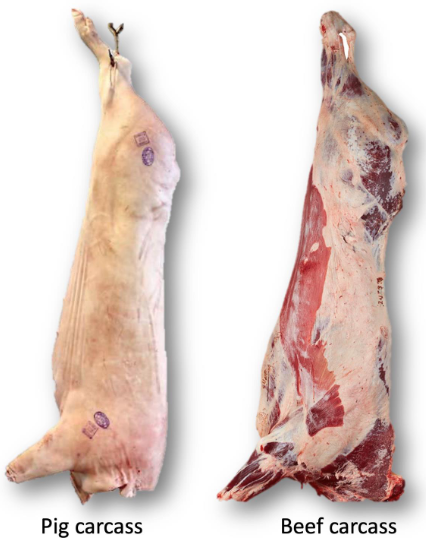
Beef and lamb have less fat so they cool down too quickly
Pig carcass has more fat
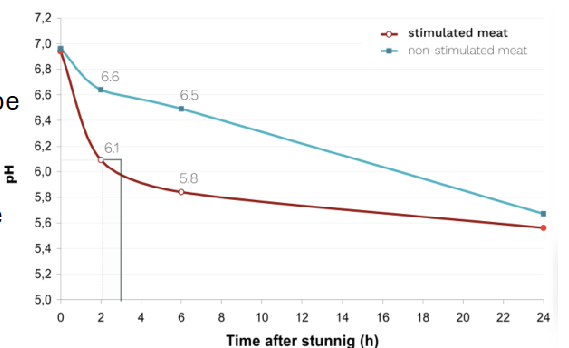
How electrical stimulation help prevent cold shortening
Electrical stimulation makes muscle use up ATP quickly
Break down glycogen faster
Glycogen is used up and no ATP left
Stop the strong contractions
Aging: Meat
Let meat rest after slaughter to make it more tender
Between slaughter and eating
Done in the fridge
What makes meat tender
Proteolysis
Proteins get broken down into smaller constituents → Polypeptides or amino acids
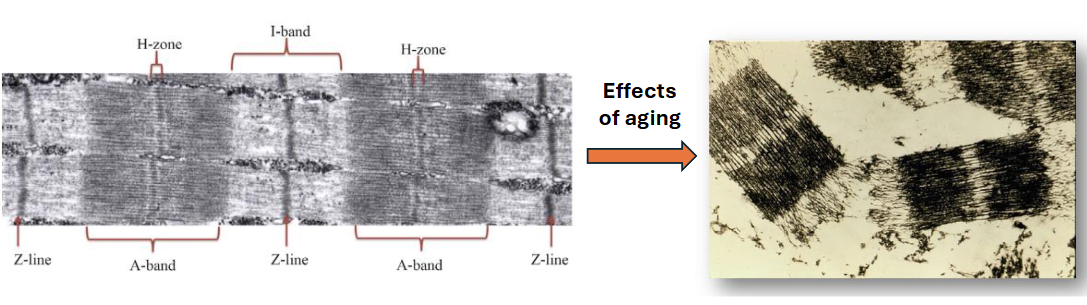
Aging and proteolysis of myofibril
Myofibrils weaken
Breakage or structural damage near Z line in I band