BAns Chap 13-14 II
 Call Kai
 Learn
Learn Practice Test
 Spaced Repetition
 Match
Match Flashcards
 Knowt Play
1/14

There's no tags or description
Looks like no tags are added yet.
Name | Mastery | Learn | Test | Matching | Spaced | Call with Kai |
|---|
No analytics yet
Send a link to your students to track their progress
15 Terms
Silencer can function downstream or upstream of promoter
3’ Poly (A) tail NOT 3’ cap
Unwinding DNA = upregulate transcription
Binding of STFs are dependent on recognition of complementary shape between STF and binding sites (NOT recognition of histone tails)
Capsid coat (NOT just capsid)
Antigenic shift -> random assembly of RNA segments
Describe role of viral DNA in infection process of T4 = what is DNA codes for!
Viral DNA acts as a template for…
An enzyme that degrades the host cell’s DNA
DNA replication and transcription, using the host cell’s machinery to produce more copies of viral DNA and viral proteins
Lysozyme which breaks down the bacterial peptidoglycan cell wall, causing cell lysis and release of the intact bacteriophages
Advantages of lysogenic pathway
Viral DNA is integrated into the bacterial genome as a prophage, and is replicated together with the bacterial genome, without killing the host bacterium -> This allows the viral DNA to be replicated many times and passed to many bacteria cells, resulting in a large population of bacteria carrying the prophage
Viral DNA can exit the bacterial genome when lytic cycle is triggered -> This allows the virus to escape from the host bacteria in unfavourable conditions
Function of haemagglutinin
Binds to specific receptors containing sialic acid on host cell so that the virus can enter the host cell via endocytosis
Properties of inhibitor
Inhibitor should have similar shape to the viral polyproteins -> complementary to the active site of HIV protease blocking the binding of substrate
Newly formed nucleocapsids…
Newly formed nucleocapsids recognises and moves towards cell surface membrane at exit point
Effect of Ethanol on virus
Ethanol is an organic solvent and dissolves the phospholipids bilayer of the viral envelope -> preventing the attachment and entry of the virus via fusion of membranes
+ RNA genome…
(+) RNA genome directly serve as mRNA template, synthesised by host ribosomes
Describe viral genome
Double-stranded DNA genome
Single-stranded RNA genome (Influenza)
Contains genes coding for viral proteins like RNA-dependent RNA polymerase
Template for the synthesis of complementary RNA strand (+) used as template for translation of viral proteins and synthesis of viral RNA
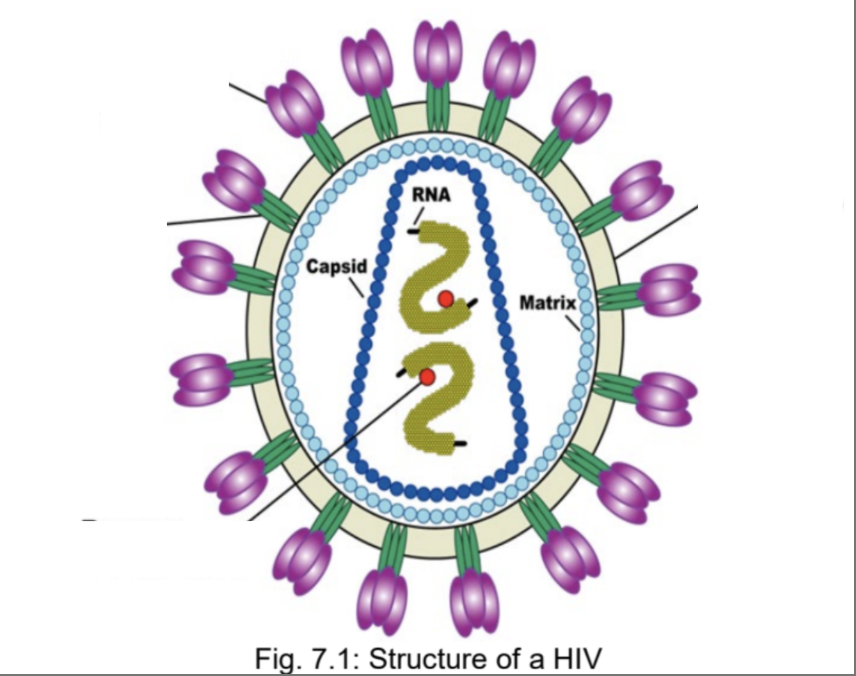
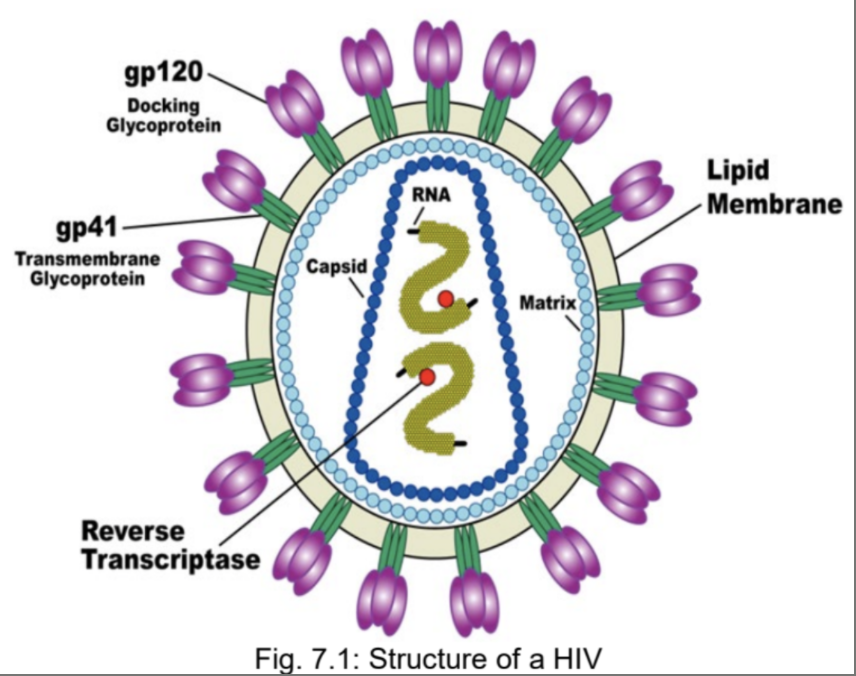
Label HIV
Evidence antigenic shift
Different strains of virus need to infect the same host cell in the same organism
Influenza pandemic caused by H2N2 did not happen in the same time period as H1N1 or H3N2
ANY Expression of proteins
This allows for long-term expression of proteins coded by the introduced RNA by host cell machinery using RNA polymerase and host cell ribosomes
Explain how virus acquires new viral envelope
Viral mRNA is translated into viral proteins by ribosomes at the RER and embedded into the membrane of the RER
Glycosylation of the viral proteins occurs at the RER/Golgi apparatus
Transport vesicles with the embedded glycoproteins fuse with the cell surface membrane and are now part of the cell surface membrane
The nucleocapsid will then be assembled near the cell surface, and it will bud off from the host cell membrane that is studded with the viral glycoproteins to form the viral envelope
Virus do NOT metabolise at all (even in host cells)
Increased international travel -> does NOT change mosquito / environment -> it just increase number of cases NOT R0